Waiting for post COVID-19 flight traffic at the busiest airports

New data on the busiest airports in the United States suggests there is room for more flights in 2022:

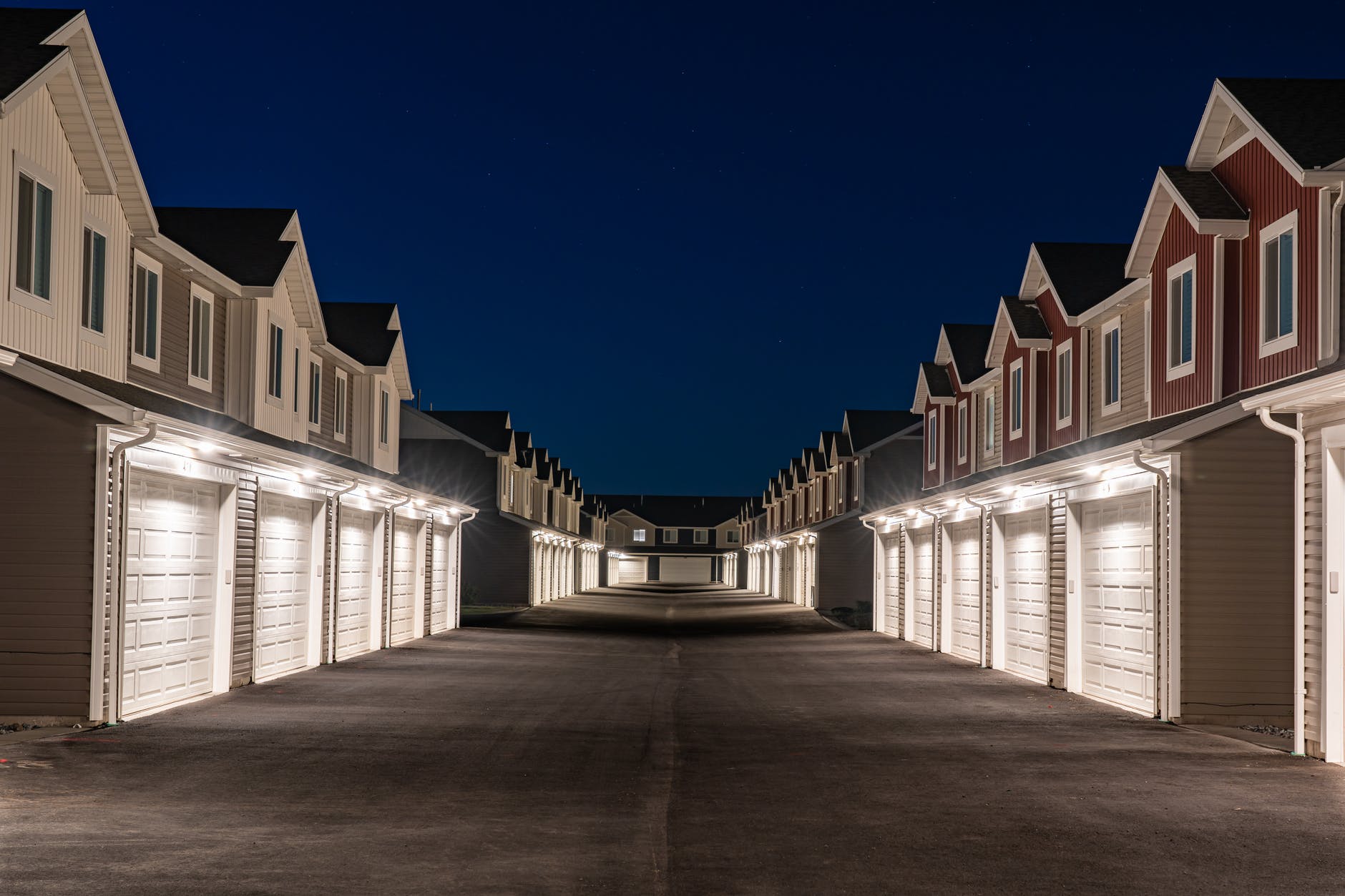
Photo by Maria Tyutina on Pexels.com

O’Hare International Airport remained America’s second-busiest hub behind Hartsfield-Jackson Atlanta International Airport in 2021, but experts say the number to watch is a 27% rebound in flights compared to a dismal 2020…

At the same time, O’Hare continues to climb out of a pandemic slump of 538,211 arrivals and departures in 2020. To put that in context, operations totaled 919,704 in 2019 when O’Hare held the title for most U.S. flights…

What other airports are bustling? The third-most voluminous was Dallas Fort Worth International Airport, followed by Denver International Airport, Charlotte Douglas International Airport and Los Angeles International Airport in sixth place.

I have been to the Chicago airports one time for a flight in the last two years and that visit in October 2021 seemed fairly close to normal. Theoretically, the pandemic provided a little space to make improvements or tackle projects at airports. I saw some improvements underway. At least a few big projects are in process at O’Hare:

An expansion of Terminal 5 is in full swing, with more than $1 billion earmarked to modernize the global facility.

At the same time, plans for major airports like O’Hare likely take place on the scale of decades, not necessarily a year at a time. For example, discussions regarding adding a new western terminal and entrance to O’Hare have gone on for years with some progress toward that goal.

It will also be interesting to see how the role of airports changes as the United States shifts to more electric vehicles. If longer road trips are different, will more people want to fly to destinations more than a few hours away? Flights are not exactly green but the transportation landscape could change in the next few decades.

Deaths and COVID-19 by groups, communities in Cook County

COVID-19 is big in its effects but I am surprised we have not seen more coverage all over the place about who specifically is affected more within regions and big cities. WBEZ looks at recent data in Cook County, Illinois:

Photo by Griffin Wooldridge on Pexels.com

In the earliest weeks of the pandemic, Chicago’s Black residents were dying of COVID-19 at alarming rates. More recently, in the few weeks since the arrival of the omicron variant, Black Chicagoans are again dying at much higher rates than their Asian, Latino and white counterparts, shows a WBEZ analysis of data on COVID-19 related deaths from the Cook County Medical Examiner’s Office.

Since Dec. 7, 2021, the date when the state’s first omicron case was found in Chicago, the city’s Black residents are dying at rates four times higher than Asians, three times higher than Latinos and nearly two times higher than white residents, according to WBEZ’s analysis. A total of 97 Black Chicagoans died of COVID-19 during the seven-day period ending Jan. 9, 2022 — more than at any point since May 11, 2020.

Black Chicagoans aren’t the only demographic that has been particularly vulnerable since the arrival of omicron. Older suburban Cook County residents have also seen their seven-day COVID-19 death totals reach levels not witnessed in more than a year. According to WBEZ’s analysis, a total of 181 suburban Cook County residents 60 years and older died from COVID-19 during the week ending Jan. 9, 2022. That’s the highest seven-day total for that group since Dec. 24, 2020…

While several communities on Chicago’s South and West sides have been hit hard by COVID-19, the pandemic’s death toll has also weighed heavily in various parts of suburban Cook County. WBEZ’s analysis finds some of the county’s highest COVID-19 death rates in parts of northwest suburban Niles, Norridge and Lincolnwood, southwest suburban Palos Heights, Chicago Ridge, Oak Lawn and Bridgeview; and south suburban Hazel Crest, Markham, Harvey, Robbins and Country Club Hills.

I am sure there are already and will continue to be many academic studies that examine these differences. Even as COVID-19 has impacted many, the impacts of COVID-19 are not distributed evenly. It arrived at a time of inequality, including in health outcomes and experiences, and it exacerbated issues.

At least in the Chicago area, data on this topic is available online. For example, I have tried to keep track of the disparate effects of COVID-19 in DuPage County where there are significant differences across racial and ethnic groups, age groups, and communities (earlier post here).

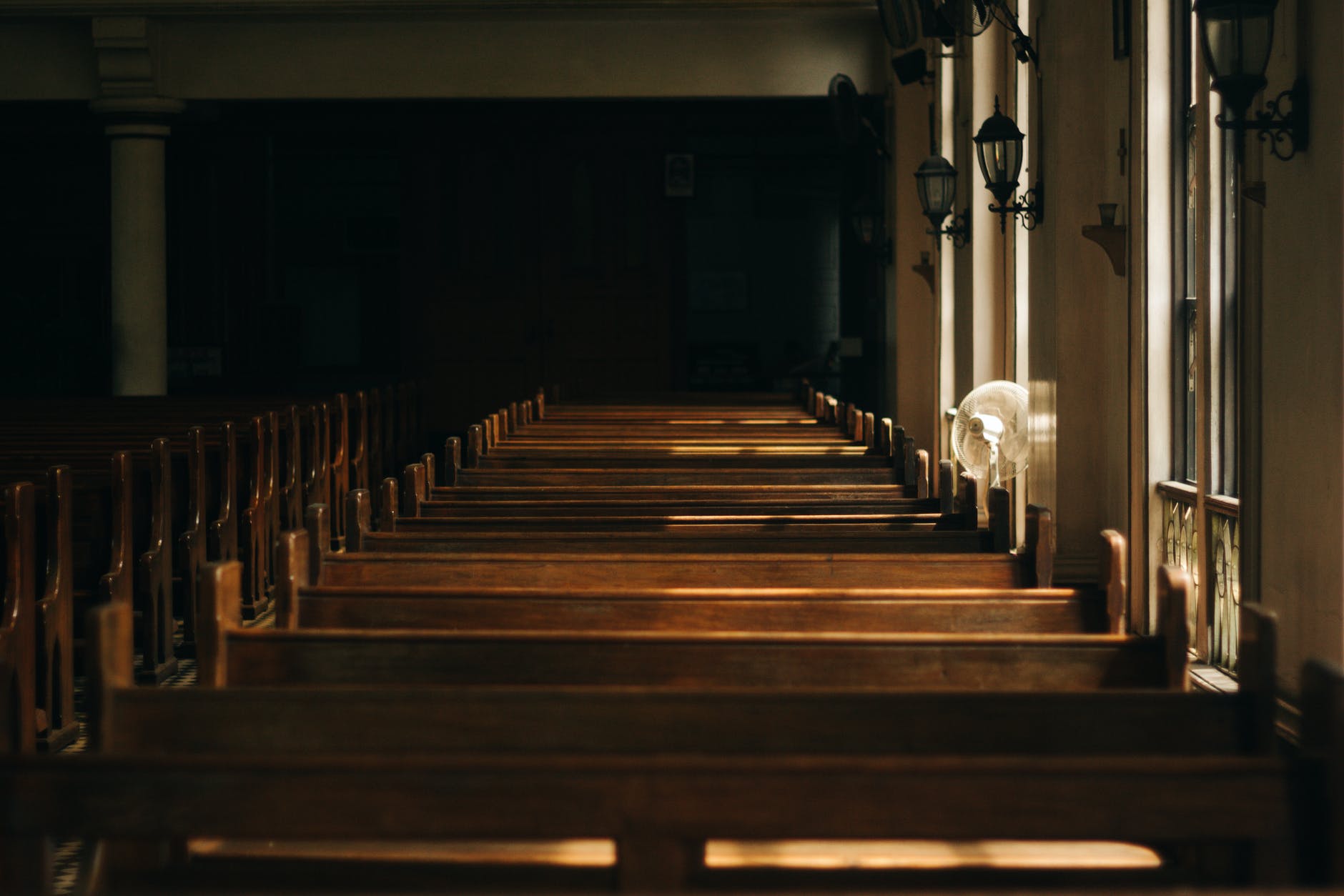
Will there be more empty church buildings in the near future due to COVID-19?

COVID-19 has lowered church attendance and impacted giving. Does this mean there will be more empty church buildings in the next few years? A few hints:

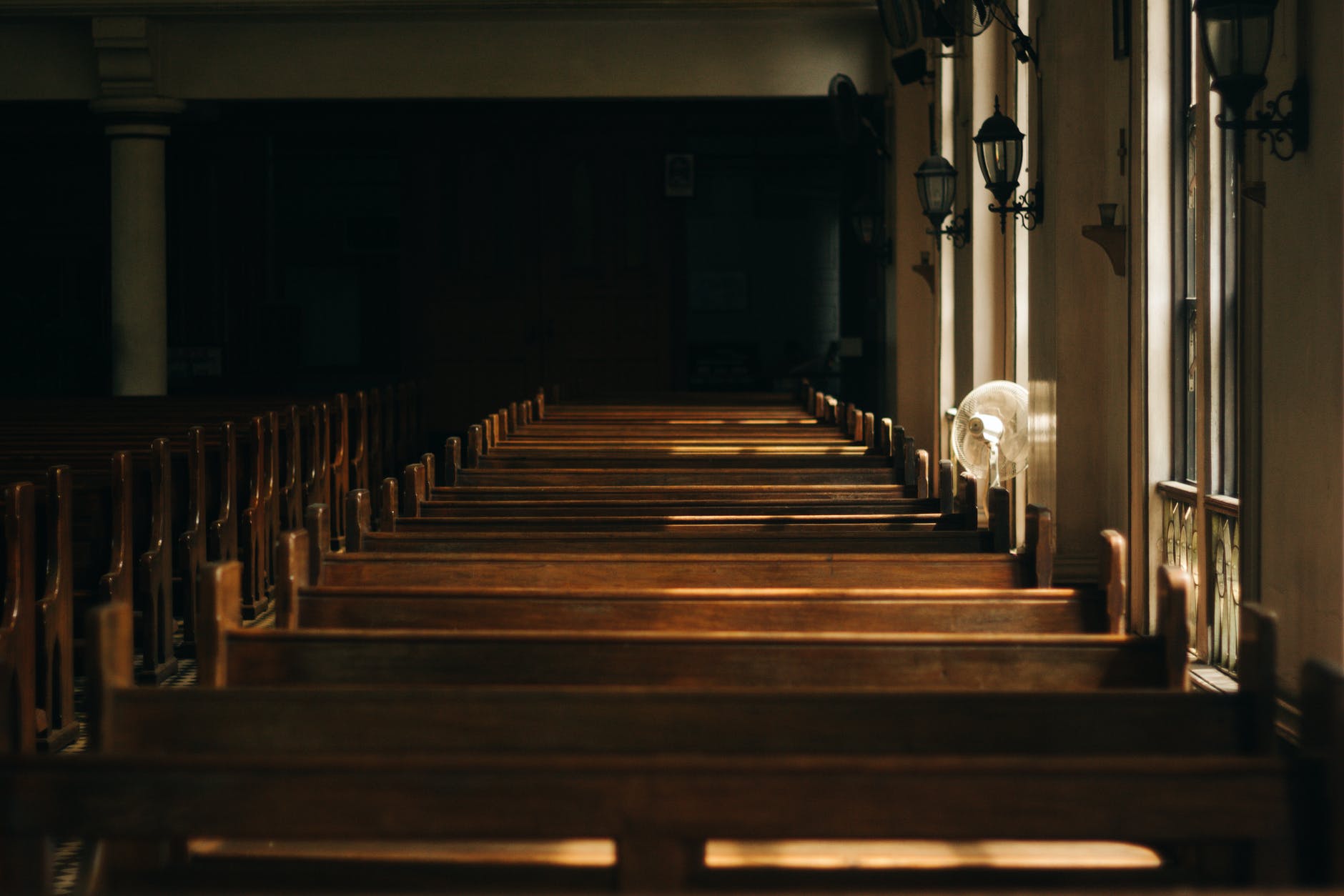
Photo by Nikko Tan on Pexels.com

Biltmore is just one of an untold number of congregations across the country that have struggled to stay afloat financially and minister to their flocks during the pandemic, though others have managed to weather the storm, often with help from the federal government’s Paycheck Protection Program, or PPP, and sustained levels of member donations.

The coronavirus hit at a time when already fewer Americans were going to worship services — with at least half of the nearly 15,300 congregations surveyed in a 2020 report by Faith Communities Today reporting weekly attendance of 65 or less — and exacerbated the problems at smaller churches where increasingly lean budgets often hindered them from things like hiring full-time clergy…

After congregants voted last May to put the church property, a two-building campus perched on a verdant knoll just off Interstate 40, on the market, church leaders are still figuring out what comes next, including where the congregation will call home. But they hope to use some of the proceeds from the property sale to support marginalized communities and causes like affordable housing…

When services went virtual, savings on utilities and other costs helped keep the budget balanced. PPP loans of some $290,000 were also key to maintaining employees on the payroll and offsetting lost revenue from renting out space and other services.

COVID-19 has been disruptive for many faith communities. The article notes the fallout in multiple areas and I will add how this might affect buildings.

  1. Disrupted giving. Congregations have to decide what is essential. This might differ across congregations as they consider staffing, programs, and buildings. A congregation with an older but important structure may respond differently than a newer congregation with less attachment to a property.
  2. Decreased attendance. The building has likely experienced less use during COVID-19. Is the same building needed in the future? Is it maintainable given fewer attendees or with modifications that make streaming services and activities possible?
  3. Congregations that were already struggling may have been pushed to the brink. Whereas they may have been able to hold on to a building longer or developed a solution without COVID-19, the pandemic gave a shove to property and building concerns.

Combine these factors with the regular flow of older church buildings and congregations fading away and we may just see more church buildings available for reuse or redevelopment.

See this earlier set of posts (on reusing religious buildings, building maintenance, using space differently, and different building energy) addressing possibilities for religious buildings post-COVID-19.

That McMansion space comes in handy during a pandemic, Australian edition

An editorial in the Sydney Morning Herald notes that the square feet available in a McMansion can be useful:

Photo by Belle Co on Pexels.com

The trend to large new houses with multiple bathrooms and bedrooms is decades old but they have proved especially handy over the past two years because lockdowns and quarantine rules have forced people to stay indoors more than usual.

Home schooling and working from home is easier with a separate dining room or living room and the hundreds of thousands of people now forced to isolate at home will be glad if their house has extra bathrooms.

“Many households are wanting larger homes than they did before the pandemic. The combination of the time confined at home during lockdowns and the likely future of more working from home has brought the quality and size of one’s home sharply into view,” Reserve Bank of Australia assistant governor Luci Ellis told the federal inquiry into housing affordability in November.

Yet once the pandemic passes, one of many aspects of Australian life that may come up for discussion is whether we need to keep building such big houses.

In a typical housing unit, people spend more time in some spaces than others. The kitchen can function as the hub of the home.

Yet, in the midst of a pandemic when people are home more and the home may need to provide more different kinds of spaces, having more rooms and space helps. The open concept kitchen and great room is central in many larger dwellings but such spaces do not work as well with working from home, running a household, and other activities. A larger house at least provides options, even if the layout is not the most conducive to more private separate spaces.

What happens after the pandemic? As the editorial notes, questions will persist about large homes. Australians and Americans have been asking about the need for the largest homes for the world for several decades and people keep buying them. Will there be an interest returning to smaller spaces and closer connections or will people want the option of more space should something every come up? Of course, in the meantime that space can be used for storage or other activities…

Pop-up COVID-19 testing sites likely benefit from more vacant commercial properties

Amid concerns in the Chicago area about a pop-up COVID-19 testing site operator, I thought: a business that can quickly emerge and offer testing services needs to be able to quickly find properties for their new locations. Brick and mortar businesses have faced issues for years and this has led to plenty of vacant commercial locations.

Photo by Adrian Bancu on Pexels.com

Thus, when COVID-19 arrived and swept through the United States in multiple waves, there were numerous potential locations available for testing sites. Throughout the Chicago region and the United States, there are larger vacant properties – from office parks to grocery stores to shopping malls – as well as smaller locations in strip malls and other smaller structures. I got my first two vaccination shots at a former big box store in the far-flung Chicago suburbs. Commercial properties are often located along busy roads and they may have central locations that people can access relatively easily.

If commercial properties were not as available, testing could take place elsewhere including on government properties like fairgrounds or civic centers. For example, the State of Illinois Community-Based Testing Sites appear to be a range of property types.

Additionally, I wonder at the rates a new testing business or a government group would pay for rent and utilities at a vacant commercial property. Has more vacancies also helped make prices more affordable for testing facilities to arise?

And if COVID-19 passes plus there is more interest in commercial properties, testing sites might also fade away. Just like other businesses or organizations who might take up residence in a strip mall or commercial property for a while, COVID-19 testing sites would arise and then disappear again in the commercial landscape.

Focusing mass transit on those who need it or commuters

Looking at those who continued to use mass transit during COVID-19 helps raise the question of who public transit should serve:

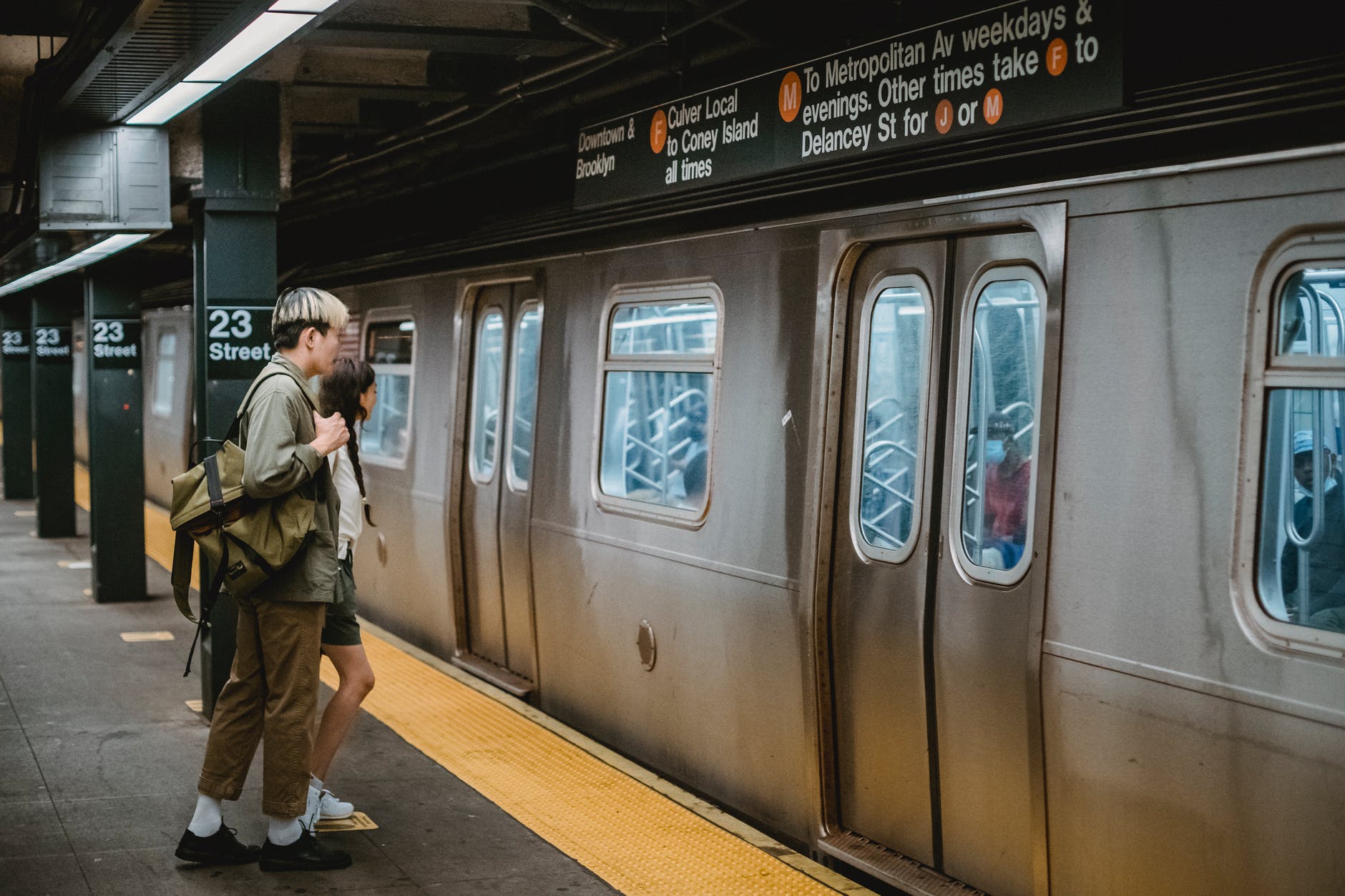
Photo by Samson Katt on Pexels.com

Yes, public transit ridership dropped like a stone after many places instituted stay-at-home orders. Americans took 186 million transit rides in the last week of February 2020, according to data compiled by the American Public Transit Association; a month later, that number had fallen by 72 percent, to 52.4 million. At the Port Authority of Allegheny County, which operates in the Pittsburgh area, ridership fell 68 percent.

Who kept riding? In a country where race is tied to economic opportunity and geography, transit riders have long been disproportionately low-income and people of color. Maybe it shouldn’t have been a surprise, but they were the riders who stuck around. An analysis from the APTA found that white men were more likely to have given up transit during the pandemic; people of color, people who spoke Spanish, and women did not…

But US public transit has generally focused on commuters, especially those with traditional 9-to-5 schedules, who travel between city fringes and downtown business districts—riders who are less likely to be low-income and more likely to be white. That’s despite the fact that, even in the biggest cities, where transit use is more common, just half of pre-pandemic trips were to and from work. In smaller systems, the share is even less. The Port Authority of Allegheny County isn’t an exception. “Our system is very downtown centric, and it has historically relied very much on the commuter,” says Brandolph, the spokesperson. As a result, service within cities, serving people with less-regular work schedules or who took transit for other purposes, got short shrift.

That age may be over, says Alex Karner, who studies transportation equity as an assistant professor at the University of Texas at Austin’s School of Architecture. “The pandemic really exposed the truth that there are people for whom public transit is a vitally important public service,” he says. He says agencies now realize they will no longer be able to rely on peak-period commuters. When Urban Institute researchers surveyed 73 US and Canadian agencies on what service might look like in a “post-pandemic” era, more than half said they thought “peak period” travel would decrease. Nearly 70 percent said white-collar workers would take fewer rides. So transit agencies must decide what the new normal will be—and who it will serve.

In a country devoted to driving, those who have alternatives to mass transit to get to work will use those. Additionally, there is a class element to how mass transit is used and regarded and COVID-19 made work from home possible for some and not others.

The underlying assumption here appears to be that public transit cannot or cannot easily serve both groups of users. One aspect of this is that underlying patterns of residential segregation in cities and urban areas mean potential riders live in different locations. Additionally, later parts of the story cited above highlight the money mass transit systems have at the moment due to federal funds.

In the long run, when wealthier residents are asked to devote more funds to mass transit for equity and those who need it, will they agree? In Chicago, this has manifest in limited mass transit service in some areas compared to others. The new federal money means the Red Line can be extended on the South side. How far can efforts go? In other metro areas in recent years, wealthier suburbanites (see Nashville) have rejected efforts to expand mass transit. When suburbs are increasingly diverse and home to poorer residents, is there will to have consistent mass transit service?

Some hints about the effectiveness of relocation incentives offered by American communities

A number of American communities are offering monetary incentives to bring in residents and workers. Do the incentives work? Here are some recent clues:

Photo by Alexander Mils on Pexels.com

Fifty-three communities in 24 states and Puerto Rico are trying to lure new residents by offering cash, covering moving costs or providing other incentives, according to makemymove.com, an online directory of such programs. They largely seek remote workers from expensive coastal areas. Though the idea started before the pandemic, COVID-19 fed the movement by quintupling the number of remote workers and dampening some of the conviviality millennials sought in big cities.

So far, many areas have failed to bring in significant numbers of remote workers despite offering incentives. Most don’t have the staff and money backing the Tulsa Remote program, which is funded by the George Kaiser Family Foundation.

Even so, smaller areas have found advantages in remote worker programs. Natchez, Mississippi, a river town north of New Orleans where the population has been declining for decades, saw home sales double to 700 in the past year, even though only 12 people have used a $6,000 incentive for remote workers, said Chandler Russ, executive director of Natchez, Inc. Economic Development, which operates the Shift South remote worker incentive plan…

Tulsa’s program is often cited as a rare success story. It moved 100 people in its first year, 2019, and despite the pandemic it projects another 950 moves this year. Along with cash incentives up to $10,000 for living in Tulsa at least a year, the program offers a free trip to check out the area and intensive social networking in person and online…

A new study by the Economic Innovation Group, a Washington, D.C.-based research organization, found the new workers created almost $14 in new local labor income — a measure of earnings by employees and business owners — for every dollar spent on relocating workers, adding $62 million in earnings by the workers themselves and the jobs created to support them in 2021.

It sounds like more data and time is needed to figure out whether the incentives lead to increased populations and, if they do, how and/or at what cost or benefit.

But, I could imagine many communities and their leaders would be interested in offering such incentives even if the data suggests they do not do much. Why? It is an actionable step that sounds like it should work. The community can lead with the incentive in their marketing. If people or businesses are looking to move, wouldn’t an incentive help encourage a particular decision? At the least, such an effort would get the name of the community out in front of the public or other interested parties.

Some of the other tidbits from the article cited above are interesting. Incentives could target particular kinds of residents or businesses. Increased housing costs could make an incentive worth very little. Could we imagine a future where potential residents negotiate with several communities in order to get a better deal? Just as businesses negotiate for tax breaks and communities compete with each other, why not residents?

The role of religious buildings in the decline in religiosity in the US during COVID-19

New data from Pew Research suggests religiosity declined during COVID-19:

Photo by Nikko Tan on Pexels.com

The percentage of Americans who identify as Christians now stands at 63%, down from 65% in 2019 and from 78% in 2007. Meanwhile, 29% of Americans now identify as having no religion, up from 26% in 2019 and 16% in 2007, when Pew began tracking religious identity.

Many places of worship closed during the pandemic—some voluntarily, others as a result of state and local social-distancing rules—and in-person church attendance is roughly 30% to 50% lower than it was before the pandemic, estimates Barna Group, a research firm that studies faith in the U.S. Millions of Americans moved to worshiping online, and questions linger about how many will come back in person.

A previous Pew survey, in January, found that a third of Americans said their faith had grown stronger during the pandemic—the highest share of any developed country. But overall, religious engagement trended downward at roughly the same rate as before the pandemic, according to the new Pew survey.

These findings are likely part of a longer trend away from religion that was already underway before COVID-19 hit. Sociologists and others have noted the rise of “religious nones,” particularly among younger Americans. Religion in the United States can often be individualistic and anchored less in religious traditions or denominations.

Yet, I wonder if COVID-19 presented a unique disruption to religiosity as it limited interaction with religious buildings. Sociologist Robert Brenneman and I discuss the impact of religious buildings on worship and community in Building Faith. We argue that the religious building and the ways that exterior and interior features are designed influence people who interact with them. The buildings do not just reflect religious values or doctrine; they help shape religious experiences.

When COVID-19 stopped people from being in buildings that influenced their faith, did this register as a loss and/or lead to a decline in religious engagement? With today’s technology and the ways that many congregations pivoted to online options, people can still engage with faith communities. Yet, that experience through Zoom or other video options is not the same as being in a physical structure that reinforces faith experiences. Even in congregations that tend to downplay the role of space, they still try to shape the religious building space in ways that encourages particular emotions and experiences.

Can religious faith in the United States survive as an enterprise free from the confines of a religious building? I have my doubts. While buildings themselves are unlikely to reverse the decline in religiosity in the last decade or so, they have a role in shaping communal and individual faith.

If Americans moved less in 2020, the stories of people moving from places were specific to particular locations

One consistent pandemic story was that people fled urban neighborhoods for less dense locales. This narrative held for New York City and San Francisco, among other places. But, in light of mobility data from 2020 that showed just under 8.5% of Americans changed addresses, what really happened?

Photo by Helena Lopes on Pexels.com

Two recent stories help make sense of the patterns. Story number one:

“Millennials living in New York City do not make up the world,” joked Thomas Cooke, a demographic consultant in Connecticut. “My millennial daughter’s friends living in Williamsburg, dozens of them came home. It felt like the world had suddenly moved, but in reality, this is not surprising at all.”…

Demographic expert Andrew Beveridge used change-of-address data to show that while people moved out of New York, particularly in well-heeled neighborhoods, at the height of the pandemic, those neighborhoods recouped their numbers just months later. Regarding the nation as a whole, Beveridge said he’s not surprised migration declined.

Put together the attention New York City and millennials receive and that residents may have left for a while but not permanently, the population did not change dramatically.

Story number two:

Lake Forest has seen a dramatic uptick in the number of people relocating to the northern suburb during the coronavirus pandemic.

“We’ve had over a thousand new families move to Lake Forest in the last 18 to 24 months,” said Mayor George Pandaleon.

He attributes the surge to four things: space, schools, safety and savings…

The mayor also noted the suburb’s real estate market was soft, meaning there was a large inventory that made it relatively easy for people to find a place to live.

This relatively small and wealthy suburb – around 20,000 residents, median household income of over $172,000 – grew as it had multiple factors in its favor.

Put these two stories together and other data and what do we have of the great COVID-19 migration of 2020? Here is my guess:

-The media and the public were very interested in what might happen because of COVID-19. It seems plausible that COVID-19 might prompt people to move given fears about transmission through the air.

-Certain people in certain locations could afford to move: those with resources to buy homes and those with flexible work arrangements. Those with fewer opportunities could not. The same residential segregation and uneven development present at normal times affected COVID times as well.

-Millennials seem to get a lot of news coverage as the next generation as well as one supposedly holding different values than previous generations.

All of this did not add up to significant mobility across the United States or across many groups in the United States.

Zillow sought pricing predictability in the supposedly predictable market of Phoenix

With Zillow stopping its iBuyer initiative, here are more details about how the Phoenix housing market was key to the plan:

Photo by RODNAE Productions on Pexels.com

Tech firms chose the Phoenix area because of its preponderance of cookie-cutter homes. Unlike Boston or New York, the identikit streets make pricing properties easier. iBuyers’ market share in Phoenix grew from around 1 percent in 2015—when tech companies first entered the market—to 6 percent in 2018, says Tomasz Piskorski of Columbia Business School, who is also a member of the National Bureau of Economic Research. Piskorski believes iBuyers—Zillow included—have grown their share since, but are still involved in less than 10 percent of all transactions in the city…

Barton told analysts that the premise of Zillow’s iBuying business was being able to forecast the price of homes accurately three to six months in advance. That reflected the time to fix and sell homes Zillow had bought…

In Phoenix, the problem was particularly acute. Nine in 10 homes Zillow bought were put up for sale at a lower price than the company originally bought them, according to an October 2021 analysis by Insider. If each of those homes sold for Zillow’s asking price, the company would lose $6.3 million. “Put simply, our observed error rate has been far more volatile than we ever expected possible,” Barton admitted. “And makes us look far more like a leveraged housing trader than the market maker we set out to be.”…

To make the iBuying program profitable, however, Zillow believed its estimates had to be more precise, within just a few thousand dollars. Throw in the changes brought in by the pandemic, and the iBuying program was losing money. One such factor: In Phoenix and elsewhere, a shortage of contractors made it hard for Zillow to flip its homes as quickly as it hoped.

It sounds like the rapid sprawling growth of Phoenix in recent decades made it attractive for trying to estimate and predict prices. The story above highlights cookie-cutter subdivisions and homes – they are newer and similar to each other – and I imagine this is helpful for models compared to older cities where there is more variation within and across neighborhoods. Take that critics of suburban ticky-tacky houses and conformity!

But, when conditions change – COVID-19 hits which then changes the behavior of buyers and sellers, contractors and the building trades, and other actors in the housing industry – that uniformity in housing was not enough to easily profit.

As the end of the article suggests, the algorithms could be changed or improved and other institutional buyers are also interested. Is this just a matter of having more data and/or better modeling? Could it all work for these companies outside of really unusual times? Or, perhaps there really are US or housing markets around the globe that are more predictable than others?

If suburban areas and communities are the places where this really takes off, the historical patterns of people making money off what are often regarded as havens for families and the American Dream may continue. Sure, homeowners may profit as their housing values increase over time but the bigger actors including developers, lenders, and real estate tech companies may be the ones who really benefit.