Marketing 101 example: equating pickup trucks to the American way of life

A look at declines in pickup sales for American automakers includes this description of what pickups represent:

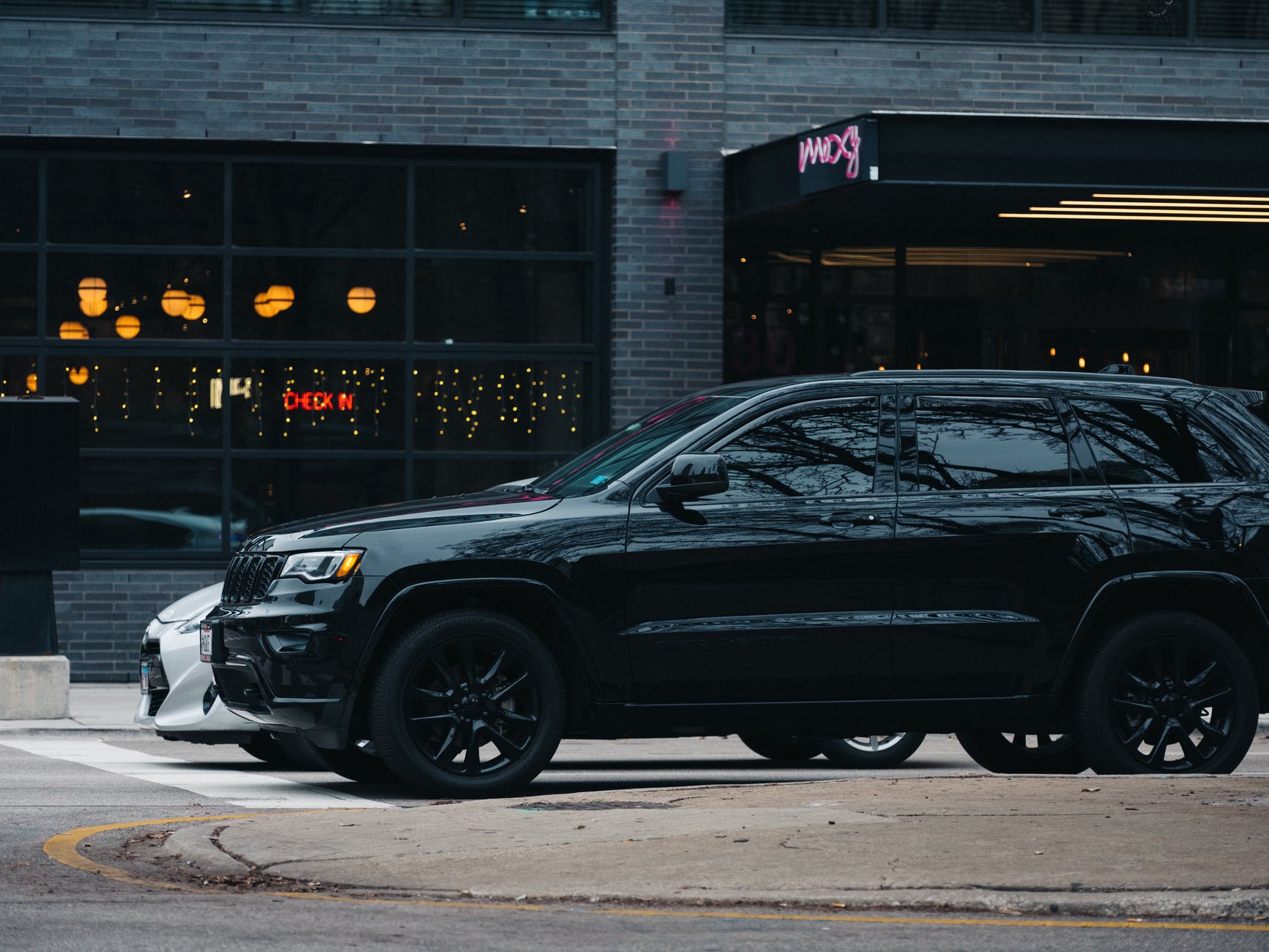
“Pickups represent a rugged sense of individualism for many Americans. They are the very definition of America in that they are larger than life like America and can both work and play hard,” said Erich Merkle, U.S. Ford sales analyst.

This is both a concise and bold marketing statement: pickups are the American way of life! The statement ties to multiple big themes that run through American culture: individualism, larger than life, hard work and lots of play. And it is a vehicle that allows the owner to participate in the pervasive driving culture in the United States. And all this just for $35,000 to $50,000 for a new truck!

A truck, like many consumer goods, is not just about functionality but is also a statement about the owners and what they want to be. Buying smartphones, single-family homes, clothing, and more fall into the same process: marketing appeals to our want for what we own to match our personality and/or aspirations. A truck is not just a truck; it is a statement about the driver. It says, “I eat a Prius for lunch” or “I need to do important projects” or “I have the resources to buy a new truck” (among other possible messages).

Then I am reminded that it is just a pickup truck. Vehicles are necessary in many American communities in order to get from Point A to Point B. But, many vehicles may work in order to accomplish regular tasks. If the primary vehicle use is for commuting to work or regular errands such as buying groceries or dropping off and picking up kids, a truck is probably not needed. Some people need trucks for regularly hauling items or for work.

For now, this match between pickups and the American Dream “works.” There are numerous other products that would wish to tie themselves as closely as pickup trucks to the base values of the American Dream. It may not be this way in several decades; perhaps the rugged individualism and freedom will be attached to fleets of electric vehicles that are at everyone’s beck and call. Until something changes, expect to continue to see the marketing pitch that pickups equal the American way of life.

A brief history of the Sunday drive

With Illinois residents asked to shelter in place, architecture critic Blair Kamin suggests the Sunday drive could be revived – and provides a brief history of the practice:

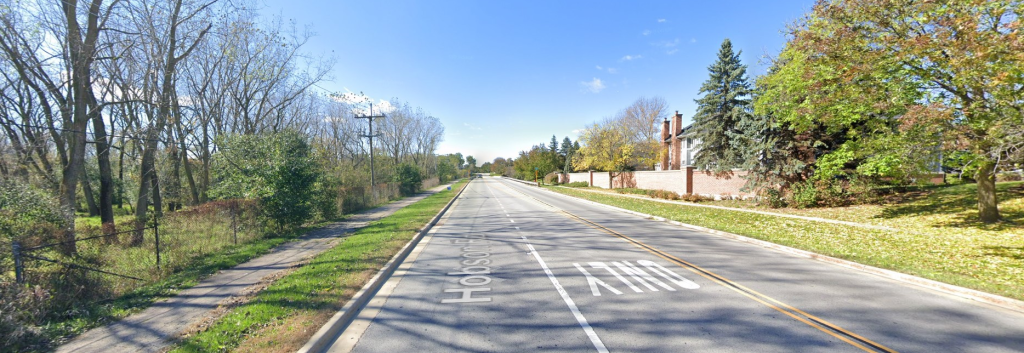
Building on the precedent of the high society horse-drawn carriages that rolled down elegant boulevards in the late 19th century, the Sunday Drive is thought to have originated in the 1920s — just a few years after the great influenza epidemic of 1918 that killed at least 50 million people worldwide…

Henry Ford, whose mass production methods made cars available to millions, is said to have supported the Sunday Drive because it helped to sell cars…

The popularity of the Sunday Drive reached its apex in the 1950s and 1960s, when cars were still associated with personal freedom, not air pollution or suburban sprawl.

But something changed in the 1970s. Perhaps it was rising gas prices or a heightened environmental consciousness. Or maybe, some urban planners think, suburban sprawl was blurring the once-clear boundary between town and country. Where once there were farm fields and expanses of nature, now there were strip malls and traffic-jammed arterial roads. That made the Sunday Drive a lot less alluring.

This impulse is not foreign to Americans today. Driving is romanticized in many ways, from the celebration of road trips to marketing for cars which shows happy drivers moving through alluring landscapes to ordering social life in the suburbs around the need to drive. At the same time, as Kamin notes, driving is a humdrum activity much of the time. The car commercials that show people cruising down empty roads in the middle of the day do not match everyday experiences.

I also wonder about the connections between Sunday drives and other activities. For example, take organized religion. The classic sociological study Middletown describes the changes in a small city with the introduction of cars, including some residents who shifted from going to church on Sundays to taking recreational drives with family. The car offered an escape from the typical way of life. As a more recent example, data suggests younger people are less interested in getting their driver’s licenses. Why would you want to go for a leisurely drive when a smartphone or tablet or laptop offers access to what information and destinations you want?

Less traffic, faster driving

Reports suggest more drivers are going fast on emptier roads:

Despite there being far fewer vehicles on the road due to COVID-19 stay-at-home orders, state highway safety officials across the country are seeing a severe spike in speeding. Many states have reported alarming speed increases, with some noting a significant surge in vehicles clocked at 100 mph or more.

Being a safe driver should always be a priority, but during the coronavirus pandemic, traffic safety experts at the Governors Highway Safety Association (GHSA) say it is more important than ever. “While COVID-19 is clearly our national priority, our traffic safety laws cannot be ignored,” said GHSA Executive Director Jonathan Adkins. “Law enforcement officials have the same mission as health care providers — to save lives. If you must drive, buckle up, follow the posted speed limit and look out for pedestrians and bicyclists. Emergency rooms in many areas of the country are at capacity, and the last thing they need is additional strain from traffic crash victims.”

During the past month, pedestrian and bicycle traffic are reported to have increased exponentially, while motor vehicle traffic is down. Adkins noted that GHSA is encouraged to see so many communities across the country making roadways more accessible to pedestrians and bicyclists. To keep roads safe for everyone, traffic safety officials nationwide are pleading with motorists to slow down and respect traffic safety laws…

A 2019 report on speeding by GHSA, “Speeding Away from Zero: Rethinking a Forgotten Traffic Safety Challenge,” highlights excessive vehicle speed as a persistent factor in nearly one-third of all motor vehicle-related fatalities, while a 2020 GHSA report on pedestrian fatalities, published in February, finds that pedestrians now account for 17% of all traffic-related fatalities.

In many metropolitan regions, traffic is pretty constant throughout the day. COVID-19 has reduced the number of daily work trips plus some of the other reasons for cars and trucks on the road.

With more open road, perhaps it is “natural” for drivers to feel they can go faster. I am reminded of the argument by New Urbanists that narrower roads lined with parked cars and trees close to the street push drivers to slow down. The illusion is that with fewer potential obstacles on the road, a driver can be safe even while going faster. Of course, going faster reduces the time drivers have to correct and avoid things in their path.

It would be interesting to note how much local police forces are responding to speeders now. Is it worth stopping them if there is a risk of transmitting COVID-19? Are police resources needed more elsewhere? At this point, what other options do officials have in reducing speeds on less crowded roads?

Mapping daily life amidst COVID-19

I like the Citylab project of asking readers to submit their maps life during COVID-19. A few thoughts:

1. COVID-19 affects multiple dimensions of social life, including the distance people must keep from each other (and social interactions). The maps help highlight the spatial dimensions of COVID-19, reminding us of the relatively free mobility many people have during normal times (think regular commutes, a sprawling country often based on driving a car to different locations). The maps also highlight the difficulties or significant changes because of reduced mobility. On one hand, we have more technology than ever that lets us access people and places wherever all the time. On the other hand, not being able to move as we typically do is worth acknowledging.

2. It can be both fun and informative to ask people to draw their daily activities or their community. It pushes people to think spatially (which they may or may not do on a regular basis) and can quickly show what places they find more meaningful. Asking about someone’s day often leads to a list of activities or tasks; the map can include this information but add a valuable spatial dimension.

3. As a bonus, such maps not only provide information but they also allow people to display their creativity. This is clear in the Citylab maps: the contrasts of color, styles, and interpretations is engaging. Compared to more common methods of data collection like surveys or interviews, drawing a map provides a worthwhile contrast.

4. Perhaps reduced mobility will push more Americans to know their immediate surroundings in and around their residences. Instead of passing many places while driving, current circumstances may push more people to pass places at walking or bicycling speed. I know I see my neighborhood differently through regular walks; perhaps other will have similar experiences.


.

Subways and individual cars during COVID-19

A new study suggests New York City’s subway system helped spread COVID-19:

The paper, by MIT economics professor and physician Jeffrey Harris, points to a parallel between high ridership “and the rapid, exponential surge in infections” in the first two weeks of March — when the subways were still packed with up to 5 million riders per day — as well as between turnstile entries and virus hotspots.

“New York City’s multitentacled subway system was a major disseminator — if not the principal transmission vehicle — of coronavirus infection during the initial takeoff of the massive epidemic,” argues Harris, who works as a physician in Massachusetts.

While the study concedes that the data “cannot by itself answer question of causation,” Harris says the conditions of a typical subway car or bus match up with the current understanding of how the virus spreads…

“Social density … was a result of many factors — business, restaurants, bars, Madison Square Garden, sports arenas, concerts, and the things that make New York happen,” Foye said.

New York City is already unique with its level of mass transit use. The large subway system helps people move around in a crowded city where both parking and driving a car can prove difficult.

The contrast to New York City is sprawling suburbia (including within the New York City region – see Levittown). Americans love to drive and the suburbs are built around cars, driving, and covering relatively large distances on a daily basis within a private vehicle.

With Americans already predisposed toward driving if they can, will COVID-19 increase their reluctance to take mass transit? Is driving safer in these times? (Of course, one could look at the number of deaths related to cars – accidents, pedestrians – and argue otherwise.)

New York City is not the only city dependent on subways; numerous large cities around the world need subways to move large numbers of people. Perhaps there will be new health measures in subways and other forms of mass transit moving forward. But, without fundamentally altering such cities and the benefits that come with density, subways cannot be removed or limited on a long-term basis – can they?

A way to fight app directed through traffic: cul-de-sacs

The suburbs are full of of cul-de-sacs. Homeowners might prefer them because of the quiet and the space that they allow for kids and vehicles. They can help developers and builders fit more houses into spaces.

At the same time, cul-de-sacs may be the bane of New Urbanism as neighborhoods with many of them do not have a consistent street grid and they are primarily lined by private single-family homes. One video promoting New Urbanism put it this way: The greatest threat to our planet is…

CuldeSacsfromBuilttoLast

Yet, cul-de-sacs do provide one additional advantage in today’s world. They can limit the effectiveness of Waze and other traffic or mapping apps: cars and traffic cannot cut through cul-de-sacs. I saw this argument recently in a 2001 newspaper article where a suburban leader said they had restricted commercial development to main roads and highways and the high percentage cul-de-sacs and loops among the residential roads kept neighborhoods quiet. With more cul-de-sacs, more traffic is routed to arterial roads, streets that can usually accommodate more volume. Cul-de-sacs help make residential neighborhoods harder to navigate; I can think of several residential neighborhoods in my area that make it very difficult to find your way through if you are not familiar with it because of the winding roads and dead ends.

New Urbanists would argue that this is not ideal: more cars on arterial roads is going to lead to more congestion (as opposed to a grid system that provides drivers lots of options), arterial roads may be less friendly to pedestrians and bicyclists, and we should be working to reduce driving anyhow rather than planning communities around cul-de-sacs that depend on cars.

Speed bumps, roadside speed monitors, and other devices might not be enough to stop through traffic in residential neighborhoods. Permanent cul-de-sacs could do the trick – but at a cost to the overall fabric of the neighborhood and community.

Imagining tipping points for when Americans will not be hesitant about getting into a self-driving vehicle

A recent survey from AAA suggests Americans are not ready for self-driving vehicles:

The survey shows only 1 in 10 drivers say they would trust riding in a self-driving car, and 28% say they don’t know how they feel about the technology.

According to AAA, trust in automated vehicles can improve with more tangible information on key issues, as well as quality education and experience.

For instance, six in 10 Americans say they would like to have a clear understanding of who is legally responsible in a crash with a self-driving vehicle.

Seven in 10 Americans said they would feel safer riding in a self-driving vehicle if they had the ability to take over control is something goes wrong.

There are a few different issues to address here. Addressing just one, such as who is legally responsible, might not be enough to get people into a vehicle.

I wonder what the tipping point will be on this. Several scenarios could present themselves:

1. A government ruling or edict that makes self-driving cars more attractive. Imagine a guideline that 20% of vehicles must be self-driving in five years.

2. A company that does not make these vehicles invests heavily in them. Think a ride sharing or rental car company goes all in with a fleet of vehicles.

3. Trucking companies switch over to self-driving trucks to cut costs. Would Americans be okay with a self-driving cars if trucks are already doing this (and the alternative might be higher prices for delivered goods)?

4. There is a cool self-driving vehicle that just catches everyone’s attention. Tesla seems to capture attention but does not have a fully-functional self-driving feature yet.

5. There is a significant safety issue that arises with regular vehicles or driving is soon seen as a significant health issue. Perhaps at some point Americans will get fed up with the 30,000+ deaths a year in car accidents. (Could be connected to #1.)

Given the concerns people have, it is hard to know when self-driving vehicles will become a significant presence on the road. 2030? A number of things will need to come together for fears to subside.

Trying to convince Illinois drivers to use zipper merges

New recommendations from the Illinois Department of Transportation mean drivers should expect to see more zipper merges:

Most people aren’t familiar with the zipper merge and have never even heard of it. But with construction season just a couple months away, the Illinois Department of Transportation wants drivers to use the zipper merge technique when approaching lane closures…

Experts believe that is the quickest way to get through construction sites and entrances on highways during busy season.

So much so that a new law for 2020 mandates the zipper merge be included in this year’s Illinois Rules of the Road handbook, following many other states that already use the technique like Minnesota, Missouri, North Carolina, Montana and Nevada, to name a few…

Not only is the zipper merge a safer and more efficient way to merge into traffic, it’s the law and carries a $164 fine, not including court costs and fees.

Changing decades of ingrained patterns is not an easy task. New drivers can be trained on this from the start but many drivers have been operating with different methods for decades. However, I would guess the presence of police and the use of tickets in situations where zipper merges will now be expected could help prompt people to follow the new guidelines. Or, imagine a campaign on public media where drivers who do not follow the guidelines are highlighted.

The one thing I do not get about resistance to zipper merges and the drivers who look to block traffic is that it is inefficient to not follow the zipper merge. Theoretically, everyone wants to to get where they need to go as quickly as possible. Hence, rampant speeding and other behavior intended to save time. Zipper merges are supposed to help with this which should be a win-win for everyone.

A nation beholden to cars: a record number of pedestrians die in US in 2019

A new report highlights the dangers to pedestrians in the United States:

Based on data from the first six months of 2019, the Governors Highway Safety Association predicts there were 6,590 pedestrian deaths that year, which would be a 5 percent increase over the 6,227 pedestrian deaths in 2018.

The 2019 figure is the highest number of such deaths in more than 30 years, according to the association…

While there’s been a significant increase in pedestrian deaths over the past decade, the number of all other traffic deaths increased by only 2 percent…

“Following 30 years of declining pedestrian fatalities, there has been a complete reversal of progress,” Retting said in the release. “Pedestrians are at an inherent disadvantage in collisions, and we must continue to take a broad approach to pedestrian safety.”

While there are particular aspects of driving and pedestrian behavior that could be debated and addressed, there is a larger point that can be made with such data: the priority on American roadways goes to vehicles. This has been the case for decades and will continue to be the case for years to come. While efforts to make streets more amenable to walkers and bikers, these efforts are often limited to only a few areas. The goal of roadways in many places, included dense, populated areas, is to move as many vehicles as quickly as possible to where drivers want to go.  Tackling specific issues may help reduce the number of deaths but still leave the larger problem: Americans like cars and driving and our lives are often organized around driving.

More major American cities closing major roads to cars

San Francisco recently moved to restrict vehicles on Market Street, following actions and plans in other major cities:

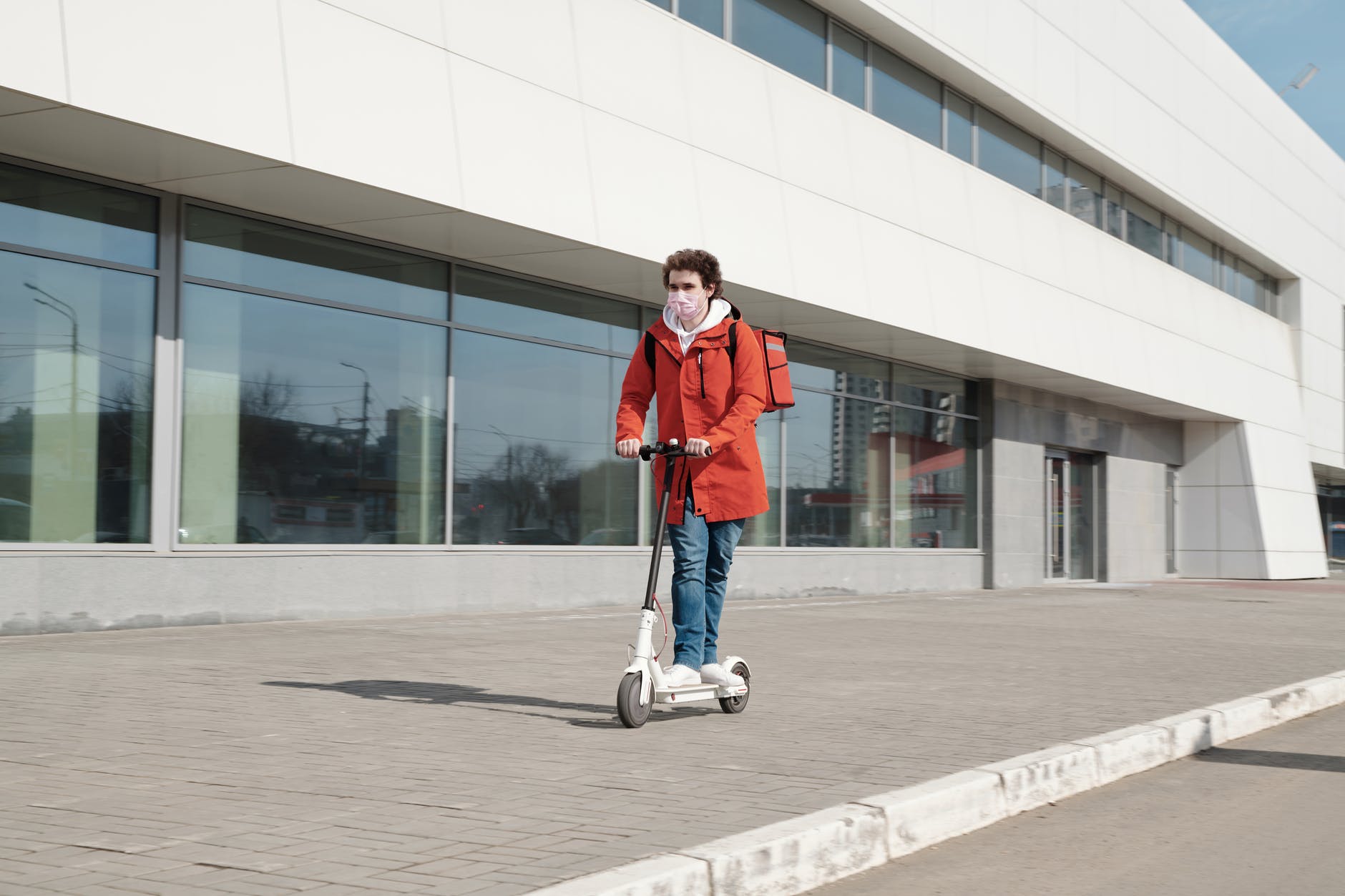
A few weeks ago, there was a dramatic shift when San Francisco banned private cars on the busiest section of Market Street. Suddenly most automobiles were gone — Ubers, Lyfts, and tourists in rental cars banished. Historic streetcars and electric trolley buses glided along. Cyclists and electric scooter-riding commuters celebrated their new freedom…

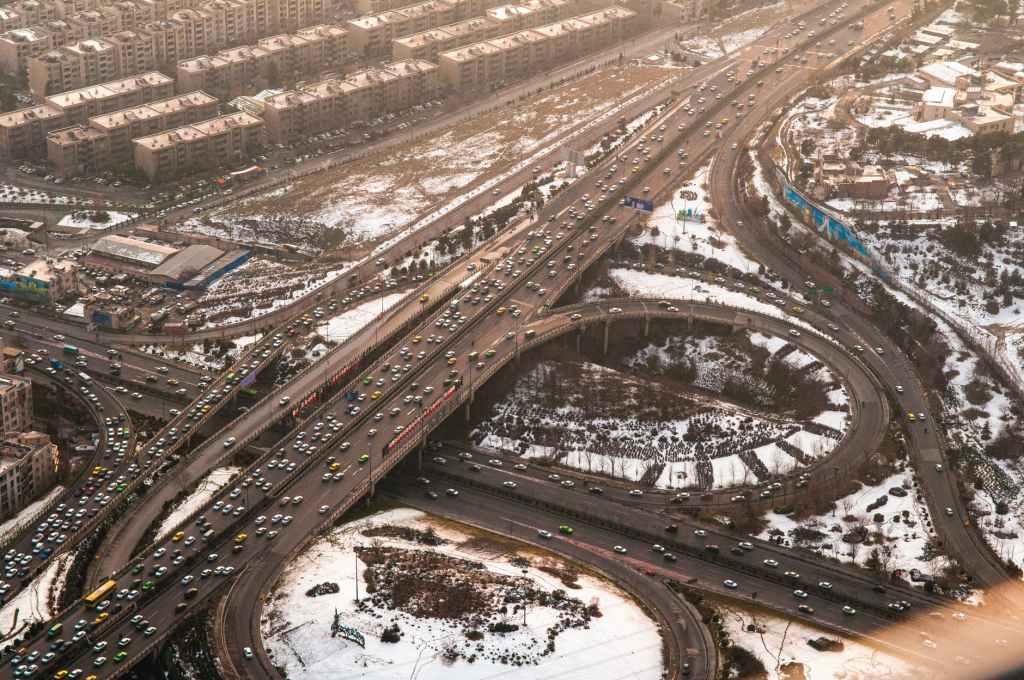
Alarmed by rising traffic deaths and painful gridlock on downtown streets, New York City, Seattle, Denver, Minneapolis, Toronto and other cities have instituted restrictions — forcing vehicles to share fewer lanes, ending curbside parking during rush hour or banning virtually all cars from signature boulevards in favor of mass transit.

Los Angeles is considering its own bold step: dramatically reducing the number of lanes for traffic along Hollywood Boulevard…

City officials nationwide talk of “Vision Zero,” a goal of eliminating all traffic deaths, and “complete streets,” which value safety not only for cars but pedestrians, cyclists and transit riders.

This is a small shift away from prioritizing vehicular traffic over other uses for streets, including pedestrians, bicyclists, mass transit, and street life. Closing major streets to vehicles, even for just part of the day, signals that cars and trucks should not necessarily have priority.

Yet, even with these changes, significant challenges are still ahead:

1. Such closures can help make these streets more attractive to other users. However, does it deal with the issue of driving more broadly? Making moves such as this without adding mass transit options throughout the region or discouraging driving in other ways may not do much beyond make particular streets better off. Hopefully, these road closures are part of comprehensive plans to address driving and congestion in the big picture.

2. Once there are fewer cars, how can the city return the roadways and sidewalks to a more pedestrian and social scale? Take Market Street. It is a wide roadway. It is lined with tall buildings. Retailers have struggled to stay in business. Simply reducing traffic does not necessarily turn it into a lively streetscape.

3. It is worth watching how these closures affect traffic elsewhere. Generally, going on road diets should help reduce car usage. If people cannot drive down Market, will they clog up other roads or switch to other forms of transit? San Francisco and the other major cities cited above are all known for traffic and congestion; what if more traffic moves to residential areas? While they are not an organized force, the thousands of drivers each day in major cities can make their voices heard in various ways (and know ride-sharing companies can represent some of that population).