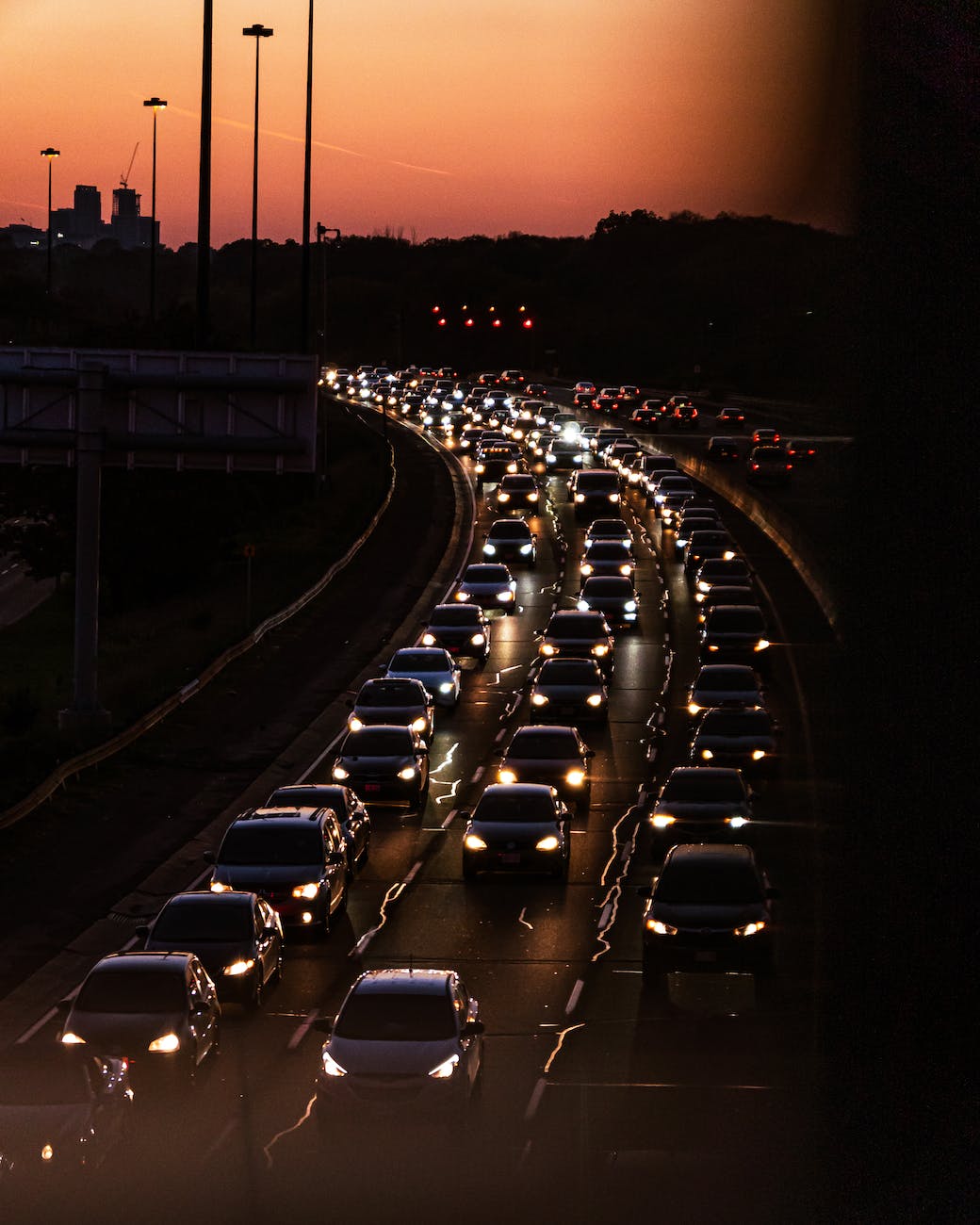
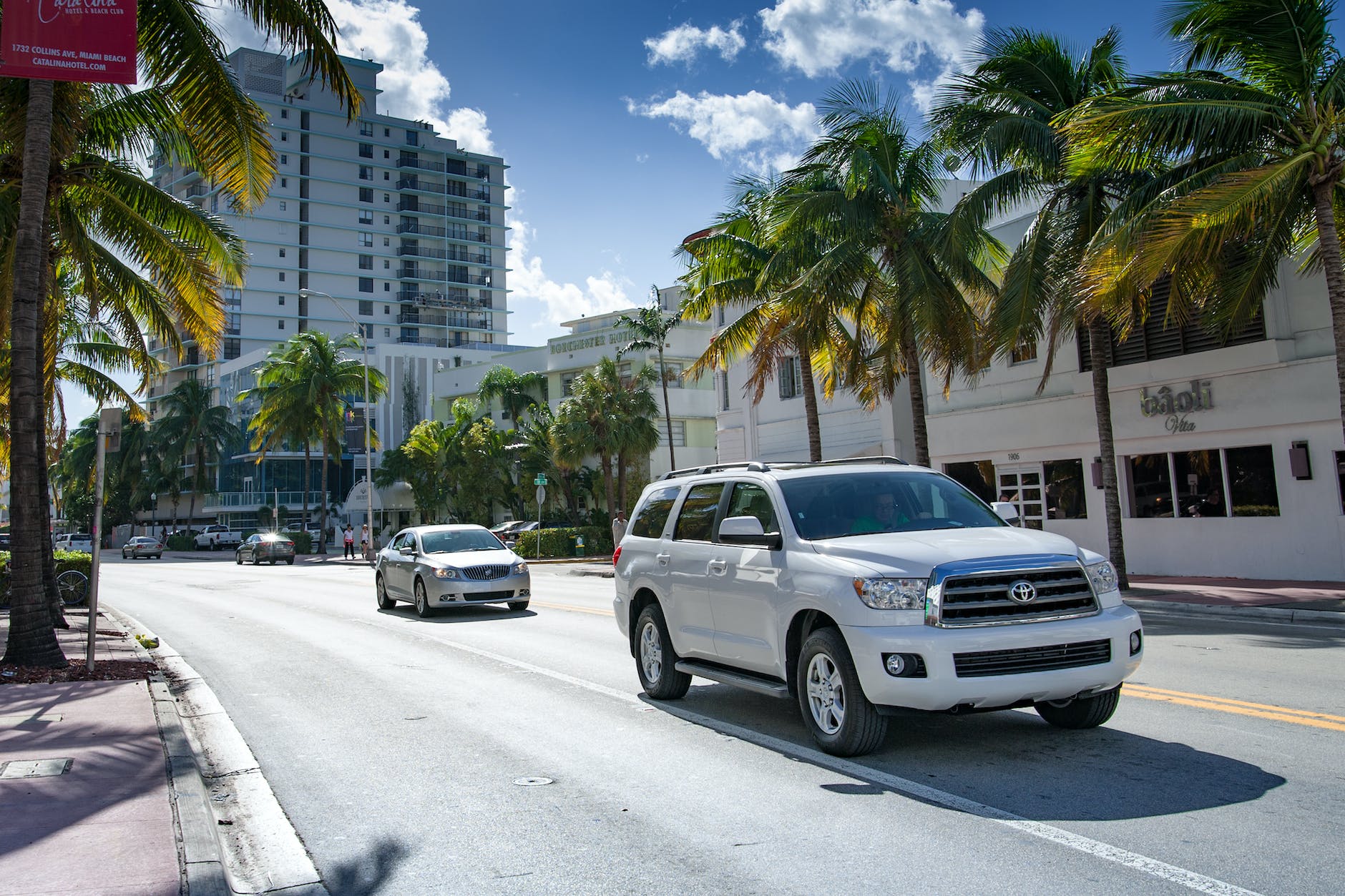
In recently driving in and around several big cities, I was struck by what I could (and could not) see. I certainly observed a lot of motor vehicles on highways and roads.
It is long evident that Americans prioritize cars and trucks on their roads. There might be room for some pedestrians (be safe!), mass transit, and bicyclists and scooter users but these are not as numerous as all of the cars and trucks.
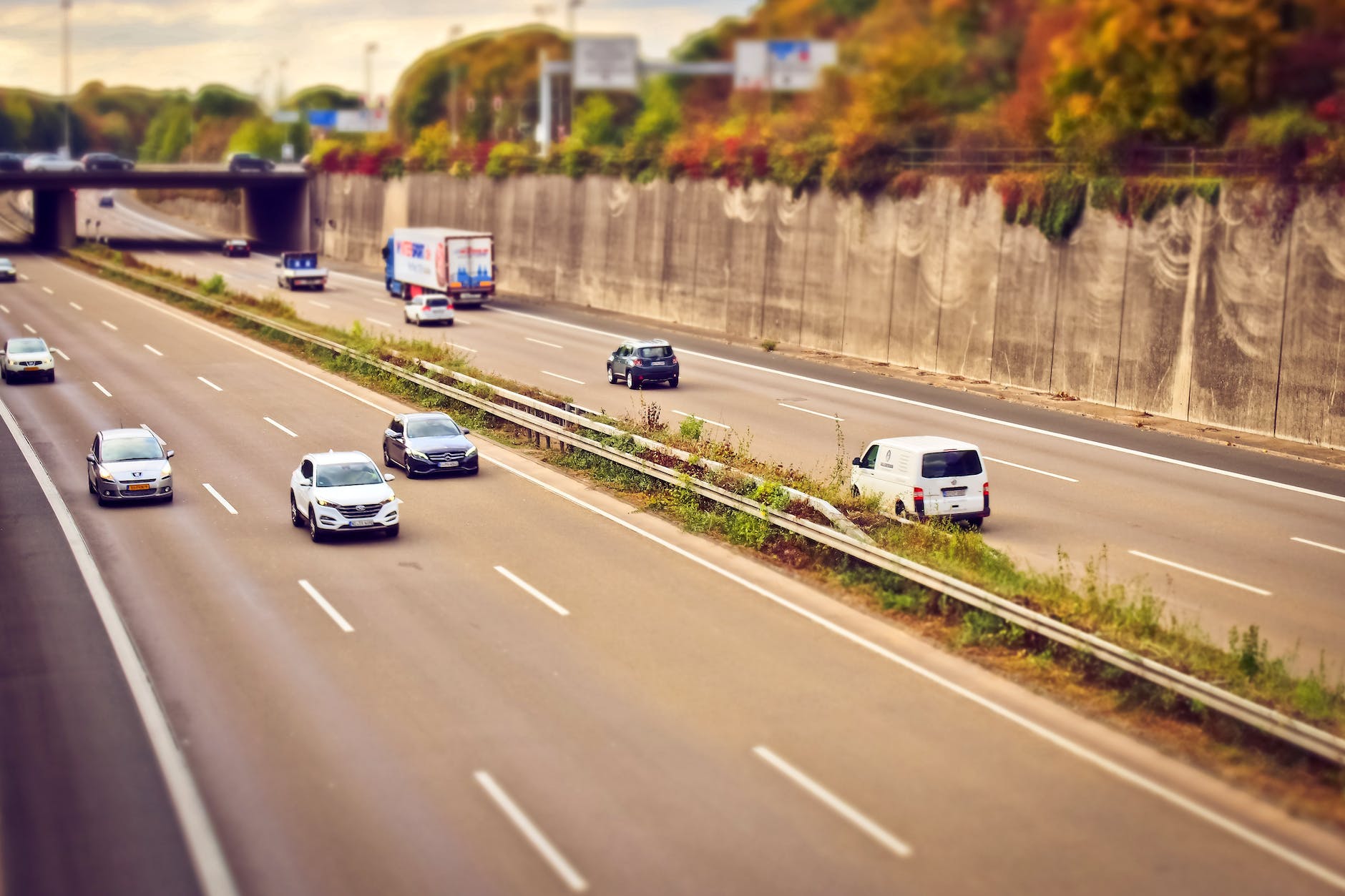
The range of vehicles really does run the gamut. On the same major roads, one can find all sorts of trucks (delivery trucks, dump trucks, tankers, car carriers, etc.) and cars ranging from expensive luxury models to those who look pieced together to newer electric vehicles. If I wanted to see what Americans are driving for personal and business trips, I would recommend driving some of the highways that go right through urban centers and one can observe a wide variety.
Even with at least some people working from home, there are plenty of vehicles at many hours of the day. For many residents and companies, it is easiest to go via vehicle than other option. Driving is still a preferred method, even in cities with busy roadways.
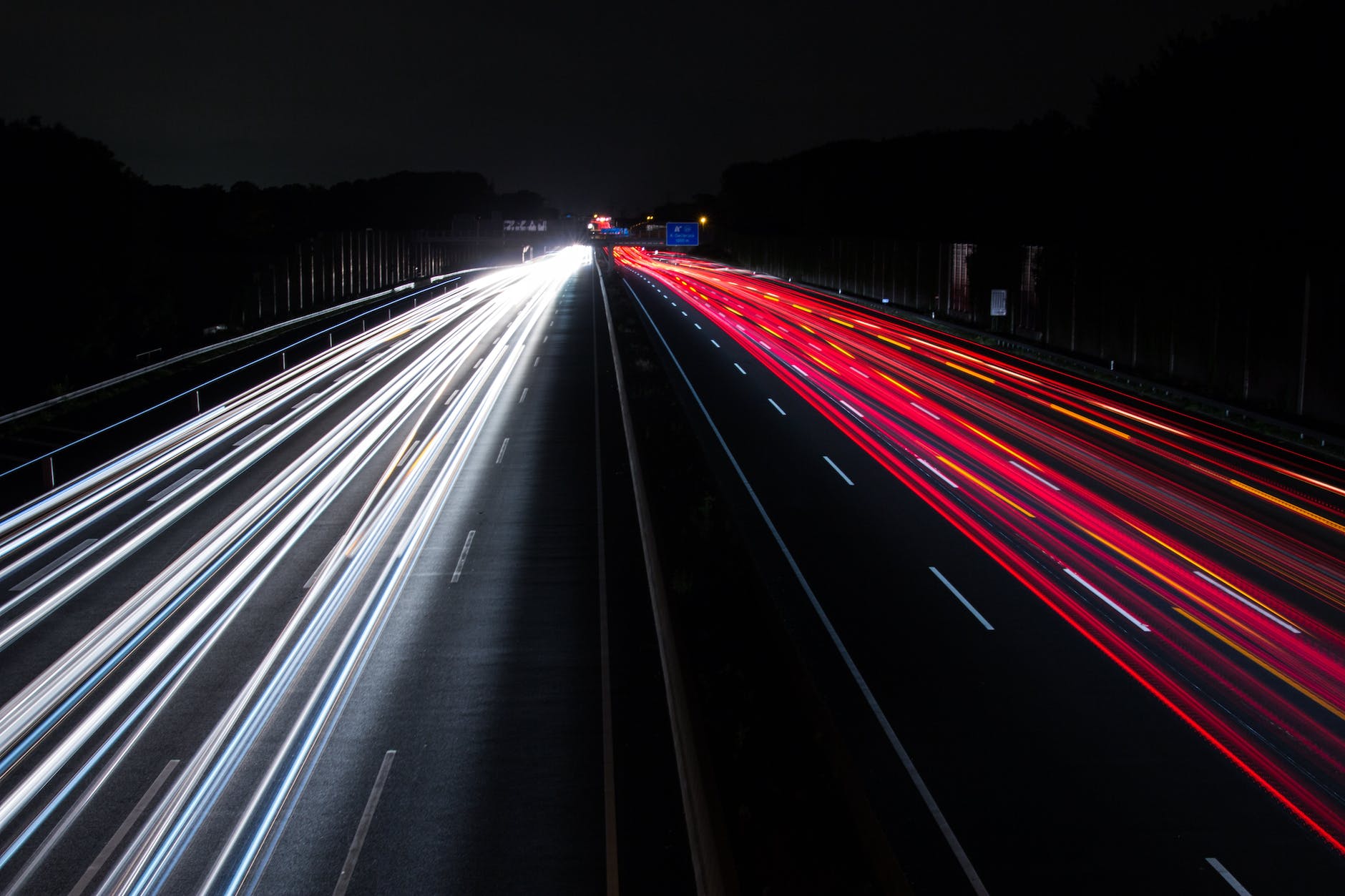
If a driver truly wanted to be safe and only focus on the road around them, there is plenty to see. On many of these busy roads, tens of thousands or even hundreds of thousands of vehicles might pass by each day.
Kansas City officials are now looking to repair some of the damage caused by the highway and reconnect the neighborhoods that surround it. To date, the city has received $5 million in funding from the Biden administration to help develop plans for potential changes, such as building overpasses that could improve pedestrian safety and better connect people to mass transit.
The funding is an example of the administration’s efforts to address racial disparities resulting from how the United States built physical infrastructure in past decades. The Transportation Department has awarded funding to dozens of projects under the goal of reconnecting communities, including $185 million in grants as part of a pilot program created by the $1 trillion bipartisan infrastructure law.
But the project in Kansas City also shows just how difficult and expensive it can be to reverse long-ago decisions to build highways that slashed through communities of color and split up neighborhoods. Many of the projects funded by the Biden administration would leave highways intact but seek to lessen the damage they have caused to surrounding areas. And even taking out a roadway is just a first step to reinvigorating a neighborhood.
“Once you wreck a community, putting it back together is much more work than just removing an interstate,” said Beth Osborne, who served as an acting assistant secretary at the Transportation Department during the Obama administration and is now the director of Transportation for America, an advocacy group.
In the name of fast travel between outlying areas and the city, such highways removed people and buildings, disrupted economic corridors, and created barriers between neighborhoods.
From the examples provided in this article, it sounds like this money will be used to try to reestablish streetscapes. Wide highways made it difficult for pedestrians to walk between places. Businesses had to rely on vehicle traffic. Decades after the highways were constructed, there may be relatively little activity on roadways near the highways.
Simply creating better paths over a major highway could be helpful. Removing a highway can also help, as evidenced by at least a few projects in American cities. But, there is a lot that goes into a streetscape. It takes time and resources to recreate thriving neighborhoods with multiple factors at play. Even then, vibrant sidewalks and streetscapes are relatively hard to find in American communities given the other priorities Americans emphasize.
Today Indigo operates 2,700 garages on three continents. But it’s here in Paris, where the company now manages more than a third of publicly accessible garage parking, that Indigo is beginning to develop a new underground commercial ecosystem. There are car repair shops, car rental offices, and click-and-collect lockers from Amazon. Larger-scale ventures the company is pioneering for lower levels include storage facilities and data centers. One private, non-Indigo garage has even been turned into a farm for mushrooms and endives.
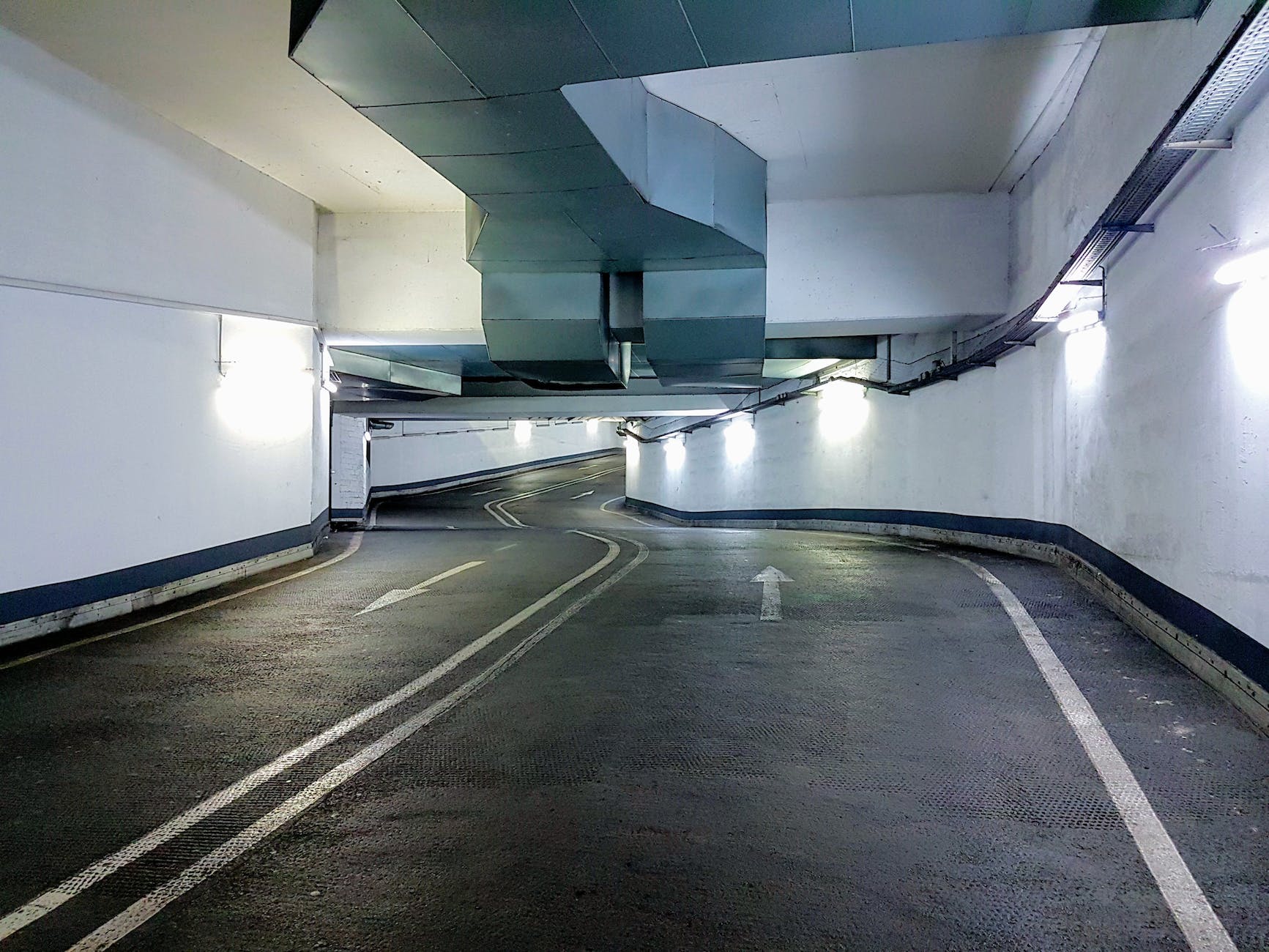
Retrofitting parking is complicated, said Arnaud Viardin, Indigo’s director of partnerships. Counterintuitively, garage floors have less load-bearing capacity than homes or offices. Garages also have very low ceilings, threaded with beams and utility conduits that can limit adaptive reuse: It’s hard to market a storage facility that’s not accessible by box truck. Energy-intensive vehicle chargers require drilling through concrete to lay new electrical cables, and just about anything you do demands a time-consuming review with the Fire Department. Rarely do these new leases pay more than a constant stream of drivers charged hourly parking rates. But they pay more than an empty parking garage.
Indigo’s underground real estate has few competitors. Hundreds of thousands of square feet are now dedicated to alternative uses across France, mostly in Paris. “Finding real estate under Place Vendôme, under Place Dauphine?” Fraisse put it to me, pointing to two of the capital’s ritziest addresses. “We’re capable of proposing square footage at prices that have nothing to do with what you’ll find aboveground. Ten, 20, 50 times cheaper.”…
For logistics clients, the value of Indigo’s space is hard to beat. MonMarché is a spinoff of a larger French grocery chain, Grand Frais, whose stores are suburban big boxes with ample parking. “We had to find another solution for the Parisian market, which is the biggest,” said Demond, slicing open the packing tape on a Styrofoam box of durian, the odoriferous East Asian fruit. “The cost of real estate is so high.”
Cities have gone underground for numerous reasons: space above ground is limited, certain land uses are less desirable, underground uses can be more efficient. Putting cars underground made a lot of sense in previous decades when there was a lot of traffic and parking aboveground takes up a lot of space.
How far can underground redevelopment of parking garages go? Would people be willing to spend long amounts of time in such spaces if they were adapted for commercial, office, or residential use?
If these underground spaces become desirable opportunities, how high might rents and resale values go?
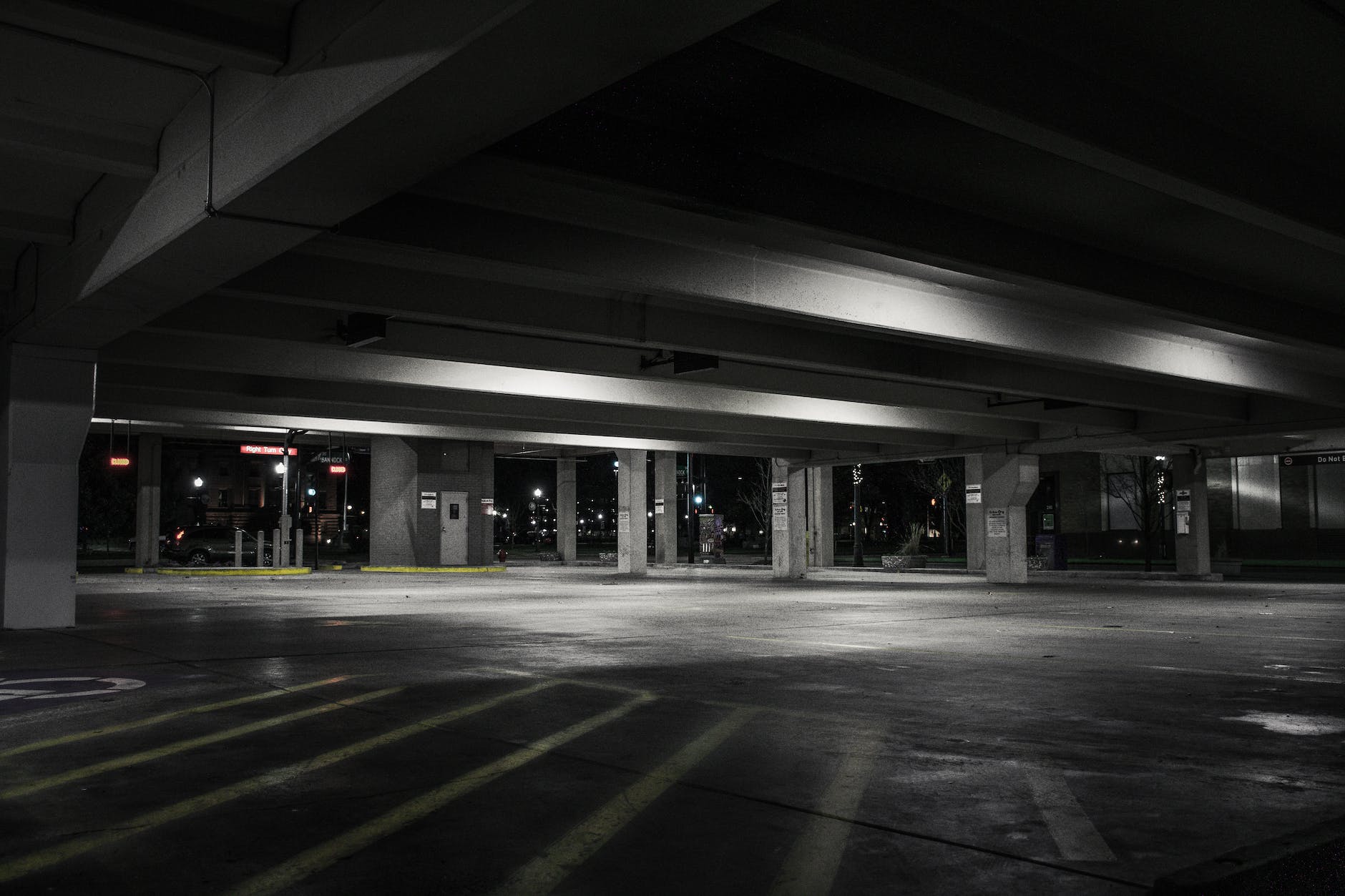
The United States has about two billion parking spots, according to some estimates — nearly seven for every car. In some cities, as much as 14 percent of land area is covered with the black asphalt that engulfs malls, apartment buildings and commercial strips.
Increased density would help solve this problem without necessarily asking for people to drive less. Put desirable locations near each other and then centralize parking or share parking facilities so that parking is not unnecessarily duplicated. If “surban” developments are more popular or “fifteen minutes cities” emerge in greater numbers, perhaps this might help.
Less driving could also help. As could expectations about how much parking is needed; it is for peak and unusual times that rarely occur?
If enough places and concerned actors are able to slow the growth of parking lots and/or eliminate some, it is interesting to imagine communities with fewer parking spaces in the future. How might such land be positively used?
Gen Zers point to many reasons they are turning their backs on cars: anxiety, finances, environmental concern.Many members of Gen Z say they haven’t gotten licensed because they’re afraid of getting into accidents — or of driving itself. Madison Morgan, a 23-year-old from Kennewick, Wash., had multiple high school classmates pass away in driving accidents. Those memories loomed over her whenever she was behind the wheel…
Others point to driving’s high cost. Car insurance has skyrocketed in price in recent years, increasing nearly 14 percent between 2022 and 2023. (The average American now spends around 3 percent of their yearly income on car insurance.) Used and new car prices have also soared in the last few years, thanks to a combination of supply chain disruptions and high inflation…
E-scooters, e-bikes and ride-sharing also provideGen Zers optionsthat weren’t available to earlier generations. (Half of ride-sharing users are between the ages of 18 and 29, according to a poll from 2019.) And Gen Zers have the ability to do things online — hang out with friends, take classes, play games — which used to be available only in person…
But, he added, data has shown that U.S. car culture isn’t as strong as it once was. “Up through the baby boom generation, every generation drove more than the last,” Dutzik said. Forecasters expected that trend to continue, with driving continuing to skyrocket well into the 2030s. “But what we saw with millennials, I think very clearly, is that trend stopped,” Dutzik said.
Is less need for driving causing this or is driving viewed as less enjoyable and even reprehensible (climate change concerns)?
While per capita driving has plateaued, have other driving activities increased driving and traffic? For example, the number of deliveries from Amazon and similar companies did not exist in the same way nor did ride-sharing. Younger adults are driving less than older Americans but the world today depends on driving more than ever?
The last paragraph of the article emphasizes how planning could change based on less interest for driving. It would be interesting to see how planners and others work with both populations – younger Americans who do not drive as much and older Americans who drive a lot – to reach possible solutions.
When I set out to study McMansions, I found regular reference to McMansions alongside SUVs. In the time period I examined, the New York Times put these two phenomena together 33 times. Both the homes and vehicles emerged in a similar time period, the end of the twentieth century, and embodied a consumption economy with a bigger is better mentality.
Looking from the vantage point of 2023, SUVs far exceeded McMansions. Even accounting for the differences in price and resources needed, can we declare the SUV the more successful cousin? This particular statistic helped me come to this conclusion:
The best counter-argument I can imagine would go like this: do bigger vehicles and more driving enable McMansions or does a love of single-family homes fuel driving SUVs? Americans like big houses and this encouraged more big vehicles to travel to and from these hours.
However, the sheer number of SUVs is hard to overcome. Millions upon millions. How many McMansions are there? Plenty, but they are clustered in particular places. The SUVs are everywhere and not fading anytime soon.
There’s a name for the principle behind that apparent paradox: induced demand. Economist Anthony Downs is often credited with first articulating this “iron law of congestion” in 1962, as construction crews were hacking interstates through American cities. Downs published a seminal paper with a stark warning: “On urban commuter expressways, peak-hour traffic congestion rises to meet maximum capacity.” In other words, adding lanes won’t cure snarled traffic; the additional car space inevitably invites more trips, until gridlock is as bad as ever.
Downs was not the first to sound an alarm about the futility of expanding urban roadways — not by a long shot. In 1932, an association representing streetcars warned that “as fast as improvements are made in existing arteries of travel … they are saturated by an increasing volume of traffic.” In 1955, urban observer Lewis Mumford wrote a series of essays in the New Yorker titled “The Roaring Traffic’s Boom,” in which he memorably compared a highway planner widening a congested highway to “the tailor’s remedy for obesity — letting out the seams of trousers and loosening the belt. [T]his does nothing to curb the greedy appetites that have caused the fat to accumulate.”
Downs’ iron law applies not only to U.S. cities, which have grown more traffic-jammed despite billions of dollars in fresh pavement, but also to those around the world. Highway expansions in Norway and Britain haven’t reduced congestion there, either. The principle now meets little opposition among economists and urban planners. “It’s widely accepted,” says John Caskey, who teaches induced demand as part of his urban economics course at Swarthmore College. “For economists interested in urban transportation, there isn’t really any debate.”…
But turning down a new highway lane remains politically challenging. “The highway construction system has vast momentum,” says Rose, the historian. “It has the authority of highway contractors, builders and labor unions. Here is something that labor and management really can agree on: a highway contract.” The auto industry, too, continues to benefit from ongoing investments that expand the “floor space” allotted to its products. In 2019, Tesla CEO Elon Musk tweeted that induced demand “is one of the most irrational theories I’ve ever heard.”
Build it and they will come.
As I read through the longer narrative in this article, it seems that the needs of the automobile were prioritized by drivers, businesses, those in the road industry, and politicians. This has been going on for roughly a century; would academic theories with evidence behind them be able to overcome these interests?
Perhaps at some point in the future, we will able to look back at “peak road” or “peak highway.” Is there a point where new roads and highways or lanes are no longer pursued in the United States? Even if population growth stagnated or slowed, would the United States continue to build roadways? Maybe the costs of maintaining all those roadways will help lead to this moment. It is hard to imagine other scenarios; even as fewer people drive to work compared to earlier years, traffic continues.
“If the earth was really a globe, the Chicago skyline from Indiana would be hidden by 1,473 ft. of Earth Curve,” reads the text included in one such Nov. 6 Instagram post (direct link, archive link). The post, which garnered more than 2,000 likes in one week, includes an image of the Chicago skyline taken from across Lake Michigan at the Indiana Dunes State Park.
But the claim is false.
Scientists say the photo actually proves that the Earth is indeed curved. While the buildings in the Chicago skyline are visible in the photo, parts of the buildings are obscured by the curve in the Earth. A simple trigonometric equation confirms that the buildings of the Chicago skyline are indeed visible from the Indiana Dunes State Park, where the image was taken…
“The image actually demonstrates that the Earth is round,” Oran said. “(The bottom) parts of the buildings are actually obscured because the Earth is curved.”
Oran noted the lower halves of the buildings are not visible in the photo. According to Oran’s calculations, roughly 500 feet of the bottom of the Willis Tower, the tallest building in Chicago, would not be visible based on the distance the picture was taken from.
While the flat earther phenomenon is interesting in itself, I am more interested here in how this is based on a unique view of the Chicago skyline. I know that seeing it from a different perspective can be disorienting or reveal new angles. Growing up, I mostly saw the skyline from the west coming into the city. In graduate school, I often saw the skyline from the south and southeast arriving from a different direction. I rarely see it from the north because I have little reason to come from that direction. And the view can be very different from an airplane depending on the approach or takeoff of a particular trip and the flight patterns for the day.
Would any of those views push me to conclude the earth is flat? No, but I have definitely noticed different buildings, different ways the sun or dark frames places, and how the city seems to be a different place when approaching from different directions.
I regularly drive by a single-family home that is located on a busy four lane road. Decades ago, this was a two lane road and traffic was lighter. Now, it is a road with a 50 MPH speed limit and many cars zooming daily between suburbs. In the morning, the school bus stops on the busy road to pick up kids from one house. Most of the housing in this area is located on streets that branch off this main road; this is common in suburban areas as residential neighborhood traffic is routed to arterial roads.
When looking for housing years ago, I remember seeing homes located on such roads. What might be the advantages and disadvantages of such properties?
Advantages:
-Quick access to a major road. Suburban subdivisions can be big and the roads winding. It can take minutes just to leave the neighborhood.
-A reduced price. If the road is busy and noisy, this may mean the property is cheaper than comparable houses and lots.
-A location along a known road.
Disadvantages:
-Noise. The sound of cars and trucks is constant.
-Safety. Many suburbanites might wonder whether kids can safely play.
-Lower property values in comparison to similar properties.
-Less parking. If you have lots of people over, is the driveway big enough for everyone?
I would guess many suburbanites would choose not to live on or even near such a major road if they can help it. At the same time, plenty of suburbs have houses located along busy and fast roads.
How often do you pull near another vehicle and take a quick look over? These days, you will often see a driver looking at their phone. Recognizing phone use while driving is relatively easy to spot: the driver’s head is tilted down, not looking at the road. There is a particular posture, as illustrated in the photo below:
This can occur while accelerating in leaving an intersection or driving at high speed down the highway. Many drivers appear unable to keep their eyes off their phone while their vehicle is in motion.
Perhaps this is just a sign of our era? Americans love driving and love smartphones. Even as deaths while driving increase, phone use continues. The acknowledgment of a public problem with phone use while driving from years ago seems to have faded away a bit.
From a driving norms perspective, is there a polite way to signal to another driver that you can see their phone use and request they pay attention to their safety and your safety?
From a social perspective, is the smartphone the new car in that we are willing to reorganize society around using smartphone use rather than fitting smartphones into our existing social order?





 Legally Sociable