America: attend a festival and end with an 8 hour traffic jam

Live by the car, get stuck in traffic with the car:

Photo by Miguel Barrera on Pexels.com

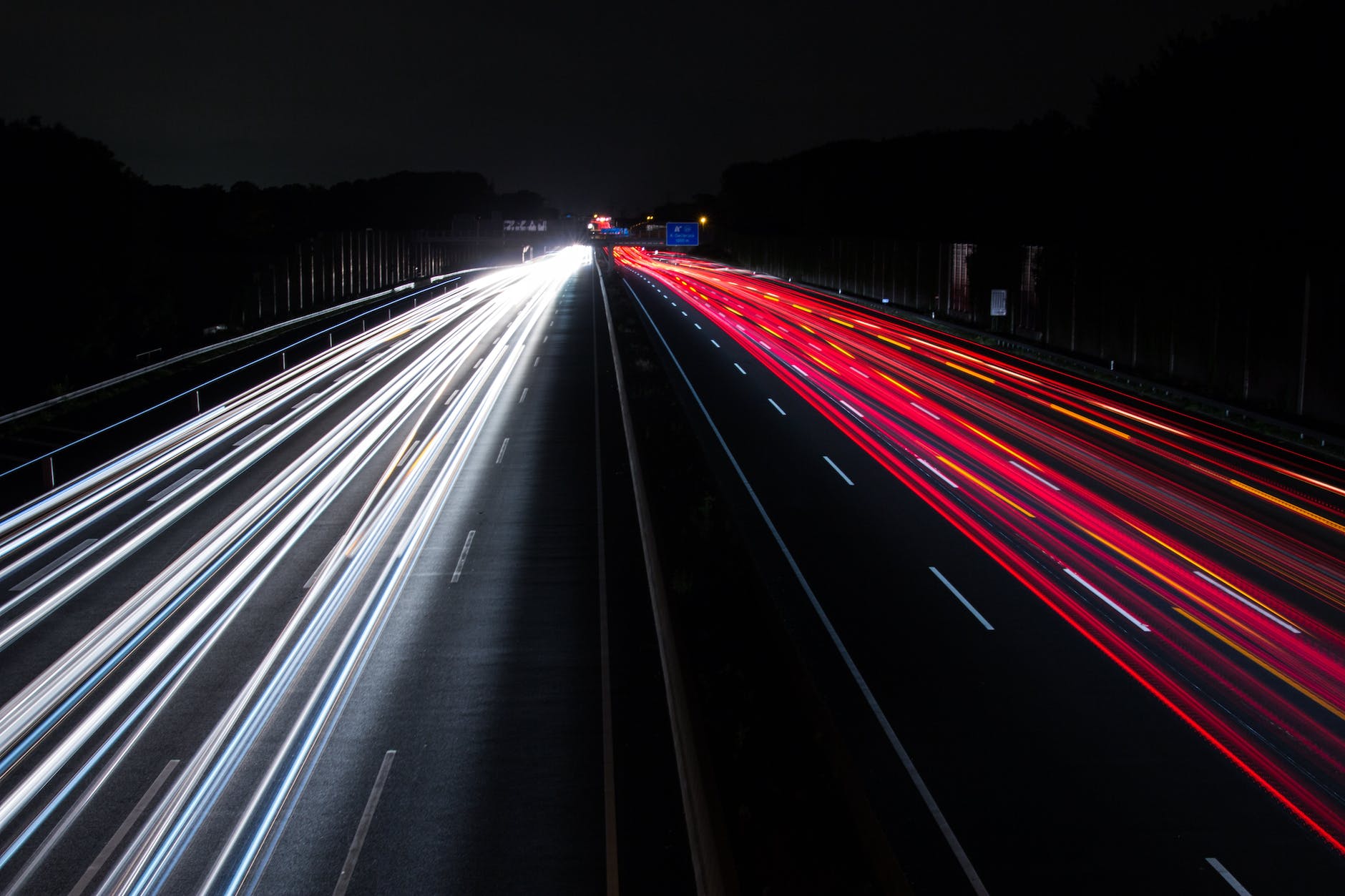
The first Burning Man festival after three years of COVID pandemic delays ended rather unceremoniously as exhausted revelers endured an apocalyptic eight-hour traffic jam in the sweltering desert to leave the site. Twitter posts depicting the post-revelry congestion — and a bizarre “Thunderdome”-style fight — are going viral online.

“Exodus wait time is currently around 8 hours,” Burning Man’s official travel account confirmed regarding the bash, which saw 80,000 Burners descend on the Black Rock Desert in Gerlach, Nevada, for nine days ending Monday. “Consider delaying your departure until conditions improve.”…

Meanwhile, one burned-out reveler posted photos depicting 15 lanes of traffic that were clogged bumper to bumper for miles like something out of a classic disaster movie.

At least this traffic jam had different scenery compared to the typical highway landscapes found in metropolitan areas?

The car may be essential to the American way of life – and celebrations of life – but traffic jams are one consequence many would hope to avoid. It offers freedom for individual drivers to go when they want at a pace partly of their own choosing, yet the system of roads and land uses can easily lead to backups and delays that limit such perceived freedoms. The car commercials featuring people enjoying driving on the open road do not typically reference any traffic jams. Or, how many movies or TV shows show the difficulties of traffic congestion? After a period of festival-going, just how frustrating is a long traffic jam?

Americans love highways so much they are willing to volunteer to keep them clean?

I saw my share of Adopt-a-Highway signs this summer on driving trips. Here is some of the history of the program:

Photo by Pixabay on Pexels.com

The Birth of Adopt-a-Highway

The idea hit James Evans like an empty soda can, or maybe it was a discarded candy wrapper. Evans, an engineer for the Texas Department of Transportation, was driving one day in 1984 when he saw litter blowing out of the back of a pickup truck. Littering was a growing problem in Texas at the time, and while Evans knew that his department didn’t have the resources to combat it, he saw a prime opportunity to promote volunteerism. One year later, Billy Black, the public information officer for the Tyler District of the Texas Department of Transportation, collaborated with Evans and organized the first Adopt-a-Highway program.

How the Program Works

The program varies slightly by state, but volunteers typically apply to adopt at least two miles of highway for two years, and are responsible for cleaning that stretch at least four times per year. In return, the adopter’s name is recognized on a sign along that stretch of highway. The Adopt-a-Highway program saves taxpayers millions of dollars in cleanup costs and allows state governments to allocate transportation funds to other projects. The number of state employees devoted to highway cleanup and beautification has plunged since the advent of the Adopt-a-Highway program. A number of states, including New Hampshire, have Sponsor-a-Highway programs, where volunteers make donations to pay for maintenance crews to clean a stretch of highway in exchange for recognition on a sign…

The Adoption Movement Spreads

The Adopt-a-Highway program was a huge success in Texas and other states soon took notice. The program, or a variation thereof, eventually spread to all 50 states, as well as Puerto Rico, and several countries, including Australia, Japan and Spain. The most common adopters are civic groups and local businesses, though individuals occasionally adopt. Celebrities, including Bette Midler and Robin Williams, helped raise the profile of the program by adopting their own stretches of highway. Today, a handful of for-profit companies manage the sponsoring of highways by large companies looking for positive publicity and what amounts to advertising space on a small billboard.

The description above hints at the convergence of multiple forces: a growing environmental movement, efforts to encourage civic engagement and pride, looking for ways to cut government costs, and opportunities for some marketing.

But, this could be put simply: largely for free, Americans clean up highways. Groups and individuals take time out of their schedules to pick up garbage and debris. Americans love driving and the way of life it is tied up with so much that they clean the highways that enable quick travel via car. Adopt-a-highway works because Americans like highways so much.

Consider an alternative approach. Instead of cleaning up littering and criminalizing the practice, what about deemphasizing highways and major roadways and pursuing other forms of transportation and denser housing? This may seem like a difficult task but so is cleaning the tens of thousands of miles of highways, whether through paid employees or mobilizing volunteers all over.

Are electric school buses the future of school transportation?

Five students from a local high school appealed to the school board to switch over to electric school buses:

Photo by Wesner Rodrigues on Pexels.com

Five students from a Peace and Conflict Studies class at Naperville Central High School researched electric buses from various angles. They told the school board about the potential health benefits, the grants available to mitigate the costs, and the long-term financial benefits. They also provided examples of surrounding districts currently investing in electric buses.

“Through conversations with experts and subsequent research, it is evident that electric buses are vital to our future,” student Emma Orend said. “We must implement them into our school district’s transportation fleet to benefit both the environment and ourselves.”

While school board members and Superintendent Dan Bridges didn’t respond to the students during Monday’s meeting, the issue arose on March 21 when the board approved the purchase of 17 diesel-powered buses at a cost of $1.8 million. Board members Donna Wandke and Joe Kozminski voted no, with Wandke expressing frustration at the lack of urgency in shifting to electric buses.

District Chief Financial Officer Michael Frances said a shift was difficult because the district didn’t qualify for grants that would make the transition affordable. The standard 71-passenger diesel-powered buses purchased by the district cost $108,497, but the electric equivalent costs anywhere from $200,000 to $500,000.

I had to post about this after writing several days ago about how school buses have not changed in decades. I could imagine several possible scenarios given this possibility of electric buses:

-A few influential districts in each region are the early adopters, other surrounding districts are interested observers, and when the electric buses work out, they gain market share.

-Districts wait to see if there is more money available – grants, other sources – before spending a lot more upfront for electric buses.

-Certain districts might experience more pressure from students, parents, members of the community, and board members to purchase electric buses as part of broader efforts to be more environmentally sustainable.

-The electric buses might not run on diesel but they might look very similar on the exterior and interior. Absent the black smoke, will they present a better experience for riders?

The interior of American school buses have not changed significantly in 30+ years

My heyday of riding a school bus started over three decades ago and lasted for about 9 years. I do not remember many specific moments from those rides, usually short ones in a suburban setting, but I could easily describe the interior of the bus. Steep steps up. A domed ceiling. Lots of brown or green rows on metal frames. Metal windows that fogged up often and required pinch tabs at the top to slide down. A long and narrow aisle. A wide rear-view mirror for the driver to watch the back of the bus. A particular smell.

Photo by cottonbro on Pexels.com

This interior has not changed for decades. As an adult, I have been on a school bus a few times in recent years and it looked almost exactly the same. It felt very familiar very quickly.

Why haven’t buses changed in decades? A few possible reasons:

-They require a significant monetary investment so they continue because they cost a lot to replace.

-It works as a long box on wheels. Why make changes to what “works”?

-There are few innovators in this space. What would be a game-changer in the school bus industry? Increased efficiency? More safety features? A significantly lower cost?

-People want future generations to have the same bus experiences they had as kids? (On the opposite end of speculation, do experiences on school buses while kids discourage American adults from choosing buses?)

Perhaps like the vehicles of the United States Post Office, school buses are destined to live forever.

US roadway deaths rise 10.5% in one year

Fatalities on American roads increased quite a bit in 2021:

Photo by Artyom Kulakov on Pexels.com

Nearly 43,000 people were killed on U.S. roads last year, the highest number in 16 years as Americans returned to the roads after the coronavirus pandemic forced many to stay at home.

The 10.5% jump over 2020 numbers was the largest percentage increase since the National Highway Traffic Safety Administration began its fatality data collection system in 1975. Exacerbating the problem was a persistence of risky driving behaviors during the pandemic, such as speeding and less frequent use of seat belts, as people began to venture out more in 2021 for out-of-state and other road trips, analysts said.

Transportation Secretary Pete Buttigieg said America faces a crisis on its roads. The safety administration urged state and local governments, drivers and safety advocates to join in an effort to reverse the rising death trend…

Buttigieg pointed to a national strategy unveiled earlier this year aimed at reversing the trend. He said earlier that over the next two years his department will provide federal guidance as well as billions in grants under President Joe Biden’s new infrastructure law to spur states and localities to lower speed limits and embrace safer road design such as dedicated bike and bus lanes, better lighting and crosswalks. The strategy also urges the use of speed cameras, which the department says could provide more equitable enforcement than police traffic stops.

Americans like driving and all that comes with driving. Because of this, Americans generally accept the risks of driving. While people may have fears of airplanes crashing or being hit by lightning or other improbable occurrences, the regularity of vehicle accidents does not seem to bother many.

Would a big jump in roadway fatalities catch people’s attention in a way that a typical year-to-year change would not? That this jump is tied to COVID-19 is also an interesting twist; driving might be more dangerous during and after a deadly pandemic. Also in the article, officials note the difficulty of quickly reducing roadway deaths. When do such deaths become an acknowledged crisis or a serious social problem?

Many goods come via truck, few want to encounter those trucks on a suburban road

Trucking is essential to the American economy. However, it is not desirable to encounter many trucks on local roads. Here is how one Chicago area county wants to address the issue:

Photo by Craig Adderley on Pexels.com

“The key is really getting trucks onto the interstate as safely and efficiently as possible,” said Patricia Mangano, senior transportation planner with the Chicago Metropolitan Agency for Planning.

As the county grows and the region continues to be an important national transportation hub, the study recommends strategies to minimize the negative impact of freight traffic to residents and the environment…

The report says that high volumes of truck traffic have led to safety and congestion concerns, especially in sensitive areas such as historic districts, neighborhoods or environmentally protected areas. The study notes western Will County’s natural and cultural assets, such as Midewin National Tallgrass Prairie, Abraham Lincoln National Cemetery and the Kankakee River, could be negatively affected by new development and traffic…

“We are the proverbial crossroads of America,” he said, noting residents just want to ensure they can get from work to home to their children’s activities without being caught in traffic.

In recent decades, Will County has become home to an increasing number of warehouses and intermodal facilities. This could be viewed as a positive for economic activity and growth which then leads to more tax revenues, jobs, and prestige.

Yet, certain industries do not necessarily mesh well with the suburban single-family home ideal. Trucks are related to a number of concerns residents have about all sorts of land uses: noise, traffic, lights, threats to the residential ideal they hope for.

I see the point of routing truck traffic along particular roads. This also has the effect of altering those roads. I can think of several major thoroughfares near here that are full of truck traffic during the day. Driving on these roads can be quite different than driving on other main roads. And because the way many suburban communities are laid out, there are often not good alternative routes since traffic in general is funneled from smaller residential streets to larger volume roads.

An impractical suggestion that might please suburban residents: have truck only roads that lead from industrial and commercial properties straight to highways. In many locations, this might work as warehouses and distribution centers are clustered together as are big box stores and shopping malls. On suburban roads without big trucks, suburbanites might occasionally find the opportunity to drive like people do in car commercials: on the open road.

Can a suburban newspaper call for less driving and two long-term options for minimizing driving in suburbs

The headline to an editorial earlier this week in the suburban Daily Herald said “we need to re-evaluate our relationship with cars”. More from the editorial:

Photo by Aleksejs Bergmanis on Pexels.com

If drivers have been reluctant to limit their car use and reduce mileage in the past, they now have two headline-making reasons to reconsider: painful prices at the pump and a sobering recent report on climate change.

Meeting both challenges means committing to conservation as individuals — and as a society…

Minimizing driving and maximizing the efficiency of our cars are vital tools in the battles to lower gas bills and protect our planet.

The Daily Herald covers news in the suburbs of Chicago and is based in Arlington Heights, a suburb with a denser downtown roughly 25 miles northwest of Chicago. In other words, they serve an area built on cars and driving. Their headquarters is primarily accessible by cars and is next to a major interstate.

One of the primary features of the American suburbs is that it revolves around driving. Single-family homes with larger lots are made possible by cars. Commuting to other suburbs or large cities is made possible by cars. Fast food is made possible by cars. Big box stores and shopping malls rely on cars. And so on. More broadly, one could argue the American way of life is built around cars.

I do see two longer-term and possible suburban options that could minimize driving:

-Denser suburban developments, downtowns, and communities. In the Chicago area, downtown densification has been a trend for a while as communities seek downtown residents who can then patronize local business. “Surban” communities are of interest. New Urbanists promote residences within walking distances of regular needs.

-More working from home. COVID-19 has accelerated this but technology does make it possible for some workers.

In both cases, suburbanites might not be able to give up cars all together but a household might be able to go from two to one car with less driving. That would reduce pollution, traffic, and parking needs.

However, both of these shifts are significant ones. Denser suburban areas are not necessarily ones with single-family homes on big lots. Denser areas put people in closer proximity to each other. Working from home might be technologically feasible but might not be desirable by corporations and organizations or by communities who relied on commuters and workers. These might be options more available in some communities or some residents rather than to all suburbanites.

The multiple NIMBYs in the way of “electrify everything”

A new book suggests a climate change answer is “electrify everything” but the author describes some NIMBY roadblocks to this idea:

Photo by Vivint Solar on Pexels.com

Griffith: There is no easy answer. There are different NIMBYs at play. There are “No wind turbines off my coastline!” NIMBYs. There are “No gas line running through my backyard!” NIMBYs. There are “I don’t like the look of solar cells!” NIMBYs. For those complaining about the view, I would remind them that a huge amount of land is already taken up by our energy-transmission systems. Millions of miles of dedicated coal rail lines and natural-gas pipelines are already strewn across the landscape. They only seem invisible because they’ve blended in over the past century.

Thompson: Okay, if there’s no easy answer, what’s the hard answer?

Griffith: I’m going to give you an answer that I’ve only been thinking about for a few weeks. I think the argument will be won on local economics. If you take a suburb with a thousand homes in it, those families might spend $3.5 million a year on gasoline. When those families fill their car with gas, the money immediately leaves the community and goes to Texas or Saudi Arabia. But if the cars are run on electricity that comes from their own rooftops and houses, then no money is leaving the community. You can take that $3.5 million and build new classrooms. That’s really exciting to me…

Griffith: Electricity literally is the network that connects every home. You are connected to everybody through this thing in your community. And it really might be the opportunity for community renewal that America needs. It might be the thing that binds us back together again. Because it saves us money and has a damn good chance of being bipartisan.

This does seem to be the trick: how to convince the majority of Americans that green energy benefits their daily lives. And if they actually gain money for their own households or for goods they want in their community, this would help. If individual homeowners do not want to take more responsibility for generating electricity (solar panels on the roof), it could devolve into arguing which less fortunate suburb should be home to the solar panels, wind turbines, etc.

Thinking bigger, what if green energy enables suburban life to continue, as opposed to a vision where people need to live in denser concentrations in order to use less energy? I wonder about this externality of more electric vehicles: if pollution via driving and the need for gas are reduced, can sprawl even expand?

You can buy the newly constructed home – without a garage door

Supply chain issues have limited the availability of garage doors for new homes:

Photo by Castorly Stock on Pexels.com

In most parts of the country, a builder can’t pass final inspection for a home that is otherwise perfectly complete — but that is missing its garage door. That means builders don’t get paid and home buyers can’t move in…

These last two years, the garage has also become the answer to all kinds of pandemic problems. It’s the remote office, the home gym, the one-room schoolhouse and the makeshift bedroom for doubled-up family. The pandemic has effectively completed the decades-long evolution of the garage from a detached carriage house to a connected car annex to a space inseparable from the home itself.

Along the way, the garage door became, for many, the real front door. And so it can be surreal to see brand-new homes with their garages sealed in plywood, or to hear homebuilders talk of installing temporary ones. Welcome to your dream home! The real garage door will be coming later…

Amid all this variety, a few problems have been acute lately. Many doors contain spray-foam insulation, which has been in short supply since the plants in Texas that manufacture its chemical components were disrupted in last year’s winter freeze. (If you make garage doors, you’re also competing for polyurethane or polyvinyl chloride with window frames, vinyl siding, caulking — and the aerospace, cruise ship and automotive industries.)

Many other garage door components are made from steel, which has also been in short supply. And even companies that manufacture the finished doors domestically typically source parts from China that have been snarled in global shipping.

Having a garage is essential in many ways (hence the need for it in a final inspection): it protects whatever is in the garage from the elements, it seals up the opening for safety, it provides for entering and leaving, and it is part of the front that home presents to the world.

Indeed, with the development of the single-family home in the United States, the garage became a key, and sometimes, leading component. With homes in the suburbs dependent on cars plus the ownership of more and more vehicles, garages became larger and featured more prominently in the front facade. As the term “snout house” implies, some houses literally lead with the garage closest to the street. In other homes, the garage might be set further back or even discreetly turned or more hidden from the front. Regardless where the garage is placed and featured, it is very important to the American single-family home.

Perhaps this is an opportunity to rethink garages and how they might work. As noted above, many garages have been used in different ways during COVID-19. Is there a way to build them where they can be more quickly converted without the need for a traditional large door? In a possible future of electric car fleets, how would a home garage work?

Large disparities in risk of death across American transportation modes

Here is the risk of dying in a vehicle compared to other modes of transportation:

Photo by Laura James on Pexels.com

Northwestern University economics professor Ian Savage examined American crash data over a decade, concluding that 7.3 people died in a car or truck for every billion passenger miles, 30 times the risk on urban rail and 66 times the risk aboard a bus. (If you’re wondering, motorcycles are by far the riskiest vehicles of all, while airplane travel is the safest.)

Even with these numbers, there are multiple reasons why many continue to prefer to drive:

Studies show that people typically feel safer in vehicles they control compared to those they cannot (i.e., a car compared to a bus or train). Worse, the rare transit crash is often a top media story, while daily car collisions barely register. “It’s baked into how we talk about crashes,” says Millar, of Washington State. “We had an Amtrak train crash here, three people died, and it was international news. That same week 10 people died on highways in this state—and it was the same the week before that, and the week before that.”

According to psychology’s “availability heuristic,” the intense attention paid to exceedingly rare plane or train crashes can lead us to unconsciously exaggerate their frequency, while the media’s shrug at car crashes causes us to discount the dangers of driving. One extreme example: A study found that the shift away from flying toward driving in the aftermath of 9/11 led to over 2,000 additional traffic deaths in the United States.

Lots of interesting factors to consider here. Do the perceived advantages of driving block out any consideration of the risk? Even if people had these numbers at their fingertips, would they consider risks or numbers?

I have argued before that the preference for driving is strong. If people in the United States have the resources and opportunity, they will pick driving over mass transit. Of course, the system is set up to make this choice for driving easier with an emphasis on roads and linking important cultural values and driving (such as individualism, taking road trips, suburban life, etc.).

This may be a prime case where making an argument from the numbers simply will not get far given the cultural narratives and social systems already in place. Perhaps the numbers could be paired with a compelling story or narrative? Even then, it could take a long time to convince Americans that because driving is more dangerous than other options they need to switch to other modes of transportation.