Memorializing shopping malls that are demolished

Thinking about two suburban shopping malls recently demolished in the western suburbs of Chicago (here and here), how might a suburb go about marking – if at all – where the shopping mall once stood?
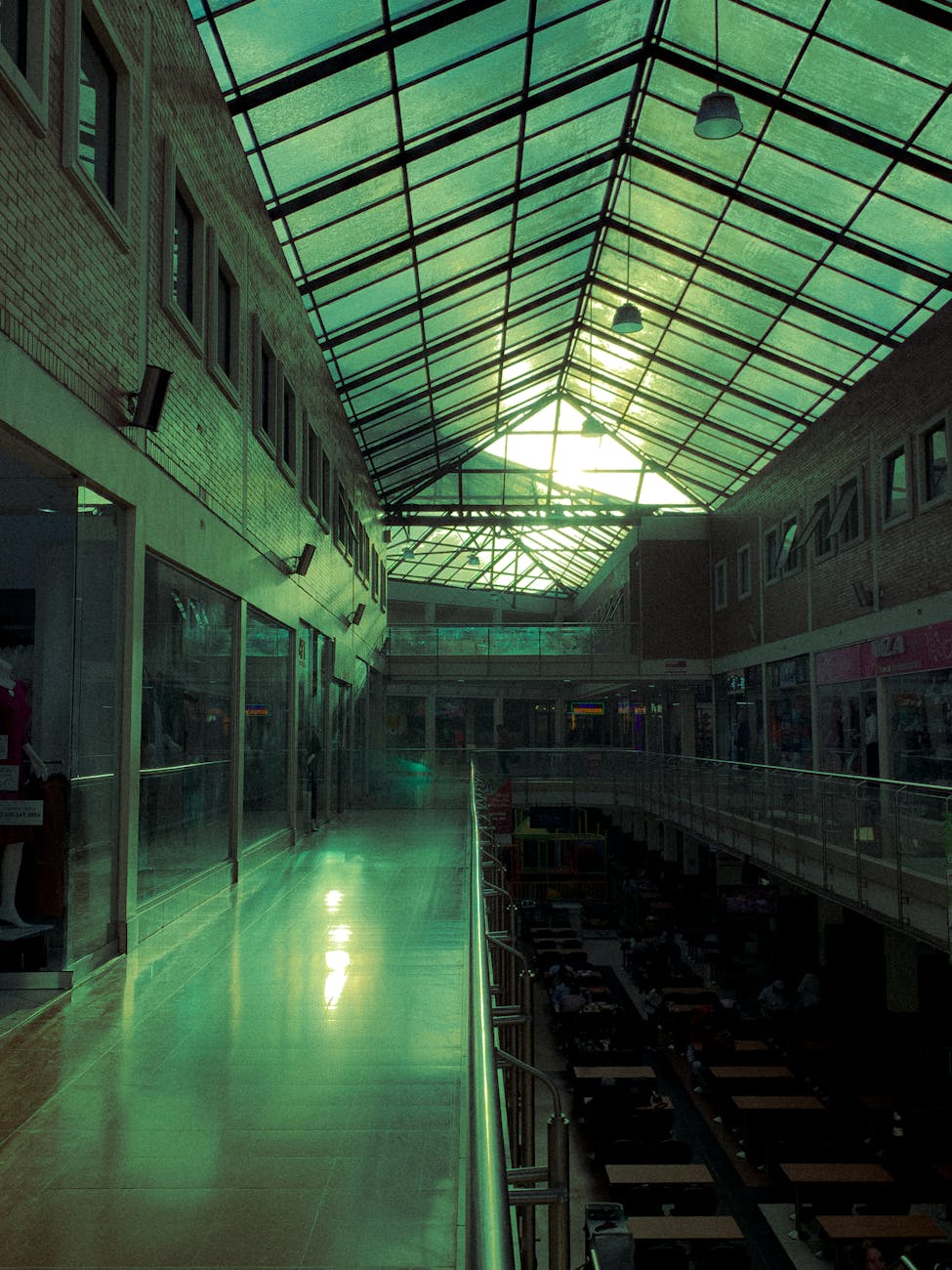
Photo by Felipe Jimu00e9nez on Pexels.com

Both malls operated for over four decades. People from the suburb in which they were located and nearby suburbs shopped and gathered there. The communities in which they were located gathered and used the tax revenue generated by the mall.

As redevelopment plans get underway, is it worth marking where the mall once stood? Imagine a roadside marker that says “Former site of the Stratford Square Mall.” Or within the new development some indication on the ground of the footprint of the mall. Or naming some part of the new development after the mall that was once there.

Perhaps marking the former mall site in some way is going too far. Plenty of suburban redevelopment happens without much concern with what was there before. Historic preservation groups and efforts can save or identify properties worth holding on to. But it takes money and local will to remember past land uses and buildings. Would there be enough interest in remembering these shopping malls?

One feature I like about Google Streetview is that with over a decade of streetscape images, you can go back and see what an address looked like years ago. This might be possible to do with other mediums, such as overlaying older photographs or drawings over current images, but it can be difficult to track down such images. The malls will live on in Streetview, even as the sites are transformed.
When “icons of urban decay” are demolished

One well-known site on Chicago’s southwest side will soon be no more:

Photo by Jan van der Wolf on Pexels.com

For some in the city’s cultural community, the demolition of the historic grain silos represents a visual gut-punch. The structures — icons of urban decay as they sat empty for nearly five decades — have been a popular backdrop for filmmakers, musicians and skyline photographers and served as a canvas for many graffiti artists who ignored the “No Trespassing” signs. The silos even appeared in the 2014 movie Transformers: Age of Extinction

Whether you think of them as eyesores or historically significant structures, the Damen Silos will soon vanish from the Southwest Side’s skyline. By the end of last week, a squat building along Damen Avenue had been reduced to rubble. Heneghan Wrecking’s crews were working next to the tall silos, where the noise of a jackhammer rang out. Workers sprayed water to prevent clouds of dust from filling the air.

“We are extremely disappointed about the demolition,” said Kate Eakin, managing director of the McKinley Park Development Council. “It represents a gross lack of imagination about what the site could be, as well as failures of government at several levels to communicate with each other.” Eakin’s local neighborhood group hoped to see the site transformed into a music venue and park that could host festivals. Other grain silos have been repurposed in similar ways: An art museum fills a former silo in South Africa, while Minneapolis left a silo standing in the middle of a popular tourism district…

“The Damen Silos are among the last remaining reminders of the agricultural trade that literally built the city,” said Tom Leslie, an architecture professor at the University of Illinois at Urbana-Champaign. “Losing the Damen Silos means yet another lost opportunity to celebrate the city’s history as the center of agricultural trade.”

This single case hints at multiple interesting questions communities consider. At what point does an abandoned building or property become worth preserving? Which buildings can or should be repurposed for cultural or recreational use? Who should make these decisions and who can or should fund decisions?

But this case also involves ruins, industrial ones at that. This is a different kind of case than a once opulent theater or a once thriving neighborhood. How many industrial sites in the United States are preserved? There would be no shortage of such sites across American cities, particularly in the Midwest and Northeast.

Trying to remember the farm life that came before today’s suburbia

I was recently looking at aerial photographs of our suburban area from nearly 100 years ago. The outline of suburban communities were there – small sets of houses clustered around railroad lines – but much of the land use involved farming plots. Today, hardly any of that farm land can be seen, let alone evidence of farming life. How can suburban communities remind people of that past?

Photo by Brandon Randolph on Pexels.com

An editorial in the Daily Herald suggests preserving an old farmhouse and providing exhibits and demonstrations can help suburbanites today:

The Forest Preserve District of DuPage County is seeking formal statements of interest from individuals or organizations with a vision for rehabilitating and reusing the 1850s farmhouse at the southeast corner of Greene and Hobson roads…

Our hope is that it could pave the way for Oak Cottage — and a neighboring barn — to someday become an educational resource similar to Kline Creek Farm, a forest preserve district-owned living history museum in West Chicago that depicts what local farm life was like in the 1890s…

Restoring the farmhouse — along with opening the Greene Barn to the public — could help educate future generations about DuPage County’s farming past. We applaud forest preserve officials for at least being open to one of those ideas and wanting to partner with a group to breathe new life into Oak Cottage.

Such efforts can have multiple benefits:

  1. It helps people know their local history. If suburbs are sometimes characterized as “no places” as people move in and out or the landscape looks similar to any other suburbs in the US, such sites can remind people of a particular local history.
  2. It could remind people of a particular connection to land and nature beyond that of suburban lawns. Farming can involve intense agricultural and livestock activity but this is a different interaction with soil and creatures than what suburbanites typically experience.
  3. Land and places go through change. Prior to farming, Indigenous groups lived in the area. White settlers starting in the 1830s cleared much of the land for their preferred methods of subsistence. Sprawling suburbia picked up in the postwar era, leveling the landscape for single-family homes and roadways. The future use of land does not necessarily have to look like it does now.

Current owner of “The Brady Bunch” house says it is a “piece of art”

The owner of The Brady Bunch house, bought for $3.2 million in 2023, says it is art:

Photo by Puu0219cau0219 Adryan on Pexels.com

Trahan told the Journal in 2023 that the house was “the worst investment ever,” but has since clarified those comments, telling People that she views the home as a piece of art.

“When I was buying it, I wasn’t thinking, ‘Oh, it was a great investment,'” Trahan told People in 2023. “When I buy art, it’s because I love the art. It’s not because, ‘Oh, I’m going to make money on this.’ If you’re going to make money in art, you have to sell it. I buy art, and then I don’t sell it.”

The first Brady Experience sweepstakes was such a success that Trahan is opening it up for another round. Trahan could not be reached for comment.

Can a home be art? Can a real suburban home that became part of a well-known TV show be art? This might require public and/or critical consensus.

The idea that a postwar suburban house could be a piece of art is not that farfetched. Imagine homeowners of such homes across the American landscape that lovingly take care of their homes, maintaining and improving them. Or preservationist efforts that protect particular homes for future generations. (Which postwar suburban homes might qualify for this is another discussion – which are more art and which are more pedestrian?)

Add to this the iconic nature of this home. For many, The Brady Bunch house represents suburban family life. The show only ran 5 seasons but the family and its home became a part of the postwar culture during its run, through syndication, and ongoing lore. I doubt many critics would say the show was art – it was a normal sitcom – but the iconic status of the show may elevate it in the eyes of viewers.

Perhaps the Brady home is pop art: a slice of a particular time that was revered by many.

Creating collaborative archives in historic skyscrapers

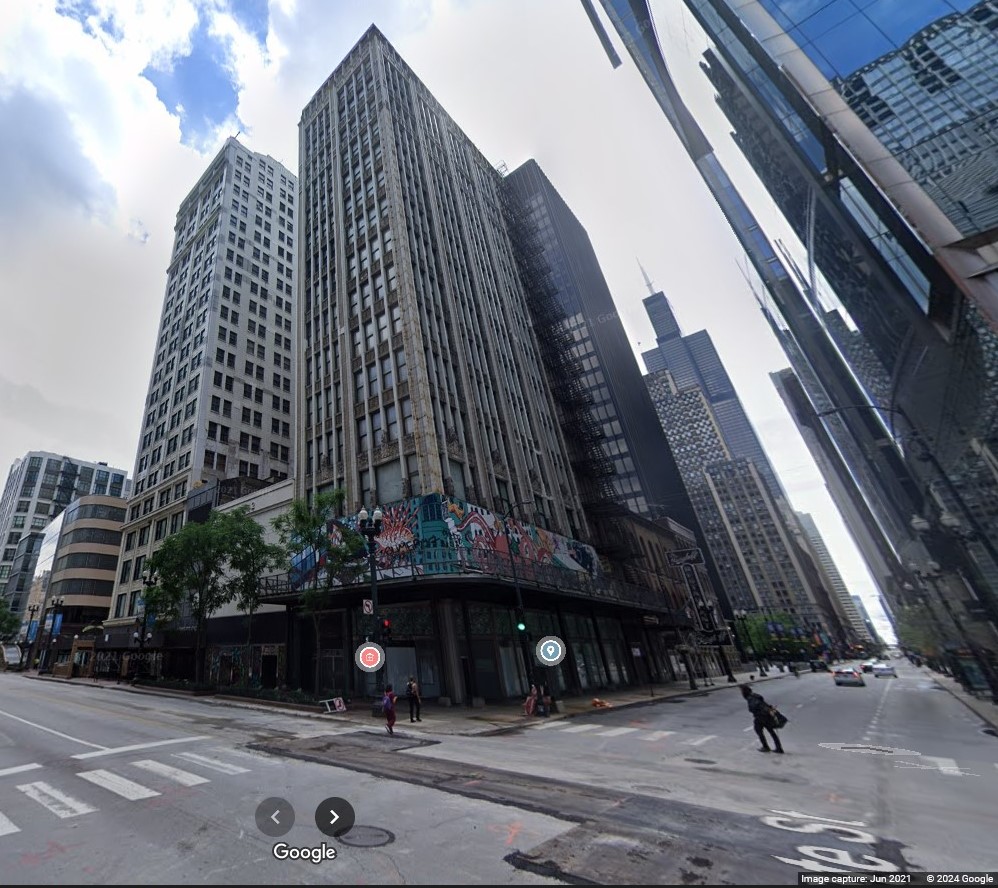
Finding new uses for two historic Chicago buildings slated for demolition led to an interesting proposal. First, the status of the buildings:

Image from June 2021, Google Street View

The U.S. General Services Administration released its final environmental impact report for the Century and Consumers buildings at 202 S. State St. and 220 S. State St., and also a smaller building between them, at 214 S. State St., ultimately choosing to reuse the vacant buildings rather than demolish them.

In 2022, Congress earmarked $52 million for the demolition of the buildings, with the federal government, which owns the buildings, arguing the buildings pose a security risk to the U.S. courts. The buildings back up against the Dirksen Federal Building on Dearborn Street.

Second, here is a proposed use for the buildings:

Preservation Chicago at one point had lined up 20 religious orders, including Dominican University in River Forest, that are interested in converting the Century and Consumers buildings, 202 and 220 S. State St., into the proposed Chicago Collaborative Archive Center.

Museums and other non-religious entities could have space there also, said Preservation Chicago Executive Director Ward Miller.

Those advocating to save them in this manner also argue that archival storage would minimize any security threat and allow windows facing the federal building to be sealed off.

“A collaborative archive of this proposed size is rare in the country,” Christopher Allison, a historian and director of the McGreal Center at Dominican University in River Forest had said in 2022. “It would become a major hub for archive-based research and would consolidate precious sources in one space.”

While some might see the potential for real estate redevelopment on prime Loop property or hold security concerns, having spent some time in smaller archives, this sounds like a win for archives and researchers. I can imagine some benefits of taking multiple smaller archives and putting them in one place. Efficiencies in storage and staffing. The ability to connect archival items and ideas in one place. Ease for researchers looking for material on related topics and in different collections. The possibilities of expanding collections with combined powers and status.

Plus, do archives and older buildings go well together? Archives can of course be newer settings and spaces designed for the task. Buildings designed specifically for archives could provide particular advantages. Yet, given the interest in some places in historic preservation and efforts to help people know and understand the past in archives, does putting them together regularly enhance the ethos of both?

Workers cottages and a growing suburban dream in the Chicago region

What kinds of homes did early suburbanites in the Chicago area live in? Some lived in workers cottages:

Photo by Steve Johnson on Pexels.com

Thanks to a plentiful supply of lumber from old growth pine forests in Wisconsin and Michigan, as well as new milling processes such as kiln drying that gave precut wood precise standardized measurements, a new form of structure started appearing. Workers cottages were more affordable than elaborate, but they came with the promise of a better standard of living for working class families.

A century and a half after they started being built in earnest, an effort is afoot to celebrate and preserve the cottages, houses that have continued to offer utility and accessibility for generations…

The lecture was arranged by the nonprofit Chicago Workers Cottage Initiative, a group organized to celebrate and promote the houses, built mostly from the 1880s to the 1910s, that they say “represent the origins of the ‘American Dream’ of homeownership and the investment and pride of Chicago’s new immigrants.”…

“Some of these cottages were really spartan four-room houses,” Bigott said. “They cost like $600 on a $200 lot. It was a simple frame building, with two bedrooms, a living room, a kitchen.”…

It was a model that worked, and its backbone was the workers cottage. Elaine Lewinnek, a professor of American Studies at California State University, Fullerton, argues in her 2014 book “The Working Man’s Reward: Chicago’s Early Suburbs and the Roots of American Sprawl” that the idea of house ownership as “the working man’s reward” was one of Chicago’s most impactful exports, setting the scene for suburbs everywhere.

The suburbs have a longstanding reputation that they are full of people of wealth who are able to purchase a home and afford a suburban lifestyle. Imagine neighborhoods of McMansions, rampant consumerism, and newer vehicles.

This may be largely true and yet it is not entirely true. The homes described above could house the working class in suburban settings. This is not the only area where this occurred; historian Becky Nicolaides described working class houses in the Los Angeles suburbs.

And the housing today in the suburbs can also be varied. Postwar housing also had some variety from larger homes to smaller ranches. Wealthy suburban communities in the Chicago region today sit not far from neighborhoods with more modest housing.

If this article looks back at what was over 100+ years ago, what housing today will be viewed as housing for the working person in the suburbs in 2100?

How many landmark buildings should a suburb have?

As Napervillians debate the fate of the Scott house, a 156-year-old home constructed by one of the community’s first families, the number of historic landmarks in the suburb stood out:

Photo by Tim Mossholder on Pexels.com

As things stand right now, there are no protections that would prevent future owners from altering or tearing down the house. Its location is just outside of the Naperville Historic District, where regulations dictate standards for exterior home improvements. It is part of a federal historic district, but their rules is not nearly as restrictive, according to the Illinois Historic Preservation Office.

Preservation is possible were it to be made a city landmark, a process open to any Naperville property over 50 years old, but that requires the recommendation of the Naperville Historic Preservation Commission and the approval of the Naperville City Council.

There are only four historic landmarks in Naperville.

Heap said he and his fellow co-owners are keeping options open but acknowledges the house’s future will hinge on who it’s sold to. That also goes for whether Heap’s law practice stays on as tenants.

This is not a new debate in Naperville. As the article notes, the suburb has a historic district that developed over time and through much discussion. Naperville has lots of teardowns where public debate could pit the property rights of the owners against the interests of neighbors or the community.

Is four historic landmarks, then, good or enough? The current four include two houses, one former church, and a former library building. One way to figure this out would be to do some comparing to other suburbs. I do not know these figures but someone or an organization might have them. Another way to think about it is that Naperville has a track record of preserving its past and telling its own story, such as through Naper Settlement and other actors. A third option would be to have some sense of what leaders and residents want concerning landmarks; do they want to save particular structures or have guidelines for more buildings and properties?

The matter of preserving buildings in the suburbs is an ongoing conversation as buildings from a prior era come up against changing conditions and styles. This includes homes (even McMansions eventually?) but also civic buildings and business structures. The American suburbs have had a particular look for decades but there is no guarantee that much or all of that remain in the future unless there are dedicated efforts to the contrary.

Dallas neighborhood fought off McMansions with conservation districts

The Greenland Hills neighborhood in Dallas limited McMansions in recent decades by establishing conservation districts:

Photo by David Gonzales on Pexels.com

Neighbors were also concerned about tear downs and new builds. They watched as modern mega mansions took over the Park Cities. “There’s this thing coming,” Pratt says. And the residents, who founded the Greenland Hills Neighborhood Association in 1983, knew they had to do something to fight the “McMansions.”…

After that, Greenland Hills residents formed a conservation district. In the early 2000s, they surveyed the houses, and a feasibility study showed that about two-thirds of the homes were Tudors. And there was a schism in the neighborhood. There was the M Streets, between Central and Greenville, and then there was M-Streets East, which was sandwiched by Greenville and Skillman. East wanted less restrictive conservation rules, Mut says, and some blocks wanted to opt out.

Finally, the M Streets and M Streets East conservation districts formed in 2003. The M Streets Conservation District protects seven architectural styles, like neo colonial and contemporary. “We all get hung up on Tudors, and we should because that’s pretty massive,” Pratt says. “But the other styles are just as notable in the time period as well.” The district rules preserve each architectural style’s most iconic features on the front façade. The longest section is dedicated to the Tudors. There are specifications on window proportions, roof pitches, secondary gables, even doors. “We’re not going to put a Victorian door and a Tudor home,” Mut says…

And the prices of the houses increased. Homes in Greenland Hills often go for $800,000 or more. Mut can’t pinpoint the exact reasons for the surge in pricing, but he attributes it to inflation, the proximity to downtown, and demand for the homes. Mut and Pratt recognize the irony of the neighborhood’s start as an “affordable” neighborhood versus today. But it’s not an apples-to-apples comparison, Pratt says, especially now that the neighborhood is not on the outskirts of Dallas. And the overall value, she says, is still there. 

Three thoughts come to mind:

  1. The neighborhood wanted to protect its particular architecture and character. To do this, they set up guidelines that limited property owners. This is often the trade-off of historic preservation in American communities: retaining the older styles limits what current and future property owners can do.
  2. This occurs in a metropolitan region where McMansions are common. When I compared how McMansions were defined in the New York Times and Dallas Morning News, I found people in Dallas more open to McMansions. However, it sounds like people saw what was happening in other neighborhoods and decided they did not want this in their neighborhood.
  3. Home values in the neighborhood have increased. Would this have happened at the same rate if McMansions had been constructed instead? Preserving the older homes means the neighborhood appeals to certain buyers. Building McMansions means newer and bigger homes. Which option would have raised property values more?

Teardown a home for a new parsonage that may not be a McMansion

What happens when the needs of a church for a larger parsonage converge with the interests present in a district of older single-family homes where teardown McMansions occur? Here is a case from the Buckhead neighborhood of Atlanta:

Photo by JESHOOTS.com on Pexels.com

Peachtree Road United Methodist Church aims to demolish a historic Buckhead Forest house for a new parsonage, stirring preservationist concerns.

The 81-year-old house at 3210 West Shadowlawn Ave. is listed as contributing to the Alberta Drive-Mathieson Drive-West Shadowlawn Avenue Historic District, which was added to the National Register of Historic Places in 2015. But that does not prevent demolition and the property has no City historic protections. The church claims the house is “uninhabitable” and can’t meet its mother organization’s requirements for large parsonages…

The historic district application was filed with the National Park Service in 2014 by the Georgia Historic Preservation Division. The filing says the neighborhoods are historically significant as part of a building boom that followed a 1907 trolley line extension on Peachtree, and for its wealth of intact architecture dating from the 1910s through the 1960s. West Shadowlawn, the filing says, was named for a subdivision called Shadow Lawn, which started construction in 1922. The filing includes a photo of the house at 3210. The main church property is not included in the historic district.

Rev. Bill Britt, the church’s senior minister, told the DRC that the plan is to build a parsonage as a home for a member of its clergy who currently rents elsewhere in the city. The existing one-story house would be replaced with a larger, two-story version…

Project architect Brandon Ingram noted that many houses on the street date to the period of the 1920s through 1940s. He said the church wanted the new parsonage to be be “respectful” of that aesthetic and look “a little bit more vintage” rather than “some giant Buckhead McMansion.”

This sounds like a typical teardown situation: there is an older property in a desirable single-family home neighborhood that needs some work. It does not have modern features or the size of new homes today. A property owner wants to tear it down and build a new home. Some in the community want to preserve the old home and worry that a new home changes the local character. Some in the community want property owners to have the right to do what they want with their property and be able to reap the benefits of what might come along.

Does it change the situation if it is a local church that wants to pursue the teardown? The church will likely profit from a teardown – increased property value, a newer home – but it is also a community or non-profit actor and not just a private owner. The church has been around a long time and the parsonage may not change hands for a long time. The intended use is for church staff.

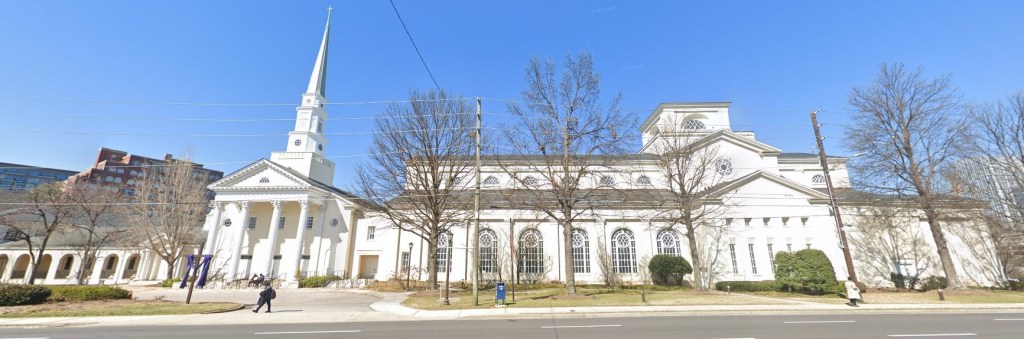
Is a church that is a long-term member of the community less likely to construct a McMansion and instead lean more toward the existing architecture of the neighborhood? Trying to picture a McMansion nearby a historic looking church building – see image below – does not work as well as imagining a McMansion near a newer megachurch in the sprawling suburbs.

Google Street View of Peachtree Road United Methodist Church

If religious congregations are in the business of building McMansions, there may be an interesting story to tell.

McMansions as part of or outside of a changing suburbia?

This description of the changing American suburbs includes McMansions:

Photo by Jeswin Thomas on Pexels.com

The demand for something like urban living is real. Even at the outer edges of growing metro areas, mixed-use walkable developments pop up alongside familiar subdivisions and McMansions. “Mixed-use centers—often in suburban locations—continue to be built from the ground up in many communities across the US,” wrote the Congress for the New Urbanism in 2019.

As more immigrants and millennials become suburbanites, and as Covid and remote work give the suburbs another growth spurt, they are evolving into something different. Between 2019 and 2020, the share of millennials who live in suburbs increased by 4 percentage points; and in 2014, more than 60 percent of immigrants lived in suburbs, up from just over half in 2000.

Many communities that were once white, exclusionary, and car-dependent are today diverse and evolving places, still distinct from the big city but just as distinct from their own “first draft” more than a half-century ago…

If a “second draft” of the suburbs is now being written — at least in some of America’s growing and expensive metro areas — what might it actually look like?

This is part of the complex suburbia we have today. Where do McMansions fit into this? The selection above suggests “mixed-use walkable developments” are near McMansions. But, what happens to the McMansions in the long run? Here are a few options:

  1. The McMansions continue in their neighborhoods for those that want them. Even amid proclamations that McMansions are dead, there are some homebuyers and suburbanites that want such homes.
  2. McMansions themselves are altered in ways to fit the new landscape. Perhaps they are subdivided into multiple units for more affordable housing. They could be added to. Their properties could host accessory dwelling units.
  3. McMansions are demolished and replaced with something else. This could be because the quality of the homes does not stand the test of time or the land is more valuable used another way (some of the teardowns become teardowns).
  4. Some McMansions live on through historic preservation marking a particular era of housing and American life.

For some, McMansions represent the peak of an undesirable suburban sprawl and excess. For others, they are homes that provide a lot for a decent price. Their long-term fate is to be determined both by those who like them and those who detest them as the suburbs continue to change.