As a result, empty-nest Baby Boomers own 28% of large homes — and Milliennials with kids own just 14%, according to a Redfin analysis released Tuesday. Gen Z families own just 0.3% of homes with three bedrooms or more…
This is a change from the historical norm, according to the research. Ten years ago young families were just as likely as empty nesters to own large homes…
For those who own their home outright, the median monthly cost of owning a home, which includes insurance and property taxes, among other costs, is just $612, according to the report.
“Logically, empty nesters are the most likely group to sell big homes and downsize,” said Bokhari. “They no longer have children living at home and don’t need as much space. The problem for younger families who wish their parents’ generation would list their big homes: Boomers don’t have much motivation to sell, financially or otherwise.”…
This speaks to one of the assumptions of American housing: older adults are expected to move out of larger homes and move to smaller homes or ones that better suit their needs later in life. This frees up their homes for the next generation to move into.
Is this the way it has always worked? Might patterns change heading into the future?
Several thoughts on these trends:
Americans like bigger homes. As the size of American homes has increased, might Americans want to keep these larger homes as long as possible?
Houses are places to live and strategic investments. Older residents may not need all that space but wouldn’t they want to cash out as late as possible on this large asset?
An emphasis on living independently and youthfully may mean that staying in a house is a sign of vitality (while moving would be a sign of weakness). Why sell if you can still live in a big house?
This could be the product of a unique confluence of factors in recent decades: a sizable birth cohort, a change in what housing is and what housing is available, and an unprecedented growth in housing values.
UIC professors David Merriman and Rachel Weber, experienced researchers on property taxes and government finances who led the report, said this is one of the first attempts to measure the impacts of exemptions on the county as a whole. In total, $15.8 billion worth of property value in Cook County was unavailable for governments to tax in 2021 because of those breaks, their research found.
That translates into about $1.6 billion in tax revenue, which governments simply shift onto other property owners…
To respond to tax spikes or inflation, state lawmakers have expanded breaks over the past half century. They now include eight types of homestead exemptions: homeowners, seniors, veterans, people with disabilities and those making improvements on their home. Exemptions typically cut down the taxable value of a home to provide relief.
The report noted the effects of these exemptions are not the same in every community. The tax base of the community matters:
Those unintended consequences also aren’t the case everywhere. The effects of homestead exemptions are negligible in cities and villages with a bigger industrial property base, like McCook and Bedford Park, with a concentration of more valuable properties like Winnetka or Kenilworth, or with a lower share of homeowners who qualify, like Chicago.
It sounds like this affects communities that do not have great tax bases to start with. Already behind, homeowner’s exemptions then contribute to a lack of community funds compared to other communities.
The “American Dream” costs about $3.4 million to achieve over the course of a lifetime, from getting married to saving for retirement, according to a recent analysis from financial site Investopedia.
Meanwhile, median lifetime earnings for the typical U.S. worker stand at $1.7 million, earlier research from the Georgetown University has found.
Such figures underline the financial pressures that many families face trying to afford a middle-class life as expenses like child care, college tuition and buying a home continue to climb. The Investopedia analysis tallies the average cost of achieving other aspects traditionally associated with the American Dream, such as owning a house and raising two children to age 18.
Another analysis, from USA Today, found that funding the American Dream costs about $130,000 a year for a family of four. Median household income stands at about $74,450, according to the Census Bureau.
One key facet of the American Dream is that it is supposed to be available to all. That never meant everyone would achieve it, particularly as Americans often emphasize individual hard work and taking advantage of opportunities. But, it should be reachable in a society where many Americans value and see themselves as middle-class.
Perhaps this is why there is a market or demand for particular experiences that provide part of the American Dream or a taste of it. One traditional marker of the American Dream in the United States is owning a home. This is displayed on TV, illustrated in toys, and promoted by presidents. If people can just own a home, they have a strong case to make for attaining the American Dream. Or, consider the freedom of driving down the road in your vehicle to wherever you want. This experience offers a taste of the larger American Dream.
If large numbers of Americans cannot obtain the American Dream now and in the coming years, this could mean the Dream becomes redefined. Maybe it will have different elements. Or, perhaps it will be more commonly viewed as attainable only by some. It could be a status symbol of the elite. Or, new policies and conditions could renew aid and efforts toward achieving the American Dream. Politicians could run on this idea while grassroots movements could promote it.
Given the high cost of purchasing a home at the current moment in the United States, what can the President and the Executive Branch do on their own? In addition to supporting legislation for a new tax credit, the Biden White House has ideas about its own actions:
Brainard suggested that President Joe Biden will not wait for Congress. The administration, for example, said that it was advocating for zoning reforms that will help unlock the construction of affordable homes.
“Our Department of Transportation is making billions of dollars in low-cost loans available for developing housing near transportation,” Brainard said.
The administration has also been trying to help first-time buyers who have struggled to gain a foothold into homeownership. Home prices were nearly 6 times the median potential first-time homebuyer income in the third quarter, according to NerdWallet’s recent analysis.
The White House pointed out that it was trying to reduce costs for first-time buyers through the the Federal Housing Administration program. The effort, it said, helped reduce mortgage insurance premiums by 0.3 percent.
Many presidents from the early 20th century onward have promoted homeownership in rhetoric and policy. These proposed actions would continue this pattern. Could a president even if elected if they did not support homeownership for the masses? See great quotes in homeownership.
Of course, the President and the Executive Branch can only do so much in this area. Yet, a number of important changes to housing policy have come through this branch. Will Biden make a significant change or is this about temporary salves? All of these proposals do not alter the fundamental economic realities that make current homes so expensive. They offer incentives or help around the edges. Addressing zoning from a federal level could prove interesting as it is such a local matter.
The findings from one of the largest surveys done on these issues shows significant but varying support for 10 policy initiatives to encourage more housing. At the high end, nearly 9 in 10 (86%) say they would back efforts to expedite permitting processes, while at the lower end, about half (49%) support the concept of allowing smaller lots, and homes to be built closer together…
Support for most of the housing policies transcended the usual fault lines of political party, region, race, income, and gender. The eight most popular proposals received clear majority support from Republicans, Democrats, and independents. In addition, 9 of the 10 tested measures received majority support from both renters and homeowners. All of these policies have either already been shown to work in improving housing affordability in American cities and towns or have recently been enacted by state or city policymakers hoping to do so.
Some approaches that stood out as especially popular—earning support from more than 70% of respondents—are similar to state laws that have passed in recent years (although the survey questions themselves were not modeled on any particular laws). For example, in 2023, California, Montana, Texas, and Washington took steps to simplify permitting for new housing. In recent years, California, Massachusetts, Montana, and Utah have passed laws to enable more housing near commerce or transit. And Maine, Montana, Oregon, Utah, and Vermont, among others, have enacted legislation to allow houses to have an accessory apartment or dwelling unit, as have many cities…
Respondents also broadly supported the reasons behind efforts to create more housing, with 65% to 82% seeing each reason as excellent or good. (See Figures 3 and 4.) However, in some cases, Republicans and Democrats prioritized different reasons. For example, somewhat more Republicans (68%) than Democrats (62%) identified freedom for property owners as an excellent or good reason, while more Democrats (81%) than Republicans (49%) chose reducing racial segregation as an excellent or good reason. But large majorities of Democrats, Republicans, and independents see improving housing affordability and allowing more people to live near their preferred jobs and schools as excellent or good reasons to change housing rules to allow more homes to be built in cities and suburbs. Successful state-level efforts to allow more housing have consistently received bipartisan support, and the survey results indicate that people with different political views can come together to support policies to end the housing shortage and affordability crisis for different reasons.
Americans like the idea of owning housing. Add this to the current state of housing where both owning and renting is expensive and Americans broadly like more housing.
Thus, the expression of this majority for housing is difficult to put into practice. Even state laws are often fraught as it can run against local desires. Take the efforts in Illinois to promote affordable housing at the state level: the initial legislation had limited enforcement and more would need to be done for state-level policy to provide more housing.
As noted above, one of the routes forward that could gather more local support involves policies that provide more opportunities for current property owners. Adding ADUs, for example, provides a choice for current property owners to generate more income or provide housing for family. Other policies might be viewed as funneling money to outside developers or providing housing for people who would not be as welcome in the community. If policies can add housing units and enrich/protect homeowners, they might find more support.
The Zinnick’s aren’t alone: Older buyers are prevailing in America’s hot housing market. This year, the median age for a repeat buyer – someone who has bought a home before – was 58, according to data released Monday by the National Association of Realtors. That’s down just a smidgen from last year’s record of 59, but it’s up significantly from 36 years old in 1981, when NAR began conducting its survey.
Lately, grandparents have been edging out younger buyers who are struggling to get into the market for the first time. Nowadays, first-time buyers make up 32 percent of the market, well below an average of 38 percent since 1981, according to NAR. They’re also more likely to be in their mid-30s today, in contrast to their late 20s in the early 1980s…
There are many reasons. For starters, older buyers are also likely to be selling a house, which provides them fresh cash. Indeed, the typical home seller was 60 years old in 2023, according to NAR, the same as last year.
And with so few homes available, sellers often go with the potential buyer making the most attractive offer – be it a large down payment, stellar credit or all cash. There, too, older buyers have a leg up…
That often leaves seniors and aspiring first-time buyers competing for similar types of homes – just a couple of bedrooms, not too much upkeep. Usually, there’s a clear winner.
If you have the wealth from owning a home, you can then put that wealth into something else – if you so choose. So, if housing values have tripled to quintupled, there is plenty of resources to apply to a new home. The home gets turned into a new home (and perhaps leftover cash). One advantage begets another, what some have called The Matthew Effect.
In theory, this is how Americans expect homeownership to work: you purchase a home, you get to live in the home, and then at some point you cash out because the home offers a strong return on investment. But, as this story notes, this is not a good story for everyone. Others who might be competing in the housing market may not have the same resources. Or, not mentioned are seniors who have not owned homes or owned properties that did not appreciate much.
Is this just a blip in the grand scheme of things because of unique conditions in the housing market? Or, is this a long-term change where those who bought homes in the past now reap certain rewards? The outcome of this could help influence the life outcomes of a lot of Americans in the coming years.
Building on yesterday’s post regarding the growing homeownership rate of millennials, I wonder: how much do Americans today feel they deserve to be able to own a home? It is one thing to make a choice to buy a property, it is another to feel that the economic and social conditions render this difficult or impossible. Here are several factors complicating this issue:
The American social contract includes a house. Many Americans expect they should be able to purchase a home. I would guess that Americans and the American structures will continue to pursue and promote homeownership, even when it might be difficult. A big change might require a significant event or a steady long-term process moving toward different housing preferences and possibilities.
Immediately, the rankings revealed a stark geographical pattern. The first surprise—especially for professors who have spent our careers studying urban poverty—was that the most disadvantaged places on our index were primarily rural. But they didn’t fit the stereotypical image of rural America. Though some of these were majority white, most were majority Black or Hispanic. We could see, too, that many places with large Native American populations ranked among the most disadvantaged in the nation. Considerable poverty exists in Chicago, Los Angeles, and New York. But in our apples-to-apples comparison, none of those cities ranked among even the 600 most disadvantaged places in the nation. The only cities on that list were a relatively small number of industrial municipalities such as Cleveland, Detroit, and Rochester…
The places that our index identified as the 200 most disadvantaged are concentrated in three regions—Appalachia, South Texas, and the southern Cotton Belt. (Not one county in the West, apart from those with disproportionately large Native American communities, showed up on the list.) These places share a history of intensive resource extraction and human exploitation not seen to the same degree elsewhere in the United States. In each place, this economic pattern emerged (or, in the case of the Cotton Belt, fully flourished) in the late 19th or early 20th century. In each place, one industry came to dominate the economy, a pattern that held, broadly, until the 1960s, when King Cotton, King Tobacco, King Coal, and South Texas agriculture, would bow to the twin forces of automation and global competition…
Exploring the other end of our Index of Deep Disadvantage—the places identified as those of greatest advantage—was also vital to our research. Once again, we were surprised by where the index took us. It was not Manhattan or tech-rich Seattle. Instead, the list pointed us to the upper Midwest: Minnesota, the Dakotas, Wisconsin, Nebraska, and Iowa. Overall, poverty rates in these places are very low, babies are born healthy, people live to a ripe old age, and a low-income child usually has a similar chance of making it into the middle class as any other kid.
Counties that rank among those of greatest advantage began as agricultural communities with modestly sized farms, many originally secured through the 1862 Homestead Act that made landownership widely available. Many of these places have built on this history of broad-based wealth by making significant investments in schools, which has contributed to high graduation and college enrollment rates over generations. Using the best data available, we found that they have enjoyed the lowest rates of violent crime, income inequality, and public corruption in the nation. These counties are unusually rich in social capital: Residents are connected to one another through volunteerism, membership in civic organizations, and participation in other community activities.
Who owns land? Who benefits from working it? It sounds like the Upper Midwest offered more opportunities for settlers to purchase land and develop wealth over the long run. In contrast, the three areas of disadvantage identified had more disparities in land ownership versus who worked the land. Additionally, Native Americans were removed from land that offered opportunities.
Approaches to addressing inequality and poverty in the United States can often involve homeownership but less discussed is land. A house is often tied to a particular property that has its own value. The land identified in the rankings above were particularly important for subsistence. This is not so much the case with urban and suburban land today where the proximity of the land to amenities and the size of the lot matter more than the owner’s ability to live off of it.
The rankings above also hint at the long-term consequences of land ownership. Who can access and own land now will matter for decades, possibly centuries.
From the beginning, much of Barbie’s existence — her unrealistic physical proportions, the lack of racially diverse dolls, the toy’s reinforcing of gender roles — has been debated in jest and in seriousness. But her home, which has not been as publicly parsed or praised like the doll, has been a mirror for the various social, political and economic changes the rest of the country was experiencing. It has followed housing patterns and trends, from chic, compact urban living to suburban sprawl to pure excess. At times, it has been out of step, ignoring the country’s ills (Barbie’s never been broke; she has never lost her house to foreclosure)…
Financial institutions frequently turned down mortgage applications for women without male co-signers when Mattel debuted the Dreamhouse in 1962, three years after Barbie shook up the toy world, arriving in a one-piece bathing suit and kitten heels…
Society has held up “this promise of homeownership as part and parcel of the American dream,” for centuries, said Ms. Castro. More than 60 years of Barbie’s Dreamhouses have further instilled that in us from a young age.
To own a home at all, especially one with a three-story slide, can feel unattainable for most. From July 2021 to June 2022, home buyers were richer, whiter and older than they had been in decades. The share that were first-time homeowners was the lowest its been since at least 1981. And, the median home price exceeded $400,000 for the first time.
It’s called a Dreamhouse for a reason. We can all dream, can’t we?
Is the Barbie Dreamhouse simply a plot to teach children that they should aspire for a large home with all the latest furnishings and in a bright style?
Stickers on the back windows of cars can signal all sorts of things. The number of family members. A favorite vacation spot. A beloved car brand or sports team.
What would a house sticker in the back window mean?
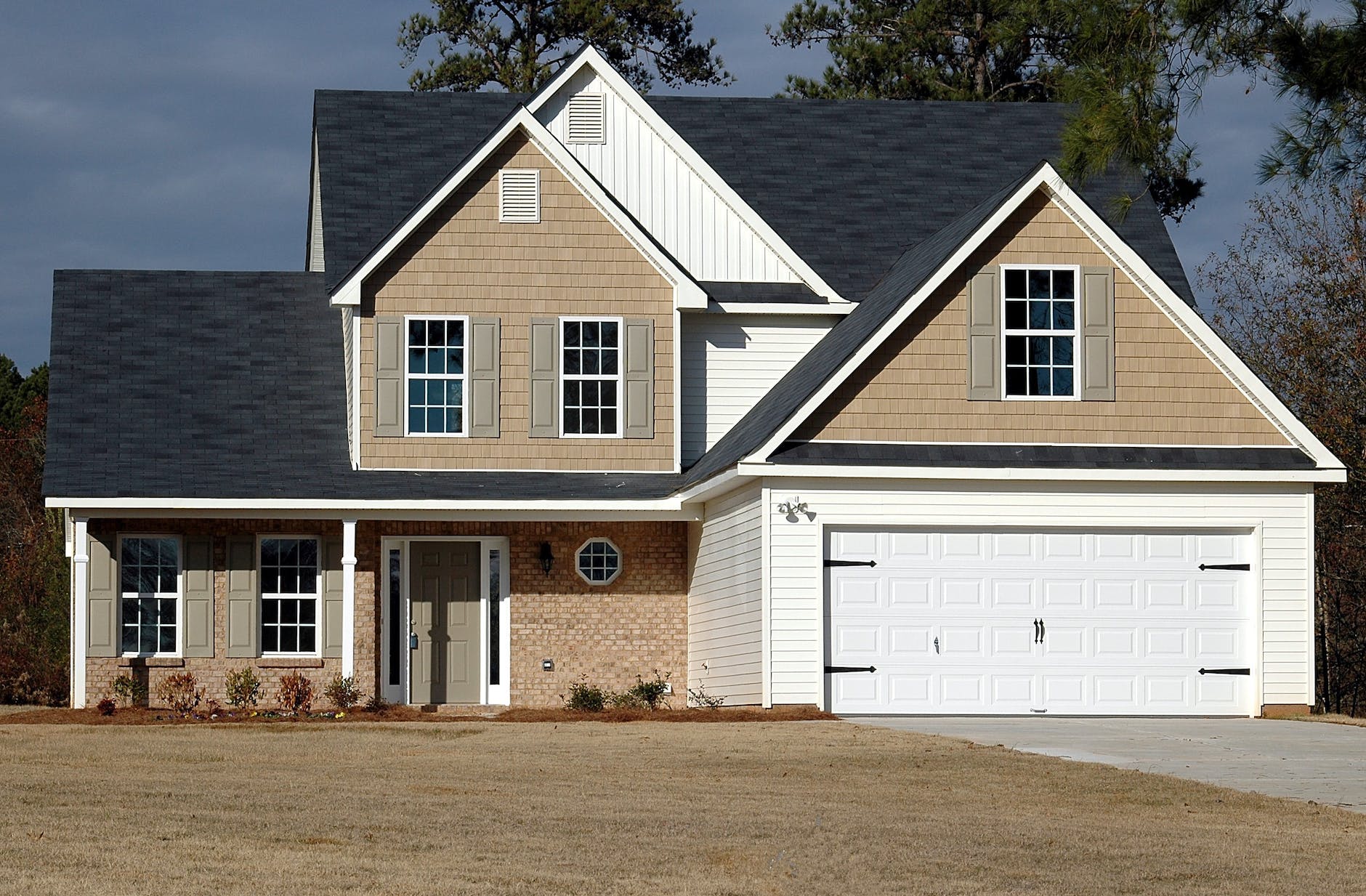
I recently saw a SUV with a two-story house sticker. The sticker looks similar to a drawing a child might make of a house. The picture below has such an image; this sticker had much cleaner lines but had a similar shape.








 Legally Sociable