In addition to the upbeat emotions on HGTV, the network relentlessly suggests houses are worth the financial investment. Numerous shows discuss how much money is involved, whether that is in the purchase price or the profit or equity made in repairing a home or the costs to particular changes. These are often not small sums; budgets are usually in the tens of thousands or more and few characters discuss how they have such money to spend.
But, the big sums of money are worth it in the end because homes are an important investment. Sure, they are to be enjoyed – and the reveals at the end of many HGTV episodes are full of positivity – but the money may be even more important. Everyone has spent a lot of money on these homes and they are worth it because they will be worth even more in the future.
“Bill Gates is buying up the majority of American farmland and BlackRock is buying the majority of single family houses but I’m supposed to believe the biggest threat to us is Elon Musk buying Twitter?,” read a Twitter post that was liked or shared more than 250,000 times.
But Gates doesn’t own more than 50% of U.S. farmland, according to The Associated Press. Even with recent purchases, he owns less than 1% of the nation’s farmland.
Gates, with 269,000 acres, is considered the largest private owner of farmland in the country. But his share is a small percentage of the nearly 900 million acres of U.S. farmland, according to the Department of Agriculture…
Also, BlackRock does not own a majority of U.S. single-family homes, the AP said.
How much property ownership is too much? Putting the amount of land or property into percentages is one way to think about it. Gates owns less than 1% of the farmland, BlackRock owns under 50% of the homes. The first figure suggests Gates barely owns anything while the second number is not a great one to note since I suspect owning 49% would not assuage those who retweeted this (and the likely figure is way under 10%).
Putting the ownership in absolute numbers might make a different argument. Gates owns 269,000 acres. That sounds like a lot, even in a big country in the United States. Or, if someone said BlackRock owns 60,000 homes, that would sound like a lot, even in a country with many more homes than that.
But, before we decide what numbers to use, we have to know what the concern is: should someone own 1% of the farmland? Should a company own tens of thousands of homes? The numbers can help illuminate the situation but they cannot answer the moral and ethical questions of just how much should one person or organization own? Using big or shocking numbers (even if they are incorrect) to suggest people should pay attention to a particular social problem is not new.
Homes ranging in price from $100,000 to $250,000, the typical cost for an entry-level home, have seen nearly a 28% decrease in inventory from a year ago, says the National Association of Realtors.
And smaller homes are also in short supply. In 1999, 37% of newly-built single-family homes were smaller than 1,800 square feet. By 2020, that share had fallen to 25%, Dietz said.
In comparison, in 1999, 66% of newly-built single-family homes were smaller than 2,400 square feet while in 2020, that share had fallen to 57%.
These are two very important factors for getting into purchasing a home. A lower price means a smaller down payment and mortgage is needed. Smaller homes are cheaper because they have fewer square feet and cost less to construct.
And without this ability to enter the housing market, it will take potential homebuyers longer to enter, if they can enter at all. This precludes them from building housing equity and stepping up to larger or more expensive residences in the future. It limits the ability of people to pursue homeownership, a goal many Americans have.
Tackling both price and housing size will be difficult in many markets where developers, builders, and those in the real estate industry can get more. Yet, here is an opportunity to appeal to an important sector of potential homeowners if solutions can be put into practice.
Some suggest that Japan is the model to follow. There, rental prices have largely remained flat over the last 25 years, according to data from the country’s statistics bureau. The reason is that the government controls zoning nationally and is more open to development in the number of houses it allows to be built. Just over a third of Japanese citizens rent the homes they live in, protected by a 1991 law called the Act on Land and Building Leases, which makes it difficult for landlords to end leases or prevent a tenant from extending their rental contract…
So where else should we be looking, if not to Japan, for the model to fix the broken housing market in large parts of the west? One option is Singapore, where public housing is built in specially designed communities and sold to individuals with a 99-year lease below market value. Selling on that property is highly restricted to reduce profiteering, but it can happen after five years of ownership. Nearly four in five Singaporeans live in public-sector housing, according to official statistics. “Prices can never get beyond regular working families,” says Ronald. “They have this virtuous circle, and it makes it interesting to think about the role of regulating housing.”…
Until late January 2022, housing developments in Germany were subsidized by the government below market rates for the first five years after being built. “It means tens of thousands of units every year come onto the market, keeping rental prices lower and preventing scrambles to buy a property,” he says.
A similar model exists in Austria and Switzerland, where the split is roughly 55 to 45 percent (in favor of renting in Switzerland, and owning in Austria), compared to an average European home ownership rate of 70 percent. When you get to the Austrian capital, Vienna, the home ownership rate is just 7 percent.
All of these sound like they would require some fundamental changes to housing policy in the United States. This might include:
A stronger national policy. This could be through programs available everywhere or guidelines that all states and municipalities have to follow.
A stronger emphasis on renting.
More government involvement in the construction of housing and/or longer-term government oversight of housing units.
None of these options would be particularly popular in the United States or easy to implement. Here are quick explanations why for each option above:
A national policy would come at the expense of the power of more local governmental actors. With real estate being so much about location, could a national policy truly address all of the different situations? Americans expect to be able to control or at least provide input into the use of land around them.
Homeownership is ingrained in American life as part of the attainment of the American Dream. This is ensconsed in zoning policy, supported by politicians and policies for decades, and Americans can be suspicious of renters compared to homeowners. Renting is more common in some areas compared to others but it is not seen as the ideal among Americans.
This does not mean that the housing landscape in the United States cannot change. The need for more housing and more affordable housing is acute. But, changes will likely take decades and sustained efforts.
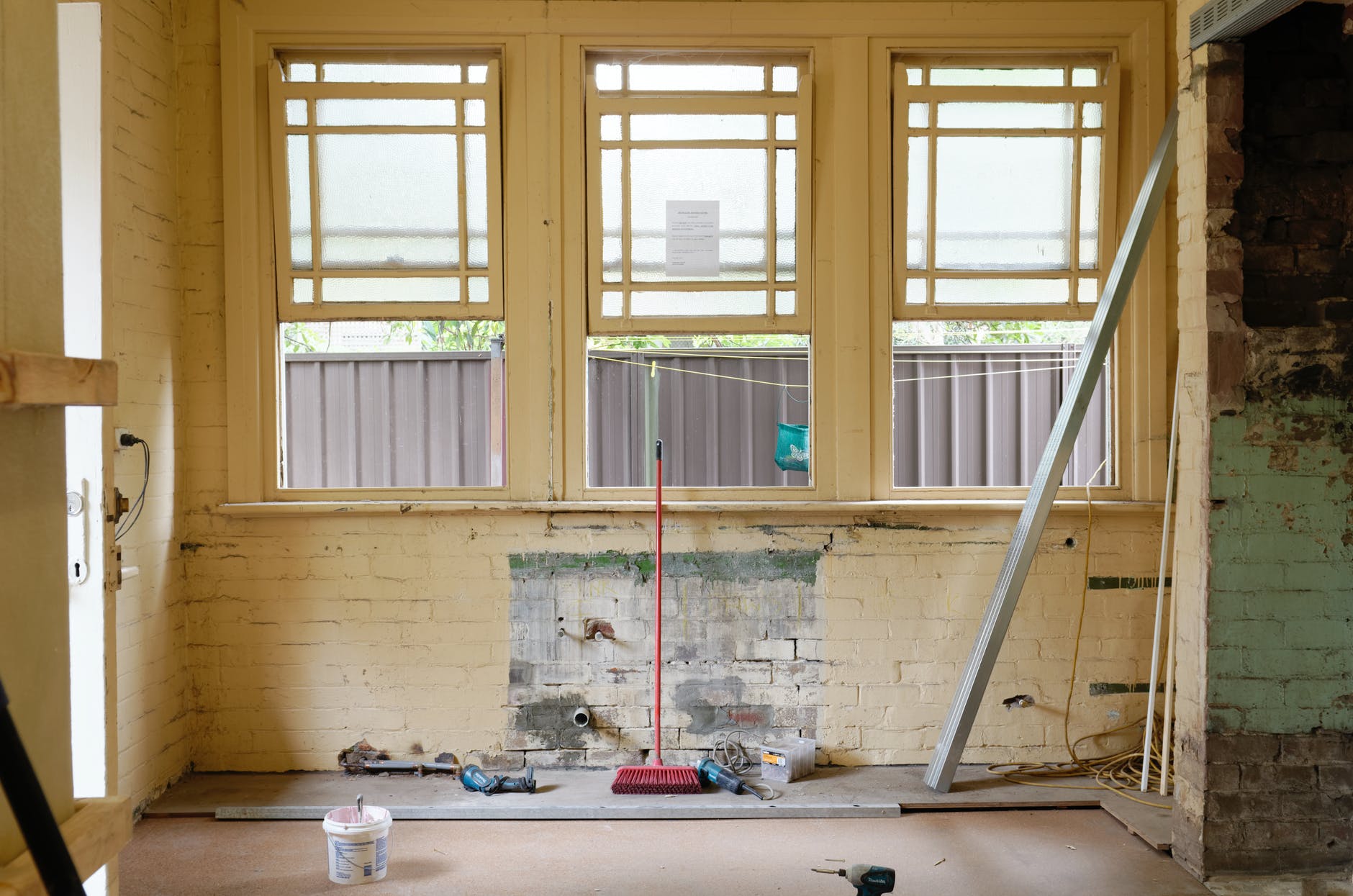
“When everyone else is looking for a move-in ready home, there’s less competition for the fixer-uppers,” said Daryl Fairweather, chief economist at Redfin Corp. “I would not advise it for the faint of heart, but there are a lot of people who are willing to take on that risk because there is such a high reward.”
In 2021, homes in need of renovation sold at a faster pace than the two prior years, according to data from Realtor.com. Fixer-upper sales jumped 13.4% from 2020 to 2021, while the dollar volume of those deals surged 40.8% from 2019 to 2021, reflecting the high growth in sale prices across the broader market. Plus, listings described as “fixer-upper” or using other related terms by agents increased by 8% in December from the previous year…
In a survey by housing research firm Zonda, 33% of respondents said they would buy a fixer-upper for their first or next home but “only if I got a great deal.” Meanwhile, 27% said they would “if the repairs are minor.” Just 20% responded with a “no thanks.”…
On average, fixer-uppers cost 13% less than their move-in ready counterparts, or are about $40,000 less than the typical U.S. home value, according to Zillow. But if that home needs $80,000 to make it livable, that’s not such a great deal, Pendleton said. She recommends that those fixing up homes add an extra 20% onto their budget as a cushion for the unforeseen.
As the article notes, not everyone has an appetite, resources, or the skills for renovation. But, if the housing options are limited, this appears to be an increasingly attractive option for some. The data cited above suggests a small bump in people selling and buying such homes.
This is also interesting to consider from the other side: the sellers. If someone had a home that needed significant repair, this might be the time to not do those repairs and still get a good price. All those homes needing “TLC” or sold “as-is” now might not linger on the market for months.
More broadly, this hints at how much housing in the United States is eligible for repairs and renovation. The postwar suburban boom started roughly 70 years ago now. Those homes have already likely experienced a lot of repair and change and will undergo more in the upcoming decades. The McMansions of the 1990s and early 2000s will be the fixer-uppers of the future. And since Americans tend to like DIY projects and homeownership, we could be in for more decades of renovations.
I think that pride in accomplishment is healthy, but there’s another sense to my pride in homeownership that is, or was, harmful. It’s painful to admit this, but I think I had an unconscious sense that by navigating all the hurdles to home ownership, I proved myself to be “deserving.” That I am, perhaps, more clever, harder-working, more reliable, and somehow more “worthy” of owning my own home than others who haven’t accomplished that.
And to be clear, I knew that my ability to buy a house was, in part, the result of privilege, related to historical and ongoing racism. I have known for years, in an abstract, intellectual way, that my family had pathways to middle-class stability that were not available to others. That inequity was intentional, and racist. My family is white, and I know my grandparents benefited from subsidized mortgages and education benefits that were part of the GI Bill of Rights, which was structured in a way to exclude African Americans and other non-whites. I knew racial discrimination affected who gets jobs, compensation, or who gets mortgage loans.
But recently, when I became aware of an ongoing project by my WBEZ colleague Natalie Moore, my feelings about my house, and particularly that pride in homeownership, became more complicated. Natalie has been researching racially restrictive housing covenants in Chicago, and inviting WBEZ listeners to research their own home, to see if it was ever subject to racially restrictive covenants. Racial deeds and covenants have been getting a lot of attention recently, as more Americans are coming to understand this dimension of American racism. These deeds and covenants, which in most cases restricted white sellers to sell only to white buyers, enforced segregation, excluding millions of African Americans from living in certain neighborhoods. That exclusion limited their ability to access home ownership and the attendant opportunity to build wealth…
When I was seeking to purchase my house in McKinley Park, Linda and my father helped me with a gift that allowed me to afford the downpayment. It was a gift they may not have been able to make without the inheritance from Linda’s parents, which in turn began with her grandfather’s development that excluded Black people and Jews. The gift I received wasn’t enormous, but without it, I would have had to save for at least another year and may have missed the opportunity to buy into my neighborhood at a low cost, as prices are rising.
The Matthew Effect in action: homeownership and wealth begets more homeownership and wealth. More broadly, if you have wealth it can be invested to create more wealth while it can be difficult to start on a path to wealth with little or none to start with.
Even as Americans connect homeownership to responsible homeowners and hard work, those are not the only factors involved. Others include access to capital both for a down payment and for a mortgage and access to particular residential units and communities (whether through formal or informal reactions). And because homes can be expensive and institutions and communities can change slowly, it takes time to acknowledge, address, and change past patterns.
Speaking at a Arizona high school in August 2013, President Obama both addressed specific policies he hoped Congress would pass regarding homeownership as well as the dream of middle-class homeownership. Here is part of the speech connecting middle-class aspirations and homeownership:
What we want to do is put forward ideas that will help millions of responsible, middle-class homeowners who still need relief. And we want to help hardworking Americans who dream of owning their own home fair and square, have a down payment, are willing to make those payments, understand that owning a home requires responsibility. And there are some immediate actions we could take right now that would help on that front, that would make a difference. So let me just list a couple of them…
So I want to be honest with you. No program or policy is going to solve all the problems in a multi-trillion dollar housing market. The housing bubble went up so high, the heights it reached before it burst were so unsustainable, that we knew it was going to take some time for us to fully recover. But if we take the steps that I talked about today, then I know we will restore not just our home values, but also our common values. We’ll make owning a home a symbol of responsibility, not speculation — a source of security for generations to come, just like it was for my grandparents. I want it to be just like that for all the young people who are here today and their children and their grandchildren. (Applause.)
These sections echo common themes of how the American public often thinks about housing:
Homeownership is a symbol of successful hard work and responsibility. Put it in the time and effort and it should lead to a home.
Systems and particular actors can conspire against possible homeowners – financial speculators, irresponsible people – but the government should be in the business of helping people achieve homeownership.
Homeownership is a goal across American generations, from grandparents to current adults to future children.
The middle class and homeownership are intertwined.
Even as President Obama sought specific actions, he appealed to cultural goals and narratives very familiar in American life.
But after prices soared during the COVID-19 pandemic, even the lower-priced homes became out of reach for many low-income households, according to a recent report from the Joint Center for Housing Studies of Harvard University…
In June 2020, a home slightly below the median price was comfortably in that range, selling for $196,450, Hanifa found.
But one year later, a home that was 80% of the median price would sell for $220,562, meaning even lower-priced homes were no longer affordable for low-income buyers.
The loss of affordability was not limited to Chicago. Hanifa found low-income families could afford a home in just 20 of the country’s 100 largest metro areas in 2021, down from 39 the year before…
The hot housing market has had a trickle-down effect on neighborhoods such as Garfield Park, Humboldt Park and Belmont Cragin, he said. As buyers have been priced out of more expensive neighborhoods, they begin looking at a lower or middle-income neighborhoods where they can make offers over asking. Then residents of those neighborhoods can’t afford the homes for sale.
Rising home values are often viewed very positively. Those who own homes can benefit from the increase in prices without much work of their own. Over time, homeowners hope prices go up and they can get a strong return of investment at a sale.
But, this data is a reminder of the flip side of those same rising prices. If prices go up faster than other factors including accessing mortgages and rising incomes, those who want to enter the housing market – and reap the benefits of increasing real estate values – have a harder time doing so.
This dynamic is recognized in particularly expensive real estate markets. When people discuss Manhattan, San Francisco, Seattle, Los Angeles, and a few other locations, people know there is a limited or nonexistent cheaper market for homeownership. This does not come up as often in cheaper markets, often in the Midwest or South, where prices are not as high and there are more options. If prices increase there as well to beyond what lower-income residents could afford, then what happens?
Makes the single largest and most comprehensive investment in affordable housing in history.
The framework will enable the construction, rehabilitation, and improvement of more than 1 million affordable homes, boosting housing supply and reducing price pressures for renters and homeowners. It will address the capital needs of the public housing stock in big cities and rural communities all across America and ensure it is not only safe and habitable but healthier and more energy efficient as well. It will make a historic investment in rental assistance, expanding vouchers to hundreds of thousands of additional families. And, it includes one of the largest investments in down payment assistance in history, enabling hundreds of thousands of first-generation homebuyers to purchase their first home and build wealth. This legislation will create more equitable communities, through investing in community-led redevelopments projects in historically under-resourced neighborhoods and removing lead paint from hundreds of thousands of homes, as well as by incentivizing state and local zoning reforms that enable more families to reside in higher opportunity neighborhoods.
There is certainly a need for affordable housing throughout the United States as well as in specific places. What interests me at the moment here is the references to how this investment in affordable housing will benefit the middle class. The whole package is aimed at the middle class. The introduction states, “President Biden promised to rebuild the backbone of the country – the middle class – so that this time everyone comes along.”
On one hand, affordable housing is important to the middle class. For decades, homeownership has been a marker of being in the middle-class. The postwar suburban housing boom was driven in part by attainable mortgages. This middle-class homeownership is then often related to a number of middle-class goals. Since housing is such a big expense in many household budgets, having cheaper housing enables spending in other areas.
On the other hand, many people need housing assistance, not just the middle class. Middle class is a broad category and some in that group have plenty of resources (this is a little different in high housing cost areas). Housing is foundational need as good stable shelter is connected to a number of other positive outcomes. If this money is aimed at the middle class, will it go to educated young professionals or older downsizers (as it sometimes discussed in suburban communities)? Or, would it be more needed for those who work lower-wage wages or have fewer family and community resources to draw on?
Perhaps the devil is in the details and where exactly this money goes. Or, middle-class here is intentionally broad as many Americans like to think of themselves even if their circumstances suggest they are not and some Americans are averse to resources directed to narrower groups. Regardless, if the plan comes to fruition, it will be worth seeing whether these efforts can make a significant dent in the affordable housing needs in the United States.
Rampant speculation and skyrocketing property values have left Kelman feeling almost nostalgic for those years leading up to 2008, which, in retrospect, were the last time the working poor could reasonably aspire to home ownership in America. “I used to read stories about strawberry pickers buying McMansions in central California, and everybody viewed that as just the absolute apex of insanity,” Kelman told me. “But reading Piketty five years later, is it so bad that the strawberry picker had a nice house?”
Conceding that the picker probably could not afford his McMansion, and that the loans that put him in it were untenable, Kelman nevertheless liked this gaudy permutation of the American Dream. More than that, he disliked the level of “elitist judgment” surrounding these types of homes, which he views as nothing more sinister than the market’s attempt to grapple with problems politicians are content to ignore. In Kelman’s view, the left is eager to help the poor rent homes but not own them, while the right tends to ignore their plight altogether. Meanwhile, rampant NIMBYism prevents the kind of building that might help bring home prices back down to earth.
It had put him in a mood to reflect somewhat darkly on the future of housing in America. “The original premise of my stint at Redfin was that we’re selling the American Dream and the idea that everyone can afford a house sooner or later if they work hard and play by the rules,” he said. “Recently, I’ve had this feeling that there are so many people who are never going to become Redfin customers — that maybe the product we’ve been selling just isn’t a middle-class product anymore but an affluent product.” In February, anticipating a future in which homeownership is out of reach for more and more people, Redfin spent $608 million to acquire RentPath and its portfolio of apartment-leasing sites.
The story as written suggests that Kelman originally subscribed to the idea that Americans who work hard and follow the rules would be able to purchase a home. This has been at least an implicit idea for decades, particularly in the postwar era. He did not like commentary that suggested some were less deserving to own homes or political positions that limited homeownership. But, after the housing bubble burst in the late 2000s, he realized homeownership was not available to all.
If this is correct, the Redfin pivot to apartment-leasing is an interesting choice. This could be a good business decision as rental housing is needed in many communities. At the same time, this does not necessarily line what up with what Kelman expressed. Apartments can provide housing but they do not provide the same kinds of opportunities as housing – such as building wealth – nor are apartment dwellers viewed the same way as homeowners. Americans continue to say that they would prefer to own a home.
Redfin and similar sites could play important roles in what homeownership looks like in the future. Exactly what influence they will have is less clear.