Flipping mobile homes for profit

Fixing up mobile homes offers an opportunity for some to make money:
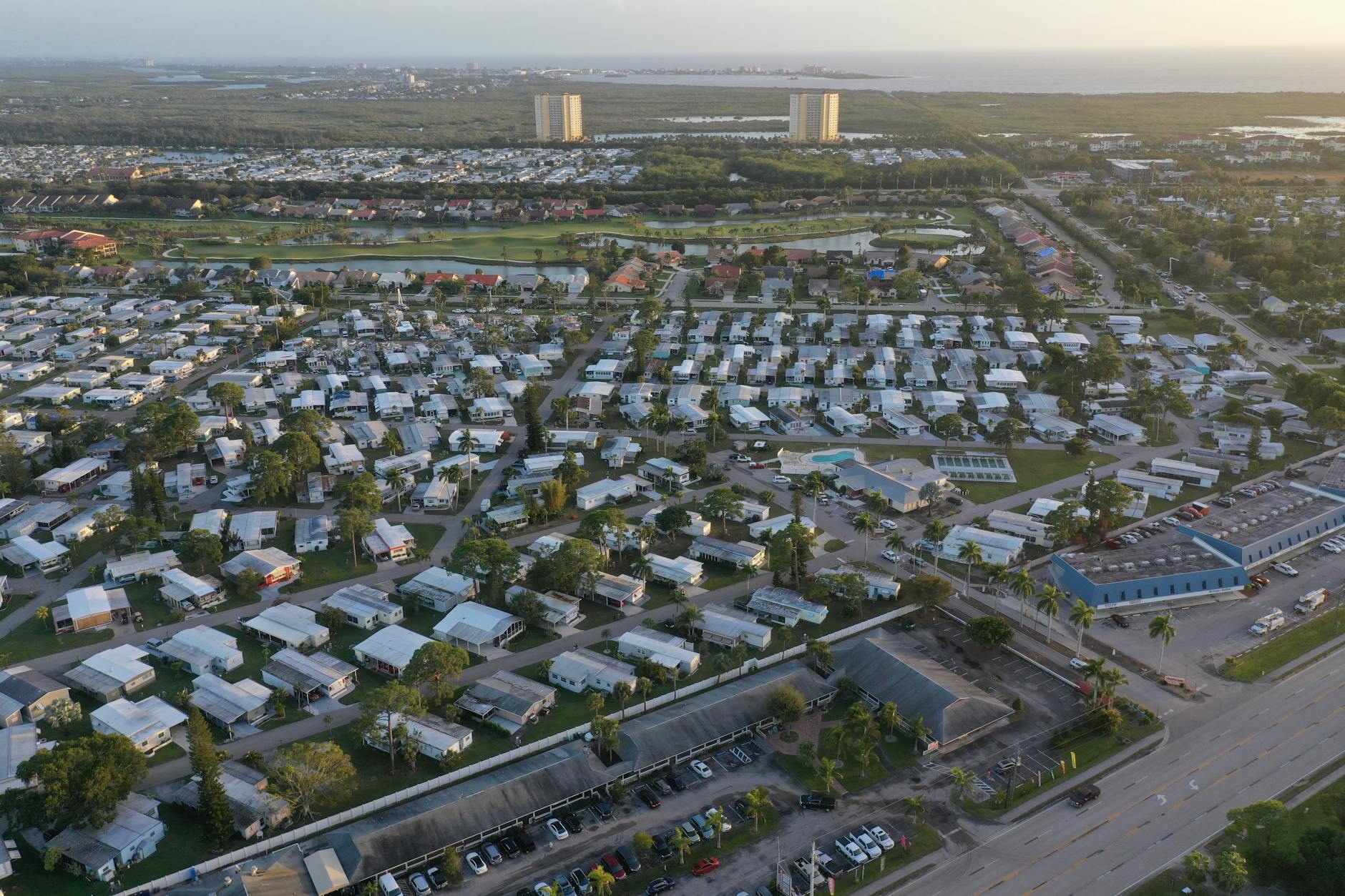
Photo by Nick Adams on Pexels.com

This is mobile home investing, an unsexy, little-known sector that happens to be recession-proof, meeting a nearly bottomless demand, and earning some of the best returns in the housing industry. Its low price of entry is allowing an entirely new crop of entrepreneur — many of them Black, as the Sellerses are, or coming from very modest backgrounds. (A 2021 survey by the National Association of Real Estate Investment Managers found that 73 percent of industry workers are white males.) With housing costs rising across America, many mobile home flippers are finding the opportunities so plentiful that they’re now training other wannabe real estate moguls in the practice, earning a significant chunk of their income from mentorships and tutorials that help more people like them enter the field.

While they don’t get a lot of attention, mobile homes — “manufactured housing” per marketing and policy wonks, or “trailers” in other circles — are the country’s biggest source of unsubsidized low-income housing, providing shelter to 21 million Americans. As the nation’s housing crisis grows, they’re becoming increasingly attractive to people who can’t afford a traditional site-built home. Between 2014 and 2024, the number of new manufactured homes shipped across the country increased by over 60%, according to census data…

The work does require a lot of elbow grease. Some units just need a good cleaning and a fresh coat of paint; others have rotted subflooring, old insulation, and broken windows that all need replacing. After that, the investor will have to market and sell them on Facebook Marketplace or Craigslist, either outright to a buyer or wholesaler, or through seller financing. Investors say the downsides of the mobile homes business aren’t much different from those of other real estate fields: homes that turn out to be in worse condition than the buyers had thought, difficult tenants, unscrupulous contractors.

The sector’s high returns are often characterized by desperation. Facing a lost spouse or job or some other hardship, sellers are often willing to dispose of a home cheaply because they need the quick cash. Buyers are hungry for something, anything, they can afford. They aren’t looking to build equity; they’re seeking shelter, at a time when both conventional homeownership and rentals have soared out of reach for many. Mobile homes exist in an alternate reality, one where a home purchase can be completed in a day without the help of attorneys or appraisers, where the cost of a used unit floats depending on its actual value to the buyer and seller.

An interesting look at the intersection of flipping culture – who doesn’t want to make money on housing? – plus a big need for affordable or cheaper housing across the United States.

Several questions come to mind:

  1. At what point do the returns on flipping mobile homes limit investor interest?
  2. How many people might be priced out of mobile homes because of flipping?
  3. Does any of this help raise the status of mobile homes which tend to have a stigma in many places?
  4. Would we ever see an HGTV show on flipping mobile homes? (Maybe not given their audience.)
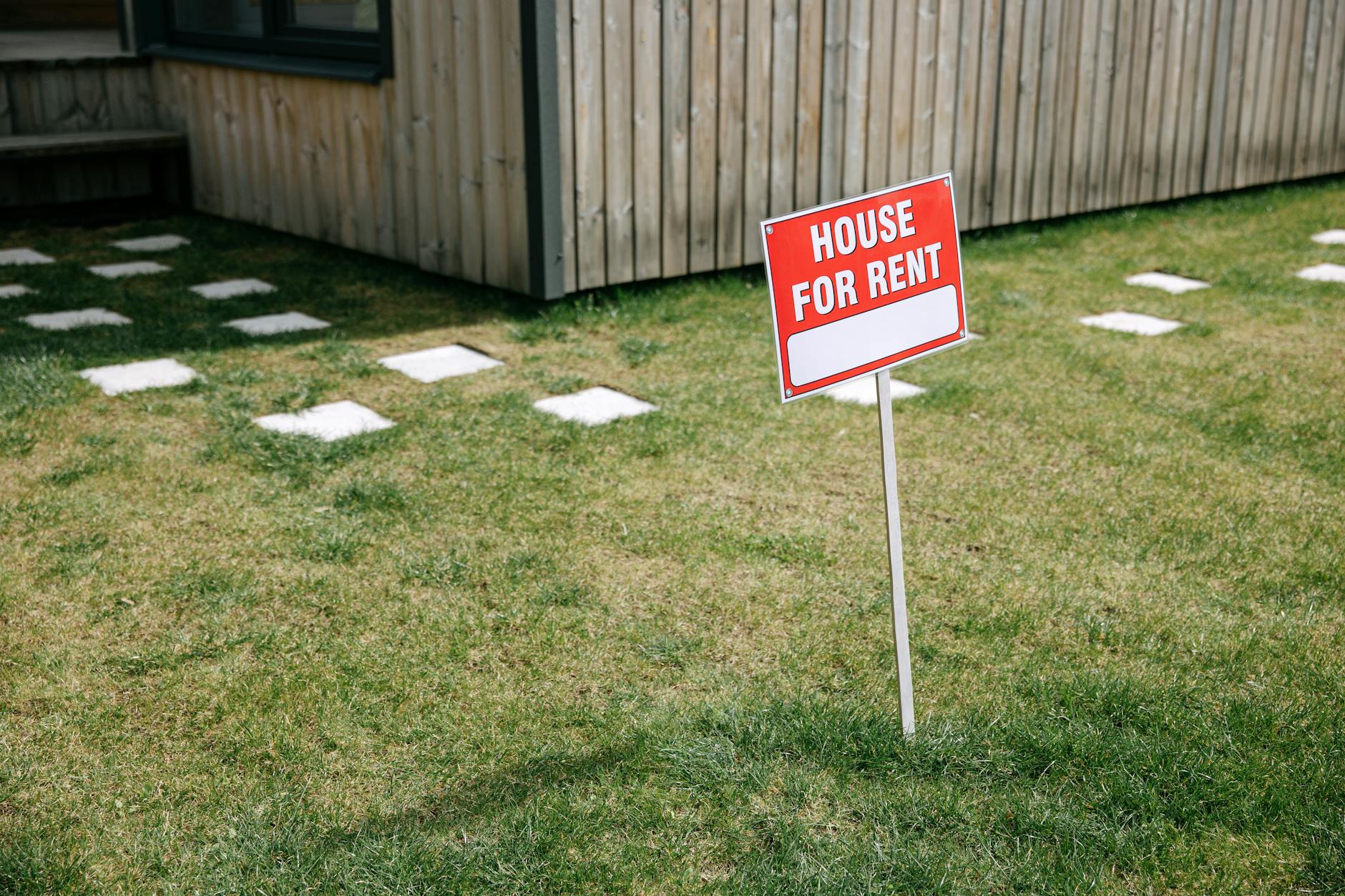
“Small-time landlords still dominate the single-family-rental landscape” and have new tools

One reporter argues the small landlords of today operate differently:

Photo by Ivan Samkov on Pexels.com

Institutional investors — those with more than 1,000 homes in their portfolios — own about 426,000 of the 14.2 million rental homes today, John Burns Research and Consulting found. Most of those properties are in sunny Southern places like Atlanta or Raleigh. Small-time landlords still dominate the single-family-rental landscape, but these aren’t your mom and pop’s “mom-and-pops.” For one, the industry is vastly more transparent than it was in the early 2000s. If you want to see what comparable homes in your neighborhood are renting for, you can scroll through Zillow or visit the website of one of the institutional investors, such as Tricon Residential, Pretium, or Invitation Homes, all of which publicly list their properties and their asking rents. If even that sounds like too much work, companies including Buildium and Roofstock, known mostly for servicing the largest investors in the space, stand at the ready to offer property management and pricing advice — for a fee, of course…

Data on small landlords’ behavior is notoriously scarce, but the latest John Burns figures show that in cities with little to no institutional presence, the smaller landlords are the ones cranking up the pressure. Chattanooga, Tennessee, for instance, has practically zero homes owned by institutional landlords but one of the country’s highest rates of rent growth for single-family homes, with the typical asking rent for new leases up 10% in April from a year prior. Institutional investors own less than 1% of single-family rentals in Grand Rapids, Michigan, but asking rents there were up 8% year over year. In a similar vein, corporate owners may face the most scrutiny over evictions, but mom-and-pop rental owners are more likely to illegally evict their tenants, advocates for both landlords and tenants told Business Insider as part of a wide-ranging investigation into so-called “lockouts.”

Mom-and-pop landlords may not be required to detail their operations in quarterly calls with stock analysts, but most experts I spoke with agreed that even those who own just a handful of properties are getting more with the times…

There will always be some landlords who seek nothing more than a tenant who pays rent on time, doesn’t leave, and doesn’t pick up the phone to complain when something breaks down. For this subset, the onslaught of proptech companies and landlord software may seem like unnecessary money sucks. But others will recognize the need to compete with the more professionalized newcomers — the landlords, both large and small, who fix things on time, let you pay online, and, yes, raise rents accordingly.

If this argument is correct, then it sounds like the information now available to potential landlords and property investors – including for a fee – puts the potential resident at a disadvantage regarding price. Are there tools and information now available on the Internet and social media that help potential renters level the playing field? The potential democratization of information in this sphere may not have benefited everyone in the same way.

I also wonder at the role of expectations about returns on investment among smaller landlords. How much profit should they get? Are they providing a community good or are they hoping to cash out big and/or finance a particular lifestyle? As Americans as a whole expect more money from their houses, how have small-time landlords responded to this?

“Zombie malls” cost communities while others profit

A number of American communities have “zombie malls,” shopping centers that continue to exist even if communities wish they would disappear.

Photo by Aldiyar Seitkassymov on Pexels.com

There are hundreds of zombie malls throughout the U.S. like the Berkshire
Mall, more dead than alive. The older, low-end ones have
lost at least half and, in some cases, more than 70% of their value
since
the industry’s peak in late 2016, according to real-estate research firm Green
Street…

That’s when Namdar Realty and Mason like to swoop in. The New York-based
real-estate partners are among the most prolific purchasers of U.S. malls. They
make money by buying malls cheap and keeping them going, even as town officials
beg them to pull the plug.

Bare said the community would be better served if the Berkshire Mall was
turned into something more valuable. Ideally, a mixed-use property with housing
and medical offices or educational space, and maybe some retail and
restaurants…

Malls typically sit on large parcels of prime real estate—which often
include nearby buildings such as restaurants as well as large parking lots—that
can be subdivided and sold in parts, sometimes at a value exceeding the
purchase price of the mall. The partners keep the malls open, but cut costs by
appealing their property-tax bills and reducing expenses such as staffing and
maintenance. 

All the while, they continue to collect rent from the mall’s remaining
retailers. When national retailers move out, Namdar Realty and Mason try to
replace them with nontraditional tenants such as call centers, local small
businesses, doctors’ offices and bounce-house venues.

asdf

Here are some of the reasons communities do not like malls surviving in this
state:

-They are not generating the kinds of tax revenues they did as a thriving
mall.

-The land could be generating more revenue if used in different ways.
Communities want to replace the tax revenues of the malls with other revenues.
(And this is a reason housing might not be too appealing to some leaders.)

-A mall in bad repair and/or is partly to mostly empty is an eyesore.
Gleaming and busy malls are a source of pride; struggling or dying malls are
the opposite.

-Outside mall owners may not always be perceived as having the best
interests of the community in mind. Imagine how locals might interpret their
actions: someone is trying to profit off our struggles. They are impeding our
progress just to make money for outsiders.

-Even if malls can be demolished or repurposed, it can be a hard path to
putting new and worthwhile in its place. These outsiders are slowing the
process or making it impossible to move on.

Even zombie malls will meet their fate eventually, either as unprofitable
ventures that are sold and redone or as places that continue to generate
profits. And if they can keep making money, are they really zombies?

Skyscrapers happened because real estate was really expensive

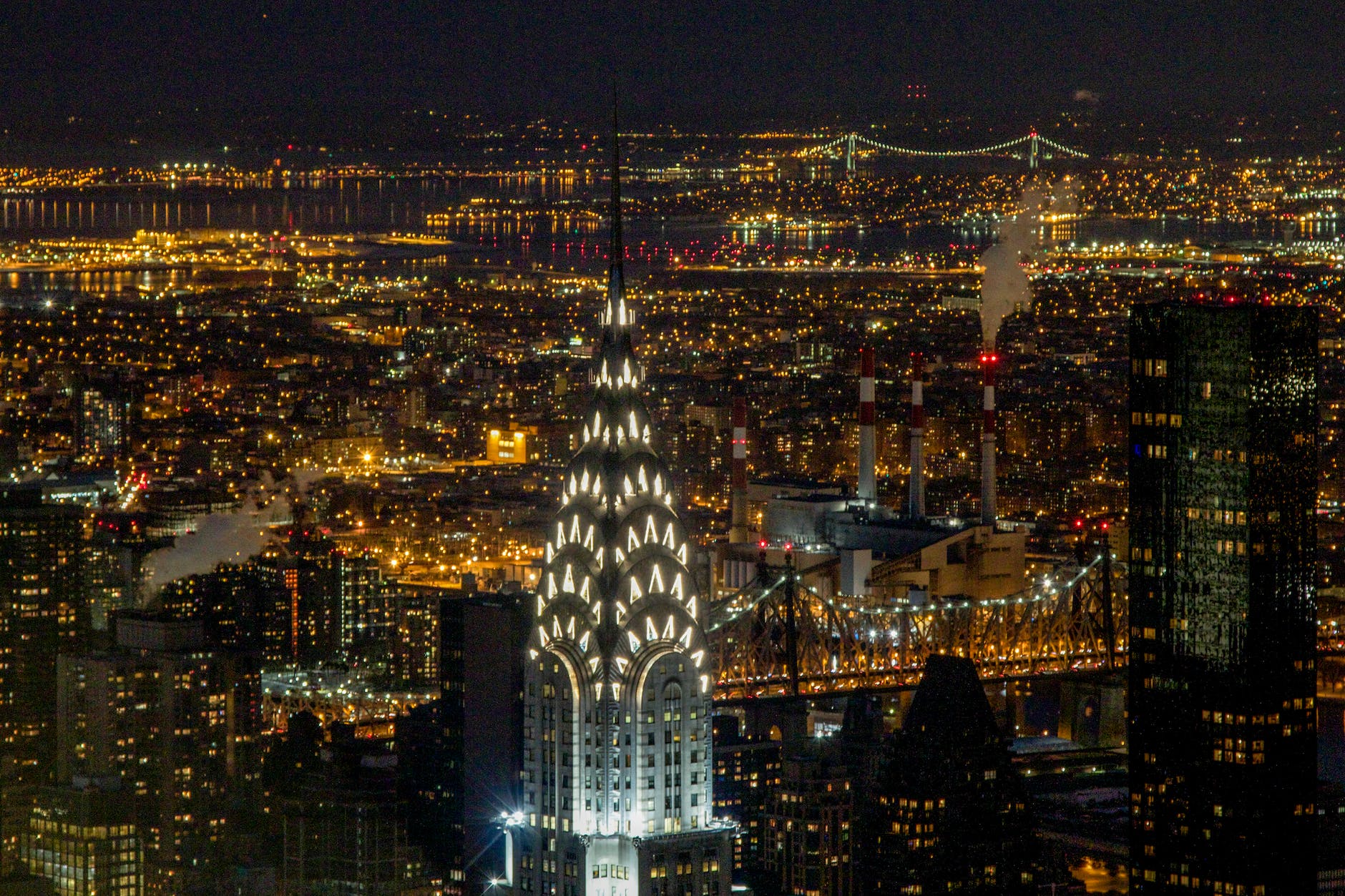
A quick history of the Chrysler Building in New York City provides a reminder of a key reason skyscrapers emerged in American cities:

Photo by Following NYC on Pexels.com

Dominating the New York skyline brought prestige and publicity, but tall towers also resolved a more prosaic problem: As land prices climbed, developers had to build upward to turn a profit, pushing their projects as high as engineering, natural light and, eventually, zoning would allow. “Skyscrapers were a self-fulfilling prophecy of the heated real estate market,” writes Neal Bascomb in his 2003 book Higher: A Historic Race to the Sky and the Making of a City. By the 1920s, with Europe in ashes after World War I, these buildings became brash totems of a new world order. Manhattan in particular had become the “harbor of the world, messenger of the new land … of the gold diggers and of world conquest,” wrote the German architect Erich Mendelsohn in his seminal 1926 book Amerika, published the year after New York overtook London as the world’s most populous city.

In a dense space like Manhattan, demand for land pushed prices up. To make more money from the same plot of land, skyscrapers offered more space. The addition of thousands of square feet of office space, even if it could be hard to fill at times, provided profit.

I would be interested to see analysis shows the profits of a skyscraper over a lifetime compared to other options builders, developers, and companies could have pursued. Instead of building up in major cities, here are other options they could have pursued: building underground; building dense and wide buildings (imagine ones that cover several city blocks at a height of ten stories or so); constructing large buildings in other parts of the city and suburbs; and pursuing multiple business districts rather than centralized locations where everyone wants to gather.

Even if there was profit at stake, there is also the matter of the prestige of skyscrapers. Skyscrapers are important symbols in a city skyline. Were skyscrapers both profitable and status-enhancing or did the increased status mean that the absolute numbers did not matter quite as much?

Celebrating property owners who hold on to their land even as development surrounds them

The movie Up starts with a portrayal based on a true story: property owners continue to live in their home even as it becomes surrounded by new buildings. Their home is now isolated amidst change.

Here is a similar recent story from Australia:

https://www.facebook.com/7NEWSsydney/videos/790734838563206/

Their large five bedroom property with a sprawling 200 metre-long drive is located in The Ponds area in west Sydney, where hundreds of new homes have popped up in recent years…

The home looks bizarrely out-of-place wedged between identical chock-a-block newbuilds, where its 1.99 hectare garden could fit over 50 of the matching new homes inside.

However, when their neighbours upped and left – choosing to sell to the developers – the Zammits made a last hold out.

They refused to sell, despite being offered millions, and prevented the developers snatching up the last plot of land.

“The fact that most people sold out years and years ago, these guys have held on. All credit to them,” local agent Taylor Bredin told 7News

In short, the land could be worth over £25million, especially after ten years of their private rebellion.

The valiant resident holds on to their land despite possible riches; all they have to do is move. Such a story fits the image of the sacrosanct property owner. A home is their castle. No one can tell them what to do. If they want to stay, they can stay. The government or private actors should not be able to move them.

At the same time, we believe growth is good. If even just a few property owners hold out, they can interrupt larger plans for new buildings and activity. Imagine an important highway project or mass transi line or new tall building that need several properties to make it better for others but those owners will not sell. Are there limits to whether a property owner can hold on?

In the Seattle story referenced by Up and in this Australian suburban story, developers could not force the issue but they could build right around them. Edith Macefield’s Seattle home was boxed in on three sides. The suburban property above is surrounded on all four sides by dense single-family homes. The property owner has stayed but the surrounding area has been radically transformed.

For now, the single-family home owner reigns supreme. That there are relatively few similar cases also tells us something. It is nice to hold on to a property but it is also nice to profit tremendously from selling it. Some may not like teardowns but the initial homeowner can make a lot of money. Housing and land is an investment. Few can hold out against the available money and resulting changes.

Closing Walmart and Whole Foods locations and their responsibilities to urban neighborhoods

Walmart announced yesterday it is closing four locations in Chicago:

Photo by Evgeni Lazarev on Pexels.com

The simplest explanation is that collectively our Chicago stores have not been profitable since we opened the first one nearly 17 years ago – these stores lose tens of millions of dollars a year, and their annual losses nearly doubled in just the last five years. The remaining four Chicago stores continue to face the same business difficulties, but we think this decision gives us the best chance to help keep them open and serving the community.

Over the years, we have tried many different strategies to improve the business performance of these locations, including building smaller stores, localizing product assortment and offering services beyond traditional retail. We have invested hundreds of millions of dollars in the city, including $70 million in the last couple years to upgrade our stores and build two new Walmart Health facilities and a Walmart Academy training center.

It was hoped that these investments would help improve our stores’ performance. Unfortunately, these efforts have not materially improved the fundamental business challenges our stores are facing.

Chicago officials decried the closures:

Nedra Sims Fears, executive director of the Greater Chatham Initiative, said the closure of the store and health center in Chatham was “deeply disappointing.”…

“All communities in Chicago should have access to essential goods and services,” Lightfoot said in the statement. “That is why I’m incredibly disappointed that Walmart, a strong partner in the past, has announced the closing of several locations throughout the South and West sides of the City. Unceremoniously abandoning these neighborhoods will create barriers to basic needs for thousands of residents.”…

In a statement, Mayor-elect Brandon Johnson said his administration “will be committed to identifying ways to fill the gaps these closures will leave in neighborhoods, and also to finding other ways to ensure families have direct access to groceries in their communities.”

Ald. Sophia King, 4th, and Ald. Jason Ervin, 28th, whose wards include locations slated to close, both called the closures disappointing in statements Tuesday. “The west and south sides need committed partners to reverse decades of disinvestment and discrimination, and I hope Walmart will work hard to invest in the communities in Chicago that desperately need their presence,” Ervin said.

In San Francisco, a Whole Foods that opened downtown in 2022 closed earlier this week:

Whole Foods Market opened a new “flagship” branch Downtown, at Eighth and Market near the Trinity Place development, with much fanfare in March 2022. But just 13 months on, the supermarket chain has decided to close the store, which was shuttered at the end of business on Monday.

Residents and leaders expressed disappointment:

News of the store’s closure also sparked dismay online. Residents on Twitter described losing the supermarket as “disappointing,” and “disheartening,” while one warned: “As whole foods goes, so goes the neighborhood.”

The Whole Foods Market fell within the district of San Francisco District 6 Supervisor Matt Dorsey, who posted a thread about its closure on Twitter on Monday.

“I’m incredibly disappointed but sadly unsurprised by the temporary closure of Mid-Market’s Whole Foods,” he wrote. “Our neighborhood waited a long time for this supermarket, but we’re also well aware of problems they’ve experienced with drug-related retail theft, adjacent drug markets, and the many safety issues related to them.”

Residents of all communities need access to food. Certain neighborhoods are invested in less than others. A sizable grocery store can help anchor other business activity. Filling a vacant large commercial space can be difficult.

If a company says it cannot keep a store open – the two companies give different reasons above – what reasons might be acceptable to a community?

I would hope retailers and corporations want to go beyond just making money in a location. At the least, as corporations and politicians often remind us, they provide jobs. But, they can also be much more.

From subprime mortgage issues to superprime mortgage issues

The most recent financial uncertainty includes mortgages in a superprime era:

Photo by Expect Best on Pexels.com

This is quite the turnaround. After 2008, banking the rich was often touted as a far better model. Even the biggest banks began aiming more of their consumer lending and wealth management at relatively better-off customers, and they scaled back on serving subprime customers. Wealthy customers seldom default, they bring lots of cash and commercial banking business and pay big fees for investments and advice, the thinking went.

But when interest rates shot up last year, it exposed weaknesses in the strategy. It isn’t that the rich are defaulting on loans in droves. But the most flush depositors with excess cash last year started taking their cash and seeking out higher yields in online banks, money funds or Treasurys. On top of that, startups and other private businesses started burning more cash, leading to deposit outflows…

A major way that the better-off do borrow from banks is to buy homes, and often in the form of what are known as jumbo mortgages. Jumbos are for loan amounts over $726,200 in most places, and over $1,089,300 in high-cost cities such as New York or San Francisco. Jumbo mortgages bring wealthy customers with lots of cash. They also are typically more difficult to sell to the market, in part because they aren’t guaranteed by government-sponsored enterprises such as Fannie Mae or Freddie Mac. So banks often sit on them. But the value of these mortgages, many of which are fixed at low rates for the foreseeable future, have dropped as interest rates have risen.

To be sure, not all banks that focus on wealthier individual clients are under intense pressure. Shares of Morgan Stanley and Goldman Sachs, are down less than half as much this month as the nearly 30% decline for the KBW Nasdaq Bank index. But those banks are more diversified and focus more on the steadier, fee-generating parts of the wealth business, such as stock trading and asset management, than on mortgages or deposits.

I interpret this to mean that there is less money – or lower rates of return – to be made on big mortgages. Wealthy people will want to buy real estate, particularly because it is often assumed that the value of real estate will be good long-term, but the money does not generate the amount of money banks want.

If mortgages are too “boring” or do not generate enough money, could we be headed to an era where banks do not want to do mortgages? Money for mortgages could come from elsewhere.

Build it – the residential and commercial development around a suburban football stadium – and they will profit?

What if the new football stadium is less of a draw in the long run than the development right around the stadium? Here is one report about what has changed in Glendale, Arizona, home to today’s Super Bowl, where the stadium opened in 2006:

Photo by Pixabay on Pexels.com

Far out? The site of Sunday’s Super Bowl is about 13 miles northwest of downtown Phoenix. Arlington Heights is about 30 miles northwest of downtown Chicago.

The distance is less of an issue than it was when State Farm Stadium was built, said Kevin Phelps, Glendale’s city manager. Some projections show that two out of three newcomers to the Phoenix area will live in the West Valley…

The last time Glendale hosted a Super Bowl, it had about 800 hotel rooms near the stadium. By next year, that number will be 3,000. The city has found that most people spend money on dinner and shopping within two miles of their hotel. But a new development has to deliver.

“You have to have a ‘there’ there,” Phelps said. “I don’t care how good your advertising is. If we told everyone to come to Glendale and they got here and there was an ice cream shop and a Denny’s and that’s all there is, you’d never get them back again.”

Just having a superb stadium experience is not enough. The stadium can anchor a larger entertainment district where people come for a variety of events, enjoy food and other experiences, and are willing to spend a few nights or a long day. The real activity and money is in the year-round potential of the property that at the center has a recognizable stadium but also has enough to attract people when there is not a big game.

Still, the more important question is this: who benefits from the new development? Does the suburb of Glendale? Do its residents? Or, does this primarily enrich the team owners who see the value of their franchise increase?

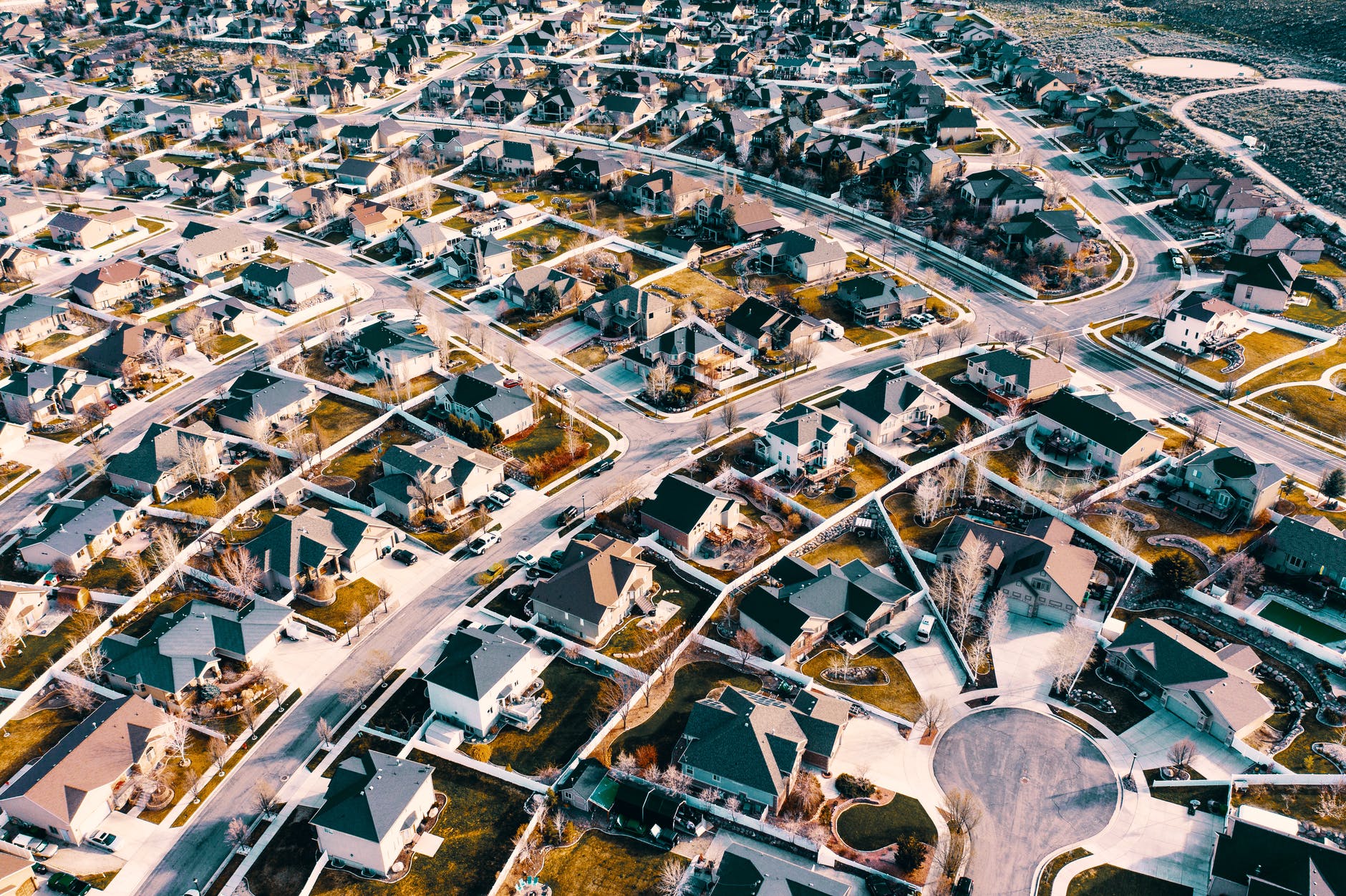
The suburbs are about homeownership but some property owners see more money in rental units

The American suburbs revolve around single-family homes. But, in recent years some property owners see more money to be made in converting housing units into rentals. Here is a recent example from Arlington Heights, Illinois:

Photo by Alexander Mils on Pexels.com

Interra Realty, a Chicago-based commercial real estate investment services firm, announced this week it brokered the transaction — equating to $242,500 per unit — for the property at 1 N. Chestnut Ave. The firm represented both the seller, the Chestnut Street Condominium Association, and the confidential buyer, according to the announcement…

“As long as there remains potent rental demand in desirable communities like Arlington Heights, I expect to see continued deconversion opportunities in select Chicago suburbs,” Interra Managing Partner Patrick Kennelly said in the company announcement. “This submarket, in particular, has become more of an investment target following headlines related to Arlington Park.”

If homes, single-family dwellings and otherwise, are now primarily about financial investments, is this one of the logical consequences?

Suburbanites can often have negative perceptions of renters and apartment-dwellers. How do residents of Arlington Heights feel about more housing units becoming rentals? Does it matter if the conversions are happening in or near suburban downtowns compared to in single-family home subdivisions?

If this continues to spread – and I saw numerous stories in the last few years about single-family homes turned into rentals as well – I would imagine there will be some concern and attempted regulations.

Nextdoor as a kinder, community oriented social media platform and still looking to make money

Nextdoor wants to offer more positive content but is also trying to figure out how to increase profits:

Photo by Michael Tuszynski on Pexels.com

“We actually have data that shows that in the short run, toxic content absolutely drives more engagement,” Nextdoor Chief Executive Officer Sarah Friar said in a recent interview. “But over a six month period, it drives down overall engagement.”

It explains why the company chose the ticker KIND when it went public on the New York Stock Exchange last year. Nextdoor wants to distinguish itself from social media peers like Twitter Inc. and Meta Platforms Inc.’s Facebook as a friendly, down-to-earth platform that fosters connections between real neighbors, not anonymous trolls and scammy bots. There’s also local utility: Users can find a couch to buy, a plumber to fix a leak or a barbecue to attend…

The strategy has not translated into profitability for Nextdoor, which reported a loss in 2021 on revenue of $192.2 million, almost all of it from advertising. Friar says the company is in “investment mode” with plans to expand abroad in the UK, Germany, France, Canada, Denmark and Australia. It’s ramping up marketing and trying to figure out a way to capture more small businesses beyond the 30,000 that currently advertise on the platform. The company is focused on the hyperlocal, but large national advertisers are still how it makes most of its money.

But Nextdoor is competing for those accounts with advertising behemoths, and its users are still older and whiter than other social media networks, according to a survey by the Pew Research Center. Its $51 million in first quarter revenue is a 48% year-over-year jump, but a blip compared to advertising giants like Meta and Twitter, which posted revenues of $27.9 billion and $1.2 billion, respectively. Frontdoor Inc., a platform for home services and repairs, and Yelp Inc., both eclipsed $250 million for the quarter. Unlike Nextdoor, all of them have been profitable. 

This description of the platform raises multiple questions. Here are a few in my mind:

  1. Is profitability in the social media space now inextricably tied to anger and provocative content?
  2. Platforms offer different affordances, features for users and groups to utilize. How much can these features specific to different platforms tame negative content and behavior or is this a problem endemic to social media or society at large?
  3. Can a social media platform be more of a public service than a profitable private company?
  4. Once a social media platform has an established base – other parts of the article discuss Nextdoor’s appeal to suburbanites interested in crime and safety – can it actually change audiences and purposes?
  5. What happens if Nextdoor is acquired by another tech or media company?

As a Nextdoor member, I will keep my eye on this.