NIMBY wins by reducing the number of residential units

One observer discusses how NIMBY efforts reach their goals:

Photo by cottonbro studio on Pexels.com

Sometimes working together, sometimes working separately, NIMBYs have manipulated a web of local laws and requirements—such as exclusionary zoning, minimum lot sizes, and parking minimums—to reduce production of homes. As with any production cap, the result is higher prices for new residents and higher profits for incumbents, and a transfer of wealth and power from buyers and renters to existing owners.

The article places this in the context of antitrust efforts. Local residents and officials are able to operate a monopoly with local land and regulations, thus limiting any competition. Loosen the monopoly’s hold, others can promote and build housing, and housing prices might be more reasonable and more units are available to those who could not otherwise more there.

In the suburban context, one of the reasons Americans tend to like suburbs is because of this local control. They want to buy a home in a community, enjoy the benefits of that community, and then see their property values appreciate as they are there for a while. More housing units is perceived to do multiple things: (1) threaten the amenities of the community – through density, traffic, new residents, etc. and (2) threaten property values.

The author describes efforts in Washington state to counter local NIMBY efforts. It sounds like efforts at the state level changed what local communities could do. It remains to be seen how much local change will now occur and it is not clear how many states would be willing to go as far as Washington. How many local residents would support state-wide efforts that could overrule community interests regarding housing/

A common suburban playbook: zone for big lots, oppose apartments

A new book about Southlake, Texas discusses some of the mechanisms used to keep the community white:

These approaches are found across American suburbs. Start with zoning for larger residential lots which has several effects. It keeps houses further apart. It maintains a more rural image. It avoids having dense housing. It raises the price of homes as each lot is bigger and costs more and the houses can be bigger since there is more space to build.

Next, take apartments and why a good number of suburbanites do not like them. They are denser housing. Suburbanites prefer homeowners, who they think have more commitment to the community and to the property in which they live. They are cheaper and this may drive property values down.

Put these two together and suburbs can keep housing values up and limit who can live in a community. This is not an accident; suburbs often have particular residents in mind when they think about development and the future of their community.

If NIMBY movements wanted to protect property values, were they wildly successful?

The last fifty or so years of life in the United States has included numerous NIMBY efforts by residents (see recent examples here, here, and here). One of the reasons for NIMBY activity is to protect property values. Did NIMBY efforts lead to higher property values?

Photo by Monstera Production on Pexels.com

I was thinking about this recently after reading more Internet/social media chatter about the rise in housing values in recent decades. The appreciation in value is astounding in many places.

NIMBY efforts could have contributed to this in multiple ways. They may have limited housing supply. One common argument regarding promoting more affordable housing prices is to build more housing units. This will reduce demand for existing units.

Or, NIMBY movements may have limited what communities will build. When they do construct housing, it is of similar or better quality of what is already there so as to not create downward pressure on prices.

Or, effective NIMBY efforts have kept less desirable uses away from housing. In particular, single-family homes are often located away from other land uses perceived to threaten property values.

These actions led by residents may not be the only reason housing and property prices have soared. Residents are not the only actors with influence in housing markets and communities; certainly the actions of those involved in real estate, local officials, and others contributed to increased property values.

However, taking the long view, if NIMBYs have acted in order to protect property values, does it appear – whether they directly caused it or not – that this was successful?

Dallas neighborhood fought off McMansions with conservation districts

The Greenland Hills neighborhood in Dallas limited McMansions in recent decades by establishing conservation districts:

Photo by David Gonzales on Pexels.com

Neighbors were also concerned about tear downs and new builds. They watched as modern mega mansions took over the Park Cities. “There’s this thing coming,” Pratt says. And the residents, who founded the Greenland Hills Neighborhood Association in 1983, knew they had to do something to fight the “McMansions.”…

After that, Greenland Hills residents formed a conservation district. In the early 2000s, they surveyed the houses, and a feasibility study showed that about two-thirds of the homes were Tudors. And there was a schism in the neighborhood. There was the M Streets, between Central and Greenville, and then there was M-Streets East, which was sandwiched by Greenville and Skillman. East wanted less restrictive conservation rules, Mut says, and some blocks wanted to opt out.

Finally, the M Streets and M Streets East conservation districts formed in 2003. The M Streets Conservation District protects seven architectural styles, like neo colonial and contemporary. “We all get hung up on Tudors, and we should because that’s pretty massive,” Pratt says. “But the other styles are just as notable in the time period as well.” The district rules preserve each architectural style’s most iconic features on the front façade. The longest section is dedicated to the Tudors. There are specifications on window proportions, roof pitches, secondary gables, even doors. “We’re not going to put a Victorian door and a Tudor home,” Mut says…

And the prices of the houses increased. Homes in Greenland Hills often go for $800,000 or more. Mut can’t pinpoint the exact reasons for the surge in pricing, but he attributes it to inflation, the proximity to downtown, and demand for the homes. Mut and Pratt recognize the irony of the neighborhood’s start as an “affordable” neighborhood versus today. But it’s not an apples-to-apples comparison, Pratt says, especially now that the neighborhood is not on the outskirts of Dallas. And the overall value, she says, is still there. 

Three thoughts come to mind:

  1. The neighborhood wanted to protect its particular architecture and character. To do this, they set up guidelines that limited property owners. This is often the trade-off of historic preservation in American communities: retaining the older styles limits what current and future property owners can do.
  2. This occurs in a metropolitan region where McMansions are common. When I compared how McMansions were defined in the New York Times and Dallas Morning News, I found people in Dallas more open to McMansions. However, it sounds like people saw what was happening in other neighborhoods and decided they did not want this in their neighborhood.
  3. Home values in the neighborhood have increased. Would this have happened at the same rate if McMansions had been constructed instead? Preserving the older homes means the neighborhood appeals to certain buyers. Building McMansions means newer and bigger homes. Which option would have raised property values more?

Suburban aesthetic regulations for homes and solar panels on the roof

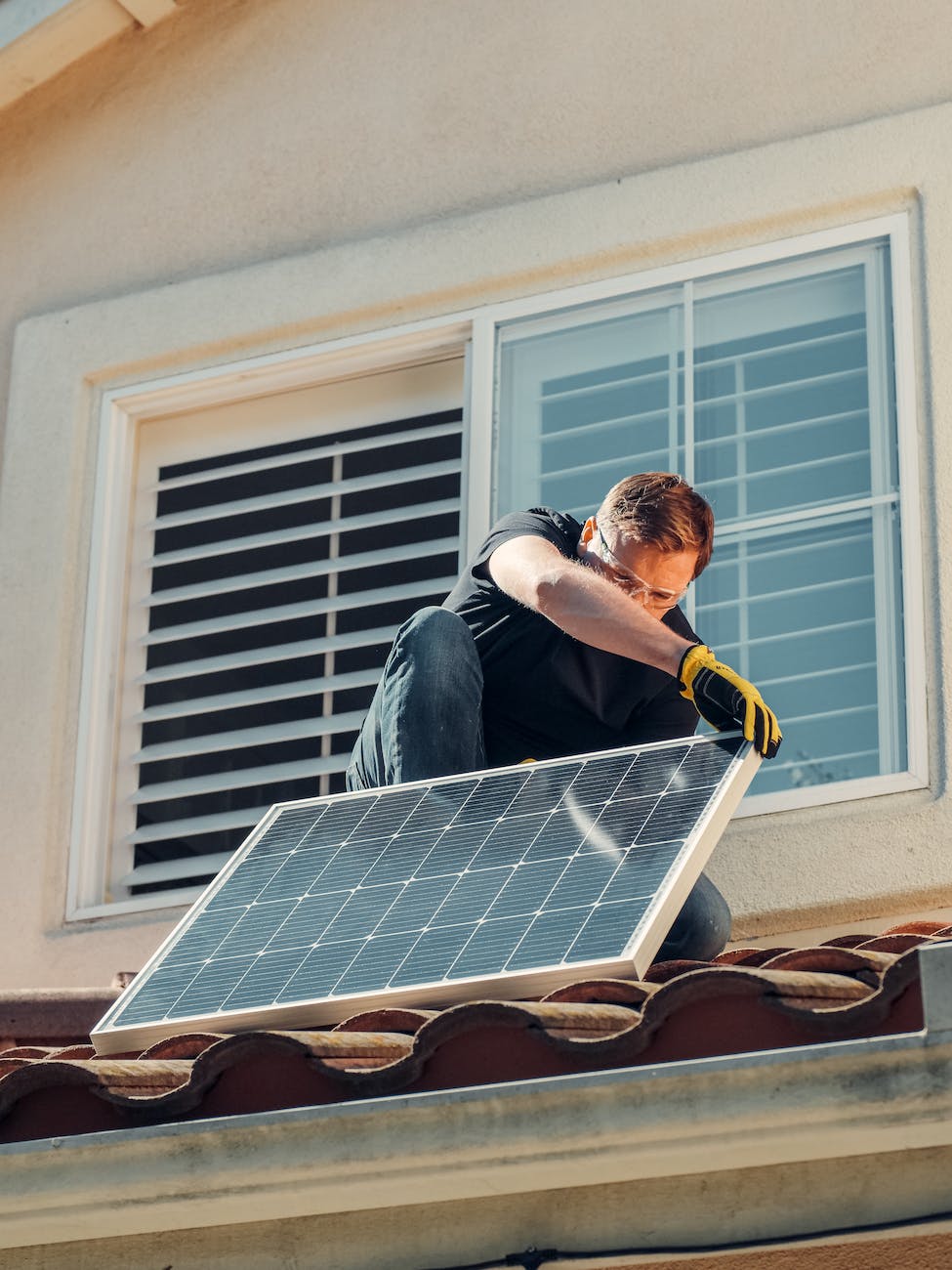
One wealthy Chicago suburb does not allow solar panels on the roofs of houses due to concerns about their appearance:

Photo by Kindel Media on Pexels.com

In an attempt to stay true to its motto — “A Unique Village in a Natural Setting” — Kildeer is one of the few Illinois municipalities that bans roof-mounted solar panels from residential buildings.

The reason? Village leaders think they’re ugly…

Residents may install only the generally pricier version of solar energy collection: integrated solar roofs, which are made of solar shingles that blend into a home’s appearance…

Restrictions on solar-power equipment to certain materials and designs is not unusual for the village, said Chief Village Officer Michael Talbett. The municipality already restricts building materials based on quality and aesthetic concerns, he said. For instance, the village does not permit vinyl siding on its homes…

Golf, a small Cook County community just north of Morton Grove, has a moratorium in place on solar development while it finds “the best fit” for its community, village administrator Michelle Shapiro said.

It sounds like property values are the primary concern here. If certain materials are used on a house in a neighborhood or community with more expensive houses, some fear a threat to values and neighborhood continuity. Americans like to talk about the rights of individual property owners but also are very willing at times to regulate property owners to counter perceived threats and interactions with neighbors (think HOAs, local regulations, etc.)

Do solar panels on the roof mar a house or do they indicate a certain class status? Or, as the article indicates, there are higher-end solar panel options that would satisfy those with aesthetic concerns.

Who benefits from preserving open space in the suburbs?

I was reading through some newspaper articles from the 1990s about development in my suburban county. In an article on a $75 million bond proposal for county voters to preserve 2,300 acres of open space (which voters did approve), here is one explanation why county voters should increase their property taxes for this purpose:

Photo by David Boozer on Pexels.com

Bond issue proponents have stressed that preserving open land will help everyone by making DuPage County an even more desirable place to live. Saving open space will improve wildlife habitats, help control flooding, improve stream water quality, avoid added congestion and protect property values, Oldfield said. (Lynn Van Matre, “DuPage voters to decide on open space,” Chicago Tribune, November 2, 1997)

The reasons listed for voting in favor of spending this money appear to split into two areas: (1) environmental concerns (wildlife, flooding, water) and (2) a particular quality of life marked by property values and limited traffic.

But, I wonder if the first category is a subset of the second set of concerns. Suburbanites in Chicagoland care about property values and have concerns about drug treatment centers, waste transfer facilities, religious buildings, apartments, and anything else they think threatens their financial investment.

Do suburban residents care more about environmental concerns or about what development might go into these open spaces? From the perspective of some (and this was also expressed in the article above), such land could be used for affordable housing or for community amenities. To keep it as open space means it could not be other uses that people could benefit from.

If preserving property values is the top concern regarding land development, this is the sort of decision that might be made. Such a decision does not come cheaply; local property owners pay more but they do so in order to hopefully boost their investment even more.

(See earlier posts involving questions about who benefits from open space in New Jersey and the motives behind acquisitions by forest preserves.)

Regulation coming for renting out suburban backyard swimming pools?

Suburbanites are renting out their pools through an app and their neighbors are not happy:

Photo by Pixabay on Pexels.com

The sounds of summer fun ripple up from ads for Swimply, an app that allows homeowners to rent out private pools to strangers looking to enjoy cool water under the hot sun. But that seasonal chorus has sharply divided suburban residents of Montgomery County as the local government considers formally regulating the short-term amenity rentals — potentially becoming the first in the nation to do so…

It is only mid-spring, but already dozens of pools in and around Maryland’s most populous county have been listed for rent on Swimply, which launched in 2020 as people sought alternatives to public pools that shut down because of the pandemic on the heels of the wild success of apps like Airbnb and Uber. Hosts set hourly rates anywhere between $25 to $100 an hour to access private backyard pools that bypass lines and crowds.

Unlike long-established home rental and ride sharing apps, newer apps that let people rent out their pools, home gyms and backyards have largely been unregulated across the United States so far. In fact, several jurisdictions, from the city of San Jose to towns across New Jersey to the state of Wisconsin, have tried over the past three years to ban the rentals or set up strict rules that require private pools to meet the same standards as a public pool…

A like-minded group of 36 county residents from Chevy Chase, Rockville, Montgomery Village, Kensington and Rosemary Hills, wrote a letter opposing the bill and asking the county instead to outlaw the amenity rentals altogether. The group argued that the rentals turn quiet residential neighborhoods into bustling business districts, without the infrastructure to support commercial activity. They raised dozens of concerns, largely over the added nuisance of strangers pouring into their neighborhoods because of the apps, congested roads, scarce parking, and noise and safety.

Should the property rights of homeowners reign supreme – they can do what they want with their property – or is this too much activity within residential neighborhoods where people expect quiet and do not want neighboring activities that they perceive will affect their property values?

If Montgomery County does not regulate this, someone will. I can imagine an alternative line of reasoning from a suburban government: this is a possible revenue stream.

When the values of homes quintuple over 5 decades by just being there

I recently saw a house near me that was for sale. Checking the online property history, I found that the home is now worth roughly 5 times more than what it sold for in the early 1980s. By just being there for the last four decades, the home has quintupled in value.

Photo by Nataliya Vaitkevich on Pexels.com

This is not a phenomena restricted to our suburban area. Recently following an Internet rabbit trail, I was looking up property values in Levittowns on the East Coast. I remember seeing that their values had at least tripled or quadrupled over a similar span. What were once cheap and simple suburban homes became homes with values significantly above the median value for owner-occupied homes.

Homeowners would likely say that the values have increased because of the maintenance and upgrades in the homes and properties. There has been change; the homes near us have been updated and added to over the last fifty years while the Levittown houses have been transformed in numerous ways over the decades.

But, those positive changes do not add up to such an increase in value. Much of the increase in value has come from just being there. Being in the right location. The owners who lived in such homes benefited financially from a positive return on investment and could roll that new found wealth into other homes, investments, or opportunities.

How might a prediction of a crash in housing prices in specific cities affect behavior?

Goldman Sachs is predicting a big drop in housing values in four American cities:

Photo by RODNAE Productions on Pexels.com

In a note to clients earlier this month, Goldman Sachs forecasted that four American cities in particular should gear up for a seismic decline compared to that of the 2008 housing crash.

San Jose, California; Austin, Texas; Phoenix, Arizona; and San Diego, California will likely see boom and bust declines of more than 25%.

Such declines would rival those seen around 15 years ago during the Great Recession. Home prices across the United States fell around 27%, according to the S&P CoreLogic Case-Shiller index…

In 2023, the investment bank expects home prices to barely fall in cities like New York (-0.3%) and Chicago (-1.8%) while predicting higher prices in Baltimore (+0.5%) and Miami (+0.8%).

It make sense that a company interested in investments and finance would want to make such a prediction. Will it change people’s behavior? A few ways this might matter:

-Local homeowners try to sell now before the big decline or prepare to stay put longer so they can see an increase in values. Either way, the supply of homes for sale is affected.

-Builders and developers reduce their construction and plans. They wait to see how long such a decline lasts. They hope to weather this and have higher profit margins later.

-Local governments steel for the impacts to tax revenues and population growth.

-People who might consider moving to or investing in the area reconsider. Would lower housing values make the area more attractive? (This might conflict with fewer homes for sale.)

Does such a prediction become a self-fulfilling prophecy to some degree as people wait for the drop in home prices?

Outside of governments, which actor owns the largest amount of land in the world?

According to a story from the University of Notre Dame, the answer is:

Photo by Ashley Fontana on Pexels.com

the Catholic Church is the largest nongovernmental property owner in the world

While there are no numbers on the number of properties, acres, or value, I would guess that it adds up to a lot. To serve over 1.3 billion adherents around the globe – 2019 pre-Covid figures – requires a number of buildings and properties all over the place.

Asking questions about how much property a religious group should own is another matter. Is one interested in efficiency and how many people are served through each property? Is there a religious group has too much property? Does it matter if the property serves the community as well as religious adherents? All of these could factor into whether the amount of land owned is seen as a moral good or a moral problem.