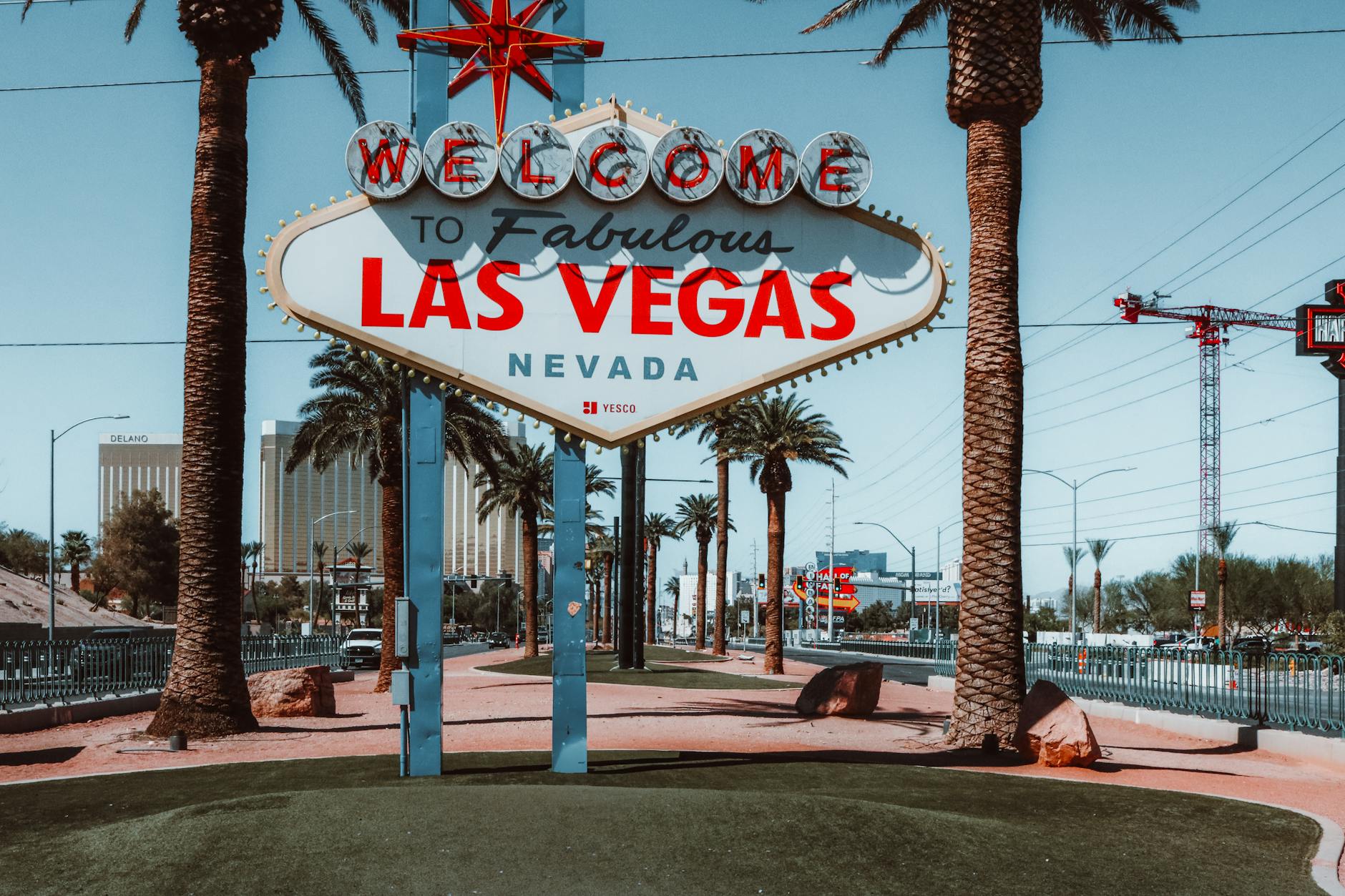
With the potential for a city to add an NBA franchise in time for 2028, Vegas could go from no Big Four teams to become the 13th city with an MLB, NBA, NFL and NHL team in the span of 11 years.
Several things may have happened in a relatively short amount of time:
The city has grown rapidly in recent decades. The city had 125,787 people in 1970 (too small to have 4 sports franchises), 258,295 in 1990 (still on the smaller side), and 583,756 people in 2010 (a big city).
It is a new market. This presents a chance to have new fans.
Gambling is now okay with every major sport because of the revenue generated. That obstacle is gone.
The city and other governments are willing to provide public money for stadiums. Owners and teams really like this.
At some point, Las Vegas will not grow like it has in the past (it already slowed between 2010 to 2020 to 10%). At some point, a team might want to leave Las Vegas for greener pastures. But for now, Las Vegas is a shiny new sports city. If the NBA does indeed start a franchise there in the next few years, the teams in the four major sports help give the city and region a certain status.
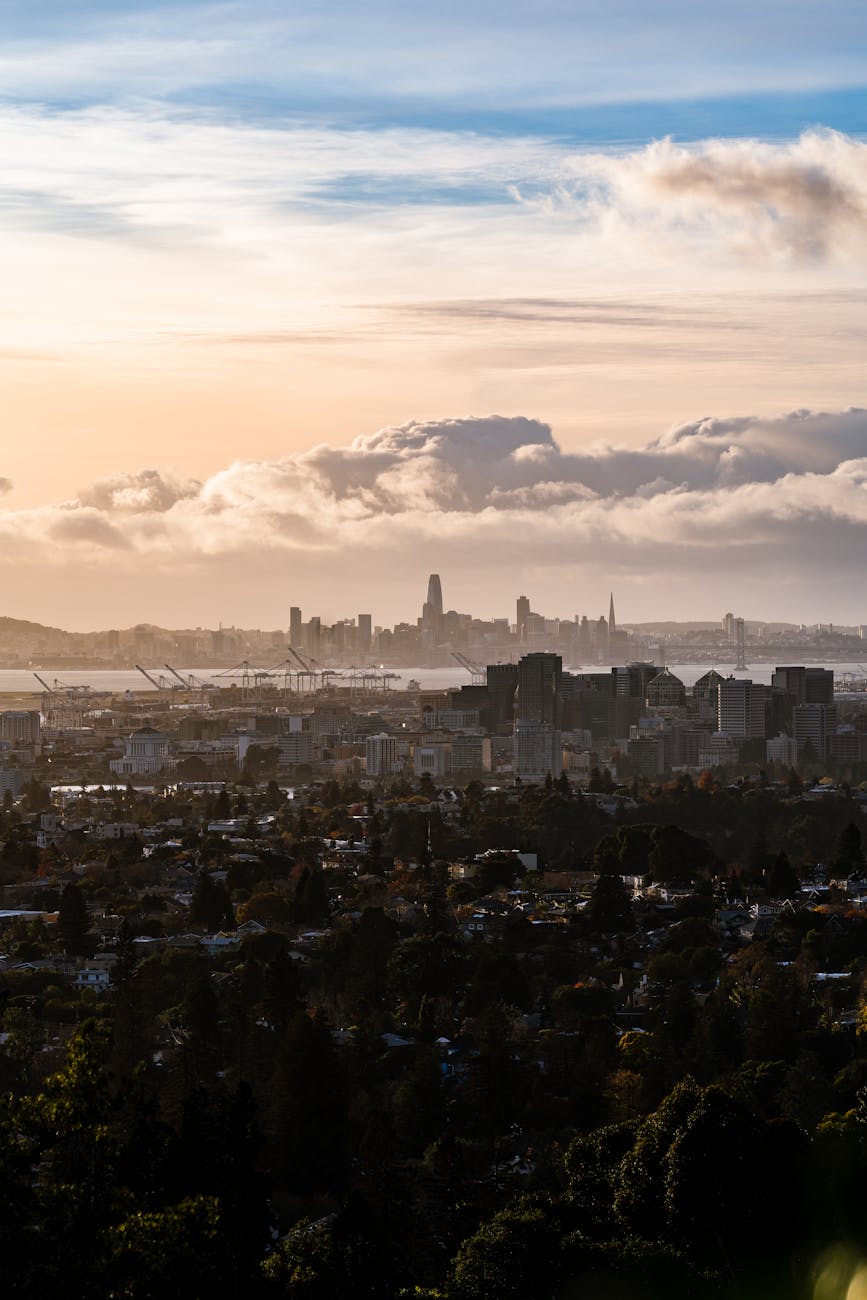
Professional sports teams in the United States can and do move from place to place. But how often does a city lose three teams in less than 10 years? Here is what happened in Oakland:
The Raiders left for Los Angeles in 1982, came back to Oakland in 1995 and then uprooted for Las Vegas 2020.
The Golden State Warriors moved across the bay to San Francisco’s Chase Center starting in the 2019-20 season after having played in Oakland since 1971.
Oakland even briefly had an NHL team: the California Golden Seals, which entered as an expansion franchise in 1967 and played nine seasons in Oakland before moving to become the Cleveland Barons, which ceased operations after two seasons.
What might this signal about Oakland? Pro sports teams can be a status symbol, indicating a particular population size and reputation. Losing a team can be viewed as a loss to a different place.
At the same time, there seem to be some unique factors at work. Oakland is across the bay from San Francisco and is close to San Jose, two other big cities that also have pro sports teams. One team, the Warriors, went across the bay. Additionally, the rise of Las Vegas meant teams could move without going all the way across the country from Oakland. Two teams went there. Finally, all three of these teams were in other cities before leaving Oakland: the Raiders spent time in Los Angeles (though started in Oakland), the A’s came from Philadelphia and Kansas City, and the Warriors started in Philadelphia and played in San Francisco before playing in Oakland for several decades.
The A’s leaving means this big city has no pro teams within city limits. The region still has pro teams – the 49ers, Giants, Warriors, and Sharks – but none are located in a city that had teams in each of the four major leagues.
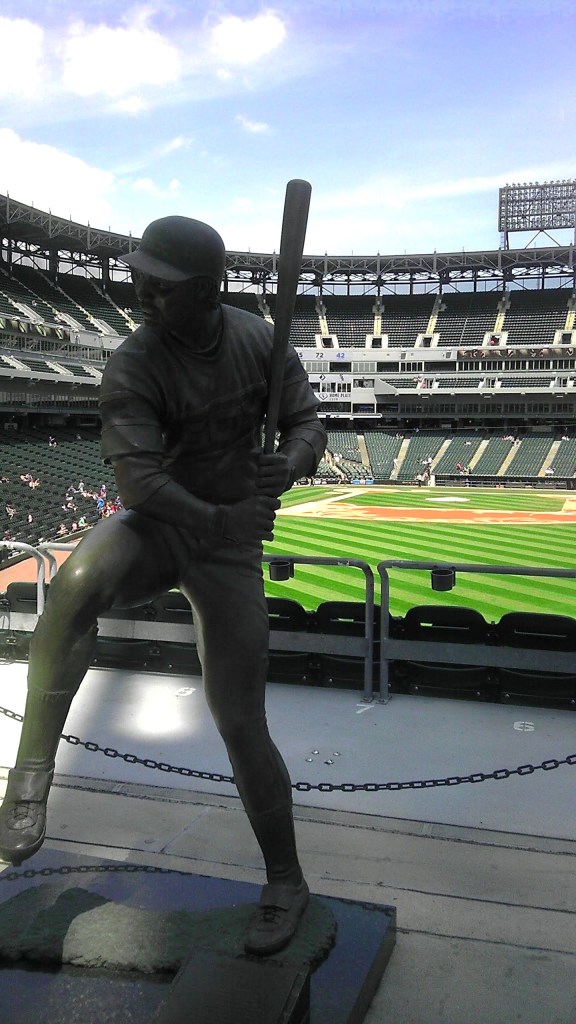
The White Sox stadium plan was resurrected seconds before midnight Friday, thanks to House Speaker Michael Madigan`s watch and an animated display of political arm-twisting by legislative leaders and Gov. James Thompson…
Minutes before House and Senate members walked into their chambers late Thursday, leaders from both parties predicted that the $150 million Sox stadium bill would fail, leaving the Sox no choice but to leave the South Side for St. Petersburg, Fla.
House Republicans left their caucuses, saying they had only five votes for the package. Their Democratic counterparts said only 50 votes could be mustered. And Senate Democrats said they had only 10 votes in favor of the deal.
But a few minutes before midnight, Senate Democrats ratified the measure by gathering 30 votes. In the House, after many observers saw their watches read past midnight, the constitutionally mandated adjournment time, the House passed the measure by a 60-55 vote. The published roll call read 12:03 a.m. Friday, which normally would mandate any bill passing by a three-fifths majority, or 71 votes…
”By my watch, it was 11:59,” Madigan said. ”I didnt know this would pass. The Republicans told me they had seven votes when we went in, but the governor and I and all the members took risks and passed this bill to keep the White Sox in Chicago. Now its up to them. We took them at their word.”
Clocks stopped, votes changing, foregoing other legislative priorities all to get a sports stadium paid for. As I have argued before, few political leaders want to be the ones who let the local major team get away. What this tends to mean is that local residents end up paying for the stadium while the team owners become even wealthier.
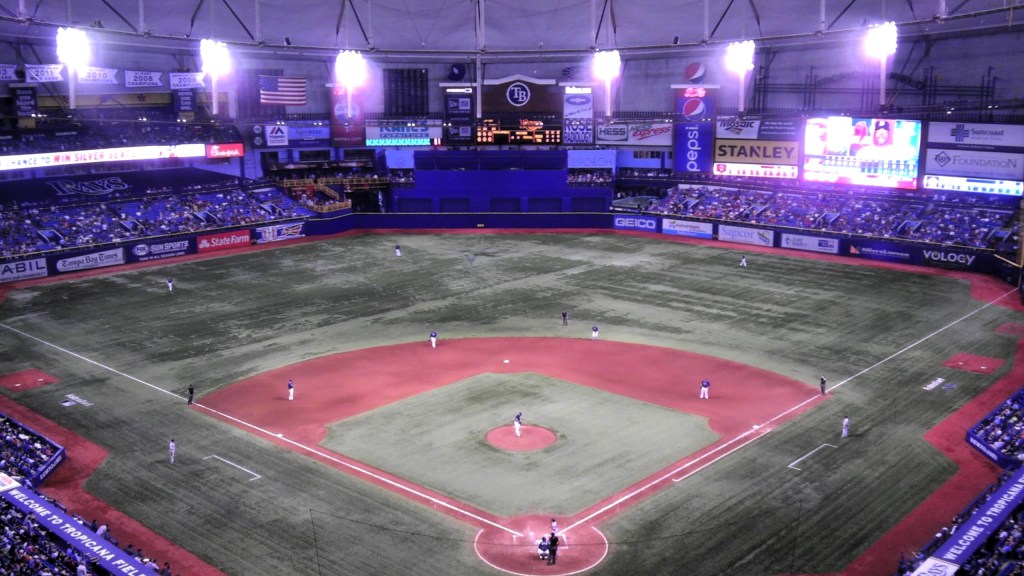
Another reminder: this threatened move of the White Sox to St. Petersburg, Florida led to the construction of another stadium where the Tampa Rays now play:
Who wins in these deals? The owners. For their tax monies, the fans may get to watch games in person or pay attention through local media.
The 2026 World Cup final will be held at MetLife Stadium in East Rutherford, New Jersey, on July 19, world soccer governing body FIFA announced on Sunday…
“It’s going to be a special World Cup,” Berhalter said after the announcement was made. “To have the final in New York, New Jersey is a dream come true for me. Being from that area, and I’m sure for most people from that area, it’s an area with a rich tradition of soccer and producing players.
“To think about when I was little, going to watch the [New York] Cosmos and them selling out Giants Stadium, and now this stadium is going to host a World Cup final. It’s really special.”
MetLife Stadium is home to the New York Giants and Jets who play in suburban New Jersey. The stadium is about 9 miles northwest of Times Square and about 13 miles northwest of Wall Street. When the Super Bowl was played here in early 2014, I assume more TV shots and attention was paid to New York City rather than the New Jersey suburbs.
It might also be worth noting that the 1994 World Cup final, the only one in the United States thus far, also occurred in the suburbs:
In 1994, the United States played two of its group-stage matches at the Rose Bowl in Pasadena, California, and the other at the Silverdome in Detroit. The Rose Bowl also hosted the final that year — with Brazil topping Italy in a penalty shootout — and again in 1999 for the Women’s World Cup, when the United States beat China, also on penalties.
Set in Pasadena, the Rose Bowl is roughly 11 miles northeast of downtown Los Angeles. This region is famously sprawling – and the 2028 Summer Olympics will take advantage of the full region for all of the events.
All the talk of soccer taking off among kids in the American suburbs may find its peak in this experience.
According to this map, most stadiums are pretty close to downtown. Some are further away – Texas, Kansas City – while others are close to ten miles away but still in the city (both New York teams).
My suspicion – without looking hard at the data – it that this may not be true of all of the major sports leagues in the United States. Baseball stadiums are often close to downtown but this may not hold across other sports. At least a few NFL stadiums are in the suburbs.
Do cities believe baseball stadiums are economic engines? Do teams closer to downtowns draw more fans? Do team owners see locations closer to downtown as more desirable, particularly with the trend to make money on developing land around the stadium?
Via Sports Business Journal, a Chicago mayoral committee will recommend that the city consider the feasibility of putting a dome over Soldier Field.
A dome, as reported by Crain’s Chicago Business, could cost between $400 million and $1.5 billion.
Other possibilities include upgrades to the stadium (including significant rebuilding of certain parts of it) and selling naming rights to generate revenue for improvements.
In the long run, it is not probably not worth it for the city and the others to spend hundreds of millions to keep the Bears. The team would benefit the most from new arrangements. The money spent on eight Bears home games a year will be spent elsewhere in the city. The team is not leaving for another market but just for the suburbs.
At the same time, losing the biggest team in town to a suburb is not a good look for leaders. The Bears have played in the city for a century. They are the most popular sports team in town. Soldier Field hosts other events but it has been the home of the Bears for decades. The loss of the Bears could be added to the narrative of losing companies and residents.
Discounting whether the offer from the city is a viable one – putting a dome on Soldier Field is no easy task – I think this is a necessary political move. The mayor and city leaders need to make a good offer to save face. The big city leader cannot let the big team leave without a fight. And ten years from now, when the Bears are playing in a suburban property that earns the team even more money and the city of Chicago has moved on, there may still be lingering blame for those who let the Bears leave no matter what offer or public statements they made.
In a pair of radio interviews last week, Lightfoot poo-pooed a potential move, saying Arlington Heights can’t match the offer Chicago will make — or its tourist trade…
While the prospect of reelection is much more imminent for Lightfoot than where the Bears end up, any signs that she is relenting to Arlington Heights would be the death of her political career.
It was just a few months ago that Lightfoot was overtly dismissive of the Bears’ purchase agreement for the 326 acres at Arlington Park Racecourse — enough land for a world-class stadium plus all manner of ancillary entertainment businesses from which the team could profit…
If Lightfoot thinks she can keep the Bears at Soldier Field — even with a dome — she’s nuts. The constraints of the NFL’s smallest and oldest stadium won’t allow Soldier Field to host a Super Bowl or, as is important to the team, to allow the Bears to do what has become commonplace around the league: develop the stadium as an entertainment complex that generates more cash…
The only sure winner in this tug of war will be the football team.
The research consistently finds that team owners are the biggest winners in the battle to provide tax breaks, monies, and other benefits for sports teams who consider relocation. Yes, it would be a PR and status blow to Chicago to lose the Chicago Bears to a suburb – even a denser Arlington Heights – but people will still spend money in the city and the team will still be in the region. Do not go into taxpayer debt just to enrich a private football team.
It will be very interesting what kind of “best offer” Chicago will provide. And how public will this all get as the city tries to avoid losing the team?
SoFi Stadium was built on the former site of Hollywood Park racetrack, presenting a solid comparison to Arlington Park. According to Noll, the reason SoFi Stadium is in position to be financially successful is the mixed-use development also being built on the property.
Noll believes a stand-alone stadium is no longer a realistic option for NFL franchises because a $5 billion stadium can’t be financed by eight football games a year and the random big-name concert. Year-round revenue must be part of the package…
Glendale city officials, for example, added residential neighborhoods to the area so the entertainment establishments would be frequented at night and on weekends when no game is in town. They added office space so workers would patronize the restaurants in the daytime and not take up parking at night.
“If you’re not able to capture benefit in a meaningful way outside of the football games, it’ll be an expensive proposition,” Phelps said. “We’re seeing tremendous growth in and around the stadium, kind of creating this sports and entertainment hub. I think that’s the future where these kinds of venues are going.”
Creating this sort of suburban entertainment center is a dream of many larger suburbs. Not only would this boost the status of the community, it would add jobs and tax revenues. Metropolitan areas only have so many stadiums and major revenue generators and this could be viewed as a once-in-a-lifetime opportunity (or gamble).
But, this would also be a major change. The article noted that this site in Arlington Heights is surrounded by residences; would a mixed-use area of denser housing, restaurants, and entertainment venues be welcomed? Can Arlington Heights go full[speed into such a project?
As the article notes, it could turn out poorly. There is a lot of money at play. Getting any taxpayer dollars involved could be a risk. It all could take time to develop fully into a true center for suburban football as opposed to a football stadium stuck in the middle of single-family homes near highways.
Given all the history of the Bears in the city, I would be more than 50% confident that they stay in Chicago. The allure of a new, large stadium that could serve other uses much of the years is incredibly appealing. There is money to be made in the suburbs. But, it would certainly be a change for all involved, including Chicago leaders who would have much to answer for if the Bears become the Chicagoland Bears.
With the announcement that Arlington Park will be for sale, ideas are swirling about how the land could be used. I have heard a few times already the possibility of the Chicago Bears constructing a new stadium there. Here is one example:
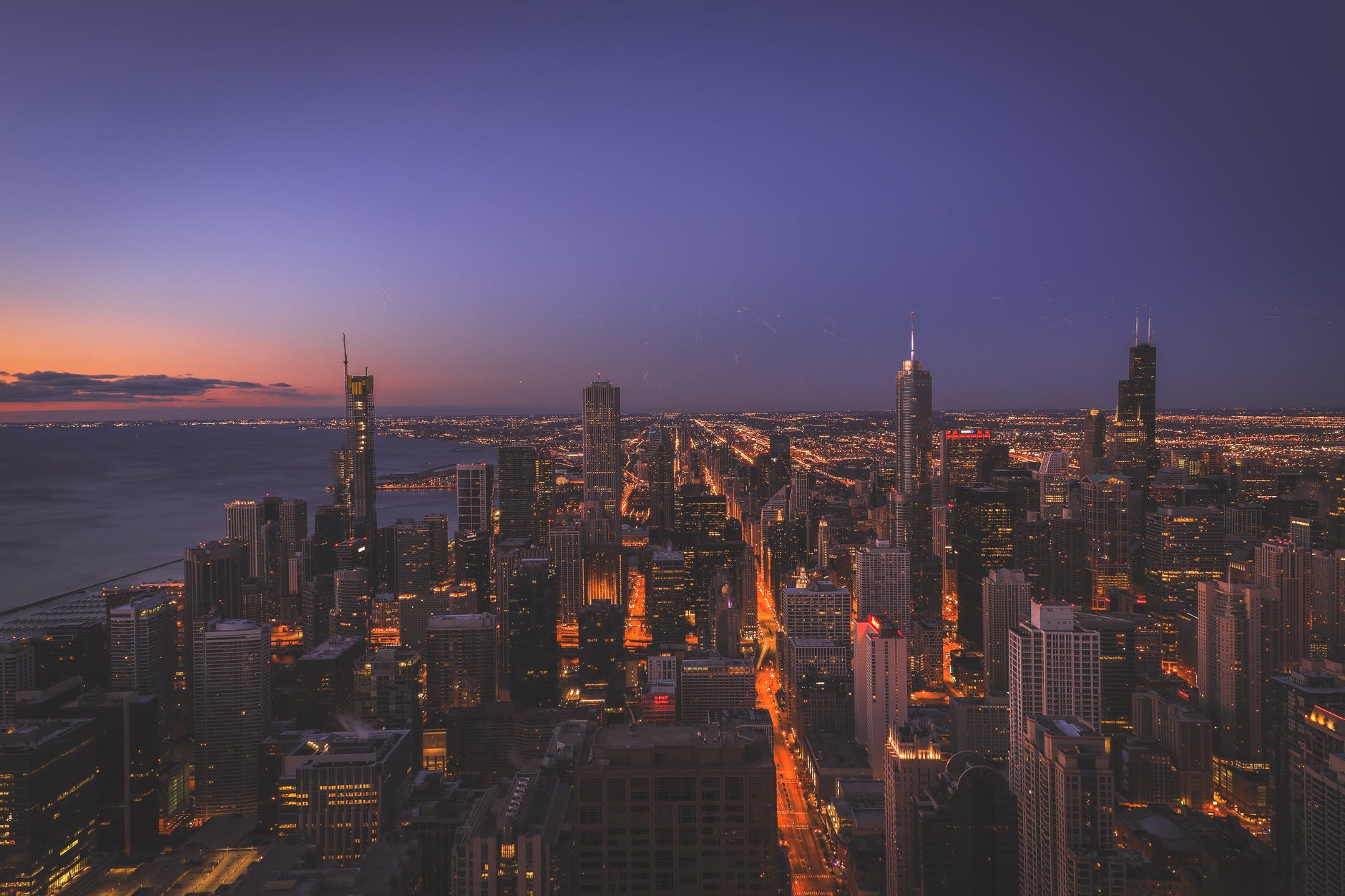
The Loop from the North End of Soldier Field
Now it is urgently incumbent upon regional politicians and civic planners to begin a campaign to get a global-class Chicago Bears stadium built as a profitable symbol of the rebirth of the 326-acre site.
Fulfillment of such a bold and visioned plan would bring about a marriage of an NFL team and a suburb that was first discussed between “Papa Bear” George Halas and then-AP empress Marje Everett in 1968…
The question of “How?” can only be answered if there is an enormously creative and concerted joint effort put forth by such potential game changers as Bears chairman George McCaskey, Arlington Heights Mayor Tom Hayes and Gov. J.B. Pritzker…
Said Mayor Butts: “From my experience — and I’m talking about my suburb, which is 52 percent Hispanic, 47 percent Black and 1 percent ‘other’ — if you have an inspired plan, proper financing that does not put the host municipality at risk and a resolute ‘will-get-done’ attitude, toss in hard work and you can make a great thing happen.”
On one hand, this is a unique opportunity. It is rare for parcels of land this large to open up in suburbs developed decades ago. Filling a large parcel can be difficult; what can add to the existing community without threatening the current character? This particular location provides easy access to highways, easing travel for thousands of fans. The surrounding area is already used to sporting events on the sites. A suburb could become home to a major sports stadium.
How to balance these competing perspectives? Many suburbs would jump at the opportunity as growth is good, having a pro sports teams is an important status symbol, and hearing the Bears are playing in Arlington Heights could be part of a branding strategy. But, I would recommend leaving the taxpayers out of this: they will likely not benefit economically from a new stadium.
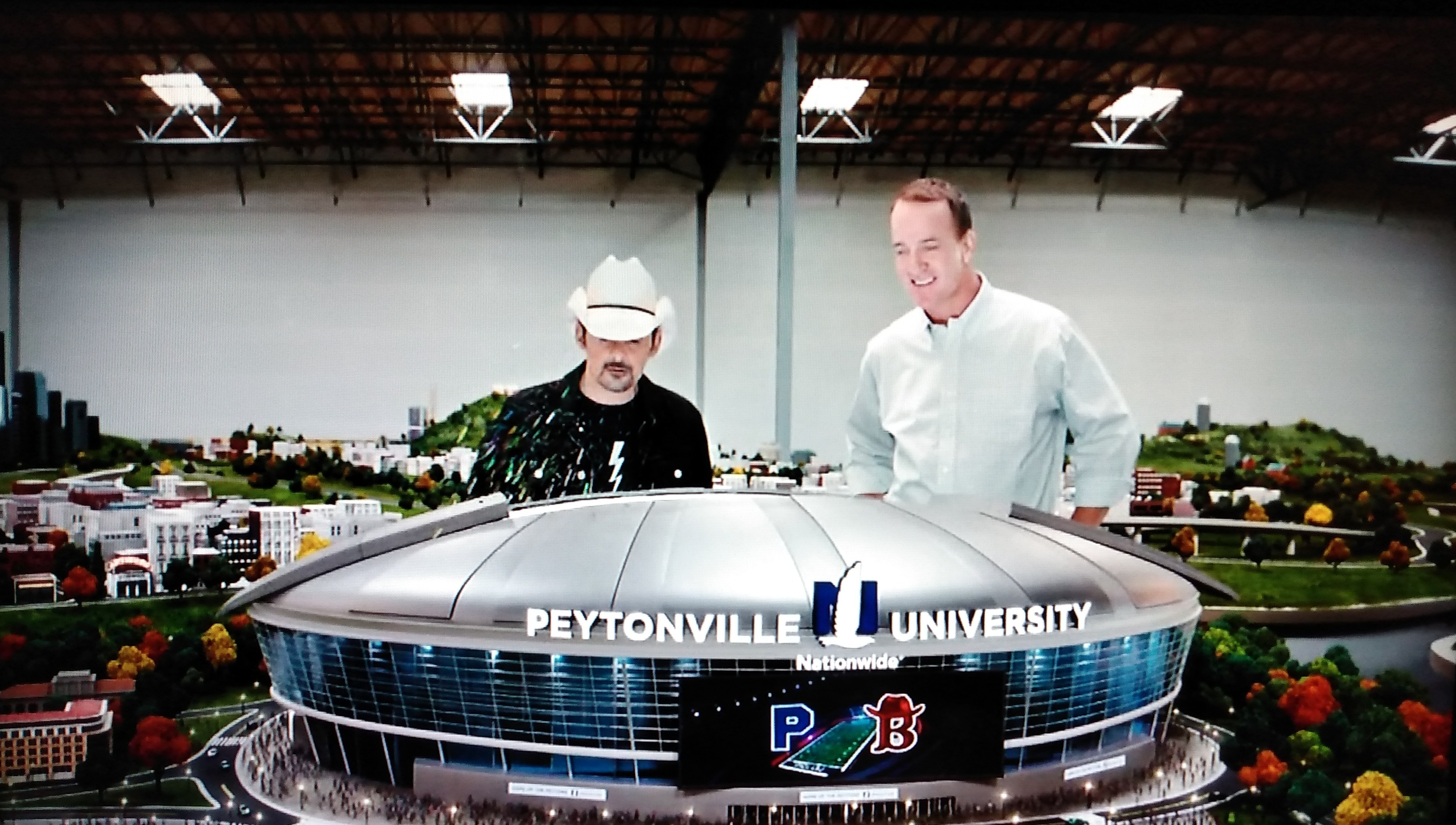
The new Peytonville commercial from Nationwide includes shots of a football stadium on a college campus:
From exterior appearances, this might be the fanciest stadium in college football. Yesterday, I wondered if people would more likely place Peyton Manning in his college days or in his long NFL days. The stadium in this commercial is an NFL stadium with its shiny exterior, almost complete roof, and scale. This stadium does not fit on the traditional looking college campus featured earlier in the commercial; this stadium belongs among the gleaming offices and condos in an urban center.
Is this a hidden prediction about where college stadiums will go next? Imagine JerryWorld in Texas but instead for Alabama football or Michigan football. Would the big football schools realize some extra revenue or value in being the first stadium to mimic the big pro stadiums?



 Legally Sociable