COVID-19, rents, and increases in household formation

A new paper suggests an increase in household formation during COVID-19 has helped keep rent prices high:

Photo by SHVETS production on Pexels.com

In this case, Ozimek and his coauthor, Eric Carlson, used heaps of 2021 census data to illustrate how housing markets in large cities were caught between two powerful, competing forces. The first was outbound migration, which led to weaker housing demand in city centers. Previous work by Stanford researchers Arjun Ramani and Nicholas Bloom found there was a “donut effect” earlier on in the pandemic, in which housing demand fell in dense urban areas as people moved to the surrounding residential areas and suburbs. Between July 2021 and June 2022, New York City lost a net 194,000 residents to migration, while Los Angeles lost 109,000, Chicago lost 88,000, and San Francisco shed about 20,000, an analysis of census data by John Burns Research and Consulting found. In the case of New York City, EIG’s latest analysis of data from the US Postal Service confirmed there hadn’t been a subsequent surge in people moving back to the city.

Instead, the sudden flight to the burbs was counteracted, Ozimek and Carlson said, by an equally startling surge in household formation. A household refers to any group of people living together in one unit — a family of five in a suburban home counts as one household, as does a group of three roommates living in an urban apartment. If those three roommates move out and each gets a one-bedroom unit, the net effect is two additional households. Before the pandemic, US household formation was on the decline. Between 2010 and 2020, the increase in the number of households was the lowest on record, an analysis by Pew Research Center found. Slow population growth and an increase in the number of adults living with their parents, perhaps as a result of the economy’s choppy recovery, meant there were fewer people striking out on their own. That changed shortly after the pandemic hit — household formation jumped by 2.5% nationally in 2021, more than double the fastest rate since the Great Recession.

This surge in household formation caused an increase in the “extensive margin of demand” — essentially, the total number of housing units that a given population desires. But EIG’s latest paper goes one step further, saying there was also an increase in the “intensive margin,” or the size and quality of units that people demand. Put another way, remote work led to an increase in the number of people wanting not only places of their own but also bigger homes. A couple might seek to upgrade from a one-bedroom to a two-bed, or they might look for a one-bedroom with more square footage. This desire to trade up is evident in the rent payments of people who shifted to remote work: Becoming a remote-work household in 2021 was associated with a 20% increase in rent payments, or about a $500 increase each month, the EIG researchers found.

Of course, those effects weren’t felt equally everywhere. To return to the “donut” analogy, the hole in the center — the most densely populated, expensive part of a metropolitan area — was likely to lose population as a result of more people working remotely. But it was also more likely to see a greater increase in household formation.

The headline for the story suggests this is about people wanting to live alone but the summary of the paper suggests people adjusted to changing work and economic conditions by seeking out more space for themselves. Did people seek their own household to get away from others or to have more space for themselves and work? If money was no object, would American residents prioritize more space or living with people?

I wonder how this connects to longer-term patterns of more American living alone.
How suburbs can lose millions in revenue when office parks sit empty

The changes to offices in one Minneapolis suburb illustrate the money at stake for suburban communities:

One surprising victim might be the Twin Cities suburbs. Take the 64,000-person suburb of Eagan, Minnesota where, earlier this year, two announcements upended the commercial landscape. Two of the city’s largest employers terminated leases at massive office parks, both of which served as local corporate headquarters…

Because commercial property is taxed at a higher rate than residential, for a city like Eagan, with a $42 million budget, the loss of two large corporate headquarters is a hit to its bottom line. In 2022, the two office parks provided about $3 million in tax dollars to the city, county and school board. (The city of Eagan’s cut of the tax revenue sits at around a third of that total.) 

Whatever happens to these two sites, they’ll likely be assessed at much lower values moving forward, likely swaying the rest of the suburban commercial real estate market. This puts pressure on Eagan’s single-family residential property to make up the difference, shifting the low-tax balance that draws people to live second-ring suburbs in the first place.

For their part, Eagan city leaders say these kinds of economic changes are nothing new, and the city is well-positioned to survive…

She cited the changing loss of previous corporate headquarters in the city, including Lockheed Martin and Northwest Airlines, both of which disappeared due to mergers or outsourcing.

Multiple forces are at work:

  1. Corporate offices change over time, before and after COVID-19. This suburb has seen companies go before and they found different businesses to lease office space.
  2. It is less clear the direction of the current office space market and financial markets are nervous. With more work from home and more Internet business, how much physical office space is necessary in the coming years?
  3. Filled office parks can help suburbs generate significant revenues and reduce tax burdens for others. Vacant buildings do not this at the same rate.
  4. Buildings that are vacant long-term are negative symbols. Communities want to have thriving businesses, not empty buildings. The longer the vacancy stretches, the bigger the consequences.
  5. Communities can redevelop such properties but this requires money, proactive local officials, and partners.

If we could come back to Eagan in a decade or two, will these properties be redeveloped mixed-use properties, vacant sites, or office parks operating at a decent capacity?

How are the best places to live different from the “best cities for remote workers”?

A new list looks at the best places to live as a remote worker. Here is the description of what sets these places apart:

Photo by Pixabay on Pexels.com

We compared the 200 biggest U.S. cities based on 20 remote worker-friendliness factors, such as internet quality, cost of living, and access to coworking spaces. We even considered financial bonuses that local and state governments offer prospective telecommuting incomers.

Here are some trends in the rankings:

Live your best remote life in Plano, Texas, our 2023 gold medalist. Plano displaces fellow Dallas suburb Frisco, our former top city for telecommuters, as well as Austin, Arlington, and Dallas, which were also ahead last year…

Eight of our top 10 cities are all located in the South. This region is known for its general budget-friendliness (including no state income tax for some) and sprawling spaces, and our data maintains that reputation…

What gives? The real question is, what doesn’t California’s biggest cities give? The answer is a lot: generous square footage and affordable goods and services. There are exceptions in each category, of course, but they’re few and far between.

This list seems to roughly overlap with other lists of best places to live: there are certain factors and locations that offer opportunities in ways that others do not.

At the same time, this list and the best places to live lists tend to be skewed toward certain kinds of jobs or industries. This list depends on the kinds of jobs or sectors where people can work from home. The best places to live lists often rank highly places with lots of well-paying white collar jobs.

Does it matter that the so-called best places to live are similar to the places named as best for remote workers? Such rankings can reinforce each other and lead to population growth in some places – and not others that could also be good places for people to live.

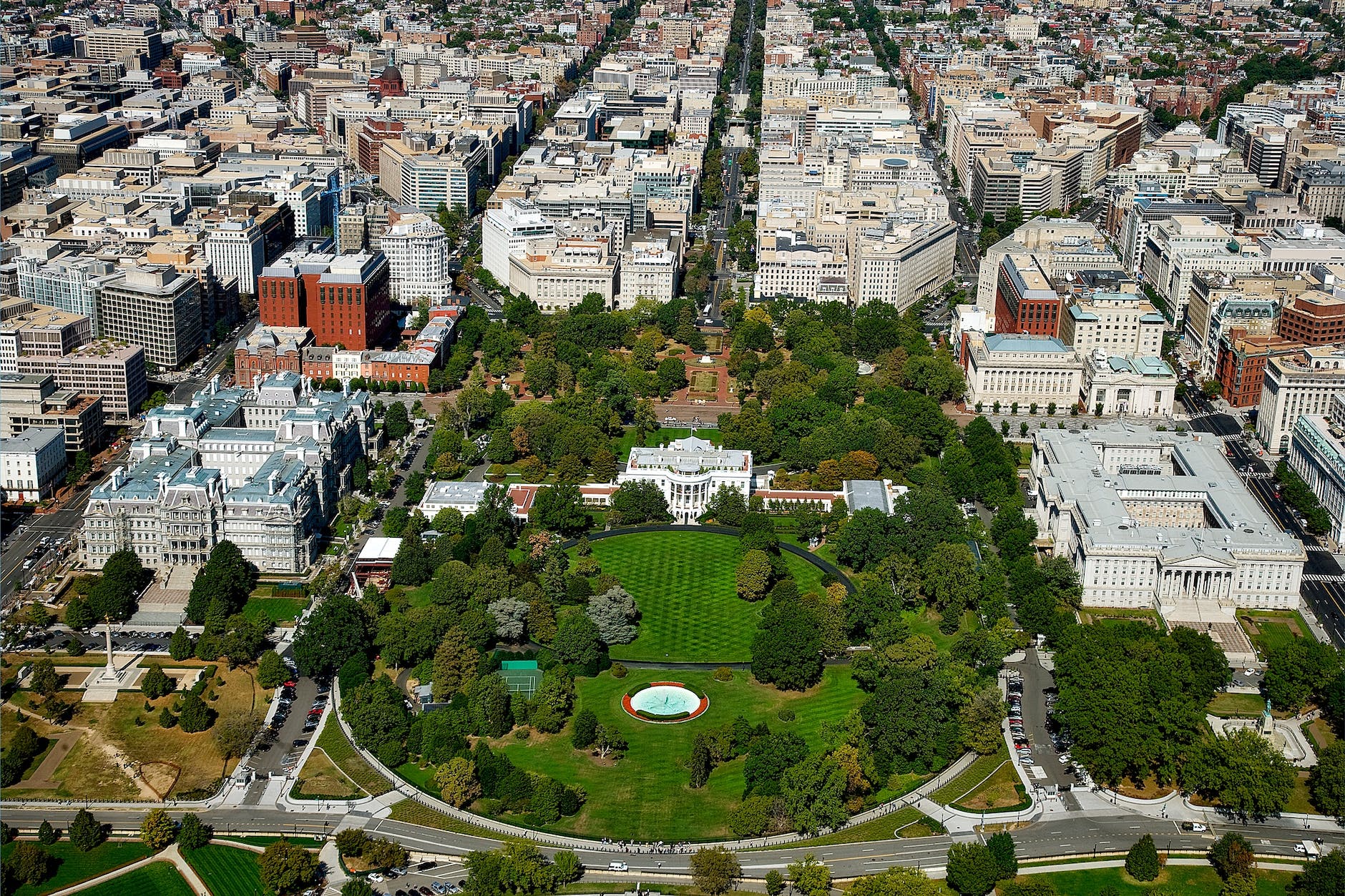
Trying to get federal workers back in the office in Washington, D.C.

As big downtowns across the United States grapple with more employees working from home, Washington, D.C. is particularly hit hard:

Photo by Pixabay on Pexels.com

At the swearing-in this month for her third term as the District of Columbia’s mayor, Muriel Bowser delivered a surprising inaugural-address ultimatum of sorts to the federal government: Get your employees back to in-person work — or else vacate your lifeless downtown office buildings so we can fill the city with people again…

There are days when downtowns in other American towns can almost look like they did before 2020. In the 9-to-5 core of Washington, though, there’s no mistaking the 2023 reality with the pre-Covid world. Streets are noticeably emptier and businesses scarcer. Crime has ticked up. The city’s remarkable quarter-century run of population growth and economic dynamism and robust tax revenues seems in danger…

According to census data, Washington has the highest work-from-home rate in the country. Week-to-week numbers from the security firm Kastle Systems back this up: The company, whose key fobs are used in office buildings around the country (including the one that houses POLITICO), compiles real-time occupancy data based on card swipes in its 10 largest markets. D.C. is perennially dead last…

To people who depend on commuters’ lunch-hour spending or transit fees, the change is less welcome. According to John Falcicchio, the city’s economic-development boss and Bowser’s chief of staff, the federal government’s 200,000 D.C. jobs represent roughly a quarter of the total employment base; the government also occupies a third of Washington office space — not just the cabinet departments whose ornate headquarters dot Federal Triangle, but plenty of the faceless privately held buildings in the canyons around Farragut Square, too.

On one hand, Washington D.C. is in a unique situation. One employer, the federal government, is responsible for a sizable portion of the local workforce.

On the other hand, this is an issue facing many downtowns. Can asking companies to have workers return or applying threats be successful? Or, is it better to try to offer amenities and encouragements so workers want to return? As a third option, is it time to transition from the decades-long emphasis on commercial downtown space to residences and other uses?

This could be an inflection point for a number of downtowns or it could end up being a version of the same old approach. However, it would not surprise me if the conversation between local politicians and business leaders heats up around this issue.

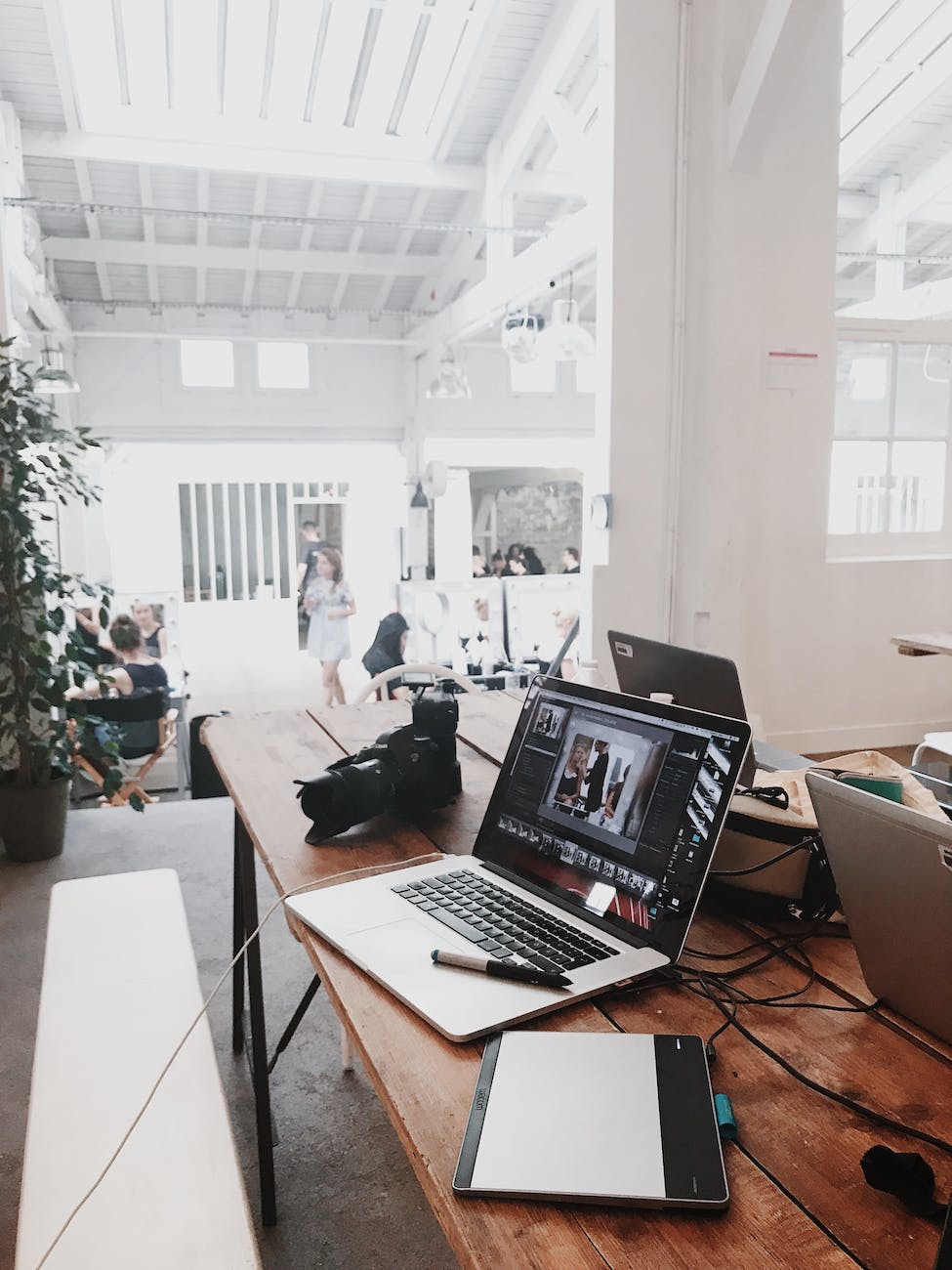
More people working from home + smaller corporate offices = more coworking spaces?

Are recent trends coming together to make coworking spaces more popular? At least a few people think so:

Photo by Katerina Holmes on Pexels.com

A distinct growth sector of the suburban office market, coworking has become a bastion of those downsizing from corporate space, fleeing the congestion of the city, or escaping the domestic distractions of working from home…

He said the New Jersey site opened at that Bell Works in March 2016 with 2,800 square feet. But as the popularity and future trending of coworking became clear, construction began on a 25,000-square-foot version elsewhere in the building — just before the pandemic.

Previously, the concept had been based on a desire in the market for flexibility and a better work-life balance. But the pandemic really hit the gas pedal for coworking…

While coworking sites already make up 7% of total office space, that amount is projected to reach 30% by 2030, she said.

Hauser, whose sister firm Workplace Studio also designs coworking spaces for others, said there are five elements that define coworking: flexible desks, meeting rooms, a sense of community, a community manager, and a source for economic development.

The transformation of office space continues.

One other factor hinted at in the experiences described in the article is this: a cool factor. The ability to access space in an interesting setting – such as the revamped Bell Works site in Hoffman Estates – with on-campus amenities is fun. Setting up coworking space in a quiet strip mall in a sleepy community would be less attractive. Being around energy and excitement helps make the the flexible workspace experience interesting.

I would be interested to know how much coworking space might emerge compared to the corporate office downsizing that might happen in the next few years. What percent will coworking occupy compared to the loss of traditional office space?

Even with some working from home in 2021, driving alone is by far the most common way to get to work

Here is data on how people in the United States got to work in 2021:

Over two-thirds of workers drove alone. This is the case even with some Americans working from home.

The percent of Americans either driving with someone or taking mass transit is low. Estimating from this data, fewer than 11% travel to work among others.

Commuting is primarily a solo task in the United States. This has all sorts of implications ranging from traffic and congestion on roads, environmental concerns, time use, land use, social interactions, and more.

The suburbia where those who work from home have money to spend nearby

If more suburbanites are working from home and spending more time in the suburbs, suburban communities and businesses want their money:

Photo by Andrew Neel on Pexels.com

Suburban developers and retailers are working to provide ways to escape home, be around others, and, most importantly, spend newfound time and money…

Neighborhood retailers are eyeing the money she and others are saving on the commute, in addition to the thousands of dollars that office workers typically spend annually in restaurants, bars, clothing stores, entertainment venues and other businesses. In many cases, coffee breaks, haircuts and happy hours that used to happen near downtown offices have moved to the suburbs…

In the Washington region and nationally, the trend is most striking in higher-income inner suburbs, where more residents have computer-centric jobs suited to remote work and money to spare…

The new weekday demand, developers say, has helped suburban shopping centers and entertainment districts reach and, in some cases, surpass 2019 sales. The pandemic also accelerated long-standing pre-pandemic trends toward walkable suburban developments and the “third place” — public gathering spots like coffee shops and bookstores, where people can connect beyond home and work.

I want to expand on one of the ideas suggested above: this may already be happening in wealthier and denser inner-ring suburbs. These communities already have residents with more money to spend and already have a denser streetscape from a founding before postwar automobile suburbia.

But, could this go further? Suburbanites with more money to spend live in certain places. The shopping malls that will survive and even thrive are likely located near wealthier communities. Having more resources could enable certain suburbs to redevelop and add to their offerings compared to others that could languish in a competition for spenders and visitors.

Imagine then an even more bifurcated suburbia where wealthier suburbs have vibrant entertainment and shopping options while other suburbs do not. The suburban work from home crowd is not evenly distributed and neither are the communities and amenities they might prefer.

Many Americans have reunited work and home…because of a pandemic

One of the consequences of urbanization is the physical and social separation of work and home. People live further from where they labor and land uses are often separated. Yet, the pandemic may have helped many Americans reunite these two realms that were once joined more closely. Here is a summary of a survey specifically looking at working from home:

Photo by Dominika Roseclay on Pexels.com

While there has been a widespread recognition that the remote work rate surged during the height of the coronavirus pandemic, there is disagreement about the extent of this change. To address this limitation, we field a new, nationally-representative survey instrument called the Remote Life Survey (LFS) in October 2020. We find that in October, 2020, 31.6% of the workforce always worked from home and 22.8% sometimes or rarely worked from home, totaling 53.6%. We compare our results with alternative measurement approaches, focusing on five factors: (a) differences in the selection of respondents among mail versus web -based surveys, (b) differences in the inclusion of self-employed workers, (c) ambiguity that arises from the forced classification of remote versus non-remote work into discrete categories, (d) the industry mix of the sample, and (e) the exclusion of people who were already remote pre-pandemic. We find that explanation (e) explains the bulk of the difference in estimates between the Current Population Survey (CPS) and other measures of remote work, underestimating the remote work rate by 33 percentage points. Overall, we estimate that about half of the US workforce currently works remotely at least some days each week.

For those who wanted to reunite work and home, is it good that a pandemic brought this about for a good number of workers? What I mean is this: metropolitan regions did not become denser, employees were not economically more able to reside closer to where they worked, and companies and organizations did not necessarily allow this because they wanted to. People worked at home more because of a health risk, not because they aimed to create more holistic lives.

But, here we are with more people working from home. Does this then transform both the communities where they live and the communities where they work? Does it enable more integrated social networks and communities or has too much changed since urbanization (such as the Internet and social media)?

It is hard to predict what exactly might happen if work from home trends continue. As the researchers suggest above, having better data should allow us to better understand what is going on. Figuring out what this all leads to will require more work and interpretation.

Can a suburban newspaper call for less driving and two long-term options for minimizing driving in suburbs

The headline to an editorial earlier this week in the suburban Daily Herald said “we need to re-evaluate our relationship with cars”. More from the editorial:

Photo by Aleksejs Bergmanis on Pexels.com

If drivers have been reluctant to limit their car use and reduce mileage in the past, they now have two headline-making reasons to reconsider: painful prices at the pump and a sobering recent report on climate change.

Meeting both challenges means committing to conservation as individuals — and as a society…

Minimizing driving and maximizing the efficiency of our cars are vital tools in the battles to lower gas bills and protect our planet.

The Daily Herald covers news in the suburbs of Chicago and is based in Arlington Heights, a suburb with a denser downtown roughly 25 miles northwest of Chicago. In other words, they serve an area built on cars and driving. Their headquarters is primarily accessible by cars and is next to a major interstate.

One of the primary features of the American suburbs is that it revolves around driving. Single-family homes with larger lots are made possible by cars. Commuting to other suburbs or large cities is made possible by cars. Fast food is made possible by cars. Big box stores and shopping malls rely on cars. And so on. More broadly, one could argue the American way of life is built around cars.

I do see two longer-term and possible suburban options that could minimize driving:

-Denser suburban developments, downtowns, and communities. In the Chicago area, downtown densification has been a trend for a while as communities seek downtown residents who can then patronize local business. “Surban” communities are of interest. New Urbanists promote residences within walking distances of regular needs.

-More working from home. COVID-19 has accelerated this but technology does make it possible for some workers.

In both cases, suburbanites might not be able to give up cars all together but a household might be able to go from two to one car with less driving. That would reduce pollution, traffic, and parking needs.

However, both of these shifts are significant ones. Denser suburban areas are not necessarily ones with single-family homes on big lots. Denser areas put people in closer proximity to each other. Working from home might be technologically feasible but might not be desirable by corporations and organizations or by communities who relied on commuters and workers. These might be options more available in some communities or some residents rather than to all suburbanites.

Agglomeration, working from home, and the character of places

Why do certain industries cluster together in one location? Social scientists have answers:

Photo by Chris F on Pexels.com

Economists believe agglomeration — like the clustering of tech in the Bay Area — has historically been the result of two main forces. The first is what they call “human capital spillovers” — a fancy way of saying that people get smarter and more creative when they’re around other smart and creative people. Think informal conversations, or “serendipitous interactions,” over coffee in the break room or beers at the bar. These interactions, the theory says, are crucial to generating great ideas, and they encourage the incubation and development of brainiac clusters. The other force is the power of “matching” opportunities. When lots of tech firms, workers and investors clustered in Silicon Valley, there were lots more opportunities for productive marriages between them. As a result, companies that wanted to recruit, grow or get acquired often gravitated to places like the Bay Area.

However, remote work could actually improve certain matching possibilities. Companies can hire smart people anywhere in the world when they drop the requirement that they physically be in a central office. Not only that, they can pay them less. Moreover, killing the office can significantly lower costs for companies, which no longer have to pay for expensive real estate.

So, in this theory, the future of work and the economic geography of America really hinges on whether companies can create those “human capital spillovers” through computer screens or in offices in cheaper locations.

This is a phenomenon with a pretty broad reach as cities could be viewed as clusters of firms and organizations. What has been interesting to me in this field in recent years is how places like this come to develop and what it means for the character of the place.

Take Silicon Valley as an example. This is the home of the tech industry and, as the article notes, the big firms have committed to physically being there with large headquarters (including Google, Apple, and Facebook). These headquarters and office parks are themselves interesting and often a post-World War Two phenomena as highways and suburbanization brought many companies out of downtowns to more sprawling campuses. At the same time, the impact of all of this on the communities nearby is also important. What happens when the interests of the big tech company and the community collide (see a recent example of a Facebook mixed-use proposal)? What did these communities used to be like and what are they?

This is bigger than just the idea of employees working from home. This potential shift away from clustering would affect places themselves and how they are experienced. If thousands of workers are no longer in Silicon Valley, what does this do to those communities and the communities in which more workers are now at home? Silicon Valley became something unique with this tech activity but it could be a very different kind of place in several decades if there is new activity and new residents.

The same could be said for many other communities. What is New York City if Wall Street and the finance industry clusters elsewhere or disperses across the globe? What happens to Los Angeles if Hollywood disperses? And so on. The character of places depends in part on these clusters, their size, and their history. If the agglomerations shift, so will the character of communities.