The changed traffic patterns in the Chicago region

A global pandemic plus other changes mean that there are new patterns of traffic in Chicagoland:

Photo by Jeffrey Czum on Pexels.com

The Chicago Metropolitan Agency for Planning (CMAP), which tracks these patterns, has found that drivers are taking trips on different days, at different times, and sticking closer to home than they used to. An analysis done for WGN-TV shows fewer trips being made at the familiar times and locations of rush hours. “Instead, they are more spread-out, making travel and congestion unpredictable,” WGN reported.

Another big factor in this traffic roulette is the continued rise of e-commerce. Amazon, FedEx and UPS trucks are everywhere, it seems, stopping-and-going, and sometimes blocking streets as drivers deliver online orders. CMAP reports that single-unit truck traffic (including those delivery vans) has shot up 20% since early 2020.

The third variable is public transit. Ridership on CTA, Metra and Pace continues to lag pre-pandemic levels, thanks in no small part to the perception that they are either unsafe, inconvenient or both, meaning more commuters are driving. As a result, motoring to and from downtown can be as rough as ever, especially on Tuesdays, Wednesdays and Thursdays, when employers are more likely to require the physical presence of their office workers.

While these patterns will continue to evolve in the years ahead, working and shopping from home are here to stay, and public transit has a long journey to win back its customers. Planners need to adjust accordingly, and that probably means re-engineering traffic systems.

Summary: Tuesday through Thursday are now the worst “regular” rush hour days, trucks and traffic can be anywhere, and fewer people are using mass transit.

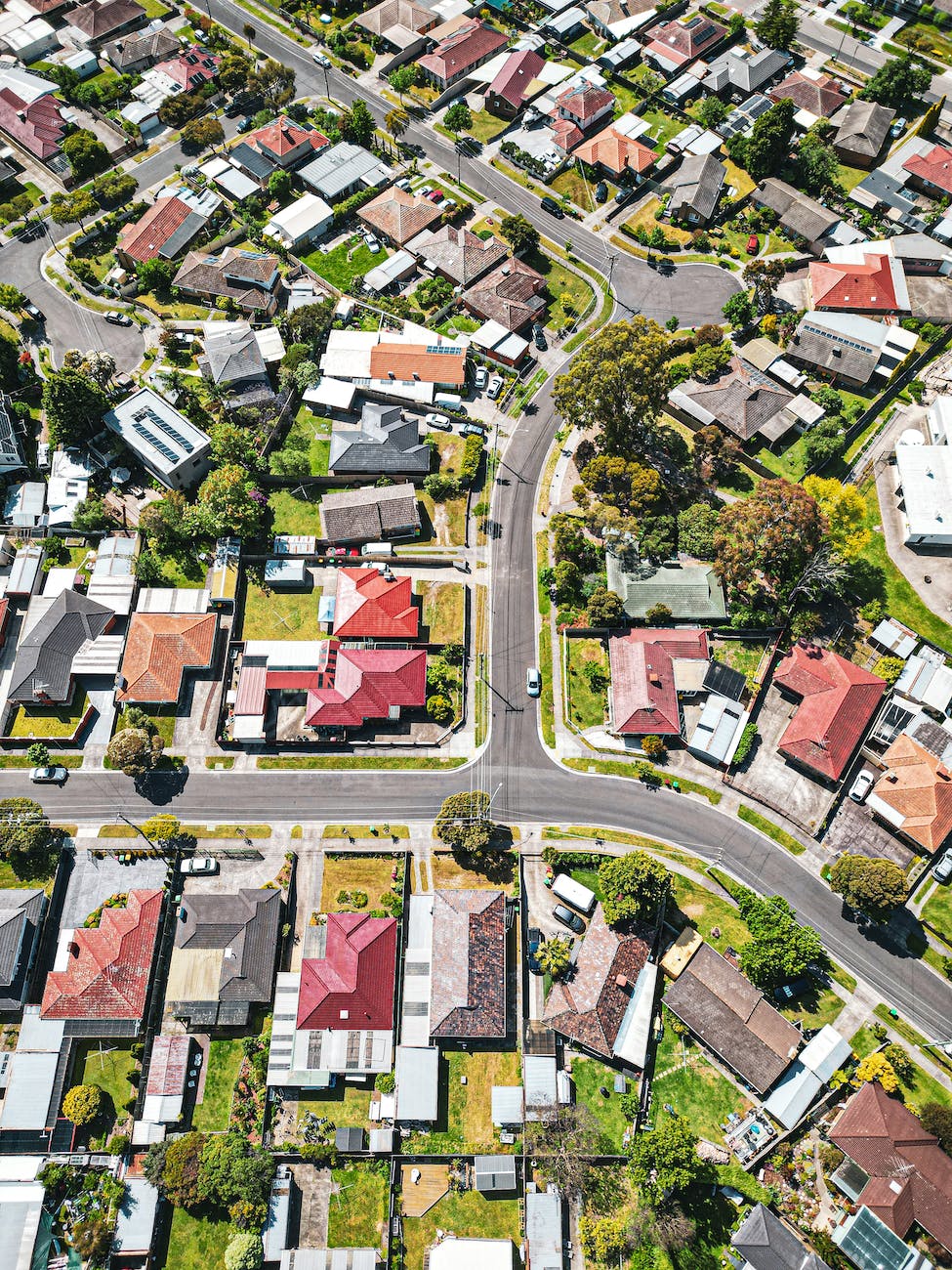
Does the Chicago area have an advantage because of its grid network? If drivers encounter a problem, it is not hard to find an alternative route. Compared to cities with longer histories and fewer major roads in the Northeast, Chicagoans have a plethora of options. On the other hand, the Chicago area is limited in terms of highways and sprawling roads compared to some places in the South and West.

Even with a grid and flat surface, one of the biggest problems seems to be that traffic – driving and rail – tends to end up in particular chokepoints that are more unpredictable in their use. Drivers still go through the Jane Byrne Interchange. Freight traffic needs to get through railyards and across at-grade crossings. Could this traffic be effectively lessened or rerouted in ways that help people and goods flow more quickly?

If there was an issue that the over 9 million people in the Chicago region could address together, this might be it. Yes, few people want to pay for solutions they do not directly benefit from. However, solutions to these issues across the region would benefit everyone.

When a populous suburban county has no property available for a second waste transfer station

DuPage County has only one waste transfer station and residents of one its suburbs do not want a second one in their community:

Photo by Tom Fisk on Pexels.com

The idea has outraged many residents who believe the city is being unfairly targeted as the “garbage capital” of the Western suburbs. Citing a threat to their home values and quality of life, they say a second waste transfer station should be built elsewhere in the county or not at all because of a lack of need.

In comparison, there are more than 20 transfer stations spread throughout Cook County.

Representatives from LRS insist a second DuPage County facility — one that is state-of-the-art and environmentally sound — is necessary to maintain healthy competition with other major waste companies. Another transfer station, officials say, would reduce garbage bills for residents and bring hundreds of thousands of dollars in fees from LRS to West Chicago coffers…

West Chicago residents say they’ve already done their part with one facility in their city, and a second DuPage County station should be built elsewhere. LRS officials, however, say they’ve looked elsewhere and couldn’t find another parcel that meets zoning and setback regulations.

This is a common issue in metropolitan regions: there are certain land uses that relatively few people want to live near. Since individual communities can set their zoning guidelines and communities with money and influence can fight particular land uses, it can be difficult to find a home for these land uses.

One solution? Push the garbage transfer station outside of DuPage County to another community that might want it or will not fight it.

Another solution (unlikely in the short-term but perhaps doable in the long-run): the need for more metropolitan level planning. With all of the people and business in the Chicago region, how can garbage be dealt with on a regional level?

A third and unlikely solution: significantly reduce the amount of waste produced by residents so fewer waste transfer stations are needed.

If West Chicago residents band together enough, they can likely convince local officials to turn down this proposed waste transfer station. Where exactly the garbage will go is unclear but West Chicago residents could be happy that it will not take place in their community. However, it is going to happen somewhere…to be determined.

I just want housing for Christmas, New Year’s, and the years to come

How about more housing for the holidays?

Photo by Michael Tuszynski on Pexels.com

“We have a supply problem with housing,” Marc Norman, associate dean at the NYU Schack Institute of Real Estate, told Yahoo Finance Live (video above). “We’ll see the price declines, but I think the income gains that we are seeing lately are still not keeping up with the prices that we are seeing in the market — in most markets.”…

“We, for the last 20 years, have underbuilt the housing,” Norman said. “In 2008, we saw the sort of demand go down, but it never came back in terms of supply.”

After the 2008 real estate crash, residential construction activities in the private sector never recovered to the level of 2006. Although home building slowly increased year over year during the last decade, projects remained well below early 2000 levels, according to figures from the Census Bureau and. Department of Housing and Urban Development.

Several thoughts in response:

  1. The United States has never fully recovered from the housing bubble in the late 2000s. The rise in housing values, homeownership, and lending activity led to a lot of trouble.
  2. How much money has the real estate and development sector made since the late 2000s? How much money has been left on the table by not building (or not being able to build, as discussed in the article, due to zoning and other restrictions)?
  3. How many older homes are retrofitted or renovated to meet current standards and tastes each year compared to how many new housing units are needed? Both routes could help provide housing.

All of this could set up nicely for giving housing as a Christmas present in the future.

The marketing pitch in Chicago’s motto “Urbs in Horto”

Chicago’s official motto helped sell the city in the mid-1800s:

But as European descendants forcibly settled the region, and began turning land over to agriculture and then urbanization, the trees that remained were sparse holdovers from pre-settlement times. Many of the new trees they planted were non-native species for landscaping purposes, while animals distributed invasive tree species.

So the idea that Chicago was a “City in a Garden” when the motto Urbs in Horto was adopted by the city government in the 1830s is a bit of a misnomer, said Julia Bachrach, former historian for the Chicago Park District.

Bachrach said the 1830s brought a flurry of land speculation in the Chicago area, which city officials encouraged by enticing East Coast developers to buy up stretches of land. But first they had to convince developers the land was valuable.

“It was a bit of a PR move to call this marshy, windswept, ‘smelly onion’ city the ‘City in a Garden’,” Bachrach explained.

As this article goes on to describe in more detail, many of the trees, parks, and boulevards came later to Chicago. And many of the things Chicago later became known for – including “the city of broad shoulders,” skyscrapers, meatpacking, and divides – have few clear links to gardens and trees.

I recall reading Ann Durkin Keating’s Rising Up From Indian Country and being surprised by the presence of sand dunes along the shores of Lake Michigan in the early days of white settlement. As a kid reading and hearing about Chicago, the story always seemed to go the other way: filling in land along the lake with refuse from the great fire, reversing the flow of the Chicago River, and building a booming metropolis over whatever was there before. Chicago conquered nature to become what it was and then thought of parks, trees, gardens, and a lakefront. That it could feature nature in particular ways was a product of this mechanical and human progress.

Bonus facts: the motto is featured at the bottom of Chicago’s seal and is represented by one of the points of the fourth star on the Chicago flag.

Housing, the holidays, and the economy

Just before Christmas, President Joe Biden touted the economic strength of the United States:

Photo by Jamie Lee on Pexels.com

Americans have been through a tough few years, but I am optimistic about our country’s economic prospects. Americans’ resilience has helped us recover from the economic crisis created by the COVID-19 pandemic, families are finally getting more breathing room, and my economic plan is making the United States a powerhouse for innovation and manufacturing once again.

In the list of economic accomplishments, I could find no mention of housing. None. Zero. There could be a few reasons for this:

  1. There is little good news on the housing front.
  2. The new about housing is less good or clear than the areas Biden cites.
  3. Housing is not viewed as a winning political topic.

What could political leaders do to help deliver a Christmas housing present for Americans? How can they talk about jobs, incomes, taxes, and opportunities without mentioning one of the most basic pieces of the good life in the United States: a pleasant home or residence in a decent location?

I keep thinking about the car commercials that have run for years featuring people getting new cars, SUVs, or trucks as Christmas gifts (sometimes with a bow). This might be the ultimate in Christmas consumption: a true big ticket purchase on the biggest consumer day. At the same time, Americans like cars and driving and are willing to shell out for it. Americans also like single-family homes; could someone develop a Christmas housing share gift program? Or, “give a mortgage”?

Even George Bailey, who realizes life is worth living, has a home to come back to at the end of the classic film. How many Americans want a storybook ending that includes such a home this Christmas?

How do I tell my friend I do not want to live near her “hideous” McMansion?

Can a McMansion come between friends? From an advice column four years ago:

Photo by Luis Yanez on Pexels.com

Dear Prudence,
My husband and I are moving to the city where one of my dearest friends lives. She really wants us to move to her neighborhood (“You can walk over for barbecues! Go on morning runs together!”). I love the idea of being close, except I hate her neighborhood. It’s a bunch of huge McMansions with things like fake turrets and nonsensical designs. I get why she and her husband chose it—there’s lots of space for their big family—but you couldn’t pay me to live there. On paper, though, it makes a lot of sense: It’s close to my work, in my price range, etc., so my friend doesn’t seem to catch on to my polite demurrals (“That might be a little too much house for us” or “We’re looking in a lot of neighborhoods.”) What can I tell her besides “your house is hideous”?
—Hideous House

Unless she’s calling you every day and going through all the listings in her neighborhood, I think it’s fine to keep offering her polite-yet-accurate demurrals until you eventually find a house elsewhere. There’s a natural expiration date to this conversation, and that will be when you move into a house in a different neighborhood. In the meantime, you can stress how great it is that you two will finally be living in the same city. If you absolutely can’t stand her gentle but insistent questions, then pick a household feature or two you know her neighborhood can’t provide that are absolute necessities for you and tell her: “We’re looking for something with less than 2,000 square feet, and [your neighborhood] just doesn’t fit the bill. Tell me what you think of these two houses we’ve been looking at.”

The term McMansion is typically negative. The answer above suggests it is best not to call out the friend’s home as a McMansion. This might not go over well, even if the person picked the McMansion because they liked it. Instead, emphasize how your own interests are different and move on.

I have wondered about this very topic for years: it is one thing to dislike McMansions from afar or in the abstract. But, what happens if someone you know and/or like lives in a McMansion and likes it? Is having a McMansion a barrier to friendship or a deeper relationship? Should one who dislikes McMansions express this opinion and the ways that McMansions bring blight to the earth? How does it work to criticize McMansions strongly and then know that at least a few McMansions like them and purchase them? Are these sorts of differences part of the sorting of people into different communities and social spheres?

These dynamics play out regularly in many communities, whether they have subdivisions full of McMansions or teardown McMansions. How exactly they affect interpersonal and community interactions and relationships could be studied further.

American political leaders tend to be homeowners

A recent study looked at how many political leaders in the United States are homeowners or renters:

Photo by August de Richelieu on Pexels.com

The researchers identified 10,800 representatives across city halls, state houses, and federal offices in 2019 and cross-referenced their home addresses with tax records. They found that about 93% of US senators, congressional representatives, federal judges, city council members, state senators, state representatives and governors definitely or likely owned a home.

In another sample of 1,800 city-level officeholders, the discrepancy between voters and their electeds was stark: For the 190 municipalities researchers examined, citywide homeownership rates were around 50%, while 83% of mayors owned their residences…

Despite these high-profile exceptions — both young people of color, like Azeem — researchers found that in city after city, the broader homeownership trend held, even in costly cities like Miami and Boston, where renters dominate. “There aren’t really any cities where large numbers of renters have been elected to local, state or federal office,” Einstein said.

The paper describes two “bottlenecks” that could prevent renter representation: Either fewer renters run, or fewer voters are willing to elect them. By analyzing the housing status of city council candidates in California between 2017 and 2018, they found that the former is more likely…

Elected officials are even more out of step with their communities when it comes to where and how they live. Researchers found that the homes occupied by local, state and federal officials were worth an average of 50% more than their zip code’s median value. The higher the level of public office, the greater the ratio. Nearly 80% of officeholders who owned their houses lived in single-family homes, while only 67% of houses across the country are considered single family.

Who will represent the renters in a country that loudly proclaims its preference for homeownership?

If you have a list of steps one needs to take to be a successful politician, add this one to early in the list: own a residence.

How exactly does wealth play into this? Does wealth lead to both homeownership and the possibility of running for office?

A possible follow-up study: do political candidates run markedly different campaigns given their homeownership status or do they generally play to the ideals of homeownership?

Interesting framing: American faith beliefs and practices down “despite a megachurch surge”

Here is a summary of recent data on religiosity in the United States:

Photo by Luis Quintero on Pexels.com

Church membership, church attendance and belief in God all declined during the pandemic years, survey data suggest, accelerating decadeslong trends away from organized worship.   

At least one-fifth of Americans today embrace no religion at all. Researchers call them “nones.”  

A similar share tell pollsters they do not believe in God, an all-time high.

The lone, striking countertrend is a steep rise in nondenominational Protestants, who attend churches outside the “mainline” denominations — the once-ubiquitous Baptists, Methodists and Lutherans.

The story is set up this way: religion is on the decline and the only phenomena standing out are megachurches. This is an interesting set of evidence to put together. Do religion and megachurches go together or cause each other? Here are just a few ways they might be related:

  1. Religion is down and megachurches are up. (This is what the article suggests in the headline and later in the story.)
  2. Religion is down and megachurches are a last gasp of religion.
  3. Religion is down and megachurches helped contribute to this decline.
  4. Religion is down. And megachurches are not related to this overall pattern.

Which of these options is most accurate? What is the causal link between overall American religiosity and the presence of sizable religious congregations?

Argument: emphasizing homeownership for investment purposes as the ultimate American goal leads to worse housing outcomes

Americans like single-family homes and especially owning a home that appreciates in value. What if this is the wrong way to go about providing housing?

Photo by Oleksandr Pidvalnyi on Pexels.com

At the core of American housing policy is a secret hiding in plain sight: Homeownership works for some because it cannot work for all. If we want to make housing affordable for everyone, then it needs to be cheap and widely available. And if we want that housing to act as a wealth-building vehicle, home values have to increase significantly over time. How do we ensure that housing is both appreciating in value for homeowners but cheap enough for all would-be homeowners to buy in? We can’t…

Fundamentally, the U.S. needs to shift away from understanding housing as an investment and toward treating it as consumption. No one expects their TV or their car to be a store of value, let alone to appreciate. Instead, Americans recognize that expensive purchases should reflect their particular desires and that the cost should be worth the use they get out of them…

I should be explicit here: Policy makers should completely abandon trying to preserve or improve property values and instead make their focus a housing market abundant with cheap and diverse housing types able to satisfy the needs of people at every income level and stage of life. As such, people would move between homes as their circumstances necessitate. Housing would stop being scarce and thus its attractiveness as an investment would diminish greatly, for both homeowners and larger entities. The government should encourage and aid low-wealth households to save through diversified index funds as it eliminates the tax benefits that pull people into homeownership regardless of the consequences

If we are interested in helping low- and middle-income people live well, we need to fix renting. Some potential policies include increasing oversight of the rental market, providing tenants with a right to counsel in eviction court to reduce predatory filings, advancing rent-stabilization policies, public investment in rental-housing quality, and, most important, building tons of new housing so that power shifts in the rental market from landlords to tenants. Even if nothing changes and America’s love affair with homeownership continues, tens of millions of people will continue renting for the duration of their lives, and almost everyone will rent for at least part of their life. Financial security, reliable and reasonable housing payments, and freedom from exploitation should not be the domain of homeowners.  

There is a lot to think about here. A few thoughts:

  1. Is the entire goal of the American system to generate money through property and ownership? Owning land and property has been very important from the beginning not only for what land could be used for and the money that could be generated but also because of status and rights attached to owning land and homes.
  2. Who is homeownership for? Consistently in American life, it is more available and profitable for wealthier white residents. Policies and ideals have promoted and perpetuated this.
  3. Given #1 and #2, renting is not just a difference in how one pays for their dwelling. It is a difference in how a person is regarded and what is viewed as ideal. The current system may have vast disparities in homeownership and the wealth generated by it but renting or renters is disagreeable to a good portion of Americans.
  4. Even if the goal remains to help adults in the United States attain homeownership, more could be done to address renting or obtaining a first property or addressing racial disparities in housing values. Ignoring renting means that it could limit people in the future from owning a home. Or, not having entry-level housing means people cannot easily move up. Or, help limit the disparities in housing values based on existing patterns. Promoting only homeownership is short-sighted.

Move at the right time to reap the benefits of an American boomtown

At the end of a listing of the “Top Boomtowns in America” in 2022, here is some advice about timing a move to one of the boomtowns:

Photo by Lukas on Pexels.com

“Moving to a boomtown at its earliest stages can be a great opportunity for entrepreneurs and investors, as there’s still plenty of room for growth. And for those who are looking for a job, there are usually plenty of opportunities available in rapidly growing cities,” says Edith Reads, senior editor at TradingPlatforms. “However, if a city has already reached its peak, it may be too late to get in on the action. In this case, it may be wiser to wait until the city’s growth slows down before making the move. This way, you can avoid getting caught in the midst of a housing or job crunch.”

In other words, a resident or business wants to get in on the earlier parts of the boom, not in the latter stages or after it is over. Why? A few reasons listed above:

  1. There is money to be made. Whether owning a business or a home, an investment early on could pay off down the road. (For more on American homes as investments, see this earlier post.)
  2. A growing community means numerous job opportunities.

Mess up your timing in moving to one of these boomtowns and these two opportunities are not as good.

Another thought that is not accounted for in this ranking: how does the community change because of the boom period? Is it just as an attractive place to live and work after the rapid population growth? How do the old-time residents view the change? If the community grows enough, it will not exactly be the same place. Ultimately, other boomtowns will reign in future years. Will the boomtown be a good place to be in a few decades?