The importance of the globe’s five biggest forests

A new book outlines the outsized role of the five remaining big forests in the world:

Photo by thiago japyassu on Pexels.com

All forests can help, but large forests are of supreme importance for the climate. The five largest ones left—the megaforests—include boreal forests in Russia and North America, and the tropical forests in the Amazon, Congo, and New Guinea. Intact forests are 20 percent of the tropical total and store 40 percent of the aboveground forest carbon in the low latitudes. New research led by Sean Maxwell, of the University of Queensland, and 11 collaborators suggests that the carbon benefit of intact tropical forests is six times greater than the Intergovernmental Panel on Climate Change and others have estimated to date. That’s because in the years after a big forest is broken up by roads or farms, its edges dry out and winds whistle through, blowing over big trees. Fires invade it more readily, and overhunting eliminates animals that disperse seeds. And on top of all the carbon vaporized from the space actually deforested, over the next several decades the climate will be stuck with 14 metric tons of extra carbon per acre that the lost tropical forests would have absorbed had they remained standing…

This experiment began in 1979. It ended up with five plots measuring two and a half acres, four at 25 acres, and two covering 250 acres. Matching control plots in continuous forest were also established. By 2002, the project had produced a simple answer about fragmentation: Large intact areas are very important, the larger the better. Even the 250-acre reserves were too small for forest-interior bird species, half of which vacated these patches in less than 15 years. The edges were hotter and drier, with great mats of desiccated leaves from trees either dying or losing foliage to wind. There were more vines, thicker undergrowth, and fewer mushrooms.

Species that need continuous tree cover decamped. Black spider monkeys, for example, who move fast through large areas of forest eating fruit from widely spaced trees, abandoned all the forest fragments immediately. They stayed in nearby continuous forest. Howler monkeys, by contrast, are leaf eaters and not particularly choosy. They remained in all the fragments. The white-plumed antbird, so named for the spiky crest between its eyes, could not persist in the fragments. Antbirds follow raiding ant armies and eat the bugs flushed out by the lethal column. Though 250 acres is sufficient territory for one ant colony, each colony marches only about a week per month. So, to avoid going hungry for weeks at a time, the white-plumed antbirds need to follow several colonies on a rotating basis. The 250-acre fragments were at least three times too small for the birds. No antbirds means no antbird droppings, which deprives shimmering blue-and-black skipper butterflies their sustenance. They left too…

Big forests are a linchpin in a planetary system. They are vivid stages for stories about energy and matter that we describe severally with our physical, biological, and chemical sciences, but are really a single story whose intricacies and meaning we don’t fully understand. Orchid bees make Brazil nuts, feed agoutis, take carbon from the air, breathe water back into it, make clouds that make rain a hundred miles away that feeds a stream, where a catfish, having migrated from the mouth of the Amazon, is caught by an otter or by a person, surrendering its protein to enliven the woods. The bee makes all these things, and these things make the bee.

One takeaway from this research: the way trees and nature are often treated in urban and suburban settings does not fully grapple with the larger impact of trees and forests. Isolated pockets of green are not necessarily bad but there is a difference in scale between those possibilities in more densely settled locations and large unbroken forests.

Another interesting aspect to consider is the human interaction with these large forests. Coming off reading the The Dawn of Everything, the shift to agriculture and living in larger cities in metropolitan areas did really create a divide between certain natural settings where humans could thrive and what became the settings for much of human activity.

This book also reminded me of this January 2022 piece on a man who has explored the old growth forests of New England and how much this differs from many contemporary experiences with trees and forests.

“60 Minutes” on the 4+ million housing units needed in the United States

This past Sunday, 60 Minutes addressed the sizable need for housing throughout the United States:

Photo by Max Vakhtbovych on Pexels.com

Daryl Fairweather: We are not building enough housing for everybody who needs a place to live. We built fewer homes in the 2010s than in any decade going back to the 1960s, and at the same time millennials are the biggest generation and they’re entering into home-buying age. Millennials aren’t living in their parents’ basement any more or shacking up with roommates, they want a place of their own, and we didn’t build any housing for them in the last decade because we are still so traumatized by the last housing crisis. We didn’t put any investment into housing…

Daryl Fairweather: The government has estimated that we are short about 4 million homes in this country, and that number is likely growing, especially since the pandemic.

In my opinion, the emphasis in the rest of the segment on institutional buyers is a weird way to go given the numbers cited above. If we need over 4 million housing units, it seems like more of this falls on developers, builders, and communities to open up opportunities for new housing for millennials and others who really want it.

I wonder how much of this now works like it seems to in the auto industry. Auto makers have shifted to making trucks and SUVs because there is demand and a higher profit margin. These vehicles are not greener but there is a lot of money to be made. Is the same true of starter homes? Smaller units simply do not bring in as much money as a larger house with more amenities. And, if builders and developers have to go through a significant process to purchase land, get approval, and go through construction, wouldn’t they want more money at the end?

I think we should ask about the civic responsibility of those who can approve homes and/or build homes. Don’t we need more housing? Shouldn’t this be a shared responsibility across actors? Why are so many Americans willing to get into their particular housing unit and then shut the door to those who want a similar opportunity?

Quick Review: Can’t Get You Out of My Head

The six part documentary Can’t Get You Out of My Head: An Emotional History of the Modern World captures well the foreboding and confusion of our current moment at the beginning of the third decade of the twenty-first century. Here are a few thoughts on what I found to be a thought-provoking and interesting watch:

  1. The general premise is that the freedom, prosperity, and joy that was supposed to come with the ascension of liberal democracy and individualism at the end of the twentieth century did not come. Indeed, it may have led to new and more troubling questions. The sweep of history is limited to roughly the last 100 years but there is a lot to consider over the six episodes. Even if you do not agree with the argument, there are a number of threads and points of information that may be new and/or have not always been put together in such ways.
  2. The construction of the documentary adds to the foreboding as its intersperses multiple threads across different countries, montages of images set to generally upbeat pop music, and a dark instrumental soundtrack.
  3. That this work is not from an American point of view and includes important actors from around the globe is very important. There were things I had not known before. I know the American perspective on the world is very biased and yet my daily reading is almost exclusively in this realm. At the same time, the documentary is still from an Anglo perspective and it would be worthwhile to hear form voices elsewhere on what is chooses to say and show and what it does not address.
  4. Just as an example of one of the important questions raised: what happens if a democratic people elect or support an undemocratic leader? More specifically, what do the cultural and political elites do in such a moment? In the current populist period, this is a real conundrum.
  5. One thing I appreciate is the interest in thinking across contexts and time. I would argue we need more work that tries to pull together multiple strands from around the globe across big chunks of time. Put this documentary series next to Graeber and Wengrow’s The Dawn of Everything and there may be some patterns worth considering.

While I finished watching this several months ago, the title is correct: I cannot get some of the ideas and images out of my head.

A novel about urbanizing London and its social networks in Dickens’ Bleak House

As London grew tremendously in the 19th century, Charles Dickens tackled the city as the subject of the novel Bleak House:

Photo by Lina Kivaka on Pexels.com

In The Turning Point, the literary scholar Robert Douglas-Fairhurst studies Dickens’s mid-career reinvention by zooming in on this single year, 1851. It was the year of the Great Exhibition in London. Marvels from around the world—an enormous diamond from India, saxophones from Paris—were displayed in the Crystal Palace, a colossal structure made of glass. (The young socialist polymath William Morris was reportedly so overcome by the exhibit’s crass materialism that he rushed from the glittering halls and vomited in the bushes.) Beyond the Crystal Palace, the world was becoming modern. The train and the telegraph made long distances feel short. Commentators hailed the progress of industry, as Britain’s robust manufacturing sector exported textiles, steam engines, and more. Yet the streets of London teemed with the starving and desperate. Raw sewage caked the banks of the Thames. Prescient British scientists warned that the destruction of tropical rainforests could yield “calamities for future generations.”…

In late November, Dickens began the work that became Bleak House, determined to wrest the chaotic realities of a world in flux into a narrative shape. Earlier industrial or “social-problem” novels by authors such as Elizabeth Gaskell and Benjamin Disraeli had aimed to document the suffering of workers and poor people; Dickens himself had presented a scorching critique of the Victorian workhouse system in Oliver Twist. With Bleak House, however, he sought to do something different: assimilate the new sensations of urban capitalism—marked by bewilderment, bureaucracy, and the collision of strangers—into a multi-plot novel…

Some authors find it necessary to maintain distance from the society they’re writing about. Dickens felt the opposite. The world he created in Bleak House arose from his enmeshment in the city of London and his familiarity with the streets on which he walked as many as 20 miles a day. From its first word—“LONDON”—Bleak House announces itself as a study of contemporary urban life…

Through images of shared engulfment—fog, mud, disease—Dickens joined together seemingly disparate elements of modern life. He also presented an implicit case for social reform. By tracing the vectors that link various levels of society, such as disease, kinship, and the simple fact of shared residence in London, Dickens encouraged his readers to think of the rich and the poor as, in Douglas-Fairhurst’s summation, “parts of the same story.” Processing the chaos of London through a powerful and idiosyncratic imagination, he depicted a community bound together in a common fate.

The growing cities of Europe in the 1800s did not escape the attention of writers, sociologists, and others. The speed at which cities grew and changed was unprecedented. I would argue that what it all means for human life and society is still being sorted out as we examine and adjust to a highly urban world with huge population centers.

Examining the city in the novel – and in other creative forms – is essential for helping people make sense of new phenomena. It is one thing to produce a factual report about urban change; this number of people moved, here are the conditions in which people live, here is the amount of money flowing in and out, etc. It is another thing to tell the stories of people there and then connect those stories to each other and to the larger whole.

As an urban sociologist, I would be very interested in a literature course that addresses urban novels and literary works.

Can a suburban newspaper call for less driving and two long-term options for minimizing driving in suburbs

The headline to an editorial earlier this week in the suburban Daily Herald said “we need to re-evaluate our relationship with cars”. More from the editorial:

Photo by Aleksejs Bergmanis on Pexels.com

If drivers have been reluctant to limit their car use and reduce mileage in the past, they now have two headline-making reasons to reconsider: painful prices at the pump and a sobering recent report on climate change.

Meeting both challenges means committing to conservation as individuals — and as a society…

Minimizing driving and maximizing the efficiency of our cars are vital tools in the battles to lower gas bills and protect our planet.

The Daily Herald covers news in the suburbs of Chicago and is based in Arlington Heights, a suburb with a denser downtown roughly 25 miles northwest of Chicago. In other words, they serve an area built on cars and driving. Their headquarters is primarily accessible by cars and is next to a major interstate.

One of the primary features of the American suburbs is that it revolves around driving. Single-family homes with larger lots are made possible by cars. Commuting to other suburbs or large cities is made possible by cars. Fast food is made possible by cars. Big box stores and shopping malls rely on cars. And so on. More broadly, one could argue the American way of life is built around cars.

I do see two longer-term and possible suburban options that could minimize driving:

-Denser suburban developments, downtowns, and communities. In the Chicago area, downtown densification has been a trend for a while as communities seek downtown residents who can then patronize local business. “Surban” communities are of interest. New Urbanists promote residences within walking distances of regular needs.

-More working from home. COVID-19 has accelerated this but technology does make it possible for some workers.

In both cases, suburbanites might not be able to give up cars all together but a household might be able to go from two to one car with less driving. That would reduce pollution, traffic, and parking needs.

However, both of these shifts are significant ones. Denser suburban areas are not necessarily ones with single-family homes on big lots. Denser areas put people in closer proximity to each other. Working from home might be technologically feasible but might not be desirable by corporations and organizations or by communities who relied on commuters and workers. These might be options more available in some communities or some residents rather than to all suburbanites.

The fate of church buildings when thousands of churches cease operating

A new book addresses the fate of church buildings when congregations end:

Photo by Pixabay on Pexels.com

Dominic Dutra, author of “Closing Costs,” a new book about how church property can be repurposed, says there are thousands of churches around the country that have closed or will likely close in the years to come. And too often, he said, leaders of those churches put off any discussion about what to do with their building until it’s too late.

“I’ve had situations where buildings are empty and they have no plan at all,” he said.

A 2021 study from Lifeway Research, based on data from three-dozen denominations, found that 4,500 churches closed in 2019, while only 3,000 were started. The 2021 Faith Communities Today study found that the median worship attendance for churches in the U.S. dropped from 137 people to 65 people over the past two decades.

Dutra argues that billions of dollars in church property could be put to work for ministry ­— if church leaders become proactive about the future. He has worked with a number of religious groups to do just that.

The numbers cited above are interesting: prior to COVID-19, more churches closed than opened. Additionally, the data from the survey is consistent with the National Congregations Study run over the last two decades regarding the median size of churches.

This is one area that my co-author Robert Brenneman and I did not address as much as we could have in our 2020 book Building Faith: A Sociology of Religious Structures. One of the later chapters looks at the fate of church buildings in the Chicago area. We found big differences across four denominations and a number of church buildings put to other uses. Church building are used in a variety of ways, including used by new congregations, converted into housing or commercial space, razed, and preserved.

Based on the description of the book in the article above, my guess is the recommendation is that church buildings no longer housing congregations can be put to other faith uses. There is certainly opportunity, ranging from serving new congregations to housing non-profits or parachurch organizations to being home to community centers.

2020 Census shows increasing number of Black residents in the suburbs

A trend continues in the 2020 Census data: Blacks continue to move from big cities to the suburbs.

Photo by Mikhail Nilov on Pexels.com

The two enclaves of roughly 30,000 people reflect how Black migration patterns in the 21st century are changing the makeup of metropolitan areas nationwide. For decades, Black residents have been leaving some of the nation’s largest cities while suburbs have seen an increase in their Black populations. Those two trends have now spread to even more areas of the country, according to the 2020 U.S. census.

The patterns echo the “white flight” that upended urban landscapes in the 20th century. Like those who left cities before them, Black residents often move because of worries about crime and a desire for reputable schools, affordable housing and amenities. But there are key differences: Leaving Black city neighborhoods that are starved for investment is often more of a necessity than a choice, and those who do settle into new suburban lives often find racial inequities there, too.

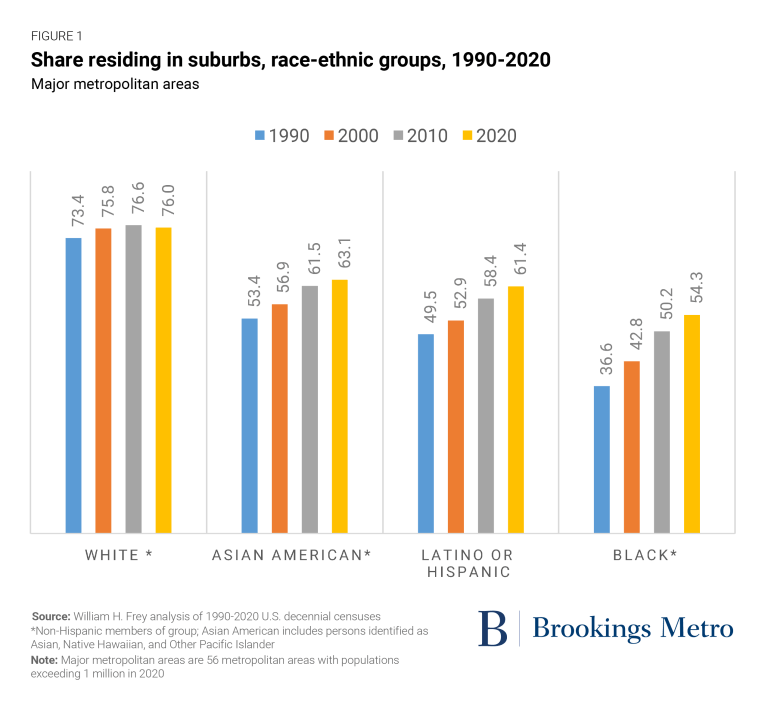
From 1990 to 2000, 13 of the United States’ biggest cities lost Black residents. By 2020, it was 23. According to the census, roughly 54% of Black residents within the 100 biggest American metro areas were suburbanites in 2020, up from 43% two decades ago, according to Bill Frey of the Brookings Institution.

While New York, Los Angeles and Philadelphia all lost Black residents from 2010 to 2020, the change was especially notable in Chicago, which gained population but lost 85,000 Black people, the highest number after Detroit, according to the 2020 census. Those numbers could vary slightly, as the Census Bureau reported last week that 3.3% of the Black population was undercounted in the 2020 census, a rate higher than in 2010.

To summarize from the data presented above: among Black residents in the largest metropolitan areas in the United States, the majority now live in the suburbs.

This trend is several decades in the making. Traditionally, a move to the suburbs in the United States is interpreted as finding success in the land of single-family homes and middle-class and above life. Yet, not all suburban lives or communities are created equal. From the banning of Black and other minority residents from suburbs in the past to more informal methods today to exclude residents, residential patterns are uneven in the suburbs.

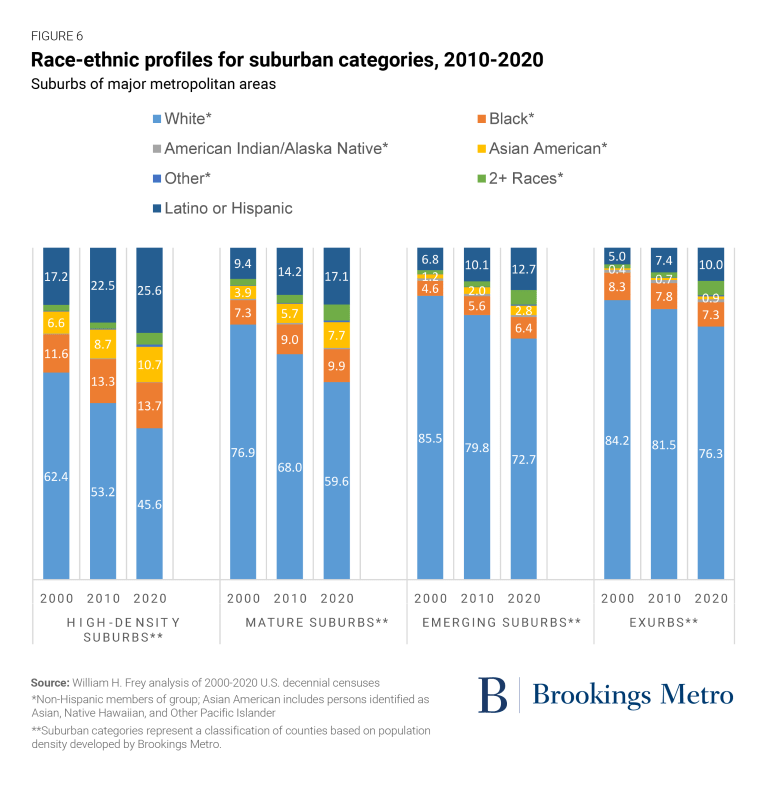
This also adds to the ongoing complexity of the suburbs where populations and communities are changing. The suburbs are not static even as they might as a whole adhere to similar ideals and ways of life.

Avoid “near churches” in a real estate listing

Among other phrases to avoid in writing real estate listings, one expert suggests avoiding this:

Photo by Tom Fisk on Pexels.com

Near churches

You may be amazed that this still happens, but here and there I see this pop up in property descriptions. Perhaps worse is when a specific church is mentioned as a local landmark since it suggests not only that the prospective buyer should be church-going, but that they should be from a specific denomination.

In general, much of the advice in this piece asks sellers to broaden their categories about who might purchase the home. Why mention “near churches” if there are plenty of potential buyers who are of a different faith or of no faith? With “religious nones” as the fastest growing religious tradition, to paraphrase Michael Jordan, “non-religious people buy houses too.”

At the same time, there may be unique locations where “near churches” or “near houses of worship” might make more sense. Perhaps it is a neighborhood or community known for religious activity. Perhaps there really is an important site that people might want to live near. (One less positive possibility: could such a phrase signal the amount of traffic and activity around churches? Since real estate listings do not often dwell on negative features of the property, this may be unrealistic.)

I also suspect the “near churches” information is found much more frequently in some places than other. How about the Bible Belt or Midwest much more so than the Seattle area or the Northeast?

Why people do not flock to the American cities that keep showing up in the most affordable places to live

I recently saw another list of the most and least affordable metropolitan areas in the United States with a key metric of how many families in the region could purchase a home at the median price. Here are the five most affordable places:

Photo by Ketut Subiyanto on Pexels.com

Home prices and incomes vary widely, and there are oases of affordability, mainly in the Rust Belt and Midwest. The top five most affordable places among metro areas with population of 500,000 or more:

Lansing, Michigan: As a result of modest home prices, 90.6 percent of all new and existing homes sold in the fall months were affordable to families earning the area’s median income of $79,100. The median home price was $155,000 in the fourth quarter of 2021, the builders’ index says.

Scranton-Wilkes Barre-Hazleton, Pennsylvania: Wages here are below national levels, but so are home prices — the median sale price was $150,000 in the fourth quarter. As a result of rock-bottom prices, 88.5 percent of all new and existing homes sold in October, November and December of 2021 were affordable to families earning the area’s median income of $70,600.

Pittsburgh: This metro area has a median family income of $84,800 and a median home price of just $166,000. As a result, 88.4 percent of homes were affordable for typical earners.

Indianapolis. This metro area has a median family income of $81,600 and a median home price of $215,000. As a result, 87.6 percent of homes were affordable for typical earners.

Akron, Ohio: With a median family income of $83,300 and a median home price of $165,000, fully 86.5 percent of homes were in reach of median-income families in the state capital.

Two features quickly stand out: the homes in these regions really are cheap (particularly when compared to local earnings) and they are all in the Midwest/Rust Belt.

Still, I have seen some version of this list many times now and I am not sure what to make of them. Why aren’t people moving to these locations?

The most obvious answers to me: it is not necessarily easy to move and these cities are perceived to have a lack of opportunities (economic, cultural, housing, etc.). American geographic mobility as a whole is down but do people actually move just for cheaper housing? What this list does is highlights that median income families can access median level housing in these five places. Get a decent job and owning a house is possible.

There are other possible answers that get more complicated:

  1. People just do not think of the Midwest/Rust Belt when thinking of places to live. Lack of opportunities, the weather, the middle of the country, a Midwestern blah-ness, etc.
  2. It is not just about a lack of opportunity; these are places seen as on the decline. Even if they are cheaper, who wants to live in a place that has already seen its best days when “growth is good” is a key marker of communities?
  3. These communities are lacking incentive campaigns to try to attract new residents.
  4. These communities may not want too many people to move in because it could drive up prices and bring in outsiders. (Yet, growth is good and many declining communities would do a lot to become a destination again.)

In sum: some American metropolitan areas are much cheaper than others, they have common characteristics, and there are a number of compelling reasons why people do not move to the places with cheaper housing.

Religion, work, and Silicon Valley

A new sociology book looks at how a number of Silicon Valley leaders embraced religion as they also created a unique work culture:

Photo by Fox on Pexels.com

Author and sociologist Carolyn Chen calls this philosophy “techtopia,” where “people find their highest fulfillment in the utopian workplace.”…

Chen’s research subjects are almost all men, and most are white or Asian. Eighty percent had moved from places outside Silicon Valley, marooned there without the support structures of family, friends or community. Chen describes them as “far from home, alone, young, impressionable.” Work is their only outlet to fill in the “meaning” gap…

While Silicon Valley may be the epicenter of experimental self-improvement (just check out how many tech workers fast or microdose psychedelics to achieve greater clarity or productivity), the “work as religion” philosophy has spread across the country. According to Chen, almost every Fortune 500 company has some kind of religiosity baked into its corporate structure — from inspiring mission statements to charismatic leaders — and many companies have actively gone “spiritual” to drive up the bottom line.

For the past 40 years, the workplace has successfully unseated religious institutions as a primary meaning maker, right after family, according to a recent Pew survey. High-income employees work longer hours than ever and are less likely to consider themselves religious, writes Chen. People who don’t have any religion — “religious nones” — have tripled in the past quarter century. At the same time, corporations have changed their strategies, using new incentive structures like gain sharing and stock options to bring people into the corporate “family.”

Going back to the early days of sociology, is the Silicon Valley marriage of religion and work more like:

  1. Marx’s suggestion that religion is a tool used by the capitalists – who own the means and modes of production – to distract workers from the reality that they are being exploited.
  2. Weber’s idea that religious ideas could transform economic systems; is this less about religion being connected to work and more about religion fundamentally changing work?
  3. Durkheim’s argument that people will no longer need religion as humans embrace a brotherhood of people and progress.

There might be some merit to all of these. If humans are meaning-making creatures, they will continue to make meaning – and ultimate meaning – in the midst of their day-to-day realities. Yet, since we are right in the middle of this transformation, it is not certain that it will necessarily continue. Do American workers like the idea that work is the primary meaning-maker?