The Robert ruins in Gallery 218

The Art Institute of Chicago recently featured on social media a painting by Hubert Robert:

Among the many worthwhile works on the second floor of the Art Institute are these four works in one room. I have always enjoyed them. Building off yesterday’s post about how today’s buildings could become tomorrow’s fossils, these paintings romanticize ruins from past civilizations. Imagine walking through such structures. There may have been centuries when people could wander through such ruins in Rome, Greece, Egypt, and more. Today, such a site would be hard to find as many ruins are swarming with tourists.

What always impressed me about these paintings was the scale of the buildings. As the social media post notes, the people at the bottom are very small. The buildings are massive and impressive. They connote great civilization and activity. Imagine this building above with a full vaulted ceiling and full of people. The buildings have lived on even as the individual leaders and residents changed.

The Diderot quote above is an interesting one. These buildings are falling apart and time will conquer them. At some point, the pillars will fall, the arches will be no more, and the scene will look very different. But, rulers and leaders construct such buildings in the first place so that the structures outlive them. They will not last forever, but even as ruins or remains in the ground they can still attest to a past era.

A fossilized Shanghai Tower

I have read numerous versions of how modern civilization might appear in the future archaeological record. However, I liked this particular exploration of what Shanghai Tower, a 2,000 foot structure, might become over millions of years.

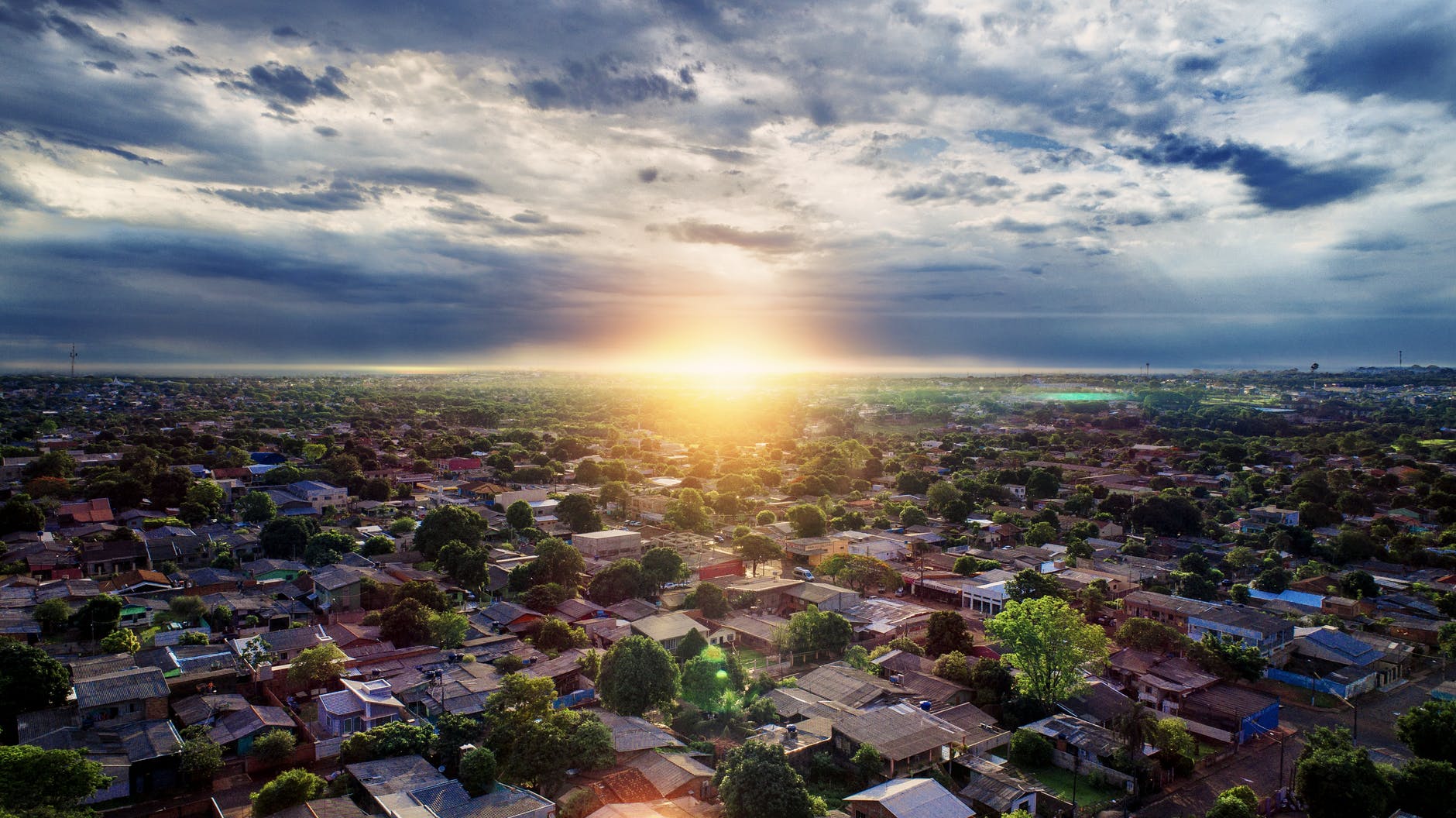
Photo by Manuel Joseph on Pexels.com

Almost immediately, water making its way down to the lowest levels it will react with the calcareous material in concrete, to form cathelmites – stalactite- and stalagmite-like growths that form in human-made environments. These will continue to grow for thousands of years, transforming the shopping mall into something akin to a horror movie set. If humanity is still around, most things of value will have been stripped out before the Tower is completely abandoned, but perhaps not everything. Aluminium in the ventilation system, stainless steel in the food court – maybe even a few cars in the garage levels will be left to perform remarkable transformations…

The story continues even deeper underground. The entire Shanghai Tower sits on top of a concrete raft, one metre thick and covering nearly 9,000 sq m (97,000 sq ft). Beneath this are 955 concrete-and-steel piles, each a metre in diameter, driven up to 86m (282ft) deep into soft ground. After several million years, as the weight of the sea water and sediment warps the subterranean layers beyond recognition, some of the foundation piles will fracture, twisting within compacting mudrock formations like the fossil roots of an immense, long-vanished tree.

As millions of years stretch into tens of millions, the transformations come more slowly. Rare earth minerals, leached from discarded mobile phones and other electronic devices, may begin to form secondary mineral crystals. Glass from windshields and shop windows will devitrify, darkening just as obsidian does after long burial. By now, the entire city is compressed to a layer perhaps only a few metres thick in the strata. All that is left of Shanghai Tower is a geological anomaly studded with the fossil outlines of chopsticks, chairs, sim cards, and hair clips.

All of this will be deeply buried, in some cases thousands of metres down. But geology never stands still. After around one hundred million years, as new mountain ranges begin to form, the layer of compacted rubble that was once Shanghai Tower may be pushed upwards, and revealed. 

A tower is not just a modern landfill or a single-family home; it is a monument to modern society in a similar way to the massive temples of past civilizations.

The idea that the tower would emerge again as part of a new mountain range is an interesting one. The assumption in a lot of these modern fossil/future archeology writings is that modern civilization will mostly disappear from the Earth’s surface. Many science fiction writings have the same idea: all that modern humans prize in the Industrial Revolution and urbanization will fade away just as everything else has in the past. Certainly, modern structures and infrastructure will only last for so long. What exactly is the predicted lifespan of a major skyscraper, let alone a single-family home or a big box store? Or, all of it will go away due to disaster, war, or the accumulation of garbage and self-induced environmental catastrophe.

Given how we dig and reconstruct the past, I still find it interesting to ponder that someone might come along and dig down and discover a major city that looks abandoned. What was life like there? Why did the city disappear? This was a global city?

Considering Jane Jacobs’ advice for parks when planning a major suburban park

Jane Jacobs is famous for her observations regarding sidewalks in the opening chapters of The Death and Life of Great American Cities. Right after this is a chapter on parks. In summary, she suggests are not automatically good as they can easily become problem areas if there is not regular foot traffic in and through the park.

Photo by Felix Mittermeier on Pexels.com

I thought of this when seeing a plan of how the former Motorola Campus in Schaumburg might be turned into “a Millennium Park for suburbs”:

Schaumburg trustees Tuesday will consider approving a $1.1 million bid for construction of the first phase of a 12-acre, urban-style park ultimately envisioned as a sort of Millennium Park for the suburbs.

Planned for the former Motorola Solutions campus, the park when completed could house such amenities as a large outdoor performance venue, a sculpture garden, a dog park and a winter ice rink.

Phase one, however, will focus on the basic outline of the park and providing passive recreation opportunities to serve residents of the area, before the next set of upgrades are budgeted and built.

A suburban park, no matter how beautiful it is or how many amenities it has, could easily fall prey to the issues that Jane Jacobs describes. Do people live around the park? Will there be people regularly walking through the park? Will it have the same kind of lively pedestrian activity and interaction that she recommends for sidewalks?

A park built on a former office park campus might not have any of these. Located in a sprawling suburb, would the majority of users have to drive here? Would people be there just for the park and its particular amenities or are there nearby activities that would keep them in the area such as shops or restaurants? Are there enough residents within walking distance who can informally help keep an eye on the park and those who use it?

This could all be in the eventual plans. In the Chicago suburbs it is currently popular to suggest mixed-use developments to replace office parks, shopping malls, and other large properties. But, it takes time for such developments to happen and for community to arise. Parks do not automatically work like they do in Simcity where placing a park next to commercial or residential property boosts property values. Just because there is a pristine park in the plans does not mean that the park becomes the kind of asset Jacobs suggests they can be in the right conditions.

Black homeownership rate barely improved since 1970

One marker of success in the United States is homeownership, particularly in the suburbs. Yet, the Black homeownership rate has not increased much over the last five decades:

After this chart at the top, the rest of the article is an in-depth look at race, lending, and housing in the Los Angeles area. While some of the story involves factors pre-1960s, there is also much after the Civil Rights Movement that has limited homeownership. All groups on the chart had higher homeownership rates into the early 2000s but conditions changed for Blacks such that they experienced a decline.

All of this makes the recent efforts in Evanston, Illinois, just north of Chicago, all the more interesting. The discussions of reparations there have settled on providing funds for housing. From the City of Evanston FAQs:

In July 2019, the Equity and Empowerment Commission held community meetings to solicit feedback from community members on what reparations would look like for the City of Evanston. Affordable housing and economic development were the top priorities identified during those meetings. A report was submitted to the City Council for consideration and was the basis for  Resolution 126-R-19, “Establishing the City of Evanston Reparations Fund and the Reparations Subcommittee.”

Reparations, and any process for restorative relief, must connect between the harm imposed and the City. The strongest case for reparations by the City of Evanston is in the area of housing, where there is sufficient evidence showing the City’s part in housing discrimination as a result of early City zoning ordinances in place between 1919 and 1969, when the City banned housing discrimination.

View the Evanston Policies and Practices Directly Affecting the African American Community, 1900 – 1960 (and Present) draft report written by Dino Robinson of Shorefront Legacy and Dr. Jenny Thompson of Evanston History Center.

With housing underlying much wealth in the United States, it is important to address this issue in the long run.

Starchitect Jahn’s buildings in the Chicago suburbs

World famous architect Helmut Jahn died over the weekend. He built iconic buildings in major global cities and several notable buildings in the western suburbs of Chicago.

A native of Germany, Jahn won international recognition and awards for projects around the globe, including United Airlines Terminal 1 at O’Hare International Airport, the former Citigroup Center (the main entrance to the Richard B. Ogilvie Transportation Center) in Chicago, and the Sony Center in Berlin.

Besides MetroWest in Naperville, his suburban work includes the Oakbrook Terrace Tower in Oakbrook Terrace.

Here are images of the two buildings referenced:

Both buildings are interesting structures to see in their suburban settings. They would not be out of place in a major city. They are full of steel and glass. They have sharp angles. They can be seen from a distance and are of a height beyond most suburban buildings.

But, they also stick out. They are right next to major highways. They are not surrounded by other tall buildings; the size of the Oakbrook Terrace Tower is particularly notable. Instead, they are surrounded by parking lots and smaller suburban office parks. They are in the suburbs but they are not of the suburbs; few residents would want these structures anywhere near their single-family homes.

In other words, a starchitect can build in the suburbs. In many parts of the United States, they are growing and a majority of Americans live in suburban settings. Interesting buildings help add to the status of certain suburbs as job centers. Yet, the interesting buildings by a famous architect can only go so far in sprawling settings: they do not really fit in even as they provide something different to view at 70 miles per hour.

Americans celebrate moving away from their small home town

An excerpt from a new book presents an American conundrum: many Americans like the idea of small towns yet celebrate moving away from them.

Photo by Syed Andrabi on Pexels.com

I was humiliated, not just because I’d left school, but because I’d glaringly stumbled off the traditional path everyone I knew had taken: If you move away from home, you don’t move back. That’s not how young adults do it. We leave. We find our way.…

So there’s this push and pull, where fulfilling this Americanized ideal of being out on one’s own and forging one’s own life comes at the real cost of contributing to families and communities in tangible ways, Katsiaficas explained. “For so many young people that I’ve talked to, they’ve narrated that hyperindividualism as a real sense of loss,” she said. Rarely, if ever, had I heard that sense of loss, or even homesickness, described as anything other than something we’re supposed to grow out of…

Because moving is so ingrained in how we think about this time of life, even though not everyone can “achieve” that milestone, staying seems like it is rarely celebrated. With going-away parties to celebrate new adventures and graduation parties to mark the close of one chapter and the beginning of another, staying in one place can feel boring…

In our conversation, Warnick pointed out that there is a stigma in America against not only small towns, but staying in the same place at all. We tend to think of it as representing “the abandonment of our big dreams,” Warnick said, a feeling of escape that some young people feel acutely. I felt called out, and with good reason: I’d clung to the belief that life would really begin once I left wherever I was. It kept dreams I was too scared to say aloud at arm’s length; it allowed me to imagine, and reimagine, the “best life” I’d finally find with a new zip code, conveniently forgetting that my real life was happening wherever I happened to be. I could participate, or I could wait. And for years, I waited.

There is a lot to consider here: the particular stage of life in the discussion here (from roughly college to settling down as an adult), mobility, frontiers, cities versus other settings, and larger American narratives about success. A few quick thoughts in response:

  1. I wonder how much these narratives differ across places. Is this more prevalent in rural areas where the allure of trying the big city is strong or is it also present in big cities where young people want to experience other places, including other appealing big cities? This could help untangle whether this is more about small towns or a general theme that emerging adults need to strike out on their own somewhere else.
  2. This reminds of some marriage advice I once read that suggested newlyweds should move hundreds of miles away from both families to establish themselves as a couple before moving back near family. Does such a narrative go against most of human history?
  3. Could all of this help explain the enduring appeal of the suburbs? They are not quite small towns but they are not cities. Americans can feel better about returning to suburban municipalities and making a home there because it feels in between.
  4. This all seems to beg for a more robust theology of place in the United States.
  5. It would be interesting to know how social media and the Internet either help connect people to home towns from afar or present just a poor and ultimately unsatisfactory substitute.
  6. Plenty of Americans do stay in the community in which they grew up or stay nearby. What is different about their stories? What are the factors that help explain why some commit to staying and others leave?
  7. How do Americans process their experiences with and understandings of place? If the emphasis is largely on mobility or making do where you are, this might discourage positive memories or investing too much in a particular place.

Spending significant time in windowless rooms

As the days lengthen and the sun and warmer weather is more common at this time of year, I recently thought about the time I have spent in windowless rooms. Three instances came to mind:

Photo by Jacob Morch on Pexels.com

-I worked for years at WETN, the radio station at Wheaton College, which was located in the middle of the basement of the Billy Graham Center. Outside of the ends of the basement which open into parking lots, there are no windows in any of the rooms along this long basement. Going into the studios for hours at a time, putting on headphones, and working with audio software left little time for thinking about natural light. However, when I would emerge from the building, the contrast was jarring, whether I had entered on a winter afternoon and came out for dinner at 5 PM and it was dark or entered on a sunny Sunday morning and came out five hours later. (The studios had large windows between them but this just offered a view of a hallway with florescent lights.)

-For a trip to London, we ended up booking several hotel nights in a windowless room. This cost us less than a room with windows – we could have paid more for this luxury – and we had limited options for hotels due to a busy time of the year. On one hand, we were not planning to spend much time in a hotel while on vacation. How much time do people stare out the window while on vacation in a city? On the other hand, it was strange to return to and wake up in a windowless place.

-During college, I lived in our basement when at home for summer and breaks. I had a little natural light from two window wells but not much and I was often gone during the day at work. I think I noticed the temperature difference more than the lack of light; the cool setting was much appreciated during the summer. Of course, I could go upstairs when needed to get light.

Perhaps this is not actually that much time in windowless spaces. Many offices or dwellings likely have rooms with no windows. I have been in such spaces for temporary situations and my current dwelling and office have plenty of windows.

I can see how many people find natural light necessary. Should it be required in all dwellings? While I can survive in spaces without it, it makes a big difference to have natural light. I would prefer to have natural light than use artificial light, particularly the whiter institutional light.

Reactions to suburban yards filled with dandelions

Is a mark of a suburbanite who cares about their property values and yard a lawn free of dandelions? In a recent walk, I saw this yard:

On a corner lot, this yard was filled with dandelions all around. And to compound the issue, two of the next three yards adjacent to this home looked similar.

What does this all mean? Is this a set of households devoted to eco-friendly lawn care? Or, is it a sign that the owners do not care about their property and/or their neighbors?

Remarkably, many of the nearby lots have no dandelions whatsoever. Even as these three lots have helped spread thousands of dandelion seeds, the weed killers used nearby have done their job. The whole neighborhood is not overrun with dandelions. The damage – mostly visual? – is contained to three lots.

At the same time, I could imagine some of the neighbors might not be happy about the situation. The optics of yards given over to dandelions might not play well in a middle-class neighborhood where green manicured lawns are an expectation. What kind of neighbors are these to subject others to this blight? What if someone was trying to sell their home nearby?

Soon enough, the most visible signs of these dandelions will be gone. The seeds will have scattered, contributing to windy days where the air is visibly full of plant matter. Will the neighbors forget the dandelions? Will they be back next year? Is all of this a matter of overwrought suburbanites policing their artificial nature known as a lawn? The grass and the weeds may be more than just that; they are markers of social class and social norms in suburbia.

Some evidence Americans are returning to cities in early 2021

Some Americans left cities during COVID-19. New data suggests some people are returning to those cities:

Photo by picjumbo.com on Pexels.com

Some data suggest a return is already underway. Cellphone tracking firm Unacast had earlier noted that phone users were shifting their overnight locations out of New York, but now sees them coming back.

“New York is growing again,” with the city adding a net 1,900 people in the first two months of 2021 versus a loss of 7,100 in the same two months of 2019 and the 110,000 estimated by the company to have left the city throughout 2020…

Similarly, Bank of America economists wrote last week that they “don’t see evidence of a broad urban exodus,” a conclusion that combined analysis of the company’s own card spending data as well as a survey of other reports…

“Out-migration did increase in many urban neighborhoods, but the magnitudes probably would not fit most definitions of an exodus,” he wrote. “What is certain is that hundreds of thousands of people who would have moved into an urban neighborhood in a typical year were unwilling or unable to do so in 2020.”

Stay tuned for years to come: untangling these numbers and what it means for the long-term health of cities will take time as scholars and leaders collect, analyze, and interpret patterns. Was COVID-19 a blip on the long history of American cities? Will they signal a resurgence of urban life or exacerbate the issues many face in moving to major and expensive cities?

One problem in the meantime is that there are plenty of people who want to declare an answer to these questions. For those who dislike cities, the move of residents in 2020 to suburbs and other locations is evidence of the downsides of dense cities. For those who like cities, the numbers can suggest a few people left but city life continued strong and will bounce back. And because either narrative is highly politicized and connected to numerous long-standing American issues like race (example from then President Trump in summer 2020), these are not just speculations; there are people with interests who want to settle the debate over cultural narratives before the data is in.

Graphic options for illustrating where Americans moved during COVID-19

I appreciate the effort at CityLab to take all of the data regarding where Americans moved during the COVID-19 pandemic and put it into graphs and charts. Good graphs and charts should help illustrate relationships between variables and help readers see patterns. Here are several choices that I thought succeeded.

First, start with patterns in metro areas across the United States.

The two colors plus the size of the circle show the percentage change in population. The percentage is a nice touch yet the comparison to the previous year might slip past some viewers.

Second, another way to look at metro areas on the whole regarding population changes.

The side-by-side of central cities and suburbs quickly shows several differences: lower ratios for cities, more variability among suburban counties, more losses for cities during COVID. The patterns among suburban counties are a little hard to pick up; there are a number of counties that lost people even as the general trend might have been up.

Third, where did all those people moving from New York City, specifically Manhattan go?

In absolute numbers, there are patterns this map displays nicely: a lot of moves in New York City and in the region plus moves to other metro areas (including Miami, Los Angeles, Chicago, and more). The inset of the Southwest at the bottom left is a nice touch…presumably New Yorkers did not move in large numbers to anywhere roughly between Nashville and Seattle.

Fourth, which New Yorkers moved?

Looking at zip codes, neighborhoods with higher incomes had more people moving while the numerous neighborhoods with lower incomes had smaller changes in inflow.

All together, this is more than just a series of pretty graphics. These choices – first about what data to use and second about how to present one variable in light of another – help clarify what happened in the last year. Each choice could have been a little different; emphasize a different part of the data or another variable, choose another graphic option. Yet, while there is certainly more to untangle about mobility, cities and suburbs, and COVID-19, these images help us start making sense of complex phenomena.