Fighting math-phobia in America

The president of Barnard College offers three suggestions for making math more enticing and relevant for Americans:

First, we can work to bring math to those who might shy away from it. Requiring that all students take courses that push them to think empirically with data, regardless of major, is one such approach. At Barnard — a college long known for its writers and dancers — empirical reasoning requirements are built into our core curriculum. And, for those who struggle to meet the demands of data-heavy classes, we provide access (via help rooms) to tutors who focus on diminishing a student’s belief that they “just aren’t good at math.”

Second, employers should encourage applications from and be open to having students with diverse educational interests in their STEM-related internships. Don’t only seek out the computer science majors. This means potentially taking a student who doesn’t come with all the computation chops in hand but does have a good attitude and a willingness to learn. More often than not, such opportunities will surprise both intern and employee. When bright students are given opportunities to tackle problems head on and learn how to work with and manipulate data to address them, even those anxious about math tend to find meaning in what they are doing and succeed. STEM internships also allow students to connect with senior leaders who might have had to overcome a similar experience of questioning their mathematical or computational skills…

Finally, we need to reject the social acceptability of being bad at math. Think about it: You don’t hear highly intelligent people proclaiming that they can’t read, but you do hear many of these same individuals talking about “not being a math person.” When we echo negative sentiments like that to ourselves and each other, we perpetuate a myth that increases overall levels of math phobia. When students reject math, they pigeonhole themselves into certain jobs and career paths, foregoing others only because they can’t imagine doing more computational work. Many people think math ability is an immutable trait, but evidence clearly shows this is a subject in which we can all learn and succeed.

Fighting innumeracy – an inability to use or understand numbers – is a worthwhile goal. I like the efforts suggested above though I worry a bit if they are tied too heavily to jobs and national competitiveness. These goals can veer toward efficiency and utilitarianism rather than more tangible results like better understanding of and interaction society and self. Fighting stigma is going to be hard by invoking more pressure – the US is falling behind! your future career is on the line! – rather than showing how numbers can help people.

This is why I would be in favor of more statistics training for students at all levels. The math required to do statistics can be tailored to different levels, statistical tests, and subjects. The basic knowledge can be helpful in all sorts of areas citizens run into: interpreting reports on surveys and polls, calculating odds and risks (including in finances and sports), and understanding research results. The math does not have to be complicated and instruction can address understanding where statistics come from and how they can be used.

I wonder how much of this might also be connected to the complicated relationship Americans have with expertise and advanced degrees. Think of the typical Hollywood scene of a genius at work: do they look crazy or unusual? Think about presidential candidates: do Americans want people with experience and knowledge or someone they can identify with and have dinner with? Math, in being unknowable to people of average intelligence, may be connected to those smart eccentrics who are necessary for helping society progress but not necessarily the people you would want to be or hang out with.

Pondering one of the tricks of academia: juggling tasks, work

As my school takes several days for Fall Break (and I nope students, faculty, and staff get a little respite), I am reminded of one of the secrets of academia: the academic work is never-ending and there are numerous tasks that are all vying to be done now.

I hear this from students in several different forms. They will discuss the various assignments and requirements across the four or so classes they are taking at the same time. This is a lot to handle; which tasks should they prioritize? Or, students will describe feeling like there is always work to do, whether they are in the classroom or back in their dorm or apartment. At least during the course of semesters, it seems like there is more to do.

Faculty face similar pressures. With teaching, publishing, and service responsibilities, let alone life off campus, faculty have plenty to do. Even when the semester ends and the grading is all done, breaks can only last so long because there are ideas to pursue and work to catch up on before another round of on-campus activities begin. In order to do good research, faculty need time to mull over ideas and make revisions and carry out the research process – but all this takes place while doing other things.

And for both students and faculty, there can often be a nagging feeling that others are doing more (it is not hard to find peers who have amazing productivity) or that we should be doing more (and giving up time in other areas). The anxiety lingers: what should I be doing now?

All of this is not easy to manage. Even if the work is invigorating or the tasks sometimes not that difficult, just the number of them and changing nature of the work can be daunting. Staying organized, having a strong support system as well as activities that bring relief, and finding accomplishments can go a long way.

This means that the flexibility of the student and faculty roles comes at a price: more tasks await even during breaks. From the outside, the summer breaks look nice – and they can be – but there is also work to do during these times. Finding a way through these challenges is something students and faculty must navigate.

Describing the relationship between economics and sociology as one between siblings

A long profile of economist Raj Chetty includes a section on his look at the concept of social capital:

Chetty has found that opportunity does not correlate with many traditional economic measures, such as employment or wage growth. In the search for opportunity’s cause, he is instead focusing on an idea borrowed from sociology: social capital. The term refers broadly to the set of connections that ease a person’s way through the world, providing support and inspiration and opening doors.

Economics has long played the role of sociology’s annoying older brother—conventionally accomplished and wholeheartedly confident, unaware of what he doesn’t know, while still commanding everyone’s attention. Chetty, though, is part of a younger generation of scholars who have embraced a style of quantitative social science that crosses old disciplinary lines. There are strong hints in his research that social capital and mobility are intimately connected; even a crude measure of social capital, such as the number of bowling alleys in a neighborhood, seems to track with opportunity. His data also suggest that who you know growing up can have lasting effects. A paper on patents he co-authored found that young women were more likely to become inventors if they’d moved as children to places where many female inventors lived. (The number of male inventors had little effect.) Even which fields inventors worked in was heavily influenced by what was being invented around them as children. Those who grew up in the Bay Area had some of the highest rates of patenting in computers and related fields, while those who spent their childhood in Minneapolis, home of many medical-device manufacturers, tended to invent drugs and medical devices.* Chetty is currently working with data from Facebook and other social-media platforms to quantify the links between opportunity and our social networks.Sociologists embrace many ways of understanding the world. They shadow people and move into communities, wondering what they might find out. They collect data and do quantitative analysis and read economics papers, but their work is also informed by psychology and cultural studies. “When you are released from the harsh demands of experiment, you are allowed to make new discoveries and think more freely about what is going on,” says David Grusky, a Stanford sociology professor who collaborates with Chetty. I asked Princeton’s Edin what she thought would end up being the one thing that best explains the peaks and valleys of American opportunity. She said her best guess is “some kind of social glue”—the ties that bind people, fostered by well-functioning institutions, whether they are mosques or neighborhood soccer leagues. The staff at Opportunity Insights has learned: When an economist gets lost, a sociologist can touch his elbow and say, You know, I’ve been noticing some things.

A few thoughts on this description of a relationship between two academic disciplines:

  1. The family metaphor is an interesting choice. Both disciplines are in the larger family of social sciences. They share some common interests. They often bicker like siblings. But, they are not twins here – one is the older sibling, one is the younger. The family picture suggests the two disciplines are tied together forever but their standing within the family is a contentious one.
  2. The primary difference suggested above is one of methodology: economists look at lots of quantitative data, sociologists “embrace many ways of understanding the world.” There are methodological differences between the disciplines but also other important differences, such as theoretical assumptions about how humans and societies operate. If both fields move toward using similar methodologies, does this bridge their differences? I would guess not.
  3. The suggestion at the end is that economists need sociologists when there is something that is hard to uncover or goes beyond their models. If those conditions are not met, then relying on sociology may not be necessary. Might both fields be more open to working with each other before they run into issues? Do sociologist need economists to help them explain difficult things?

Should I say hello to people I know on campus when they are walking by with their heads buried in their phones?

A college campus has many people walking around while looking at their phones. This leads to a common dilemma: should I say hello to someone when they are so engrossed by their smartphone? Earlier this week, I chose not to and I realized this is my default setting.

Here is my reasoning: these people are signaling they are busy or occupied. Walking in particular ways alerts others that they are not to be disturbed. Such behaviors include: closely looking at a smartphone screen; using headphones; talking on the phone; talking to someone walking next to them. Indeed, it is hard to be holding a smartphone while walking and not be viewed as saying, “Don’t disturb me.” (The only exception I could quickly think of: the number of people willing to offer to take a picture for you. I have had several people do this recently and I found it strange. Are selfies out? Did I look like I needed help?) I am helping these phone-lookers out: by not disturbing them and breaking their concentration, I am helping them accomplish what they need to do.

I do not know how many of these people I know would consider it a distraction or inconvenience if I did say hello. The posture of avoiding social interaction may be unintentional. We have a fairly friendly campus and if I see faculty, staff, and students that I know, we generally exchange greetings. Our regional norms are for fairly friendly greetings in public. As our students note, we are not quite the South but we are also not the Northeast.

If I were walking around campus with my nose buried in my phone, the biggest issue I would have with being greeted would be this: it might take me a second or two to recognize who issued the greeting. Rather than having the long lead-up to greetings where you see the person from a distance and can mentally prepare their name and your words (plenty of time for impression management), I am stirred from my focus. This will likely lead to a more generic greeting from me.

Will all this lead to the downfall of sociability on our campus? Probably not. Will it lead to more accidents as people walk into other and things? This has already happened. If anything, we will probably see more of his as time goes on and campus norms may continue to adjust to changing sociability.

Non-fiction books can have limited fact-checking, no peer review

An example of a significant misinterpretation of survey data in a recent book provides a reminder of about reading “facts”:

There are a few major lessons here. The first is that books are not subject to peer review, and in the typical case not even subject to fact-checking by the publishers — often they put responsibility for fact-checking on the authors, who may vary in how thoroughly they conduct such fact-checks and in whether they have the expertise to notice errors in interpreting studies, like Wolf’s or Dolan’s.

The second, Kimbrough told me, is that in many respects we got lucky in the Dolan case. Dolan was using publicly available data, which meant that when Kimbrough doubted his claims, he could look up the original data himself and check Dolan’s work. “It’s good this work was done using public data,” Kimbrough told me, “so I’m able to go pull the data and look into it and see, ‘Oh, this is clearly wrong.’”…

Book-publishing culture similarly needs to change to address that first problem. Books often go to print with less fact-checking than an average Vox article, and at hundreds of pages long, that almost always means several errors. The recent high-profile cases where these errors have been serious, embarrassing, and highly public might create enough pressure to finally change that.

In the meantime, don’t trust shocking claims with a single source, even if they’re from a well-regarded expert. It’s all too easy to misread a study, and all too easy for those errors to make it all the way to print.

These are good steps, particularly the last paragraph above: shocking or even surprising statistics are worth checking against the data or against other sources to verify. After all, it is not that hard for a mutant statistic to spread.

Unfortunately, correctly interpreting data continues to get pushed down the chain to readers and consumers. When I read articles or books in 2019, I need to be fairly skeptical of what I am reading. This is hard to do with (1) the glut of information we all face (so many sources!) and (2) needing to know how to be skeptical of information. This is why it is easy to fall into filtering sources of information into camps of sources we trust versus ones we do not. At the same time, knowing how statistics and data works goes a long way in questioning information. In the main example in the story above, the interpretation issue came down to how the survey questions were asked. An average consumer of the book may have little idea to question the survey data collection process, let alone the veracity of the claim. It took an academic who works with the same dataset to question the interpretation.

To do this individual fact-checking better (and to do it better at a structural level before books are published), we need to combat innumeracy. Readers need to be able to understand data: how it is collected, how it is interpreted, and how it ends up in print or in the public arena. This usually does not require a deep knowledge of particular methods but it does require some familiarity with how data becomes data. Similarly, being cynical about all data and statistics is not the answer; readers need to know when data is good enough.

Online courses open opportunities…to study close to home

The spatial dimension of taking online courses provides a surprising finding in a new survey:

While studying online theoretically gives students who are place bound for work or family reasons more geographic flexibility than does in-person study, the Online College Students research shows that ever larger numbers of fully online students are staying close to home.

As seen in the graphic below, 67 percent of respondents said they lived within 50 miles of a campus or service center of the college where they are studying, up from 42 percent just five years ago. Meanwhile, the proportion who said they are studying at least 100 miles from where they live has dropped by more than half, to 15 percent in 2019 from 37 percent in 2014.

The report’s authors offered this analysis: “The growing number of schools offering online programs provides students with more options closer to their home. Local schools have greater visibility among employers and others in the community, which is valuable to students.”

The explanation offered makes some sense: nearby colleges are known in the community. A degree from a local school may mean more than a school from elsewhere.

But, this could lead to some interesting connections:

1. Does this suggest that students have a hard time differentiating from all of the online course options out there? One way to filter all of those options would be to stick to recognizable nearby names.

2. I wonder how the marketing of local institutions matters. Media outlets in the Chicago area are full of advertisements from universities and colleges pushing online programs. Of course, there are national voices advertising in there as well but some of these can be unknown institutions (I’m thinking of Southern New Hampshire University).

3. Could this be linked to decreased geographic mobility among Americans? If Americans like to be rooted in a place, choosing a place to take college classes – whether online or not – may matter.

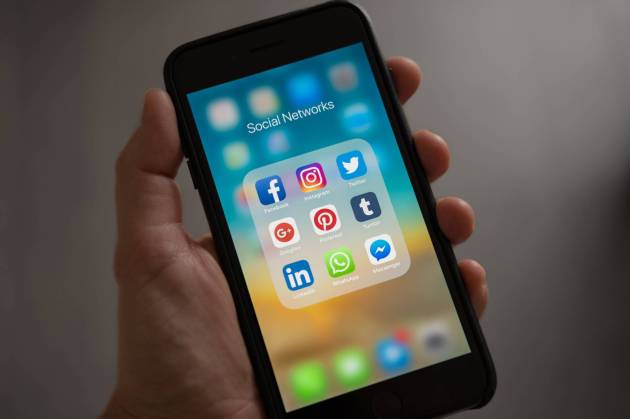
4. I’m reminded of findings that suggest social media users often make online connections with people they already know offline. In other words, social media users are not always seeking out random connections or unknown people to interact with. Could the same principle apply to colleges?

In the long run, what if the online world ends up leaning local in terms of the connections people make and maintain?

What can you tell about a person from their neighborhood?

When I read the news that The College Board is expanding its use of an “Adversity Score” with the SAT (including measures of “the crime rate and poverty level of the student’s neighborhood”), I immediately thought of a basic sociological question that is part of the discussion of the new methods: just how much does a neighborhood or location shape a person?

A few pieces of evidence:

1. A particular location shapes access to numerous resources from jobs to certain neighbors to local services and amenities to schools to certain political structures. Hence, residential segregation has significant influence on life chances.

2. Marketers seem to make a lot of zip codes. For example, Esri has a tool that divides American locations into certain slices:

Just head to the website, type in your zip code, and you’ll be greeted with a breakdown of your zip code’s demographic characteristics based on Esri’s “Tapestry” technology, which consists of 67 unique market segment classifications.

More:

But more than that, the database is a fascinating glimpse into how marketers see the world, and how data profiles can link populations in distant cities—or not. Though cities like Portland, Oregon, and Austin, Texas, might be compared culturally, their marketing profiles are fairly distinct. And while the majority of consumers in Beverly Hills share a profile with those on Philadelphia’s Main Line, for example, they don’t match up with the profile for residents of similarly expensive zip codes on Manhattan’s Upper East Side.

3. Wealthy people seem to use their zip code as a marker for who they are. Getting to help determine who can live in the community or neighborhood is a desirable goal in many places.

At the same time, not everyone in a particular community or location has the same experience. Yet, locations are very formative for people even as they exercise some agency in responding to local conditions or making choices to move elsewhere.

Brilliance vs. perseverance in academic writing and work

What does it take to publish academic research? Here is a recent reminder of a truism I have heard again and again and experienced myself:

Brilliance (or something close to it) is, I’d say, about 3 percent of creating a publishable article or monograph. The other 97 percent is patience and the stamina to be able to work, over and over, on something for which the end might not be in sight for a while.

This would be similar to two pieces of helpful advice I received within the first few weeks of starting a sociology Ph.D. program:

-Treat your academic work like a job: have regular hours, goals, and progress.

-Be a chipper and not a binger. Short and continuous efforts lead to better work than last-minute, long sessions to meet a deadline.

Or, we could turn to quotes or stories about Thomas Edison’s work and trying over and over again.

To me, all of this makes more and more sense as you work on research projects. The various stages of academic work – conceiving a viable idea, tracking down data and evidence, scouring the existing literature, analyzing the data, considering the implications, submitting for publication and then going through the review process – can each require a large amount of work and require time to ponder and address. Rushing to meet deadlines can be helpful for structuring time but it does not free up the same kind of mental space to ponder the question at hand. Finding the creative edge in academic work often requires more time, not less.

All of this requires working against an American cultural setting where (1) fast work and efficiency is often prized and (2) creative work is viewed as the result of individual genius. There may be grains of truth in each of these regarding academic research but they can also work against the need to persevere. For example, passing along the above information to undergraduate students can be difficult because their academic modes have prized these two qualities: be individually smart and meet relatively short deadlines. And how much is this perpetuated by college projects that may last 10 weeks at most?

All of this academic patience and stamina takes time to develop and likely exists in various degrees and expressions among academics. But, I imagine it would be hard to get far without at least some of it.

Debating mass transit: a format for discussing whether it is dead or can be revived

Even though I did not attend a recent debate in Washington D.C. between two mass transit commentators, I wish we could have more conversations like this one:

O’Toole opened with a whirlwind of statistical bullet points documenting the transit death spiral. He seized on the latest national transit ridership data, but his message was vintage O’Toole: Government funding of public buses, trains, light rail, and streetcars has failed and should stop. “I’m fundamentally pessimistic about the future of the transit industry,” O’Toole said. “Transit ridership has been declining steadily and it’s declining in all major urban areas, whether it’s rail or bus. I don’t see hope of recovery because the forces that are causing it to decline are not going away.”

Subsidies can’t overcome what shapes people’s preferences, O’Toole argued, and what people want is to live out in the suburbs and drive their cars. In recent years, transit ridership has really only grown in places where there’s been a dramatic boom in downtown jobs, such as Seattle…

For Walker, a consultant who works on improving transit systems in cities around the world, the narrative that O’Toole spins about declining transit ridership doesn’t frame the story quite right—it’s zoomed out too far. “A lot of what seems like an urban-rural culture war is actually just people at different densities understandably trying to solve the immediate problems of where they live. The national statistics are useless. [The decline of urban trips since 1976] is also a history of urban density, of course, because transit is a response to density.”..

Rather than directly rebutting each bullet point on O’Toole’s laundry list, Walker made a more values-based case, stressing that the big problems public transportation systems now face come down to just a few things: emissions, labor, and space. And those can be addressed with fleets of electric vehicles that are either large—think electric buses—or small e-boosted bikes and scooters. He’s optimistic about self-driving technology, but believes that their truly transformative deployment will be in city bus fleets, where they could dramatically trim labor costs.

It sounds like the debate accomplished two major tasks:

  1. Each side was able to put forth their arguments. One goes more with data. The other talks more about values. Both can explain what they think the problems are.
  2. The two sides had good conversation before, during, and after the debate. They found some common ground as well as points at which they still disagree.

Contrast this to two other public conversation options often employed by colleges as well as think tanks and other organizations interested in public conversations. It is common to have a single speaker present their book, article, or idea. There might be some back and forth with the audience afterward but the format generally assumes the one expert has the knowledge to share with the audience. In thirty to sixth minutes, the speaker can really get into their topic with some detail. A second option is the panel discussion where multiple people with insight to the issue talk in front of an audience. Each person might have a few minutes to share (this can’t go on too long or it becomes multiple mini-single person presentations) and there might be some robust discussion (though this can be difficult depending on the size of the panel and the temperament of the moderator and participants).

The debate seems like a better format to discuss difficult questions like the one these two debaters addressed. It works better if the two are skilled at presenting their sides and responding to others. The audience gets to hear two sides (better than the single talk but in less detail) and the conversation is only between two sides/perspectives (perhaps worse than the panel because some views will not be expressed but it is much easier to provide time for all participants).

And as for the result of such a debate? Perhaps the goal is less about winning and more about engaged listening, conversation, and trying to find a way forward between two people who might still disagree about important points.

For what ends do sociologists labor?

I recently gave a short presentation in a training seminar regarding introducing first year students to different disciplinary perspectives. For each of the natural sciences, social sciences, arts, and humanities, I described methods and goals. For the goals of the social sciences, I put down “just society” and “social wrongs righted.” One of my colleagues asked me a question about this: “Do the people at the top R1 schools adhere to these goals?” Just having returned from the ASA meetings in Philadelphia and thinking about some of the things I saw there, I said yes.

This is a good question to consider on Labor Day. What are sociologists after when they work? Here are some options:

-just society/social wrong righted: a mindset devoted to improving society, sometimes attributed to an activist approach though American sociology has a deep tradition of this (even if it was shunted into social work and not promoted as much at leading schools)

-knowing more about the social world: this quest for knowledge and a better understanding of whatever phenomena is under study could be at the root of every academic enterprise

-a way to achieve status and power: the field may be limited be compared to others but academic titles and academic merits (published articles, name recognition, grants, school, etc.) still provide a certain status

-the joy of teaching and mentoring students: these expectations likely differ dramatically across institutions (let alone personalities) but there can be both immediate and long-term gratification in making a difference in the life of students

-a satisfying way to occupy one’s mind and fulfill intellectual curiosity

I suppose individual sociologists might be able to pursue unique combinations of these five options within their own experiences and institutional contexts. Yet, on the whole, I’m pretty comfortable asserting sociology and other social sciences want to make the world a better place.