As noted in the review, the addition of the cross to the front of the home helped it look like a church. However, outside of that, it looks like a fairly standard house: long and skinny to fit a city lot, a bay window in the front, a second story with pitched roofs all the way back, nondescript siding.
That the single-family house was at the center of a spectacle – slow moving vehicles, other music stars, people in masks and costumes on the front steps, thousands of people listening in the stands – hints at the role of the home in the creative process. How many important American cultural works emerge from such dwellings? Once stars are established, we do not associate them with such humble dwellings but rather with large Hollywood mansions or opulent condos in the biggest cities. Or, we might think of artists as connected to particular places, whether specific neighborhoods or cities or suburbia at large. Kanye has noted connections to Chicago but this home says less about Chicago as a place than it does about more private activity, home life, and the importance of West’s mother. Even as we are not invited to see inside the important home – imagine it being constructed in such a way to open for the audience with emphasis on certain rooms, activities, or symbols – we get the sense that the home mattered.
The Chair follows a new English Department chair as she navigates crises and pressure from administrators and faculty. On one hand, it is about a unique academic position where the department chair is caught between the interests of the institution and the interests of faculty. On the other hand, the six episode season considers some of the large issues facing higher education in 2021. These include:
-Hiring, retaining, promoting, and celebrating female faculty and faculty of color.
-Responding to student interests amid faculty and institutional expertise and will that might or might not line up with those interests. This can come out in discussions about attracting students and majors or whether programs and faculty are contributing to or harming the school’s brand.
-The personal lives of faculty juggling family, teaching, research, and other commitments.
-Generational change within departments and institutions.
-Addressing social change, new ideas, and controversies when expertise takes time to develop and research cycles are long.
These may not be new questions in academia but relatively few television shows, movies, or other cultural products grapple with issues in what might seem to outsiders to be a strange world.
Rightly or wrongly, I concluded that suburbia was segregated and snobbish, an attitude I’ve never been able to shake. I didn’t get that attitude from movies about just any suburbs, I got it from movies about Chicago’s Northern suburbs, which, over the last 40 years, have come to be seen as representative of all American suburbia. (My first job in Chicago was covering the Lake County suburbs for the Tribune. That didn’t change my mind.)
During the first wave of suburbanization, in the aftermath of World War II, the suburbs of Northeastern cities got all the attention, in movies such as Mr. Blandings Builds His Dream House, and in the fiction of John Updike, John Cheever and Richard Yates. When Hollywood rediscovered Chicago in the 1980s, though, it also discovered Chicago’s suburbs, through the work of writers and directors who grew up there. Paul Brickman, who directed Risky Business, was from Highland Park; Hughes was from Northbrook.
In the 1980s, suburbia was in its prime. Back then, nobody with money wanted to live in urban America. Rich people wouldn’t start moving back to cities for another decade. The suburbs are often mocked as a cultural wasteland, but towards the end of the 20th century, that’s where a lot of Chicago’s cultural energy was coming from. Even The Blues Brothers, which is revered as a document of post-industrial, pre-gentrification Chicago, was co-created by John Belushi of Wheaton. Steppenwolf Theatre Company was co-founded by Jeff Perry of Highland Park and Gary Sinise of Blue Island. According to his National Lampoon colleague P.J. O’Rourke, Hughes in particular was eager to rescue his native grounds from the notion that “America’s suburbs were a living hell almost beyond the power of John Cheever’s words to describe.”Chicago’s 1990s alternative music scene may have been born in Wicker Park, but its leading lights were suburbanites: Liz Phair of Winnetka, Billy Corgan of Elk Grove Village, Local H of Zion. Urge Overkill formed at Northwestern University. High Fidelity, the movie which celebrated that scene, starred Evanston’s own John Cusack as Rob Gordon, a guy from the suburbs who opens a record shop on Milwaukee Avenue.
Chicago’s suburbs continue to define suburbia in popular culture. The 2004 movie Mean Girls, the quintessential depiction of high school cliques, was set at fictional North Shore High School (i.e., New Trier). The characters even shopped at Old Orchard, although it was inaccurately depicted as an indoor mall. Greater Chicagoland also makes an appearance, and provides a contrast: Wayne’s World, set in Aurora, and Roseanne, set in the fictional, Elgin-inspired collar-county town of Lanford, are on the outside, physically, culturally and economically.
As someone who has researched locations and television shows, this raises several responses:
Would viewers of these different suburbs know that the Chicago suburbs were unique in some way or do they look like suburbs all over? For example, does North Shore High School look or feel different than schools in Westchester County or outside Boston? One of the films cited, Ferris Bueller’s Day Off, clearly shows Chicago locations but the suburban shots could fit in many American suburbs.
There is an empirical question here: were Chicago suburbs depicted more often than suburbs of other locations? Or, based on viewers or ticket revenue or albums sold, how does the creative energy of the Chicago suburbs compare to cultural products linked to other locations?
There is still some sense that suburbs are not creative places. This stereotypes dates back to at least the mid-twentieth century when suburbs were criticized as conformist and bland. True creative energy can only come from cities, not homogeneous and exclusive suburbs. Yet, as more Americans lived in suburbs compared to cities starting in the 1960s, it is not a surprise that cultural products would come from suburbanites.
Even as a number of creatives grew up in suburbs, how much did their adult work and products rely on cities, including Chicago? The major culture industries in the United States are often located in big cities so even suburban or rural themes are mediated through more populous and denser communities.
For a network focused on single-family homes, the term McMansion is rarely uttered on HGTV. Here is one example I ran into a few weeks back on My Lottery Dream Home:
On the top left of the image, you can faintly see some of the narration over the image: “Willow Park Way that almost looked like a McMansion.”
Almost a McMansion. The exterior here has some interesting features that might place it in McMansion territory: multiple roof lines, interesting window placement, a large house, in a sprawling Texas community.
Even as the couple did not select this home at the end, it is interesting the term was applied to this home and not the others which also could have been viewed as McMansions. Present a large suburban home with a front meant to impress yet some questionable architectural choices and McMansions may just come to mind.
At the same time, this episode was set in suburban Texas where housing tastes are different than in more sophisticated markets. In my comparison of the use of the word McMansion in the New York and Dallas regions, there was more openness in Dallas to such homes and what they represent. Surely, some McMansion dwellers and afficionados watch HGTV and they might be in markets where McMansions are not so disliked.
I will keep checking for more mentions of McMansions on HGTV. As I do, I am much more likely to hear terms like mid-century modern or country farmhouse much more than the term McMansion.
I am intrigued when the topics I study as a sociologist intersect with board games. Here is another example: the highly rated two person 7 Wonders Duel game includes a token that through science gains you can acquire called “urbanism”:
The way it works is that it immediately provides the player 6 coins and then each time they acquire a building for free, possible if you have already constructed a building linked to the proposed structure, they gain 4 additional coins. In short, you get more coins for constructing free buildings. Hence, urbanism as you are building your city faster.
There is little doubt that urbanism is one of the most important forces in human history. This is about the process of cities developing as well as a particular way of life that emerged in and around cities. Urbanism was important in multiple time periods. This includes the last two centuries as megacities developed around the globe concurrently with industrial, economic, and societal change. It is also the case in the last five or so millennia as population centers around the globe emerged. This is the period that 7 Wonders is covering as ancient wonders are constructed and denser permanent centers of political, religious, and economic life emerge. Most of these cities are not the size of cities today yet their permanence and way of life transformed human and societal fortunes.
In playing the game, having free buildings also contribute free coins is a helpful bonus. More buildings beget more buildings and wealth.
Home Town is one of the big shows on HGTV and it has a premise somewhat different from the other headliners: all of the renovations take place in or near Laurel, Mississippi. The couple in the show, Ben and Erin Napier, say they enjoy contributing to a town that they love:
The town of Laurel (population 18,338) itself is a starring character in “Home Town,” and it’s a huge part of what keeps the Napiers grounded. “Everybody here knows us,” says Ben. “When we’re in places like New York, Atlanta, Nashville or (Los Angeles) and people stop us on the streets …” Finishing his thought, Erin says, “It’s very surprising.”
Laurel, located about 90 miles southeast of Jackson, was founded in 1882 and flourished thanks to the timber industry (the region is known as the state’s Pine Belt). Mills and factories followed, bringing economic prosperity. Even now, the town boasts the state’s largest collection of early 1900s residential architecture. But as companies moved their operations offshore seeking a cheaper bottom line, the town languished. When the Napiers planted roots in 2008, there was virtually nothing to draw visitors or locals, with vacant storefronts lining the brick streets. Still, they saw its potential and looked for ways to support it, with Ben volunteering with economic and preservation organization Laurel Main Street.
Now, thanks in no small part to the success of the show, “People come to visit Laurel every day, and that’s amazing. It’s incredible. It’s why we agreed to do the show,” says Ben.
Even with the community focus and the history they provide for each property, the show still takes a classic HGTV approach to the bulk of the episode: it is all about the single-family home under renovation. There are limited shots of the street. There are limited views of the rest of the community. There are no neighbors in view. Most of what we see if of the interior rooms, the facade, and sometimes the rear yard. The new owners move in and presumably live a private happy life ever after.
Slowly rehabbing the housing stock of a community plus bringing visitors is a laudable thing. Many small towns in the United States need attention. Many HGTV shows focus on wealthier suburbs or urban neighborhoods where housing prices are already good and people have money to make the homes even better. The housing in Laurel is not what many would want in growing communities but it represents the housing that is found in many American communities.
Can a show truly be about community when the primary focus are interior private spaces? Home Town offers a variation of HGTV’s relatively anonymous single-family homes but it might only be a veneer of community and not a true transformation.
On May 25, 1991—30 years ago Tuesday—Billboard started using Nielsen SoundScan data to build its album chart, with all of its charts, including singles hub The Hot 100, eventually following suit. Meaning, the magazine started counting album sales with scanners and computers and whatnot, and not just calling up record stores one at a time and asking them for their individual counts, often a manual and semi-accurate and flagrantly corrupt process. This is the record industry’s Moneyball moment, its Eureka moment, its B.C.-to-A.D. moment. A light bulb flipping on. The sun rising. We still call this the SoundScan Era because by comparison the previous era might as well have been the Dark Ages.
First SoundScan revelation: Albums opened like movies, so for anything with an established fan base, that first week is usually, by far, the biggest. First beneficiary: Skid Row. And why not? “Is Skid Row at the height of their imperial period?” Molanphy asks of this ’91 moment. “For Skid Row, yes. But Skid Row is not Michael Jackson, Whitney Houston, Bruce Springsteen, or Stevie Wonder. Skid Row is a middle-of-the-road hair-metal band at the peak of their powers, relatively speaking. So it’s not as if they are commanding the field. It’s just the fans all showed up in week no. 1, and it debuts at no. 1. And then we discover, ‘Oh, this is going to happen every week. This is not special anymore.’”
Next SoundScan revelation: Hard rock and heavy metal were way more popular than anybody thought. Same deal with alternative rock, R&B, and most vitally, rap and country. In June 1991, N.W.A’s second album, Efil4zaggin, hit no. 1 after debuting at no. 2 the previous week. That September, Garth Brooks’s third album, the eventually 14-times-platinum Ropin’ the Wind, debuted at no. 1, the week after Metallica’s eventually 16-times-platinum self-titled Black Album debuted there. In early January 1992, Nirvana’s Nevermind, released in September ’91, replaced MJ’s Dangerous in the no. 1 spot, a generational bellwether described at the time by Billboard itself as an “astonishing palace coup.”
Virtually overnight, SoundScan changed the rules on who got to be a mega, mega superstar, and the domino effect—in terms of magazine covers, TV bookings, arena tours, and the other spoils of media attention and music-industry adulation—was tremendous, if sometimes maddeningly slow in coming. Garth, Metallica, N.W.A, Nirvana, and Skid Row were already hugely popular, of course. But SoundScan revealed exactly how popular, which of course made all those imperial artists exponentially more popular.
This is all about measurement – boring measurement! – but it is a fascinating story. Thinking from a cultural production perspective, here are three things that stand out to me:
This was prompted in part by a technology change involving computers, scanners, and inventory systems. The prior system of calling some record sales and getting their sales clearly has problems. But, how to get to all music being sold? This requires some coordination and technology across many settings.
The change in measurement led to changes in how people understood the music industry. What genres are popular? What artists are hot? How often do artists have debut #1 albums as opposed to getting discovered by the public and climbing the charts? Better data changed how people perceived music.
The change in measurement not only changed perceptions; it had cascading effects. The Matthew Effect suggests small initial differences can lead to widening outcomes when actors are treated differently in those early stages. When the new measurement system highlighted different artists, they got more attention.
Summary: some might say that good music is good music but how we obtain data and information about music and then act upon that information influences what we music we promote and listen to.
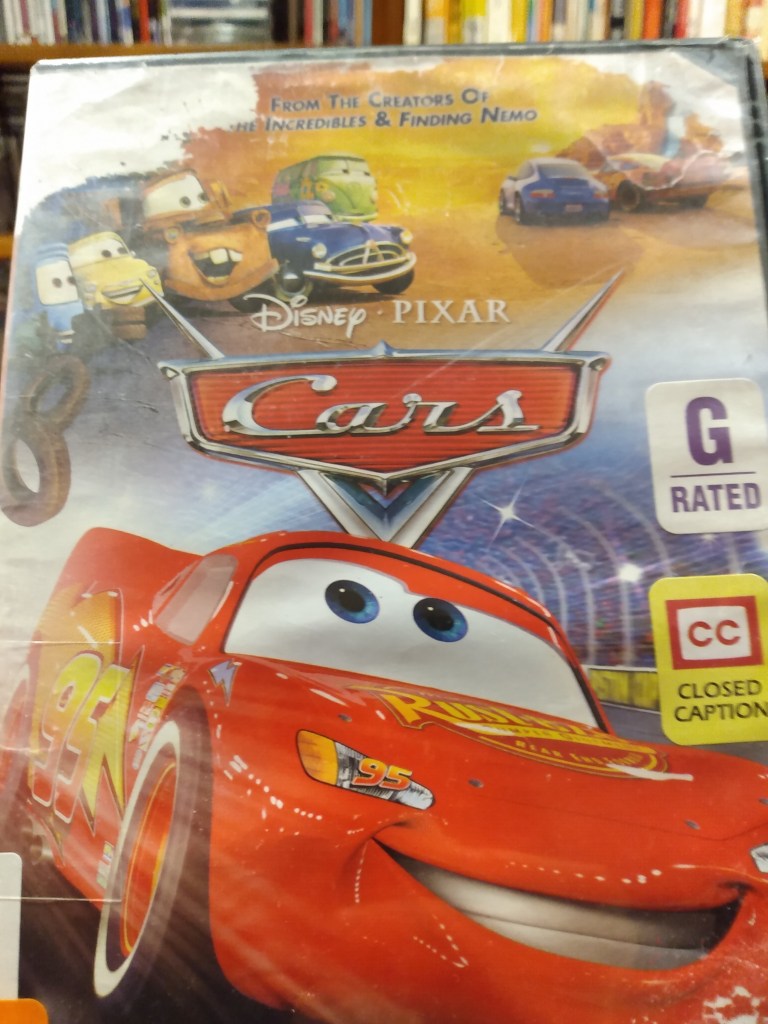
On a recent rewatching of the Pixar film Cars, I was reminded of something that bothered me at my first viewing soon after the movie came out in theaters. Here is the issue: one of the key points of the plot is that the small town of Radiator Springs suffered when Interstate 40 opened nearby. But, the film makes clear that the issue is the interstate, not driving in general.
This movie celebrates driving. The main character, Lighting McQueen, is an ascendent race car and he needs to rediscover his love of the road. He does this after getting stuck in Radiator Springs. The combination of relationships, the lanscape, and a reorganizing of priorities helps him see that driving should be fun and relaxed, not just about winning and being brash.
The Interstate represents all that is bad. McQueen gets into trouble when he is accidentally dumped off on the side of the Interstate and gets lost. Radiator Springs is just a shell of itself because all the traffic that used to come through town now just whizzes by on the Interstate. Route 66, the road of quirky local establishments, small towns, and vistas, gives way to the straight and multi-lane highway where people just want to go as fast as they can to get to the real destinations.
The movie says everything went wrong with the Interstate. Its emphasis on efficiency came at the cost of communities. It left places behind; not just urban neighborhoods where new highways bulldozed homes and establishments but also small towns in the middle of the desert. McQueen would have left it behind too if he wasn’t forced to stay.
Is the real problem the Interstate or an American way of life built around driving? Sure, the Interstate promotes faster driving but cars themselves promote a different kind of life, one lived at faster speeds. Small towns can force people to look a little more closely with reduced speed limits and speed traps. But, they cannot force them to stop or to care or not just stop at a fast food joint and filling station and get back to the road quickly.
Once Americans had cars in large numbers, they wanted to go places. The open road offered opportunities. Some will want to drive and take their time. Some will want to get places as quickly as possible. Others just need to get from Point A and Point B to do what they need to do on a daily basis. Some of the car commercials I see today make me laugh as they try to say that a sportier exterior or 50 more horsepower transform the daily commute; how many people today really love driving?
Or, how many Americans really like small towns? They may hold it out as an ideal but the population shifts in the last century – both shaped and echoed by the Interstates – have been to metropolitan areas, particularly suburbs. Radiator Springs might be nostalgic and an interesting place to visit. But, it is not the place many would choose as they prefer other amenities including the jobs present across metropolitan regions.
All together, Radiator Springs and its ilk would not likely spring back to life just because the Interstate disappears. Indeed, it is revived in part by the end of the movie because people can get to it via the Interstate and they are drawn initially by the celebrity of Lightning McQueen. Now, Radiator Springs can be a tourist destination and some residents may even rue the day when new residents want to move in and new development threatens what the community once was. Here, cars are both the problem and the answer and without a broader discussion about cars and driving, Americans may just be stuck between wanting places like Radiator Springs to survive and the need to drive quickly to the next opportunity in life.
Reddit user PixelMagic has revealed (in a post we first came across at Indy100) the dark lie of Seinfeld. Jerry’s home can’t exist in the real world. Not if you believe in basic rules of time and space. You can see why in an overhead rendering of the apartment. If you actually built it to these specifications, the outside hall would need to run through Jerry’s kitchen.
Your instinct might be to say the hallway must have been curved. That was my first reaction. Lots of other Reddit users said the same thing too. If you look at screenshots of certain episodes, that does seem plausible. In certain moments the area between Jerry and Kramer’s apartments seems small enough that it could form a little cove. As you walk away from Jerry’s door, the hall could bend away from the kitchen.
But once again, “The Strongbox” is here to ruin Jerry’s life. That was the episode when Jerry kept inadvertently torturing his building mate Phil. Poor Phil owned a parrot that choked to death on the strongbox key Kramer hid in his food dish.
As PixelMagic showed, that episode provides indisputable evidence that Jerry’s hall did not curve away from his door.
At the same time, consistent hiccups between what is depicted and what is actually possible can create issues down the road for viewers. Even if those watching to not consciously spend time dwelling on the physical spaces of a show or start drawing up floor plans to explore the particulars, spending all of those hours watching Seinfeld could shape how one views apartments and cities. Is this how people live in apartments? Is this what New York City is really like?
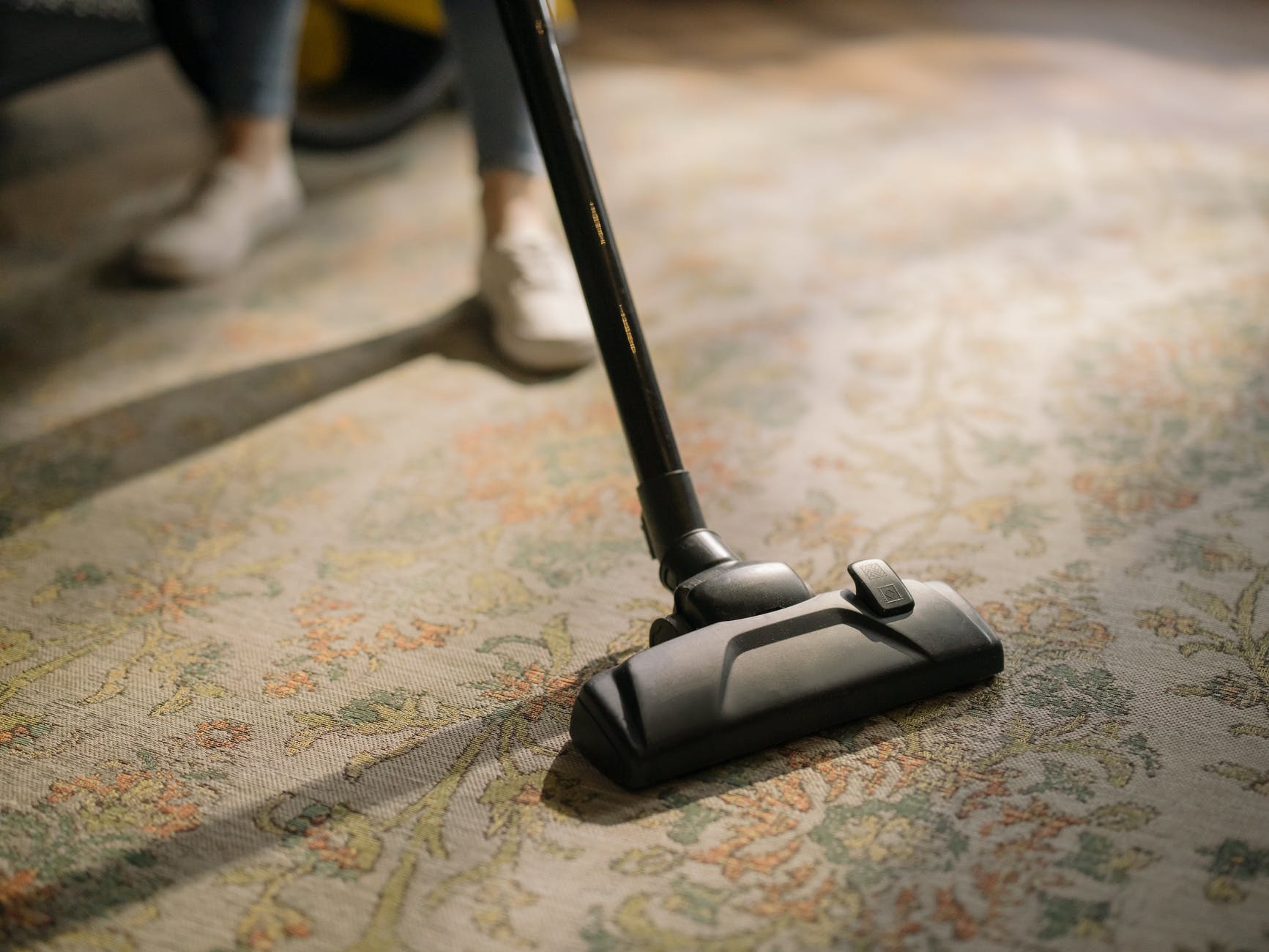
In March, EA released new ways to enhance your Sims 4 experience called “kits,” which are more scaled down and less expensive than the game’s other downloadable content packs. Two of those kits, Country Kitchen and Throwback Fit, are pretty straightforward furniture and clothing packs that add new customization options to the game. In The Sims, you are essentially keeping these virtual people alive and designing their entire existence, from clothing to homes—these kits just offer a little more variety. But Bust the Dust is a little different than the rest, in that its primary purpose is to make your Sims’ lives dirtier. “Dust off the vacuum and tidy up in The Sims™ 4 Bust the Dust Kit!” the kit’s description boasts, making a mockery of the exclamation point by using it to try to sell one of the very worst IRL chores…
What makes Bust the Dust unusual is not just that it adds the new element of household grime to the game, but that it also only adds the new element of household grime to the game. Roaches and dog poop are very minor features of the aforementioned expansion packs, and even a more narrowly focused pack like Laundry Day, which gives your Sims the ability to wash their clothes, comes with a bunch of furniture and some new looks.But Bust the Dust isn’t interested in bells and whistles. It’s just … dust.
Maybe that’s not totally fair. The kit also provides vacuums you can buy (to bust the dust) and new character aspirations (so your Sims know how to feel about the dust and busting it). But mostly, paying $5 gets you a bunch of virtual dust, which accumulates over time on the floors of your Sim’s house, both in a thin coating and in interactive clumps around the room. Early reviews last month complained that the dust accumulated way too quickly—within a matter of in-game hours—but it took around two and a half in-game days for my house to go from clean to dusty. My Sim was thrilled when this happened, because it made the house feel “homey,” and presumably because Sims can’t have asthma. Around this time, a dust bunny moved in and became a kind of companion that you can feed (it eats dust) and pet (which again, is sentient dust).
One of the marks of adulting is the need to clean up after yourself. Dishes need to be washed. Laundry needs to be picked up, cleaned, and put away. Bathrooms need scrubbing. Dusting and vacuuming need to be done.
So why try to replicate this in a game? I suppose this is the point of the franchise: to simulate daily life. The various Sim titles over the years have replicated city building, ant life, towers, and more for multiple decades. Isn’t cleaning up part of daily life just as building water pipes?
Perhaps the odd thing here is paying for the luxury of doing this. The “Bust the Dust” is an add-on. And was this the plan all along: to get more money from users for the ability to clean? There are some people who like to clean. Some who will want the complete simulation. Others will want the twists here (you can feed the dust bunnies?). Some might have never known they wanted this until it became an option.
The commodification of the world continues: you can play a computer game where you pay to dirty and clean your house. Does it inspire players to stop the game and clean their own house? Does it stimulate the imagination? Maybe it is just fun to take what is often a mundane task and play it out on a screen.









 Legally Sociable