Want to see adults attached to their phones? Go to a local park

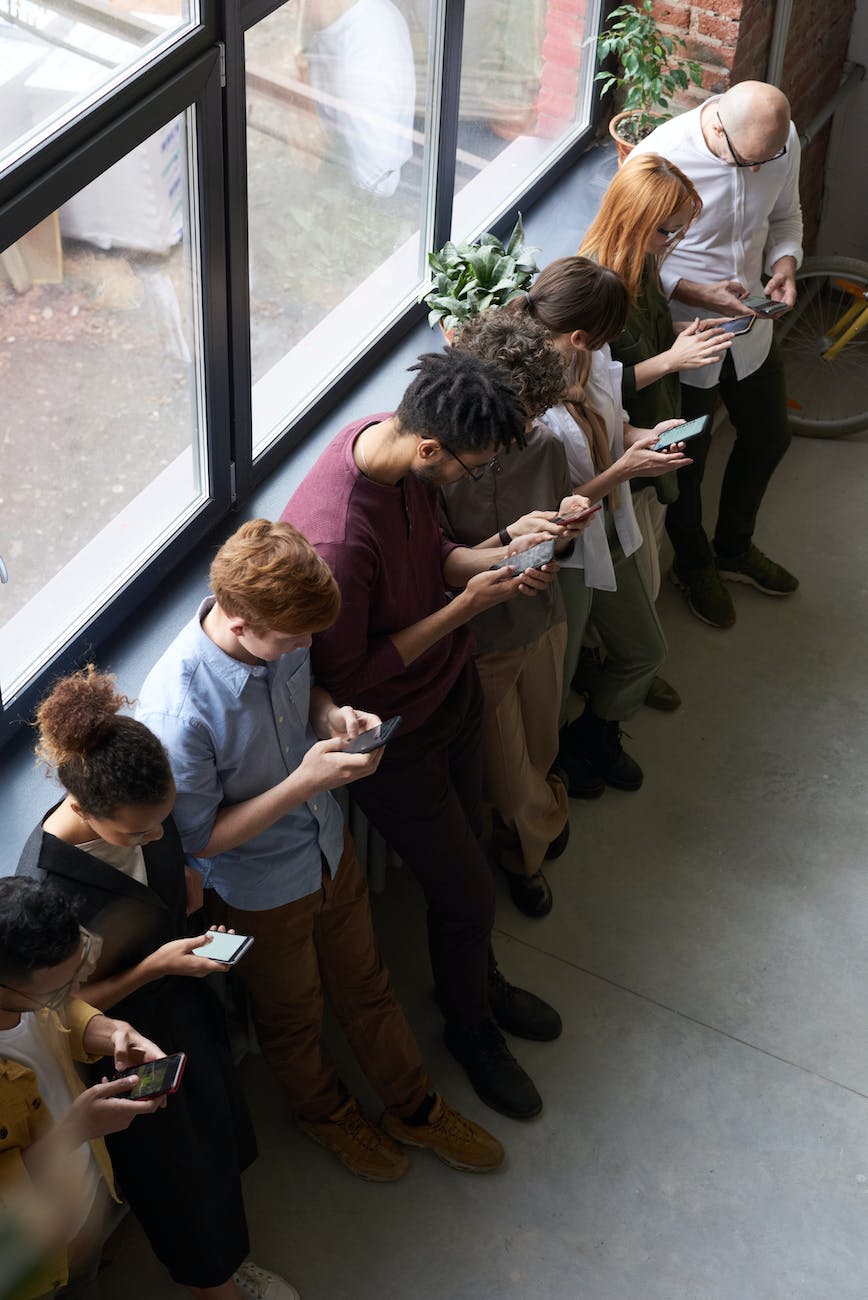
I am at neighborhood parks quite a bit with my kids. I have noticed that while kids are playing, the adults there with them are often on their phones.

Photo by Ju00c9SHOOTS on Pexels.com

I get why. It is indeed tempting. The kids are running around and occupied. Their activity means that parents might have a few moments to themselves. The park often has benches or places to relax. Why not catch up on some texts or social media activity?

Even without kids around, parks feature plenty of phone use. Walk the dog and read the phone along the way. Try biking and phone use together. Lots of walking with earbuds in or headphones on.

However, parks can be inherently interesting places without phones. Kids are learning and developing skills. There are often hints of nature around, birds to spot, bodies of water to observe. There is plenty of people-watching to be done. If the park is a lively one, perhaps one envisioned by Jane Jacobs where people are using it in multiple ways and it is situated among other interesting uses, there is plenty to see and do.

Additionally, if people are concerned with phone and social media use for kids and adults, could parks be phone free zones or at least spaces where we work to use them less? It is not because it is immediately dangerous in parks – at least, not at the level where I consistently look around and spot drivers around me with their heads tilted down to their phones – but because good parks offer the potential for a respite from other parts of life. If parks, preserves, and green spaces can help restore our minds and bodies, are smartphones part of that equation?

(To be fair, adults are on their phones all over the place. I have just noticed it recently in parks amid my own efforts to use my phone less in this setting.)

What exactly one YouTube video tell us or does not tell us, car dealer inventory edition

I recent read this summary of a YouTube video purportedly showing a car dealer stashing new cars in a parking garage so that their outdoor lots look emptier:

Photo by ThisIsEngineering on Pexels.com

Los Angeles-based car YouTuber effspot stumbled across something we’ve heard about but haven’t been able to dig up solid evidence of: dealerships are hiding a ton of new inventory in secret locations. Now you might think these dealers are putting their overstock vehicles in some secure location like a warehouse or locked lot, and some definitely are, but effspot found hundreds of Jeeps, Dodges, Rams, and Chryslers stashed in a public parking garage, all apparently put there by just one dealership.

This is a potentially interesting find. How common is this?

Dealerships have been running this scheme for months and months, but it’s starting to fall apart despite some media outlets trying to claim there may be no return to normal for the car market. Instead, both the new and used markets are going in only one direction: down. Just how quickly and by how much remains to be seen, but don’t believe car dealerships have hardly any vehicles and need to overcharge you big time for the privilege of new car ownership.

So we go from one parking garage is “dealerships have been running this scheme for months and months”? Roughly 51 seconds into the YouTube video, the maker says “these dealerships, or at least this particular dealership” has engaged in these practices. Later, at 5:52, he asks whether this is happening around the country.

This does not necessarily mean the larger argument is not true. But, the evidence presented here shows one parking garage and cars from one dealer. How broad is this practice? We do not know from this video and story.

This might just be the daily story of the Internet and social media. Interesting things are posted. Information is shared. People describe their experiences. But, it is difficult to know how this matches larger patterns or not. An individual reader might be able to make connections across stories. Or, people online could connect the dots for others. For example, others could make videos on YouTube detailing their finds of auto inventory in different locations. Sometimes these connections are made, often they are not. The next day comes and there is more information to process and relatively little that helps fit all the pieces together.

The Internet and social media mean our reference group is everyone and not just family and friends

Related to the post yesterday about the power of statistics on college campuses, here is a similar matter: how much do we compare our behavior today to “everyone” or “larger patterns” rather than just family and friends around us?

Photo by fauxels on Pexels.com

The connection is not just the Internet and social media and the way they connect us to more people and narratives. This is a change in statistics: we think we can see larger patterns and we can access more information.

Whether what we see on social media is a real pattern might not matter. (A reminder: relatively few people are active on Twitter.) We see more online and we can see what people are highlighting. This might appear as a pattern.

Not too long ago, we were more limited in our ability to compare our actions to others. The mass media existed but in more packaged forms (television, radio, music, films, newspapers, etc.) rather than the user-driven content of social media. The comparisons to that mass media still mattered – I remember sociologist Juliet Schor’s argument in The Overspent American of how increased TV watching was related to increased consumption – but people’s ties to their family and friends in geographic proximity were likely stronger. Or, in Robert Putnam’s Bowling Alone world, people spent a lot more time in local organizations and groups rather than in the broad realms of the Internet and social media.

Now, we can easily see how our choices or circumstances compare to others. Even odd situations we find ourselves in quickly be matched across a vast set of platforms for similarities and differences. Whether our tastes are mainstream or unusual, we can see how they stack up. If I am on college campus X on one side of the country, I can easily see what is happening on college campuses around the world.

Even as the Internet and social media is not fully representative of people and society, it does offer a sample regarding what other people are doing. We may care less about what the people directly near us are doing and we can quickly see what broader groups are doing. We can live our everyday lives with a statistical approach: look at the big N sample and adjust accordingly.

Fewer than 10% of homes sold via virtual real estate transactions

A small percentage of homes are sold without the buyer seeing the property in person:

Photo by Kampus Production on Pexels.com

The National Association of Realtors first started collecting data on virtual real estate transactions in April 2020, according to Jessica Lautz, deputy chief economist and vice president of research. Virtual home sales, which are sometimes referred to as “blind offers” or “sight unseen sales,” peaked at 13% of all transactions in January 2022. By November 2022, that number dropped to 9%.

Lautz sees two drivers for virtual sales, beyond the pandemic. “It’s not only because inventory is tight, but people are moving longer distances. It might be very difficult to make your way to that home before it is under contract,” she said. “If you’re moving to a different state, the ability to quickly book a flight because that perfect home has just come onto the market may be impossible.”…

Lautz sees virtual transactions continuing, even if they’re less frequent. “If you had asked me that at the start of the pandemic, I would have thought it was a fluke. But it seems to be here to stay.”

Virtual transactions may reflect another shift, as the National Association of Realtors sees the median distance folks relocate increasing to 50 miles. “It makes sense because of housing affordability, people are moving farther out because of hybrid or remote work,” Lautz said. Being close to friends and family is top priority for so many buyers today, so they may be moving to a different area to seek that.”

Several thoughts in reaction to these numbers:

-I thought the percentage might have been higher during the pandemic. But, even then, seeing a property in person matter mattered.

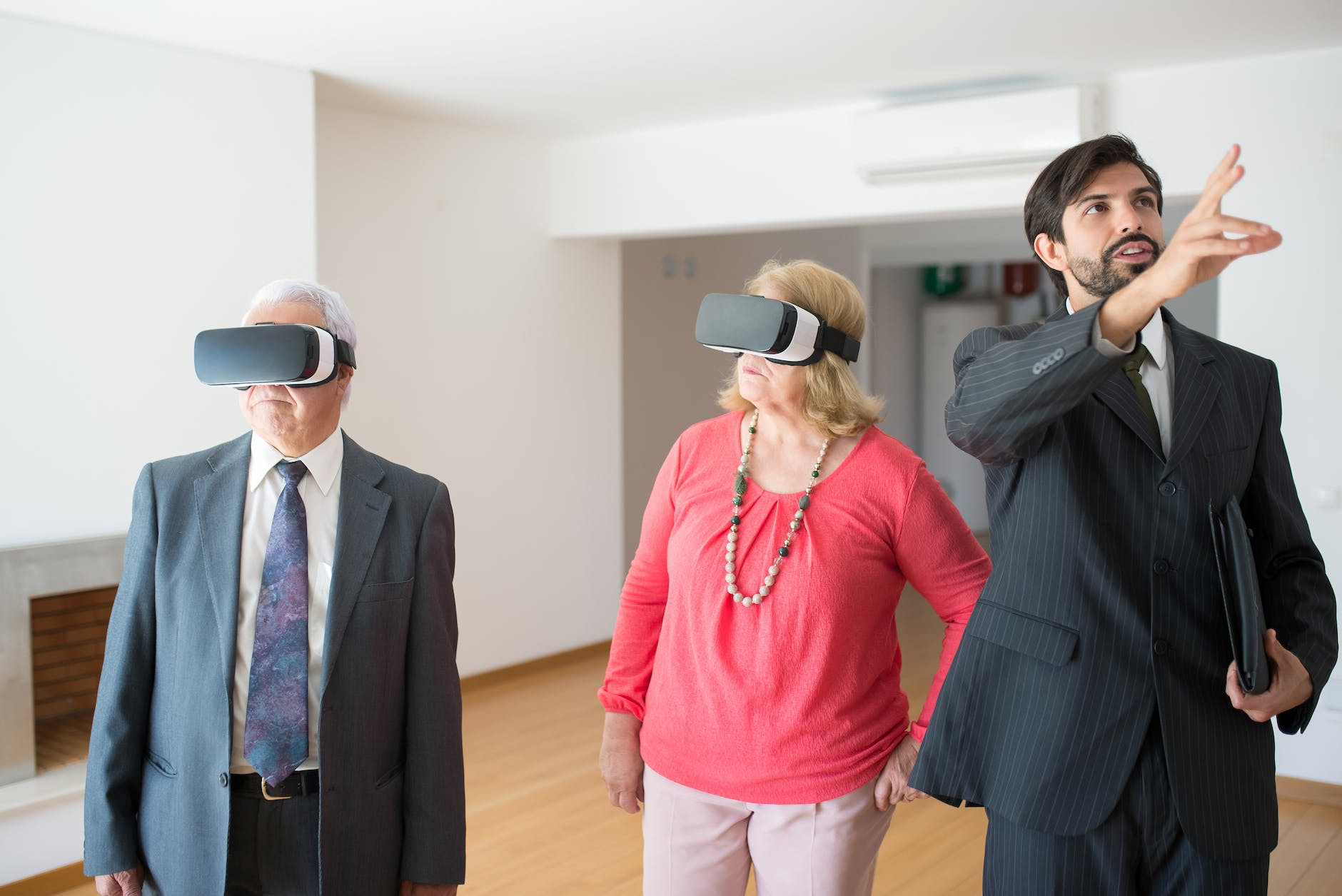
-How much can technology remedy the desire to see a property in person? How long until prospective buyers could walk through a housing unit in the virtual realm? This is related to the biggest question I have: how well could technology substitute for being in a space? One matter is feeling like you were in person and could experience everything. Another matter is whether the technology allows you to consider everything. If that technology could be improved, maybe it can provide enough or all of the experience.

-Would more virtual showings increase the need for realtors or reduce them? If the main issue is technology being able to show everything about a unit, I could imagine it done without a realtor. If the main issue is about knowing a community and having connections, then the realtor continues even if the technology improves.

Bringing large cities to the Metaverse

Meta may not have done well in this past week’s news cycle but at least one global city is headed to the Metaverse:

Photo by Bradley Hook on Pexels.com

This month, Seoul plans to launch the first stage of Metaverse Seoul, an ambitious five-year plan to code a digital re-creation of the South Korean capital. When it’s finished, residents will be able to explore historical sites, tour museums, attend virtual events, and even stop by City Hall to hack away at red tape without leaving their couches. Given Governor Jared Polis’ love of all things high-tech—including collecting state taxes in cryptocurrencies—it’s only a matter of time until Colorado follows suit, starting with our own capital city. Which is why we came up with some of Metaverse Denver’s most important points of interest.

There are a lot of possibilities here in addition to what Seoul is pursuing. Should a city aim for a brick for brick recreation? A hint or flavor of the offline city? A new kind of experience? An online site meant for tourists and/or those considering relocating? A place to try out new ideas? A gathering place for current residents?

One quick reminder as cities and communities consider this: the online and offline realms are not separate. What ends up in the Metaverse at the behest of cities will be connected to the offline city and vice versa.

More on the power users that drive Twitter

An internal Twitter research report highlights the importance of its most frequent and influential users:

Photo by Brett Jordan on Pexels.com

These “heavy tweeters” account for less than 10% of monthly overall users but generate 90% of all tweets and half of global revenue. Heavy tweeters have been in “absolute decline” since the pandemic began, a Twitter researcher wrote in an internal document titled “Where did the Tweeters Go?”

A “heavy tweeter” is defined as someone who logs in to Twitter six or seven days a week and tweets about three to four times a week, the document said.

This echoes earlier analyses of power users on social media. Many members of social media platforms contribute relatively little while a small number do a lot.

I would be interested to hear more about social media platforms or online sites that are able to encourage broader participation. Is there a way to build broad-based online communities with more equitable contributions and influence?

I also wonder how much this matches offline communities that can also be marked by a small set of participants doing a lot. Is the online realm simply mirroring offline patterns or are there new dynamics here that are important?

“The strength of weak ties” applies to LinkedIn

A recent study suggests that weak ties on Linkedin are better in helping people find jobs:

Photo by Pixabay on Pexels.com

If you have a LinkedIn account, your connections probably consist of a core group of people you know well, and a larger set of people you know less well. The latter are what experts call “weak ties.” Now a unique, large-scale experiment co-directed by an MIT scholar shows that on LinkedIn, those weak ties are more likely to land you new employment, compared to your ties with people you know better…

The notion that there is something especially useful about the more tenuous connections in your social network dates to a highly influential 1973 paper by Stanford sociologist Mark Granovetter, “The Strength of Weak Ties,” from The American Journal of Sociology. In it, Granovetter identified weak ties as a key source of “diffusion of influence and information, mobility opportunity, and community organization.”…

All told, the experiment involved around 20 million LinkedIn users, who over the five years ended up creating about 2 billion new connections on the site, recorded over 70 million job applications, and wound up accepting 600,000 new jobs identified through the site…

“Moderately weak ties are the best,” Aral says. “Not the weakest, but slightly stronger than the weakest.” The inflection point is around 10 mutual connections between people; if you share more than that with someone on LinkedIn, the usefulness of your connection to the other person, in job-hunting terms, diminishes.

The general idea is the people more removed to you but still in your network can access opportunities that close connections do not have access to. Reach out to the edges of your network and there are more options.

Now it would be interesting to see how LinkedIn and other similar platforms take advantage of this knowledge. Many social media platforms want to connect people. But, what if having more ties and increased interaction with other users is actually a negative feature for jobs?

Or, I imagine there are strategies for social media users to create an excellent set of weak ties rather than connect with people they know better. Why connect with people close to you when you could amass weak ties that could come through big later?

Nations vying for big data hegemony

Big data is out there – but who will control it or oversee it?

Photo by Federico Orlandi on Pexels.com

The rise of Big Data—the vast digital output of daily life, including data Google and Facebook collect from their users and convert into advertising dollars—is now a matter of national security, according to some policymakers. The fear is that China is vacuuming up data about the U.S. and its citizens not just to steal secrets from U.S. companies or to influence citizens but also to build the foundation of technological hegemony in the not-too-distant future. Data—lots of it, the more the better—has, along with the rise of artificial intelligence, taken on strategic importance…

Broad fears of technological hegemony may be overblown, some policy experts say. And harsh measures against China could alienate allies and trigger a rash of similarly harsh measures by counties abroad toward U.S. tech firms.

In any case, the U.S. is in an exceedingly weak position to lead a moral crusade for the sanctity of data. The concept of harvesting clicks, text, internet addresses and other data from unsuspecting citizens and exploiting them for commercial and national-security ends was invented in the halls of the National Security Agency, the CIA and the tech startups of Silicon Valley. Facebook (now Meta), Google, Amazon, Microsoft and Apple currently lead a vast industry based on trading and compiling user data. Taking measures to protect the data of American citizens from the ravages of Silicon Valley would go a long way to protecting them from China, too. Any measures directed solely against China would likely be ineffective because vast troves of consumer data would still be available for purchase on secondary data markets…

Whatever the case, some suggest the world is already moving inexorably towards a bipolar digital world—a move that will only accelerate as the burgeoning race for AI dominance between China and America picks up steam.

So data becomes just another area in which powerful nations fight? Does the data with all of its potential and pitfalls simply become a national instrument of power?

There could be other options here. However, it might be hard to know whether these are preferable compared to states wanting to control big data.

  1. In the hands of users. Move data toward consumers and individuals rather than in the hands or accessed by nations and corporations.
  2. In the hands of corporations. They often generate and collect a lot of this data and then operate across nations and contexts.
  3. In the hands of some other neutral actors. They may not exist yet or have much power but could they in the future?

This bears watching because this could go well or not and would have wide consequences either way.

If every life event was sponsored, baseball edition

I enjoy listening to baseball games on the radio. The pace of the game, the voices of the announcers, and the ability to do other things while listening add up to an enjoyable experience.

Photo by Anthony on Pexels.com

Except for one growing trend: the number of commercial reads throughout the game. At this point, it seems like almost every baseball event has a sponsor. Strikeouts, walks, doubles, home runs, the fifth inning, the seventh inning…you get the idea. Baseball has a lot of small events and apparently they can be attached to an advertiser for the right price.

I am aware of multiple factors behind this. Radio is a dying business. Live sports is one of the few shining spots where there are certain to be listeners (or viewers). Commercialization is alive and well. There is money to be made here.

But, I can only imagine how this might spread to all areas of life. Go beyond the Internet and social media ads tied to your browsing and shopping habits. You tie your shoes; brought to you by [blank]. You run the dishwasher; brought to you by [blank]. You read a book; brought to you by [blank].

At this point, there do not seem to be any officials guardrails against more and more of this happening. People can push back but this has consequences. If I do not like the baseball ads, I can stop listening. But, if we move to more immersive devices – Google Glass, virtual reality headsets, a house full of Internet equipped objects – this will be very hard to push against or escape.

Alphabet’s proposed Toronto “smart city” project vs. a new development more about nature and people

A new Toronto development is in the works where Alphabet once had plans for a “smart city” project:

Photo by Luis Ruiz on Pexels.com

In every way, Quayside 2.0 promotes the notion that an urban neighborhood can be a hybrid of the natural and the manmade. The project boldly suggests that we now want our cities to be green, both metaphorically and literally—the renderings are so loaded with trees that they suggest foliage is a new form of architectural ornament. In the promotional video for the project, Adjaye, known for his design of the Smithsonian Museum of African American History, cites the “importance of human life, plant life, and the natural world.” The pendulum has swung back toward Howard’s garden city: Quayside 2022 is a conspicuous disavowal not only of the 2017 proposal but of the smart city concept itself.

To some extent, this retreat to nature reflects the changing times, as society has gone from a place of techno-optimism (think: Steve Jobs introducing the iPhone) to a place of skepticism, scarred by data collection scandals, misinformation, online harassment, and outright techno-fraud. Sure, the tech industry has made life more productive over the past two decades, but has it made it better? Sidewalk never had an answer to this…

Indeed, the philosophical shift signaled by the new plan, with its emphasis on wind and rain and birds and bees rather than data and more data, seems like a pragmatic response to the demands of the present moment and the near future. The question is whether this new urban Eden truly offers a scenario that will rein in global warming or whether it’s “green” the way a smart city is “smart.” How many pocket forests and neighborhood farms will it take to cool the planet?

Whatever its practical impact, renderings of the new version of Quayside suggest a more livable place. The development promises something incredibly obvious that the purveyors of the smart city missed: a potential for daily life to be pleasurable. As MaRS Discovery District CEO and tech entrepreneur Yung Wu puts it: “What is the vision that inspires people to want to live here, to work here, to raise their families and children and grandchildren here? What is it that inspires that?”

“It’s not a smart city,” he concludes. “It’s a city that’s smart.”

I wrote about the earlier project here and it is interesting to see this update. I would guess the “smart city” will still come but perhaps through different forms including more incremental changes, smaller and less high-profile projects that test the concepts first, and perhaps through examples in other countries where guidelines and regulations are different.

Additionally, does this mean Alphabet and similar companies will no longer pursue such projects or will they seek more favorable conditions? Or, what happens if tech companies provide a more convincing argument that tech and nature can go together in urban forms?

At this point, it is hard to imagine tech retreating much but how exactly it continues to develop and merge with urban and built spaces remains to be seen. It is one thing to push technology through individuals or private actors but it is another level to build it in into the infrastructure from the beginning.