How many American communities want super big houses?

Americans have large houses. But not every community wants a lot of really big houses:
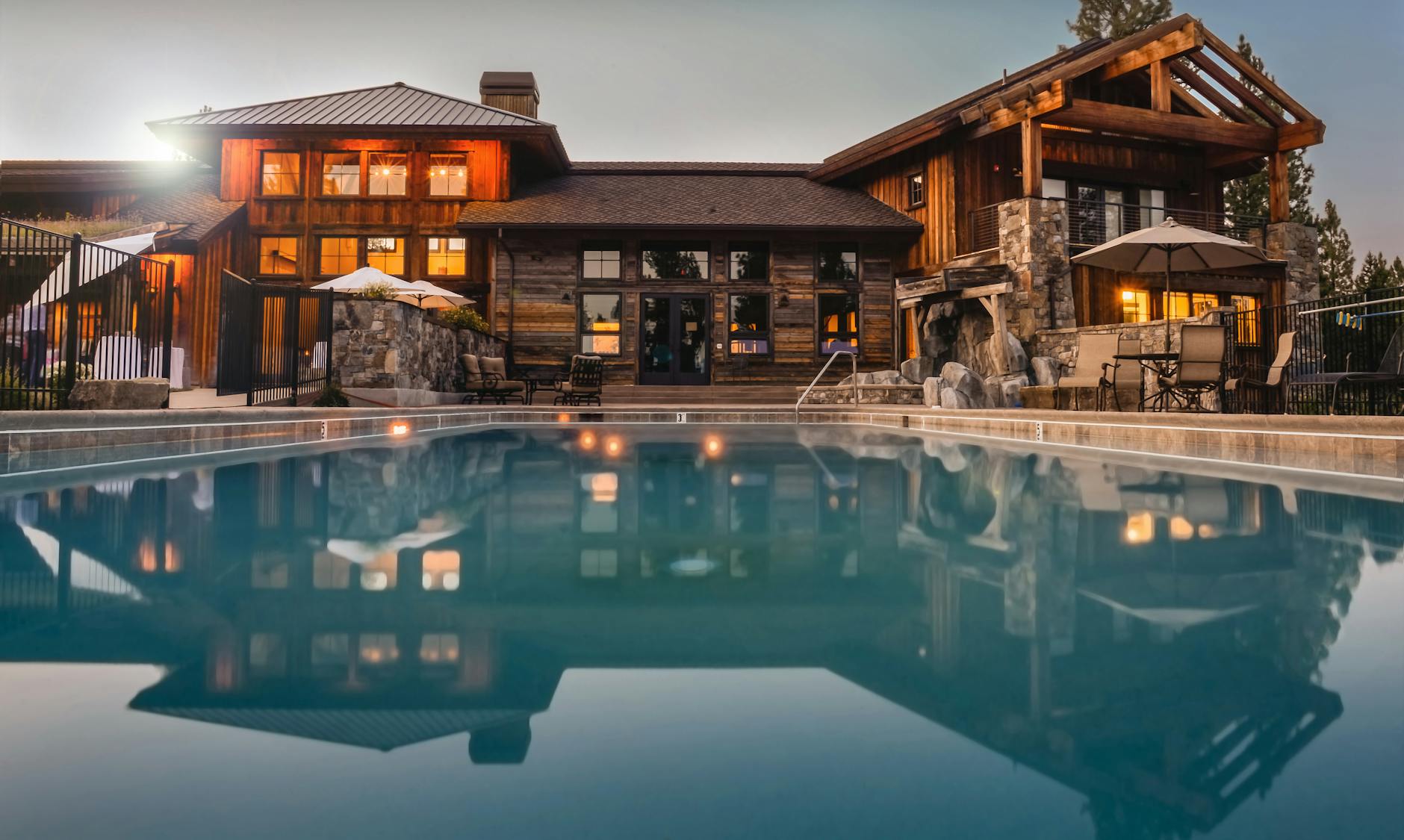
Photo by Chris Goodwin on Pexels.com

“How big is a house?” mused Jeremy Samuelson, planning director for East Hampton, N.Y., where a working group recently proposed slashing the town’s maximum-allowed house size in half, from 20,000 square feet to 10,000 square feet…

Towns from Aspen to Martha’s Vineyard are in a big-house brouhaha. Critics say mushrooming mansions cramp scenic vistas and local charm, consume excessive energy and inflate prices…

Truro capped new homes at 3,600 square feet in 2017, but then, Shedd says, officials stuck in an amendment allowing bigger builds with special permits. “I’m not saying it was done on the sly,” says Shedd. “Our town meetings drag on. I was probably glazed over.”…

Routt County, Colo.—home to Steamboat Ski Resort—adopted a proposal capping house sizes at 7,500 square feet in June. Debated for months, the hot-button issue packed public meetings…

In Pitkin County—home to Aspen—officials slashed the maximum new home from 15,000 to 9,250 square feet last November, noting that a big house raises “greenhouse gas emissions and increases environmental havoc.”

What strikes me about these discussions is something I first discovered when researching the use of the term McMansion: the size of a big house is relative in terms of size and quantity. In the case of McMansions, a 3,000 square foot new house might be normal in newer neighborhoods but it can be considered a monstrosity next to a 1,100 square foot postwar ranch house. Or is an 8,000 square foot home a McMansion or a mansion? Depends on who is considering the home and where it is located. Or one teardown McMansion might not be a big deal but dozens or hundreds over a decade or two might be considered going too far.

In the cases of these even larger homes, how big is too big or how many is too many? The discussions here do not appear to be taking place within communities where they are contemplating going from no big houses to some. They are considering whether to have no more big houses. Apparently there is some limit to be reached soon or no more might be allowed.

Will such moves push those who desire giant houses to other communities? Will they end up in municipalities just outside these jurisdictions? Are there other communities who would see this as an opportunity rather than a problem?
Seeing teardowns and infill homes throughout DuPage County

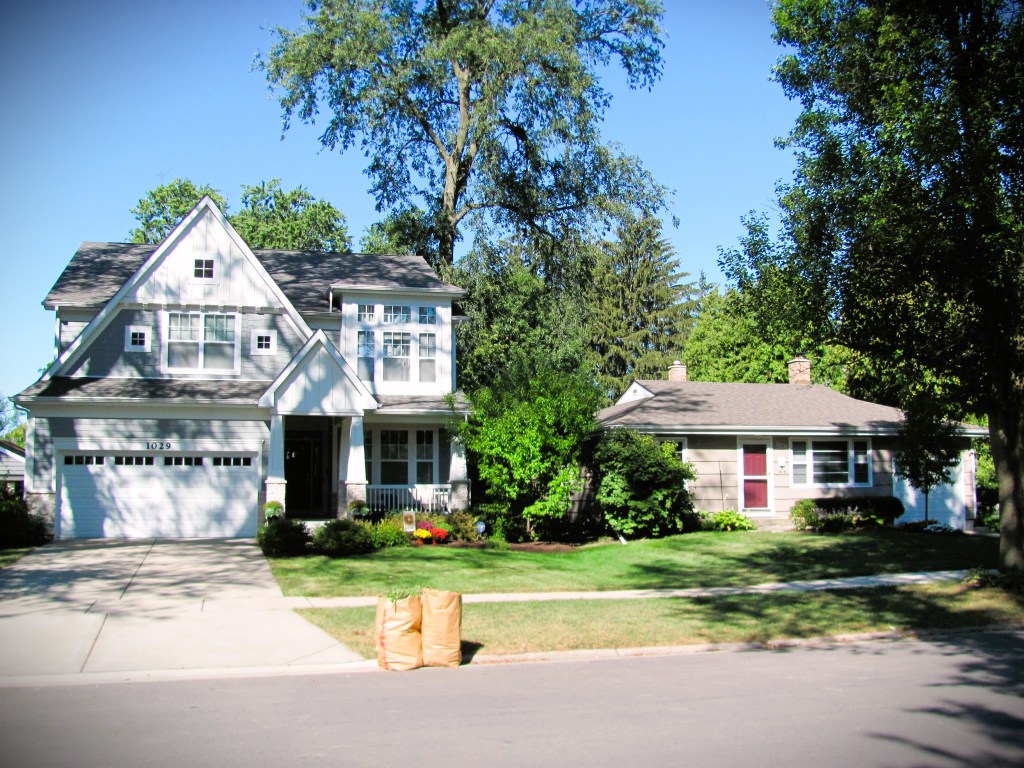
While working on a project, I noticed something while driving through a number of DuPage County communities: there are teardown homes everywhere. They are not just limited to desirable downtowns; they are spread throughout numerous residential neighborhoods. They are often easy to spot: much larger than adjacent homes and with a particular architectural style with stone or fake stone bases, lots of roof peaks, and plentiful garage space. Some could be categorized as teardown McMansions. (Some of these homes might be infill homes where homes were constructed on empty land.)

These teardowns follow some of the patterns I found in over 300 teardowns in Naperville. The architecture and design is similar. The homes are often located next to older homes, often from the postwar era, from the twentieth century.

One difference is that these teardowns are spread throughout communities. In Naperville, teardowns tended to cluster near the desirable downtown area. In some of the communities I drove through, teardowns and/or infill homes are all over the place. Some of these communities do not have downtowns like Naperville and have housing stocks of different ages. It was not unusual to see a teardown suddenly in a neighborhood on the edge of a community when in Naperville the teardowns tend to cluster in particular neighborhoods.

In a county that is largely built out and with suburbs now 50-170+ years old, there will be more opportunities for property owners, builders, and developers to tear down old homes and construct new ones. My sense is that while communities may have regulations about what can be rebuilt, the general atmosphere is in favor of these new homes as long as there is interest and resources to make it happen.

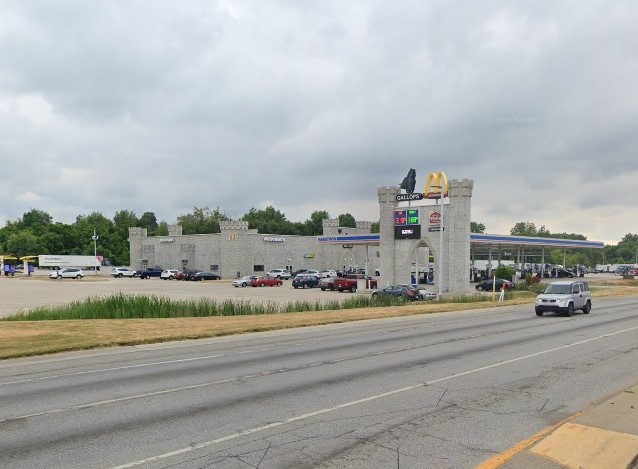
“A man’s home is his castle,” McMansions, and the “castle” that houses a McDonald’s

Let me try to put together a few ideas:

  1. Americans tend to subscribe to the phrase “a man’s home is his castle” and all that means for a private home owner.
  2. Plenty of Americans like McMansions, large homes with dubious architecture often found in sprawling neighborhoods or as much larger houses compared to their neighbors.
  3. McDonald’s is a famous American brand and helped give rise to fast food that goes well with driving and the private single-family homes of suburbia.

Put these together and you have a McDonald’s in a castle in northern Indiana:

Image from Google Street View

Only in America might someone build a gas station castle (it looks like a castle but in a McMansiony way) that contains a McDonald’s. I wonder if it attracts any more customers just because it is a castle.

(This building has apparently been around a while but I recently saw a story about it that caught my eye because I have seen other castle gas stations in other northern Indiana trips.)

Opening land for development and “subsidies for McMansions”

A proposed bill in Utah would allow development on public lands. Critics say it would open the door for McMansions.

Photo by Michael Tuszynski on Pexels.com

Rep. Ivory, R-West Jordan, sponsored HJR19, a resolution supporting a piece of federal legislation called the Helping Open Underutilized Space to Ensure Shelter (HOUSES) Act. Ivory is a manager for two real estate affiliated companies — Mission Property Management and 9615 Property Management — according to his financial disclosure form.

“We’ve learned that about 150,000 acres of federal lands are within city boundaries,” Ivory told the House Public Utilities, Energy, and Technology Committee on Thursday evening. “There’s another about 600,000 acres that are within a mile of city limits.”

The HOUSES Act, sponsored by Utah Sen. Mike Lee last year would open up certain public lands managed by the Bureau of Land Management to housing developers. Some critics of the legislation note that it doesn’t require those homes to be affordable, calling it a “McMansion Subsidy Act.”

The proposal would require that 85% of public lands sold be used for residential development and that 4 homes be built per acre. The other 15% could be used for commercial businesses or “other needs of potential communities.”

My guess is that the use of the word McMansion here refers less to a home with mixed-up or garish architectural features and more to big houses in the suburbs. More like “McMansions sprouting” or “cookie-cutter large homes” suddenly arriving in fields. The sprawl that has marked America for decades. And why should new housing opportunities go to people with resources? (See the different traits of McMansions here.)

At the same time, if these lands were opened up and they were filled with denser condos or communities of tiny homes, critics might still have concerns. Allowing the use of public land can be contentious as protected open spaces have value. If one goal is to not allow sprawl to take over everywhere, opening federal land is not a line some would want to cross.

Another question: does simply adding any housing to the housing stock help by adding to the supply? Or, is it more important that affordable housing is added? The charge of McMansions being constructed with subsidies suggests these may be houses for people who do not need help or that adding such housing might not help the housing issue.

Do Christmas movies avoid McMansions?

What kinds of homes are featured in Christmas movies? One article suggests McMansions are rarely featured:

Photo by Kristina Paukshtite on Pexels.com

Have you noticed that holiday movies are already streaming? And have you noticed the homes? They’re built for families who enjoy being together.

Rarely opulent “McMansions,” the homes featured in holiday family movies run the gamut from the family cabin in the woods to a stately family home that has been passed down through the generations.

The suggestion here is that the features of McMansions are not well-suited for these films. Here are some traits that might not work. Lots of square footage means family members are not around each other regularly. Unusual architectural features or interior designs do not look like traditional homes. A giant house on a small lot or looming over other homes does not appear friendly.

In contrast, a “good” home for a Christmas movie will be cozy, traditional in architecture and design, and present a particular appearance from the outside. The home might be tied to particular styles from the Victorian era through the mid-twentieth century when many Christian traditions and themes emerged in the Anglo-American sphere.

Given the way McMansions are treated in artistic endeavors, perhaps a McMansions could serve as the setting for a dystopian or black comedy Christmas film.

Here is what Americans gained in interior features with larger and larger new homes

An analysis of data involving American homes from 1970 to 2022 shows several important changes:

Since the 1980s, the percentage of homes being constructed with four bedrooms has on the whole grown, while the percentage of two-bedroom homes have fallen. In 2022, nearly half of all homes constructed had four bedrooms, compared to two-bedroom homes at 9%.

This trend of larger homes is also shown through the number of bathrooms in new houses, with over a third having three or more baths, slightly more than the percentage of homes with two baths.

If you have more square footage, people might want more of these kinds of rooms. Who wants to share a bathroom? Can’t additional bedrooms be repurposed for other uses like an office or workout space? Haven’t all the shows on HGTV convinced viewers that more bedrooms and bathrooms increase the resale value of a home? Too bad we do not have a measure of the number of open concept living areas. Or, how many square feet are allocated to the kitchen, the space where Americans spend a lot of their time?

One more interesting chart regarding basements:

Basements have also become much less popular over the last five decades— the percentage of new homes with a full or partial basement in 1974 was 45%, compared to just 21% in 2022. Slab and other types of foundations have become the sweeping majority for new homes.

I wonder if this has more to do with more new homes constructed in places, like the South, where basements are less common as opposed to a declining interest in basements. This also suggests newer homes have less space underground and have more of their space above ground.

Are these changes due solely to the spread of McMansions? The headline may invoke McMansions but they were not the only style of larger home constructed in recent decades. As many new homes added square feet, their features shifted. McMansions may have had plenty of bedrooms and bathrooms but so did other new homes.

Dallas neighborhood fought off McMansions with conservation districts

The Greenland Hills neighborhood in Dallas limited McMansions in recent decades by establishing conservation districts:

Photo by David Gonzales on Pexels.com

Neighbors were also concerned about tear downs and new builds. They watched as modern mega mansions took over the Park Cities. “There’s this thing coming,” Pratt says. And the residents, who founded the Greenland Hills Neighborhood Association in 1983, knew they had to do something to fight the “McMansions.”…

After that, Greenland Hills residents formed a conservation district. In the early 2000s, they surveyed the houses, and a feasibility study showed that about two-thirds of the homes were Tudors. And there was a schism in the neighborhood. There was the M Streets, between Central and Greenville, and then there was M-Streets East, which was sandwiched by Greenville and Skillman. East wanted less restrictive conservation rules, Mut says, and some blocks wanted to opt out.

Finally, the M Streets and M Streets East conservation districts formed in 2003. The M Streets Conservation District protects seven architectural styles, like neo colonial and contemporary. “We all get hung up on Tudors, and we should because that’s pretty massive,” Pratt says. “But the other styles are just as notable in the time period as well.” The district rules preserve each architectural style’s most iconic features on the front façade. The longest section is dedicated to the Tudors. There are specifications on window proportions, roof pitches, secondary gables, even doors. “We’re not going to put a Victorian door and a Tudor home,” Mut says…

And the prices of the houses increased. Homes in Greenland Hills often go for $800,000 or more. Mut can’t pinpoint the exact reasons for the surge in pricing, but he attributes it to inflation, the proximity to downtown, and demand for the homes. Mut and Pratt recognize the irony of the neighborhood’s start as an “affordable” neighborhood versus today. But it’s not an apples-to-apples comparison, Pratt says, especially now that the neighborhood is not on the outskirts of Dallas. And the overall value, she says, is still there. 

Three thoughts come to mind:

  1. The neighborhood wanted to protect its particular architecture and character. To do this, they set up guidelines that limited property owners. This is often the trade-off of historic preservation in American communities: retaining the older styles limits what current and future property owners can do.
  2. This occurs in a metropolitan region where McMansions are common. When I compared how McMansions were defined in the New York Times and Dallas Morning News, I found people in Dallas more open to McMansions. However, it sounds like people saw what was happening in other neighborhoods and decided they did not want this in their neighborhood.
  3. Home values in the neighborhood have increased. Would this have happened at the same rate if McMansions had been constructed instead? Preserving the older homes means the neighborhood appeals to certain buyers. Building McMansions means newer and bigger homes. Which option would have raised property values more?

What allowing “build[ing] more houses on less land” in Austin could lead to

Austin, Texas recently changed its regulations to allow property owners to “build more houses on less land”:

Photo by Abigail Sylvester on Pexels.com

Homeowners now have increased flexibility to build more houses on less land, after the lot size required for a home was reduced from 5,750 square feet to 2,500 via the HOME initiative (Home Options for Middle-income Empowerment). The policy also increases the number of housing structures that can sit on that 2,500 square feet from two to three. 

The debate over these changes continues:

The debate around a policy like this comes down to whether someone believes increased density (more housing for more people on smaller footprints) will help the situation, or will lead to overbuilding, crime, and rental cash grabs. The latter tends to sound a lot like NIMBY talking points more concerned with preserving the charm of longstanding Austin neighborhoods.

Some developers and homeowners feel that the resolution alleviates just a small part of Austin’s building woes, since the zoning codes are still complex and difficult to navigate. Jason Kahle, who owns Small Home Solutions, LLC, says he and his 10 employees are “going to be all over” the changes in a market where it seems everyone with a large-enough lot has considered building a granny pod, mother-in-law suite, or backyard office. 

But being free to build on a smaller lot is not the same as being able to feasibly do it within existing rules, Kahle points out. “There’s a lot of wheels turning at the same time,” he says. “Austin Energy is a challenge. We have protected trees, impervious cover, floor-area ratio rules, the level of detail the city requires on civil engineer plans, the subchapter McMansion ordinance, temp drawings. It’s a lot to deal with.” The McMansion regulations, also known as “Subchapter F” in the city’s housing code, set detailed and strict limits, including height and setbacks from the edges of a lot.

Laura Boas, an Austin physical therapist, is building an “accessory dwelling unit” for her family behind her 1950s-era, 720-square-foot cottage in the Brentwood neighborhood. She’s seen massive 2,500-square-foot homes go up in her area, and her lot is big enough to support additional buildings. Boas lives alone and jokes, “I’m part of the problem.”

It sounds like the goal is to allow for more housing units without changing many existing lots and allowing for smaller lots. This is a different approach than promoting more multi-family housing or larger structures containing more residential units. These changes keep the single-family character and the scale of the neighborhood similar while adding more units and people.

It will be interesting to see if an approach like this solves the problems it was intended to solve. Will the number of new McMansions decrease as property owners pursue other options? Does this add enough units? Does it ease housing affordability? If not, what changes would residents and the city be willing to enact? I hope researchers and policy experts are keeping track of the changes in cities that have enabled similar regulations. This could help determine whether adding ADUs (such as in Portland) is helpful.

The Simpsons encounter a teardown McMansion

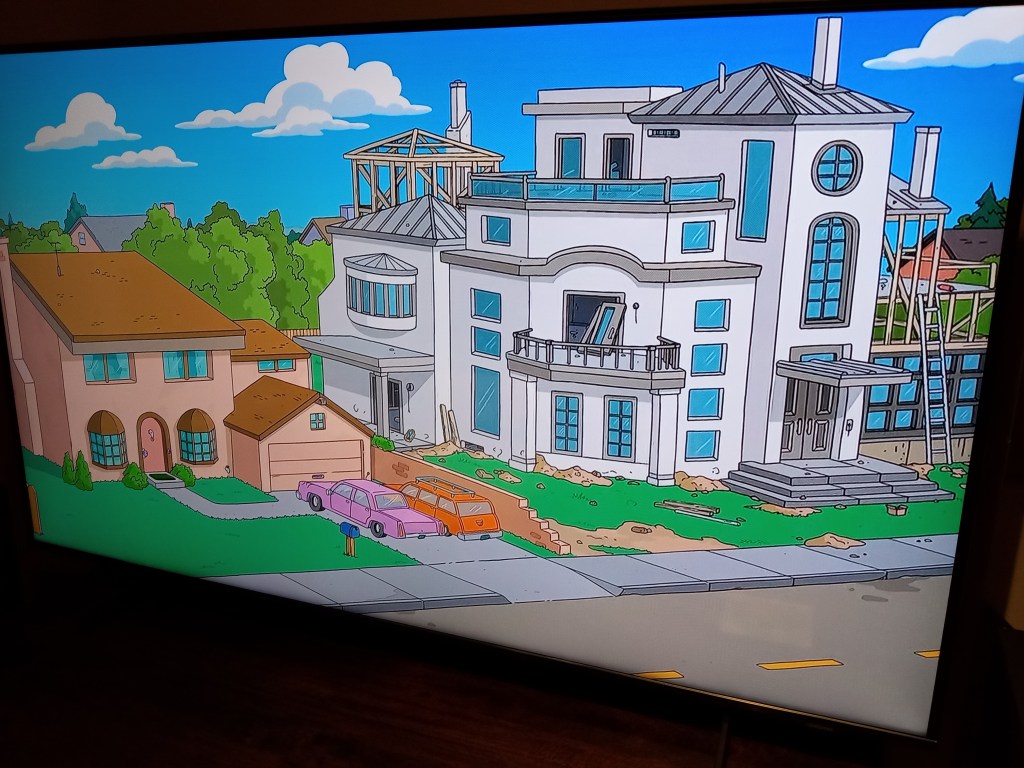
The Simpsons have new neighbors in Season 35 episode 3, “McMansion and Wife.” They get to know each other and enjoy spending time together. But, then the neighbors go from a modest home to a teardown McMansion:

As the new home is under construction, it is called a “reno” and then a “do-over.” Then it turns into a giant home. By my count, the teardown is 3-4 stories, is much bigger in terms of square feet and height as it towers over the Simpsons’ home, and has a mishmash of architectural features. The Simpsons live in a modest suburban home by today’s standards.

This story of a teardown McMansion within an established neighborhood is a common story across the United States. The new home can be considered disruptive by some neighbors even as others might defend the ability of property owners to do what they wish with their home and land and benefit from those changes.

One possible twist this episode briefly explores is the relationship between neighbors in these positions. Can they be friends? Can someone moving into a neighborhood build relationships and soften the blow of tearing down a house and constructing something much bigger on the same spot? Or, do teardowns usually lead to conflict between neighbors?

McMansions and combating climate change

A letter to the editor in California includes McMansions on a list of items that need attention in order to fight climate change:

Photo by Guduru Ajay bhargav on Pexels.com

Wildfires are increasing but McMansion developments are underway in brushland.

McMansions have long been connected to environmental concerns. This includes their presence within sprawling suburbs and neighborhoods where driving is necessary and a lot of land is used. It includes the materials required for each home and yard. It includes the use of resources to heat and light such homes.

The concern expressed above is more specific. McMansions are linked to wildfires and brushland. This suggests these homes are being built in places where they should not be built or in places that are vulnerable to wildfires. If McMansions were not in these locations, wildfires would affect fewer people.

I wonder, however, if McMansion is shorthand here for any larger single-family home. Do expanding metropolitan regions in California and other states have climate implications? When people move to what used to be small towns surrounded by more open land or continue to move out into dry suburban fringes, isn’t this more problematic than large McMansions with bad architecture?