Schaumburg, Illinois, nearly 30 miles northwest of downtown Chicago, is a prototypical edge city. Home to Woodfield Mall, hundreds of thousands of square feet of office space, and over 70,000 residents plus located at the convergence of I-290, I-90, and IL-390, journalist Joel Garreau mentioned Schaumburg in his 1991 book Edge City: Life on the New Frontier. When I heard Schaumburg advertising on the radio, I wondered: is this an aggressive or a desperate move in these particular times? Where does Schaumburg fit among other Chicago suburbs also trying to get their name out there (examples here and here)? A few thoughts on this.
-Woodfield Shopping Mall is one of the largest in the United States. Even with numerous shopping malls struggling plus the problems of brick and mortar retailers, Woodfield will probably survive due to its size, location, and status. It may need to transform significantly – can it still support hundreds of stores? – but it is likely in good shape compared to numerous other Chicago area malls that are exploring new paths (other examples here, here, and here).
–Growth is important to American communities. Like many edge cities, Schaumburg experienced explosive growth early in its history: it had 986 residents in 1960, in 1980 had over 53,000 residents, and peaked in 2000 at over 75,000 residents. Where does it go from here? Population loss and/or the loss of businesses would not be a good image for the community as it tries to chart a bright future.
Compared to other Chicago suburbs, Schaumburg is likely in good shape. At the same time, the growth and status of the past and present does not have to continue amid new social pressures and internal decisions. If Schaumburg is advertising in order to attract businesses, perhaps this hints at broader issues across suburbs: can they all succeed in what may be a challenging several year period?
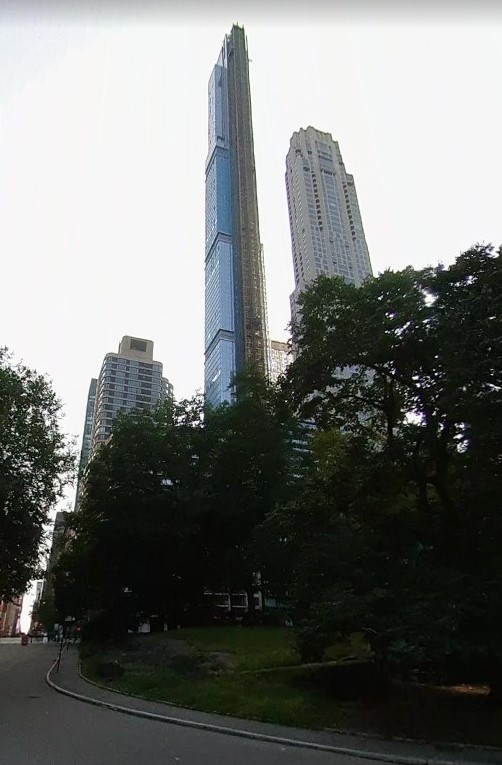
Google Street View image of 220 Central Park South(September 2020)
By the end of September, the volume of Manhattan co-op and condo sales was down 43% year over year, according to a report by Douglas Elliman, as sellers held back from listing their apartments and buyers increasingly gravitated toward the suburbs…
Of the top 10 national sales compiled by Jonathan Miller, president and chief executive officer of Miller Samuel appraisers, five were in 220 Central Park South, a new luxury tower on Central Park designed by architects at Robert A.M. Stern…
Another trend from this year, namely rich people “fleeing” New York for Florida, didn’t manage to trickle up to the highest tier. Only two of this year’s top 10 sales were in Palm Beach; last year there were three…
Even the three Los Angeles entries diverge slightly from conventional 2020 narratives. Yes, the L.A. market is one of the few urban bright lights this year, with sales soaring and inventory hard to come by. But numbers at the very top are down from last year, when it notched four entries in the top 10, totaling $463 million. This year there were three, totaling $293 million.
The actions of the wealthiest homeowners matters not only because people often have an interest in what those who have lots of money do with all that money; it matters because these are people with clout and influence. If they are continuing to purchase in New York City – it is less clear how much time the owners would necessarily spend in the city – it is a sign of the importance of the city and the prospects for future development.
The optics of 2020 might not be favorable to the list above but the project and the trends were underway far ahead of COVID-19. In a very expensive land and housing market, purchasing a residence in one of the newest buildings and in such a location within Manhattan is an object of desire for some who have the resources to purchase such places. While a figure later in the article notes that the total price for the properties on this list is lower than the price for the properties the year before, this may only allow the wealthiest to get into hot markets even more.
It may (or may not) be worth noting that five of the ten properties are in a tower in New York City while the other five properties are large homes on some land. On the whole, Americans as a whole tend to prefer or idealize single-family homes but the wealthiest in the United States and elsewhere may be more inclined to purchase large units in multi-unit buildings.
While reading reporting about skyscrapers going up in Chicago even during COVID-19, I continue to wonder: who is purchasing all of the residential units in times like these? Here is one example involving Chicago’s new third-tallest building.
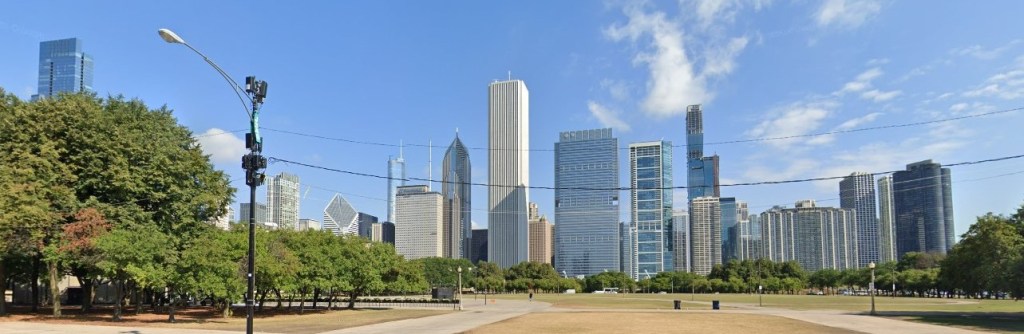
Part of the Chicago skyline from East Jackson Drive – Google Maps
Located on a multilevel riverfront site at 363 E. Wacker Drive that belongs to the same Lakeshore East development as Aqua, Vista will house a 191-room hotel and 393 condominiums once it’s complete in the third quarter of next year.
For now, as COVID-19 rages and office cubicles remain empty, the tower sends the upbeat message that downtown has a future, and it’s not just for the 1%. Vista’s ground-level amenities will benefit ordinary citizens as well as those who can afford the tower’s condos, which start at around $1 million.
The entry point of $1 million means that the clientele for such a building is pretty restricted. The Chicago area is not a superheated real estate market like San Francisco or Manhattan or several other coastal cities yet tall residential buildings are meant for a select few.
The biggest Chicago skyscraper to have construction halted by the coronavirus pandemic could be revived in 2021 — as apartments instead of condos.
Unit layouts are being redesigned at 1000M, the Helmut Jahn-designed condo tower on South Michigan Avenue, in an effort to refinance the project and resume construction next year, “primarily as a rental project.”…
It was the largest condo development by unit count, at 421 units, launched in Chicago since the Great Recession all but shut down construction of condos in the city for several years. At 832 feet, it also would be the tallest Jahn-designed building in Chicago, where the German-born architect is based.
With rentals being in demand, this makes some sense in order to help get the project started again. At the same time, these rental units will not come cheap.
All of this residential construction suggests there is a lot of capital continuing to flow for prestigious building projects in desirable locations. COVID-19 might be a bit of a speed bump – whose impact will continue to be determined by its length – but big lenders, developers, and buyers still have an appetite for these prestigious residential units.
Focusing on the construction of these units can both help the public pay attention to where the money is really going as well as continue to highlight the disparities in development money by location. It is hard not to report on these new tall structures; they require a lot of effort and resources and will be part of a celebrated skyline for decades. Yet, within Chicago, as the skyscrapers continue to rise for the corporations and residents with plenty of resources, needs for housing and other development are very present elsewhere.
A small town once stood on the riverbank, where the river bends before ending its journey at the lake. For several decades in the mid-1800s, the village of Singapore was a humming lumber and shipbuilding hub. Residents and sawmill workers processed the plentiful white pine trees of western Michigan, then loaded them onto schooners for Chicago and Milwaukee.
The founders of Singapore had big dreams. They envisioned their town, then located north of present-day Saugatuck on the southwestern Michigan shore, as the next important Midwestern city, rivaling the growing metropolises in Illinois and Wisconsin…
After the lumber trade waned and a series of fires roared through the area, leading to the destruction of many of Singapore’s houses, the town was abandoned. By 1875, according to Eric Gollannek, executive director of the Saugatuck-Douglas Historical Society, the lumber boom was over, the mills were dismantled and moved to St. Ignace, Michigan, jobs dried up and the village slowly disappeared.
Eventually, what was left of Singapore was buried beneath the sand.
The sand dunes of Lake Michigan are an underrated natural feature. Since I have seen them on top of a house or two at Silver Lake (see the image above), it is not surprising that they cover the remains of a town.
I would guess that the early decades of Midwest settlement is a ripe time for finding ghost towns or abandoned communities. Many early settlers had dreams that their town would prosper in the future. But, time, outside social forces, and internal decisions helped seal the fate of some places while others thrived.
The possible forces at work are numerous. Perhaps it was the changing of transportation technology; the coming of the railroad, the slowdown or rise in traffic along a road, shifting harbors and waterways. Perhaps it was the consolidation of residents or trading activity in one community as opposed to another. Perhaps it was the presence of a particular industry or the the decline of an industry. Ecological conditions can change as well, ranging from droughts to major storms to fires to human activity that changes the landscape in significant ways.
Today, it is hard to imagine that established communities of a particular size could disappear. Yet, history suggests this has happened before. It may not take sand dunes or cutting down many trees (something that happened all around Lake Michigan) but the communities of today are not guaranteed to be the communities of the future.
A big drop in rental prices appears to be luring new, younger renters back to the city, even as office workers and wealthy New Yorkers remain in the suburbs and more rural resort towns. New leases in Manhattan increased 33% in October, making it the best October in 12 years, according to a report from Douglas Elliman and Miller Samuel.
The typical rent paid for apartments including discounts, or the median net effective rent, fell 19% from a year ago to $2,868 — a record decline. Smaller apartments, which cater to younger renters, fell the most. The price of studio apartments was down 21%, and one-bedroom apartment prices dropped 19%.
“I think we’re at a tipping point where the consumer starts coming back to the city,” said Jonathan Miller, CEO of Miller Samuel. “Sellers are slowly recalibrating what the values are, and the lower pricing is beginning to bring more people in.”…
And with the average rental price for a one-bedroom apartment still over $3,200 — more than twice the national average — Manhattan is still far from affordable for many young renters. Still, experts say the October increases could begin a long, slow recovery for the nation’s largest real estate market.
Manhattan is an important real estate market. It is part of the leading city in the United States and one of the most important global cities in the world. Housing is desirable there for multiple reasons.
But, Manhattan’s prices are unusual. There is a limited amount of land. Few other places in the United States have a similar local economy and cultural scene. Prices will remain high because they have been high for a while. There is a lot of capital tied up in buildings and land.
Thus, it is hard to know what to do with an article like this in regards to housing. The suggestion is a 20% price drop may be enough to attract new renters who are interested in Manhattan and have the resources to move in. Most people, and perhaps even most residents of the New York City region, do not have the interest or the resources. At the least, this is a reminder that real estate is a very local affair.
But, at the same time, housing is a city-wide, region-wide, and a national concern. The Manhattan market has unique traits but many people face housing challenges, particularly during COVID-19. Manhattan may be a bellwether or it could be more of a curiosity of how a small slice of people think about housing. The bigger question from a story like this could be: have housing costs dropped elsewhere in the United States? Since few markets are like Manhattan, perhaps not. How does this affect people? What are the long-term housing price prospects across different kinds of markets and for more typical residents?
When the British film studio company Pinewood opened a production facility outside Atlanta in 2014, it framed the venture as a one-stop-shop alternative to the mature but spatially fragmented system in Hollywood. With a high-tech media center, soundstages, offices, prop houses, and set builders all colocated, Pinewood Atlanta was a turnkey space for filming. An early relationship with Marvel Studios led to a steady stream of big-budget superhero movies such as Ant Man and Captain America: Civil War, and Pinewood Atlanta quickly became a contender in the film business.
But some of its local investors wanted it to be more than just a production facility. They wanted the entire business to have a place at the studios, with development of new shows happening where they’d eventually be filmed, and local workers able to easily commute to jobs on the site, about 20 miles south of Atlanta. So they decided to build a town…
Pinewood recently left the project, amiably, and the studio and town are now fully in the hands of local founders, who have accelerated Trilith’s development, which broke ground two years ago. Planned with New Urbanist design principles, Trilith is a dense, pedestrian-oriented, mixed-use village, with a commercial town center, more than half of its area dedicated to green space and forest, and room for an eventual population of 5,000. About 500 people are currently living in the town, which is planned to have a total of 1,400 townhomes, apartments, cohousing units, and 500-square-foot “microhomes.” Housing is available to rent or buy, and Trilith’s developers say it’s luring residents from within the film industry as well as people from other walks of life…
Parker says the town was inspired by Seaside, a New Urbanist community in Florida famous for its use as the setting of The Truman Show. Trilith was designed by the Atlanta-based planning firm Lew Oliver, with homes designed and built by companies such as 1023 Construction and Brightwater Homes. Parker says the design was intended to appeal to young creatives, with an emphasis on wellness and access to the outdoors, but with the kinds of amenities people want in a town. The first of the town’s restaurants recently opened, and 11 more are in the works. A 60,000-square-foot fitness studio was recently completed, and a K-12 school is already open.
Three quick thoughts:
It will be interesting to see how the relationship between the film industry and the town continues. On one hand, it could create a regular level of business and residents. On the other hand, not everyone in the community will be involved and interests could collide. Will this be like other suburbs and communities that rely heavily on one industry or sector (with both the advantages and disadvantages that come with this)?
Later portions of the article discuss the diversity of residents in the community. Seaside looks good on film but has been more of a wealthy community than one that lives up to its New Urbanist principles of having mixed-income housing and residents. Will the desirability of such a community drive up housing costs? Will the connection to the film industry make it more difficult to others to move in?
Does this provide a new model for numerous industries? For example, prior to COVID-19 big tech firms had constructed large, all-encompassing headquarters intended in part to help keep workers close. Or, large office buildings in central areas help consolidate workers and multiple sectors. But, perhaps this New Urbanist vision provides an alternative: more space in the suburbs, film facilities, other opportunities in the town outside of film.
The lead tenant, Charlotte, N.C.-based Bank of America, expected to have more than 2,600 people working on its 17 floors of the 56-story tower. But fewer than 200 work there now, according to company spokeswoman Diane Wagner…
By drastically reducing the number of columns that come to the ground, this structural tour de force allows the tower’s caissons to reach bedrock without hitting the remaining caissons of the old Morton Salt building. It also opens up the riverwalk, which would have felt constricted had it been hidden behind a row of columns.
To some, the arrangement may appear unstable. But new section of riverwalk, with its long, curving benches and still-to-be-planted greenery, is among the strongest contributions the tower makes to the public realm. It will not become a windblown cavern, the architects assure…
With COVID-19 still a significant threat, the developers have put several safeguards in place, including walk-through temperature scanning in the lobby, antimicrobial cladding on the building’s entry doors and upgraded air filtration systems. Tenants can swipe their smartphones on high-tech turnstiles that call an elevator. There’s also none of the welcoming seating that animated other downtown office building lobbies before the pandemic struck.
It sounds like the pandemic has effects on two major features of the building:
The interior will not be functioning as it was designed for a while. This building has a lot of office space; will it ever be fully filled after COVID-19 passes and businesses reckon with shifts to working from home? We have not heard much about what it is like to work in such conditions – a relatively empty building – nor do we know how building owners and developers plan to use office space if they cannot attract firms.
The excerpt above describes how the building interacts with the surrounding environment. It sounds good. But, how does it look and/or function when the typical street life of the Loop is not present? Can aesthetics overcome a lack of social interaction? When will the building fully participate in regular urban life?
Since this is not the only large downtown building under construction in Chicago, let alone in large American cities, it will be fascinating to see what comes of these structures. Will they be regarded as the last of the big central office buildings in a decentralized work landscape or will they be brave attempts to do business as normal or do they represent a new wave of exciting buildings that mark a post COVID-19 era?
Can America in the 2020s turn itself around the way the America of the 1890s, or the Britain of the 1830s, did? Can we create a civic renaissance and a legislative revolution? I’m not so sure. If you think we’re going back to the America that used to be—with a single cohesive mainstream culture; with an agile, trusted central government; with a few mainstream media voices that police a coherent national conversation; with an interconnected, respected leadership class; with a set of dominant moral values based on mainline Protestantism or some other single ethic—then you’re not being realistic. I see no scenario in which we return to being the nation we were in 1965, with a cohesive national ethos, a clear national establishment, trusted central institutions, and a pop-culture landscape in which people overwhelmingly watch the same shows and talked about the same things. We’re too beaten up for that. The age of distrust has smashed the converging America and the converging globe—that great dream of the 1990s—and has left us with the reality that our only plausible future is decentralized pluralism.
A model for that can be found in, of all places, Houston, Texas, one of the most diverse cities in America. At least 145 languages are spoken in the metro area. It has no real central downtown district, but, rather, a wide diversity of scattered downtowns and scattered economic and cultural hubs. As you drive across town you feel like you’re successively in Lagos, Hanoi, Mumbai, White Plains, Beverly Hills, Des Moines, and Mexico City. In each of these cultural zones, these islands of trust, there is a sense of vibrant activity and experimentation—and across the whole city there is an atmosphere of openness, and goodwill, and the American tendency to act and organize that Hofstadter discussed in The Age of Reform.
Not every place can or would want to be Houston—its cityscape is ugly, and I’m not a fan of its too-libertarian zoning policies—but in that rambling, scattershot city I see an image of how a hyper-diverse, and more trusting, American future might work.
The key to making decentralized pluralism work still comes down to one question: Do we have the energy to build new organizations that address our problems, the way the Brits did in the 1830s and Americans did in the 1890s? Personal trust can exist informally between two friends who rely on each other, but social trust is built within organizations in which people are bound together to do joint work, in which they struggle together long enough for trust to gradually develop, in which they develop shared understandings of what is expected of each other, in which they are enmeshed in rules and standards of behavior that keep them trustworthy when their commitments might otherwise falter. Social trust is built within the nitty-gritty work of organizational life: going to meetings, driving people places, planning events, sitting with the ailing, rejoicing with the joyous, showing up for the unfortunate. Over the past 60 years, we have given up on the Rotary Club and the American Legion and other civic organizations and replaced them with Twitter and Instagram. Ultimately, our ability to rebuild trust depends on our ability to join and stick to organizations.
Houston is a growing city – now the fourth largest American city – and is a unique city in the United States. Brooks notes three features above: sprawl and a decentralized landscape, a lack of zoning policies, and diverse residents.
A fourth factor could be worth adding that might undercut Brooks’ example. Sociologists Michael Emerson and Kevin Smiley examined people-oriented cities and market-oriented cities. One of their case studies is Houston, a paradigmatic market-oriented city. Heavily influenced by the oil industry, the city has prioritized business over people. Can such a setting foster more social trust? If so, would it primarily be based on economic interdependence and would that be enough to overcome the problems Brooks suggests Americans face? If not, how can places combat the tendencies for current systems to pit interested parties against each other?
Furthermore, it would be worth hearing more how “islands of trust” can cooperate together to pursue projects for the good of the whole city. In a decentralized landscape, wealthier private residents may have what they want – access to a home and yard, for example – but it is less clear what kinds of institutions successfully bring people together over an expansive metropolitan region. A limited number of regions have tried metropolitan wide initiatives – see Minneapolis for sharing revenues, building housing across the region – but these can be difficult to sell and implement (see, for example, trying to promote mass transit in the Nashville region).
The contrast to Houston would be more established cities in the Northeast and Midwest that have long-standing institutions and coherent neighborhoods. Yet, the fault lines in these places may be too entrenched for significant coming together to happen.
Is there a growing smaller sized city that could lead the way in building social trust amid the pressures of pluralism, disagreement, and limited social trust?
Using public art, an already accepted medium in downtown Naperville, to make a new statement seems like it could be effective. At the same time, having more art that promotes diversity in the community in more prominent locations also matters.
How much room is there in downtown Naperville to do different kinds of art? At this point, there are a number of murals, statues, and sculptures. How varied could future works in these formats be and what new formats might be included? More artistic freedom and new aesthetics – downtown Naperville generally has a red brick, several story building look – could also contribute to a sense of diversity.
The conversation about art gets at larger questions about race and ethnicity in Naperville. Although it is more diverse than in the past, is it welcoming to all people? Do all residents feel comfortable in the downtown and in other local institutions? How does the community tell its own history? What is the vision for the future?