Driving less in the suburbs, a space devoted to driving

Nearing the ninth month of COVID-19 restrictions in our area, I remembered again this weekend that I have done one regular activity a lot less than normal in that time: driving. While this may be true for many Americans, this is particularly unusual in the suburbs. When a whole space where more than 50% of Americans live is organized around cars, driving significantly less makes for noticeable change.

Photo by Pixabay on Pexels.com

Americans like suburbs, in part, because they are organized around cars and driving. Single-family homes often features garages and driveways. Private lots are often located beyond walking distance of key destinations including schools, grocery stores, parks, and jobs. Commuting by car is required in the absence of other transportation options and the suburb-to-suburb trip is common.

To start, making fewer car trips during COVID-19 means I have more time in life. I do not have a long commute but with an average commute time of just under twenty-seven minutes, less driving and/or working from home means many suburbanites have more time during the week. Those who have had to continue to drive to work regularly encounter less traffic on the road and can arrive more quickly. And I have driven less to other locations as well. (Of course, others might have driven more during COVID-19, particularly delivery drivers of all sorts.)

Second, I have had to do less maintenance on my car and pay for less gas. Cars are expensive to own and maintain. It is not only about the frequency of trips; we have put off longer trips to visit family or take vacations. Suburbanites may be used to driving trips to the city or vacation spots but tourist activity is down during COVID-19. The time between oil changes and regular maintenance has increased, likely lengthening the life of our vehicles. (At the same time, COVID-19 might make owning a car more necessary when public transportation is not as attractive.)

Third, with less driving and more time at home, I have been more free to walk and bike locally. While I tend to do these things already, it is a more attractive option for many in order to get out of the house and get some fresh air. This can help suburbanites pay more attention to what is going on around them rather than just retreat to their private spaces. Similarly, streets can be more about people than just cars and trucks.

Finally, driving less means more suburbanites are spending more time at home. The private single-family home in suburbia may look more attractive during COVID-19 as it often offers space and distance from others. Particularly in wealthier suburbs, residents can work from home, have plenty of entertainment and leisure options, and have things delivered to them.

While COVID-19 has affected driving and time use in suburbs, it is less clear how attractive this is to suburbanites. Americans in general like to combine driving and homes but during COVID-19 they may have seen more of their homes and less of the road. Since driving is connected to many social and economic activities in suburbs, this is not just about accessing opportunities; it is about living out a particular style of life. Will suburban COVID-19 experiences help push residents and leaders toward a new kind of suburbs or will people be overjoyed to return to typical driving patterns?

Where shopping mall debt ends up

A story of several traders who shorted shopping mall debt provides insights into financial workings of shopping malls:

Photo by Magda Ehlers on Pexels.com

Then, in October 2018, Sears declared bankruptcy, and they decided it was time. Here was the scheme: MP built a position against two slices—called “tranches” in Wall-Street speak—of mall debt with, they thought, a relatively low likelihood of being repaid: CMBX.6 BB and BBB-, which were filled with roughly $2 billion worth of debt, an outsized chunk of which was issued to 39 struggling shopping malls. They bought credit default swaps on the block of debt, which amount to insurance policies on the bonds. If the bonds went completely bust—similar to, say, your house burning down—they would be owed their entire value in cash. But even if the tranches decreased in value, MP’s insurance would be worth more and they could sell the swaps for a profit. In any case, it was an asymmetric bet: the downside risk was confined to what they’d have to pay to hold the insurance, but the potential payout was many multiples of that amount—theoretically in the billions…

Meanwhile, McKee was becoming known on Wall Street as “The Queen of Malls,” and other bearish hedge funds began asking her for advice on shorting CMBX.6. “All I did was talk about malls all day,” she said. This included portfolio managers working for the infamous billionaire activist investor Carl Icahn, who, by the end of 2019, had put on a $5 billion short position, arguably the largest by anyone on Wall Street. This went against conventional wisdom at the time, considering that the value of the mall debt was going up, but once word got out that Icahn had entered the ring, the trade was taken more seriously on Wall Street. “That made a lot of people stand up and say, ‘Hold on, we should look at this,’” McNamara said…

Between March and July, as businesses struggled to pay their rent, CMBS delinquencies, according to Trepp, increased by a staggering 492 percent, the value of the hotly contested CMBX.6 tranches were slashed in half, and the brick-and-mortar retail sector was on the verge of going belly-up. Large retailers like Gap stopped paying rent; Neiman Marcus, J.Crew, Brooks Brothers, Ann Taylor, Loft, Pier 1 Imports, GNC, and JCPenney (among many others) filed for bankruptcy; Victoria’s Secret was closing hundreds of stores and Lord & Taylor announced it was closing its doors for good and liquidating inventory; TJX and Macy’s recorded losses of $5 billion and $2.5 billion, respectively; foot traffic for shopping malls plummeted to basically zero; and, in April, clothing sales fell 79 percent, the largest drop on record. “The economy has declared war on your aunt’s wardrobe,” Scott Galloway, marketing professor at New York University, mused on his podcast Pivot. As for Crystal Mall, Simon Property Group, its landlord, defaulted on the mortgage and is planning on handing over the keys to their special servicer…

COVID-19 also revealed a dirty secret hidden in the crawlspace upon which many commercial mortgage-backed securities were built. A University of Texas at Austin study published in August claimed that banks knowingly inflated underwriting income for $650 billion worth of commercial real estate mortgages issued between 2013 and 2019, including by 5 percent or more for nearly a third of the roughly 40,000 loans. “A well-documented historical pattern is that fraud thrives in boom periods and is revealed in busts,” the university researchers wrote, adding that end investors were unaware of this hidden risk, a deception akin to buying a Ferrari secretly outfitted with a rusted-out Kia engine. It could be argued that CMBS had been a magic trick all along, with big banks one step ahead, luring investors to pick a card from a rigged deck. It took a global pandemic—an act of God—to reveal this financial sleight of hand.

Americans and financial institutions were bullish about single-family homes into the 2000s, until they were not and the housing market imploded. Americans liked shopping malls…and is this a repeat?

Since the story suggests those shorting shopping malls are in the minority, does this mean other investors truly believe shopping malls will successfully reinvent themselves and or redevelop enough to successfully pay their mortgages? Or, are a lot of people hoping that shopping malls make it through?

The default of shopping malls could have a broad effect, particularly on communities that will struggle to fill that space and recapture some of the tax revenue that shopping malls could bring in. More broadly, the difficulties retailers face could impact a lot of people in multiple ways.

When television shows help interpret history

What responsibility do television shows have to accurately depicting history? Take the case of The Crown:

Photo by John-Mark Smith on Pexels.com

Historical dramas might similarly warp our attitude toward history, encouraging us to expect that cause and effect are obvious, or that world events hinge on single decisions by identifiable individuals. Academics have been trying to demolish the great-man theory of history for more than a century; television dramas put it back together, brick by brick.

What matters here is that we are having the right arguments about these ethical and dramatic decisions, not lobbing grenades at each other from opposing trenches of the culture war. Reasonable people can disagree over artistic license and the writer’s duty of care to her or his subjects. And none of this would be an issue if so many people didn’t love The Crown. Dowden is right to argue that the show is so popular that its interpretation of history will become the definitive one for millions of viewers.

That is something Netflix could mitigate, if it wanted to. Not with a pointless disclaimer, but with an accompanying documentary, rounding out the stories told in the drama. (There is a Crown podcast, featuring Morgan, but I mean something packaged more obviously alongside the main series.) There is certainly an appetite for one: Three unrelated Diana documentaries now clog up my Netflix home screen, and newspapers have published multiple articles separating fact from fiction.

Ultimately, it is not illegitimate to create narratives out of real lives. In fact, a good historical drama has to do so. But when we talk about the monarchy, modern Britain, and the legacy of divisive politicians like Thatcher, The Crown should be the start of a conversation, not the last word.

Television, and mass media more broadly, has the potential to shape how people udnerstand the world. This is not only because people find it a compelling window to the world; the sheer amount of time Americans spend watching TV on a daily basis means that television depictions have at least some influence.

Given this, it is interesting to consider whether Netflix and other producers and distributors of television should do more to depict history accurately. How possible is this? Here are a few problems that might arise:

  1. Balancing a historical drama with an accompanying documentary might help. But, documentaries are also told from particular points of view. And how many viewers will watch all of both?
  2. History is an ongoing narrative. The Crown comes from a particular point of view in a particular time that may or may not with other depictions before and after. Imagine some time passes after Queen Elizabeth dies and another director with a different vision comes along – how different is the story in facts and tone?
  3. Other mediums could present different realities in different ways. History often requires working with a variety of sources, not just visuals. How about at least giving viewers additional resources to consult?
  4. How much should TV viewers know or be expected to know about particular phenomena they observe?

Public understandings of history, academic understandings of history, and other interpretations of history have the potential to interact with and shape each other. How exactly The Crown helps shape the ongoing conversation about the monarchy, Queen Elizabeth, and all the involved actors remains to be seen – and studied.

The new residential skyscrapers in Chicago continue to highlight capital flows and disparities

While reading reporting about skyscrapers going up in Chicago even during COVID-19, I continue to wonder: who is purchasing all of the residential units in times like these? Here is one example involving Chicago’s new third-tallest building.

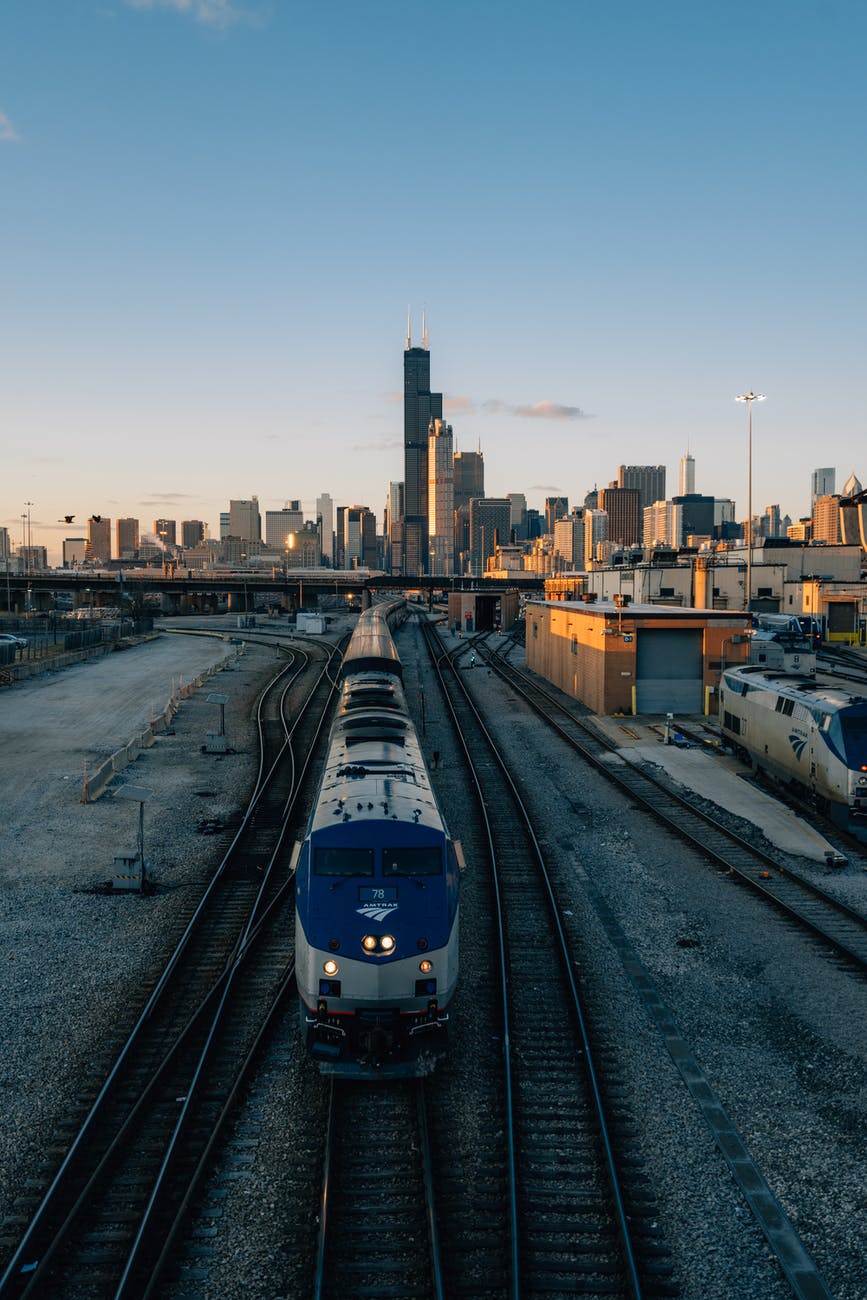
Part of the Chicago skyline from East Jackson Drive – Google Maps

Located on a multilevel riverfront site at 363 E. Wacker Drive that belongs to the same Lakeshore East development as Aqua, Vista will house a 191-room hotel and 393 condominiums once it’s complete in the third quarter of next year.

For now, as COVID-19 rages and office cubicles remain empty, the tower sends the upbeat message that downtown has a future, and it’s not just for the 1%. Vista’s ground-level amenities will benefit ordinary citizens as well as those who can afford the tower’s condos, which start at around $1 million.

The entry point of $1 million means that the clientele for such a building is pretty restricted. The Chicago area is not a superheated real estate market like San Francisco or Manhattan or several other coastal cities yet tall residential buildings are meant for a select few.

On the other hand, another skyscraper project in Chicago might move to make their residential units available for rent rather than purchase:

The biggest Chicago skyscraper to have construction halted by the coronavirus pandemic could be revived in 2021 — as apartments instead of condos.

Unit layouts are being redesigned at 1000M, the Helmut Jahn-designed condo tower on South Michigan Avenue, in an effort to refinance the project and resume construction next year, “primarily as a rental project.”…

It was the largest condo development by unit count, at 421 units, launched in Chicago since the Great Recession all but shut down construction of condos in the city for several years. At 832 feet, it also would be the tallest Jahn-designed building in Chicago, where the German-born architect is based.

With rentals being in demand, this makes some sense in order to help get the project started again. At the same time, these rental units will not come cheap.

All of this residential construction suggests there is a lot of capital continuing to flow for prestigious building projects in desirable locations. COVID-19 might be a bit of a speed bump – whose impact will continue to be determined by its length – but big lenders, developers, and buyers still have an appetite for these prestigious residential units.

Focusing on the construction of these units can both help the public pay attention to where the money is really going as well as continue to highlight the disparities in development money by location. It is hard not to report on these new tall structures; they require a lot of effort and resources and will be part of a celebrated skyline for decades. Yet, within Chicago, as the skyscrapers continue to rise for the corporations and residents with plenty of resources, needs for housing and other development are very present elsewhere.

Finding the “unstandard McDonald’s”

A Twitter account titled “unstandard mcdonald’s” features unusual McDonald’s buildings.

Recently discovering this account reminded me of some earlier posts about unusual McDonald’s (see here and here). There might be some things worth researching here…

  1. How often are fast food companies – or any large corporations with many locations – willing to compromise their architectural identity to either meet (a) local standards or to (b) be located in a potentially profitable location? In the first case, different communities might want a fast food restaurant to look a certain way. Some might consider a typical McDonald’s tacky or vulgar but the business might be more acceptable if it fits with local architecture. In the second case, McDonald’s might prefer to have a drive-thru and huge identifiable arches but can you pass up a location in a heavily trafficked location like an urban street corner or a museum?
  2. What makes the cases featured on this Twitter account stand out is that they are deviations from what McDonald’s typically looks like. Fast food – and other industries – value recognizability, especially when drivers are going by at a high rate of speed. McDonald’s helped standardize all sorts of things (hence McDonaldization), including architecture and design. Of course, that look can change over time but it typically takes place within a corporate-defined time period to refresh locations or project a new image.
  3. Can fast food have local variation? Different regions have different chains while other businesses are all across the country. Perhaps the most famous example in a similar space to McDonald’s is In-N-Out Burger. As the chain expands (and the recent opening of locations in Colorado drew lots of customers), does it lose some of its cachet and quality as it becomes just another national chain? Fast food is part of the American lifestyle but it also draws much critique.

Do not forget the thousands of public housing units lost

With comments from a variety of experts addressing housing issues connected to COVID-19 and other social factors, I noticed the last expert cited provided a reminder about lost public housing units:

Photo by Ksenia Chernaya on Pexels.com

“There’s a lot of talk about a universal voucher program in housing and entitlements, which would be a game changer for family homelessness, but you still have the problem of there not being enough places for people to rent,” Popkin said. “So we need to push both on the supply side and on the increased assistance side.

”Funding could go toward replacing tens of thousands of public housing residences lost between the ’80s and now, whether it be with new construction or renovating older buildings, she said.

“I’d like to see them built in a thoughtful way that doesn’t repeat the mistakes of the past,” she said.

The demolition of public housing high-rises in Chicago and numerous other big American cities had multiple effects. One of the stated goals was to help deconcentrate poverty. By moving public housing residents into other neighborhoods, it was hoped this would help their life chances.

But, this has not worked as well as might have been hoped. If the goal was simply to remove an eyesore in the city and push problems with housing and poverty out of the public eye, mission accomplished. The stigma of such projects disappeared with their demolition. Some of the land, when it was in desirable locations, was redeveloped. If the goal was to help people find good housing and attain more opportunities, this would involve a more robust approach to building and making available good housing. In Chicago, there were promises to provide for better lives and build more units…and it did not happen.

Just because the public housing high-rises are not visible in many locations does mean there is not need for cheaper yet quality housing. Americans do not have much stomach for public housing but the need is there to be addressed.

Using old technology to get around twenty-first century cities

Tom Vanderbilt considers how innovation in transportation affects urban life:

Photo by Snapwire on Pexels.com

And yet, there was something else that struck me about that scene in New York. For all its feeling of novelty, just about every one of those ways that people were getting around were technologies that dated back to the 19th century. The subway? It officially opened in 1904, but its basic technology was first demonstrated in 1869—the year Jesse James robbed his first bank. The car? Karl Benz sold his first in 1885. The bicycle? 1860. Ferries have gotten a revival in New York City in the past decade, but they have been around since the Dutch. Even e-scooters, which could be read as some Millennials-led plot on boomer NIMBYs, were piloting New York City streets—albeit powered by gas—more than a century ago…

It raises the question: Why hasn’t there been more innovation in transportation? Why is the 21st-century street still being trod by 19th-century vehicles? The pandemic gave the world a pause, the sort capable of disrupting entrenched habits—Zoom changed our notions of social connectivity almost overnight. Had a similar glitch in the matrix allowed us the temporary means to envision better—safer, cleaner, quieter, more efficient—ways to move around?

Transportation tends to resist rapid innovation. There’s the simple physical bounds of being human; as of yet, we can’t be zapped through the ether. The form of cities, built up over centuries, also makes wholesale change difficult. Transportation, too, must account for the way people actually want to move around: It needs to go to where people want to go and get them there reasonably quickly; it needs to be stored and then be available when you want it. Proposed innovations like Personal Rapid Transit (little pods that run on elevated rails), or the “Travelator” (moving sidewalks) have largely failed, outside of places like airports, either because there’s no room (or money) to build them or because they don’t carry enough passengers to where they actually want to go. The Hyperloop, for all its promise, can’t get around the idea it might take longer to get to a terminal in either San Francisco or Los Angeles than it would to travel between them…

But, he argues, we don’t challenge the image’s key assumption: “Why, in this coming world of wonder, are we still getting around in cars?” The passenger car so dominates our thinking that we find it neither desirable, nor possible, to easily imagine alternatives. “Even in our wildest dreams,” Townsend writes, “we can’t free ourselves from the status quo.”

Three quick thoughts:

  1. One way to look at this would be that the cities of today are still addressing the problems of the past few centuries. With the rapid urbanization of many major cities within the last century or two, how could any city coherently address transportation? The growth – often celebrated
  2. Transportation is not community destiny. And yet, changes in transportation technologies shaped numerous communities at key moments. The stretch from roughly the 1820s to the 1950s brought trains, streetcars, subways, bicycles, and automobiles/trucks (and not including airplanes and changes in ships that enabled more and faster travel between cities). This brought unprecedented speed to humans. It enabled commuting. As prices dropped, the modes became accessible to millions.
  3. I wonder if the true innovation with transportation technology in the future would involve new communities or cities developing around new technologies. Retrofitting the cities of today to new technologies limits options, is costly, and will require lots of time. If we are locked into streets and transportation grids once designed for cars, we can only do so much. But, if whole new places can arise, more opportunities might emerge.

Making a big deal out of a round number, Dow at 30,000 edition

The Dow recently topped 30,000. What is notable about this number?

Photo by energepic.com on Pexels.com

How big a deal is Dow 30,000?

It’s just an arbitrary number, and it doesn’t mean things are much better than when the Dow was at 29,999. What’s more impactful is that the Dow has finally clawed back all its losses from the pandemic and is once again reaching new heights. It is up 61.5% since dropping below 18,600 on March 23.

It took just over nine months for the Dow to surpass the record it had set in February, before panic about the coronavirus triggered the market’s breathtaking sell-off.

I like this explanation for two reasons. First, it downplays hitting 30,000 just because it is a large round number. Why should 30,000 be more important than 29,000 or 29,852? Because round numbers seem more meaningful to us, especially one that is a change from the 20,000s to the 30,000s. Second, it provides a longer context for the rise to 30,000. That particular number is meaningful in part because of the record in February, the drop in March, and then the steady rise. Arguably, this rise since March is much more important than getting past a particular number.

In addition to these steps, a few more could help people interpret the 30,000 figure. Instead of focusing on a particular number, how about discussing the percentage change? This is done regularly with other financial figures. Such a story is ripe for a visual showing the change over time. And a final option would be to downplay such milestone numbers in this story and in future reporting and instead focus on other markers of financial patterns rather than emphasizing outliers (peaks and valleys).

A public space trying to serve the public during COVID-19

Sociologist Eric Klinenberg’s book Palaces for the People features public libraries as important public spaces. But, during COVID-19 libraries cannot be these spaces in the same way:

Harold Washington Library Center, Chicago – Google Street View

Libraries, especially during times of crisis, have long been far more than just places where people can check out books and DVDs. With their high-speed internet connections, meeting rooms and massive depositories of information, print and otherwise, they are a beacon to those needing assistance or companionship.

That has changed during the pandemic. Libraries across the state closed for months after Gov. J.B. Pritzker issued his stay-at-home order in March, and though many reopened during the summer, some services remain diminished or unavailable for fear of transmitting the virus.

But libraries have made creative adjustments in these strange times, boosting their Wi-Fi signals so patrons can use the internet in their cars, expanding their curbside pickup services and offering all manner of virtual programming…

The libraries that are staying open typically have large buildings and relatively few patrons coming inside, leaving plenty of social distance. But as winter approaches, they must decide whether they can accommodate those who depend on the buildings as warming centers.

During COVID-19, spaces cannot accommodate the same amount of people or any people at all. They cannot be public spaces in the typical sense of the phrase: the public cannot congregate there.

Before this, public space was often at a premium for a number of reasons: preferences for private homes, limited funds for public spaces, declining trust in institutions. The number of spaces, public or private, that do regularly have a mix of people is limited.

As Klinenberg notes, online community cannot match community developed in spaces and proximity. In this moment, it is as not as if those who used to go to the library can easily find other public spaces. Where is there physical space to be had? What are people doing for alternatives?

And after COVID-19, will libraries and other public spaces be the same? Will they garner more public support or less? Even as some will want just to return to a typical library trip, the public library present in many communities and neighborhoods can continue to provide for the good of many people.

Proposing the rowhouse as the solution to an over-priced housing, McMansion world

If you do not like McMansions, perhaps the rowhouse is a preferable alternative:

Photo by Pixabay on Pexels.com

The great thing about rowhouses — that is, narrow, long, tall houses built connected to one another, sometimes called townhomes — is that they have most of the stuff Americans say they want in a home in a dense, efficient format. Typically they are single-family homes between two and four stories (though they can be built or split into apartments easily enough), with a front and back yard. The yards are small, but big enough for most purposes — you don’t need a McMansion-style soccer field to have some friends over for drinks and burgers, or let the dog run around, or simply get some fresh air and sunshine.

Then because the houses are connected to each other and on tiny lots, they are vastly more efficient. Instead of construction crews working on separate detached projects one after the other, they can build an entire block all at once. Shared walls means smaller bills for heating and cooling. Perhaps most importantly, the high density they enable allows for walkable neighborhoods with lots of shops and workable public transit. South Philly, which is almost entirely rowhouses, has about 24,000 people per square mile — which is not as dense as Brooklyn, but more than five times as dense as Phoenix and easily enough to support a subway line.

Rowhouses do have somewhat less privacy, of course. (I occasionally hear my neighbors even through the foot-thick brick walls, and I’m sure they hear me on occasion.) But even this has its upside — most obviously in a more vibrant neighborhood culture. When the sun is shining the folks on my block like to sit on the porch, chat with each other, smoke some meat, keep an eye on the neighborhood kids playing on the sidewalk, and so on. It feels like a friendly, alive place much more than the silent suburban cul-de-sacs I have visited in my life. And besides, who really wants to mow a three-acre yard all summer? Occasional weeding is more than enough work for me…

But rowhouses make a perfect middling addition to the American urban housing toolkit. Wherever a location is near to an urban center but not quite suitable for high-rises, slapping down a quick set of rowhouses ought to be the default option whenever land is freed up. By the same token, many American cities are also desperately short of moderately large apartment buildings, in the 3-8 story range, at somewhat more valuable locations like directly adjacent to transit stops.

The advantages and disadvantages to single-family homes amid American sprawl are clearly laid out here. The advantages include a lower price, efficiency in construction and heating and cooling, a smaller yard to maintain, and a lively, denser street. The disadvantages mirror these advantages: less space, less privacy. At the least, rowhouses in cities and denser suburbs provides opportunities for homeowners.

I have three further questions about rowhouses. First, what about rowhouses constructed for wealthier homeowners? In this piece, part of the appeal of rowhouses is a cheaper price point. Yet, rowhouses can be constructed with plenty of space and a lot of features for wealthier buyers. These homes might even give the appearance of being denser but are then trapped in small spots in cities or in suburban subdivisions far from anything walkable. Zoning is indeed an issue in certain places but I am guessing that is matters less in wealthier neighborhoods or communities or rowhouses are not viewed as a threat but rather as an intriguing change of pace.

Second, the importance of privacy may be understated. Americans like suburban single-family homes in part because they want to be separate from others (for privacy, because of race and class, to have their own property). Some homeowners want density and vibrant neighborhood life; others do not. If given the choice between a single-family home, a rowhouse, a condo, a townhouse, and an apartment (and controlling for particular neighborhood characteristics), what would most Americans choose?

Third, how much of these chooses about development depend on regional approaches to housing? As noted in the story, rowhouses are common in some places like Brooklyn and Philadelphia. They are not common in many other places. Having lived in one such development in the suburbs of the Midwest, it was an unusual choice among the typical options. And when that community and other nearby ones have been given choices about what to build since, they have largely eschewed rowhouses (except for more expensive ones). Getting communities to change up these options, particularly if there are worries about property values, is not an easy task.