I saw a sign for “Steeple Storage” – and drew the wrong conclusion

Fewer churches have steeples. What might a congregation do if they have a steeple but do not want it for the future?

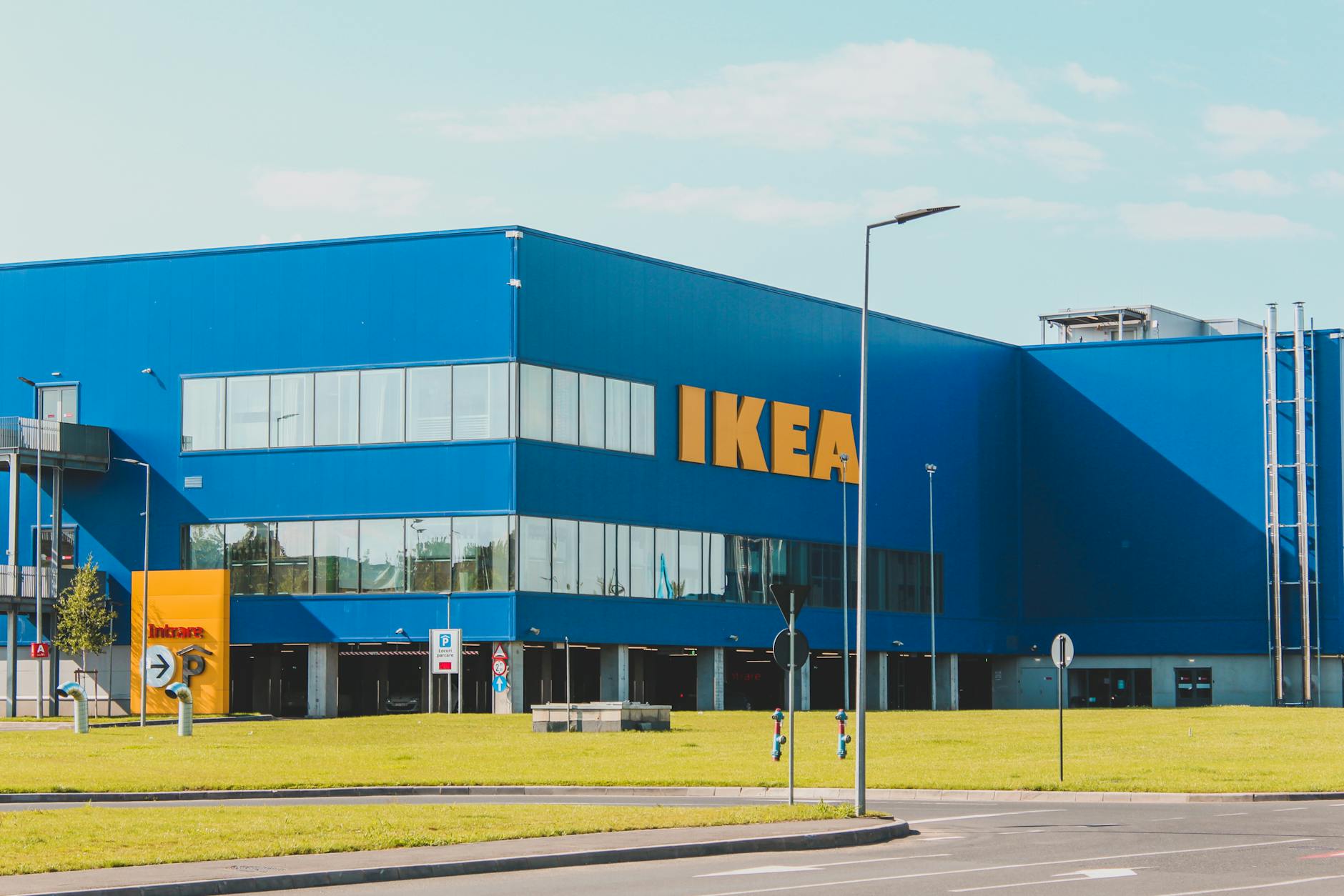
Photo by Gustavo Rocha on Pexels.com

I recently thought I had found an odd solution to this issue. On a recent drive through Michigan, we passed a business named “Steeple Storage.” I thought they must store steeples. I have never heard of such a thing but perhaps there is some demand for churches to hold on to steeples even if they are no longer on their buildings. Imagine a storage facility you can enter where there are steeples from different traditions and time periods. The steeples are protected for posterity. Perhaps they could be used again later or end up in museums or archives.

Weeks later, it hit me: this business likely does not store steeples. The name might refer to a surname or some other feature of the company’s history. How much demand could there be for storing steeples?

I can see how I got to my first conclusion. I co-authored a book about religious buildings and am always looking for them. In particular, the shift from older architectural styles in religious buildings – including the use of steeples – to newer styles is fascinating.

In this, I was doing a very human thing: trying to find patterns. But, I was likely wrong. I saw a pattern that does not exist. It is not the first time this has happened and it won’t be the last. And I will hold on to a dream of steeples stored somewhere so that visitors, researchers, and people from the future can see what steeples used to look like.

Imagining a car-free Los Angeles and using the coming Olympics to move that direction

The city of Carmageddon is interested in hosting a 2028 Summer Olympics with little car use:

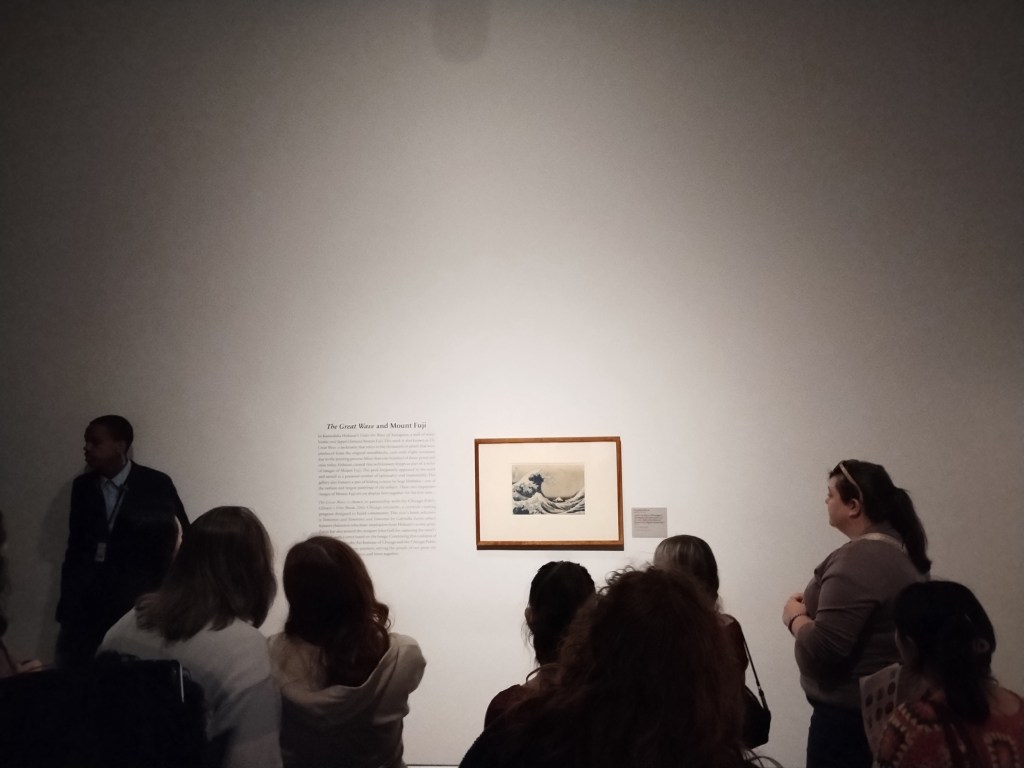
Photo by KEHN HERMANO on Pexels.com

“A no-car Games,” she said.

Doubling down on something she discussed with The Times in April, Bass told reporters at the 2024 Paris Olympics that she envisions expanding public transportation to a point where fans can take trains and buses to dozens of sports venues, from Crypto.com Arena downtown to SoFi Stadium in Inglewood to the beaches of Santa Monica.

“That’s a feat in Los Angeles — we’ve always been in love with our cars,” she said at a news conference Saturday, adding that people “will have to take public transportation to get to all the venues.”

The LA28 organizing committee — a private group charged with staging the Games — prefers to say it is planning a “public-transit-first” Games. Some venues will have ample parking, others will not. Organizers say no one will be told they cannot drive to a competition, but public transportation might be an easier option.

This is a bold vision in a city and region famous for driving, highways, and sprawl. The realism is okay too; trying to do this all in 4 years is a tall task.

But why stop at the Olympics and that several week window? Why not imagine a Los Angeles in ten or twenty years that relies much less on cars? Why not pursue some of the same strategies – working from home, staggered work schedules, more buses – with additional strategies – more mass transit options that do not involve roads, ban planning that does not just keep adding lanes, etc.?

Even if these efforts require the long view and a large amount of resources, the time to start is now. Developing needed infrastructure is costly but pays off down the road. What if the lasting legacy of the Olympics in Los Angeles was not property or stadiums that people do not know what to do with (a common issue in recent Olympic cities) but a new approach to the streetscape and getting around?

Living with a distant view of a big city’s skyscrapers

My daily life in the suburbs does not provide views of the Chicago skyline. But I do not have to go far to find such views. Here is one recent example looking east from a four story building:

Given the importance of skyscrapers for cities, how do these skylines affect suburbanites? They may provide a reminder of the big city. They may be a landmark or anchor in looking in a particular direction. They could be interesting to view amid changing weather conditions (as I was watching the image above, rain was coming down off and on in between my location and the skyline). They could provide space where a suburban resident works.

Such buildings are relatively rare in the suburbs. There are collections of taller buildings in suburbs, particularly in communities with office parks. This can occur in edge cities where buildings provide hundreds of thousands of square foot of office and retail space near major roadways. But this buildings are rarely 50+ stories and they cannot be seen from as far away as a skyline like Chicago’s.

I think I would enjoy seeing a distant skyline on a regular basis. It might feel less like a looming structure and more like a reminder of the population center nearby. To see multiple tall skyscrapers in one view provides a reminder of the large scale of human activity in the early 21st century.

Rents set by algorithm and how housing prices are set

New tools allow landlords to set rental prices and this has led to lawsuits:

Photo by Meruyert Gonullu on Pexels.com

Instead of getting together with your rivals and agreeing not to compete on price, you can all independently rely on a third party to set your prices for you. Property owners feed RealPage’s “property management software” their data, including unit prices and vacancy rates, and the algorithm—which also knows what competitors are charging—spits out a rent recommendation. If enough landlords use it, the result could look the same as a traditional price-fixing cartel: lockstep price increases instead of price competition, no secret handshake or clandestine meeting needed…

According to the lawsuits, RealPage’s clients act more like collaborators than competitors. Landlords hand over highly confidential information to RealPage, and many of them recruit their rivals to use the service. “Those kinds of behaviors raise a big red flag,” Maurice Stucke, a law professor at the University of Tennessee and a former antitrust attorney at the Department of Justice, told me. When companies are operating in a highly competitive market, he said, they typically go to great lengths to protect any sensitive information that could give their rivals an edge.

The lawsuits also argue that RealPage pressures landlords to comply with its pricing suggestions—something that would make no sense if the company were merely being paid to offer individualized advice. In an interview with ProPublica, Jeffrey Roper, who helped develop one of RealPage’s main software tools, acknowledged that one of the greatest threats to a landlord’s profits is when nearby properties set prices too low. “If you have idiots undervaluing, it costs the whole system,” he said. RealPage thus makes it hard for customers to override its recommendations, according to the lawsuits, allegedly even requiring a written justification and explicit approval from RealPage staff. Former employees have said that failure to comply with the company’s recommendations could result in clients being kicked off the service. “This, to me, is the biggest giveaway,” Lee Hepner, an antitrust lawyer at the American Economic Liberties Project, an anti-monopoly organization, told me. “Enforced compliance is the hallmark feature of any cartel.”

The company disputes this description, claiming that it simply offers “bespoke pricing recommendations” and lacks “any power” to set prices. “RealPage customers make their own pricing decisions, and acceptance rates of RealPage’s pricing recommendations have been greatly exaggerated,” the company says.

It will be interesting to see how the courts decide in this area.

I would be curious to hear how this process differs from the way housing prices are determined. The “correct price” does not just emerge. There are a set of actors – such as realtors, appraisers, and websites – that contribute. There are local histories that inform current and future prices. The housing market follows particular patterns and I recommend reading sociologist Elizabeth Korver-Glenn’s 2021 book Race Brokers: Housing Markets and Segregation in 21st Century Urban America on this topic.

Is the primary difference that there is not a centralized tech source for housing prices? (But maybe there is – how much has Zillow and its Zestimate changed the game?) Or are the new actors viewed with more suspicion than others (tech sector versus realtors)? Or are we in a particular social moment where high costs of housing prompt more questions and thoughts about alternative?

Will “did not vote” once again win the presidential vote in 2024?

I recently saw a graphic that compared vote totals for president since 1976. Outside of the last election in 2020, there has been a consistent winner:

And “did not vote” often clobbered the candidate who received the higher percentage of the popular vote, often by 10-20%.

What does this mean about “get out the vote” efforts? Is the narrative that “this is the most important election of our lifetime” effective in getting people to vote?

At the least, the presidential election turnout is better than many local elections.

Locating the geographic center of Chicago

A sign in the McKinley Park neighborhood supposedly marks the geographic center of Chicago. Just one problem: the center shifted several decades ago:

Photo by Pixabay on Pexels.com

In 1896, a Tribune article placed the city’s midpoint at West 37th and South Carlton. That address doesn’t exist today, but it’s pretty close to where the modern-day sign is. The discovery that the geographic center was essentially a cow pasture shocked the article’s writers…

The spot is no longer home to a pasture, but it’s still in a quiet, residential neighborhood about 5 miles from The Loop. Ald. Julia Ramirez (12th) said it’s special the sign is in a working-class neighborhood like McKinley Park…

But more than 20 years before outgoing Mayor Michael Bilandic presided over a 1979 ceremony declaring the intersection as the city’s geographic center, the city’s annexation of land for O’Hare International Airport had shifted the actual midpoint about 1.5 miles northwest. 

Now, the actual center is between Pilsen and McKinley Park: south of 31st and Western and in the water of the Chicago Sanitary and Ship Canal, according to WBEZ Chicago. 

Two thoughts in response:

  1. Geographic centers get relatively little love compared to population centers or social influence centers. Where there is more social, economic, and government activity is likely to be seen as more “central” even if it is not geographically central.
  2. This provides a reminder of the dimensions of the city of Chicago. The geographic center is pulled to this location by the city stretching further to the south than the north.

How about a sign at the true geographic center as well as retaining the sign at the acknowledged geographic center? They could coexist and mark the unique boundaries of the city over time. Imagine a walking trail of geographic centers throughout Chicago’s history.

How does a story about a band’s tour bus dumping waste on a tourist boat enter a city’s “pop culture fabric”?

On August 8, 2004, the driver of the tour bus for the Dave Matthews Band emptied the bathroom waste as they crossed over the Chicago River. The waste fell on passengers in a tourist boat passing below.

Photo by Blue Arauz on Pexels.com

Lots of things happen in big cities. Some stories are stranger or more influential than others. But how might one story get commemorated for years? Which cultural narratives last? One non-profit leader described this particular story:

“The incident is woven into the city’s pop culture fabric, and the anniversary seemed like an opportunity to emphasize that the world has to protect our natural resources, but it didn’t work out,” Frisbie said of the effort.

The article on the 20th anniversary provides some hints on how this story caught on and continues to be told. To go beyond a story that the people involved tell over and over, some help is needed:

-Famous people involved. The music group was well-known with multiple #1 platinum albums under their belt. This was not a random tour bus.

-Criminal charges and a court case. This involves different public bodies and can keep a story in the news.

-The media. A strange but true story – bathroom matters! a famous band! charges! – is a good one to get attention. And can we expect stories on the 25th anniversary, the 30th, and so on?

I am sure it would be hard to measure but it would be interesting to look at how this story stacks up against other stories in the city of Chicago. Which ones stand the test of time? Does this one make it into “official” lore (books, museums, memorials, etc.)? What is the half-life of pop culture stories in Chicago?

Commemorating the portage that led to the creation and flourishing of Chicago

I recently visited the Chicago Portage National Historic Site in Lyons, Illinois. Here are some images from the site:

The importance of traveling via water meant that portage sites were important. This site was one of the places where it was easier to move watercraft from the Great Lakes system to the Mississippi River system. It was not the only portage site allowing that connection but it became known and then improved on in the mid-1800s with a canal.

The site now is somewhat obscured off a major local road and close to a major interstate. The area is mostly industrial land with few houses nearby. Chicago is a transportation center but a portage is no longer needed. There are still canal waterways nearby but these have receded in importance to and status in Chicago compared to railroads, highways, and airports. Chicago is still a transportation center but a portage is no longer needed.

The Chicago Portage Wikipedia page has lots of details.

Creating collaborative archives in historic skyscrapers

Finding new uses for two historic Chicago buildings slated for demolition led to an interesting proposal. First, the status of the buildings:

Image from June 2021, Google Street View

The U.S. General Services Administration released its final environmental impact report for the Century and Consumers buildings at 202 S. State St. and 220 S. State St., and also a smaller building between them, at 214 S. State St., ultimately choosing to reuse the vacant buildings rather than demolish them.

In 2022, Congress earmarked $52 million for the demolition of the buildings, with the federal government, which owns the buildings, arguing the buildings pose a security risk to the U.S. courts. The buildings back up against the Dirksen Federal Building on Dearborn Street.

Second, here is a proposed use for the buildings:

Preservation Chicago at one point had lined up 20 religious orders, including Dominican University in River Forest, that are interested in converting the Century and Consumers buildings, 202 and 220 S. State St., into the proposed Chicago Collaborative Archive Center.

Museums and other non-religious entities could have space there also, said Preservation Chicago Executive Director Ward Miller.

Those advocating to save them in this manner also argue that archival storage would minimize any security threat and allow windows facing the federal building to be sealed off.

“A collaborative archive of this proposed size is rare in the country,” Christopher Allison, a historian and director of the McGreal Center at Dominican University in River Forest had said in 2022. “It would become a major hub for archive-based research and would consolidate precious sources in one space.”

While some might see the potential for real estate redevelopment on prime Loop property or hold security concerns, having spent some time in smaller archives, this sounds like a win for archives and researchers. I can imagine some benefits of taking multiple smaller archives and putting them in one place. Efficiencies in storage and staffing. The ability to connect archival items and ideas in one place. Ease for researchers looking for material on related topics and in different collections. The possibilities of expanding collections with combined powers and status.

Plus, do archives and older buildings go well together? Archives can of course be newer settings and spaces designed for the task. Buildings designed specifically for archives could provide particular advantages. Yet, given the interest in some places in historic preservation and efforts to help people know and understand the past in archives, does putting them together regularly enhance the ethos of both?

New American homes down in square footage in 2023

Census Bureau data for 2023 shows new American homes are a little smaller:

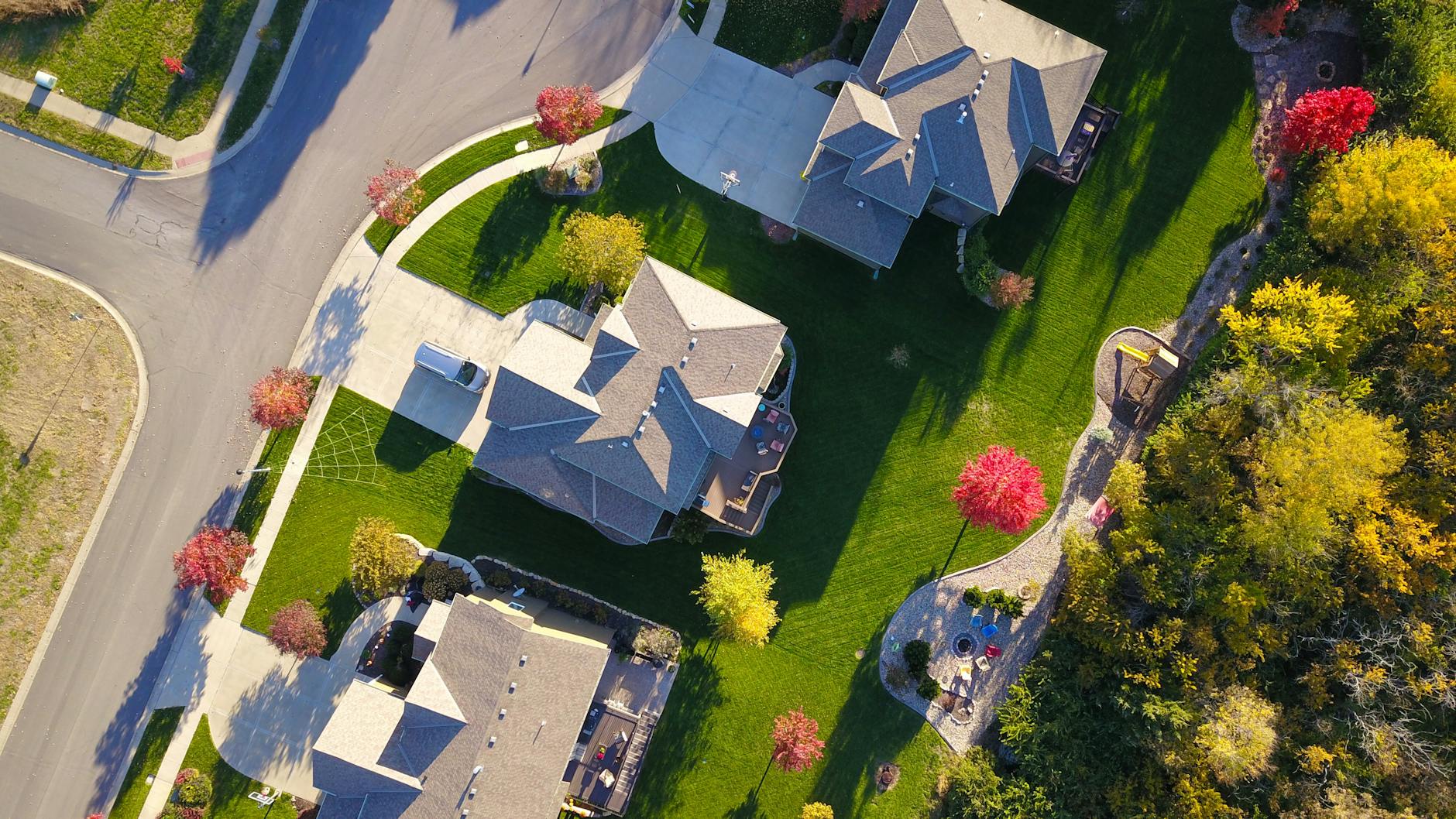
Photo by Rosana Solis on Pexels.com

But as the cost of buying a home has exploded and McMansions have fallen out of favor, homebuilders have reversed course, building smaller homes with an eye to first-time buyers. In 2023, the median single-family home built was 2,233 square feet, down 9% from the 2015 peak, with many formal dining rooms and “bonus” rooms disappearing…

Homebuyers are warming up to the idea of smaller dwellings: According to an April study from the National Association of Homebuilders, the typical buyer wants a home that is 2,067 square feet — still smaller than the typical new home size last year…

There are signs those efforts might be helping buyers get in the door: The median sales price of existing homes jumped to $426,900 in June, according to the National Association of Realtors, while the median price of new homes in June was $417,300, according to the US Census Bureau.

Three thoughts in response:

  1. It will be interesting to watch the long-term trends. The article marks 2015 as a peak. Does this mean homes will continue to get smaller in the coming years?
  2. Connected to #1, how much do Americans want smaller homes or how much do housing prices constrain what Americans expect and want? The first option could be connected to Americans having less stuff. If you buy more consumer goods, you need somewhere put them. But if you stream everything and prioritize experiences, perhaps a house is not needed as much for storage. Or if household sizes are decreasing, smaller homes could be fine. In contrast, if mortgage rates went down or housing prices became more attainable for people, would they once again want bigger houses?
  3. The figures above suggest the new homes are slightly lower in price than existing homes. But the newer smaller homes are still pretty expensive. At what price point and square footage would a bunch of potential homebuyers be able to jump into the market? Where do these lines cross on a graph? A median of 1,800 square feet at $340,000 (very hypothetical)?
  4. From the Census data, it may be worth noting that since 1999 the percent of new homes completed at 3,000 square feet or higher has always been a minority of the market (at 31% in 2015). Now this size is a smaller segment of the market as the mid-size new homes percentages are up (1,400 to 2,399 square feet).