An example of humans trying to bring order to nature

I recently encountered this view at The Morton Arboretum:

Here is their mission:

The Morton Arboretum is The Champion of Trees.

The Morton Arboretum is an internationally recognized tree-focused botanical garden and research center. Its 1,700 acres of beautiful tree-filled landscapes are a place of enjoyment, a vibrant hub for nature education, and a world-renowned center for scientific research that studies trees and how to sustain them. Its vision is a greener, healthier, more beautiful world where people and trees thrive together. As a nonprofit organization, the Arboretum’s mission is to collect, study, display, and conserve trees and other plants from around the world to inspire learning, foster enjoyment, benefit communities, encourage action, and enhance the environment.

On a pleasant morning, this plaza was an enjoyable place to be. At the same time, there is very little “natural” about it. Concrete and other manmade materials are around. The landscape is shaped in particular ways to direct a person’s view and they ways they can move in the space. The grass, water, and plants and trees are where humans wanted them to be. The sound of the nearby highway is present.

A garden or park or plaza brings order to nature. Wild spaces can be inhospitable to human habitation or aims. We have lots of current examples of humans attempting to bring order to nature, ranging from green lawns to Central Park to guiding the flow of water to growing food.

Whether this order is good is open for debate. It may be pleasing for humans while disrupting wild settings and habitats. It may be order from a particular perspective but not from others. What is considered ordered natural settings may very well change in the coming decades though it is hard to imagine that humans would stop pursuing this goal.

An American right to a good deal?

Amid inflation and high prices, the Chicago Tribune editorial board ended an editorial on prices at Starbucks this way:

Photo by Engin Akyurt on Pexels.com

It’s no sin to offer good value. Americans are practical people. We’re betting most of those who duck into a Starbucks would be pleased to see some special deals on the menu.

What American does not like a good deal? At the same time, Americans tend to say that the market sets prices. So what happens if prices seem unfair or unreasonable?

Two recent phenomena highlight this tension:

  1. Higher levels of inflation coupled with higher set prices. Is this fair? Sure, Americans keep buying during this time but they are spending more money on goods that used to be cheaper.
  2. High housing costs. Americans want to benefit as homeowners from rising property values but do not like paying high housing prices.

At what point do Americans deserve a good deal? Or when should non-market forces jump in to change conditions? This could depend on the particular context, leaders and influential actors, and what the public wants. Regarding the second example above, Americans have worked over decades to back up mortgages so that more people could pursue homeownership while not providing much public housing.

Even as Americans do not have a right to good deals, they tend to have at least some companies willing to offer goods or services at prices lower than others. This does not always occur and there are situations – such as with monopolies – where the government will step in. Without intervention, individual consumers are left trying to find a bargain or going without in a country devoted to consumerism.

Zillow Gone Wild is popular but how can one make money from it?

Social media users like to see unusual residences on the account Zillow Gone Wild:

Photo by cottonbro studio on Pexels.com

Since he started the account in December 2020, it has exploded into a social media phenomenon, amassing more than 4 million followers across the major social media platforms and spinning off an HGTV show that debuts next month with Mezrahi as executive producer. Throughout it all, Mezrahi’s recipe has remained mostly unchanged: Find the zaniest homes on the market – castle-themed mansions with full drawbridges, for example – then blast them out to the internet with a bit of pithy commentary, and watch the clicks, likes and shares pile up. The simplicity of the premise is part of the brilliance; it’s the result of the decade-plus that Mezrahi spent charting the internet’s fascinations as social media director for BuzzFeed.

Does all this interest in houses translate into money?

None of this, however, was enough to save Mezrahi at BuzzFeed. The now-struggling company laid him off last spring. He had survived previous cuts, “but eventually you don’t last, especially as a strategist kind of person,” Mezrahi says. Already, he’d been mulling the prospect of leaving the full-time gig to focus entirely on his personal projects. BuzzFeed simply made the choice for him…

Still, there is one thing that Mezrahi shares in common with the rest of them: He’s trying to figure out how to make more money off the internet. Aside from the HGTV executive producer credit, most of Zillow Gone Wild’s revenue comes from ads. He did one for “The Bachelor,” posting what looked like a typical listing but for the show’s famed house. PopTarts and Royal Caribbean have also paid him to promote fake listings for a house made of PopTarts, and for the new Icon of the Seas cruise ship.

But the account still brings in “very little” money, he says. He imagines a future where his newsletter has a paid classified section or where he dedicates more time to growing a YouTube audience because that platform can be the most lucrative.

Americans like houses. It helped give rise to suburbia and an decades-long emphasis on homeownership. That they are now popular on social media should not be a surprise.

It will be interesting to see how this goes in the next few years. How big can the social media audience get for this account? Would users be willing to pay for such content or special content? How much content could there be? Will a TV show lead to more opportunities or spin-offs or streaming shows? Can Zillow Gone Wild be its own brand soon with different content and products?

A possible timeline of 50 years to build an American community for 50,000 people

One source suggests it might take 50 years to complete a proposed community in California for 50,000 people:

Photo by George Becker on Pexels.com

A group of Silicon Valley investors aiming to build a new city in California has collected enough support from residents to place a key zoning-change measure on the upcoming ballot.

The campaign said Tuesday it has surpassed the required 13,000 signatures, gathering the endorsement of more than 20,000 residents of Solano County, a largely agricultural community located northeast of San Francisco. The initiative, if approved by voters in the county, would pave the way from construction to begin by overturning restrictive zoning laws from the 1980s that limit development outside existing cities…

Completing the project in the region between the San Francisco Bay Area and Sacramento could take as long as 50 years.

Building a new community is a sizable project. Is 50 years a normal time frame or longer or short than what we might expect? A few thoughts:

  1. The United States has a history of fast-growing communities. A city like Chicago grew from over 4,000 residents in 1840 to nearly 1.7 million people in 1890. That is fast growth. Or think of boom towns in the West. Or suburbs that in the postwar era that gained tens of thousands of residents in short periods of time. Most communities do not grow as quickly.
  2. Plenty of news stories and opinion pieces in recent years have weighed in on development processes in California. If it takes longer to build in general in California, then 50 years might be longer than expected in the United States.
  3. Going from few residents to 50,000 residents in a few decades is an accomplishment. But the size of the community at its buildout would not even put it in the top 100 cities in California by population.
  4. What are the expected growth rates at different points in those 50 years? How many years from now until the first residents move in? When does the development truly pick up steam?

Moving toward Illinois legislation to merge metropolitan transit agencies

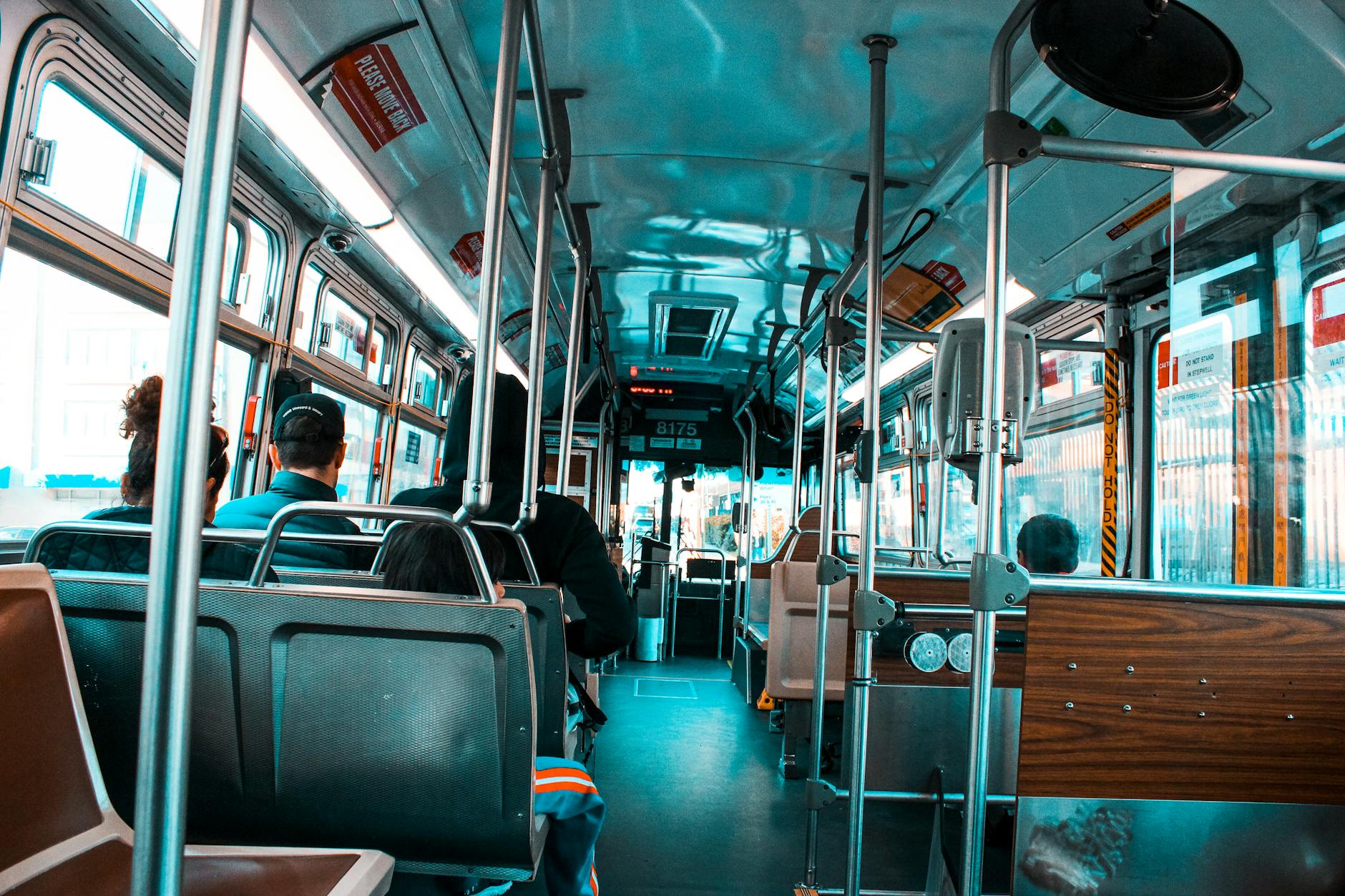
Limited budgets. Lots of traffic. Multiple regional actors, including city and suburban officials. A legislative process plus backroom conversations. All of these are involved in developing a proposal for merging Chicago area transit agencies:

Photo by Mike Wojan on Pexels.com

The proposal is part of a broader look at transit funding, as the region’s public transit agencies face a combined $730 million budget hole once federal COVID-19 relief funding starts running out, which could be as soon as 2025. Transit agencies have warned failure to plug the financial hole could lead to catastrophic service cuts and fare increases, and the Chicago Metropolitan Agency for Planning was tasked by the Illinois General Assembly with developing recommendations to overhaul transit, which were delivered to lawmakers in December.

The decision to introduce legislation is a signal of how some lawmakers and civic organizations want to proceed. Already, the transit agencies have sought more state funding, while the civic organizations and lawmakers say funding must be linked to changes to the way transit is overseen. But debate about consolidating the transit agencies and funding could prove thorny in Springfield.

Still, merging the transit agencies has garnered some support. The Civic Federation, a business-backed Chicago watchdog group, recently endorsed the idea, and Cook County Board President Toni Preckwinkle also previously expressed her support for the concept…

The proposal set to be introduced this week in Springfield is expected to replace the Regional Transportation Authority, which coordinates financing for the agencies, with a new Metropolitan Mobility Authority. The new agency would oversee the operation of buses, trains and paratransit, rather than having the CTA, Metra and Pace each operate their own services.

The proposal would revamp the number of board members on the new agency and who appoints them. The current system is complex and layered, regional planners have pointed out, with 47 board members across the agencies appointed by 21 elected officials. That has given nearly two dozen state, suburban and city officials varying levels of influence on the transit boards.

There is a lot to be worked out. No one community can address this issue. Even if the big city in a region has a great system, that city does not stand alone as people and business moves throughout the region. Indeed, in many regions, many of the jobs and much of the activity takes place in the suburbs where driving is even more prominent. Thus, I am in favor of this if it can improve transit options, create budget efficiencies, and help the region plan for the future.

One outcome is consistent in postwar era in the United States: we tend to get more roads and increasing traffic. In many regions, there are multiple competing interests regarding transportation. Do suburbanites want mass transit lines? What infrastructure already exists? Who controls the budgets? What political processes do ideas and plans need to work through? In a country devoted to driving, it can be hard to promote alternative options.

Cities and metro areas like growth – but do not necessarily like the changes it brings

Growth is good in the United States for cities and metropolitan regions. But, the changes that come with growth is not always viewed fondly by the people already there. The most recent example: Nashville.

Photo by Isaac Loredo Vargas on Pexels.com

Remacia Smith watches her children play in a grassy park by the Cumberland River, not far from where software giant Oracle said last week it would base its new headquarters. It is bittersweet—her hometown is thriving, but it has reached a point where it no longer works for her…

“There are pain points of this growth,” said Kate Webster, a 35-year-old real-estate agent who has lived in Nashville for 14 years. “But at the end of the day, I’d rather live in a city that is growing than one that is declining.”…

The region needs to focus on improving transit options and traffic flow, and on more housing options, Gaughan said. Many neighborhoods need to rezone for construction that allows more people to live there, he said.

John Michael Morgan, a lifelong resident of the area, said he remembers when Nashville’s prospects weren’t so hot. The growth is exciting, he said, but he worries about Nashville losing some of its personality.

“Nashville’s always been a big town that felt like a small town,” said Morgan, who is 44 years old. “Now we’re a big town that feels like a big town.”.

Change can be hard for residents of a community. They are used to the way things were. They may have moved there for particular features of the community.

Increased population growth tends to lead to more construction, higher housing prices, more traffic, and different streetscapes.

However, the United States tends to treat growth as a good thing. What community wants to stagnate or decrease in terms of population and business activity? How many people want to be in an undesirable community?

At some point, the growth in Nashville will level out and that will offer an opportunity to assess what has changed. Is the city and metropolitan region now a different place? What has fundamentally (and perhaps unalterably) changed?

The cultural contributions of Chicago right now

In an editorial, the Chicago Tribune highlights current cultural contributions from the city in which they operate:

Photo by Chait Goli on Pexels.com

Flyover is a fabulous new $40 million attraction at Navy Pier that used sophisticated drones to create an experience landing somewhere between an IMAX movie and a virtual roller-coaster. It makes you feel l as if you are flying like a bird over Sweet Home Chicago and thus experiencing it anew. The ride-movie hybrid, created here by Pursuit, part of the Arizona-based Viad Corp., has been doing boffo business and was just added to the lineup at the company’s Las Vegas operation. That means international tourists headed to Sin City now can visit Chicago, at least virtually. The beauty of Chicago also is coming to Flyovers in Vancouver and Reykjavík, Iceland, where we’ll bet they don’t take our city’s grandeur for granted as so many of us do here.

“The Bear” has been tantalizing neighborhoods all over the city as it has filmed its third season. This Hulu show, in many ways a love letter to Chicago and its innovative artists and hospitality workers, is approaching a tipping point of popularity. If it retains its quality, which seems like a good bet, it will bring yet more attention to the city and maybe even spark the kind of spin-off tourist appeal that shows such as “Friends” and “Sex in the City” have brought to New York City for years.

Chicago is all over Broadway, too, right now. One of the surprise hits of the Broadway season, “The Heart of Rock and Roll,” a droll jukebox musical featuring the songs of Huey Lewis and the News, is set almost entirely at Chicago’s venerable Drake Hotel during the 1980s. That’s thanks to a writer, Jonathan A. Abrams, who grew up in the north suburbs and has peppered his show with accurate local references from Dick Butkus on down. “Illinoise,” which began at Chicago Shakespeare Theater and moved to Broadway, has its audiences staring at the word “Chicago” on its backdrop for the entire show. Plenty of them are posting it on social media.

Add to that the coming Democratic National Convention and the attendant media exposure, and Chicago will be making a lot of news this summer and well beyond.

An interesting collection to highlight: a tourist attraction, a television show, theater productions, and a political convention.

Chicago is, of course, a world class global city. Figuring out what cities rank highly includes culture, among other factors. In the United States, Chicago lags behind New York and Los Angeles in terms of population and prestige and there are cities coming up behind it (Toronto? Houston?). How much influential culture needs to occur and/or be noticed in Chicago?

Setting The Matrix in Chicago – sort of

While recently rewatching The Matrix, I noticed multiple references to Chicago streets. And then there is a map in the second half of the film:

Looking closely, this is not exactly Chicago. But, the waterfront kind of looks like Chicago, there is a neighborhood on the map marked “City Loop,” the city has a river, and things do appear to converge in the district next to the waterfront.

Why the resemblance? One source suggests this is deliberate in the depiction of Mega City:

Early drafts of the screenplay identified the city as Chicago, and most of the street and landmark names referenced in the films are from Chicago,[4] such as Wabash and Lake, Franklin and Erie, State Street, Balbo Drive, Cumberland Ave, the Adams Street Bridge and the Loop Train.[5] Some street names, such as Paterson Pass and Wu Ping Ave., are derived from names of production staff.

In a brief screenshot of the first movie, wherein Tank zooms in a map on the screen to give Cypher directions to the telephone, the map of the city shows a coastline similar to that of Chicago’s Lake Michigan Coastline.

The creators have connections to Chicago:

Sure, most of the trilogy’s urban scenes were shot in Sydney, and close watchers of the first movie can spot several Sydney landmark buildings. But creators Larry and Andy Wachowski were raised in Chicago and drop at least five references in the first script…

The Wachowskis attended Whitney Young High School and spent two years in small liberal arts colleges before they each dropped out and started a construction business. Then the quirky film resume began to take shape.

This is not unusual in today’s filming of movies and shows: creators are from certain places, scenes may be shot in a variety of places, and the name of the place in the film or show may or may not align with the places that are depicted on screen. In The Matrix, a combination of modern cities produce a soulless but recognizable setting.

Assessing public arguments as an academic

Two recent encounters with arguments made – one on a podcast, one in a book meant for a broad reading audience – reminded me of the unique ways academics assess arguments. In both cases, the makers of the argument made connections across different sources and sets of evidence to present a particular point of view. As I considered these arguments, here are two features of my own thought processes that stood out:

Photo by Armin Rimoldi on Pexels.com
  1. A tendency to defer to those with expertise in a particular area rather than assemble broad arguments with multiple data sources. It is difficult to make big arguments with multiple moving pieces as this might cover ground addressed by numerous scholars across different disciplines. In academia, scholars often have fairly narrow sets of expertise. Can one argument adequately represent all the important parts of knowledge? Why not assemble a larger argument from the clear expertise multiple scholars hold rather than try to do it as one person or a small team?
  2. An interest in assessing the methods and form of the argument from a disciplinary perspective. Different academic fields go about the study of the world differently. They have different methods and think differently about what might count as evidence. They put their arguments together in different ways. The content of an argument or the rhetorical force of an argument matter but we often expect them to be presented in particular ways. Go outside these methodologies or formats and academics might struggle to past this.

Based on this, I wonder how well academics can work with arguments made to the public when we have been trained in specific that work within the parameters of academia.

When renovating a home might be more expensive than tearing it down and building a bigger new home

In response to concerns from Portsmouth, New Hampshire residents that teardown McMansions were going to be constructed, the developer said:

Photo by Pixabay on Pexels.com

“By the time we renovated them, it would have been more expensive to do that than building a brand new energy-efficient home. That’s how we made the decision,” Chinburg said…

The company comes up with homes prices, he said, by “basically adding up what it costs to buy the property and build the homes,” and then adding “a fair margin.”

“Unfortunately that’s the market now … we’re not gouging people,” Chinburg said.

It would be interesting to see a breakdown of the different costs. Older homes may not be a great state of repair, they may need to be brought up to code, and they may not have the current features property owners expect. All of this requires money.

This reminds me of what can happen with big box stores. Vacant ones may not be very attractive given maintenance costs and the need to reconfigure the space for another user. Why not just build another one?

And while teardowns tend to occur in places where land is desirable, I wonder if this points to a tough future for many older homes and the aging American housing stock: will the costs of maintaining or updating the home be perceived as worth it?