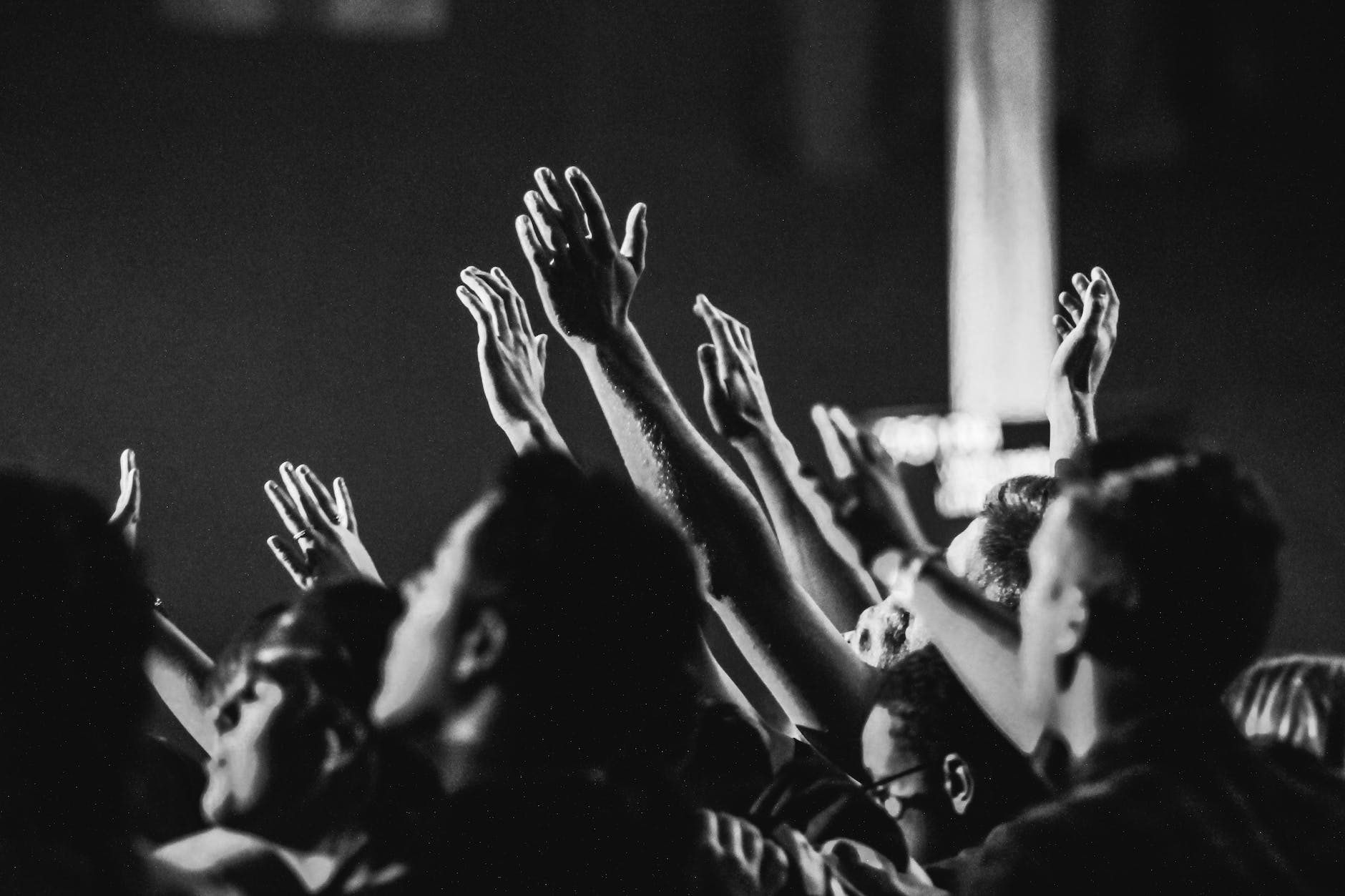
–From Super Bowl MVP Patrick Mahomes: “I give God the glory. He challenged us to make us better. I am proud of my guys. They did awesome. Legendary.”
In early sociological work, theorists discussed the boundaries between sacred and profane. In the Super Bowl, these lines can get very blurry. Is this just an athletic event or is it about our collective lives together and supernatural forces? Can advertising for religious groups and beliefs break through the noise of food and football? Should all of these forces be mixed or is there a time and place for each?
This is not new but it does highlight the ongoing interactions in American society between religion and other spheres. Similar things can and have been said about politics. A football game is not just a football game; it is an opportunity for numerous actors to put their own stamp on what we are doing together.
Rep. Ivory, R-West Jordan, sponsored HJR19, a resolution supporting a piece of federal legislation called the Helping Open Underutilized Space to Ensure Shelter (HOUSES) Act. Ivory is a manager for two real estate affiliated companies — Mission Property Management and 9615 Property Management — according to his financial disclosure form.
“We’ve learned that about 150,000 acres of federal lands are within city boundaries,” Ivory told the House Public Utilities, Energy, and Technology Committee on Thursday evening. “There’s another about 600,000 acres that are within a mile of city limits.”
The HOUSES Act, sponsored by Utah Sen. Mike Lee last year would open up certain public lands managed by the Bureau of Land Management to housing developers. Some critics of the legislation note that it doesn’t require those homes to be affordable, calling it a “McMansion Subsidy Act.”
The proposal would require that 85% of public lands sold be used for residential development and that 4 homes be built per acre. The other 15% could be used for commercial businesses or “other needs of potential communities.”
My guess is that the use of the word McMansion here refers less to a home with mixed-up or garish architectural features and more to big houses in the suburbs. More like “McMansions sprouting” or “cookie-cutter large homes” suddenly arriving in fields. The sprawl that has marked America for decades. And why should new housing opportunities go to people with resources? (See the different traits of McMansions here.)
At the same time, if these lands were opened up and they were filled with denser condos or communities of tiny homes, critics might still have concerns. Allowing the use of public land can be contentious as protected open spaces have value. If one goal is to not allow sprawl to take over everywhere, opening federal land is not a line some would want to cross.
Another question: does simply adding any housing to the housing stock help by adding to the supply? Or, is it more important that affordable housing is added? The charge of McMansions being constructed with subsidies suggests these may be houses for people who do not need help or that adding such housing might not help the housing issue.
On this winter day, there were at least a few people walking laps around the mall. Others sat in the empty food court. Security walked around.
The directory was about 5-6 years old. At that point, the mall still had a lot of retailers.
In the background of the image, you can see the Sears sign. Almost all of the anchor stores are long gone. Most storefronts are empty. The movie theater is shuttered.
The decline of this mall did not happen immediately. Combine online shopping, lots of shopping options in the Chicago region, and COVID-19 and you get a nearly empty mall. And it will take years to redevelop the property and incorporate the new elements into the community.
US banks hold about $2.7 trillion in commercial real estate loans. The majority of that, about 80%, according to Goldman Sachs economists, is held by smaller, regional banks — the ones that the US government hasn’t classified as “too big to fail.”
Much of that debt is about to mature, and, in a troubled market, regional banks might have problems collecting on those loans. More than $2.2 trillion will come due between now and the end of 2027, according to data firm Trepp.
Fears were exacerbated last week when New York Community Bancorp (NYCB) reported a surprise loss of $252 million last quarter compared to a $172 million profit in the fourth quarter of 2022. The company also reported $552 million in loan losses, a significant increase from $62 million the prior quarter. The increase was driven partly by expected losses on commercial real estate loans, it said.
Because I know little about this, this leads to several questions:
If patterns from earlier crises hold up, does this mean that when regional banks suffer difficulties they will be gobbled up by the larger banks?
What do regional banks have more of these loans – is this more of their specialty or they are more familiar with the local markets?
Who exactly decides which financial institutions are too big to fail and at what point might these regional banks qualify?
If these are the losses of just one regional bank, what might we expect throughout the entire US within the next few years?
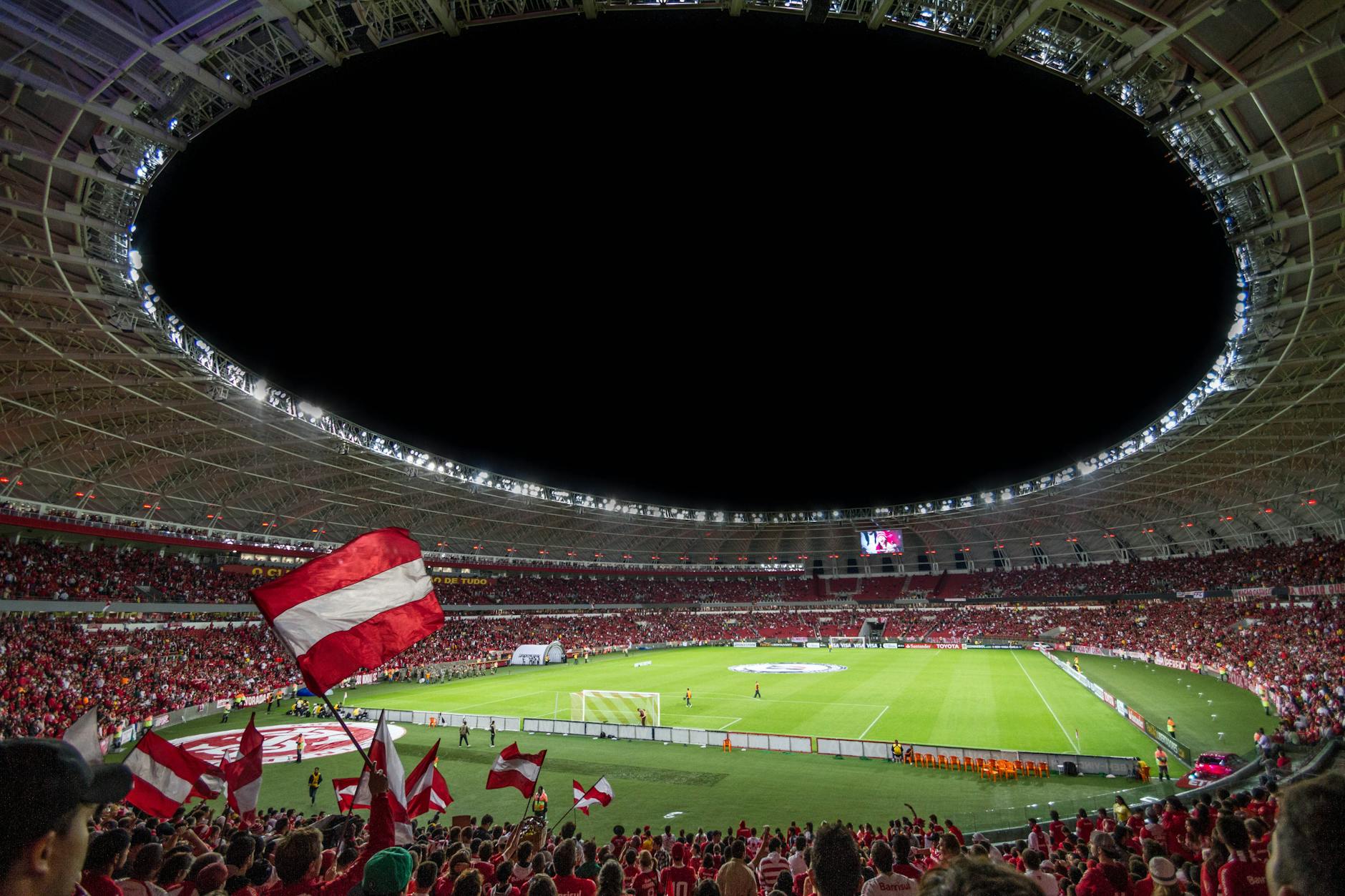
The 2026 World Cup final will be held at MetLife Stadium in East Rutherford, New Jersey, on July 19, world soccer governing body FIFA announced on Sunday…
“It’s going to be a special World Cup,” Berhalter said after the announcement was made. “To have the final in New York, New Jersey is a dream come true for me. Being from that area, and I’m sure for most people from that area, it’s an area with a rich tradition of soccer and producing players.
“To think about when I was little, going to watch the [New York] Cosmos and them selling out Giants Stadium, and now this stadium is going to host a World Cup final. It’s really special.”
MetLife Stadium is home to the New York Giants and Jets who play in suburban New Jersey. The stadium is about 9 miles northwest of Times Square and about 13 miles northwest of Wall Street. When the Super Bowl was played here in early 2014, I assume more TV shots and attention was paid to New York City rather than the New Jersey suburbs.
It might also be worth noting that the 1994 World Cup final, the only one in the United States thus far, also occurred in the suburbs:
In 1994, the United States played two of its group-stage matches at the Rose Bowl in Pasadena, California, and the other at the Silverdome in Detroit. The Rose Bowl also hosted the final that year — with Brazil topping Italy in a penalty shootout — and again in 1999 for the Women’s World Cup, when the United States beat China, also on penalties.
Set in Pasadena, the Rose Bowl is roughly 11 miles northeast of downtown Los Angeles. This region is famously sprawling – and the 2028 Summer Olympics will take advantage of the full region for all of the events.
All the talk of soccer taking off among kids in the American suburbs may find its peak in this experience.
The moves reflect an overall trend of tenants looking for higher-quality properties with financial stability, said Savills Regional Research Director Anders Klein…
Throughout 2023, trends saw office tenants move from larger spaces in older and more bare-bones Class B and C office properties to smaller spaces in well-maintained Class A buildings with more amenities.
Several thoughts about this:
It would be interesting to see how much less companies pay for office space if this is the trade-off.
Having a nicer location and more amenities on-site might also help companies make the pitch to have employees in the office.
What are the new trends for nice office spaces? We have had a few decades now of gyms, meals, on-site services, etc.
What happens to the less desirable office space? The article suggests some is converted to other uses, like for data centers. other properties might be redeveloped for housing or mixed-use projects.
Could these opposing trends mean office space will look significantly different in the United States in a few decades or will offices still be the offices we know today?
One problem: No one agrees on the definition of spatial computing. Ask 10 people in technology and you might get 12 different answers.
What Apple calls a spatial computer, some technologists call “mixed reality” — or possibly “augmented reality,” “holographic computing,” “the metaverse” or “XR,” which some people say is shorthand for “extended reality.” Others say the letters don’t stand for anything.
What I hope this means: the headset or other device is interacting with the spaces and places around the user. It is not just layering on information on a view but affecting that environment as well. Perhaps the closest a definition in this articles gets to this comes in this quote:
Imagine wearing a lightweight, inexpensive pair of glasses and seeing digital walking directions in your field of vision that point where you turn left. Or imagine sharing a video of your kid’s birthday party that makes others feel like they were there.
If a headset or device could truly make you feel like you were in a setting, that’s cool. But, that is not quite what I envision as spatial computing. What makes places unique in sociological terms is not just the physical arrangements around someone but all of the meanings, symbols, and relationships intertwined with those material realities.
Hundreds of apartments, a 600-vehicle parking garage and new retail and entertainment space are among an array of possibilities for the redevelopment of a key area of downtown Mundelein known as the “Bank Triangle.”
Suburban downtowns served different purposes in the past. They were economic and social centers in the midst of less developed suburban territories. Businesses located there sold more everyday goods including food and clothing. Banks and churches were there.
Now, suburban downtowns want mixed-use properties that match up downtown residents with restaurants, particular kinds of retailers, and entertainment and cultural options. These land uses bring in residents and money. They are perceived to be vibrant land uses. The other land uses have moved elsewhere or have downsized; banks have consolidated and have fewer branches, retailers are in strip malls and shopping malls, and more people moved to sprawling subdivisions further removed from downtowns.
This shift highlights a new version of suburban downtowns. They are now places to live and go to, not necessarily centers of community life. They have particular land uses and not others. And these will likely to continue to change in the future.
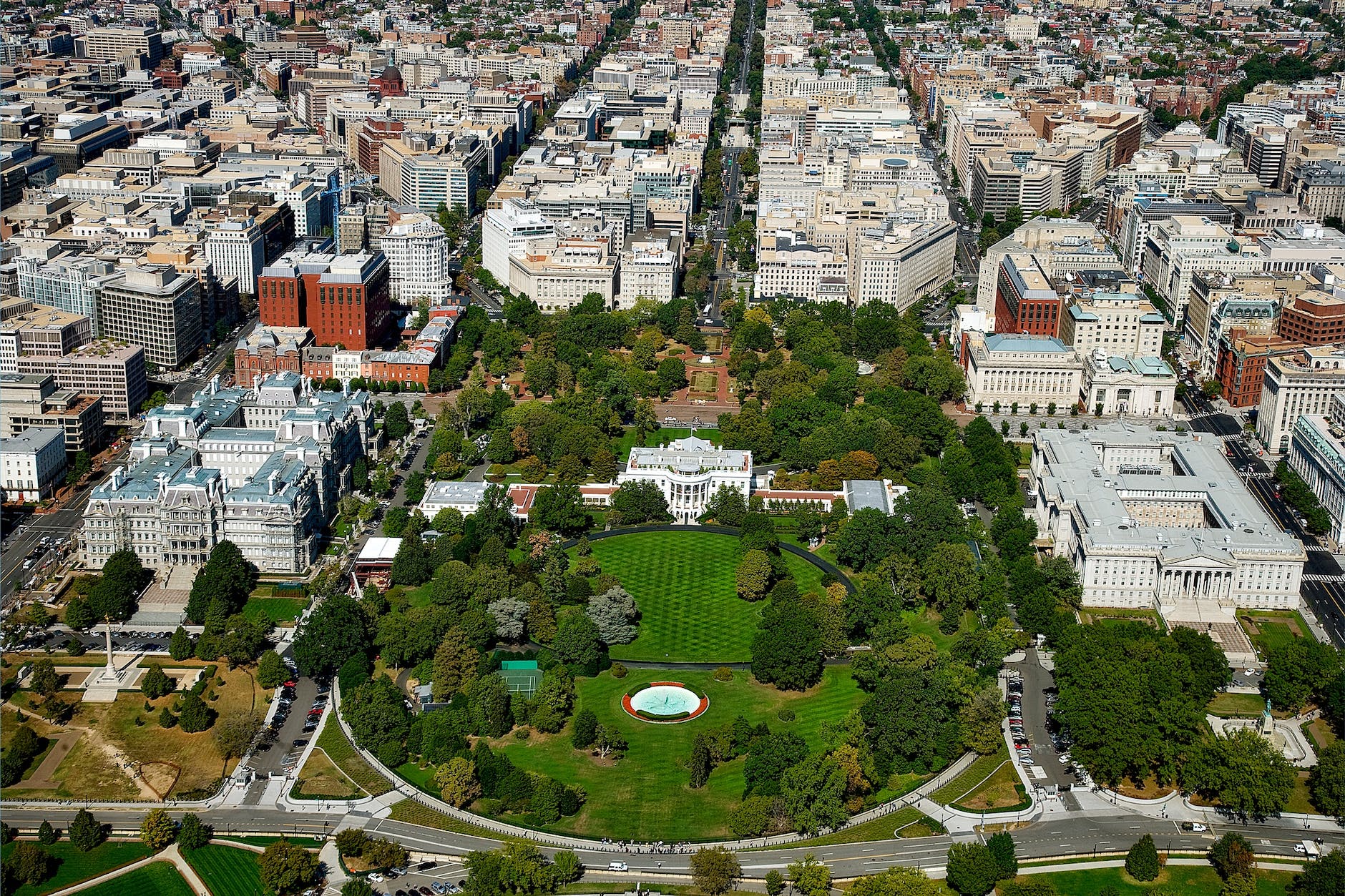
Many previous presidents, especially Republicans, have long used Washington as a metaphor for all that is wrong with America. The city is an easy target in many federal campaigns, from both parties. And for all their efforts to get to the city as president, many commanders in chief often seem desperate to leave whenever they can. Franklin Roosevelt spent long periods at Warm Springs in Georgia, where he’d ease lifelong physical repercussions from polio and at his home at Hyde Park, New York. Lyndon Johnson and George W. Bush were always keen to swap the White House for their Texas ranches.
Trump made little effort to embrace the town, getting out to play golf at his course in Virginia or heading to his properties in Florida and New Jersey. Biden spends most weekends in his beloved Delaware. But Barack Obama bucked the trend, becoming the rare president to set up home in the capital after his tenure ended instead of returning to his previous adopted hometown, Chicago.
Some presidents have tried to treat DC like home while in office. Theodore Roosevelt went rock climbing in Rock Creek Park, and decades later, Ronald Reagan saddled up to burnish his cowboy persona and went horse riding there. Abraham Lincoln used to escape the swampy summers to a cottage in Northwest DC where he’d also visit with wounded Civil War soldiers. And of course, he went to the theater at least once, with tragic results. John Kennedy and Richard Nixon, who served as naval officers, loved to take the presidential yacht, the USS Sequoia, down the Potomac River. The vessel was decommissioned by Jimmy Carter, a former submariner who was perhaps more comfortable beneath the waves…
Presidents have also often ventured out of the White House for refreshment. Ulysses S. Grant, Andrew Johnson, Grover Cleveland, Theodore Roosevelt and Warren Harding are all said to have patronized Old Ebbitt Grill, which is open still just around the corner. During the Clinton and Obama administrations it was not unusual to see the presidential motorcade idling outside some of the city’s top restaurants in Georgetown and downtown. Trump, however, rarely went anywhere to socialize apart from his former hotel on Pennsylvania Avenue, whose bars and restaurants became a hot spot for administration officials and Trump-world figures like Rudy Giuliani and a must-see for MAGA tourists in the capital.
Americans as a whole have concerns about big cities. The country has a majority suburban population and often associates cities with particular opportunities and issues.
And the United States has a unique capital arrangement in that the country’s largest city – New York City, the #1 ranked global city – is not the political center. Originally, the city sat between the northern and southern portions of the first states. It was founded after a number of other cities. It could become a political center even as it embodied characteristics of other American cities.
In looking at the list of facilities in the presidential library system, few are located in the biggest cities in the United States. Some are in smaller big cities while more recent facilities are in big cities. Perhaps presidents as a group have not been urban dwellers – and this should not be too surprising given that the United States has never had a majority of its residents living in the biggest cities.
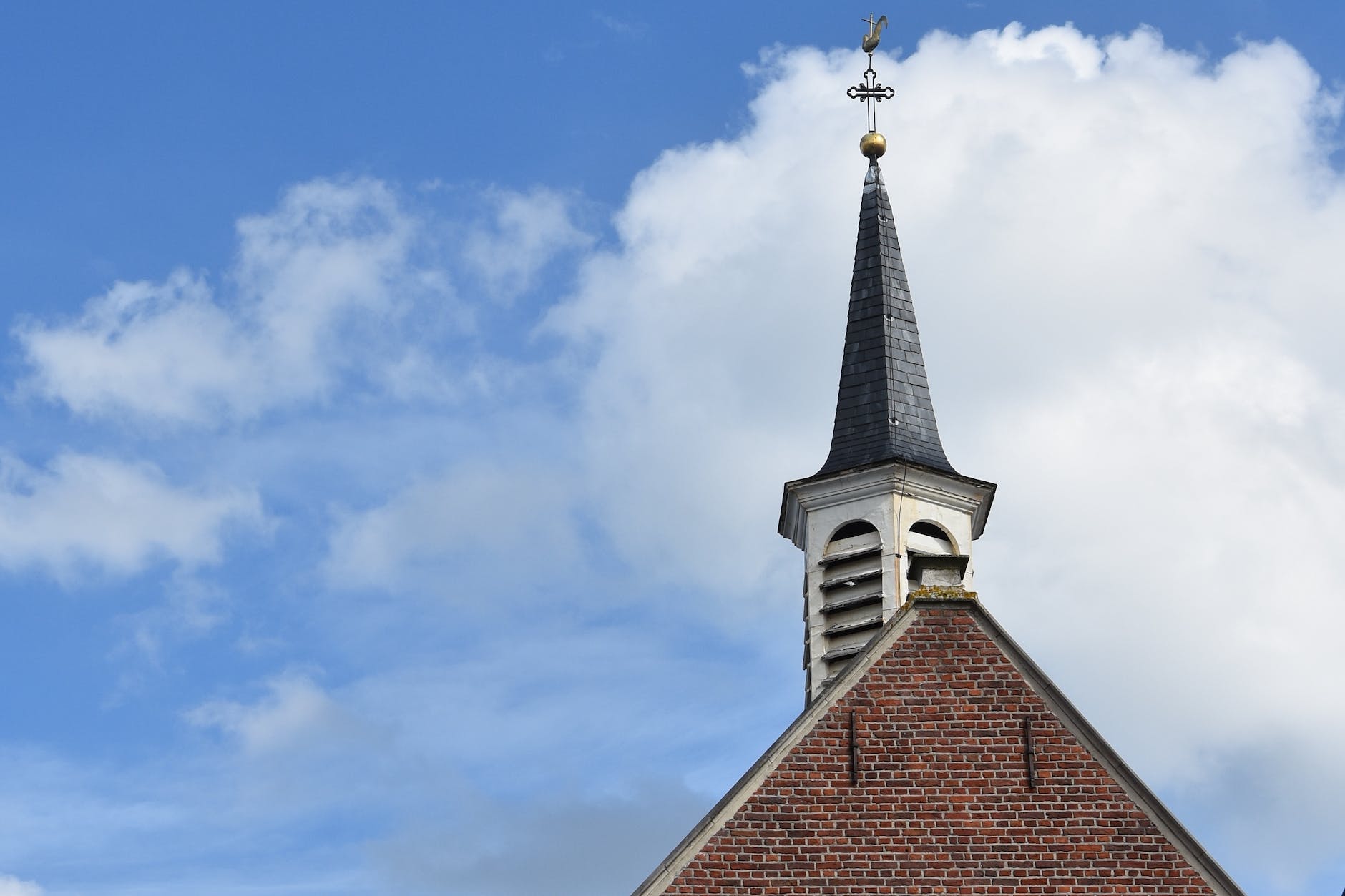
Seeking to grow revenue and do good, faith-based organizations are increasingly turning to their unused land and underused buildings as a solution to affordable housing. By the time Ms. Goff arrived at Arlington Presbyterian Church in 2018, Gilliam Place was already under construction.
“Our congregation had begun to ask itself, ‘What’s the point of us?’” Ms. Goff said. “It’s a big, existential question, and they had the sense that affordable housing was an issue they could do something about.”…
State and local governments are also recognizing the potential to increase housing stock. Andrew Gounardes, a New York State senator who represents southern Brooklyn, introduced a bill in December that, he said, would “streamline the process and the way in which religious institutions that want to help contribute to solving the state’s housing crisis will be able to develop affordable housing on their property.”…
Regardless of state laws, projects often face make-or-break decisions at the local level. Neighborhood buy-in is one small step in the journey, said the Rev. David Bowers, vice president of faith-based development initiative for Enterprise Community Partners, a national nonprofit developer. “There is NIMBYism, zoning approvals,” he said. “It’s the nature of the beast.”
Then there’s the financing question. Banks are “hesitant to do business with churches for fear of default,” said Bishop R.C. Hugh Nelson, lead pastor at Ebenezer Urban Ministry Center in Brooklyn, who worked with Brisa Builders Corporation on Ebenezer Plaza, a project that includes 523 affordable apartments, 43,000 square feet of sanctuary and ministry space, and 21,000 square feet of commercial space in Brownsville.
Two thoughts come to mind:
The combination of doing good for the community and generating revenue are interesting to consider together. Are there congregations where one of these is more of the driving force? What if more congregations from their beginnings saw housing as one of the ways they lived our and/or shared their religious faith?
How might congregations not just build housing but develop larger communities around faith, rituals, and community life? Housing is good but so is community and the possibilities of developing a local life involving the congregation.







 Legally Sociable