Could metropolitan areas have NIMBY-free zones for land uses residents do not want to live near but that are needed in the region?

After considering several recent NIMBY cases in the Chicago region (a football stadium, addiction treatment facility, waste transfer station), I had an idea: could a region develop a central zone where important but less desirable land uses could be placed and everyone in the region could benefit without having to live near them? Noisier, dirtier, and busier facilities could be separated from residences and a central location could mean more people in the region could access them.

Photo by Magda Ehlers on Pexels.com

I suppose this could happen now without the need for a NIMBY zone. Municipalities might put less desirable land uses on their edges or against certain barriers, like bodies of water or transportation corridors. Or some communities are willing to pursue industrial and commercial land uses rather than single-family homes.

But, one big advantage of a zone managed for the whole region is that the overseers could be freed from the concerns of residents. Balancing land uses in suburbs is often tricky as existing residents and leaders often have strong opinions about what and who they think might fit. And because local government officials often need to be elected or are appointed by elected officials, there are certain consequences for land use and development decisions.

Take the Chicago region as one example. Imagine creating a zone around O’Hare Airport where a number of less desirable land uses could be clustered. It would take time to develop this and address the concerns of people who live there. But, a location near highways and a busy airport means this could be a site where clustering certain facilities could benefit the entire region.

New York Times finds more suburbanites complaining about pickleball noise

Pickleball produces noise and some suburbanites across the country are not happy about it:

Photo by Mason Tuttle on Pexels.com

Sports can produce all kinds of unpleasant noises: referees’ whistles, rancorous boos, vuvuzelas. But the most grating and disruptive sound in the entire athletic ecosystem right now may be the staccato pop-pop-pop emanating from America’s rapidly multiplying pickleball courts.

The sound has brought on a nationwide scourge of frayed nerves and unneighborly clashes — and those, in turn, have elicited petitions and calls to the police and last-ditch lawsuits aimed at the local parks, private clubs and homeowners associations that rushed to open courts during the sport’s recent boom.

The hubbub has given new meaning to the phrase racket sport, testing the sanity of anyone within earshot of a game.

People from a number of communities are interviewed about the noise. The suburbs figure prominently in this list of the communities cited:

-Arlington, VA: suburb of Washington, D.C.

-Wellesley, MA: suburb of Boston

-York, ME: suburb of Portland

-Scottsdale, AZ: suburb of Phoenix

-Longboat Key, FL: suburb of Sarasota

-West Linn, OR: suburb of Portland

-Falmouth, MA: in the Barnstable Town MSA

Is this a primarily suburban problem? It may not be exclusive to suburbs – see this earlier post about noise complaints in Chicago – but pickleball is growing in popularity among suburbanites and suburbs have a lot of single-family homes whose owners do not appreciate noises or other threats to their private lives.

Will this continue to be a suburb-by-suburb problem, is there a solution that can be effective across suburbs, and/or will this problem spread to kinds of American communities?

What you see when you drive in American cities: signs

After seeing plenty of vehicles and buildings while driving recently through cities, I also observed a lot of signs. When driving at fast speeds, large signs are necessary so that drivers can read them and so that they catch people’s attention.

Photo by Charles Parker on Pexels.com

What can be learned from these signs? Here are a few of the domains:

-Information about roadways. From street signs to exit signs, there is a uniformity to information drivers need to navigate. These signs can help a driver navigate a complicated city full of other vehicles and buildings.

-Information about goods and services. Advertising signs are all over the place. They might be for a particular brand, a product, a store or restaurant, or an experience. While road signs are bland and to the point, advertisements tend use more images and text to deliver a particular message.

-Information about local attractions. These could be simple notes on highway signs for a stadium or park or more elaborate advertisement for specific local institutions.

In other words, there are a lot of signs vying for a driver’s attention. If there is time to read even most of the signs (such as being stuck in traffic or at an intersection), they can reveal much about the location and the city. But, add all these signs to the buildings and vehicles and it can be hard to take it all in.

What you see when you drive in American cities: buildings

Continuing a short series on what I observed of cities in recent driving journeys, I noticed many buildings. This included residences, businesses, office buildings, schools, skyscrapers in the bigger cities, and more. Some are newer, some are older.

Photo by Joey Kyber on Pexels.com

Driving by at a fast speed, it is easier to observe a sizable building. A really tall structure might be visible for miles. A long structure means a driver has a few seconds to see the building while driving by. Small buildings go by really quickly. The single-family home, an American favorite, is hard to see well at high speeds.

The scale between vehicles, buildings, and roadways can be interesting. Highways might be above the ground, at ground level, or below ground. Because of the highway speed, they are not at the same spatial scale as local roadways. Buildings can tower over a roadway, making it difficult to see over or around them.

The view from the highway does not always present the best side of buildings. In denser areas, the back side of buildings tend to face the highway as their primary orientation is toward a local street. However, some buildings, including suburban office buildings, are set back a bit more from highways and offer different views. Driving down major roads (not highways) in cities can often present a range of structures within a short amount of space. In a land where land uses can be rather uniform in places, the variety of urban structures can make for a fun sight.

While this is not new, I was reminded on these recent drives that many American buildings have hard or cold exteriors. This means a lot of brick, stone, metal, or glass. These materials might be durable or fit a particular style, but this does not mean the buildings necessarily look inviting or warm.

What you see when you drive in American cities: lots of motor vehicles

In recently driving in and around several big cities, I was struck by what I could (and could not) see. I certainly observed a lot of motor vehicles on highways and roads.

Photo by Miguel Barrera on Pexels.com

It is long evident that Americans prioritize cars and trucks on their roads. There might be room for some pedestrians (be safe!), mass transit, and bicyclists and scooter users but these are not as numerous as all of the cars and trucks.

The range of vehicles really does run the gamut. On the same major roads, one can find all sorts of trucks (delivery trucks, dump trucks, tankers, car carriers, etc.) and cars ranging from expensive luxury models to those who look pieced together to newer electric vehicles. If I wanted to see what Americans are driving for personal and business trips, I would recommend driving some of the highways that go right through urban centers and one can observe a wide variety.

Even with at least some people working from home, there are plenty of vehicles at many hours of the day. For many residents and companies, it is easiest to go via vehicle than other option. Driving is still a preferred method, even in cities with busy roadways.

If a driver truly wanted to be safe and only focus on the road around them, there is plenty to see. On many of these busy roads, tens of thousands or even hundreds of thousands of vehicles might pass by each day.

Pedestrian deaths in US hit record, continue to rise

Keep safe, American pedestrians:

Photo by Ketut Subiyanto on Pexels.com

More than 7,500 people were killed last year after being struck by vehicles while walking along or across U.S. roadways — the most pedestrian deaths in more than four decades, according to a new report.

This sobering trend was not surprising to experts who track the numbers. But they were dismayed by the consistent increase — up 77% since 2010.

The article goes on to suggest multiple possible reasons for the increase. In a society that privileges driving, pedestrians need to exercise caution.

From a social problems perspective, at what point would pedestrian deaths become a sufficient issue that people and governments would devote significant resources to addressing it? I am trying to imagine a pedestrian lobby that brings together different groups and it is hard to envision such a movement coming together. Perhaps it requires major marches on population centers? Could local walkers or walking groups join together with park districts, outdoor companies, and others with a stake in pedestrian activity to collectively act? The ability to walk safely should be prioritized, but it is not the primary concern in transportation or with roadways.

(Additionally, American roadways are not safe for drivers either. According to one source, “The United States has the most traffic deaths per capita of any developed country.”)

Hoping to revive shopping malls with pickleball

Could indoor pickleball courts save a depressed shopping mall near you?

Photo by Mason Tuttle on Pexels.com

The game, a mixture of tennis, badminton and pingpong, is the fastest-growing sport in America, but it requires a large court and finding space to play has become a problem.

Enter Pickleball America, which is building an 80,000-square-foot pickleball court in what used to be a two-story Saks OFF 5th at the Stamford Town Center in Connecticut.

The group is also looking at transforming other retail spaces in New Hampshire and New Jersey.

The idea seems a perfect marriage for a sport that needs massive spaces and a dying form of retail business replaced by online shopping...

“The mall just needed little bit of a boost, so with the idea of the space, it was a perfect fit,” said Pickleball America co-owner Jay Waldner of the 28-court Stamford facility. Waldner also said pickleball at the mall could annually attract 500,000 players, who could also shop during their visits.

Come play a game of pickleball and then stick around the mall for a bite, entertainment, and then a return to a nearby residence. Shopping may or may not be part of a regular trip.

I assume this new pickleball space is a for-profit enterprise. Do Americans want to pay to play pickleball or would they prefer local park districts pick up the bill for these courts? Is the indoor court enough to entice people to play? Residents may prefer that pickleball noise is contained to an indoor space at a shopping mall.

Which shopping malls could support a large pickleball facility? It is not a surprise to see this attempted in wealthier suburban communities.

Why not let every Chicago suburb pitch the Chicago Bears on a stadium deal?

The Chicago area has several hundred suburbs. Why not have dozens of them submit proposals to the Chicago Bears for a stadium and surrounding development? If the goal is to get the most tax breaks and make the most money, this is how Amazon and other large firms operate.

Here is one satirical look at some options:

Winnetka

Cheap Uber rides to the stadium for the McCaskeys from their North Shore abodes. Every dollar saved counts…

Blue Island

A local referendum changing the town’s name to “Black and Blue Island” could seal the deal. Fans would travel from remote parking lots to the stadium via a scenic barge ride on the Little Calumet River…

Batavia

In conjunction with nearby Fermilab, America’s particle physics and accelerator laboratory, the Bears could find the answers to two of life’s eternal questions: How did the universe begin? and Why can’t the Bears win another Super Bowl?…

Downers Grove

The Bears already have been a downer for many years. Just make it official by building a retractable DownersDome.

The Chicago area is large and there are plenty of possible sites for a stadium. And for most fans, the view of the game on TV will look the same regardless of where the stadium is located.

What it might mean to have a house sticker on the back window of my car

Stickers on the back windows of cars can signal all sorts of things. The number of family members. A favorite vacation spot. A beloved car brand or sports team.

What would a house sticker in the back window mean?

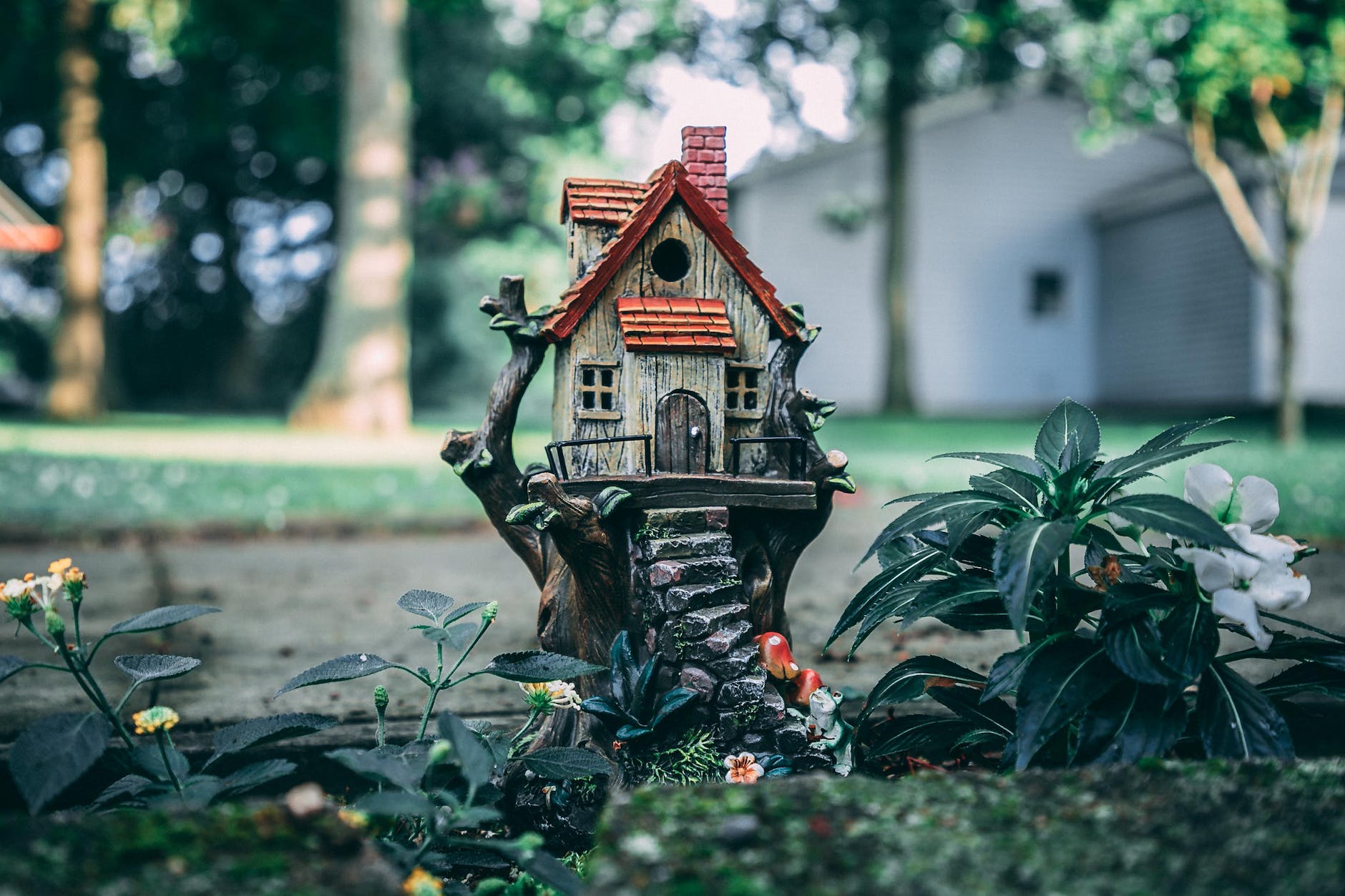
I recently saw a SUV with a two-story house sticker. The sticker looks similar to a drawing a child might make of a house. The picture below has such an image; this sticker had much cleaner lines but had a similar shape.

Photo by Maria Mileta on Pexels.com

Here are some options for what the driver of the vehicle might want others to know:

  1. They own a home. Americans value home ownership.
  2. They value home. Like others might include stickers of family members and pets, this house signals the importance of home and what happens there.
  3. They work in real estate or a related industry. However, wouldn’t they want to put their name or company to make this clear?
  4. Someone in their household or a friend drew this picture and they made a sticker out of it. It is easy to order stickers online.

Put together a home and an SUV (with a sticker of a home) and you have the American Dream?

In defining a McMansion, does Quicken Loans want people to buy one or not?

The website for Quicken Loans features an article defining a McMansion. Here is the definition:

Photo by Pixabay on Pexels.com

A McMansion is a large, highly ornate house often found in planned communities. This term is sometimes used as a criticism of mass-produced homes that don’t follow strict architectural styles.

They are large homes on small plots of land and can be more prevalent in states like California, New York and Texas. McMansions provide a way for upper-middle-class Americans to inflate their economic status.

McMansions are often generic and made from low-quality materials, so they don’t hold up well over time.

You can compare this definition to my four traits of McMansions.

Here is the “bottom line” in the article:

McMansions get a bad rap and are often referred to in a disapproving manner, but there are advantages to purchasing one. It can be a good way to buy a larger home, and you may be able to live in a nicer neighborhood. However, these houses may also come with high property taxes and can be expensive to maintain, especially if they’re built with low-quality materials.

For a company interested in providing mortgages, does this encourage people to pursue McMansions or not? I suppose providing information is helpful. I imagine all the major mortgage companies have underwritten lots of McMansion mortgages and would like to do more.

If a Quicken Loans customer does not like a McMansion but wants a bigger home that is not a mansion, what kind of home should they go after instead?