What if a significant portion of residents and leaders want to provide lots of public money for stadiums?

Plenty of professional sports teams owners have been in the news recently asking for public money to fund sports stadiums. I am against such funding (see examples here and here) as the benefits tend to primarily go to the owners.

Photo by Robert Hernandez Villalta on Pexels.com

But, what if plenty of people want to give this money to teams for stadiums? What if they value sports? What if they see this as a good use of public resources?

Those who argue against stadiums may pitch it another way. Here is an example looking at the recent request by the Kansas City Chiefs for public money. How is the Chiefs’ owner thinking about the fans?

The Chiefs are hoping, it seems, that voters are either very dumb or very scared.

This is an easy story to go with: the wealthy team owner is threatening the people. Out of fear or not knowing the full situation (the team has limited options, the money tends to enrich owners, etc.), residents and leaders will go along with it. If fear can be reduced or ignorance limited, people would oppose these proposals.

Is there another possibility? Some people like the Chiefs, think they are good for the community, and want to give them public money. They hear the opposing point of view and disagree with it. They would rather spend public money this way. Americans tend to like sports and spectacles.

In many ways, this is not just about sports and wealthy owners. These are civic questions about the public good, how money should be spent, and how we collectively make these decisions. People with all sorts of perspectives will try to persuade each other. And the fate of future sports stadiums and communities depends on these processes.

Stopping (Illinois legislative) time to get a sports team owner their taxpayer funded stadium package

As the Chicago White Sox and Chicago Bears argue for public money or lower taxes, I was reminded of the 1988 legislative deal that made sure taxpayers helped the White Sox stay in Chicago:

The White Sox stadium plan was resurrected seconds before midnight Friday, thanks to House Speaker Michael Madigan`s watch and an animated display of political arm-twisting by legislative leaders and Gov. James Thompson…

Minutes before House and Senate members walked into their chambers late Thursday, leaders from both parties predicted that the $150 million Sox stadium bill would fail, leaving the Sox no choice but to leave the South Side for St. Petersburg, Fla.

House Republicans left their caucuses, saying they had only five votes for the package. Their Democratic counterparts said only 50 votes could be mustered. And Senate Democrats said they had only 10 votes in favor of the deal.

But a few minutes before midnight, Senate Democrats ratified the measure by gathering 30 votes. In the House, after many observers saw their watches read past midnight, the constitutionally mandated adjournment time, the House passed the measure by a 60-55 vote. The published roll call read 12:03 a.m. Friday, which normally would mandate any bill passing by a three-fifths majority, or 71 votes…

”By my watch, it was 11:59,” Madigan said. ”I didnt know this would pass. The Republicans told me they had seven votes when we went in, but the governor and I and all the members took risks and passed this bill to keep the White Sox in Chicago. Now its up to them. We took them at their word.”

Clocks stopped, votes changing, foregoing other legislative priorities all to get a sports stadium paid for. As I have argued before, few political leaders want to be the ones who let the local major team get away. What this tends to mean is that local residents end up paying for the stadium while the team owners become even wealthier.

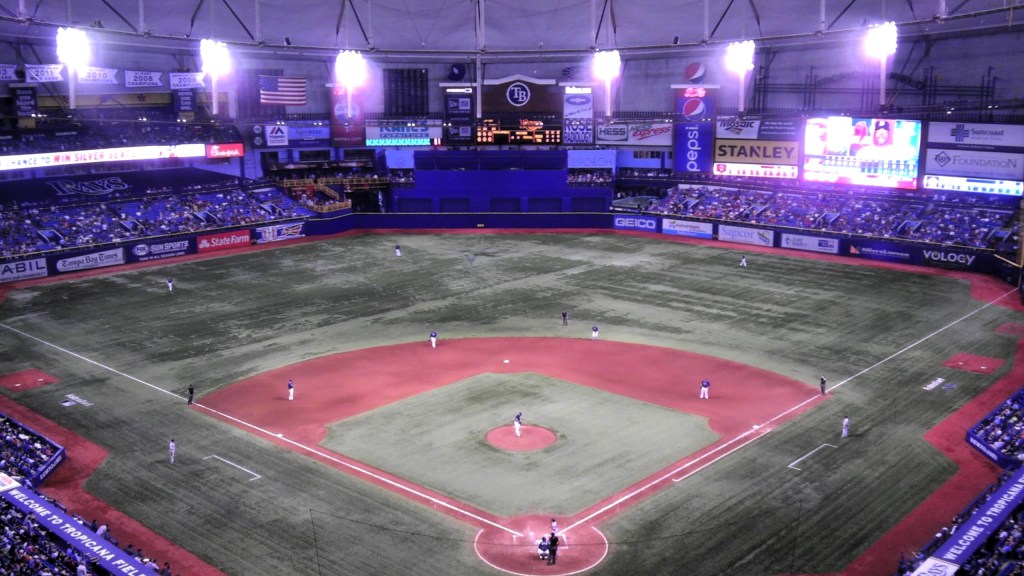
Another reminder: this threatened move of the White Sox to St. Petersburg, Florida led to the construction of another stadium where the Tampa Rays now play:

Who wins in these deals? The owners. For their tax monies, the fans may get to watch games in person or pay attention through local media.

Making the sacred profane and the profane sacred at the Super Bowl

The Super Bowl itself may qualify as a religious event given all of its pageantry and symbolism. But, yesterday’s game included at least a few more explicit mentions of religion beyond the patriotism, American consumerism, and big audience already there.

Photo by Shelagh Murphy on Pexels.com

The Super Bowl advertisements from “He Gets Us.”

The ad for prayer app Hallow.

The ad from the Church of Scientology. And see their past ads here.

From Super Bowl MVP Patrick Mahomes: “I give God the glory. He challenged us to make us better. I am proud of my guys. They did awesome. Legendary.”

In early sociological work, theorists discussed the boundaries between sacred and profane. In the Super Bowl, these lines can get very blurry. Is this just an athletic event or is it about our collective lives together and supernatural forces? Can advertising for religious groups and beliefs break through the noise of food and football? Should all of these forces be mixed or is there a time and place for each?

This is not new but it does highlight the ongoing interactions in American society between religion and other spheres. Similar things can and have been said about politics. A football game is not just a football game; it is an opportunity for numerous actors to put their own stamp on what we are doing together.

The most important sporting event in the world will take place…in an American suburb

The World Cup final in 2026 will be played in East Rutherford, New Jersey:

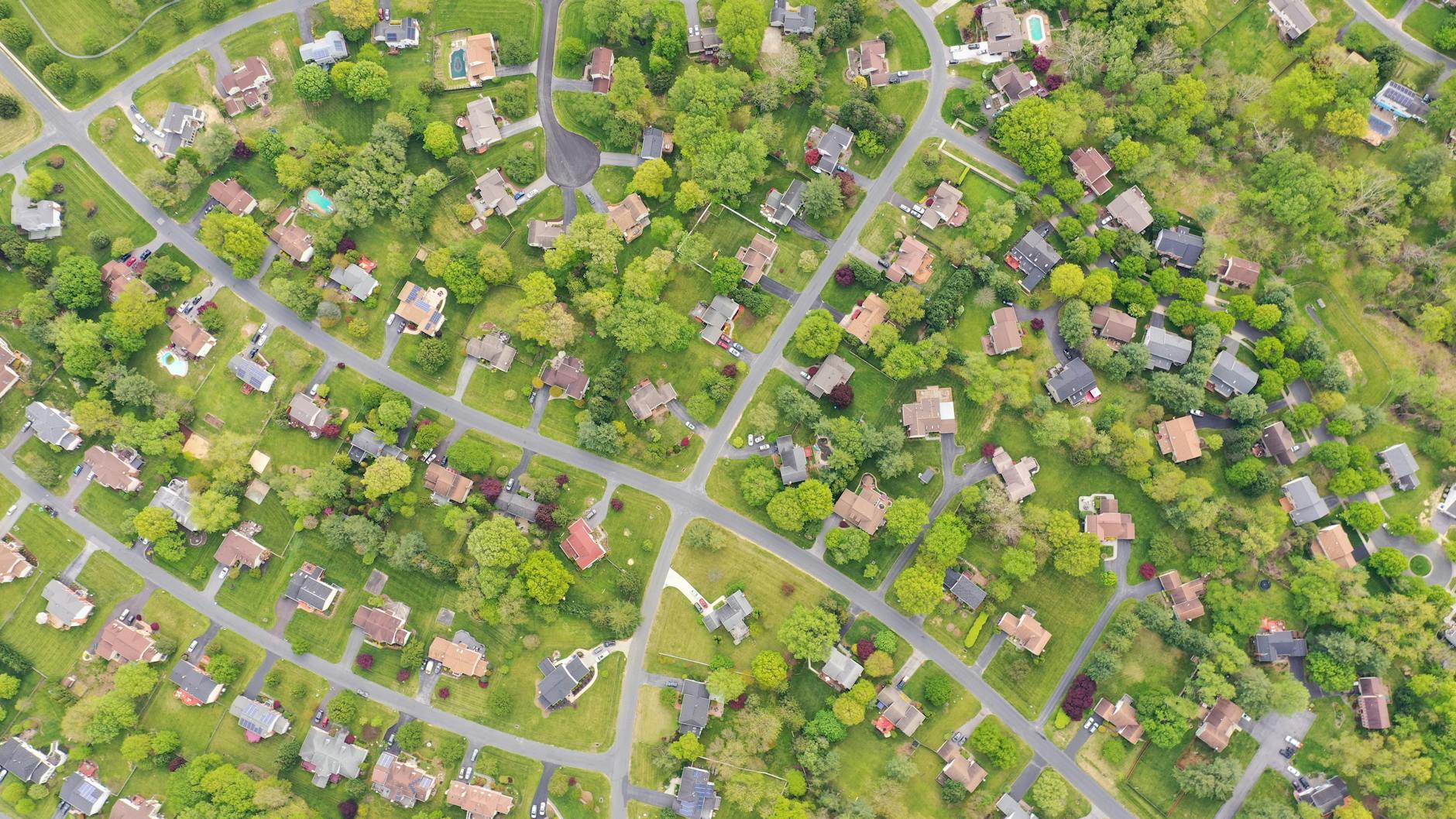
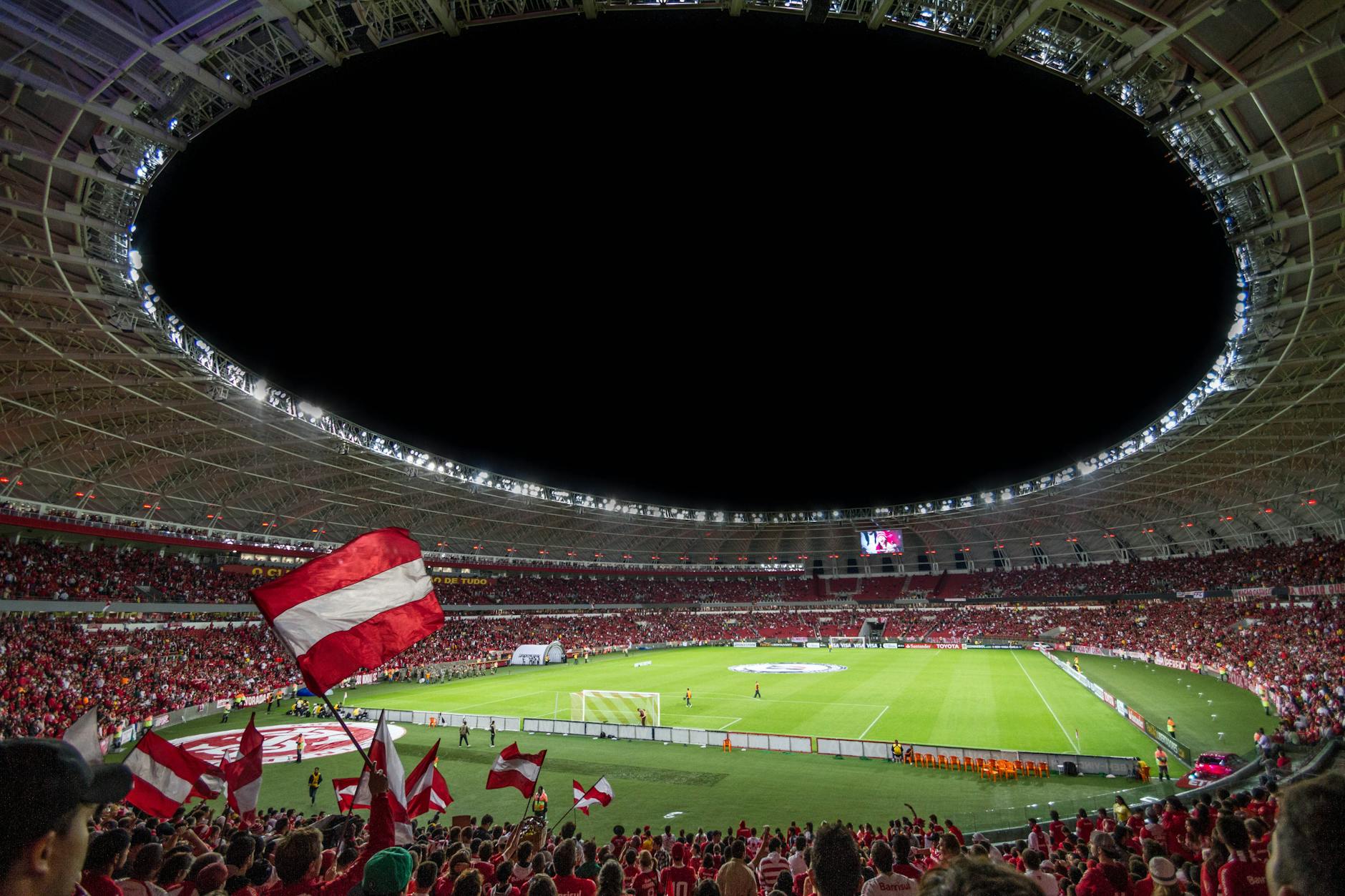
Photo by Riccardo on Pexels.com

The 2026 World Cup final will be held at MetLife Stadium in East Rutherford, New Jersey, on July 19, world soccer governing body FIFA announced on Sunday…

“It’s going to be a special World Cup,” Berhalter said after the announcement was made. “To have the final in New York, New Jersey is a dream come true for me. Being from that area, and I’m sure for most people from that area, it’s an area with a rich tradition of soccer and producing players.

“To think about when I was little, going to watch the [New York] Cosmos and them selling out Giants Stadium, and now this stadium is going to host a World Cup final. It’s really special.”

MetLife Stadium is home to the New York Giants and Jets who play in suburban New Jersey. The stadium is about 9 miles northwest of Times Square and about 13 miles northwest of Wall Street. When the Super Bowl was played here in early 2014, I assume more TV shots and attention was paid to New York City rather than the New Jersey suburbs.

It might also be worth noting that the 1994 World Cup final, the only one in the United States thus far, also occurred in the suburbs:

In 1994, the United States played two of its group-stage matches at the Rose Bowl in Pasadena, California, and the other at the Silverdome in Detroit. The Rose Bowl also hosted the final that year — with Brazil topping Italy in a penalty shootout — and again in 1999 for the Women’s World Cup, when the United States beat China, also on penalties.

Set in Pasadena, the Rose Bowl is roughly 11 miles northeast of downtown Los Angeles. This region is famously sprawling – and the 2028 Summer Olympics will take advantage of the full region for all of the events.

All the talk of soccer taking off among kids in the American suburbs may find its peak in this experience.

Baseball stadiums in relation to downtowns

The Chicago White Sox have had recent talks about the possibility of a new stadium closer to Chicago’s downtown. This would move them closer to the Loop and downtown activity. How does this compare to other baseball teams?

According to this map, most stadiums are pretty close to downtown. Some are further away – Texas, Kansas City – while others are close to ten miles away but still in the city (both New York teams).

My suspicion – without looking hard at the data – it that this may not be true of all of the major sports leagues in the United States. Baseball stadiums are often close to downtown but this may not hold across other sports. At least a few NFL stadiums are in the suburbs.

Do cities believe baseball stadiums are economic engines? Do teams closer to downtowns draw more fans? Do team owners see locations closer to downtown as more desirable, particularly with the trend to make money on developing land around the stadium?

Highlighting “suburbanites” at a Bulls game

I could not tell exactly what was happening because I caught this recently on TV but I was still interested to see what was on the scoreboard at the United Center during a Bulls game:

Was this a cheering contest between Chicago residents and suburbanites? Some camera shots on the big screen? A trivia contest?

Given the population of the Chicago region, there were probably a lot of suburbanites at the game. In 2020, Chicago had 2.74 million residents and the region had 9.61 million residents. This puts the suburban population at 6.87 million. This means over 71% of people in the region live in the suburbs.

The Chicago Bulls tend to have good attendance, even if the team is not doing great. This year, the team is under .500 and the team is second in the league in home attendance. (They also have one of the largest arenas.)

Suburbanites have ideas about Chicago and its residents and vice versa. Does identifying the two groups at a Bulls game exacerbate these differences or help bring them together around their common Bulls fandom? (I am guessing it is the second as Bulls games usually are good experiences, even if the home team is not great.)

Who can use space in the United States? FOIAed emails and pickleball

One journalist finds in emails that there is a lot of reaction to pickleball in American communities as well as concerted efforts by pickleball enthusiasts to play:

Photo by Mason Tuttle on Pexels.com

“I live near a paddle tennis court, which is basically tennis but on a small court. And at these courts, I saw this big sign that said, ‘Pickleball players, go home’ or ‘Pickleball was not welcome here.’ And I was like, What is going on? What happened was that pickleball players were sneaking onto the courts when they were open and playing pickleball when this was supposed to be a court for paddle tennis only,” Koebler said. “When I saw that sign, I was like, I bet these people are complaining to the government about the pickleball people.”

It turns out that these people were complaining. A lot. And not just in Koebler’s neighborhood. The city of Dallas told him that it had more than 100,000 emails mentioning the word pickleball. They couldn’t even begin to forward them all. The city of Fort Lauderdale said it would need $10,000 to produce all of its pickleball discourse.

These emails are about who can take up public space, and whether pickleballers are taking up too much of it. And if you’re thinking, Who cares?, Koebler says that the fight over who can take up space in this country—it’s kind of at the heart of the whole American project…

I’m going to generalize here and stereotype. But pickleball players are far more organized than other players of other sports, based on thousands of emails that I read. There are these people in city after city who are “pickleball ambassadors.” And they are given a tool kit from this group called USA Pickleball about how to talk to local government to gain access to more public spaces. And USA Pickleball’s strategy is to try to convince city council or the parks department or your local politician to build new pickleball courts. But because of this NIMBY aspect where homeowners don’t want pickleball in their backyard, it’s really hard to build new pickleball courts in certain places. And so what is happening is pickleball players have to use already-existing public infrastructure. This means basketball courts, hockey courts, tennis courts, of course. And if there’s a permitting system, they’re organized and they make sure to book out all of the permits. If there is not a permitting system, I saw emails where it’s like, I will bring my net for crack of dawn to the tennis court and set up my pickleball net. And then we will play in shifts all day so that we keep the court and the tennis players can’t get on here.

I am not surprised property values are mentioned in this interview. The sound and activity on pickleball courts can be a threat to a quiet residential existence.

I am surprised that taxes did not come up in the conversation. Americans pay property taxes to local government bodies that, among other things, build and maintain parks and public spaces. Homeowners, renters, and businesses contribute these taxes. They can all make requests or demands about how this public space is used. In this case, there is a limited public good – courts where people can play tennis or pickleball or in engage in other activity – and people could claim they are paying to provide space for the activity they want to pursue.

Given how American space is used, is this a zero-sum game: if pickleball players play, does that mean other sports must lose? Can tennis courts and pickleball courts stand side by side and be available to players of each sport? Will private pickleball facilities or clubs help alleviate these issues?

Naperville is the equivalent of 4th and 29 for a Bears opponent

Naperville is a highly-ranked suburb but is rarely described in sports terms. On the Fox broadcast of Bears-Lions yesterday, play-by-play announcer Adam Amin invoked Naperville in a difficult late-game situation for the Lions:

Why Naperville? Two quick theories. First, Amin announces a lot of games in Chicago due to being the play-by-play guy for the Chicago Bulls. He would be more familiar with the region and local communities. The Bulls do not have many ties to Naperville but it is the third largest community in the region (after Chicago and Aurora).

Second, Naperville is sufficiently far from Chicago and Soldier Field to be the distance equivalent of needing 29 yards for a first down. Naperville is roughly 30 miles southwest of downtown. Fourth and 40 might get you to Elgin and Fourth and 45 might get you to Joliet. I am up for more yard-to-mileage comparisons in Bears broadcasts though it might work better on a local radio call than a national broadcast.

And if the Bears end up in Arlington Heights or Naperville or another suburb, then can the fourth down distance go the other direction? “It’s fourth-and-Bronzeville” or “fourth-and-Logan Square”.

Trying to diversify a city economy through sports

Las Vegas has gambling and all that goes with it, including significant recent investments in sports:

Photo by Pixabay on Pexels.com

In under a decade’s time, the desert city long known for its casinos, food and live entertainment has become the home to four major league sports teams (the latest being MLB’s Athletics), six minor league teams, a major sports organization in the Ultimate Fighting Champion, and four large sports venues playing host to events such as NCAA tournament games, NFL Pro Bowls, and, coming this February, Super Bowl LVIII.

At least a half-dozen more venues are in the planning stages, and the city appears poised to be one of the top picks for an NBA expansion team and an MLS team, as well…

The initial economic impact estimates for Sunday’s Formula 1 Las Vegas Grand Prix and the February 2024 Super Bowl were $1.3 billion, and $500 million, respectively. (But this was before ticket prices slid for F1 when the championship was won earlier in the season).

That total would match the estimated $1.8 billion contributed to the metro area by all sporting events from July 2021 to June 2022, according to an economic impact study released this summer by the Center for Business and Economic Research at UNLV’s Lee Business School.

Earlier research on public money used for new stadiums suggested teams benefit the most from that spending. Will the money spent here on facilities increase the size of the economy, generate additional new jobs, and other benefits or does it simply shift money around? Will residents and businesses move to Las Vegas just because of sports?

Perhaps the pitch with Las Vegas is that it has the added bonus of lots of tourists. If some of them can be enticed to sporting events and other local attractions, this is extra money. This might work for major events, but I would guess it is harder for a regular season MLB game.

Here is just one guess of how this all might look in 10-15 years: local officials will say that sports helped enhance the city’s status, the team owners will be happy with their facilities and revenues, and the local economy will not be enhanced much just because of sports (when accounting for the debt and costs associated with sports).

Trying to maintain hope in the pep band with a HS football team that wins 4 games over 4 years

I recently saw the football team at the high school I attended has a chance to make the playoffs for the first time in over two decades. This brought back memories…of lots of football losses.

Photo by cottonbro studio on Pexels.com

Even though I like football, I would not have been at any of these games unless I had to be. And I saw many of the games in the 4-32 record over four seasons because I was in the pep band. Usually playing alto saxophone (and one season on the sidelines playing keyboards), I was at every home game and a few of the away games. I remember some of the halftime scores where the other team had thirty points or more, we had none, and we had a halftime show to do.

What happens to the pep band amid these results? We did not pay much attention to the football action. We played our parts loudly. The crowds at football games – and those who might hear us – were limited. We did our thing and did not think much about football.

Since I also had some pep band experience in college, I can compare and safely say that it was more enjoyable to play upbeat music when your team could regularly win. Someone has to lose the game and those teams have bands, cheerleaders, and fans as well. Trying to enjoy the music and band experience is harder when it occurs during loss after loss.

Put this together with my Cubs and Bears fandom and I am used to lost games and seasons. I wish teams who tend not to have success over time do at least occasionally have times of winning. Even just a year or a few games of success can help sustain enthusiasm and hope.