Two charts showing the growing racial and ethnic diversity in the American suburbs

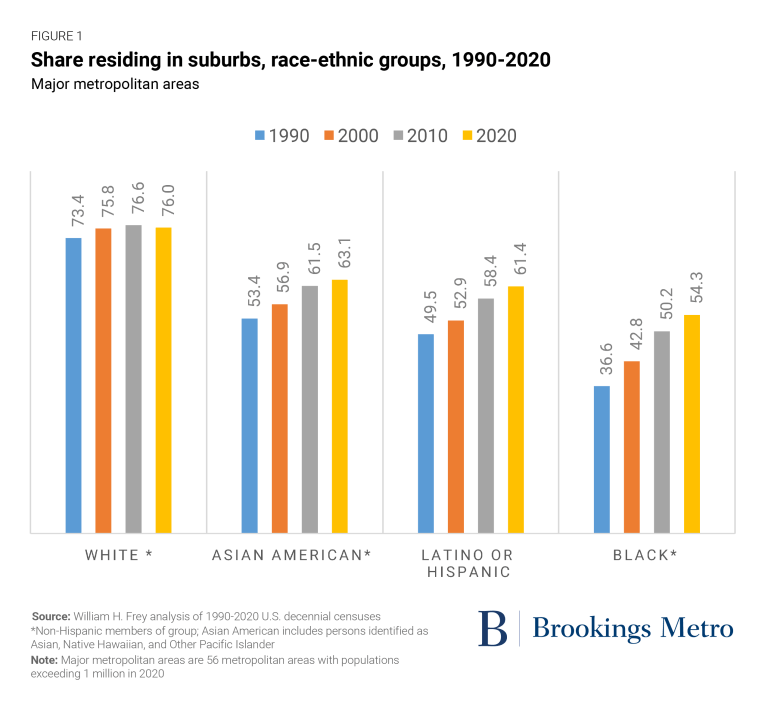
William Frey of the The Brookings Institutions analyzes 2020 Census data and shows the suburbs are increasingly diverse in terms of race and ethnicity. One chart:

The percent of Asian Americans, Latinos or Hispanics, and Blacks living in the suburbs has increased every decade since the 1980s. The percent of whites living in the suburbs has stayed stable.

A second chart looks at the racial and ethnic changes across different kinds of suburbs:
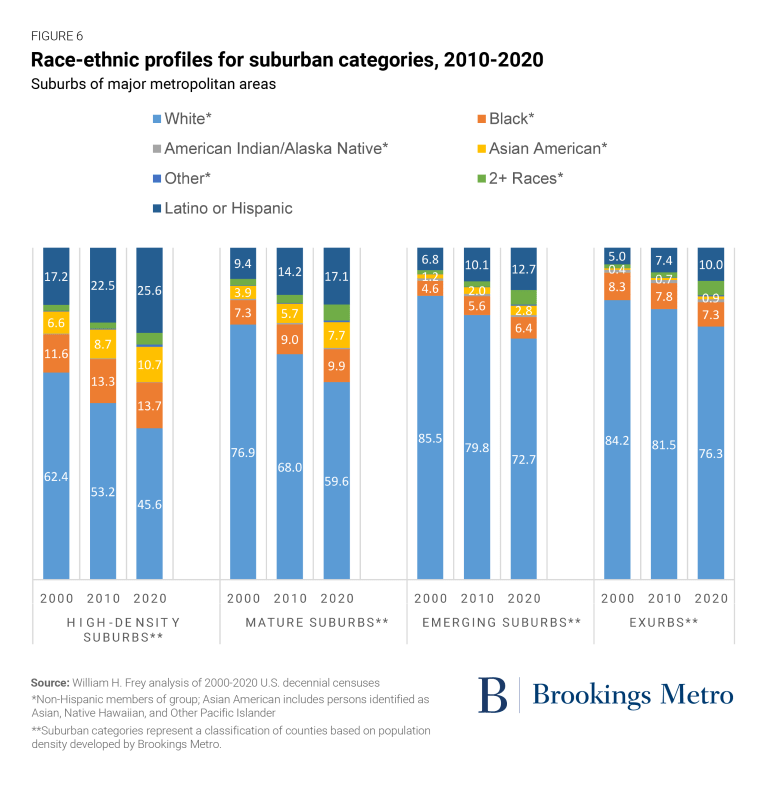
While the first chart showed increasing diversity in suburbs in general, this one helps show that this racial and ethnic diversity is not evenly distributed across kinds of suburbs. Even as the percent of white residents is decreasing in all kinds of suburbs, high-density suburbs have the most racial and ethnic diversity followed by mature suburbs.

Frey sums up his analysis this way:

Among those of a certain age, the term “suburban America” conjures up the image of mostly white, middle-class, politically conservative developments, differing sharply from a more racially diverse urban America. But the 2020 census places an exclamation point on the fact that suburbs now reflect the nation’s demographics, with respect to racial make-up and most likely on related dimensions of class and politics.

The growth of America’s suburbs embodies the nation’s population growth, accompanied by greater diversity due to the in-migration of new and long-standing minorities from nearby cities, from other parts of the country, and from abroad, as well as a rising multicultural youth population as families of color—like their earlier white counterparts—find the suburbs an ideal destination for raising children and forming new communities. From this perspective, the suburbs, perhaps more than anywhere else, are symbolic of America’s rising diversity. 

Complex suburbia continues.
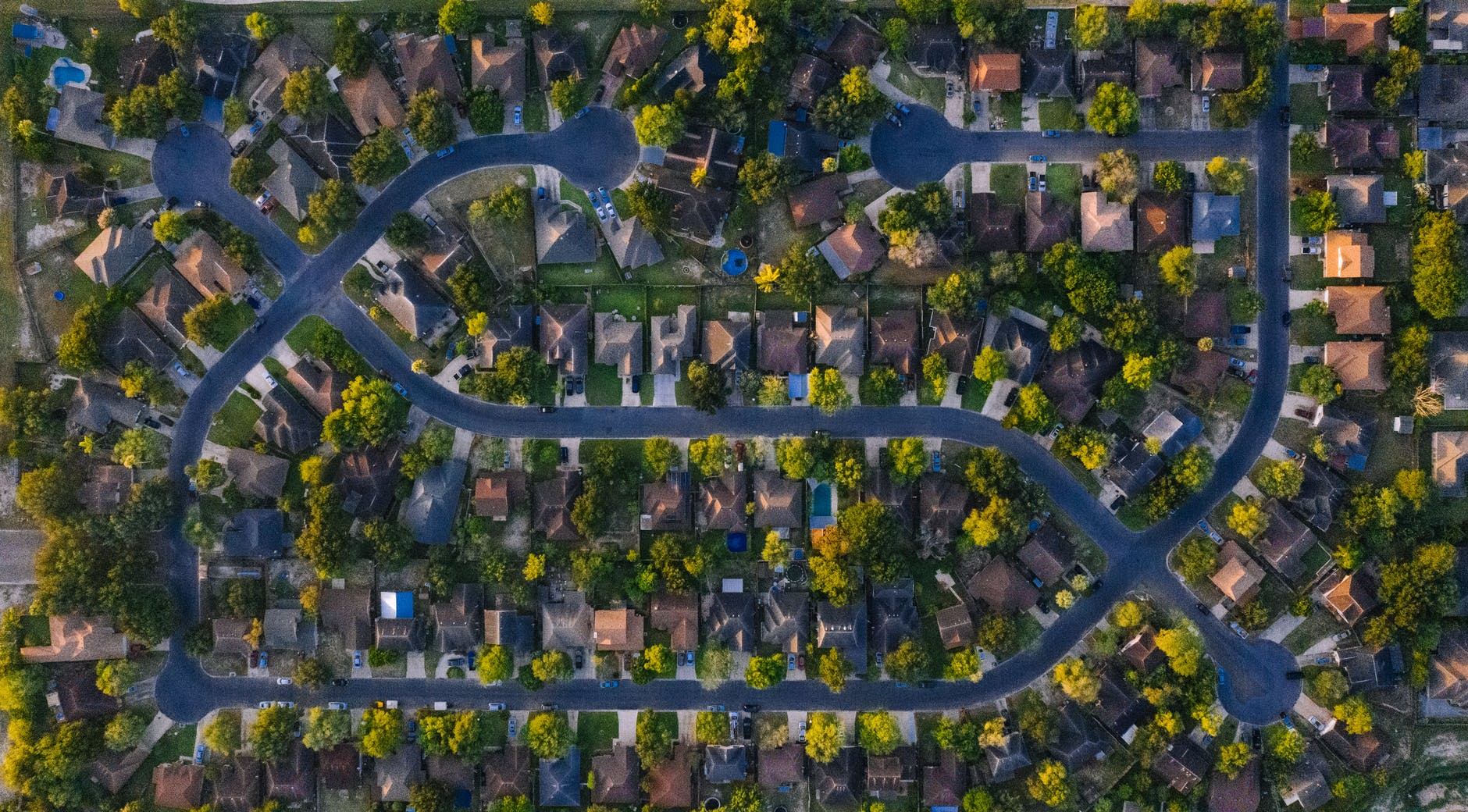
McMansions as part of or outside of a changing suburbia?

This description of the changing American suburbs includes McMansions:

Photo by Jeswin Thomas on Pexels.com

The demand for something like urban living is real. Even at the outer edges of growing metro areas, mixed-use walkable developments pop up alongside familiar subdivisions and McMansions. “Mixed-use centers—often in suburban locations—continue to be built from the ground up in many communities across the US,” wrote the Congress for the New Urbanism in 2019.

As more immigrants and millennials become suburbanites, and as Covid and remote work give the suburbs another growth spurt, they are evolving into something different. Between 2019 and 2020, the share of millennials who live in suburbs increased by 4 percentage points; and in 2014, more than 60 percent of immigrants lived in suburbs, up from just over half in 2000.

Many communities that were once white, exclusionary, and car-dependent are today diverse and evolving places, still distinct from the big city but just as distinct from their own “first draft” more than a half-century ago…

If a “second draft” of the suburbs is now being written — at least in some of America’s growing and expensive metro areas — what might it actually look like?

This is part of the complex suburbia we have today. Where do McMansions fit into this? The selection above suggests “mixed-use walkable developments” are near McMansions. But, what happens to the McMansions in the long run? Here are a few options:

  1. The McMansions continue in their neighborhoods for those that want them. Even amid proclamations that McMansions are dead, there are some homebuyers and suburbanites that want such homes.
  2. McMansions themselves are altered in ways to fit the new landscape. Perhaps they are subdivided into multiple units for more affordable housing. They could be added to. Their properties could host accessory dwelling units.
  3. McMansions are demolished and replaced with something else. This could be because the quality of the homes does not stand the test of time or the land is more valuable used another way (some of the teardowns become teardowns).
  4. Some McMansions live on through historic preservation marking a particular era of housing and American life.

For some, McMansions represent the peak of an undesirable suburban sprawl and excess. For others, they are homes that provide a lot for a decent price. Their long-term fate is to be determined both by those who like them and those who detest them as the suburbs continue to change.

Skyscrapers as amusement parks

More skyscrapers around the world are offering thrills to visitors:

Photo by Kaique Rocha on Pexels.com

Base Flying is one of an increasing number of urban tourist experiences combining tall buildings and safe-but-still-scary thrills, satiating adventure-seekers like Escalante while earning their operators significant profits. It’s a growing niche in the tall-building industry as skyscrapers continue to rise in ever more parts of the world…

But just giving people a place to view the city is no longer enough. Vettier says Magnicity is putting more of its efforts into operating—and in some cases inventing—thrill-based skyscraper experiences.

In Chicago, it operates Tilt, a platform on the 94th floor of the former John Hancock Center tower that tilts 30 degrees outward from the building, offering its eight occupants the experience of being suspended, face down, 1,030 feet over the streets of Chicago. Vettier says roughly 1.6 million people have experienced Tilt since it was added to the building in 2014, 45 years after its original construction…

New towers rising all around the world are creating more spaces for observation decks, and more opportunities to thrill. In Bangkok, the glass-floored observation deck of the MahaNakhon Tower sits 1,030 feet above the ground. In Dubai, the Sky Views Dubai tower features a glass slide attached to the outside of the building, starting more than 700 feet up. In Shanghai, the Jin Mao Tower features a rail-less exterior walkway around its 88th floor. Skyscraper thrills abound, and more are likely to develop.

A few thoughts that emerge in reading about what skyscrapers can offer:

  1. How far are we from a skyscraper just devoted to thrills? I could imagine it billed as an amusement park right in the middle of a major city.
  2. I would be interested in hearing more about how the extra money from thrills interacts with the more common stream of money for these tall buildings that comes through commercial and residential space. Are the thrill options extra money or are they replacing residential and commercial space?
  3. When exactly did the views from skyscrapers and aerial perspectives become blase? And what is the next perspective that thrills people, at least for a while? An x-ray view? A view that allows for also seeing the underground portion of structures? A view with interesting data and facts overlaid on the image?

Modern cities and deep time

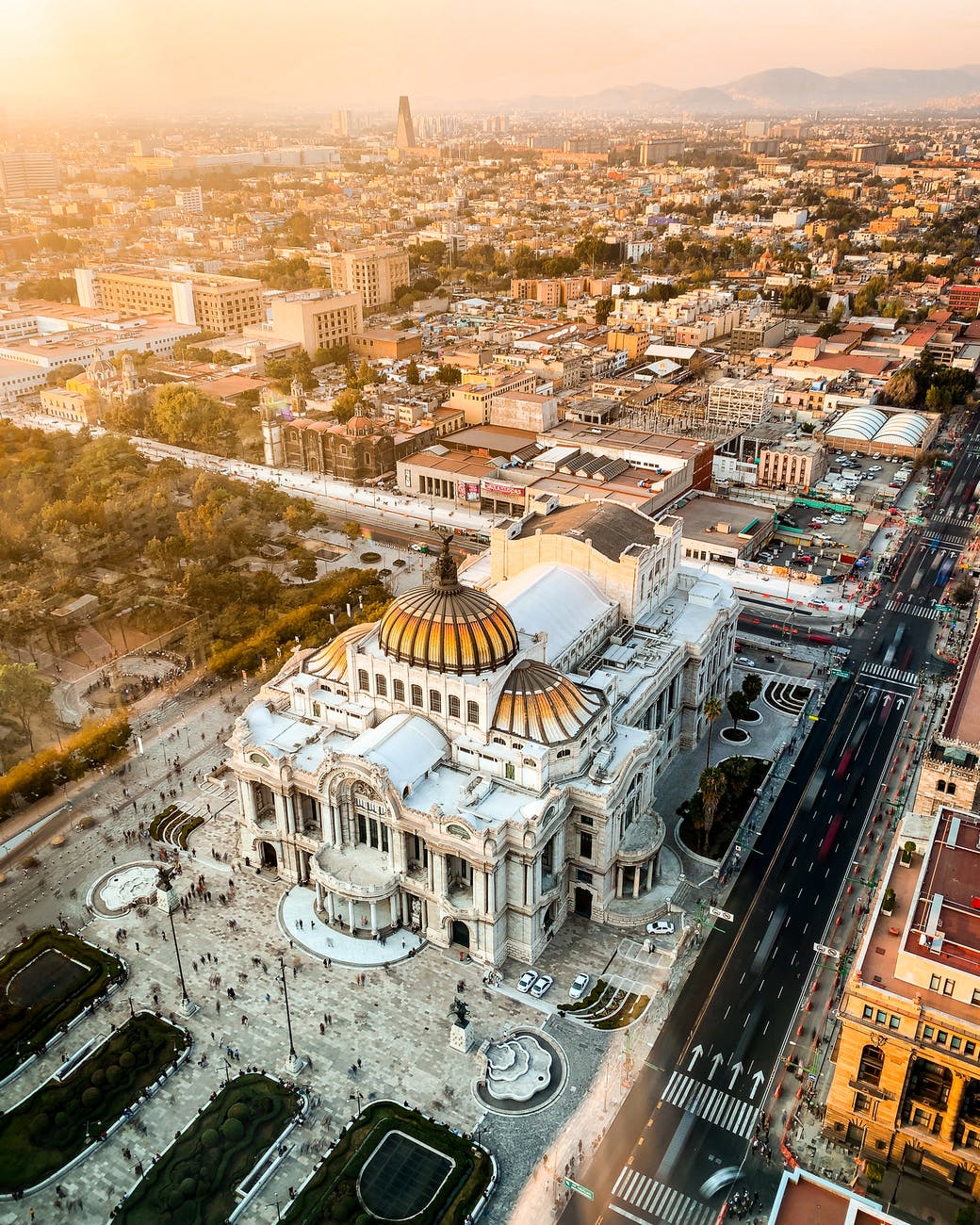
Those suffering negative consequences after earthquakes in Mexico City highlight the tensions between modern cities and deep time:

Photo by Bhargava Marripati on Pexels.com

If we consider the city a geophysical entity, we can think about being tocado as a uniquely historical form of relating with the Earth. Rather than Elena’s affliction being induced by a traumatic experience and a fear of future earthquake events, she and others fear the processes that were initiated by the earthquake: the grietas, the slumps, the leans, the fissures, the buildings collapsing years later…

This is a form of seismic time that is not only knowable through a seismic event. It’s a time that begins with an earthquake but continues through ongoing geophysical and political processes. Rather than a pathological individual condition or a culture-bound form of expression, we might see being tocado as an emergent form through which bodies, histories, legislations and earths come into relation. Deep time, in Mexico City, is resolutely present if you are compelled to notice.

Deep time might be a useful frame for contemporary analysis, a temporal literacy that places the long-term ramifications of the present moment into a deeper history. Conversely, such scales also risk subsuming deep time into the present.

Mexico City points toward something more physical, a sense of time that neither collapses the human and the geological nor holds them as irrevocably distinct. In their embodied apprehension of earthly processes, people who are tocado reveal that deep time is not only an analytic problem of scale, but a stranger temporal geometry, where homes are at once sites of security and indifferent geophysical entities. Deep time portals open in the city’s many cracks, slumps and fissures, revealing an inconceivable horizon forever rushing forward.

The modern city is often designed to avoid deep time or a deep understanding of the past. The modern city of the last two centuries often took existing land and communities and created a city on a new scale with new materials with new possibilities.

In this article, the primary point of departure from modern time are earthquakes that remind residents on what the city is constructed. Other features of cities that might do this could be other natural disasters, areas designed and established far before the advent of cars, ancient landmarks, and excavations that reveal the past.

But, I imagine many residents of such cities have limited interactions with a deep past. Take Chicago: what there would remind people of a deep past, let alone even a few hundred years before? And if residents and leaders did more regularly interact with the deep past, would they act differently in the cities that are now so important to modern life?

If every life event was sponsored, baseball edition

I enjoy listening to baseball games on the radio. The pace of the game, the voices of the announcers, and the ability to do other things while listening add up to an enjoyable experience.

Photo by Anthony on Pexels.com

Except for one growing trend: the number of commercial reads throughout the game. At this point, it seems like almost every baseball event has a sponsor. Strikeouts, walks, doubles, home runs, the fifth inning, the seventh inning…you get the idea. Baseball has a lot of small events and apparently they can be attached to an advertiser for the right price.

I am aware of multiple factors behind this. Radio is a dying business. Live sports is one of the few shining spots where there are certain to be listeners (or viewers). Commercialization is alive and well. There is money to be made here.

But, I can only imagine how this might spread to all areas of life. Go beyond the Internet and social media ads tied to your browsing and shopping habits. You tie your shoes; brought to you by [blank]. You run the dishwasher; brought to you by [blank]. You read a book; brought to you by [blank].

At this point, there do not seem to be any officials guardrails against more and more of this happening. People can push back but this has consequences. If I do not like the baseball ads, I can stop listening. But, if we move to more immersive devices – Google Glass, virtual reality headsets, a house full of Internet equipped objects – this will be very hard to push against or escape.

The places in the United States with a housing surplus

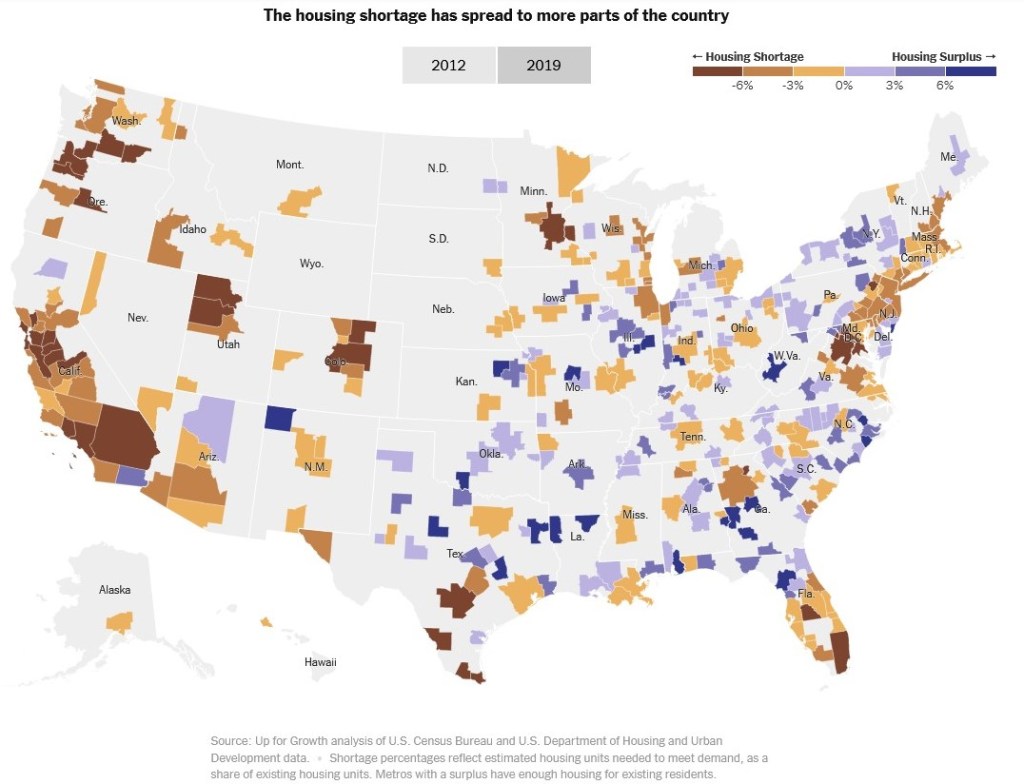
A new analysis shows which metropolitan areas in the United States have a housing shortage or surplus:

A quick look at this map shows the biggest metro areas tend not to have a surplus while smaller regions have a higher likelihood of having a surplus. There is additional analysis showing at least a few metro areas that had a housing surplus in 2012 that did not in 2019.

While it is intriguing to see that some places have housing while others need it, the answer is not to have people in large numbers move from the housing shortage areas to those with a housing surplus. Both the rise of certain cities in recent years and the COVID-19 pandemic offered some hints of what this leads to: the effects of cities losing residents (if just temporarily) and rising housing prices in markets experiencing a lot more interested housing seekers. At the same time, as noted in the article, a national policy is difficult to imagine and/or enact.

Hopefully, by the time a similar time period passes and a new map is released, there are more metro areas with available housing.

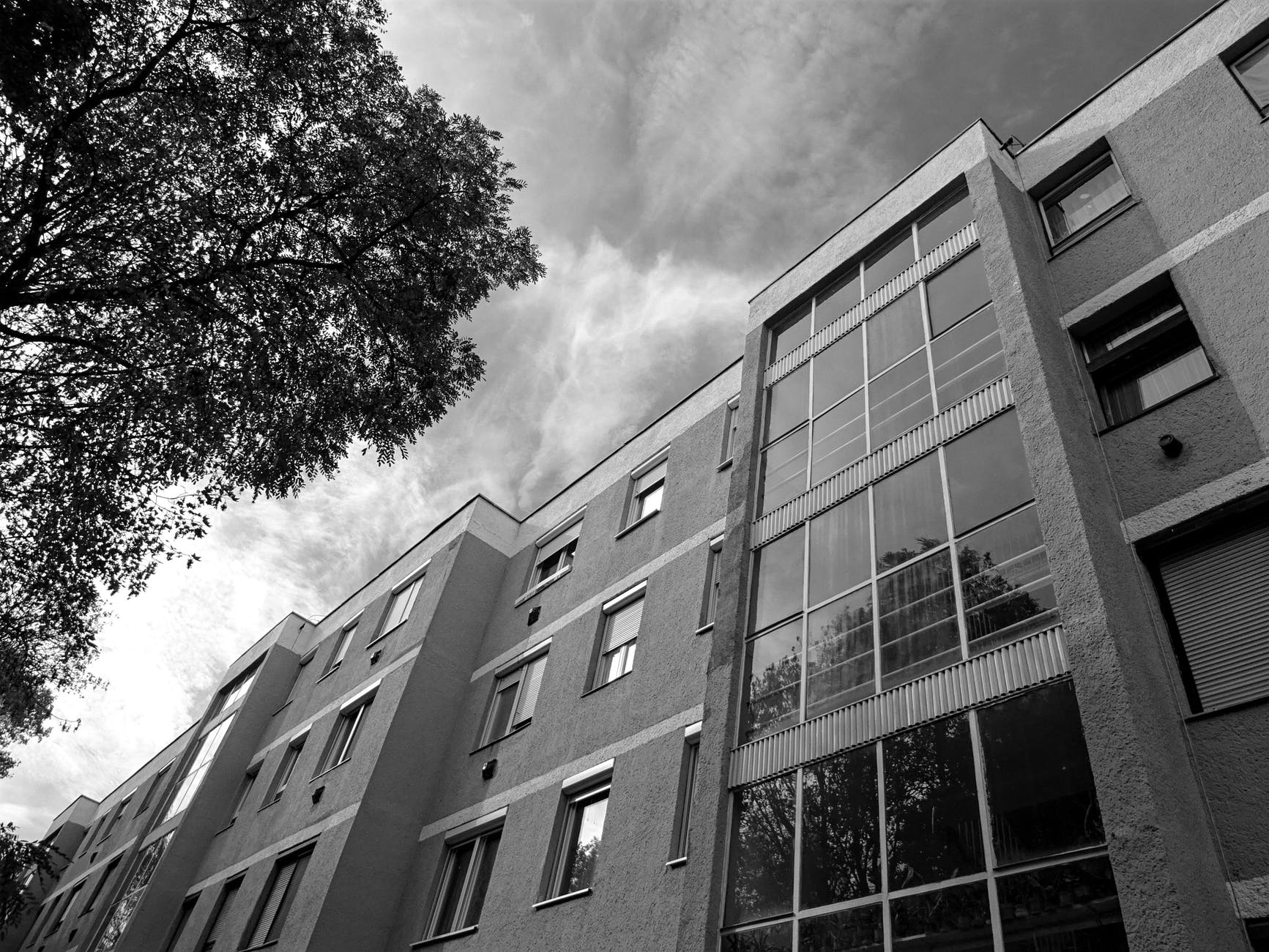
Multifamily units construction highest since 1973 – but not for the part of the market that needs it most

More multifamily units are under construction than in any year since 1973 but more units are for a particular segment of the market:

Photo by SevenStorm JUHASZIMRUS on Pexels.com

Nearly 836,000 multifamily units are under construction, the most since 1973, according to Jay Parsons, chief economist at RealPage. But most new construction targets higher-income tenants and not the lower end, where supply shortages are most extreme, he said.

I have written about the dearth of starter homes and I would suspect a similar dynamic is at play here. Builders and developers can make more money on multifamily units with higher prices. If someone is going to go to all the effort for development and construction – and this can be quite a bit of effort in certain places – they would prefer to gain more financially in the end. The number of places that require the construction of affordable housing alongside market rate housing or seriously pursue cheaper housing are limited.

If these higher-income units come on line, it will add to a bifurcated housing market where those with enough resources have plenty of choices and those with fewer resources have limited and possibly unpleasant options.

A more interactive and informational street sign

A new kind of street sign is in downtown Arlington Heights:

Photo by Jens Johnsson on Pexels.com

With three movable LED signs atop the 10-foot pole, the panels display real-time messages pertinent to their surroundings, from how many tables are available at a nearby restaurant, to Metra train timetables. Any governmental emergency alerts, like weather and Amber Alerts, get precedence.

“The sign would orient itself and say, at Salsa 17 starting at 6 o’clock, there’s $7 margaritas or something. And then later it would spin around and say there’s a band playing at Peggy Kinnane’s. There’s a lot of different inputs on this,” said Arlington Heights Village Manager Randy Recklaus. “It’s a thing that people would be drawn to, and it would be yet another thing that would kind of set our downtown experience apart because it’s not something that anyone’s seen before.”

The village would have control of the sign and approve all messages — done through a secure portal on a tablet, PC or Mac as part of a cloud-based system. And the cost of the sign would be recouped by selling advertisements to local business who want their messages on the street panels, under a lease-to-own arrangement that’s part of the Points Sign’s business model.

Pedestrians also will be able to search for things like local events and shopping and dining locales by turning and pushing a streetside dial.

The sign is customizable; some municipalities in talks with Optimal Design want to put a camera atop the pole for public safety purposes. And while the sign has sensors to know how many people are at a given intersection at one time, it doesn’t have facial recognition technology, Patel and Ottoman said.

The two keys to this sign seem to be that it is interactive and it pushes out information rather than standing passively. It does not necessarily replace static street signs, but it can help point people to opportunities. People can approach it and find something new. Such a sign could work well in locations with plenty of foot traffic and lots of local activity.

This reminds me of what I saw on my most recent trip to a shopping mall. The mall appeared to have fewer directory signs and instead I saw multiple recommendations to download the app for the mall. When I did use the interactive directory sign, I could search within certain categories and then it offered directions to the selected retailer.

Are we any closer to a more immersive sign experience that can provide an overlay of information on a 3D view of a landscape? Imagine going up to an interactive sign, searching for something or selecting something presented to you, and then seeing a 3D image of the landscape with paths and information.

Or, are we close to a time when signs are not necessary as everyone with a smartphone or smart glasses or similar devices interacts through the world through that?

The states and cities with restricted activity with other states and cities

I recently found a description of the states and cities limiting their activity with other governments/places within the United States:

Photo by cottonbro on Pexels.com

At least six states and the District of Colombia over the last six years have prohibited their employees from taking work trips to states with laws that, in their view, discriminate against lesbian, gay, bisexual, and transgender people. California’s prohibition is by far the most sweeping, barring state-funded travel to nearly half the country: 22 states, including four additions – Arizona, Indiana, Louisiana, and Utah –last week.

California, Connecticut, Minnesota, New York, Vermont, Washington, and the District of Columbia all have sought to financially pressure several other states in some form or another – creating a confusing patchwork of bans, with some states lifting previous travel bans on other states, such as Indiana, that revise laws applying to the LGBTQ community after a national or statewide uproar…

After witnessing the impact on Indianapolis, several mayors of liberal cities, including New York, the District of Columbia, San Francisco, Seattle, Minneapolis, and others sprang into action. They announced bans on city-funded travel to North Carolina amid a national backlash over House Bill 2, which prevented transgender people in the state from using bathrooms aligned with their gender identity. North Carolina lawmakers quickly devised a compromise that helped convince collegiate sporting events to return to the state. Still, several big-city mayors kept a ban on employees traveling there.

Add this to the actions of private actors and you have interesting geographic conflicts across the United States.

It is less clear what these travel restrictions lead to in the long run. Does this connect to lower levels of geographic mobility among American residents as a whole? Is it part of “the big sort” by political affiliations and commitments? Does it lead to social networks that skip over some geographies and not others? How does it fit with the urban/rural divide in politics and each spaces sense of place and country?

How many suburbs will be willing to replace suburban office parks with denser housing?

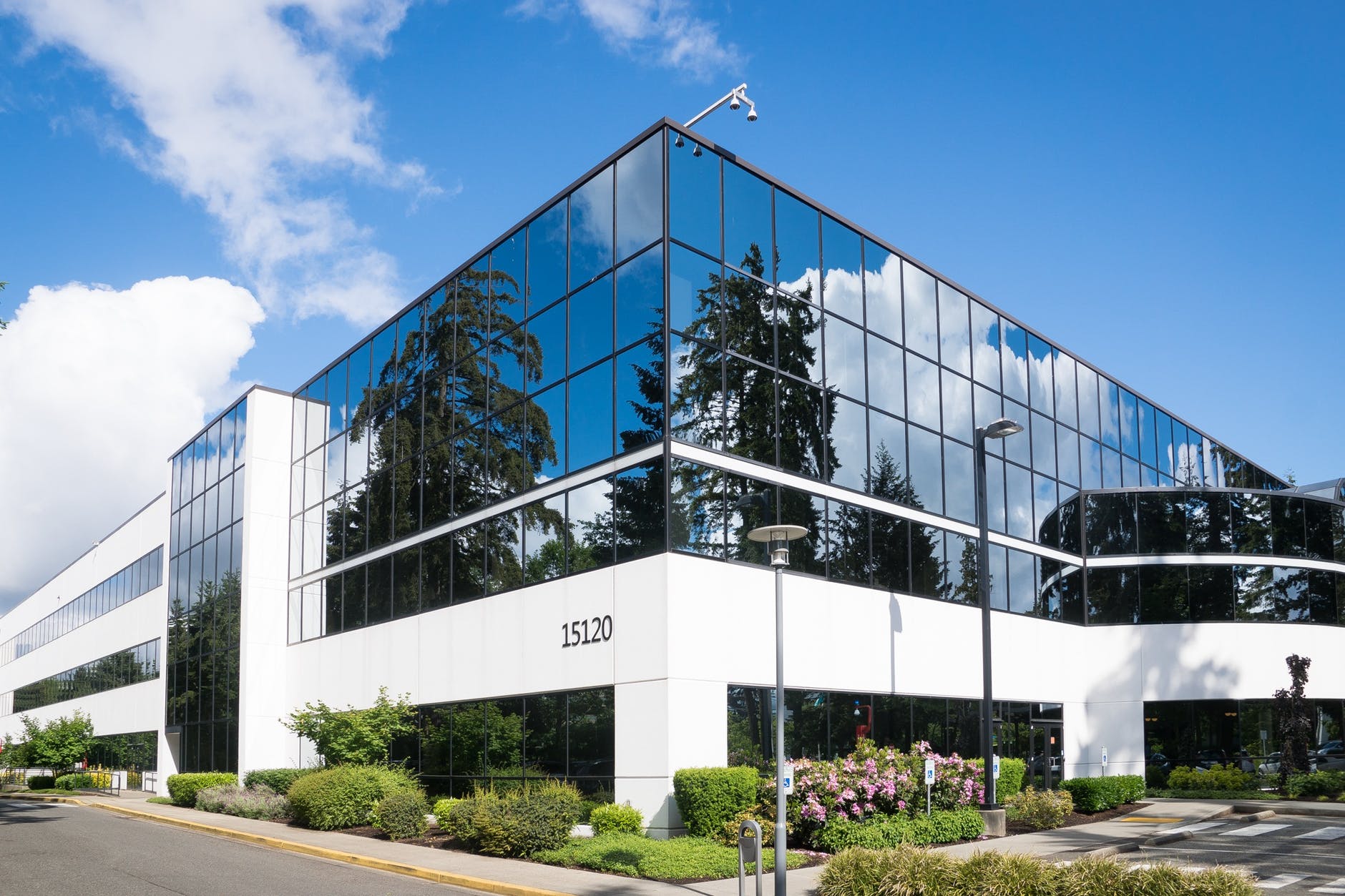
If the golden age of the suburban office park has passed, what will some of the empty properties be used for? One option is denser housing:

Photo by Pixabay on Pexels.com

It will mean taking land long zoned for offices, and allowing townhomes to be built among them, or permitting apartments or industrial-scale warehouses for the first time. Amid a nationwide housing crisis, many obsolete office parks could be ideal sites for denser housing.

However, this is a very pertinent issue:

The problem for some suburban officials: “It’ll be, ‘Oh, what do you mean we can’t just zone for single-family homes and offices? That’s our thing. That’s why we exist,’” said Tracy Hadden Loh, a researcher at the Brookings Institution. “So now it’s like an existential crisis.”

This is an issue that comes up for numerous kinds of large suburban properties, whether they are shopping malls, golf courses, or grocery stores: how to convert a vacant property into a useful long-term use? The number one goal is probably to generate significant property tax and sales tax revenue. In other words, to keep it at its original as approved by the community years before.

But, if that is not possible – and communities might go years trying to fulfill this vision – then the discussions get interesting. Expensive single-family homes, fitting with the upscale suburban character of some suburbs, would fit in. Zoning protects single-family homes for a reason: suburbanites and suburban communities prefer these homes and their lifestyle.

However, single-family homes can bring more children to local schools and add to the loads of local services. They do not necessarily produce the revenues that offices and retail do. Denser housing is even less desirable because it adds even more residents, which can add to community services and traffic, and some suburbanites are concerned with apartment dwellers.

My guess is that mixed-use redevelopment will be a popular path a number of these communities will try to pursue. Replace that office park with a “metroburb.” But, it remains to be seen how many such developments are viable and how eager suburban leaders and residents are to pursue them.