Balancing the needs of a region and nation versus the impact on local communities

Following up on a possible railroad merger that would affect multiple Chicago suburbs, several suburban leaders acknowledge that there are both community and larger interests at stake:

Photo by Brett Sayles on Pexels.com

Communities’ concerns about the length and frequency of trains are valid, but the key is to find a balance between alleviating their concerns and letting the railroads operate efficiently, bringing needed goods from one place to another, said Karen Darch, village president of Barrington and a board member of the Chicago Metropolitan Agency for Planning who has worked on railroad issues.

“We need transportation, this is a big industry for us, for the country,” she said. “And yet we want our communities to be safe and livable.”…

“It’s hard to argue against the commercial benefits that will occur from unifying these lines, and so the city’s trying to be realistic in terms of balancing its own interests with the greater benefit that can come for the U.S. economy,” he said. “We’re just asking, with the recognition that the railroads are going to benefit from this merger, we need some help.”

This is a conundrum that faces communities, regions, and the nation in multiple areas. The issue often arises in transportation but could also include eminent domain and land use, the move of a company from one location to another, and uneven development across communities. Whose interests should win out? How much room for compromise is there? How much can everyone involved see all of the layers?

There is little question that the Chicago region is an important region for railroad traffic in the United States. At the same time, that traffic impacts day-to-day experiences as well as long-term prospects for communities. What is good for the region or for national traffic may not look like what communities want.

The key here might be the efforts of the railroads themselves. What would they be willing to change about their operations and how much money would they contribute to help alleviate problems? This could range from listening to concerns, rerouting traffic away from residential areas, and contributing to the construction of bridges or underpasses to alleviate issues at at-grade crossings. This also helps make the contributions of railroads more tangible to suburbanites; people may know abstractly that railroads are important but have little to no direct interaction with any railroad company or representatives.

Just how many compounds, mansions, and luxury condos does a billionaire need?

Jeff Bezos owns multiple expensive properties:

Photo by James Wheeler on Pexels.com

When Jeff Bezos isn’t launching himself into space, he’s on the hunt for another trophy property to add to his already-impressive real estate portfolio. Earlier this year, the Amazon founder reportedly acquired a 14-acre compound in Hawaii for a whopping $78 million in a mysterious deal (more on that later) which brought the value of his real estate holdings to an astronomical $578 million, if not more. The billionaire has picked up several properties in his home state of Washington, a number of New York City apartments, a few sprawling estates in California, a ranch in Texas, and a number of places in Washington, D.C. Below, we’ve rounded up all of the homes the entrepreneur owns in the U.S.—so far…

Several years after Bezos founded Amazon, he put down $10 million for what has largely been his primary residence over the past few decades. It comprises two homes measuring 20,600 square feet and 8,300 square feet, respectively, situated on about 5.3 acres in the exclusive Medina neighborhood of Seattle (Bill Gates also owns a home there). In 2010, the Albuquerque native invested $28 million to renovate the property. That same year, Bezos reportedly bought the property next door, a 24,000-square-foot house that came with an additional five acres. The Tudor–style home was listed for $53 million at the time, but it is unclear what the billionaire ended up paying for the purchase. Bezos still owns this massive compound…

Bezos made a big move to Washington, D.C. in late 2016, snapping up two sprawling mansions measuring a combined 27,000 square feet for $23 million. Built in 1914, one of the massive homes was previously the site of the Textile Museum and was recorded as one of the largest houses in all of D.C. According to The Washington Post, which Bezos owns, the billionaire purchased the property with plans to convert the two adjacent structures into one single family home so that the Bezos family could use it during their visits to the city. It is located in the Kalorama neighborhood, which has also been home to the Obamas, Ivanka Trump, and Jared Kushner. In 2018, it was reported that Bezos was planning a $12-million renovation on the place, including the addition of a garden room to one of the two structures…

The next year, Bezos expanded his Beverly Hills compound with the purchase of the $12.9-million home next door to the Spanish-style mansion he’d bought in 2007. While details of the house are scant, the Los Angeles Times reports that the structure measures 4,586 square feet, with four bedrooms and six full bathrooms. The property features a gated semi-circular drive and a picturesque swimming pool shaded by mature trees…

In April, Bezos bought a fourth unit in the luxe Madison Square Park apartment building where he’d snapped up three homes the previous summer, dropping $16 million for a three-bedroom unit adjacent to the two lower-level units from the original purchase. Although it was unclear at the time what Bezos’s plans were for combining all four units, building permits were submitted in fall 2019, so it’s likely the fourth acquisition was meant to be an addendum to the already-grand Manhattan mega-mansion.

Real estate can serve multiple purposes for the wealthy. They need multiple places, homes near work, in important cities, and in getaway locations, to keep their wealthy lifestyle going and to keep their daily activity out of the public eye. These properties can be investments as the number of such units is limited. Finally, these holdings are status symbols in themselves as they require money, staff, and attention that few individuals could provide.

The implication here is that Bezos has spent a lot on all of his properties. Given his wealth, maybe not. What I would be more interested in is how his holdings compare to other billionaires. What is the average number of expensive properties? Are mansions, urban luxury locations, resort properties, or rural holdings more common? How do these big actors affect real estate activity in different locations? Deeper study of the real estate activity of the most wealthy could help us better understand how wealth translates into real estate capital.

A developer describes the difficulty in redeveloping a suburban shopping mall

A developer describes the challenges they face in planning a new future for what used to be Charlestowne Mall in St. Charles, Illinois:

Photo by Artem Beliaikin on Pexels.com

“The redevelopment of a vacant enclosed mall is one of the most difficult undertakings in real estate development,” he said. “The Wall Street Journal ran an article a few weeks ago describing how none of the options for a mall makeover are easy. Conversions to other uses are complex and capital intensive. Unless there is a great shortage of land in an area, most developers would much prefer to buy land and avoid the expense, time and complexity of tearing down an old mall.”…

He said the challenge is to figure out how to redevelop the mall in an economically feasible way that pays for an estimated $35 million in redevelopment costs while maintaining the existing commercial uses during reconstruction and satisfying the city’s desires for something that will serve the needs of the residents of St. Charles.

The developers plan to initially foot the bill for those redevelopment costs. But to make the project financially feasible, he said a tax increment financing district will have to be put in place…

“A tax increment financing district must be established to pay over time for the estimated $35 million cost of demolition and reconstruction of site improvements that are necessary to accommodate many uses for the property,” he said. “This is exactly the purpose for which TIFs were created. Without a TIF, the redevelopment of the mall is not financially possible.”

In addition, he said a revenue stream must be created to pay for the project’s costs. After analyzing the situation, the developers said the revenue stream must come primarily from real estate taxes generated from at least 500 residential units.

The American shopping mall is in bad shape. Redevelopment ideas have been circulating for years and malls have added restaurants, entertainment options, and housing. But, as the above suggests, this is not necessarily an easy task. Shopping malls were supposed to be good for communities, providing shopping, a place to gather, and tax revenue. Redevelopment offers the possibility of a brighter future but it requires work.

It is not surprising to hear that a developer wants help in redeveloping the property. This will help them make money. It is common practice in many communities to offer such help, particularly for important properties. At the same time, this property has some value. Malls are typically located on valuable land, often at the confluence of major roads and adjacent to other shopping and restaurants but also possibly near housing. Would a TIF and other incentives make sure the developer sees a profit or has a bigger profit?

Considering this proposal is part of a long process. See earlier posts about the troubled Charlestowne Mall here and here. Trying to revive a mall, finding a developer to significantly alter the property, and then seeing how it all works can take years. This particular mall may only be in the relatively early stages of this with years to come before residents and visitors see a transformed location.

Expectations and realities: “Being in the most advanced country in the world, why can’t we do [blank]”?

One person stuck on I-95 overnight due to snow and conditions responded to the situation this way:

Photo by Jonathan Meyer on Pexels.com

“Not one police (officer) came in the 16 hours we were stuck,” she said. “No one came. It was just shocking. Being in the most advanced country in the world, no one knew how to even clear one lane for all of us to get out of that mess?”

I have seen some version of this quote in numerous contexts in recent months. It could reference:

-health care

-US military and political involvement in Afghanistan

-infrastructure issues

-conducting elections

-responding to natural disasters

-passing basic legislation

The expectation is that the United States is highly advanced or the most advanced country in the world. The country boasts a history of innovation and pragmatism, a powerful military, and an influential set of ideals. If all of this is true, why then can the United States not address such basic issues (in the eyes of the questioner)?

Implicit in this question is whether the United States exists amid a massive contradiction. For all of those markers of success, perhaps the country is not as advanced as its people think. Perhaps there are difficult issues to solve, complex concerns that we do not know how to or do not have the will to address.

Take the above example of unexpected bad weather. Large highway backups during snowstorms are not unknown in the United States. They occur even in areas more accustomed to cold and snow. Sure, local responses can differ. But, these systems are complex with natural forces, hundreds of autonomous drivers, governments and private actors responding, and the relatively long distances Americans are used to traveling on a daily basis.

All of the issues mentioned above as something an advanced country should be able to address are not simple. The expectation that a country should always easily get it right might be unrealistic. Even so, if a large number of people think the issue should be easily solvable, this quickly becomes a problem when it is not.

The transmission of religious faith from parents to children and individual faith choices

A sociology book published in 2021 emphasizes the role of parents in religiosity in the United States. From an excerpt:

Photo by Feedyourvision on Pexels.com

Parents define for their children the role that religious faith and practice ought to play in life, whether important or not, which most children roughly adopt. Parents set a “glass ceiling” of religious commitment above which their children rarely rise. Parental religious investment and involvement is in almost all cases the necessary and even sometimes sufficient condition for children’s religious investment and involvement.

This parental primacy in religious transmission is significant because, even though most parents do realize it when they think about it, their crucial role often runs in the background of their busy lives; it is not a conscious, daily, strategic matter. Furthermore, many children do not recognize the power that their parents have in shaping their religious lives but instead view themselves as autonomous information processors making independent, self-directing decisions. Widespread cultural scripts also consistently say that the influence of parents over their children recedes starting with the onset of puberty, while the influence of peers, music, and social media takes over.

Other common and influential cultural scripts operate to disempower parents by telling them that they are not qualified to care for their children in many ways, so they should turn their children over to experts. Further, the perceptions of at least some (frustrated) staff at religious congregations is that more than a few parents assume that others besides themselves (the staff) are responsible for forming their children religiously (in Sunday school, youth group, confirmation, catechism, etc.).

Yet all empirical data tell us that for intergenerational religious transmission today, the key agents are parents, not clergy or other religious professionals. The key location is the home, not religious congregations. And the key mechanisms of socialization are the formation of ordinary life practices and identities, not programs, preaching, or formal rites of passage.

There are multiple implications of these findings. I’ll briefly consider one hinted at above. In the United States, religion is often considered an individual matter. A believer is one who has consciously made a choice in their religious beliefs, behaviors, and belonging. In the American religious system, there is plenty of freedom to make such choices, whether one is identifying with a different religious tradition, putting together multiple pieces from different traditions, or citing no religiosity at all.

But, sociology as a discipline suggests no one is a complete free agent. This applies in all areas of life, including religion. We are pressured – a negative connotation often in the American context but social pressure can be positive or negative – by society and its parts.

If a religious tradition then emphasizes agency and authenticity regarding faith, it has the possibility of ignoring or downplaying social forces at work. Take evangelicals. According to the Bebbington Quadrilateral, one feature of this group is conversionism. This emphasis on a religious conversion often refers to an individual moment when a believer made a decision and/or had a definable conversion experience. This helps establish that this is a true and authentic faith, in comparison to being a cultural Christian or adopting the faith of one’s family or people.

The excerpt above does not suggest that the actions of a parent – or other social actors or institutions – always leads to a certain outcome but rather that how parents interact with religion increases or decreases the likelihood of religious faith of their kids. It is not deterministic but it is a demonstrable pattern where social forces – parents – influence individuals regarding religiosity.

If parents influence the faith of a teenager, is that teenager’s faith less real? Or, is this how human life works: we are influenced by social forces around us and we have the ability to exercise some agency?

Focusing mass transit on those who need it or commuters

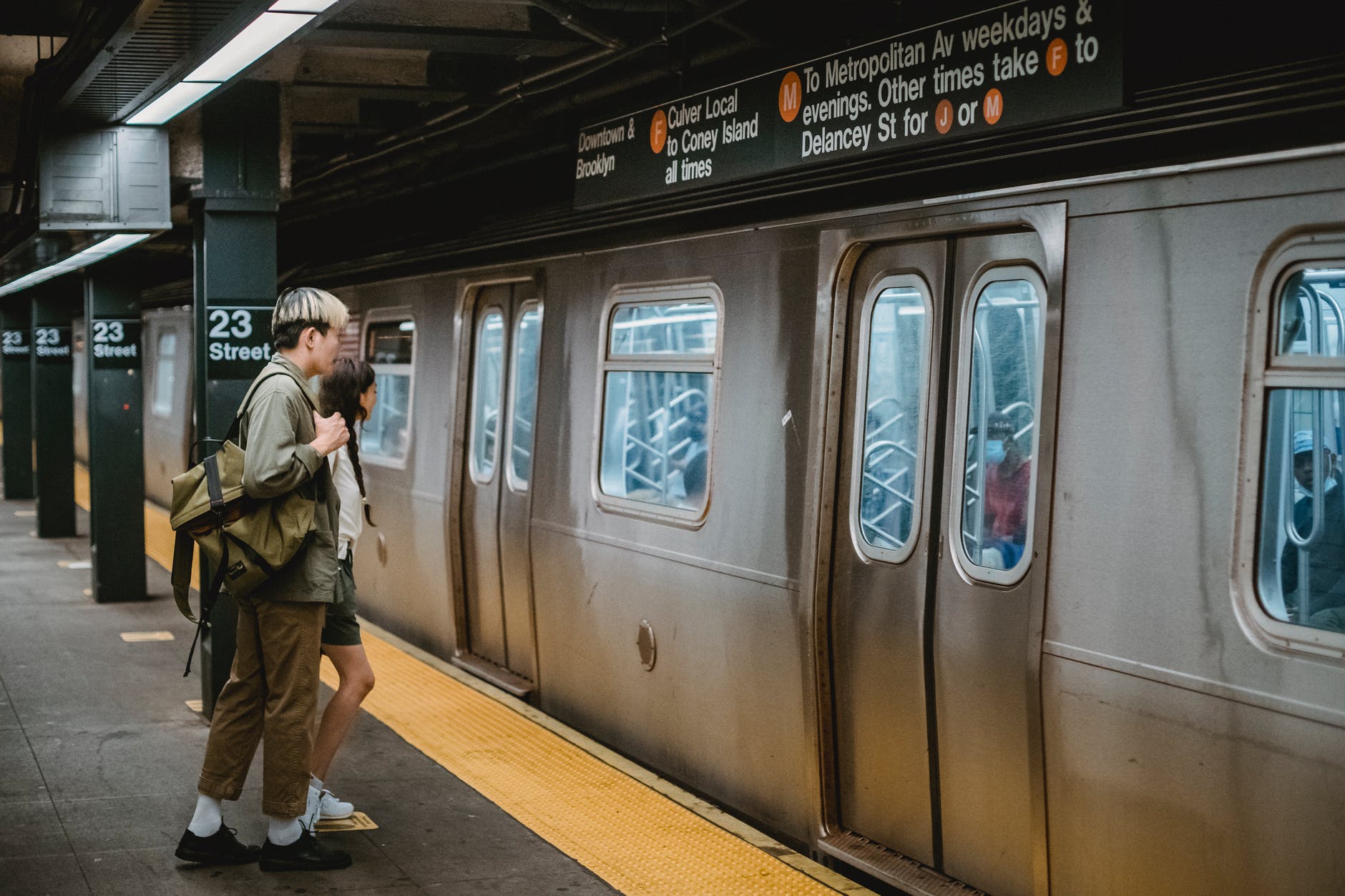
Looking at those who continued to use mass transit during COVID-19 helps raise the question of who public transit should serve:

Photo by Samson Katt on Pexels.com

Yes, public transit ridership dropped like a stone after many places instituted stay-at-home orders. Americans took 186 million transit rides in the last week of February 2020, according to data compiled by the American Public Transit Association; a month later, that number had fallen by 72 percent, to 52.4 million. At the Port Authority of Allegheny County, which operates in the Pittsburgh area, ridership fell 68 percent.

Who kept riding? In a country where race is tied to economic opportunity and geography, transit riders have long been disproportionately low-income and people of color. Maybe it shouldn’t have been a surprise, but they were the riders who stuck around. An analysis from the APTA found that white men were more likely to have given up transit during the pandemic; people of color, people who spoke Spanish, and women did not…

But US public transit has generally focused on commuters, especially those with traditional 9-to-5 schedules, who travel between city fringes and downtown business districts—riders who are less likely to be low-income and more likely to be white. That’s despite the fact that, even in the biggest cities, where transit use is more common, just half of pre-pandemic trips were to and from work. In smaller systems, the share is even less. The Port Authority of Allegheny County isn’t an exception. “Our system is very downtown centric, and it has historically relied very much on the commuter,” says Brandolph, the spokesperson. As a result, service within cities, serving people with less-regular work schedules or who took transit for other purposes, got short shrift.

That age may be over, says Alex Karner, who studies transportation equity as an assistant professor at the University of Texas at Austin’s School of Architecture. “The pandemic really exposed the truth that there are people for whom public transit is a vitally important public service,” he says. He says agencies now realize they will no longer be able to rely on peak-period commuters. When Urban Institute researchers surveyed 73 US and Canadian agencies on what service might look like in a “post-pandemic” era, more than half said they thought “peak period” travel would decrease. Nearly 70 percent said white-collar workers would take fewer rides. So transit agencies must decide what the new normal will be—and who it will serve.

In a country devoted to driving, those who have alternatives to mass transit to get to work will use those. Additionally, there is a class element to how mass transit is used and regarded and COVID-19 made work from home possible for some and not others.

The underlying assumption here appears to be that public transit cannot or cannot easily serve both groups of users. One aspect of this is that underlying patterns of residential segregation in cities and urban areas mean potential riders live in different locations. Additionally, later parts of the story cited above highlight the money mass transit systems have at the moment due to federal funds.

In the long run, when wealthier residents are asked to devote more funds to mass transit for equity and those who need it, will they agree? In Chicago, this has manifest in limited mass transit service in some areas compared to others. The new federal money means the Red Line can be extended on the South side. How far can efforts go? In other metro areas in recent years, wealthier suburbanites (see Nashville) have rejected efforts to expand mass transit. When suburbs are increasingly diverse and home to poorer residents, is there will to have consistent mass transit service?

Thinking about probabilistic futures

When looking to predict the future, one historian of science suggests we need to think probabilistically:

Photo by Tara Winstead on Pexels.com

The central message sent from the history of the future is that it’s not helpful to think about “the Future.” A much more productive strategy is to think about futures; rather than “prediction,” it pays to think probabilistically about a range of potential outcomes and evaluate them against a range of different sources. Technology has a significant role to play here, but it’s critical to bear in mind the lessons from World3 and Limits to Growth about the impact that assumptions have on eventual outcomes. The danger is that modern predictions with an AI imprint are considered more scientific, and hence more likely to be accurate, than those produced by older systems of divination. But the assumptions underpinning the algorithms that forecast criminal activity, or identify potential customer disloyalty, often reflect the expectations of their coders in much the same way as earlier methods of prediction did.

Social scientists have long hoped to contribute to accurate predictions. We want to both better understand what is happening now as well as provide insights into what will come after.

The idea of thinking probabilistically is a key part of the Statistics course I teach each fall semester. We can easily fall into using language that suggests we “prove” things or relationships. This implies certainty and we often think science leads to certainty, laws, and cause and effect. However, when using statistics we are usually making estimates about the population from the samples and information we have in front of us. Instead of “proving” things, we can speak to the likelihood of something happening or the degree to which one variable affects another. Our certainty of these relationships or outcomes might be higher or lower, depending on the information we are working with.

All of this relates to predictions. We can work to improve our current models to better understand current or past conditions but the future involves changes that are harder to know. Like inferential statistics, making predictions involves using certain information we have now to come to conclusions.

The idea of thinking both (1) probabilistically and (2) plural futures can help us understand our limitations in considering the future. In regards to probabilities, we can higher or lower likelihoods regarding our predictions of what will happen. In thinking of plural futures, we can work with multiple options or pathways that may occur. All of this should be accompanied by humility and creativity as it is difficult to predict the future, even with great information today.

View housing – and America? – as “a country of 384 metro areas”

Housing is all about location so why not view it as a metro by metro issue?

Photo by Maria Orlova on Pexels.com

When it comes to housing, it might be better to think about the U.S. as a country of 384 metro areas (plus 50 million Americans who don’t live in places big enough to qualify as a metro area) rather than one continuous country. In 2021, the U.S. population grew just 0.1% – the lowest annual expansion rate since our nation’s founding. But housing dynamics are best viewed through the different metro areas that are growing and shrinking. Of the 384 metro areas, 72 had declining populations in the decade leading to 2020, according to the Census.

The general argument makes some sense: supply and demand for housing depends on the metropolitan region. I have lived in one of these regions that has very limited demand for housing and experienced numerous foreclosures in the late 2000s. In places such as these, housing is cheap and plentiful – but there are relatively few people who want to move there and, if they do, there is limited desire to rehab older homes. On the other hand, the activity in particular housing markets – such as the coverage of housing and population in Manhattan and San Francisco during COVID-19 – draws all sorts of attention because of the prices and demand. All of this contributes to why housing is difficult to address at a national level.

More broadly, seeing the United States as a collection of metropolitan regions (or expanded city states?) may make some sense. For example, the 9+ million people in the Chicago region may see themselves as more of a collective than describing people from Illinois or people from the Midwest. These people share a particular housing and jobs market, common sources of information, entertainment options, a transportation network, and regional forces.

Of course, some regions may be more like other regions. Scholars have examined some of these broader collections, such as Rust Belt or Sunbelt regions or immigrant gateways, or used particular cities as models – particularly Chicago, New York, and Los Angeles – by which we can better understand all cities and regions. Yet, even these regions that share common characteristics have particular histories and current realities that would help set them apart from other.

All of this gets at an ongoing issue in sociology and other disciplines: at what point is it worthwhile to group phenomena together because of common traits or is it better to leave them as distinct entities because of their differences? There are both common traits in and a lot of variation among the 384 metro areas (plus all the other people living outside metro areas). At least for housing, it is tempting to treat each market as unique even as there are common patterns.

Adjusting housing for single-person households?

With the increase of single-person households in the United States, it raises questions about housing:

Photo by cottonbro on Pexels.com

The difficulties of living alone tend to lie more on a societal level, outside the realm of personal decision making. For one thing, having a partner makes big and small expenditures much more affordable, whether it’s a down payment on a house, rent, day care, utility bills, or other overhead costs of daily life. One recent study estimated that, for a couple, living separately is about 28 percent more expensive than living together.

These efficiencies are an inherent feature of sharing costs with other people, but the barriers to living alone, for those who want to, would be much lower if housing (and health care, and education) weren’t so expensive. Moreover, the types of housing that are most commonly available for one person typically privilege privacy over togetherness, but the two don’t need to be mutually exclusive. DePaulo has studied communities where single residents have their own spaces, but also plentiful shared areas with “the possibility of running into other people.” If you need to, say, move heavy furniture or get a ride somewhere in an emergency, your neighbors are easy to reach. More such options would make solo life easier.

With the rise in housing prices, the barrier to entering the housing market keeps increasing. A single-person household has fewer potential resources to draw upon.

Additionally, a good portion of housing is geared toward families or larger households. While some locations have plenty of smaller units – think studios to two bedroom units – other locations have larger residences. For example, suburbs are often full of single-family homes with 3+ bedrooms and more square feet.

Finally, housing in the United States is often tied to ideas of familial bliss. Those same private suburban homes are meant to enhance family life. Residences provide private spaces for nuclear families. They may have outdoor space for kids to play in and adults to use. Homes are a symbol of success and can provide a good long-term return on investment. Can a single person still enjoy and benefit from a house? Yes, but this may not be the typical image of life in a single-family home.

The factors affecting housing in the Chicago region in 2022

Several experts suggest housing prices will continue to rise in the Chicago area in 2022 but not at the same rate as they did in 2021:

Photo by RODNAE Productions on Pexels.com

Rather, changes in home price growth, the supply of homes for sale and upticks in rock-bottom interest rates are more likely to stabilize the market after an unpredictable 2021, they said. That likely won’t mean an end to competition or high prices — and it doesn’t bode well for first-time homebuyers — but the market could ease up compared with 2021…

In the nine-county Chicago metro area, the median home sale price from January to November was $300,000, up nearly 12% over the same months in 2020, according to the Illinois Association of Realtors…

Prices are likely to rise next year, but won’t continue the exponential growth of 2021, said Daniel McMillen, head of the Stuart Handler Department of Real Estate at the University of Illinois at Chicago. Without an influx of new residents to the area or big increases in incomes, that growth will become unsustainable, he said…

Homebuyers are continuing to look for amenities like home offices and workout areas, Melbourne said. Kitchens are a priority. Condo-buyers are looking for bigger units, rather than one-bedrooms.

The pressure from COVID-19 moves will hopefully subside. Then, the more regular patterns in Chicago area real estate might take over again. There are at least several interrelated factors:

  1. Limited population increases in the Chicago region. This reduces demand.
  2. Uneven development within the region where some neighborhoods and suburbs will be popular and others not. Prices will go up in desirable places.
  3. Construction of new residences has been down. What kind of units will be built? If recent trends hold, it will be housing aimed more at wealthier residents. Additionally, these units will be constructed in some locations and not others.
  4. If there is a long-term shift in what homebuyers and renters want from units, does this significantly shift demand? Continued or more working from home has the potential to affect the individual and collective experience of places.
  5. The particulars of certain communities. Communities understand themselves as having certain characters and prioritize particular goals. Local regulations could incentivize or discourage certain kinds of development.

There are numerous factors affecting housing to pay attention to amid changing conditions.