Chicago’s population grew in the 2010s!

Census 2020 data shows Chicago’s population increased in the last decade:
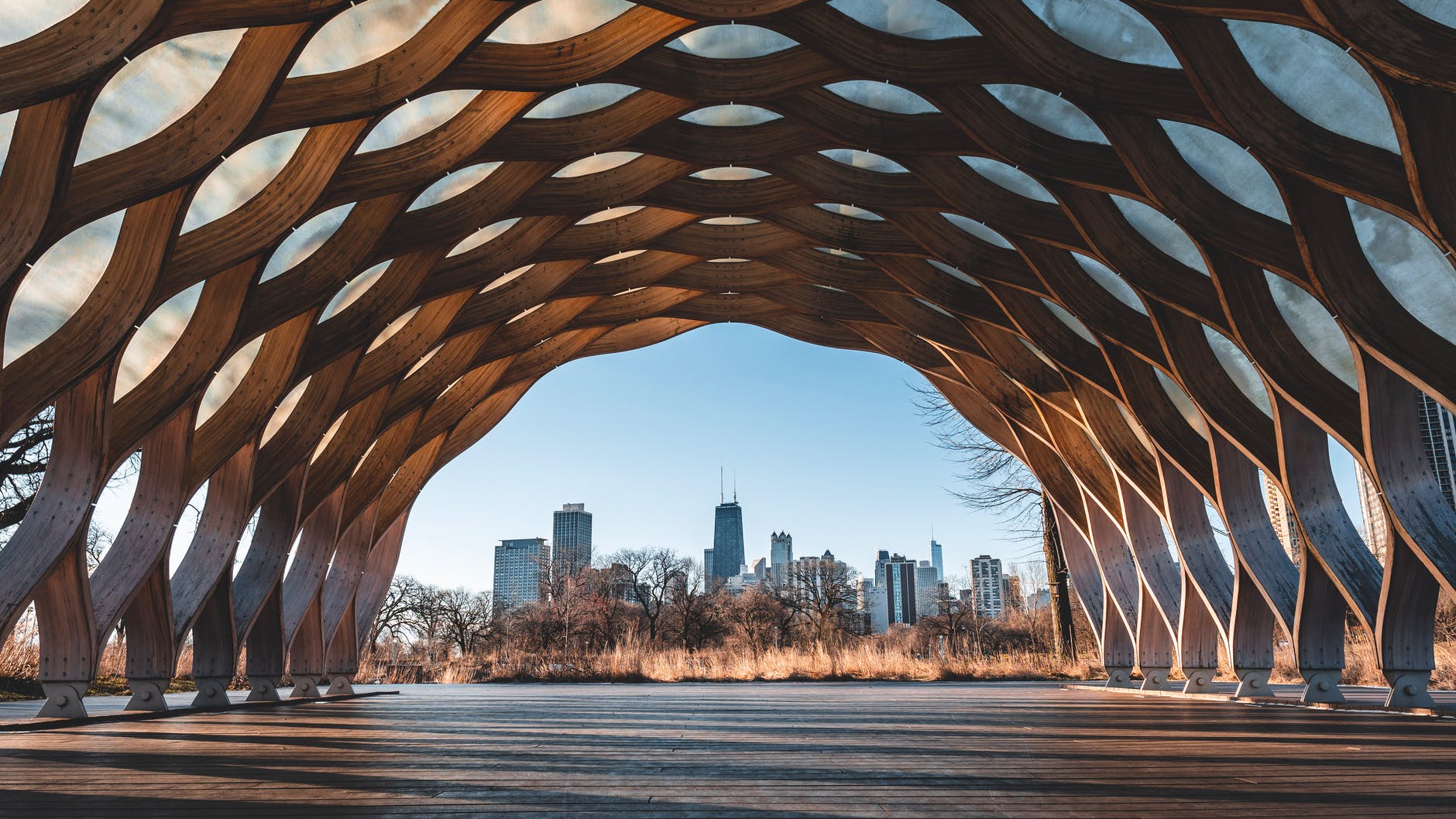
Photo by Chait Goli on Pexels.com

The decennial population count put Chicago’s total at 2,746,388 residents — a 1.9% increase over the 2010 census. The six-county region grew to 8,445,866 people — a 1.6% increase over a decade ago.

But perhaps the most stark statistic was Chicago’s plummeting Black population, which decreased by 84,738, a drop of nearly 10%. The number of Black Chicagoans now stands at 787,551 down from more than 1 million 20 years ago…

Chicago’s overall population gain is in striking contrast to the previous decade, when the city lost 200,000 residents, a 6.9% decrease. Just as eye-catching are the stagnant suburban numbers, as population growth in suburban Cook and the five collar counties stalled to what is easily the slowest rate since 1950, the data showed…

“Today’s census info shows Chicago’s resilience in the face of unprecedented challenges: privacy concerns, the Trump Admin’s fear-inducing policies targeting immigrants and a global pandemic,” Mayor Lori Lightfoot said in a statement. “We’re digging into the data, but today we celebrate the growth of our incredible city.”

As Mayor Lightfoot notes, growth is good. Population growth implies thriving, more business, an attractive location. Chicago has faced a declining population since the start of the postwar era. From the second most populous city to third and now with Houston growing quickly…but for now Chicago’s status has improved.

The rest of the article includes interesting hints of other related population changes including a lower percentage increase in the Chicago suburbs, a shrinking Black population in Chicago, and a declining population in Illinois. There will be more to find out, discuss, and formulate plans in response to with more specific data.

Cities as “a bulwark against disaster”

A review of a new book of essays about cities includes this discussion of how cities can hold up against disasters:

Photo by Nextvoyage on Pexels.com

Mattern’s deft dissection of metaphors for cities shows that when they’re misguided, they point to a failure not only of imagination but of a city’s ability to carry out its chief function—as a bulwark against disaster. Humans build cities as fortresses against failure: economic collapse, natural catastrophe, human venality and cowardice. The city walls keep those things out, when they work. If houses are, as the architect Mies van de Rohe said, “machines for living,” then cities are places where those machines get daisy-chained into a society. Cities are machines for cooperation, and survival.

Last summer, the disasters of climate change and disease pointed at the ways those machines could fail. The past year has made it clearer than ever that economic and racial inequities around the world, and especially in the United States, have imminent, deadly consequences. The warning lights are all flashing red: A conversation about cities can no longer be about the invisible data of surveillance cameras and stock trades. It has to be about the visible, more human-scaled construction of something better. The built environment can’t be an accident anymore, because that leads to catastrophe. We don’t live in a metaphor. “The built environment is the product of so many agencies and institutions, often working in the background,” Mattern says. “It’s hard to localize responsibility for that.” As she writes, cities aren’t mere computers. but I might still deploy a facile idea from that metaphor: Justice and survival now depend on cities getting a serious upgrade to their firmware.

Cities are often celebrated for what they bring or expand. Think of the wealth generated, the culture produced, the diversity experienced, the large population nurtured. Cities can be places of opportunities and change.

The quoted section above presents the flip side of this. The bringing together of people, activity, and resources helps ensure that difficult times do not wipe out human activity. People can work together to make things happen, even in the face of problems. In a more spread out landscape or with lower densities, humans might not be able to overcome these issues.

It is good to keep both of these features of cities – what they enable and what they limit – in mind. In the United States, conversation can often turn to the unique issues that cities face. Indeed, there might be societal and environmental issues that arise because of cities and then it remains to be seen how cities can address them. However, focusing on urban crises of the time can prevent us from seeing cities in a broader perspective.

Is Visa a network more than a credit card?

Visa has a new campaign where they say they are a network. Here is what it looks like on their front page yesterday:

What is a social network? Here is how one sociology source talks about social network analysis:

Social network analysis is a way of conceptualizing, describing, and modeling society as sets of people or groups linked to one another by specific relationships, whether these relationships are as tangible as exchange networks or as intangible as perceptions of each other.

Visa argues that they connect people. Because people can use Visa at a wide range of stores, restaurants, and other settings, this brings people together. Imagine all of these organizations as different nodes in a network and Visa provides the connecting link. Without Visa, they would not connect.

Yet, is the social network sustained by Visa or used by Visa? Now that the network exists, Visa claims they are the network but similar things could be said for Mastercard or paper money. Without Visa, would many of these actors still connect, perhaps through other economic means?

It would be interesting to know whether and/or this economic network facilitates other kinds of network interactions. Does Visa use lead to new social networks? Is this not just about economic exchange but also exchange of information, experiences, and culture? This gets at larger processes, like globalization, that depend on familiar economic means across places.

Solving the shipping logistics of tiny houses

This particular tiny house might be notable because Elon Musk was an early recipient but it has another claim to fame: better ways to ship the tiny house.

Photo by Pixabay on Pexels.com

Well, he reportedly lives in the Casita, a $49,500 375-square-foot unit created by Las Vegas-based Boxabl…

According to Tiramani, other prefab home makers struggle with one glaring issue: shipping logistics.

But unlike other prefab homes, the Casitas can be folded down from 20 feet to about 8.5 feet while it’s being transported on a truck or towed by a pickup truck…

So when the Casita arrives at its final destination, the home just needs to be unfolded (which takes a few hours) and then attached to its foundation and utilities, before it’s totally move-in ready.

This sounds like an Ikea like solution to furniture: get the house down to a smaller package so that it can be easily transported. Then, at the location, you assemble the product. All of this cuts down on costs. Do not underestimate the importance of shipping and logistics; for example, companies like Sears, Walmart, and Amazon mastered shipping and logistics in ways that helped them sell a lot of goods.

More broadly, the mass production, easier shipping, and modular capabilities of such homes offers lots of opportunities. Mass produced housing as we know it – think Levittowns and large builders constructing subdivisions of suburban homes over months – has endured much criticism. At the same time, this mass produced tiny house comes in a more reasonable price point, could be available to more people, and could be customized. There is still an issue of having people to put these homes together and having land; this might tie this mass production to tiny house subdivisions or clusters.

Facebook as the home for religious congregations?

Facebook is interested in partnering more with religious congregations and becoming the online home for their activity:

Photo by Luca Sammarco on Pexels.com

Facebook, which recently passed $1 trillion in market capitalization, may seem like an unusual partner for a church whose primary goal is to share the message of Jesus. But the company has been cultivating partnerships with a wide range of faith communities over the past few years, from individual congregations to large denominations, like the Assemblies of God and the Church of God in Christ.

Now, after the coronavirus pandemic pushed religious groups to explore new ways to operate, Facebook sees even greater strategic opportunity to draw highly engaged users onto its platform. The company aims to become the virtual home for religious community, and wants churches, mosques, synagogues and others to embed their religious life into its platform, from hosting worship services and socializing more casually to soliciting money. It is developing new products, including audio and prayer sharing, aimed at faith groups…

Many of Facebook’s partnerships involve asking religious organizations to test or brainstorm new products, and those groups seem undeterred by Facebook’s larger controversies. This year Facebook tested a prayer feature, where members of some Facebook groups can post prayer requests and others can respond. The creator of YouVersion, the popular Bible app, worked with the company to test it…

They decided to try two Facebook tools: subscriptions where users pay, for example, $9.99 per month and receive exclusive content, like messages from the bishop; and another tool for worshipers watching services online to send donations in real time. Leaders decided against a third feature: advertisements during video streams…

“Consumer isn’t the right word,” he said, correcting himself. “Reach the parishioner better.”

Doing church and religion online is well established and not going away. Yet, as the article notes, this raises a whole host of issues. Here are a few of my thoughts in response:

  1. I first noticed the importance of Facebook for multiple congregations when working with data based on congregational websites. Many congregations have websites, of varying degrees of sophistication and presentation, but not all. Some of those same congregations with websites also have Facebook pages and some without websites have Facebook pages. Do congregations really need both? Do they serve different audiences? The advantage of being on a social media platform is that people are already there (as opposed to searching for or typing in a website) and it offers the opportunity for interaction (usually not possible on a website).
  2. This makes sense from Facebook’s end as religious congregations tend to be durable social groups. If there are particular services Facebook can offer (such as helping congregations gather funds), they can gain a sizable market share of religious interaction and gathering.
  3. The religious people interviewed for the story suggested social media was really good for evangelism or reaching out to people. Yet, it is then easy to slip into a particular approach to people – see the conflation of “consumer” and “parishioner” above – and possibly difficult to transition from online interaction to embodied interaction. Worshiping online fits with many American religious features such as individualism and voluntary association but long-standing concerns about helping people move from an individualistic or response-to-evangelism faith to something deeper will continue in this model.
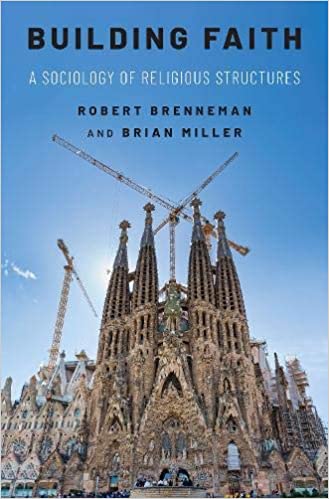
  4. I have lots of possible thoughts on how online religious gatherings function compared to meeting in a physical building shaped by the congregation. While my co-author and I did not address this directly in our book Building Faith, we argue buildings are very important for worship and fellowship.

Designing religious buildings, for function and flourishing

Building off yesterday’s post about the small percent of American buildings that are designed, I was reminded of the book Robert Brenneman and I released in 2020 about religious buildings. Here are several connections between our work and arguments about designing the American built environment:

  1. Different religious traditions and groups place a different level of emphasis on the importance of design and details for religious buildings. A number of Protestant congregations downplay the need for a designed building or the importance of a building. Take the megachurch with its theater/performance space sanctuary or the gym that could be home to services, meals, and basketball games. Yet, we found that congregations can put a lot of effort and energy into the process of constructing and maintaining their building. A building matters for religious groups and it has the potential to shape both the experience of the transcendent and the community for those who use and visit the building.
  2. In Chapter 5, Robert talked with three architects who work with different religious groups to realize their dreams for buildings. These architects have ideas about what religious buildings could or should look like and they interact with congregations to help produce what the congregation and the architect agree on.
  3. Congregations also have the ability to take the space they can access – determined by resources, networks, etc. – and add function and/or their own aesthetics. In Chapter 6, we have multiple case studies of congregations that took existing buildings and molded them to their purposes. Our cases included converting a former military barracks, a church building constructed by another congregation, a factory, and a high school.
  4. Enhancing and adapting buildings is an ongoing process for both religious buildings and congregations. Over time, a religious buildings could be home to multiple traditions and uses. A congregation may find that its needs evolve or they have different resources. Maintaining a beneficial built environment requires effort beyond the initial design.

Most of the American built environment is not designed

Sarah Williams Goldhagen argues in Welcome to Your World that despite what we know about the importance of the built environment, few American environments are designed:

Photo by Pixabay on Pexels.com

Most of what we see from our windows or in our surroundings has been constructed, but it was not really designed in any but a rudimentary sense of the word. In the United States, 85 percent of new construction – whether it is a new bridge, an urban park, a housing development, or a school addition – is realized at the hands of construction firms collaborating with real estate developers or other private clients. Many of these buildings bypass designers (a catchall term for professionals involved in designing the built environment, including architects, landscape architects, interior architects, urban designers, city planners, civil engineers, and other sorts of civil servants) completely, or employ them only cursorily, to review and stamp their approval on drawings… (xxi)

Why is this the case?

In the United States and in most other parts of the world today, many people believe that engaging a highly trained design professional is an unnecessary expense. True, wealthy individuals and corporations with plenty of assets do buy design to add beauty or prestige, and public and private institutions aspiring to serve as cultural stewards hire trained, informed professionals for complex structures such as skyscrapers. But this is not the norm.

The reason aside from financial considerations is that most projects in the built environment are commissioned on the basis of and judged by two complementary standards. Safety first: building codes and legislation and inspectors enforce standards that ensure that our bridges and buildings and parks and cityscapes will withstand gravity and wind, will weather the vicissitudes of climate and the ravages of time, and that their smaller features, such as electrical systems and stairways ,will not shock or trip people up. Function next: people expect projects to serve an institution’s or private individual’s daily needs both effectively and efficiently, which often means with as little expenditure of resources – space, time, money – as possible. (xxii)

In other words, design and beauty and their effects on people and their interactions are not considered as much as they should be. An emphasis on safety, initial cost, and function shortchanges what the built environment could offer in the long run. Thus, Americans often get uninspiring buildings and places.

This reminds me of three similar arguments:

  1. James Howard Kunstler makes a similar argument about the American suburbs. Why would people care about such places that offer so little in terms of the built environment?
  2. Sociologist Eric Klinenberg argues that public buildings and spaces could offer much to enhance community life if they were built with design and people in mind. For example, schools and libraries could be true gathering places that bring people together.
  3. Architect Sarah Susanka argues Americans do not need bigger homes but rather homes that are designed for them and that will enhance their life. Instead, the homes that Americans get – not designed by architects – are lifeless boxes.

Given the social forces at work leading to this, it would take substantial effort to have Americans value and employ better built environments.

Walking to go somewhere or interact with people in contrast to walking suburban loops for exercise

Several months ago, I heard Andrew Peterson discuss “The Mystery of Making.” As he talked about places and suburbs, he mentioned something about walking: suburbanites walk in loops instead of having walks that go somewhere or involve interacting with people.

Photo by Daniel Reche on Pexels.com

As a suburbanite who walks both for exercise and in order to get to places, this is a thing. This could occur for multiple reasons:

  1. The design of suburbs limits walking options. Because of the emphasis on single-family homes and separating them from other uses, suburbanites may not be able to access many places as pedestrians. Can they get to schools, libraries, stores, workplaces?
  2. Perhaps suburbanites do not want to interact with many people. Suburbanites want to avoid conflict and interaction happens when people want it, not necessarily because of proximity or an orientation toward the community. Add headphones/earbuds/smartphones to this and pedestrians can be in their own waking cocoon.
  3. This sounds like a focus on walking as exercise as opposed to walking as a means to accomplish other worthwhile goals. Such a focus sounds like it would fit with American emphases on efficiency or productivity.
  4. If you really need to get somewhere, Americans often opt for a car, even when the route is walkable.

Having more walkable places would likely help here but it does not necessarily guarantee sociability or walking as transportation.

Chicago as “the nation’s capital of deconversions” from condos to apartments

Henry Grabar suggests Chicago is ground zero for efforts to convert condos to apartments:

Photo by Timur Saglambilek on Pexels.com

Stories like this make Chicago the perfect place to understand how condos usually meet their end—not in a pile of rubble, but in a buyout that leaves some owners feeling lucky and others feeling betrayed. Lauren Kerchill, the owner of a Gold Coast unit overlooking Lake Michigan, was a holdout when investors came to buy out her building. After fighting to toss her condo board, she told Crain’s Chicago Business she was called “petty,” “greedy,” and “uneducated.” She just didn’t think she could find another home like hers nearby. In the end, she didn’t have a choice. Her neighbors voted to sell her building, at 1400 Lake Shore Drive, for $107 million in 2019—another record, this time the most expensive deconversion in the country…

But there’s another side to the story, in which deconversion is the only way out for condo owners stuck in deteriorating properties. In June, the collapse of Champlain Towers South in Surfside, Florida, drew attention to the challenges that confront condo boards as they assess structural damage and raise money for repairs. Maintenance bills for the Great American Condo Boom of the ’70s and ’80s are starting to come due in areas like South Florida…

While states like Florida, California, and Hawaii saw tons of new condo construction in the decades after the concept was established in the 1960s, Chicago saw a different kind of boom: older buildings becoming condos. Fearing rent control, facing declining profits, or saddled with obsolete prewar commercial space, landlords in Chicago raced to sell off their units in the 1970s. Yuppies and middle-class workers gobbled up these starter apartments, which provided an easy and cheap entry point to homeownership.

Fifty years later, those buildings are among the oldest condominiums in the country. Owners who have not kept on top of maintenance, and even some who have, sometimes find themselves facing massive repair bills.

It would be interesting to read more about the specific aspects of Chicago’s history, real estate market, and local regulations that play into the the number of condo deconversions in Chicago.

More broadly, this gets at two larger housing issues:

  1. How do deconversions fit with a larger American promotion of homeownership? Condos offer opportunities to offer homeownership opportunities in settings where the single-family home is less possible. But, given market conditions right now, is there now increased interest in having more rental units?
  2. While aging and the associated expenses is an issue for condo buildings, it is also an issue for many more housing units in the United States. What happens to older homes and residences when there is limited interest in repairing them or redeveloping the property? In wealthier communities and desirable locations, there are often developers and individuals interested in rehabbing or rebuilding structures. Hence, teardowns or new residences in suburban downtowns. Elsewhere, replacing or changing housing is a more arduous task.

The value of highlighting Starbucks, since 1971

In a Starbucks TV commercial, I noticed the company notes it was founded in 1971. Here is a logo from their website that highlights 50 years of business:

Starbucks.com

The company’s website highlights their heritage:

Our story begins in 1971 along the cobblestone streets of Seattle’s historic Pike Place Market. It was here where Starbucks opened its first store, offering fresh-roasted coffee beans, tea and spices from around the world for our customers to take home. Our name was inspired by the classic tale, “Moby-Dick,” evoking the seafaring tradition of the early coffee traders.

Ten years later, a young New Yorker named Howard Schultz would walk through these doors and become captivated with Starbucks coffee from his first sip. After joining the company in 1982, a different cobblestone road would lead him to another discovery. It was on a trip to Milan in 1983 that Howard first experienced Italy’s coffeehouses, and he returned to Seattle inspired to bring the warmth and artistry of its coffee culture to Starbucks. By 1987, we swapped our brown aprons for green ones and embarked on our next chapter as a coffeehouse.

Starbucks would soon expand to Chicago and Vancouver, Canada and then on to California, Washington, D.C. and New York. By 1996, we would cross the Pacific to open our first store in Japan, followed by Europe in 1998 and China in 1999. Over the next two decades, we would grow to welcome millions of customers each week and become a part of the fabric of tens of thousands of neighborhoods all around the world. In everything we do, we are always dedicated to Our Mission: to inspire and nurture the human spirit – one person, one cup, and one neighborhood at a time

Fifty years is likely a safe point to highlight a founding date as it is a nice round number, a half century. Sure, 49 or 51 years gets at the same idea but it does not have the gravity of 50. Yet, I could imagine two sides to whether promoting this date is helpful.

On one side, fifty years is a long time. Many businesses do not make it this far. Even fewer companies are so long for so many years. Highlighting the date implies permanence, tradition, stability. Starbucks is not just a passing trend; they are good at what they do, they have been around five decades, and hope to be around for many more.

On the other side, Americans tend to like upstarts and novelty. Does fifty years imply old age and lack of innovation? Starbucks is established while other successful companies are offering new models and products. There are Starbucks locations everywhere but once companies like Sears or Woolworths also thrived.

Even as the company celebrates 50 years, companies are not permanent. Perhaps there is a time when fast food in general no longer exists or people can get similar food products at home. Or, Starbucks does something internally that causes issues. Or who knows what. Does it reach 75 years or 100 years, other round milestones worth celebrating? It is hard to know now; Starbucks will keep going until it doesn’t.