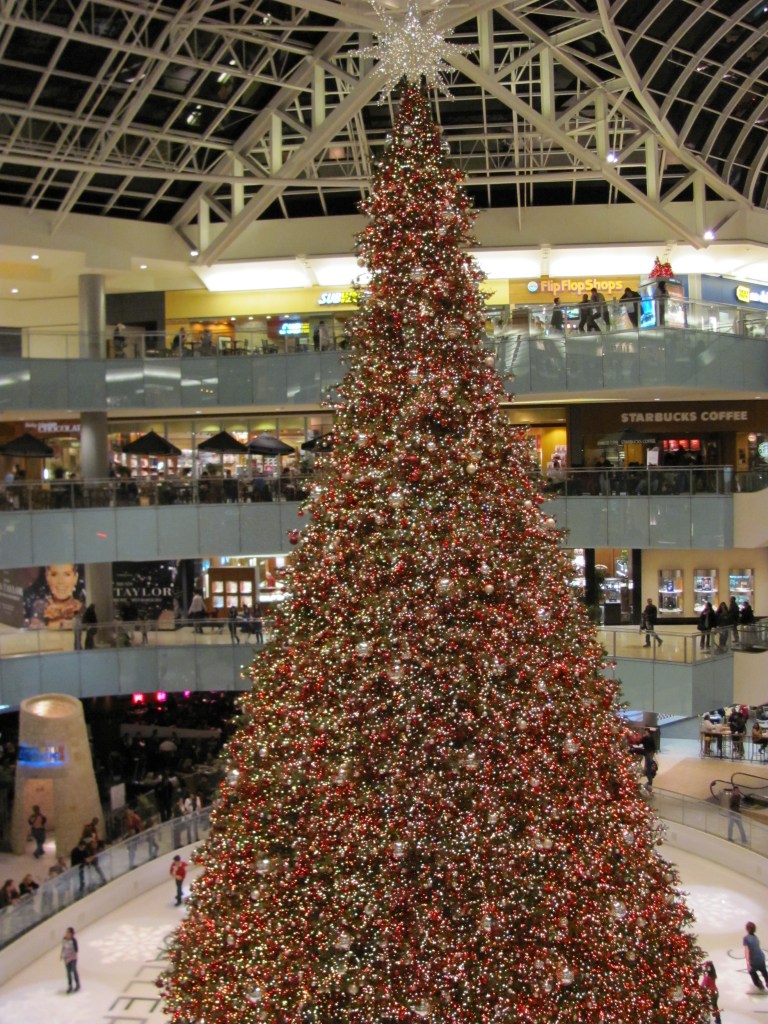
Americans like shopping. And this year, even amid COVID-19, the shopping will go on. But, it will take a different form for many as the busy stores and shopping malls will be replaced by online shopping and shopping trips intended to avoid contact with people.
There are two components to shopping at Christmas time. First, Americans generally favor consumerism and can make commodities out of lots of things. Second, shopping can involve being around other people. In a large society where private lives are the norm, shopping near people in an excited holiday atmosphere feels like being part of something bigger. Even if you have no interactions with anyone else outside of your shopping group, simply being in the same time and place can be exciting.
Just as religious rituals can produce collective effervescence according to sociologist Emile Durkheim, so too can Christmas shopping. It may be based on consumerism, have no touch of the transcendent, and involve no direct social interaction with other people. Yet, shopping at Christmas is a different kind of experience than shopping for different kinds of items at different times of the year.
Shopping online produces no such collective effervescence. A person and a screen. The social energy is limited. Of course, one could head to social media to share their online shopping exploits. But, it is not the same as being physically near to other people in a space designed to push you toward Christmas cheer and more spending.
Yet, I would guess that many of the features of modern life that people enjoy are the result of these complex systems. Streaming Netflix to a screen. The availability of modern health care. Being able to get fast food. Modern transportation systems. Widespread social change. All of these require the working together of numerous systems, organizations, and people. All might have been hard to imagine even just a century ago.
Additionally, this complexity is a boon for social scientists and researchers trying to get a handle on it all. The discipline of sociology arose in the nineteenth century as numerous changes – urbanization, industrialization, migration, modern nation-states, ways of thinking based on rationality and science, and more – came together. The modern university also developed relatively recently. The complexity of society plus the speed of social change begs for analysis, looking at patterns, trying to understand what we have helped create.
For now, we can give thanks for what complex society does bring – and work to address its many ills.
Among other interesting tidbits about how data was collected for the 2020 census, here is why it is helpful for census takers to be from the community in which they collect data:
As it turns out, the mass mobilization of out-of-state enumerators is not just uncommon, but generally seen as a violation of the spirit of the census. “One of the foundational concepts of a successful door-knocking operation is that census takers will be knowledgeable about the community in which they’re working,” Lowenthal explained. “This is both so they can do a good job, because they’ll have to understand local culture and hopefully the language, but also so that the people who have to open their doors and talk to them have some confidence in them.”
Going door to door is a difficult task. Some connection to the community could help convince people to cooperate. And when cooperation equals higher response rates and more accurate data, local knowledge is good.
As the piece goes on to note, this does not mean that outside census takers could not help. Having more people going to every address could help boost response rates even if the census takers were from a different part of the country.
I wonder how much local knowledge influences the response rates from proxies, other people who can provide basic demographic information when people at the address do not respond:
According to Terri Ann Lowenthal, a former staff director for the House census oversight subcommittee, 22 percent of cases completed by census takers in 2010 were done so using data taken from proxies. And of those cases, roughly a quarter were deemed useless by the Census Bureau. As a result, millions of people get missed while others get counted twice. These inaccuracies tend to be more frequent in urban centers and tribal areas, but also, as I eventually learned, in rural sections of the country.
It is one thing to have the imprimatur of the Census when talking with a proxy; it would seem to be a bonus to also be a local.
More broadly, this is a reminder of how an important data collection process depends in part on local workers. With a little bit of inside knowledge and awareness, the Census can get better data and then that information can effectively serve many.
If people gather for Thanksgiving, experts are advising they meet and eat outside. Here is one example:
How much safer is an outdoor meal than an indoor meal?
Much, much safer. Almost all transmission of this virus happens indoors.
Even if people are close together?
Eating outdoors doesn’t mean you’re invincible. Still try to stay six feet apart. If you huddle together around a cramped table and have close, face-to-face conversations with the people next to you, you could absolutely infect them.
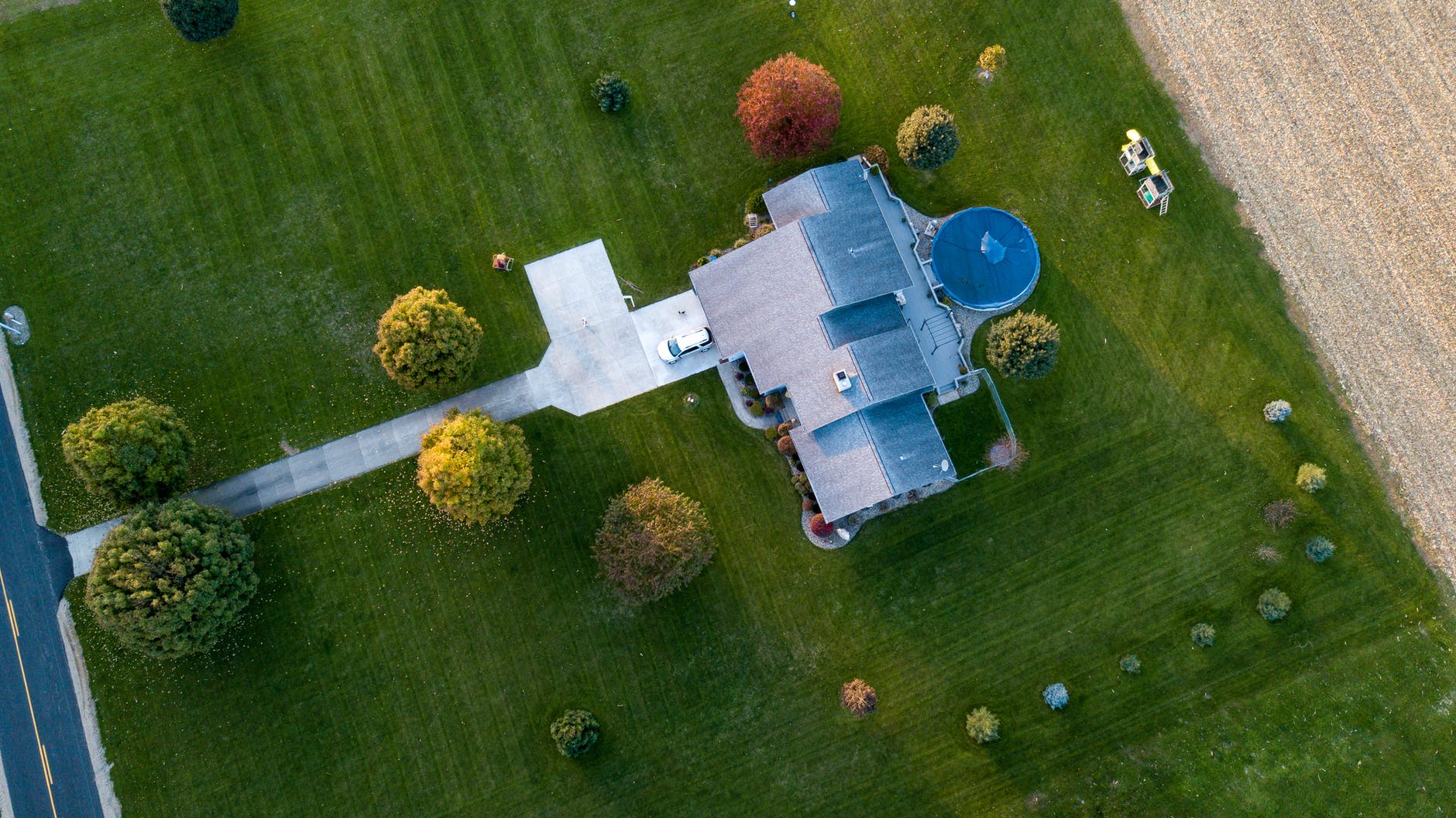
This is time for the patio or lawn, found in millions of single-family homes and in many suburbs, to shine. The lawn does not just have to be a status symbol; it can confer health benefits by allowing people to spread out.
This is not the first time that the suburban lawn was said to boost health. In the gathering urbanization of the nineteenth century, suburban lawns provided space away from polluted and noisy cities. Listening to the radio the other day, I again heard mentioned how River Forest, Illinois was intentionally built with features meant to highlight nature.
Before COVID-19, the suburban lawn was also said to aid good health. It helps people get outside to work and move around (canceled out by the use of gas-powered equipment?). It encourages kids to play in a safe space. Depending on the season and/or weather, the patio and yard can act as an outdoor extension of private living space.
Now, the lawn and patio can be a private spot away from COVID-19. Outsiders are not welcome. The fresh air, breeze, and distance can limit transmission. Nature, or “nature” in many suburban settings, can serve as an oasis. All that lawn and patio maintenance can be put to use. And, hopefully, people can stay COVID free.
I have gone through this process many times…and it still is not much fun. Here is what submitting a paper to an academic journal can look like:
Come to the point when you feel that you have said all that there is to be said and in a satisfactory way. Perhaps this comes in response to feedback from a previous submission or from your own thinking and conversations. This may have been a quick turnaround or a lengthy period of contemplation and rewriting. Time to find the submission page for a journal.
Go through the author’s guidelines for that particular journal. Even with commonly-used bibliographic formats and some consistency of how papers are put together, there might be changes or small details to attend to. Formatting ensues.
Time to submit the paper. Go through a process that looks similar across journals but might ask for slightly different information or in a different order. Get the details right and look over key parts of the paper again including the abstract and keywords. Approve your submission.
Time to sit back and wait. Will it make it past the editors? Linger in peer reviews? Come back with mixed reviews, get a revise and resubmit, or be accepted? In some ways, the publication process is just underway.
I understand why the process is what it is: each journal has its own approach as does each publisher. The publishing system is meant to provide peer review for academic work, helping to insure good research is published. Even going through the final steps for submission as outlined above can help crystallize arguments and writing.
But, simplifying the process, even within publishers or within disciplines, could help researchers feel better about their submissions. Some of this cannot be changed; it is still a vulnerable point to send off a manuscript into the great unknown and to reviewers who may or may not like what is there. Some of it can be changed: the basic details are usually the same even across venues.
A small town once stood on the riverbank, where the river bends before ending its journey at the lake. For several decades in the mid-1800s, the village of Singapore was a humming lumber and shipbuilding hub. Residents and sawmill workers processed the plentiful white pine trees of western Michigan, then loaded them onto schooners for Chicago and Milwaukee.
The founders of Singapore had big dreams. They envisioned their town, then located north of present-day Saugatuck on the southwestern Michigan shore, as the next important Midwestern city, rivaling the growing metropolises in Illinois and Wisconsin…
After the lumber trade waned and a series of fires roared through the area, leading to the destruction of many of Singapore’s houses, the town was abandoned. By 1875, according to Eric Gollannek, executive director of the Saugatuck-Douglas Historical Society, the lumber boom was over, the mills were dismantled and moved to St. Ignace, Michigan, jobs dried up and the village slowly disappeared.
Eventually, what was left of Singapore was buried beneath the sand.
The sand dunes of Lake Michigan are an underrated natural feature. Since I have seen them on top of a house or two at Silver Lake (see the image above), it is not surprising that they cover the remains of a town.
I would guess that the early decades of Midwest settlement is a ripe time for finding ghost towns or abandoned communities. Many early settlers had dreams that their town would prosper in the future. But, time, outside social forces, and internal decisions helped seal the fate of some places while others thrived.
The possible forces at work are numerous. Perhaps it was the changing of transportation technology; the coming of the railroad, the slowdown or rise in traffic along a road, shifting harbors and waterways. Perhaps it was the consolidation of residents or trading activity in one community as opposed to another. Perhaps it was the presence of a particular industry or the the decline of an industry. Ecological conditions can change as well, ranging from droughts to major storms to fires to human activity that changes the landscape in significant ways.
Today, it is hard to imagine that established communities of a particular size could disappear. Yet, history suggests this has happened before. It may not take sand dunes or cutting down many trees (something that happened all around Lake Michigan) but the communities of today are not guaranteed to be the communities of the future.
As the years drifted by, it took more and more voters per cluster for us to get a single voter to agree to an interview. Between 1984 and 1989, when caller ID was rolled out, more voters began to ignore our calls. The advent of answering machines and then voicemail further reduced responses. Voters screen their calls more aggressively, so cooperation with pollsters has steadily declined year-by-year. Whereas once I could extract one complete interview from five voters, it can now take calls to as many as 100 voters to complete a single interview, even more in some segments of the electorate…
I offer my own experience from Florida in the 2020 election to illustrate the problem. I conducted tracking polls in the weeks leading up to the presidential election. To complete 1,510 interviews over several weeks, we had to call 136,688 voters. In hard-to-interview Florida, only 1 in 90-odd voters would speak with our interviewers. Most calls to voters went unanswered or rolled over to answering machines or voicemail, never to be interviewed despite multiple attempts.
The final wave of polling, conducted Oct. 25-27 to complete 500 interviews, was the worst for cooperation. We could finish interviews with only four-tenths of one percent from our pool of potential respondents. As a result, this supposed “random sample survey” seemingly yielded, as did most all Florida polls, lower support for President Trump than he earned on Election Day.
After the election, I noted wide variations in completion rates across different categories of voters, but nearly all were still too low for any actual randomness to be assumed or implied.
This is a basic Research Methods class issue: if you cannot collect a good sample, you are going to have a hard time reflecting reality for the population.
Here is the part I understand less. This is not a new issue. As noted above, response rates have been falling for decades. Part of it is new technology. Some of it involves new behavior, such as ignoring phone calls or distrust of political polling. The amount of polling and data collection that takes place now can lead to survey fatigue.
But, it is interesting that the techniques used to collect this data are roughly the same. Of course, it has moved from land lines to cell phones and perhaps even texting or recruited online pools of potential voters. The technology has changed some but the idea is similar in trying to reach out to a broad set of people and hope a representative enough sample responds.
Perhaps it is time for new techniques. The old ones have some advantages including the ability to relatively quickly reach a large number of people and researchers and consultants are used to these techniques. And I do not have the answers for what might work better. Researchers embedded in different communities who could collect data over time? Finding public spaces frequented by diverse populations and approaching people there? Working more closely with bellwhether or representative places or populations to track what is going on there?
Even with these low response rates, polling can still tell us something. It is not as bad as picking randomly or flipping a coin. Yet, it is not accurate enough in recent years. If researchers want to collect valid and reliable polling data in the future, new approaches may be in order.
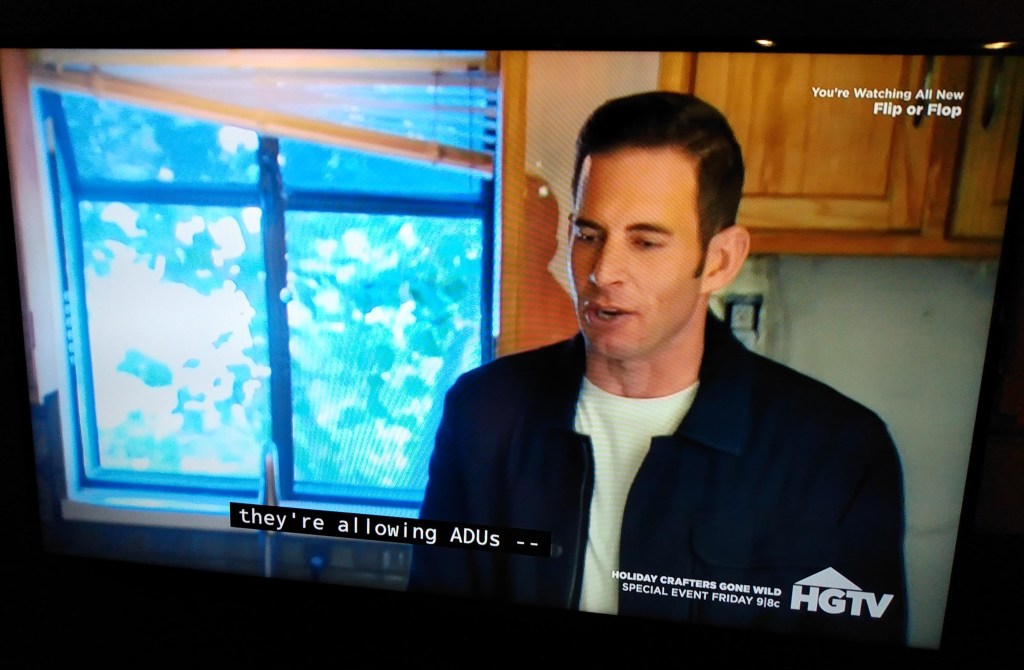
Last night’s new episode of Flip or Flop, Season 9 Episode 7, featured a home with an ADU (accessory dwelling unit). And this unique feature of the home offers a chance to make more money:
After Tarek and Christina realize the garage in the backyard is now a living space, Tarek lays out the argument: this is not just a studio space or a he/she-shed. It is possibly a rentable unit. This may make this property even more enticing.
This got me thinking. ADUs are supposed to help provide more housing units in more expensive markets like Portland and Los Angeles. Instead of building denser, taller housing in single-family home neighborhoods, ADUs take advantage of existing yard space, garages, or other buildings on residential properties.
But, while the ADUs might provide more housing, they may not necessarily provide housing that is that much cheaper. Take the example from Flip or Flop: with a home valued at over $1 million in North Hollywood, they estimated they could rent the studio ADU with a full bathroom and kitchen for $2,000 a month. How many people could afford this?
Further, such units could become a tool for residents and developers to generate more revenue. In such competitive markets, adding any kind of residential unit presents an opportunity. The ADU could enable a homeowner to generate money from their property. An investor interested in a single home or one with multiple homes could generate even more money with ADUs.
To truly provide housing that is more plentiful and at a reasonable price, it seems like a lot of ADUs are needed. They cannot provide as many units as large multifamily developments might. Yes, they do not disturb the existing character of a neighborhood much. But, if the ultimate goal is to broadly expand housing options, the occasional ADU in an expensive area might not be enough.
The vacant Sears store at the Fox Valley Mall could be razed early next year to make way for a three-building apartment development and kick off a new phase of life for the 45-year-old mall.
Aurora aldermen will vote next week on a request to rezone roughly 11 acres of the property along Route 59 side of the property to allow the buildings.
The buildings, each three stories tall, would have a total of 304 studio, one- and two-bedroom apartments…
A 2020 report for the city said that, including the closed Sears and Carson Pirie Scott department stores, 40% of the mall’s store space was vacant.
Adding residential units to shopping malls is a fairly common suggestion. With retailers in trouble, apartments fill the space more permanently, can address housing issues in communities, and could provide a ready population of potential customers for the nearby mall and other proprietors.
With the proposal working its way through local government, three things are worth watching regarding these apartments:
How, if at all, will the apartments be connected to the mall? If they are completely separate buildings and are not marketed as being right next to the mall, then they could be like any new apartments. But, perhaps the mall is a draw for those who might want to be close to shopping, an indoor walking site, and food options.
What kind of apartments will these be? Given their location, these will probably not be cheap apartments. In addition to being close to the mall, the apartments are near lots of other shopping and dining as well as potential employers, the location is just west of Naperville, and a busy Metra station is just to the north.
How much of the mall will survive within five or ten years? The apartments could help revive the mall area or help hasten its demise.
TikTok user @cyberexboyfriend is every realtor’s worst nightmare.
On his account, which boasts 32,000 followers and counting, he hosts a popular series in which he tears apart random McMansions he finds on Zillow.
It all started on Nov. 3, when @cyberexboyfriend posted a video captioned “roasting homes on Zillow.”…
Easily the funniest and most viral video in the series to date is the one in which @cyberexboyfriend critiques a $675,000 four-bedroom home, also located in Mckinney, Texas.
It is easy to criticize McMansions. They can have cartoonish features, ranging from turrets to garish facades to oversized garages to odd proportions. Much effort is put into their facades with less attention paid to other sides of the home. The interior may have some questionable choices. In an era of hot takes, social media, and concerns about housing and inequality, a quick skewering of a McMansion draws attention.
On the other hand, these real estate listings are for real homes. Numerous American communities, often wealthier suburbs, have McMansions. And at least a few people are willing to buy them.
Does this approach to McMansions help more people avoid purchasing such homes, either because the social stigma is potentially higher or because they are alerted to the problems with McMansions? Or, does it reinforce existing views people have about McMansions?
I have suggested before that if people had to choose between modernist homes and McMansions, they might choose McMansions. Those who criticize McMansions publicly are not likely to live in or near such homes. If you are against McMansions, you might also have concerns about sprawling suburbs and instead prefer denser suburban communities and cool styles like midcentury modern, interesting ranch homes, or older more traditional styles.
This may ultimately come down to taste in single-family homes based on social class, access to resources, and experiences with different kinds of communities. While political polarization in the suburbs is real, polarization by home style could be present alongside it.








 Legally Sociable