Converting suburban houses into group homes – but they cannot look like group homes

Multiple suburbs in the Chicago region allow for the conversion of suburban single-family houses into group homes for seniors or adults with disabilities. However, they generally agree that the conversion cannot alter the appearance of the home:

Photo by Dave Frisch on Pexels.com

A 2021 Northwest Municipal Conference survey of its members identified 14 suburbs permitting group homes for particular populations, largely those with disabilities.

However, the conversion of homes into assisted living centers for seniors is becoming increasingly prevalent. Schaumburg has seen two proposals in the past year alone. There are also online seminars offered to entrepreneurs looking to flip homes and turn them into assisted living centers, aimed at the nation’s aging population.

Regulations vary in towns that allow such conversions. Some require approval from a village board or city council, while other towns don’t require such approval because these uses are already allowed in its residential code. But all enforce rules against external changes to the houses that would identify them as group homes…

“You’ll be driving down a neighborhood and never know we’re there apart from a van picking people up or dropping them off,” said Little City Foundation CEO Rich Bobby…

While the intention of the homes is to blend in, a degree of engagement with neighbors is sought in advance to paint an accurate picture of those who are going to live there.

A common suburban story regarding proposed changes to houses might go like this: neighbors get wind of a possible change in a subdivision or residential area. They express concerns about such changes altering the character of the community. Perhaps there might be increased traffic, noise, and lights? They share that they moved into this location because it was a quiet, residential space. Changes to that format threaten their day-to-day experiences and their property values.

But what if the changes to that house or residence were minimal in nature? Or, as the regulations above suggest, the exterior of the home does not look any different and there is not a noticeable change in day-to-day life around the home? Would this allay all the concerns?

From this article, it sounds like concerns have been at a minimum thus far. The number of conversions is small. Perhaps there is a tipping point where multiple proposals in the same neighborhood or on the same straight might draw more attention. But if neighbors do not see significant changes on the outside, they might not have many issues.

Given the needs of the suburban population, I suspect more suburbs will face this particular issue in the coming years. Building large facilities can be difficult and costly. If converting homes to group homes can help serve residents and neighbors are okay with it, perhaps this will happen in a lot of places.

(This reminds of a 2013 book looking at affordable housing built in New Jersey where one of the goals was to design the multi-family housing units in a way that people passing by would not identify them as affordable housing. With some design work, this was largely accomplished and relatively few neighbors opposed the project.)

How young homebuyers say they will come up with a down payment

Earlier this year, Redfin research looked at how younger adults will find the money to purchase a home:

Photo by Feedyourvision on Pexels.com

More than one-third (36%) of Gen Zers and millennials who plan to buy a home soon expect to receive a cash gift from family to help fund their down payment…

Young homebuyers are also receiving help from family members in other ways. Roughly one in six (16%) Gen Zers and millennials say they’ll use an inheritance to help fund their down payment, and 13% plan to live with their parents or other family members.

Working to earn money is the most common way for young buyers to fund down payments: 60% report they’ll save directly from paychecks, and 39% are likely to work a second job, the most common responses to this question…

Just 18% of millennials used a cash gift from family to help fund their down payment in 2019, according to a Redfin survey from that time, and the share had only increased to 23% by 2023. Note that the 2019 and 2023 survey results noted here are for millennials only, while the 2024 results in this report are for millennials combined with Gen Zers. 

This is one way that wealth is passed from one generation to another. As the parents have resources (including possibly through the increase in value of their own residence), they can pass them along to their children at key moments to improve their prospects. And if parents do not have these resources, it would then take longer to amass a down payment.

One twist here is the suggestion that more parents are providing funds for down payments than in the past. The comparison is between 2019 and 2024. Were the numbers ever higher at some point in the past or perhaps higher among certain segments of the population?

What would it take for third parties to get in on this? Imagine a lending company says we will provide a large percentage of the down payment and you then owe us X amount of dollars when you sell the home at fair market value. I remember receiving some solicitations in the mail with a similar scheme for home equity loans; why not for down payments with bigger returns for the investors down the road?

Suburban redevelopment where on the same property 4 and 3 bedroom apartments are turned down, 1 to 2 bedroom apartments are approved

In consecutive years, developers brought two different proposals for redeveloping an almost empty set of suburban office buildings into apartments. The first was turned down, the second was accepted. One factor was the size of the proposed apartments. From the first proposal:

Photo by Miguel u00c1. Padriu00f1u00e1n on Pexels.com

At an initial public hearing in August, the developer indicated he would target grad students with young families. According to the original plan, each apartment would have four bedrooms.

“If the target market demographics is going to be students, that’s more like a dormitory, not a residence. It’s a residential hall, but it’s not what we would envision in a neighborhood such as ours,” nearby resident Roberta Stewart told the zoning board.

The developer modified the proposal after the zoning board expressed concerns over a lack of details and too much parking. The property now has 80 parking spaces, most of which fall within a flood plain.

The revised plan shows three-bedroom units with offices in both buildings. There’s an “unmet need” for that size apartment in the area, Che said last month.

From the second proposal:

The previous zoning request was ultimately denied by the council last November in part due to the use of nontraditional floor plans — originally calling for four-bedroom units — and a surplus of on-site parking spaces, according to city documents.

Under the current plan, the buildings would contain a dozen one-bedroom units and 10 two-bedroom apartments, totaling 22 units. The proposed rents are approximately $1,674 a month for a one-bedroom unit and approximately $2,000 for a two-bedroom, said Mike Mallon, founder of Mallon and Associates, who represents the developer.

“We believe that our proposed plan will meet the residential demand in the market,” Mallon told city council members earlier this month.

It does not sound like the idea of apartments is the problem. The suburb was working with a plan that “recommends low-density multifamily residential development and repurposing existing structures.” The issue was the size of the apartments or the kinds of residents. If this was student housing – pitched by the developer as “grad students with young families” – then neighbors expressed concerned about dorms. Big apartments will lead to too many people near single-family homes.

Where are suburban residents to find larger apartments? Which suburban communities are approving construction of apartments with more bedrooms? Are the only concerns about students? Both developers said there is a market for their units but I would guess relatively few suburban apartments under construction have four bedrooms.

The disappearance of unexpected visitors

How many people today show up unannounced at the residence of someone else?

Photo by RDNE Stock project on Pexels.com

The ring of the doorbell when you’re not expecting anyone is, at the least, odd. Above all in big cities, where distances between homes can be long and the act of going to see someone implies a certain amount of preparation to traverse the town. In far-flung neighborhoods, the chance that someone was merely in the area is low and the sound of someone at the door is more commonly tied to the arrival of a delivery person or a letter carrier. Unexpected visits are getting less common, be they from friends, family members or neighbors who show up unannounced with the aim of having a little chat.

Such encounters happen often in small urban centers and rural areas where neighbors don’t just share walls, but also, in a certain way, their free time. A lack of new residents can lead to deeper personal relationships with one’s existing neighbors that aren’t limited to a simple “hello” and “goodbye,” as they are in larger-sized cities. In contrast, social relationships that develop in the neighborhoods of major metropolises, particularly those groupings of persons who are tied together by nothing more than the simple fact that they share space, are in danger of extinction. Such are the claims of some neighborhood associations that are bearing witness to a massive exodus of local populations, supplanted by temporary neighbors, inhabitants of tourist apartments in which they rent rooms or the entire apartment and spend a short amount of time in the city. Rent increases that have taken place in recent years, added to the impossibility of saving up enough to buy one’s own home, are transforming the urban social balance.

As the article suggests, this is a massive shift from much of human history where people lived in smaller communities and tended to have closer ties with people around them. Today, we are more used to choice in selecting our relationships. Still, we encounter people we do not know regularly, whether that is looking at them from our moving vehicle or in a store or at a public event.

What if the future looks like a Black Mirror episode where people do not have to interact with anyone they do not want to? Or could technology provide us information about people as we pass near them?

What builders will do to try to move new houses in a slow housing market

With homes on their hands, builders have options on how to attract residents:

Photo by Life Of Pix on Pexels.com

A golden run for homebuilders is drawing to a close. When rising mortgage rates trapped many would-be sellers in their homes two years ago, builders turned out to be the big winners — if you wanted to buy a home, your best bet was probably new construction. One economist told me last year that builders were “the only game in town” in some areas. Builders not only offered a welcome alternative to the frozen resale market but could cut deals to make their homes even more appealing to the average buyer: Mortgage-rate buydowns, in which the builder pays the lender up front in exchange for lowering the buyer’s loan rate, can save a new homeowner hundreds of dollars each month.

Now, even with the freebies, builders are selling homes at a slower-than-expected pace as buyers grapple with worsening affordability, sharp swings in mortgage rates, and general uncertainty — people would rather sit on the fence than leap into a market with so many unknowns. With slower sales across the board, the number of homes on the market has climbed. There were 108,000 finished homes for sale at the end of September, some 48% more than at the same point a year ago. There were 258,000 homes under construction but not yet sold, another sizable figure — at the same point in 2019, there were about 194,000. Builders surveyed by John Burns Research and Consulting said they had an average of about 2.5 unsold homes in each of their communities in October, representing a 47% increase from a year ago. In October 2021, they reported only 0.4 unsold homes per community. Some of this increase is by design. Companies are building more homes “on spec,” or before they have a buyer, to shorten timelines and compete directly with the resale market. But there’s no question that builders have hit a snag.

The answer might seem obvious: Cut prices! But builders will “try a lot of other things first,” says Keith Hughes, an executive at the housing research firm Zonda. “And we’re not seeing drastic price drops virtually anywhere.” Buyers may not be flooding the market, but there are fewer homes out there, too. The number of available homes for sale at the end of October, according to Realtor.com, was about 21% lower than in the same month in 2019. Builders looking to move their product lean heavily on incentives — Lennar, one of the largest homebuilders in the country, said that the average sales incentives per home amounted to $48,100 from June through August, compared with $36,400 a year earlier. Builders are also completing smaller floor plans to match the needs of cost-conscious consumers.

Builders have another fallback: the rental market. Over the past decade, homebuilders have forged relationships with companies that purchase thousands of single-family homes and manage them as rentals — if a builder were looking to move a portfolio of homes, they might find a willing buyer in a company like Pretium, which owns nearly 100,000 homes, or Invitation Homes, which manages a portfolio of more than 85,000 homes. Builders have also started developing entire communities of single-family homes to be rented out rather than sold, a strategy known as build-for-rent. The idea is to meet the demand of renters who want their piece of the American dream — a home with a yard in a safe neighborhood with good schools — but either can’t make a purchase or don’t want to. Builders can sell to a guaranteed buyer willing to purchase in bulk or hold on to the homes and enjoy the steady returns of rental income.

How about another option (and this does not change the houses that have already been built): build cheaper units in the first place. With the decline of starter homes, is it time for more builders to construct homes that meet these criteria?

Or how about channeling more effort into multi-family housing? There will continue to be a market for single-family homes in a country that idealizes them but there is also demand for more housing in numerous places and multi-family housing provides more units in the same amounts of space.

I would also be interested to hear how builder revenues and profits are affected by these changes. If builders have found ways to limit the costs by renting, are they losing money or are they making less money than they would like?

City voters changed more for Trump in 2024 compared to support in suburbs and elsewhere

An analysis of voting data for president by county suggests Trump picked up more support from cities this election compared to changes in suburban voting:

Photo by Todd Trapani on Pexels.com

Let’s start with geography. Urban counties showed a bigger swing toward Trump than suburban and exurban counties, smaller metros, and rural areas. Of course, Harris did best — as did Biden four years earlier — in urban counties, but the 10-point swing toward Trump in urban counties was larger than swings in other places.

A more refined county classification from the American Communities Project, which groups counties based on their demographic, economic, and other factors, confirmed that Trump did better in 2024 than in 2020 in all types of communities, with larger swings in some places than others. Big cities, Hispanic centers, and Native American lands swung most toward Trump in 2024. The reddest communities — aging farmlands, evangelical hubs, and working class country — swung less, as did still-blue college towns and LDS (i.e. Mormon) enclaves, where Trump has repeatedly gotten smaller margins than previous Republican presidential candidates.

Going one step more granular to individual metros, many swung more than 10 points toward Trump in 2024 versus 2020, including New York, Los Angeles, Chicago, San Francisco, and Miami, as well as heavily Hispanic/Latino metros in Texas, California, and the Southwest. Just a handful of metros swung a bit bluer in 2024, mostly in the Mountain West and Pacific Northwest, including Salt Lake City, Tucson, and Colorado Springs. 

Looking across all counties that have reported election data, the geographic pattern of the 2024 vote was less polarized than in 2020 in some ways. Most notably, counties with a higher share of Hispanic residents were more likely to vote for Harris than for Trump, but by smaller margins than for Biden in 2020. Same with higher density counties: there was a very strong correlation between county density and Harris vote share, though not as strong as in 2020. In contrast, the correlation between county education level and Harris vote share strengthened further in 2024. Density and education are themselves highly correlated, with residents of more urban counties more likely to have a college degree than those of more rural counties, but higher-density counties swung toward Trump, while highly educated counties did not.

This is a different kind of analysis than looking at percentages of urban, suburban, and rural voters and who they voted for. This considers which places changed the most between 2020 and 2024.

One question about this is whether the electoral college outcomes changed if one candidate picked up more votes in cities. If the election came down to key states, were these swings in urban areas enough to win the state? Or maybe they did prove consequential in purple states. Looking at these swings in particular places could help address this. In Pennsylvania, did changes in metropolitan Philadelphia and Pittsburgh decide this or in Wisconsin, changes in metropolitan Milwaukee and Madison?

Additionally, it is less clear what this all means for considering suburban voters. The American Communities Project typology includes multiple suburban settings, Urban Burbs, Middle Suburbs, and Exurbs, in addition to suburban areas that might fit into other categories because of unique traits (such as a college town in a suburban county). Just looking at the three with suburbs in their title in one form or another, the 2020 patterns held: exurbs leaned Republican, suburbs near cities leaned Democratic, and middle suburbs leaned Republican. But voters in each three categories moved toward Trump. Was this shift substantive? Did suburban voters decide the 2024 election?

I am sure there is more analysis to come on this subject and I will keep looking for it.

Exit poll data on suburbanites in key states in the 2024 presidential election

NBC reports exit poll results involving people in 10 key states, hinting at how suburbanites voted for president in the 2024 elections:

Based on these results, it looks like the Democratic candidate won large percentages in urban areas, the Republican candidate won a majority in rural areas, and suburban voters went slightly for the winning candidate.

If this pattern roughly held across the United States, it would be similar to patterns from previous presidential election cycles. If a candidate wants to win, they need to appeal to enough suburban voters.

What appealed to suburbanites specifically in 2024? If economic conditions was a top concern of voters, is this what drove suburban voters? The top table above suggests white suburbanites in these 10 states voted for the winning candidate. Were they driven by economic concerns or other issues?

And as attention turns to the next election cycle, how will parties and candidates seek to appeal to suburbanites? In addition to those thinking of presidential office, how will House districts involving suburbs speak to suburban residents?

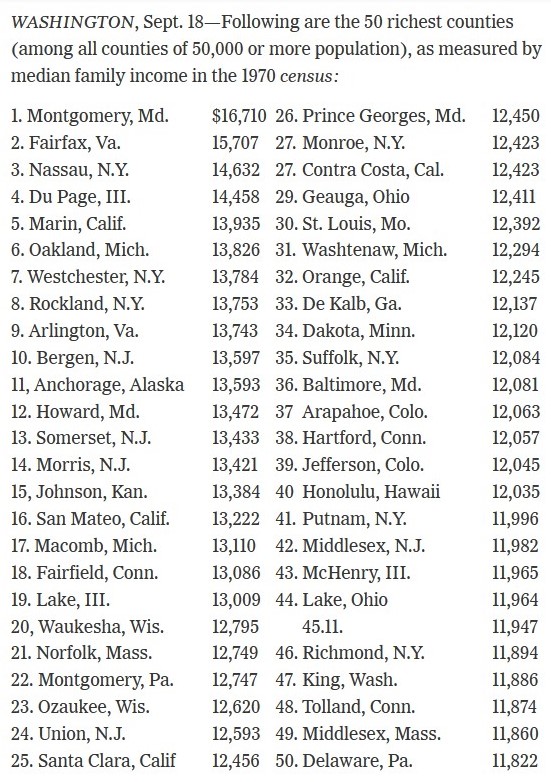
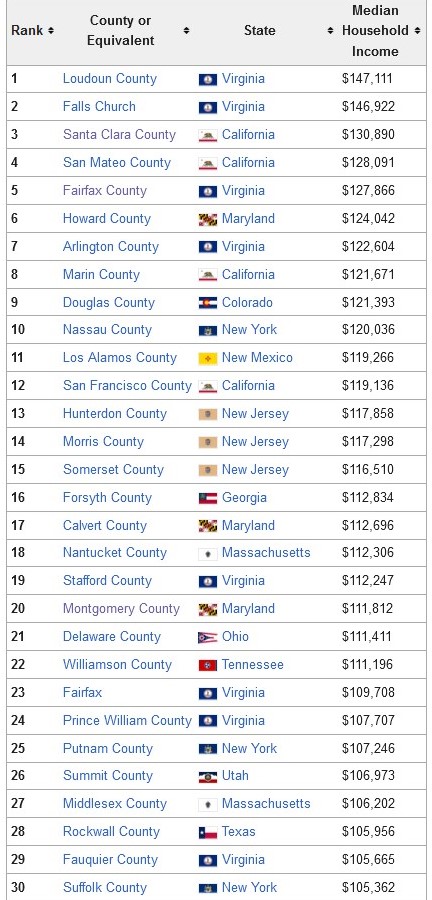
More colleges in places with higher costs of living

Where do colleges tend to be located? This graph in The Chronicle of Higher Education uses one metric:

Two quick thoughts in response:

  1. Does the presence of these colleges over time help contribute to a higher cost of living? I am reminded of Richard Florida’s argument about the creative class. If I remember the analysis correctly, places with colleges tend to have higher percentages of creative class residents. And he suggests colleges and universities can help attract people and development.
  2. When Ben Norquist and I looked at the locations of smaller Christian colleges, we found they tended not to be in the biggest cities (which account for some of these higher cost of living places). In contrast, research schools are often in big cities according to the article: “Almost a third, or 32.2 percent, of colleges in The Chronicle’s analysis were in counties where cost of living was at least 15 percent higher than the national average. The types of institutions found in these expensive regions tended to vary. About 10 percent of doctoral-granting universities and 23 percent of four-year special-focus institutions (like those specializing in health professions or religious training, for example) are in the priciest 1 percent of the nation’s counties, where the cost of living is more than one-and-a-half times the national average. In contrast, nearly half of associate- and bachelor’s-granting institutions were in counties with below-average costs of living.”
  3. The other category with a larger percentage discrepancy is among the percentage of institutions in counties at 90 to 100 in cost of living.

The prime suburban real estate available when restaurants close

Want a prime location in the suburbs? Red Lobster and TGI Fridays might have an answer:

Photo by Armando Oliveira on Pexels.com

Vacant restaurant chains are creating prime real estate for a wide range of companies looking for spots to grow, especially fast-food chains that want to install drive-thru lanes on spots where diners once sat down for dinner.

Chains like Red Lobster and TGI Fridays filed for bankruptcy this year and closed more than 175 restaurants combined. Red Lobster was driven into bankruptcy by mismanagement under a previous owner, global shrimp supplier Thai Union, while TGI Fridays fell under private equity owner TriArtisan Capital Advisors. Denny’s is also closing 150 restaurants…

In the past, these restaurants would often be replaced by a different restaurant chain, with tables to sit at and servers to bring out the food. But now, fast-food and fast-casual chains are taking these spaces and building more drive-thru lanes. Chipotle is building 4,000 new locations, the majority with drive-thru lanes, while Chick-fil-A is building new spots with four-lane drive thrus…

Many of these restaurant locations are also attractive to prospective tenants, as they are freestanding buildings, not located in the back of decaying indoor malls. Indoor malls have struggled in recent years, and mall vacancies reached 6.5% last quarter, according to CBRE. Macy’s, JCPenney, Nordstrom and others have closed hundreds of their stores in malls as online shopping has grown to around 16% of retail sales. Real estate research firm Green Street estimates about 150 enclosed malls have closed since 2008, leaving about 900 today.

Most of the closed restaurants are also located on high-traffic streets with large parking lots or adjacent to a shopping center, making them attractive sites.

I have heard before that certain restaurants and retailers are less into the business of selling things and more into the business of real estate. Think just of the largest fast food chains in the world: how many prime locations do they occupy? If all that land went up for sale at once, how many other businesses would be interested in jumping in?

I have been thinking about locations like these in terms of religious congregations recently. They often occupy important locations within communities, sometimes at busy intersections or in important historic locations. If that location is no longer occupied by a congregation and/or a religious building, it could be a loss in the community (and a possibility for something else).

In the case of these restaurants, it appears there is plenty of demand for the land and plenty of interested parties want to make more money with these properties. Additionally, I would guess most municipalities love that another restaurant will take over. Those new restaurants and businesses can generate even more revenue. The worst possible outcome is that the land remains vacant with limited demand and the property becomes an empty eyesore.

How long before these new restaurants that take over are selling off their own properties? Ten years? Twenty years? At least in this moment, new restaurants want to snatch up these properties but that might not always be the case.

“Visit your local IKEA store”

A recent advertisement encouraged people to “visit your local IKEA store.” I get the general idea: I can go find what their latest deals at my closest store.

Photo by Czapp u00c1rpu00e1d on Pexels.com

However, the “local” part of it stuck with me. Do I have a “local IKEA store”? Here is why the term might not work well:

  1. There are two IKEA stores in the entire Chicago region of over 9 million people. One is closer to those living toward the north, one is closer toward those living in the southern part of the region. Thus, many in the region will have to take a bit of a drive to reach a store. These are not stores found in numerous communities. How far away from a residence is a “local” store?
  2. Local can imply local business or smaller in scale and size. All of these might be in comparison to big box stores that offer predictability and many square feet. IKEA is more in this latter category with stores that are large, found along major roads, and are surrounded by large parking lots. These are not local businesses; this is a global corporation with a limited number of stores and pick-up sites in the United States (see the map here). These are destinations, not local businesses near the hearts of communities.

I, like many others, will make a trip to IKEA in the future to look for items and have an experience that cannot easily be found elsewhere. But I will not consider it a local store as I travel down highways to the sizable building located among many other national and international retailers at a convenient nexus of sprawling suburbia.