A Japanese experimental city to test self-driving vehicles and other new tech

A new community being built by Toyota offers opportunities to test self-driving cars:

Photo by Shane Aldendorff on Pexels.com

First announced in 2021, Toyota has been hard at work constructing their Woven City just miles away from Mount Fuji on the island of Honshū, with the first of 2,000 anticipated residents now expected to move in before the end of the year. 

News of the project’s imminent completion comes not long after photos were shared of progress being made on Saudi Arabia’s behemoth ‘mirror city’ project The Line, though they’re hardly the only megacities currently under construction around the world. 

Marketed as a ‘mass human experiment’, Woven City will provide a ‘living laboratory’ for Toyota to test prototypes of their renewable and energy-efficient self-driving vehicles, dubbed ‘E-palettes’.

The car manufacturer expects to gather data from the use of these driverless cars, guided by sensors in lights, buildings and roads across the city…

Woven City is also expected to feature ‘smart homes’ running almost entirely on hydrogen, reducing emissions so that the futuristic habitation, with its whopping price tag of £7.8 billion, will be as sustainable and eco-friendly as possible.

Imagine a future email that reads like this: “You are invited to live in a new brand-new community built and owned by [megacorporation name]. You have an exciting opportunity to be part of a new community featuring all sorts of innovative technologies. In exchange for a reduced rent, you will participate in testing numerous new technologies that have the potential to improve the world and our profits (wait they would not say this second part). All your experiences outside of your residence are subject to use by the company.”

How many people would take this opportunity? Given that people so freely give up their information for social media, wouldn’t an enticement of cheaper housing prove attractive? And you get to try out new technology? It may be a company town – but it is one with benefits (at least, according to the company).

It would also be interesting to see what would need to change in terms of local governments and zoning to make such a community possible.

25% of Parisian residents live in public housing; hard to imagine this in the United States

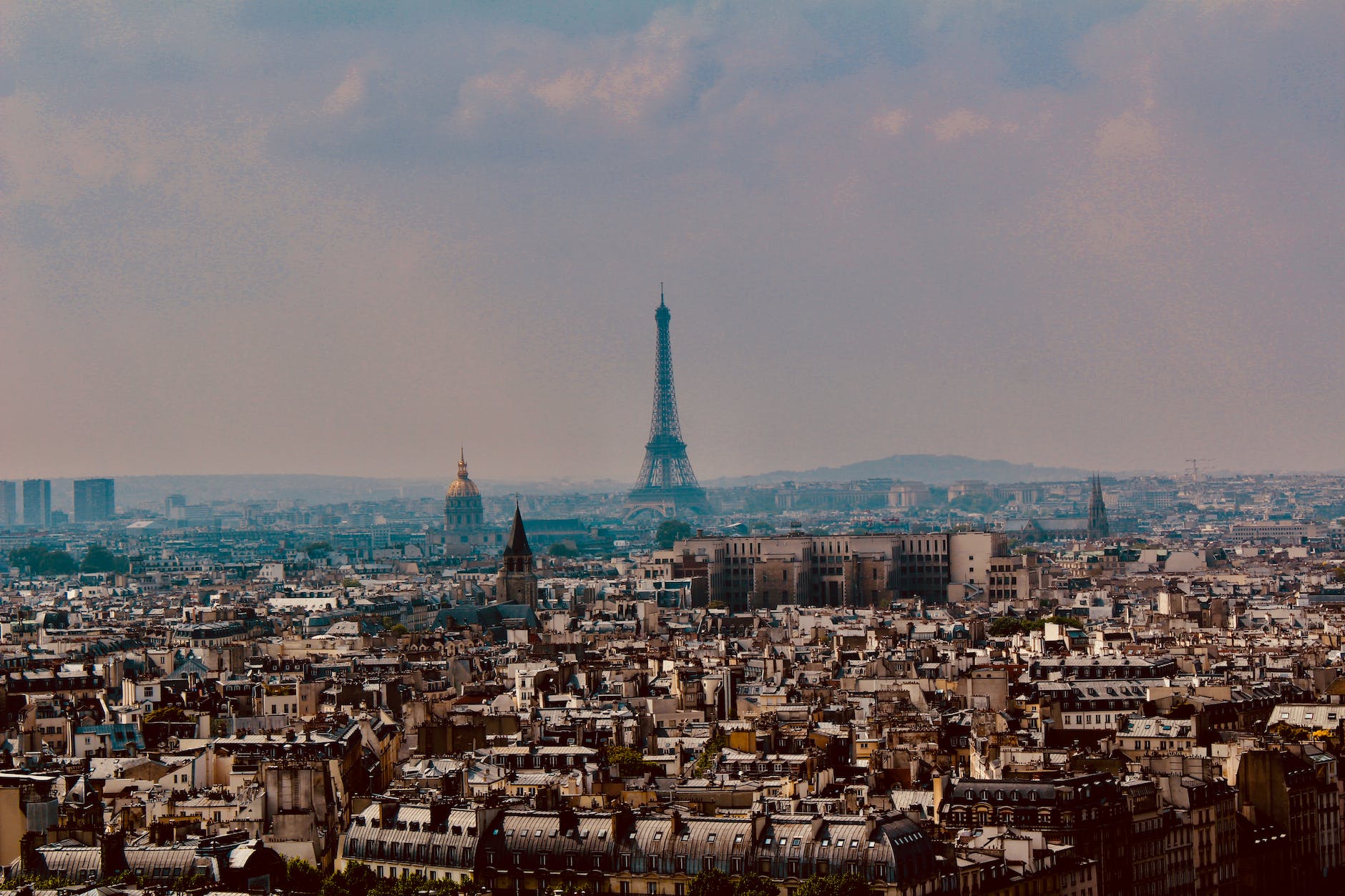
A sizable portion of Paris residents live in public housing:

Photo by Chris Molloy on Pexels.com

This summer, when the French capital welcomes upward of 15 million visitors for the Olympic Games, it will showcase a city engineered by government policies to achieve mixité sociale — residents from a broad cross-section of society. One quarter of all Paris residents now live in public housing, up from 13 percent in the late 1990s. The mixité sociale policy, promoted most forcefully by left-wing political parties, notably the French Communist Party, targets the economic segregation seen in many world cities.

“Our guiding philosophy is that those who produce the riches of the city must have the right to live in it,” said Ian Brossat, a communist senator who served for a decade as City Hall’s head of housing. Teachers, sanitation workers, nurses, college students, bakers and butchers are among those who benefit from the program.

Making the philosophy a reality is increasingly hard — the wait list for public housing in Paris is more than six years long. “I won’t say this is easy and that we have solved the problem,” Mr. Brossat said…

City Hall has a direct hand in the types of businesses that take root and survive in Paris because it is the landlord, through its real estate subsidiaries, of 19 percent of the city’s shops. Nicolas Bonnet-Oulaldj, the city counselor who oversees the city’s commercial landholdings, said his office is constantly studying neighborhoods to maintain a balance of essential shops and limit the number of chains, which can usually pay higher rent.

Three related reasons come to mind for why this would not happen in an American city, even with significant needs for housing:

  1. A supposed free market approach to housing. Americans prioritize policies and programs for single-family homes, not denser urban housing with subsidized rents. Why should public housing take up valuable real estate that would go for much higher prices on the open market?
  2. Many Americans think public housing has already failed in the United States. The story might go like this: the limited project that began in the first few decades of the twentieth century led to disastrous high-rise public housing projects in big cities and a subsequent retreat from public housing (shifting to providing housing vouchers).
  3. Less interest in centralized planning and government control. Would Americans want the government choosing housing and business opportunities in major cities? You mean Paris is not organically developed?

Overall, American cities pursue market approaches to social issues.

Crows take to American cities

The humble – mighty? – crow is congregating in some American cities:

Photo by Mike Bird on Pexels.com

Across North America, crow populations have been declining for decades. But crows appear to be flocking to cities more than ever before. Cities from Sunnyvale, California, to Danville, Illinois, to Poughkeepsie, New York, host thousands of crows each winter. Some popular urban roosts host more than 100,000 crows each night.

Crows are territorial during the spring and summer breeding season, but during the rest of the year, they sleep in large groups known as roosts. Sometimes a roost occupies a single tree; sometimes it’s spread over multiple perching sites—usually flat roofs or treetops—in a consistent area. Roosting has clear advantages for crows, especially during winter. “They’re better off being in a big group, where they get the benefit of all those eyes looking out for danger. It’s also warmer,” John Marzluff, the author of Gifts of the Crow, told me.

City roosts offer even more advantages. The very features of urban life that harm other species—fragmented landscapes, bright lights at night, and open stretches of grass in parks—benefit crows. Lights make it easier to spot predators, such as owls. Grass doesn’t offer much in the way of food or shelter for many animals, but crows will happily dig through it for beetle larvae and other snacks. Also, Marzluff told me, crows like that we humans often plant grass close to clusters of trees, where they can sleep or nest, and other food sources, such as our trash. Fragmented habitats, such as a group of trees in a park surrounded by asphalt, harm other species because they aren’t big enough to foster genetic diversity. But they are ideal for crows, who can fly between pockets of greenery and like to have a variety of options for their nesting areas and foraging sites.

Crows, in other words, move to urban areas for the same reason humans do: Cities offer just about everything they need within flapping distance. During the breeding season, Marzluff said, crows even decamp to the suburbs to raise their families, just like humans. And once even small roosts are established, many of them grow year after year, from perhaps a few hundred birds to a few hundred thousand. News spreads fast through the crow community, Marzluff said: Crows share information with one another and develop traditions and culture within populations, including roosting habits, though scientists still don’t know exactly how they do it.

These birds are real!

This reminds me of the book Subirdia which suggested some bird species can thrive with human development and others do not. Crows are likely not the only birds or animal species that finds cities to be a good habitat.

The article ends with suggestions from some that humans should embrace crows in cities. However, if the headline is prescient, would crows go the way of pigeons? Or might some another birds take over from the crows?

“Communities,”cities and towns,” and “urban, suburban, and rural” in SOTU speech

How did President Joe Biden describe where Americans live? Here are some patterns from his State of the Union speech last night:

Photo by freestocks.org on Pexels.com
  1. Communities was used five times. This phrase covers a lot of potential places. Here are two uses: “Thanks to our Bipartisan Infrastructure Law, 46,000 new projects have been announced across your communities—modernizing our roads and bridges, ports and airports, and public transit systems.”; “Taking historic action on environmental justice for fence-line communities smothered by the legacy of pollution.”
  2. Cities and towns was used twice. This presumably refers to both places with more residents and those with fewer. Here are several uses: “It doesn’t make the news but in thousands of cities and towns the American people are writing the greatest comeback story never told.”; “Help cities and towns invest in more community police officers, more mental health workers, and more community violence intervention.”
  3. Urban, suburban, rural was used once (and mentioned communities): “Providing affordable high speed internet for every American no matter where you live. Urban, suburban, and rural communities—in red states and blue.”

These uses are likely trying to cover as many different places in the United States at once. I imagine few Americans would not fit into one of these places described. A community could refer to municipalities, geographies, and other social groups that would use this term to describe themselves. Cities and towns covers bigger and smaller places. Urban, suburban, rural is a common set of categories that refers to different places and ways of life.

Are these the most effective terms to use when talking to a broad audience of people in the United States? When people hear these terms, do they recognize their own communities?

Ongoing movement of religious people from American cities to suburbs

More religious people in cities are moving to suburbs:

Photo by Jonathan Meyer on Pexels.com

Researchers interviewed by The Times said rising costs, rampant crime and changing racial demographics have made it harder to sustain worship spaces in large cities…

As more urban neighborhoods become secularized, demographers say religious families increasingly prefer to settle in suburban enclaves up to 20 miles outside of city centers…

“Over the last 10 years, the 100 fastest-growing churches in America are primarily in the growing inner and outer ring suburbs of major cities,” said Ryan Burge, an Eastern Illinois University political scientist and religious demographer. “They’re almost always non-denominational Christian churches near cities like Charlotte, Charleston and Atlanta. They are the fastest because that’s where people are moving.”…

In New Orleans and several Midwest and Northeast cities, gentrification has pushed more Black Christians into the suburbs than other groups…

Rather than start in the city and expand to the suburbs, most new churches now move in the opposite direction. For example, Elevation Church in Matthews, North Carolina, started 12 miles southeast of downtown Charlotte. It later planted a satellite church in the city center.

In some ways, these are continuations of existing trends. The United States is a majority suburban country and more people have lived in suburbs than cities since the 1960s. White flight from cities included congregations. Increasing racial and ethnic diversity in suburbs has occurred alongside increasing religious diversity in suburbs.

On the other hand, these could include new and different patterns:

-Which churches are closing and which religious groups are moving to the suburbs. If it was largely white congregations in the postwar era, it now includes more groups.

-The number of congregations closing. Are there now more closing than decades before?

-The relative power and influence of suburban megachurches compared to the past. If congregational influence decades ago tended to reside in older, urban congregations, this may have shifted today.

-Are cities more secular than they were in the past? Significant percentages of urban residents are religious and cities contain numerous religious congregations and organizations. Or, has the perception of cities and religion changed?

I suspect there is more to say on the connection between religion and suburbs.

Baseball stadiums in relation to downtowns

The Chicago White Sox have had recent talks about the possibility of a new stadium closer to Chicago’s downtown. This would move them closer to the Loop and downtown activity. How does this compare to other baseball teams?

According to this map, most stadiums are pretty close to downtown. Some are further away – Texas, Kansas City – while others are close to ten miles away but still in the city (both New York teams).

My suspicion – without looking hard at the data – it that this may not be true of all of the major sports leagues in the United States. Baseball stadiums are often close to downtown but this may not hold across other sports. At least a few NFL stadiums are in the suburbs.

Do cities believe baseball stadiums are economic engines? Do teams closer to downtowns draw more fans? Do team owners see locations closer to downtown as more desirable, particularly with the trend to make money on developing land around the stadium?

A declining urban population does not necessarily lead to a “ghost town”

Some American cities are predicted to lose residents in the coming decades:

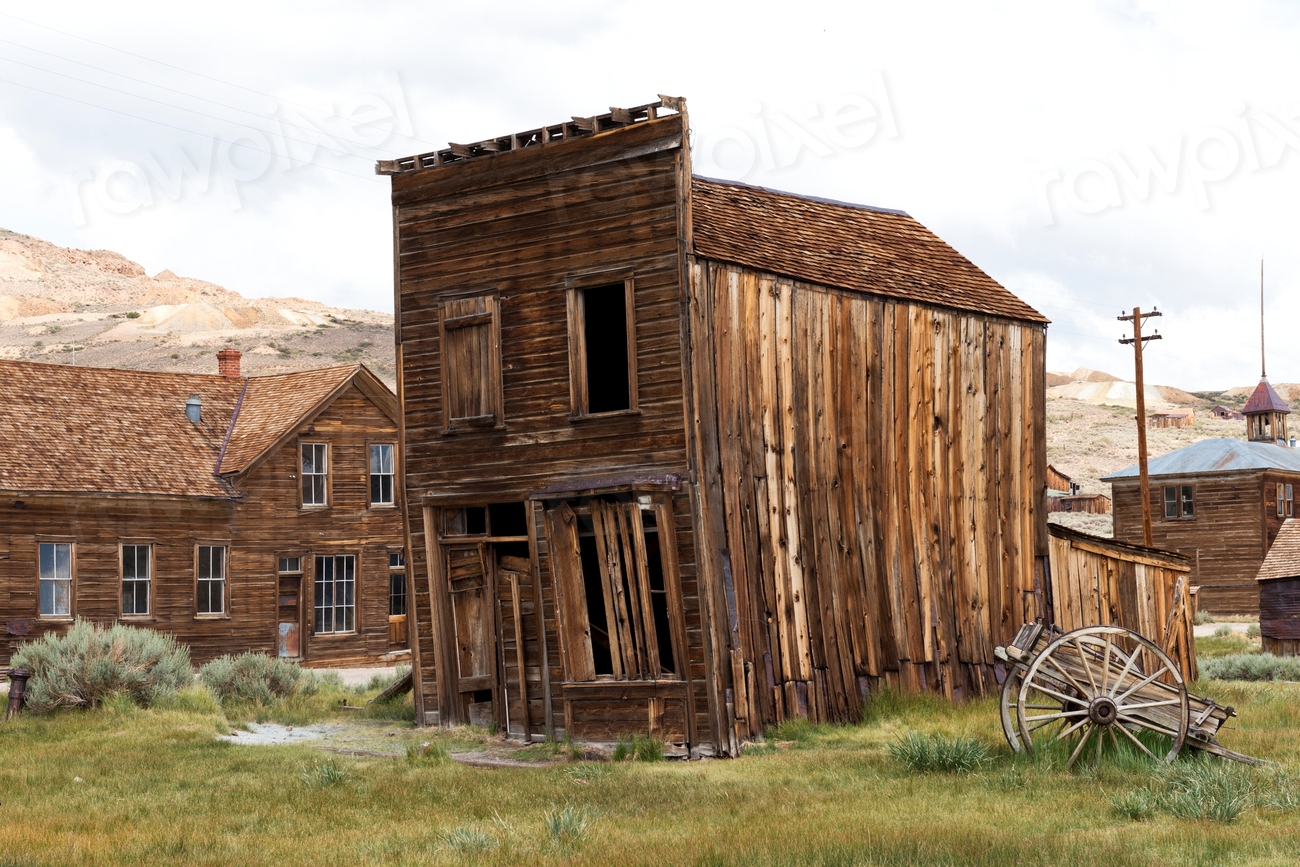
Bodie is ghost town Bodie by Carol M Highsmith is licensed under CC-CC0 1.0

Many cities across the United States could become ghost towns by 2100, according to new research published Thursday.

“Close to half of the nearly 30,000 cities in the United States will face some sort of population decline,” researchers from the University of Chicago in Illinois wrote in a journal article published in Nature Cities.

Major cities in the Northeast and Midwest are already slowly losing population. While cities in the South and West regions are experiencing a population increase, some major cities in Alabama, Georgia and Tennessee are slowly depopulating, the researchers found.

Cleveland, Buffalo, and Pittsburgh could see depopulation of 12 to 23 percent by 2100 while cities like Louisville, New Haven and Syracuse — not currently showing declines – likely could soon.

Many cities in the Northeast and Midwest peaked in population decades ago. This is not good for communities in the United States; population loss or even stagnation is viewed as a problem or failure. The reminder here that there are some cities with growing populations could feed into this. (Extrapolate from here and Dallas-Fort Worth will lead the country in residents soon!)

But, even more interesting is the use of the term “ghost town” in the headline and opening paragraph. Losing 20% of residents over the next 80 years is undesirable but this is different from making these communities a ghost town. These are typically empty communities. Perhaps they are communities wiped off the map.

Take Cleveland since it is cited above. If it loses 20% of its population by 2100, it would lose 75,000 residents. Even after these loses, roughly 290,000 residents would still live there. Is this a ghost town or a significantly changed city? Cleveland will continue to be a major regional center and the region has over 2 million people.

I wonder if being less sensational about population loss figures and exhibiting willingness to be adaptable to changing conditions could go a long way toward adjusting to these realities. Some cities will lose people and some will grow. Both kinds of changes mean communities change.

US urban office space vacancies related to earlier office building booms

With the vacancy rate for office space in the major US cities almost at 20%, is now safe to conclude too much space was constructed in the first place?

Photo by Scott Webb on Pexels.com

America’s offices are emptier than at any point in at least four decades, reflecting years of overbuilding and shifting work habits that were accelerated by the pandemic.

A staggering 19.6% of office space in major U.S. cities wasn’t leased as of the fourth quarter, according to Moody’s Analytics, up from 18.8% a year earlier. That is slightly above the previous records of 19.3% set in 1986 and 1991 and the highest number since at least 1979, which is as far back as Moody’s data go…

That glut weighs on the office market to this day and helps explain why vacancies are far higher in the U.S. than in Europe or Asia. Many office parks built in the 1980s and earlier struggle to find tenants as companies cut back on space or leave for more modern buildings.

“The bulk of the vacant space are buildings that were built in the 1950s, ’60s, ’70s and ’80s,” said Mary Ann Tighe, chief executive of the New York tri-state region at real-estate brokerage CBRE.

And just as in the early ’90s, it is the overbuilt South that is hit hardest. Today, the three major U.S. cities with the country’s highest office-vacancy rates are Houston, Dallas and Austin, Texas, according to Moody’s. In 1991, Palm Beach and Fort Lauderdale in Florida and San Antonio held those positions.

This sounds like a cyclical market: during financial downturns, fewer companies want office space and vacancies rise. During economic success, more companies expand and make use of the space. When more space is built during the good times, that same space is not necessarily needed later.

Does that mean that COVID-19 was only a partial contributor to office vacancies? Was a reckoning going to come for urban office space even without a global pandemic? Or might office space be back in demand again soon as economic conditions change?

I can see why new office space is desirable to fund and build. Whether it should be built, given the cycles discussed above, is another story. And if office space cannot be easily converted to other uses, how much more is really needed in major cities?

Can we now regularly compare NYC, LA, Chicago, and Houston?

Comments from the newly-elected mayor of Houston compare the four largest cities in the United States. The Chicago Tribune editorial board thinks this is a problem for Chicago.

Photo by Nick Bee on Pexels.com

“We’re not New York. We’re not L.A. We’re sure not Chicago. We fix our problems.”

Quick quiz: Who recently said that? Ron DeSantis? Greg Abbott? Nikki Haley?

The answer is John Whitmire, a Democrat who over the weekend resoundingly won election as mayor of Houston, the nation’s fourth largest city and on track to overtake Chicago as third largest if present demographic trends continue…

Politically, Chicago comes across to much of the rest of the country as a city that’s off course, focusing not on the issues at the top of residents’ priority list (public safety, jobs, public transit, for example) but on progressive to-do lists. Not only are Johnson and his City Council allies choosing to spend their time and political capital on issues the majority of Chicagoans view as less than pressing, they’re doing a poor job even when it comes to their own priorities.

Several factors appear to be at work. First, as noted, Houston is approaching Chicago’s population. Chicago was once the second city, then became the third city, and likely will soon be the fourth city. This means a decline a status, both internally and from the outside.

Second, Chicago has long had a reputation as “the city that works.” It might have all sorts of problems but things got done. If the perception inside and outside is that things do not get done, then people might have concerns.

Both of these might be existential issues for a city that is regarded as a global city and has always been behind at least one other major American city.

Additionally, are New York and LA ready to be mentioned in the same breath as Houston?

Trump on building “freedom cities”

Donald Trump recently said he wants to construct “freedom cities” if elected again. He has had this idea for a while; a story from March 2023 provides more details:

Photo by Brett Sayles on Pexels.com

Former President Donald Trump on Friday proposed building up to 10 futuristic “freedom cities” on federal land, part of a plan that the 2024 presidential contender said would “create a new American future” in a country that has “lost its boldness.”…

He said he would launch a contest to charter up to 10 “freedom cities” roughly the size of Washington, DC, on undeveloped federal land.

“We’ll actually build new cities in our country again,” Trump said in the video. “These freedom cities will reopen the frontier, reignite American imagination, and give hundreds of thousands of young people and other people, all hardworking families, a new shot at home ownership and in fact, the American dream.”

These cities are tied to a bigger project:

Trump’s plan, shared in advance with POLITICO, calls for holding a contest to design and create up to ten new “Freedom Cities,” built from the ground up on federal land. It proposes an investment in the development of vertical-takeoff-and-landing vehicles; the creation of “hives of industry” sparked by cutting off imports from China; and a population surge sparked by “baby bonuses” to encourage would-be-parents to get on with procreation. It is all, his team says, part of a larger nationwide beautification campaign meant to inspire forward-looking visions of America’s future.

When I saw that Trump mentioned this again, I immediately thought about free market cities that some have proposed for different parts of the world. But, that does not seem to be the goal here. Trump wants to build new cities that fit a new vision of American innovation. Freedom = innovation. One implication is that current cities are not free.

For such an idea, multiple practical obstacles exist:

  1. Where would these be located? Which federal lands?
  2. It is hard to build a new city. What is the timeline for this? How many resources will be involved? Will it be all private actors and developers doing the construction?
  3. What will be the guiding mission of these cities? If the goal is innovation, what will be different about these cities compared to existing cities?
  4. What will be the politics of these cities?

All that said, the likelihood of these being built is very low. And I thought Trump was was trying to save suburbia, not necessarily build cities?