This season is a regular occurrence even as it does not show up every year, it might be more visible on the 4 year presidential election cycle, and it occasionally occurs during primary voting periods in the spring. On its more regular schedule, by early October numerous lawns and public intersections contain political yard signs. Lawns – usually clear of obstructions – broadcast political messages for those passing by. They range from national offices (president, Senate, House) to very local offices (townships, local forest preserves, etc.). They differ in size – some huge, some small and hard to read – and in color, often tied to the traditional colors of the two major parties with some occasional other colors thrown in.
Most lawns do not have signs. Some property owners have them each political yard sign season, others are more occasional participants. The corners of major intersections can be little battlegrounds as people place signs for different candidates and different races.
What difference does political yard sign season make? I do not know. Do those going by at suburban driving speeds (1) have time to read the signs and (2) ever change their preferences or voting patterns? Is it more about political mobilization among residents where signs are symbols of their fervor? For the stories and images I see of signs stolen or removed, do these actions change anything?
Soon political yard sign season will pass. Election Day comes and the signs disappear rapidly. Some might hang on for a while longer, braving the cold and snow of winter. Almost none will be around for the coming of the next construction season. For a short period, political yard sign season blooms and we all experience it.
Photo by Miguel u00c1. Padriu00f1u00e1n on Pexels.com
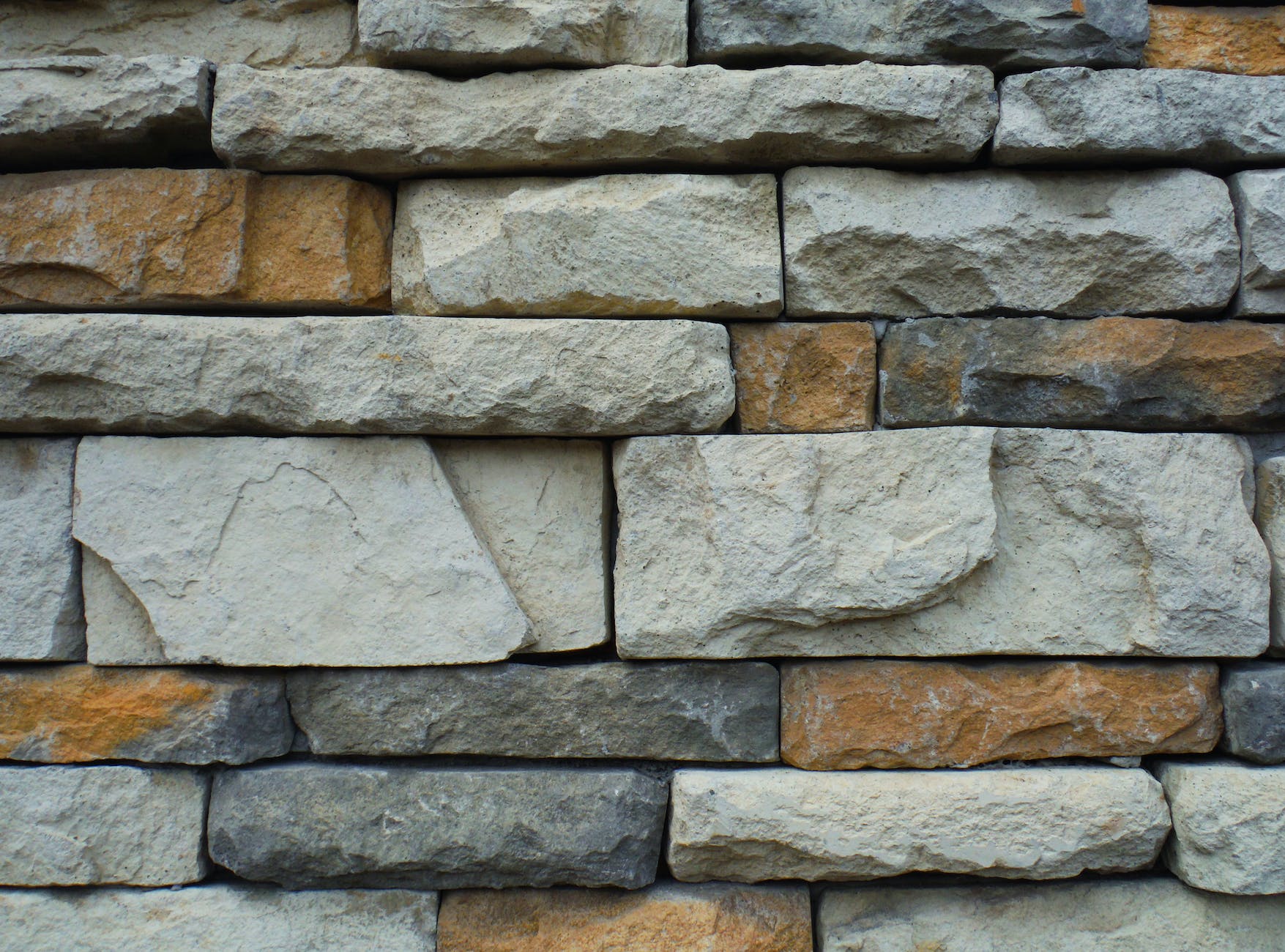
In 2018, UNESCO inscribed dry stone walling as an Intangible Cultural Heritage of Humanity, stating that “the technique exemplifies a harmonious relationship between human beings and nature.” When building a dry stone wall, Kaneko told me, you have to work with the contours of the land and irregularities of each stone. John New, the chair of the West of Scotland Dry Stone Walling Association, told me that “when you’re building a stone wall, you become part of the environment. Brown hares will just come up and stop and watch you.” Deer too. Almost as soon as it’s built, a stone wall is inhabited by insects—a key indicator of biodiversity—and small animals such as voles, chipmunks, and wrens. In China, researchers have documented the remarkable diversity of plants thriving on ancient stone walls—even in urban environments.
In rocky regions around the world, groups are working to preserve and promote the craft of dry stone walling, touting the benefits to biodiversity and low carbon footprint. These are inherently local efforts because building with stone makes the most sense when it can be sourced locally. (In the past, farmers used stone unearthed while clearing the very fields they needed to terrace or fence.) In Scotland, for example, trucking in material for a stock fence from far away could cost upwards of $5,000, New said. The most ambitious recent dry-stone-walling projects, such as the multimillion-dollar effort to restore the stone walls of Italy’s Cinque Terre, are in service of historical preservation. But Stone Walls for Life, the EU-funded project organizing the Cinque Terre restoration effort, argues that the walls strengthen resilience to climate change, too, by improving drainage and preventing landslides. They plan to replicate this kind of undertaking around the EU.
In Japan, Kaneko told me, most of the people who still know how to build simple utilitarian stone walls are in their 80s. In the past, if a stone wall along a rice paddy or road collapsed, the community would gather to repair it. This collective experience was key. When I met him again at a Kyoto café (in the concrete Kyoto International Conference Center, near a concrete-encased river), Kaneko told me about a 1919 Journal of Engineering article that emphasized the importance of human skill and discretion rather than objective numbers in stone-wall building. Although perfecting the craft of stone walling takes a lifetime, Kaneko said that an amateur, with no formal engineering experience, can learn the basics in about four days. Through workshops all over the country, he and Sanada teach people to place stones with the long side angled down into the slope, to make sure that each large stone touches at least two others, and to fill behind the large stones with small rocks or gravel as they build. There have been attempts to standardize and mechanize dry stone walling, using, for example, software and a robotic excavator. But Kaneko says that in many cases, the sites where he works are too narrow or steep for a machine to access. To him, stone walling’s reliance on man power instead of machine power, and passed-down knowledge instead of equations, is part of its value. “I like the very wild dry stone walls,” he told me.
Embracing those qualities, though, requires trust and experience. In July, Kaneko traveled to the town of Genkai, on Japan’s Southern island of Kyushu, to repair the walls at Hamanoura Tanada, a scenic and historic site where nearly 300 small terraced rice paddies chisel the dramatic slopes above an inlet of the Genkai Sea. A few years ago, the town’s planning and commerce division invited Kaneko to teach five local construction companies how to build dry stone walls so they could preserve the traditional scenery. But even with that training, none of them was willing to take on rebuilding stone walls. It’s seen as a labor-intensive and risky job, Kaneko said. Companies that use concrete can reliably calculate the strength of their walls, but it’s nearly impossible to estimate the engineered strength of any particular dry stone wall. Although villages and private landowners can choose stone over concrete, there have been no mainstream attempts to return to dry stone walling for major new public-works projects in Japan, Kaneko told me. In the United States, most landscaping walls shorter than three or four feet don’t need to be permitted, Alan Kren, a structural engineer at Rutherford + Chekene, told me. To build stone walls on any larger scale would likely require new standards for using these old techniques.
Lots of potential connections between this and the move to modernity more broadly:
-New crafts and methodologies that people know and use while older techniques fade away.
-Technological and scientific progress in new materials but costs with which we have not fully reckoned.
-Lost community moments replaced by private activity.
-Local efforts are difficult to sustain given broader global and social pressures.
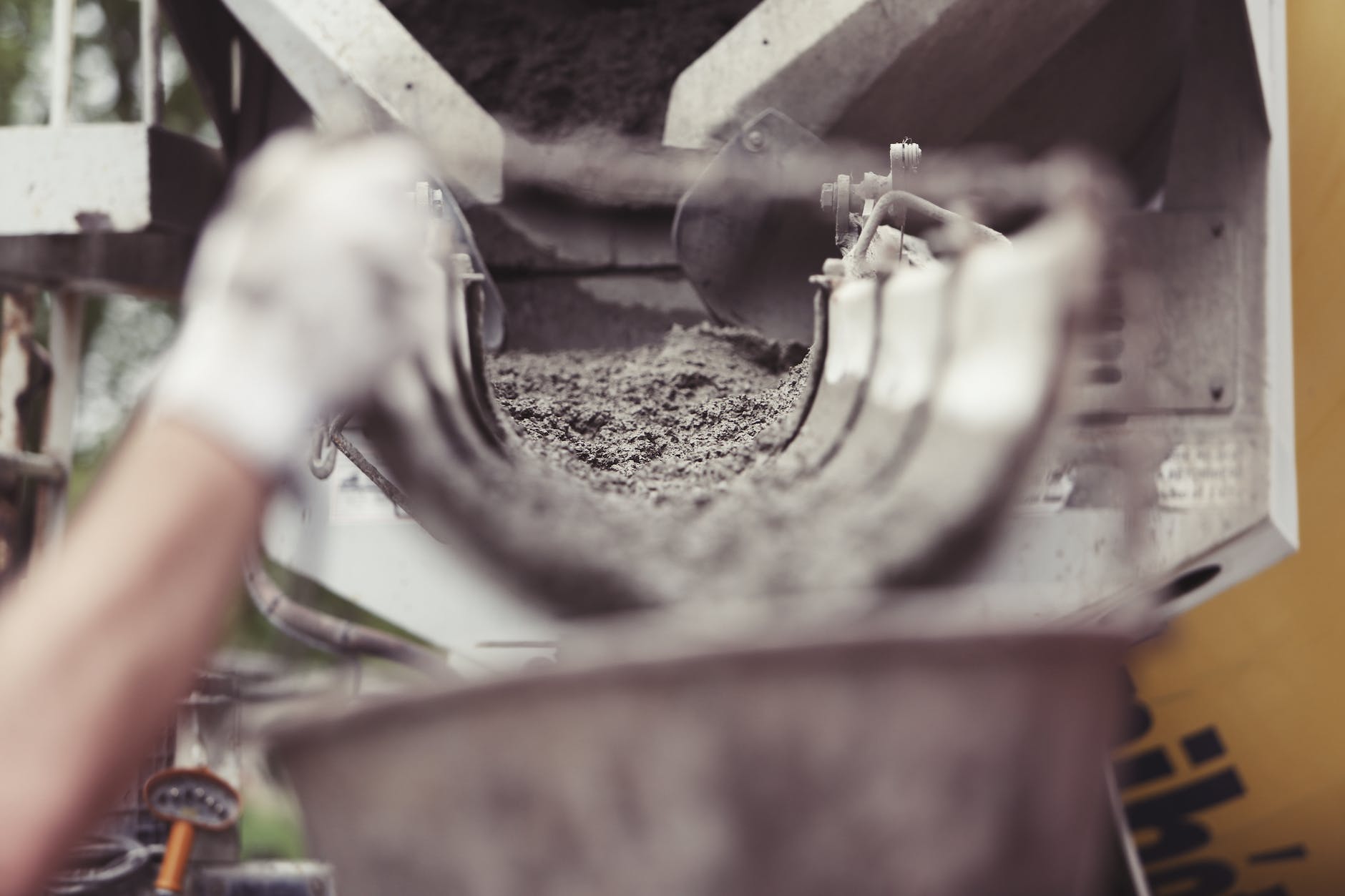
The march of concrete will go on while some advocate for other options. And perhaps at some point concrete will be replaced by another material and the techniques of using concrete could be lost.
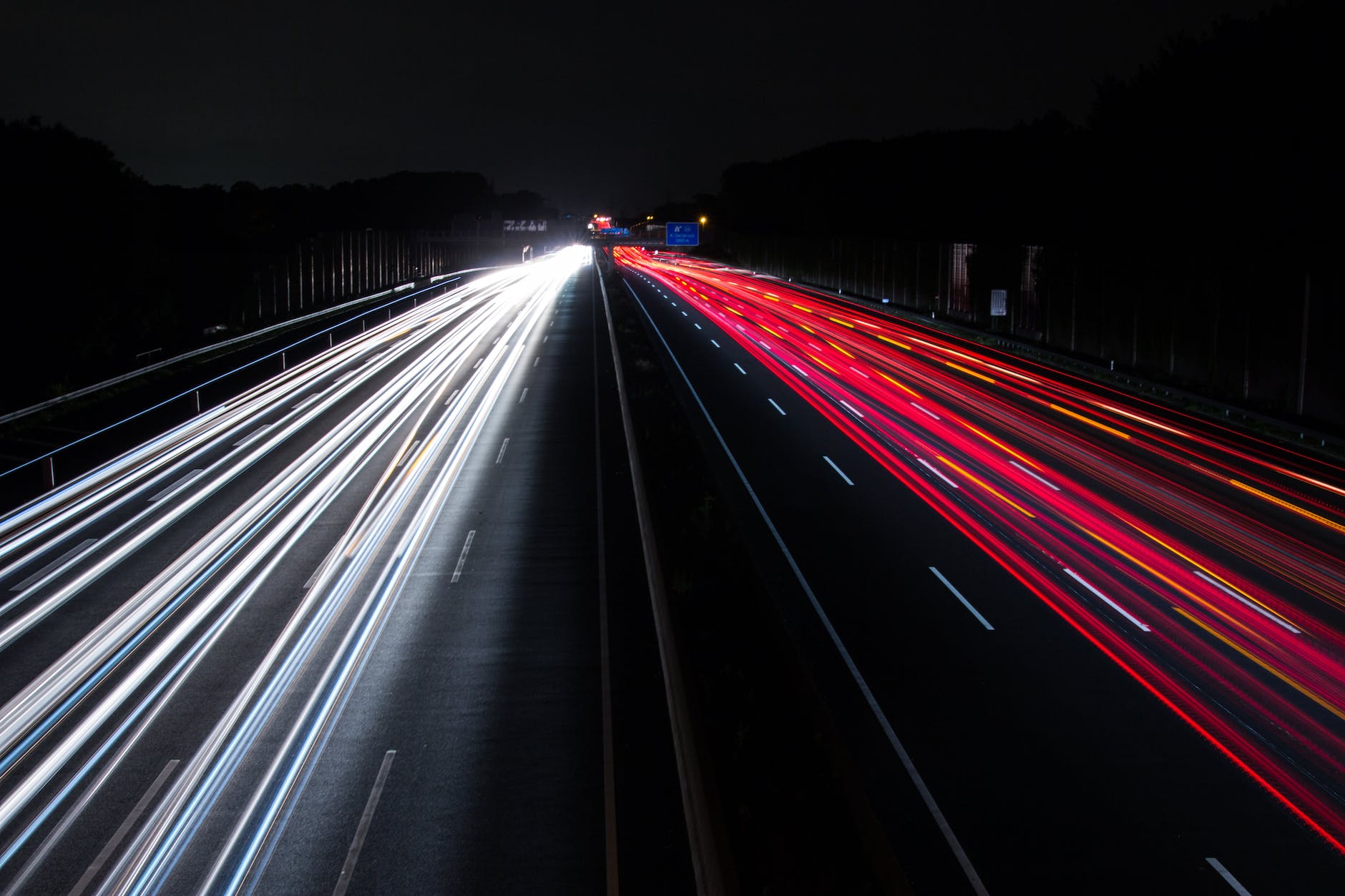
The $150 million project will take place along a 7.5-mile stretch from the split at I-94 south to Ohio Street, and at the massive underpass near Hubbard Street downtown. It will include rehabbing 36 bridges and the highway’s reversible express lane access system, replacing overhead signs, upgrading lighting, paving and painting.
The work is designed to improve safety, traffic flow and reliability on the 10-lane expressway, used by more than 275,000 drivers each day, the Illinois Department of Transportation said. The last major rehabilitation of the 63-year-old roadway was in 1994, and bridges were last repaired a decade ago.
Construction is expected to take place in phases over the next three warm-weather seasons, starting with the inbound, or southbound, lanes this year…
The outbound work and the updates at Hubbard’s Cave are expected to be complete in late fall 2025.
Given the importance of this stretch of highway for the Chicago road network, it is hard to say that the construction should not happen. Even as the cynic might note that as soon as this project is over the next stretch of the Kennedy will be under construction, roads do need repair. But, what are the consequences if the project is not completed on time? Are there any significant incentives that can help make sure this project stays on track and within budget?
It does not help that the timeline for this project is so long. At some point, the regular driver on the Kennedy may have a hard time remembering when the road was not under construction. In fall 2025, how many will remember the optimism of a prediction of 3 years? If it goes into 2026 and the cost went up some, how many will care? I will set a mental note for late 2025 but we will see what happens…
There’s a name for the principle behind that apparent paradox: induced demand. Economist Anthony Downs is often credited with first articulating this “iron law of congestion” in 1962, as construction crews were hacking interstates through American cities. Downs published a seminal paper with a stark warning: “On urban commuter expressways, peak-hour traffic congestion rises to meet maximum capacity.” In other words, adding lanes won’t cure snarled traffic; the additional car space inevitably invites more trips, until gridlock is as bad as ever.
Downs was not the first to sound an alarm about the futility of expanding urban roadways — not by a long shot. In 1932, an association representing streetcars warned that “as fast as improvements are made in existing arteries of travel … they are saturated by an increasing volume of traffic.” In 1955, urban observer Lewis Mumford wrote a series of essays in the New Yorker titled “The Roaring Traffic’s Boom,” in which he memorably compared a highway planner widening a congested highway to “the tailor’s remedy for obesity — letting out the seams of trousers and loosening the belt. [T]his does nothing to curb the greedy appetites that have caused the fat to accumulate.”
Downs’ iron law applies not only to U.S. cities, which have grown more traffic-jammed despite billions of dollars in fresh pavement, but also to those around the world. Highway expansions in Norway and Britain haven’t reduced congestion there, either. The principle now meets little opposition among economists and urban planners. “It’s widely accepted,” says John Caskey, who teaches induced demand as part of his urban economics course at Swarthmore College. “For economists interested in urban transportation, there isn’t really any debate.”…
But turning down a new highway lane remains politically challenging. “The highway construction system has vast momentum,” says Rose, the historian. “It has the authority of highway contractors, builders and labor unions. Here is something that labor and management really can agree on: a highway contract.” The auto industry, too, continues to benefit from ongoing investments that expand the “floor space” allotted to its products. In 2019, Tesla CEO Elon Musk tweeted that induced demand “is one of the most irrational theories I’ve ever heard.”
Build it and they will come.
As I read through the longer narrative in this article, it seems that the needs of the automobile were prioritized by drivers, businesses, those in the road industry, and politicians. This has been going on for roughly a century; would academic theories with evidence behind them be able to overcome these interests?
Perhaps at some point in the future, we will able to look back at “peak road” or “peak highway.” Is there a point where new roads and highways or lanes are no longer pursued in the United States? Even if population growth stagnated or slowed, would the United States continue to build roadways? Maybe the costs of maintaining all those roadways will help lead to this moment. It is hard to imagine other scenarios; even as fewer people drive to work compared to earlier years, traffic continues.
Illinois Department of Transportation engineers are promising a 50% improvement in traffic delays as the interminable Jane Byrne Interchange rebuild wraps up…
It’s estimated the redo could save more than $180 million hours annually in lost productivity from workers in traffic jams and result in a one-third reduction in greenhouse gases.
Can we start tracking this immediately and see if the promise is true?
At the same time, why not use similar metrics for all sorts of infrastructure projects? Infrastructure is needed for many areas of modern life to go well. Yet, people may not want to endure construction or costs. Promises like this at least fix a number on what people might experience as a positive outcome. And if the modeling is so difficult, does this mean that it might be hard to justify a big project? (I could imagine a different number that is also accurate but less negative: without this project, there will be this % of a negative outcome.)
The recent traffic backups aren’t a mirage, say transportation officials. It’s really a perfect storm of ongoing construction projects occurring at nearly all points of the expressway system. This includes the Jane Byrne Interchange project, the behind schedule and over budget construction job that offers one of the worst choke points for congestion in the heart of downtown Chicago…
The last week in September saw some of the worst traffic in recent memory, thanks not only to the ongoing construction — including the start of three-weekend lane reductions on Interstate 57 to accommodate ramp patching and resurfacing — but also an emergency closure of the outbound Dan Ryan Expressway ramp to the outbound Stevenson Expressway that isn’t expected to completed until Sunday, according to IDOT…
Transit experts say that Chicago, which has some of the worst congestion of any American city, is also grappling with its return to normalcy following closures brought on by the pandemic. The added congestion comes at a time when many workers such as Cavanagh are returning to the office after two years of work-from-home protocols. Rider usage of transit systems such as the Chicago Transit Authority, Metra and Pace also haven’t yet returned to normal…
“In other words, drivers are making more trips, but they’re shorter trips on average,” Dan Ginsburg, TTWN’s director of operations said in an email.
So the old joke in Chicago, “there are two seasons: construction and winter,” rings true again?
But, this is a bigger issue than just construction. The infrastructure needs help. More people are driving. People live and work in different locations. Mass transit is not being used much. Mass transit does not necessarily reach where it needs to reach. People want to drive faster. There is a lot of freight and cargo moving through the region and so on.
This “perfect storm” could be an opportunity to ask how to address traffic and congestion throughout the city and region for the next few decades? How will this get any better?
Nearly 836,000 multifamily units are under construction, the most since 1973, according to Jay Parsons, chief economist at RealPage. But most new construction targets higher-income tenants and not the lower end, where supply shortages are most extreme, he said.
I have written about the dearth of starter homes and I would suspect a similar dynamic is at play here. Builders and developers can make more money on multifamily units with higher prices. If someone is going to go to all the effort for development and construction – and this can be quite a bit of effort in certain places – they would prefer to gain more financially in the end. The number of places that require the construction of affordable housing alongside market rate housing or seriously pursue cheaper housing are limited.
If these higher-income units come on line, it will add to a bifurcated housing market where those with enough resources have plenty of choices and those with fewer resources have limited and possibly unpleasant options.
The price of a foot of water pipe in Tucson, Arizona: up 19%. The cost of a ton of asphalt in a small Massachusetts town: up 37%. The estimate to build a new airport terminal in Des Moines, Iowa: 69% higher, with a several year delay.
Inflation is taking a toll on infrastructure projects across the U.S., driving up costs so much that state and local officials are postponing projects, scaling back others and reprioritizing their needs.
The price hikes already are diminishing the value of a $1 trillion infrastructure plan President Joe Biden signed into law just seven months ago. That law had included, among other things, a roughly 25% increase in regular highway program funding for states.
“Those dollars are essentially evaporating,” said Jim Tymon, executive director of the American Association of State Highway and Transportation Officials. “The cost of those projects is going up by 20%, by 30%, and just wiping out that increase from the federal government that they were so excited about earlier in the year.”
Because a number of these projects have to get done, it sounds like the primary effect of inflation is to delay projects. This has a cascading effect on getting better infrastructure in place, jobs, construction and its consequences, and more.
NEOM, the brainchild of Saudi Crown Prince and de facto ruler Mohammed bin Salman, aims to build twin skyscrapers about 500 meters (1,640 feet) tall that stretch horizontally for dozens of miles, the people said.
The skyscrapers would house a mix of residential, retail and office space running from the Red Sea coast into the desert, the people said, asking not to be identified as the information is private. The plan is a shift from the concept announced last year of building a string of developments linked by underground hyper-speed rail, into a long continuous structure, the people said.
Designers were instructed to work on a half mile-long prototype, current and former NEOM employees said. If it goes forward in full, each structure would be larger than the world’s current biggest buildings, most of which are factories or malls rather than residential communities.
Imagine a building that stretches on for miles. As one follows it with their eye, it just keeps going and going. A building that goes past the horizon.
How does one get around within such a building? Moving walkways? Segways? An interior mass transit system? Or, exit the building and use a vehicle out there?
Since this is in the planning stages, it could be years for the development to arise and stretch out to the point where the buildings are the largest and/or longest in the world.
In most parts of the country, a builder can’t pass final inspection for a home that is otherwise perfectly complete — but that is missing its garage door. That means builders don’t get paid and home buyers can’t move in…
These last two years, the garage has also become the answer to all kinds of pandemic problems. It’s the remote office, the home gym, the one-room schoolhouse and the makeshift bedroom for doubled-up family. The pandemic has effectively completed the decades-long evolution of the garage from a detached carriage house to a connected car annex to a space inseparable from the home itself.
Along the way, the garage door became, for many, the real front door. And so it can be surreal to see brand-new homes with their garages sealed in plywood, or to hear homebuilders talk of installing temporary ones. Welcome to your dream home! The real garage door will be coming later…
Amid all this variety, a few problems have been acute lately. Many doors contain spray-foam insulation, which has been in short supply since the plants in Texas that manufacture its chemical components were disrupted in last year’s winter freeze. (If you make garage doors, you’re also competing for polyurethane or polyvinyl chloride with window frames, vinyl siding, caulking — and the aerospace, cruise ship and automotive industries.)
Many other garage door components are made from steel, which has also been in short supply. And even companies that manufacture the finished doors domestically typically source parts from China that have been snarled in global shipping.
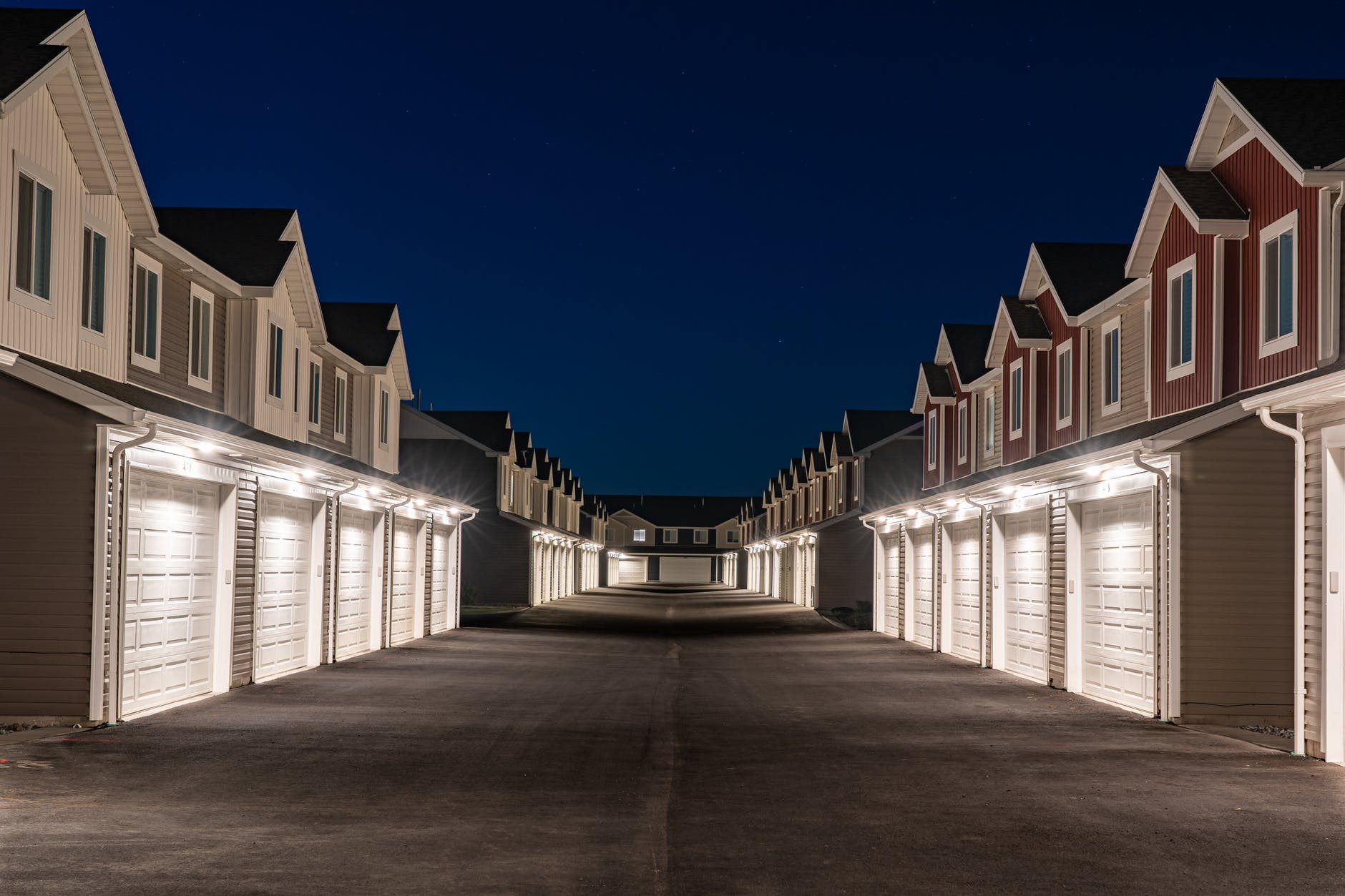
Having a garage is essential in many ways (hence the need for it in a final inspection): it protects whatever is in the garage from the elements, it seals up the opening for safety, it provides for entering and leaving, and it is part of the front that home presents to the world.
Indeed, with the development of the single-family home in the United States, the garage became a key, and sometimes, leading component. With homes in the suburbs dependent on cars plus the ownership of more and more vehicles, garages became larger and featured more prominently in the front facade. As the term “snout house” implies, some houses literally lead with the garage closest to the street. In other homes, the garage might be set further back or even discreetly turned or more hidden from the front. Regardless where the garage is placed and featured, it is very important to the American single-family home.
Perhaps this is an opportunity to rethink garages and how they might work. As noted above, many garages have been used in different ways during COVID-19. Is there a way to build them where they can be more quickly converted without the need for a traditional large door? In a possible future of electric car fleets, how would a home garage work?