O’Hare International Airport remained America’s second-busiest hub behind Hartsfield-Jackson Atlanta International Airport in 2021, but experts say the number to watch is a 27% rebound in flights compared to a dismal 2020…
At the same time, O’Hare continues to climb out of a pandemic slump of 538,211 arrivals and departures in 2020. To put that in context, operations totaled 919,704 in 2019 when O’Hare held the title for most U.S. flights…
What other airports are bustling? The third-most voluminous was Dallas Fort Worth International Airport, followed by Denver International Airport, Charlotte Douglas International Airport and Los Angeles International Airport in sixth place.
I have been to the Chicago airports one time for a flight in the last two years and that visit in October 2021 seemed fairly close to normal. Theoretically, the pandemic provided a little space to make improvements or tackle projects at airports. I saw some improvements underway. At least a few big projects are in process at O’Hare:
An expansion of Terminal 5 is in full swing, with more than $1 billion earmarked to modernize the global facility.
At the same time, plans for major airports like O’Hare likely take place on the scale of decades, not necessarily a year at a time. For example, discussions regarding adding a new western terminal and entrance to O’Hare have gone on for years with some progress toward that goal.
It will also be interesting to see how the role of airports changes as the United States shifts to more electric vehicles. If longer road trips are different, will more people want to fly to destinations more than a few hours away? Flights are not exactly green but the transportation landscape could change in the next few decades.
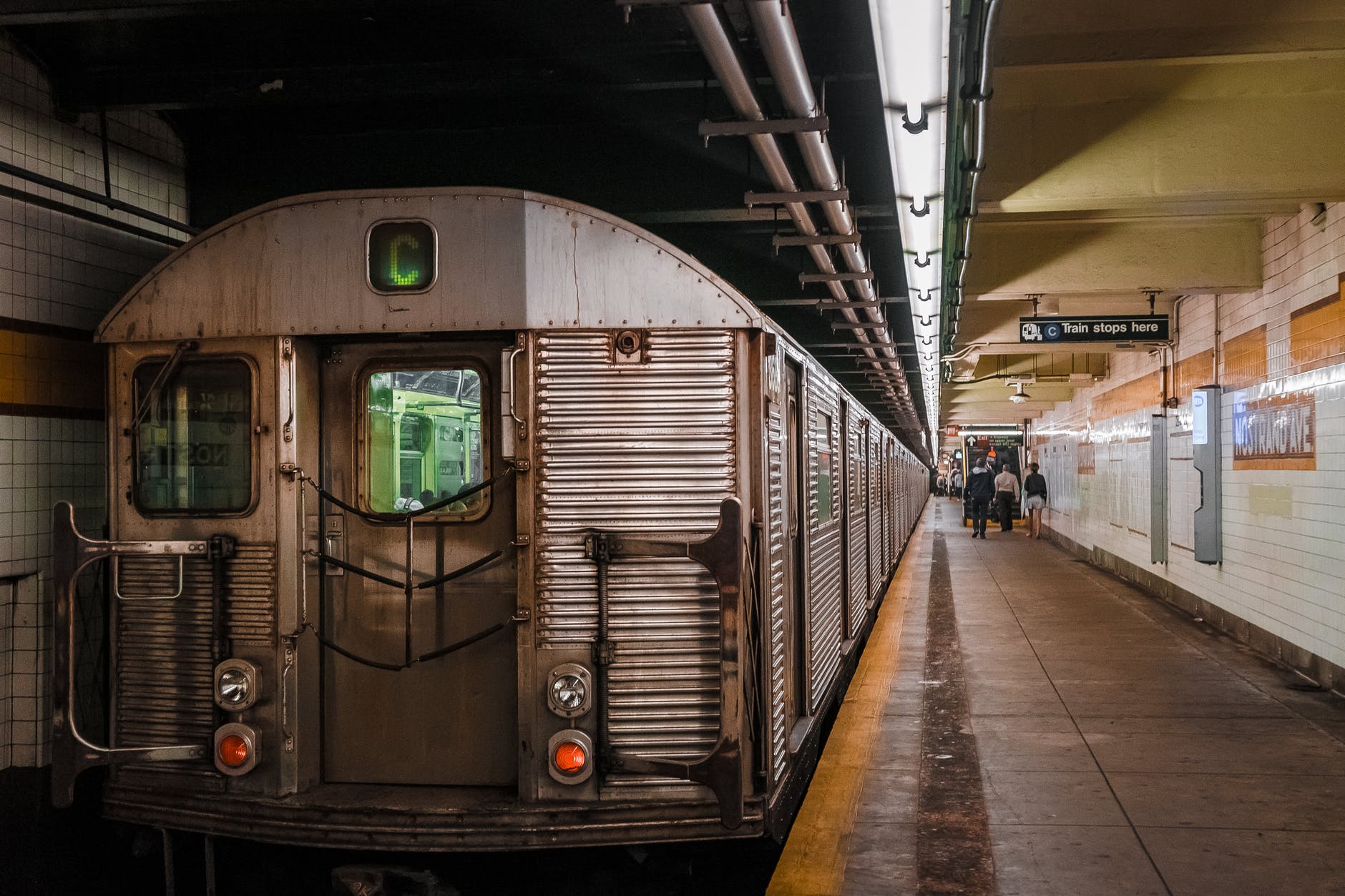
The good news is the city finally has plans to restore 11 blocks of Park Avenue north of Grand Central to a semblance of its former glory, Bloomberg reports, expanding the median from a useless 20 feet to a potentially-rejuvenating 48 feet. That redesigned street could include bike paths, walking paths, and generally more space for things other than cars or pretty things for people in cars to look at as they drive by.
The bad news is many if not most of the people currently living and working in New York will not be around to enjoy it once it’s done. It will take 20 years to redesign these 11 blocks, according to the city’s Department of Transportation. Yes, you read that right. The project to redesign 11 blocks of a Manhattan street will not be completed until 2042.
But there is no mistake, according to both DOT and Kaye Dyja, Powers’s spokesperson. As Dyja explained, “The reason the construction is going to take a long time is because they’re improving the underground railroads leading to Grand Central, as well as redoing the ‘train sheds.’ This entails that they’re digging up the ground, so the construction will have to take place in stages which will end up taking many years to complete.”
The project Dyja is referring to is a massive $2 billion renovation of the Metro North infrastructure underneath Park Avenue from Grand Central to 57th Street. Park Avenue is a bridge over those tracks, and like many of the U.S.’s bridges, this one is falling apart, too. The project will involve ripping up sidewalks and the median of Park Avenue a couple blocks at a time, going section by section, down the stretch of Park Avenue. It is expected to cause more or less permanent disruption to the Midtown East area, to varying degrees, over the next two decades.
As a kid, I remember reading books with cross-sections of underground Manhattan. Seeing all of that infrastructure needed for modern urban life – pilings for skyscrapers, subways, water pipes and sewers, etc. – was fascinating.
The flip side of that is the work it takes to make significant changes to such a system. It takes time (and money) to work around what is there and complete the work.
The time is one factor but I wonder about how the budgets will work over a 20 year period. Large American infrastructure projects can have a tendency to stretch in terms of time and budget as the work is underway.
I would love to say I will check in on this in twenty years but that is a long commitment…
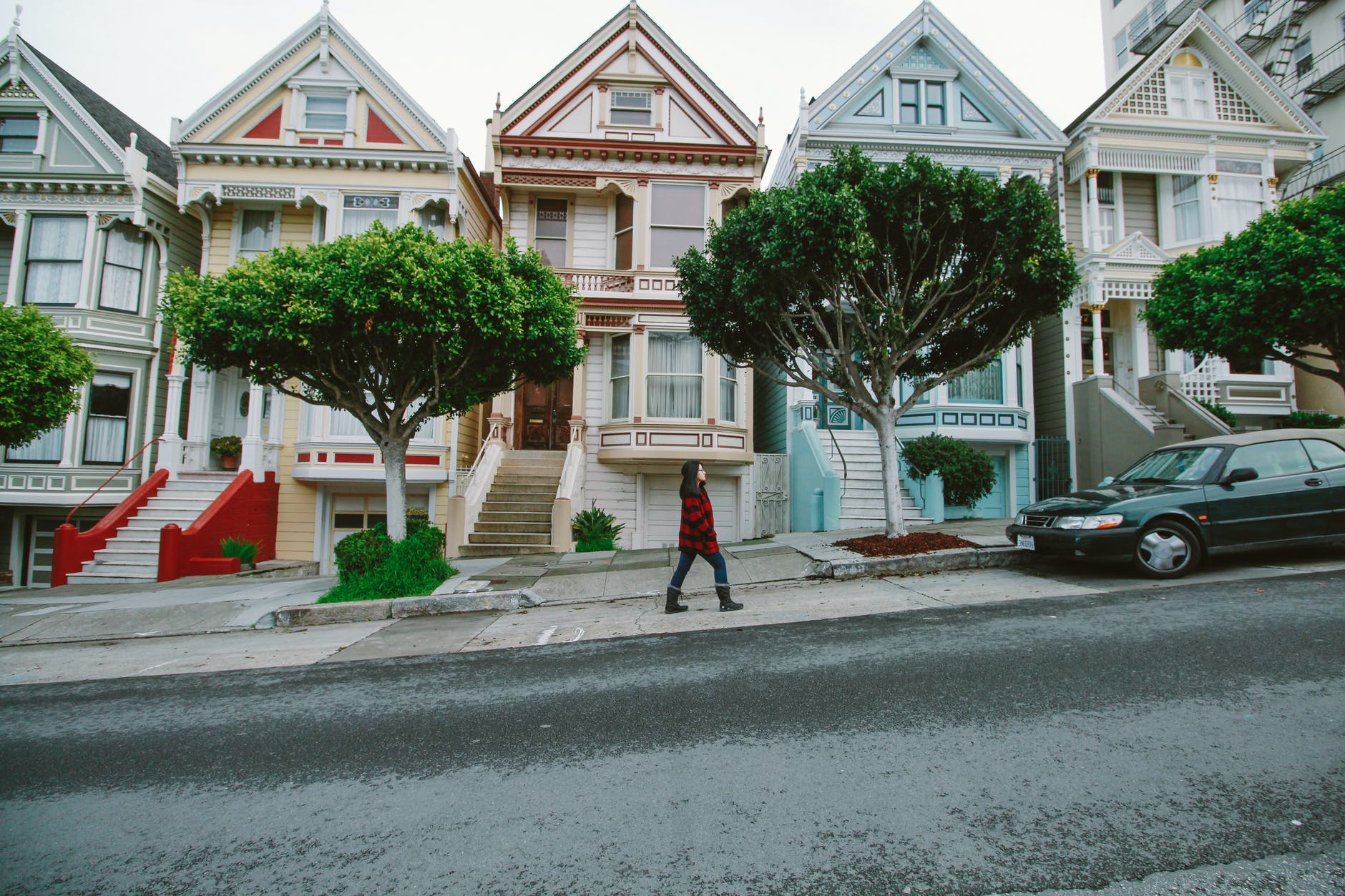
In housing circles, one hears a lot of self-righteous discussion about the need for more preservation. And many American homes doubtless deserve to stick around. But the truth is that we fetishize old homes. Whatever your aesthetic preferences, new construction is better on nearly every conceivable measure, and if we want to ensure universal access to decent housing, we should be building a lot more of it…
In the meantime, we’re stuck with a lot of old housing that, to put it bluntly, just kind of sucks. A stately Victorian manor in the Berkshires is one thing. But if you live in a Boston triple-decker, a kit-built San Jose bungalow, or a Chicago greystone, your home is the cheap housing of generations past. These structures were built to last a half century—at most, with diligent maintenance—at which point the developers understood they would require substantial rehabilitation. Generally speaking, however, the maintenance hasn’t been diligent, the rehabilitation isn’t forthcoming, and any form of redevelopment is illegal thanks to overzealous zoning.
You might think uneven floors or steep stairwells have “character.” You’ll get no argument here. But more often than not, old housing is simply less safe…
The fact is that those much-lamented cookie-cutter five-over-one apartment buildings cropping up across the U.S. solve the problems of old housing and then some. Modern building codes require sprinkler systems and elevators, and they disallow lead paint. New buildings rarely burn down, rarely poison their residents, and nearly always include at least one or two units designed to accommodate people in wheelchairs.
And despite what old-home snobs may believe, new housing is also just plain nice to live in—in many ways an objective improvement on what came before.
New housing does indeed have features, including aesthetic choices and functionality, that often better suit current users. Safety can be a persuasive argument. And there certainly is a need for more housing units in many locations.
However, continuing to use, rehabbing or renovating, and preserving housing can sometimes address these concerns and provide continuity in structure and character. We often tie concepts like stability, tradition, and permanence to housing units, even if they are not the best construction or something better comes along later.
What would be interesting to see is if one American city or region was willing to commit to building new housing in the way described in this piece. If there is there is the will and resources to construct plentiful, attractive, and safe new housing and not fix up or save older homes, what would happen?How would it transform everyday life and society?
One aspect of this debate that I wondered about: is it greener to build a lot more new housing or to rehab existing housing?
Earlier this year, Realtor.com estimated the gap between the number of homes needed and the number of homes available at 5.24 million. That estimate in June represented an increase of 1.4 million above the estimated 3.84 million gap in 2019, primarily because residential construction hasn’t kept up with household formations.
From January 2012 to June 2021, 12.3 million new American households were formed, but just 7 million new single-family houses were built, according to Realtor.com.
The housing shortage is particularly acute in the more-affordable range. Newly built houses with a median sales price of $300,000 represented just 32 percent of builder sales in the first half of 2021, compared with 43 percent during the first half of 2018, according to Realtor.com. To close the gap between demand and supply, builders would need to double their pace of construction for five or six years, Realtor.com economists estimate.
I have been trying to keep track of this for several years now: where are the new cheaper homes? If home builders are interested in selling homes, why not also create products for this part of the market?
There could be lots of reasons for this present state. But, this is not just a problem of 2021; this has been going on for at least a few years. Who can or will act to address this? Is this a pressing social concern that requires attention or just something to note every so often?
Imagine a time in the near future after this trend of the last ten years or so has truly piled up. How will younger adults pursue homeownership, a goal many Americans still say is desirable? Will a lower end of the housing market simply disappear to be overshadowed by more expensive, larger homes that truly generate profits?
If this continues, I would not be surprised to see more calls for housing interventions beyond the market.
Well, he reportedly lives in the Casita, a $49,500 375-square-foot unit created by Las Vegas-based Boxabl…
According to Tiramani, other prefab home makers struggle with one glaring issue: shipping logistics.
But unlike other prefab homes, the Casitas can be folded down from 20 feet to about 8.5 feet while it’s being transported on a truck or towed by a pickup truck…
So when the Casita arrives at its final destination, the home just needs to be unfolded (which takes a few hours) and then attached to its foundation and utilities, before it’s totally move-in ready.
This sounds like an Ikea like solution to furniture: get the house down to a smaller package so that it can be easily transported. Then, at the location, you assemble the product. All of this cuts down on costs. Do not underestimate the importance of shipping and logistics; for example, companies like Sears, Walmart, and Amazon mastered shipping and logistics in ways that helped them sell a lot of goods.
More broadly, the mass production, easier shipping, and modular capabilities of such homes offers lots of opportunities. Mass produced housing as we know it – think Levittowns and large builders constructing subdivisions of suburban homes over months – has endured much criticism. At the same time, this mass produced tiny house comes in a more reasonable price point, could be available to more people, and could be customized. There is still an issue of having people to put these homes together and having land; this might tie this mass production to tiny house subdivisions or clusters.
Over a decade ago, we planned a vacation that involved driving Highway One from San Francisco down the California coast. I had visited California several times before but had never driven this famous road. While our drive was relatively quick as we spent more time in urban centers, we enjoyed the scenery and the contrast of the roadway to typical straight Midwest roads.
Highway 1 is a California spectacle, a Depression-era monument to the state’s quixotic ambitions and stunning beauty. It runs from the Orange County surf haven of Dana Point in the south into cannabis-cultivating Mendocino County, carrying heavy traffic over the Golden Gate Bridge and under the bluffs of Santa Monica, where it is better known as the Pacific Coast Highway, on its 650-mile route…
The engineering folly of a road built on sheer cliffs has meant that closures are annual events — the “whens,” not “ifs” — for the people and the economy it supports.
But the wild card now is the increasing frequency of wildfire along a roughly 100-mile stretch from William Randolph Hearst’s hilltop castle at San Simeon to Carmel, which is stripping fragile hillsides of stabilizing vegetation and causing more slides and more serious washouts across a region known broadly as Big Sur…
An even larger stretch of Highway 1 reopened in 2018 after a 14-month closure at Mud Creek about 20 miles south of here. The road was buried — not washed away, as in Rat Creek’s case — when the rocky ground above it gave way in hard rains.
This is one of the few times in my life where the road itself was a destination – and it was worth it. Keeping this corridor open is important even as it is a difficult stretch to maintain.
The arrival of 2021 means we’ll soon be in Construction Season Nine of a notorious project that the Illinois Department of Transportation initially said would take four and a half years to complete.
We refer of course to the glacially paced reconstruction of The Jane Byrne Construction Museum. We use that respectful moniker — always capitalize The, like The Ohio State University — for what old-time Chicagoans used to call the Jane Byrne Interchange…
Whatever the reason, drivers who didn’t abandon the interchange years ago have, in recent days, found the final four rebuilt ramps open. Museum work has shifted to the mainline Dan Ryan and Kennedy expressways — although we trust that, somewhere, IDOT also is building a museum wing to house its excuses for the years of delays and cost overruns: poor soil conditions, unhelpful rules from Chicago’s City Hall, mistakes by engineering firms, utility rerouting, the diversion of resources to emergency repair projects elsewhere, and on and on…
Surely you aren’t surprised that the cost has grown by some 48%, from $535.5 million to $794 million. Most museums recruit donors to cover their big projects. The Jane Byrne Construction Museum instead gets public dollars. Which has us wondering how many gazillion gallons of amply taxed gasoline burned into the atmosphere as all those mummified motorists sat and sat.
Highways often get greenlit for expensive work because they require engineering upgrades or significant maintenance. The projects in PIRG’s least-wanted list go beyond those basic needs. Like the group’s previous boondoggle roundups, this one calls attention to taxpayer-funded projects set to consume environmental resources, cut through existing communities, and lock in decades of new carbon emissions, for what PIRG argues is little payoff in congestion relief or economic growth. The 2020 report arrives as the ongoing pandemic clobbers state and local budgets and dramatically reshuffles travel patterns.
The largest on the list is Florida’s M-CORES project, a $10 billion, 330-mile plan to build three toll roads through rural southwest and central Florida. Dubbed the “Billionaire Boulevard” by critics who characterize the project as a handout to developers, a state task force recently found a lack of “specific need” for any of the roads, which would run through environmentally sensitive areas.
There’s also the Cincinnati Eastern Bypass, a $7.3 billion highway set to loop around the eastern side of Cincinnati. Originally proposed by a local homebuilder as a replacement (and then some) for the aging bridge that leads into downtown Cincinnati, the 75-mile, four-lane bypass is designed to divert trucks passing through the region on Interstate 75, easing congestion for local drivers, boosters claim. But the report’s authors state that the highway is projected to add thousands of new vehicle trips per day, encouraging sprawl and contradicting Cincinnati’s goals to increase “population density and transit-oriented development” and decrease fossil fuel use by 20%.
No highway policy critique would be complete without a contribution from Texas. The $1.36 billion Loop 1604 Expansion in San Antonio would add four to six additional lanes on 23 miles of an existing four-lane highway, as well as new frontage roads and a five-tier interchange with Interstate 10. Texas DOT says that the new lanes are needed to keep up with population growth, but transportation planners say that the principle of induced demand would cancel out the benefits while adding pollution. The PIRG report puts it this way: “Additional capacity causes more driving and congestion.”
These summaries of major highway projects provide good reminders of several features of such undertakings:
They often require years of planning and years to complete. From start to finish, this could cover a decade-plus. They take a lot of effort to get going across numerous agencies, governments, and actors and have their own kind of inertia as they move toward completion.
These projects are often intended to make driving easier. Adding lanes and capacity can also attract more drivers. In a country devoted to driving, these contradictory ideas can go together. And the roads and systems for driving keep expanding and evolving.
The costs are huge and the efforts required massive. Yet, the average driver may think about nothing but the congestion caused by the construction.
When completed, such roads (and other significant infrastructure projects) can be impressive in their scale. (Whether this is the best use of the land or moving people around leads to other arguments.)
While these articles do not address this, are there significant infrastructure projects that drivers and residents would be pleasantly surprised to find that had been completed during COVID-19?
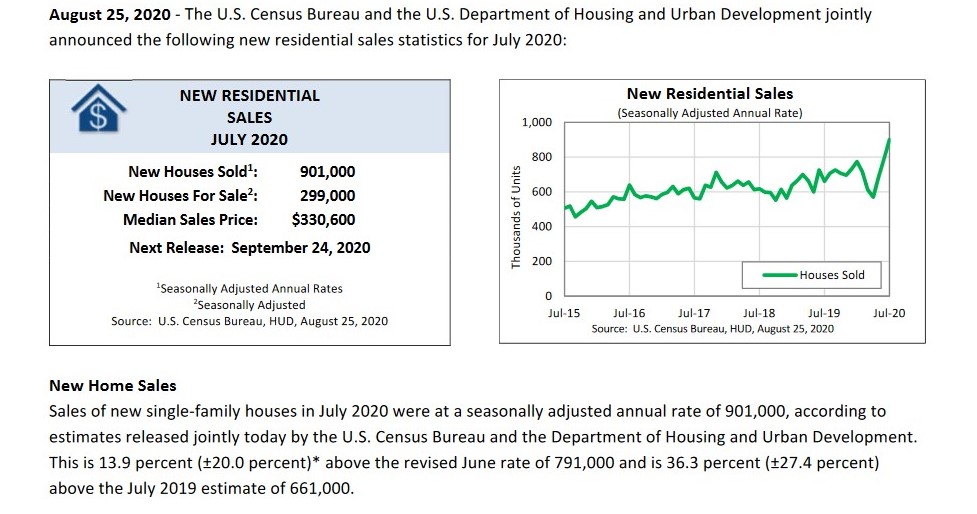
Sales of new homes in the US soared to their highest level since December 2006 in July as Americans took advantage of historically low interest rates.
Single-family home sales leaped 13.9% to a seasonally adjusted annual rate of 901,000 units, according to data released by the US Census Bureau on Tuesday. Median sales price gained 7.2% to $330,600 from the year-ago period…
The better-than-expected data follows a similarly positive report on existing home sales. Sales of previously owned homes spiked a record 24.7% to a seasonally adjusted rate of 5.86 million last month, according to a Friday release from the National Association of Realtors. Economists anticipated a 5.41 million rate.
At the same time, this is an odd time for increased housing sales. We are in the middle of a pandemic and the uncertainty and unemployment that has brought. Some indicators of the economy are okay but others are less positive.
With that, it is hard to know whether this is more of a blip or a long-term trend. Perhaps this is part of a rebound in homeownership or an odd confluence of factors in an unusual year.
And it would be helpful to have more data. The Census report suggests 61% of the private new homes sold in July 2020 were between $200k and $399k while 29% were over $400k. What kinds of homes are these and where exactly are they located (beyond regions, how about suburbs versus cities?)
In the first three months of 2020, 7.5% of homes sold in the United States were flipped, according to a June report from real estate research firm ATTOM Data Solutions. That’s the highest rate since 2006 and a jump from 6.3% at the end of 2019.
Home flipping rates had dropped drastically in 2007 and began to gradually recover in 2010. The number of flipped homes sold in a quarter peaked around 100,000 in 2005, and while it was on the rise in recent years, a decline began in the second quarter of 2019. In the first quarter of 2020, 53,705 single-family homes and condos were flipped, according to the report.
Profit margins have also dropped since 2019, hitting the lowest return-on-investment since 2011. After plummeting with the national economy between 2006 and 2008, profit margins on flipped homes grew at a steady rate until 2017. But since then, return-on-investment has been on a decline.
Still, it’s too soon to fully grasp how the coronavirus pandemic will impact the house flipping market through 2020 and beyond, ATTOM chief product officer Todd Teta said in a statement.
Flipping homes is by now a well-known process due to TV shows and personalities plus its spread throughout the United States. Yet, alongside other phenomena featured on HGTV and among certain groups (such as tiny houses), it can be hard to know how widespread a phenomena is.
Not surprisingly, these stats suggest flipping homes is connected to broader economic conditions: flipping increases when property values are high and repairs to a home can pay off in a sale. When times are tough and property values stagnate or even drop, there is less money to be made in flipping homes.
In the data above, it would be helpful to see how the national trends compare to patterns in particular places. Does flipping work in the hottest markets where prices are already high (limiting who can flip)? What about Rust Belt communities in good and bad times? Suburbs? Urban neighborhoods? I would guess there is a lot of variation across communities.
It is also worth considering what happens to the housing stock in places where flipping does or does not take place. If flipping happens, older housing stock gains new life. If it does not, do these homes simply keep sliding into disrepair?
Finally, this article starts with an example of a family involved in a flipping business but says very little about the role of small flipping businesses or more corporate operations. Even if flipping activity declines during tougher economic times, does it present opportunities for some to buy up properties to flip later? How do the profit margins differ across different kinds of flippers? Are smaller firms or family-owned flippers viewed more favorably by communities than corporate entities?
Google Maps image of Meachem Road and Illinois Route 390
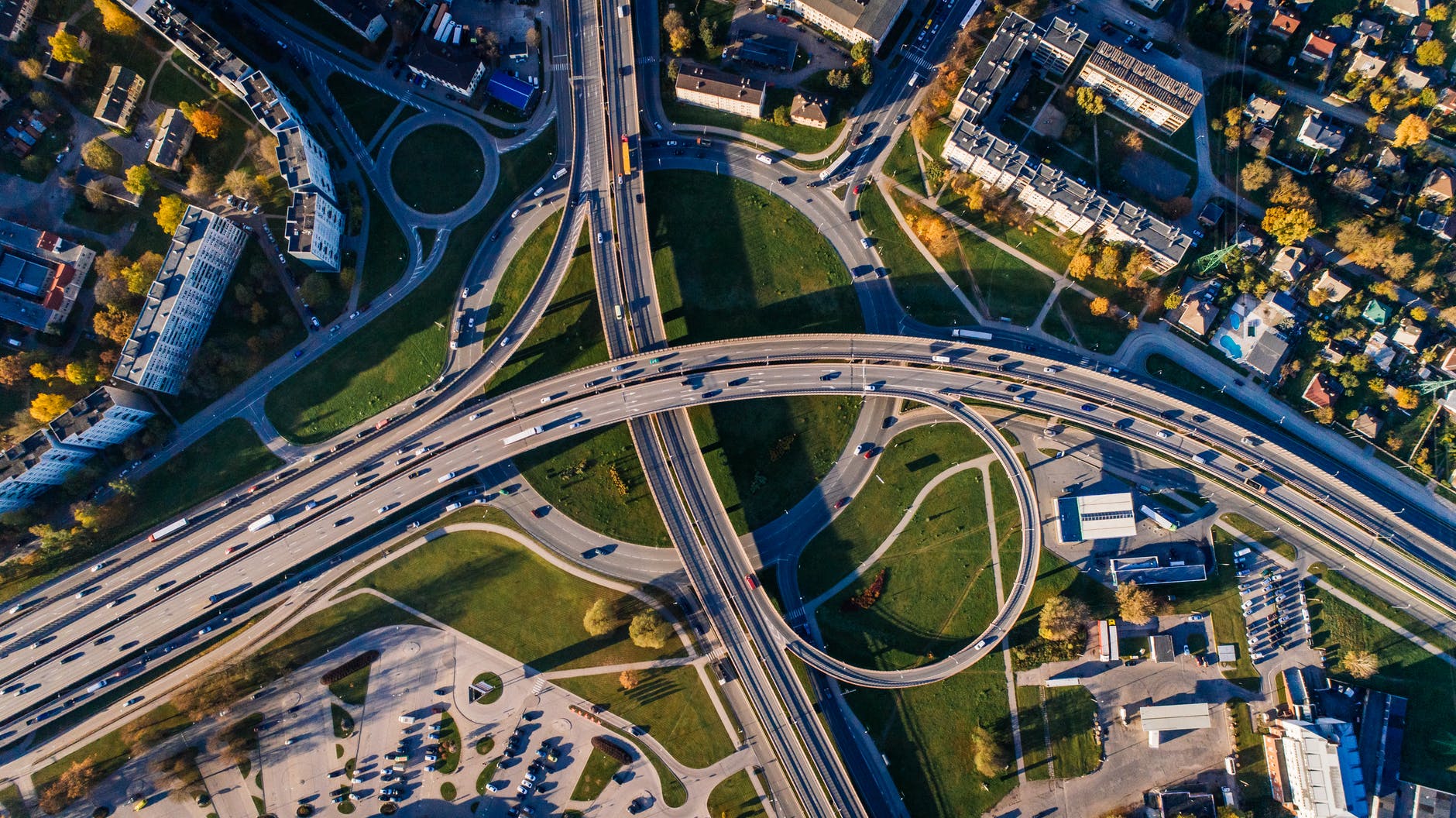
Kennedy-bound traffic will be detoured onto the far-right Eisenhower lane and steered to the outbound Dan Ryan Expressway. From there, motorists will take a “Texas U-turn” at the Taylor Street interchange and go from there to the westbound Kennedy…
“The detour will be a dedicated lane separated by a barrier wall to restrict merging into the regular Dan Ryan lanes and requiring drivers to use the Taylor Street interchange,” IDOT engineers said.
What’s a Texas U-turn? It “refers to a roadway that allows vehicles to make a 180-degree maneuver to go in the opposite direction, usually without traffic signals,” IDOT spokeswoman Maria Castaneda said. “They were first widely used in Texas on one-way frontage roads that paralleled expressways.
“The free flow U-turn improves traffic flow and reduces congestion in certain situations because it keeps the U-turning traffic out of the cross road intersections. An example of this is at the Meacham Road interchange on Route 390.”
1. A precondition for the Texas U-turn seems to be having frontage roads along highways. There are some areas in the Chicago region where this is common – such as long the Dan Ryan Expressway – but many other areas where frontage roads are not present and properties back up to the highway. In Chicago, I wonder if the frontage roads are the result of fitting highways into the existing street grid (such as the Congress Street Expressway, later the Eisenhower).
2. It would be interesting to see how different road innovations spread across states. How do highway innovations diffuse across the United States? They may arise because of particular local conditions but then engineers and planners elsewhere see how they are applicable. At some point, there is federal intervention regarding safety and regulations. Having driven on highways across the United States, there is both familiarity with the system – similar signage, the roadways themselves look similar – as well as local peculiarities – exits on different sides, the size of on and off-ramps as well as the space between them, HOV lanes, etc.