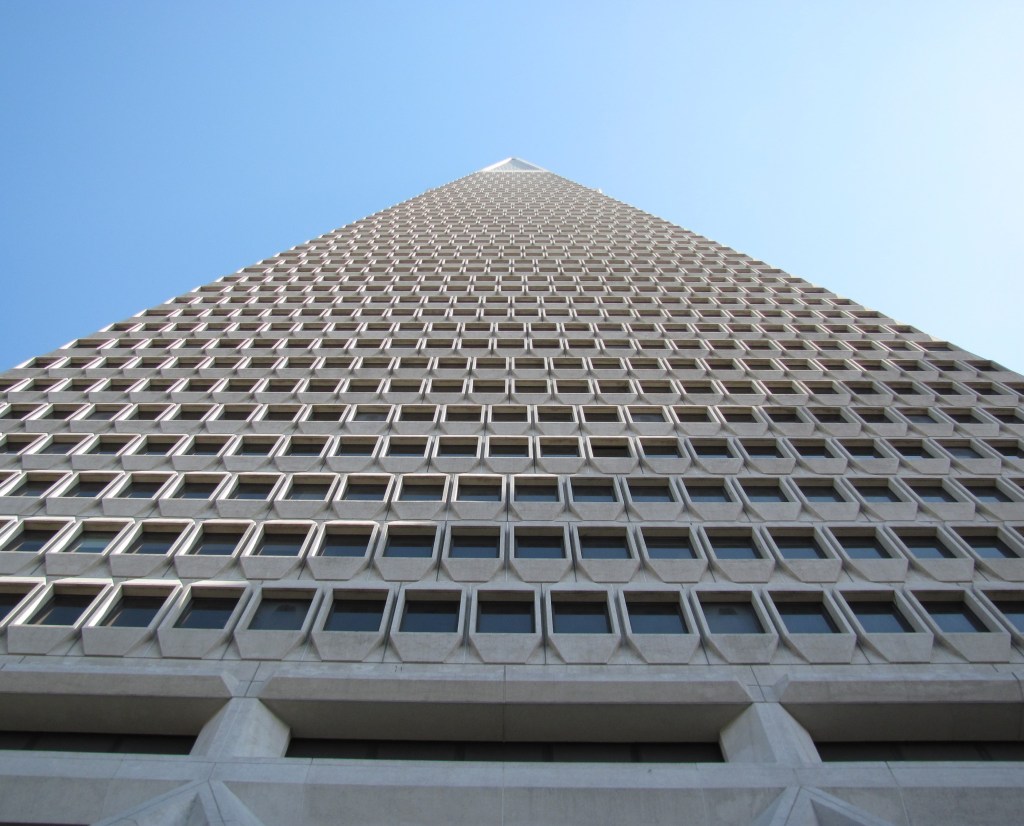
Example of rent drop in San Francisco: one bedroom down from $4,300 to $3,150

After hearing of rent drops in Manhattan, I read about one example of rent dropping in San Francisco:

Until the pandemic hit, the city’s housing market was so tight that would-be renters lined up for viewings and arrived with thousands of dollars in cash, ready to sign a lease on the spot.

But now landlords are hard-up for tenants and some are offering several months free, said Coldwell Banker realtor Nick Chen, who recently rented out a one-bedroom for $3,150 that before would have easily gone for $4,300.

“San Francisco rents have been really inflated over the past couple years,” Chen said. “It will come back, but I think the question is: Will it come back to the level it was at previously? Maybe not.”

This is a sizable drop in rent, roughly 25% in a short time frame. Yet, that is still a price that few Americans across the country could meet. Even with significant changes in social life in cities like San Francisco and New York, this does not mean these places are now accessible to many.

Presumably, there is a bottom floor below which rents will not drop. The person who owns the property has their own bills to pay. Some people will see this as an opportunity to get a place in San Francisco at a lower rent and jump at lower prices.

Or, does COVID-19 shift housing prices in high-priced markets for a longer time? If businesses decide to continue work from home and employees are skittish about being around a lot of people in a dense city, do rents drop even further? Is there an opportunity for developers, buildings owners, housing groups, and local governments to jump in and acquire and/or offer cheaper housing? I would not guess expensive housing markets like San Francisco, Seattle, or Manhattan will soon become reasonable but perhaps there will be some opportunities for more people in the region to take advantage.

How are suburban apartments designed with COVID-19 in mind different?

A proposed apartment building in downtown Glen Ellyn, Illinois includes several features in response to COVID-19:

The latest iteration creates dedicated, work-from-home spaces inside apartments. South Bend, Indiana-based Holladay Properties is looking at installing voice-activated elevators to limit touch points. The project also would incorporate small conference rooms and phone booths where residents could take a call or prepare for a presentation.

“It’s hard to ignore the global pandemic,” Holladay Vice President T. Drew Mitchell said. “It’s in front of us everywhere, so some of the things that we’re doing inside of the units is sort of a reaction to that.”…

“What we’ve encountered in our product in suburban Chicago is overwhelming demand,” said Mitchell, who’s based in the firm’s LaGrange office. “We have a waitlist right now at Burlington Station in downtown Downers Grove, and what we’re seeing unfortunately for Chicago is people are returning to the suburbs.”

In Glen Ellyn, rents would range from about $1,400 to nearly $3,000. Glenwood Station amenities would target young professionals working in the city, empty nesters seeking a lower-maintenance lifestyle and other demographic groups.

From the picture provided, this looks like a fairly typical apartment building for a wealthy suburban downtown. The building is not too tall; height is a problem in many suburbs as residents do not want structures to dwarf other buildings, particularly houses). There is room on the sidewalk for pedestrians with streetlights and plantings. While there is some variation to the exterior, the design is not too crazy for a bedroom suburb. The building is not too large; there are just 86 units. There are American flags flying at the street corner.

The changes, according to the article, seem to focus on interior spaces. If you live in an apartment, how do you find space to separate home and work? This may be easier in large homes. What additional spaces could an apartment building or complex contain that gives residents some variety without having to leave? The suggestion above is to provide private spaces elsewhere in the building. It will be interesting to see how apartment developers and owners will in the future modify public spaces – gyms, pools, gardens, dog areas, party rooms, etc. – when restrictions may not allow apartment dwellers to use them in the same way.

What is missing from the COVID-19 apartment approach? Given the economic insecurity and the housing pressures many feel, will apartments be cheaper? These are not cheap apartments according to the story. Will this bring different kinds of people to Glen Ellyn than who might have typically moved there? The amenities are said to be geared toward the types of people suburbs often want to attract as opposed to affordable housing that would better serve those who truly need decent housing.

In other words, suburban development continues in fairly normal ways: the developer gets TIF financing, the city gets a building that fits its character and aesthetic, and suburban downtowns become a little denser.

Hints of growing art scene in English suburbs, towns

COVID-19 and housing prices have pushed more artists out of English big cities:

Photo by Anthony Shkraba on Pexels.com

Now, the pandemic is prompting a wider exodus from the British capital, pushing up real estate values in outlying regions. Months of remote working have made city dwellers reassess their housing priorities. And like many office workers, contemporary artists such as Mr. Allan — who makes art under the moniker “Dominic from Luton” — are also finding that they no longer need to be in a big city…

Hastings, with its scrappy mix of stately but unkempt 19th-century houses, 1970s seafront amusements, poor transportation links and limited employment opportunities, was recently ranked as the most deprived town in southern England by Britain’s housing ministry. But its distinctness and affordability have long been valued by artists…

Supported by a new [Croydon] City Hall-funded initiative called Conditions, 27 such spaces are being offered for £138 to £230 a month in a repurposed bicycle factory and office building. Katie Sheppard, one of the artists based in the complex, makes digitally embroidered portraits based on selfies; another, Felix Riemann, makes sound sculptures for performances…

This vision of an accessible, locally grounded art scene is very different from the elitist flying circus of blockbuster exhibitions, auctions, fairs and biennials in destination cities that has dominated the art world in recent years.

On one hand, as is noted in the story, the Internet and the smartphone make art possible from anywhere.

On the other hand, art is more than just a single genius creating while sitting quietly somewhere. Local conditions, such as housing costs, matter. Having a set of like-minded arts around who provide support and spur creativity may be essential. Funding, local resources, and neighborly or community goodwill help.

One of the biggest barriers to art in these communities may just be the decades of suburban and small town critiques that suggest they are dull and backward locales. Can art only work there when conditions in big cities are too difficult for artists?

More broadly, this speaks to the concept of art worlds in which artists and numerous other actors operate. The creation of art is a social activity involving multiple pieces and social forces. Art can indeed flourish in many locations, including suburbs and small towns, if the conditions are right.

Missing any conversation about housing in the 2020 presidential campaign

The Democrat presidential primary for 2020 contained occasional talk of housing on the campaign trail or in debates. But, leading up to Election Day 2020, there has been little attention paid to housing. A few notes on this:

Photo by Element5 Digital on Pexels.com
  1. Some broader campaign themes could be related to housing: talking about the middle-class, taxes, providing opportunities for more Americans. But, these typically do not directly address housing even if it may be implied (such as being middle-class includes the ability to own a home, often in the suburbs).
  2. COVID-19 has had a direct effect on a number of areas. While there has been much said about jobs and the economy, the connection to housing is missing. For many, employment status directly affects housing status and there have been moratoriums regarding rent and evictions. Yet, the primary focus is on the direct means of making money (jobs, stock market, etc.) rather than what many hope their earnings translate into (a nice residence to own or rent in a good neighborhood). Additionally, the housing and real estate industry contribute to the broader economy but little has been said about activity here outside of some people are leaving cities.
  3. Even without the 2020 election and COVID-19, housing is related to a number of other key forces in American society: local schools, property values, building wealth, local neighbors and social networks, access to jobs, health care, amenities, and local services. Yet, it continues to merit little mention or go under the radar all together. Even as it is a difficult issue to address at the national level due to local complications and a complicated and controversial history in the United States, ignoring the issue does little.

How far might rent drop in Manhattan and other cities and who will benefit?

As some people reconsider living in Manhattan and other cities with high housing costs amid COVID-19, how far might rents drop?

According to StreetEasy, the median rent has fallen below $3,000. That is the lowest price since 2011.

The third quarter of 2020 also marked the first time since 2010 that Manhattan, Brooklyn and Queens all recorded year-over-year rent declines.

StreetEasy says renters are no longer willing to pay the so-called “commute premium” of living in Manhattan, because so many people are working from home.

Any rent drop in Manhattan or in New York could provide opportunities for people who even just a short time ago had little chance to live there.

At the same time, dropping below $3,000 for the median suggests that rent is still pretty high. Who can take advantage of this drop? Those with resources to do so, not necessarily people who need affordable or cheap housing. Indeed, if these lower rents quickly induce a number of people to take advantage, then rents could stabilize and head back up.

Perhaps there is little that could actually move rents and housing prices in certain housing markets to a point where many more residents could take advantage. A pandemic is unlikely to lead to the production of more housing and struggles with employment, among other factors, will limit who would move to big cities with temporarily lower prices. At the same time, COVID-19 could help nudge conversations about housing in a productive direction.

What redevelopment will suburbs pursue with COVID-19 induced vacancies?

The COVID-19 pandemic is accelerating a number of trends already troubling many communities: struggling brick-and-mortar retailers, filling vacant office and commercial properties, and budget uncertainties. What might this lead to as suburbs consider redevelopment? A few possible directions.

Photo by Pixabay on Pexels.com
  1. Desirable suburban communities – those with wealthier residents, more white-collar and professional workers, higher quality of life, and stronger economic bases – will do better at attracting and following through on redevelopment.
  2. The “easiest” answer in many suburbs might be to redevelop office or commercial properties for residential units. Given the needs for affordable housing or cheaper housing in many metropolitan areas, many suburbs could fill residential units. They may not want to for several reasons: residences do not bring in sales tax money and services are different for residences, including having more students in local schools. Plus, “affordable housing” implies certain things about the residents and the units that might not be palatable to some communities. But, if the primary goal is to put property to use, this might be the way to go.
  3. Mixed-use redevelopment that combines residential and retail or office space will continue to be attractive. However, these opportunities might be limited to already-advantages suburbs or particular properties that have certain advantages (large enough to create a self-contained community, access to highways and other transportation options, etc.).
  4. Certain properties may just present particular problems. Three come to mind quickly: shopping malls, empty big box stores, and sizable office parks or campuses. A number of communities have tried to tackle each of these (as one example among many, see this shopping mall post here) but the size of the property and their particular configuration present problems. There may a glut of new kinds of suburban properties that present their own issues: restaurants (both sit-down and fast food), strip malls, and movie theaters. Again, the ways the space was initially configured for these specific uses can make it difficult to pursue retrofitting.
  5. Converting private spaces into more public spaces. Imagine the shopping mall to public skating rink or office campus to park. These may have very positive long-term benefits including spaces for civic engagement, leisure, and interaction with nature. Yet, given the state of municipal budgets with COVID-19, it might be very hard to find money to purchase or use what was once private property.

If there are numerous vacant properties in suburban areas post-COVID-19, this will present a challenge for communities. Are there enough uses for these properties? How willing are suburbs to convert land from one use to another as they consider the “best use” for the community?

Online real estate shift during COVID-19 reinforces the private nature of American homes

The ways in which COVID-19 has pushed more real estate activity online – virtual tours, making offers without physically seeing a home – doubles down on the private dimensions of residences in the United States. Here is my argument:

Photo by bongkarn thanyakij on Pexels.com

Already, Americans tend to see their homes as castles, refuges from the outside world, spaces where they can do what they want, settings in which they tend to their immediate family and consume a lot of media, financial investments for their future. Add this to suburbs devoted to homeownership and driving and the home is truly a private place.

The downside is this: there is often limited community and civic engagement. Neighbors get along by pleasantly or passively leaving each other alone. Private spaces are very distinct from public spaces and public spaces where a true diversity of people might actually mix, whether a shopping mall or a library, are relatively rare. Trust in institutions is low and participation in community groups has declined.

Putting homes for sale on the Internet just further reduces the community or neighborhood element of a residence. If you look at enough real estate pictures, you see some patterns: lots of interior shots but limited images of how the residence interacts with surrounding spaces or what may be just down the street. For example, you may get a shot of a backyard but it is often facing the rear of the house, not out into the neighborhood. Or, you might get a pleasant image of the downtown of a community or a local park or a common room within an apartment building without much sense of how those spaces are used.

This is similar to how HGTV often shows homes. There may be sweeping shots of a neighborhood or location but the focus is always on the single housing unit. The interior and its features are the focus. The neighborhood or surroundings do not matter unless it has to do with proximity to work or family or to note the character of surrounding buildings (which is often connected to property values and the perceived niceness of the location).

There are some tools that could help potential homebuyers check out the neighborhood and community. A virtual house tour could be followed by a Google Street View drive through the nearby blocks. Instead of just relying on walkability and school scores on real estate websites, a potential buyer could go to local websites or message boards to try to get a sense of community life. Yet, any of these Internet attempts pale to talking to people in the community and experiencing the surrounding area. People should make some efforts to get to know their community before they consider moving there.

Seeing homes and residences as commodities that can be evaluated solely through the Internet downplays civic life or at least pushes it into the background. Divorcing a home from its surroundings can be done but it is impoverishing in the long run for property owners and communities. When we emerge from a COVID-19 pandemic, I hope the online aspect of real estate does not hamper efforts to rebuild community and social life when such work is sorely needed.

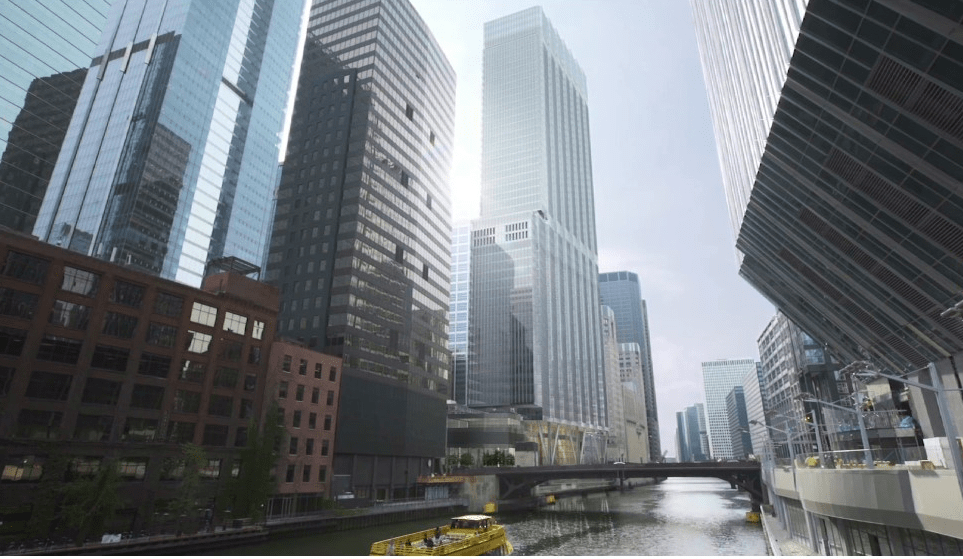
Opening a 56-story Chicago office building during COVID-19

The new Bank of America office building, 816 feet tall and 56-stories along the Chicago River, is ready for business. But, COVID-19 is around…

From film at https://110northwacker.com/

The lead tenant, Charlotte, N.C.-based Bank of America, expected to have more than 2,600 people working on its 17 floors of the 56-story tower. But fewer than 200 work there now, according to company spokeswoman Diane Wagner…

By drastically reducing the number of columns that come to the ground, this structural tour de force allows the tower’s caissons to reach bedrock without hitting the remaining caissons of the old Morton Salt building. It also opens up the riverwalk, which would have felt constricted had it been hidden behind a row of columns.

To some, the arrangement may appear unstable. But new section of riverwalk, with its long, curving benches and still-to-be-planted greenery, is among the strongest contributions the tower makes to the public realm. It will not become a windblown cavern, the architects assure…

With COVID-19 still a significant threat, the developers have put several safeguards in place, including walk-through temperature scanning in the lobby, antimicrobial cladding on the building’s entry doors and upgraded air filtration systems. Tenants can swipe their smartphones on high-tech turnstiles that call an elevator. There’s also none of the welcoming seating that animated other downtown office building lobbies before the pandemic struck.

It sounds like the pandemic has effects on two major features of the building:

  1. The interior will not be functioning as it was designed for a while. This building has a lot of office space; will it ever be fully filled after COVID-19 passes and businesses reckon with shifts to working from home? We have not heard much about what it is like to work in such conditions – a relatively empty building – nor do we know how building owners and developers plan to use office space if they cannot attract firms.
  2. The excerpt above describes how the building interacts with the surrounding environment. It sounds good. But, how does it look and/or function when the typical street life of the Loop is not present? Can aesthetics overcome a lack of social interaction? When will the building fully participate in regular urban life?

Since this is not the only large downtown building under construction in Chicago, let alone in large American cities, it will be fascinating to see what comes of these structures. Will they be regarded as the last of the big central office buildings in a decentralized work landscape or will they be brave attempts to do business as normal or do they represent a new wave of exciting buildings that mark a post COVID-19 era?

Percentage of delinquent FHA loans keeps rising

The economic and social consequences of COVID-19 might be just beginning. A new report suggests a number of FHA mortgage holders are behind in payments:

More than 17% of the Federal Housing Administration’s almost 8 million home loans nationwide were delinquent in August, according to a new study from the American Enterprise Institute.

“Rising FHA delinquency rates threaten homeowners and neighborhoods in numerous other metro areas across the country,” American Enterprise Institute researchers said in the just released report. “It would be expected that these delinquency percentages will increase over time…

The increase in late FHA loan payments is even greater than the rise in the number of overall mortgage delinquencies since the start of the pandemic…

A new study by the Federal Reserve Bank of Dallas warns that highly indebted FHA borrowers are at risk of losing their homes when payment forbearance programs end.

More people falling significantly behind on their mortgages – plus other issues related to housing – could have ripple effects on a number of actors:

  1. Americans who need housing. If you cannot afford your mortgage or rent, what viable options do you have?
  2. Mortgage providers. If a lot of mortgages go into default or foreclosure, what does this mean for these large financial actors?
  3. Local governments and communities. With larger numbers of people without housing and limited housing, what happens? What happens to local tax revenues?
  4. Housing investors and people with resources. Does this mean they can take advantage of opportunities?

The memory of the burst housing bubble just over ten years ago lingers. While few predicted a worldwide pandemic and the resulting impact on housing, we could know within a few months whether this will lead to another housing crisis.

Utilizing the front porch during COVID-19

With social life changed to COVID-19, front porches offer a unique opportunities for social interaction:

Photo by Thgusstavo Santana on Pexels.com

Thanks to the pandemic, the front porch is enjoying a new golden age. Like their near cousins, stoops, steps, even fire escapes, porches offer a semipublic setting where we can meet friends and neighbors face-to-face—even if those faces are masked. In the words of Claude Stephens, founder of a tongue-in-cheek group called Professional Porch Sitters Union Local 1339, a porch is “the only place where you can feel like you are outside and inside at the same time; out with all of the neighbors and alone reading a book.”…

“The front porch was an escape from the heat of the wood-burning kitchen stove,” explains historian Donald Empson, the author of “The Street Where You Live,” an architectural guide to St. Paul, Minn. “On the porch, in the cool of the evening, the family could gather to discuss the day’s events and exchange the latest news with neighbors strolling by.” Porches offered neighbors a place to exchange gossip, to spin sagas and sing songs, to flirt and court and air political views. The front porch at the turn of the century was Starbucks, flash mob, church social and Facebook rolled into one…

We no longer need front porches to broadcast our political agendas or to keep cool, as our grandparents once did. But we still need them, perhaps now more than ever. Porches give us a physical space to safely host friends, neighbors and passersby for the small talk and deep conversations otherwise difficult to foster in the middle of a pandemic.

If you’re yearning to add a porch, a 300-square-foot version will set you back an average of $21,000. One study shows you can recoup 90% or more of that investment at resale. But you can’t place a dollar value on the intangible elements of a porch—a social lubricant, a casual meeting place, an eye on the world, a place that’s a little bit yours and a little bit theirs.

Architects, urban planners, and others have argued for decades that front porches and the social life associated with them would help improve community. By spending time in a zone connected to the single-family home yet open to people passing by, residents open themselves up to interactions in a way that is not possible with the common holing up inside to watch TV or driving in and out of the garage at the beginning and end of each day.

It would be interesting to see how exactly front porches are being used right now. There is a time period of home construction lasting at least a few decades in the postwar era when front porches were not common. Older homes may have home as might some newer homes, though these newer porches can be fairly small or more cosmetic than usable. Do people in neighborhoods where front porches are more common report higher levels of social interaction during COVID-19?

In addition to the new opportunities for social interaction during COVID, the front porch can also function as a work or social space separate from inside life yet still connected to the home. With many working from home or students going to school remotely, the front porch offers a covered yet open-to-nature space. Just make sure the Wifi works well…