“Suburbs are now the most diverse areas in America”

Increasing racial and ethnic diversity in the suburbs can lead to tension:
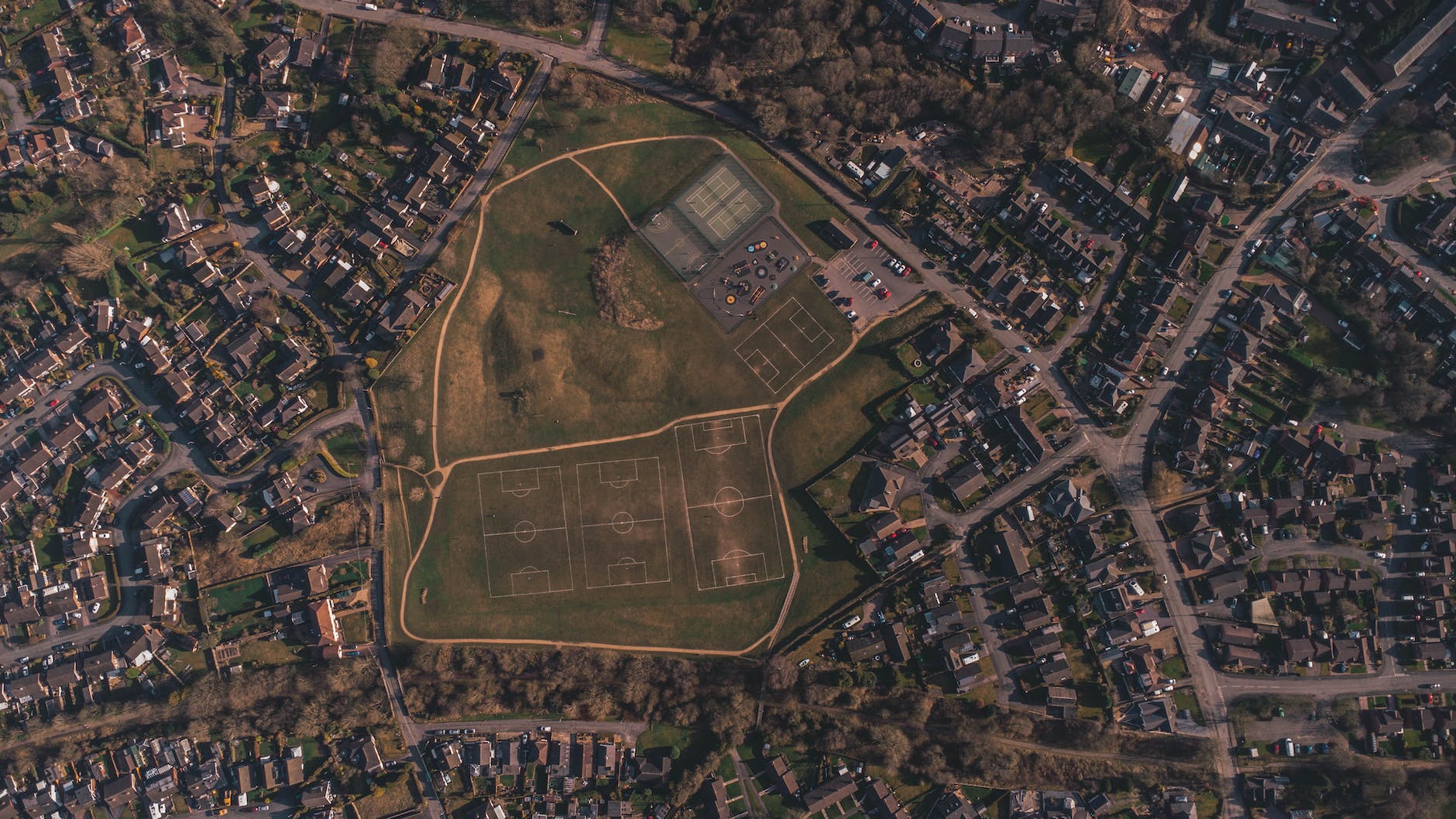
Photo by Daniel Ellis on Pexels.com

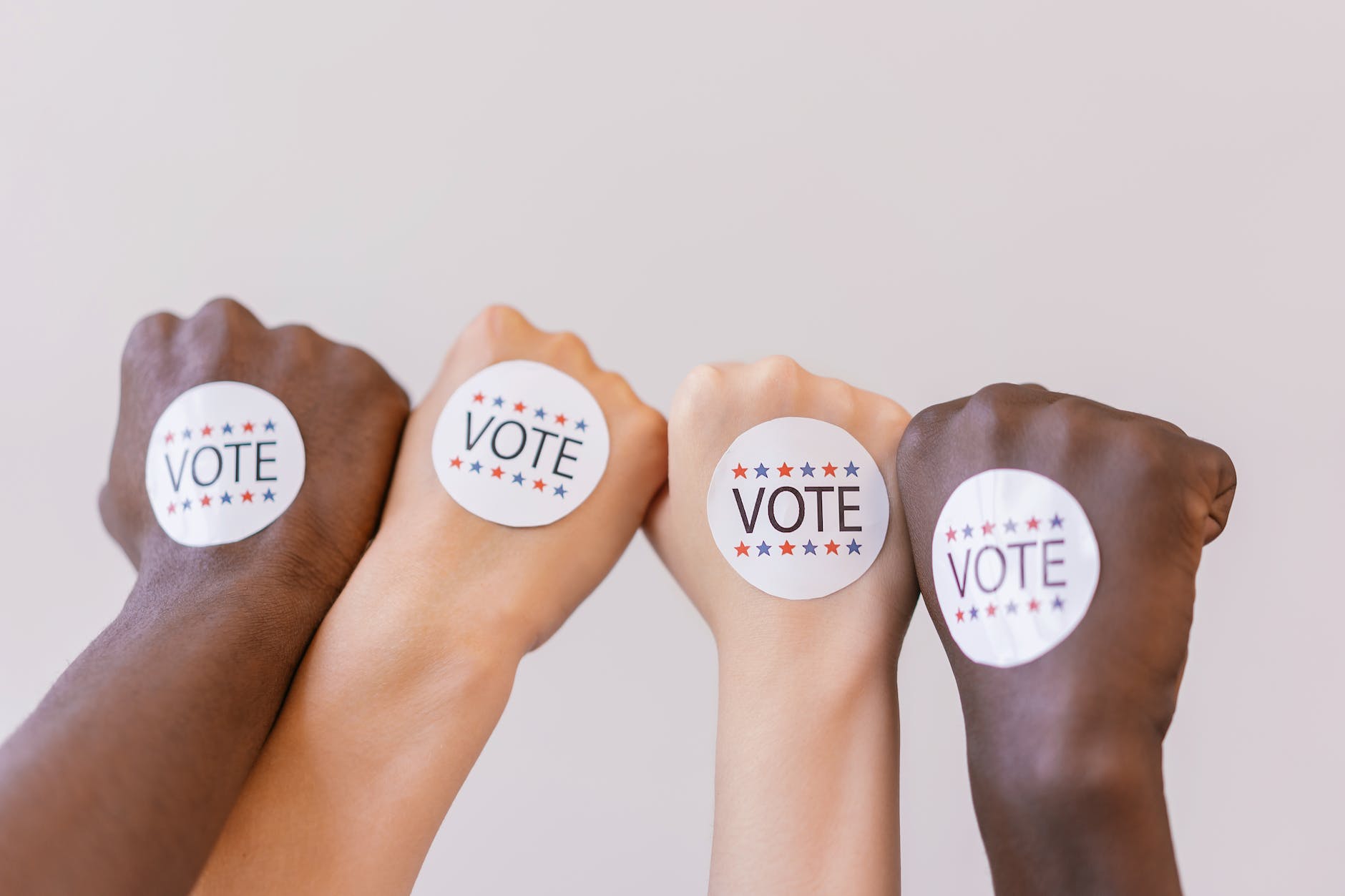
For a long time, the phrase suburban voter has been code for white voter. But suburbs are now among the most diverse spaces in American life, and tension is growing over who belongs in suburbia as NPR’s Sandhya Dirks reports.

The primary arena for conflict in this report involves politics:

DIRKS: Last year, white parents and some white folks who weren’t parents screamed at local school board meetings over teaching kids about racism or having diversity and inclusion programs. Most of the places where those fights flared were suburbs, and they were suburbs that are changing, suburbs that have grown more diverse. In some cases, like in Gwinnett County, they are also suburbs where Black people have started to get elected to local seats, like school boards.

KERNODLE: The difference between now and then is that we have power too.

DIRKS: Because as suburbs change, so does the power of the suburban vote.

This tension extends to numerous other areas including neighborhoods, housing, jobs, and schooling.

More broadly, this part of the process of “complex suburbia” where suburbs are changing. Some communities are changing faster than others, with these rates likely tied to social factors and patterns of resources and influence.


The factors behind the spread of suburban pickleball courts

Pickleball is increasingly popular in the United States and the game has also spread through the Chicago suburbs:

Photo by Raj Tatavarthy on Pexels.com

Bill and Linda Graba of Hoffman Estates are widely considered to be the godparents of pickleball in the Northwest suburbs. They picked up the game after retiring to The Villages in central Florida, where they spend their winters…

Graba said he and his wife started promoting the game locally in about 2009. They helped get indoor courts at what was then known as the Prairie Stone Sports & Wellness Center in Hoffman Estates and outdoor courts at Fabbrini Park in Hoffman Estates. For the past 10 years, they’ve organized a six-county tournament that brings in about 200 participants.

Graba said public outdoor courts are popping up throughout the suburbs, including Palatine, Schaumburg, Streamwood, Hanover Park and St. Charles.

“It’s basically all over every suburb,” Graba said. “If they haven’t had them in the past, people are asking and they will have them soon.”

This seems ripe for some analysis at the community level:

  1. In what communities are pickleball courts showing up?
  2. What are some of the common processes by which pickleball courts come into existence? Who is asking for courts and who is building them? For example, are park districts primarily funding these?
  3. The space and resources for pickleball courts is coming from where? Is this about the transformation of tennis courts or are other spaces being used?

I suspect there are some patterns to who is playing, where they are playing, and how the game is spreading. As the game spreads, there could also be some change to the answers to these questions.

Why might suburban leaders head up legal challenge to IL law ending cash bail?

A lawsuit led by suburban officials challenges a new Illinois law in court:

Photo by Pixabay on Pexels.com

When more than half of Illinois’ state’s attorneys go to court in Kankakee County next month in a last-ditch effort to block the controversial SAFE-T Act, the proceedings will have a distinctly suburban flavor.

The offices of McHenry County State’s Attorney Patrick Kenneally and Will County State’s Attorney James Glasgow have been chosen to serve as lead counsel in a lawsuit they and 61 of their peers have filed seeking to have the massive criminal justice reform bill ruled unconstitutional…

The state’s attorneys argue that violates several parts of the state constitution, including the Separation of Powers Clause by stripping judges of their full authority to detain defendants, set monetary bail and revoke bail. They also argue that a portion of the Act that gives police discretion to release defendants without bail on low-level offenses unlawfully takes that authority away from the courts…

The state’s attorneys argue that violates several parts of the state constitution, including the Separation of Powers Clause by stripping judges of their full authority to detain defendants, set monetary bail and revoke bail. They also argue that a portion of the Act that gives police discretion to release defendants without bail on low-level offenses unlawfully takes that authority away from the courts.

Suburban counties are not the only ones party to this lawsuit, but is it meaningful that they are leading the effort? A few general patterns scholars might point to:

  1. The image and ideology of suburbs suggests they are safe places relatively free of crime.
  2. Where does crime happen? It is viewed as a problem of cities and urban centers.
  3. The first two points are connected to long-term suburban patterns of exclusion by race/ethnicity and social class. Who commits crime? Not the typical suburbanite.
  4. Suburbs have a long history of fear of crime. And they act regularly in their suburban communities regarding crime, ranging from creating gated communities to supporting police efforts to choices about development and amenities.
  5. A suburban fear of crime is linked to particular political patterns and activity, including Nixon and the Republican Party’s “Southern strategy” to then-President Trump’s 2020 claim that the suburbs are under threat.

Put these factors together and suburban leadership on this issue may be no surprise.

The problems with suburbs: carelessness, lack of community

Jason Diamond’s book The Sprawl: Reconsidering the Weird American Suburbs argues the suburbs suffer from these problems:

Photo by Kelly on Pexels.com

The overall problem with the American suburbs has always been carelessness. Profit over people; keeping people out to keep up the property value; building up and out without much reason besides making more money. The idea is that what you and your family have is enough. What else could you need? Everything, you’re supposed to think, is fine as it is.

Almost every suburb in America has one thing in common: somebody built the place and moved on. These little subdivisions and towns were built, but they weren’t completed. Developers built houses and stores, but they couldn’t create community. And that’s the piece I saw lacking in so many suburban places from coast to coast: community. You can call the place you live one, but a community is only as good as the people who work to make it stronger. Nothing is complete: we’ve built the suburbs out, and now it’s time to grow them from within. It’s time to look at the past to see what we’ve done wrong, apply it to the present, and learn for tomorrow. Because whether we like it or not, the future is still in suburbia. We just need to reclaim it. (217-218)

Arguably, if you and your family have all you need in your single-family home and middle-class or higher lifestyle, what need do people have for community? People can believe they are self-sufficient enough to avoid reliance on others and can limit conflict with others. Whether this is actually true does not matter. Even as the suburbs have all sort of social networks and social interactions and are built on a long history of policies, decisions, and ideology, the perception that people can be independent and live the good life matters. This all contributes to the idea of individualism.

Reclaiming community at the suburban level is an interesting task. There are multiple communities already present in suburbia, but they do not necessarily advance the interests of the community as a whole or the people who might want to live there and cannot. For example, people are involved with local schools, public and private. Suburbanites care about education and how good school systems support higher property values. These interests and existing connections may be helpful or not for thinking about the community as a whole. Suburbanites like exclusion and local government control, two factors that can work against creating community for everyone.

Suburban voters were split in 2022

As the data trickles out from the midterm elections, here is one summary about how suburbanites voted:

Photo by Anna Shvets on Pexels.com

In 2018, independents went for Democrats 54 percent to 42 percent. Moderates broke for Democrats by a 26-point margin, and the suburbs split. In 2020, according to the national exit poll, independents went for Democrats 54 percent to 41 percent, moderates broke for Democrats by a 30-point margin, and Democrats won the suburbs 50 to 48 percent. Fox had similar results.

This year, independents went for Democrats narrowly. Moderates broke for Democrats by 15 points. And the suburbs narrowly went for Republicans in the national exit poll, while narrowly going for Democrats in the Fox voter analysis. Our national stalemate continued.

In the current state of national politics, both parties want the suburbs to break their way. It appears suburbanites were fairly split this year, meaning that not a whole lot changed. Will either party have a platform or message in 2024 that is more appealing to suburbanites than the other side?

Seeing these results also got me thinking about redistricting, gerrymandering, and how suburban areas are incorporated in districts. Given their volatility and patterns (suburbs closer to big cities lean one way, those on the metropolitan edges lean another way), do party leaders want to consolidate suburban votes or break them up? I would be very interested to see an analysis on this.

UPDATE: In at least one metropolitan region, Democrats continued to make inroads in the suburbs. Referring to DuPage County and the Chicago region as a whole:

The once-impenetrable GOP stronghold was considered purple territory in recent election cycles. But in a watershed moment, Democrats captured the county board chair seat and appeared to hold onto their board majority Tuesday.

The shift in DuPage is part of a political evolution in suburban areas. Four years after Democrats made significant gains in the region, several of the collar counties turned a darker shade of blue on Tuesday.

Democrats flipped key state House districts in the Northwest suburbs. They solidified control of the Lake County Board. The GOP has no representation in Congress from northeastern Illinois. And in DuPage, Democratic state Rep. Deb Conroy became the first woman elected county board chair.

As noted in the article, this is a significant change over the course of several decades.

More Americans now living in mixed neighborhoods, especially in suburbs

Data from the 2020 Census shows that more Americans live in neighborhoods where no one racial or ethnic group is more than 80% of the population:

Photo by Almada Studio on Pexels.com

Back in 1990, 78 percent of White people lived in predominantly White neighborhoods, where at least 4 of every 5 people were also White. In the 2020 Census, that’s plunged to 44 percent.

Large pockets of segregation remain, but as America’s White population shrinks for the first time and Hispanic, Asian, Black and Native Americans fuel the nation’s growth, diverse neighborhoods have expanded from urban cores into suburbs that once were colored by a steady stream of White flight from inner cities…

More broadly, a new majority of all Americans, 56 percent, now live in mixed neighborhoods where neither White people nor non-Whites predominate – double the figure that lived in mixed neighborhoods in 1990, according to a Washington Post analysis of census data. By racial group, 56 percent of White Americans live in mixed neighborhoods, as do 55 percent of Hispanic Americans, 57 percent of Black people and 70 percent of Asian people…

Racially mixed neighborhoods continue to be less common in small towns and rural areas, and are increasing the most in the suburbs. Across large metro suburbs and medium metros, the share of people in racially mixed neighborhoods jumped by double digits over the past decade to 59 percent.

This is part of the emergence of complex suburbia where racial and ethnic populations have changed in recent decades. There still are predominantly-white neighborhoods but there are also more neighborhoods with different mixes of residents.

If people are now more likely to live near people of different racial and ethnic groups, what might this lead to? The analysis mentions backlash toward immigration. Could it also lead to positive change? How exactly is life playing out in different kinds of neighborhoods? How much does social class and the particular character and histories of a place shape outcomes in addition to these racial and ethnic changes?

The sentiments of suburbanites ahead of the 2022 midterm elections

As the 2022 midterm elections near, what are suburban voters thinking? Here is one report from the suburbs of Los Angeles:

Photo by Mikhail Nilov on Pexels.com

No matter where you venture along the northern fringe of metro Los Angeles, whether it’s the bustling suburbs of the Democratic-leaning San Fernando Valley or the more conservative towns that nestle in the russet-hued canyons to the north and east, you’ll find people who say they have good reason to sing the blues for their country.

They’re feeling weighed down by the onslaught of inflation, cultural conflicts and assaults on the electoral process. They fear that Americans — left, right and center — have given up trying to understand or sympathize with one another.

And they hold elected officials and political candidates responsible for sowing distrust among Americans and eroding faith in democratic institutions.

Who exactly will these suburbanites vote for at the national and local levels or will they choose not to vote? One poll suggests some change among white suburban women:

The GOP has seen a shift in its favor among several voter groups, including Latino voters and women, and particularly white suburban women. That group, which the pollsters said makes up 20% of the electorate, shifted 26 percentage points away from Democrats since the Journal’s August poll and now favors the GOP by 15 percentage points.

As in previous elections, suburbanites might sway the outcomes. Both parties have aimed their messages, at least in part, toward suburban voters who are both a sizable percentage of the electorate and where more voters might be open to shifting their votes.

Locating a new grocery store: too close to “death trap” road? Is it actually in the city?

A letter to the editor in Fort Worth highlights two perceived issues with a new grocery store:

Photo by Matheus Cenali on Pexels.com

The new H-E-B grocery store that was just announced is not really in Fort Worth, in my book. That area is basically Keller or Alliance. If they build a store inside Loop 820, you could call it Fort Worth.

I have no intention of ever driving on Interstate 35W (also known as one of the worst death-trap highways in the state) to go grocery shopping.

In the future, I hope the company might consider North Main in the new Panther Island complex, the Hemphill corridor, Berry Street, Eighth Ave, South Main, Rosedale Street, University Drive or even Lancaster Avenue, to jump start that area.

I talked with a few of my friends, and they have told me, no way are they driving to the far north to buy some taters.

How exactly do companies decide where to locate their stores? Generally, I imagine locating near a major highway is a good thing. That road can help bring customers and suppliers to and from the location. The new location is right near an existing Kroger (as well as other big box stores). The highway might enable more access than if located in a neighborhood with smaller nearby roads.

At the same time, there might be other areas that also would like to have a grocery store. How about in a denser or walkable neighborhood? Bunching a lot of retail options near the highway might not be terribly accessible for some.

The second matter involves which community the new store is in. The official address is in Fort Worth. However, it is quite a ways north of the center of the city. It is a block or so away from the Alliance Town Center mall. This might technically be Fort Worth but it is a sprawling location. (There is also the matter of the planned community of Alliance which includes part of multiple municipalities.)

This hints at the sprawling nature of some cities in the United States, particularly in the Sunbelt. Fort Worth is surrounded by suburban neighborhoods and roadways. Just a short drive from this store location and one is in another municipality as the city sprawls northward.

Let us see how the potential grocery shoppers respond to this new store. This is a sizable investment for a company and I am guessing they imagine a good probability of success.

Toll Brothers and “the proliferation of McMansions”

An obituary for Robert I. Toll connects Toll Brothers and McMansions:

Photo by Max Vakhtbovych on Pexels.com

Robert I. Toll, L’66, a former University Trustee, an emeritus member of the Carey Law School Board of Advisors, and the co-founder of transformative home construction company Toll Brothers, died on October 7 at home in Manhattan. He was 81.

Mr. Toll was born in Philadelphia suburb Elkins Park, Pennsylvania, to a father who was involved in Philadelphia real estate and who had successfully rebuilt his career after the Great Depression. Mr. Toll graduated from Cornell University in 1963 with a bachelor’s degree in political science, then graduated from Penn’s Law School three years later. He briefly worked at the Philadelphia law firm Wolf, Block, Schorr, and Solis-Cohen, but then founded Toll Brothers with his younger brother Bruce in 1967. To start out, “we built two homes,” Mr. Toll recalled. “Instead of selling them, we used them as samples for the lots we owned down the street.” These sample homes landed the brothers contracts to build 20 more homes, which each sold for $17,500. Robert, Bruce, and Alan Toll were among the first postwar housing developers to recognize how trends in highway construction would allow access to swaths of farmland for housing and shopping developments. 

Over the next five decades, under Robert Toll’s leadership of the company as chair and CEO, Toll Brothers rapidly grew to become, as the company’s slogan boasts today, “America’s luxury home builder.” The company recognized shifting demographics in the U.S. during the 1970s and targeted baby boomers looking to trade upward. The Toll Brothers blueprint included targeted land purchases, appeals for quick zoning approval, and predesigned houses that allow room for personalized changes by buyers. Boosted by the proliferation of McMansions and the implementation by zoning boards of two-acre lot sizes in many American suburbs, Toll Brothers became a force in the American housing market. Today, over 150,000 American families in 24 states live in a Toll Brothers-built home. Toll Brothers appeared on the Fortune 500 list, and Robert Toll spearheaded several philanthropic initiatives, including Seeds of Peace, a summer camp in Maine for children from global conflict. His many professional honors included recognition as one of the world’s top 30 CEOs by Barron’s magazine in 2005 and as best CEO in the Homebuilders and Building Products Industry by Institutional Investor magazine in 2008 and 2009. The Wall Street Journal once called Mr. Toll “the best CEO in the housing business.” 

Did Toll Brothers take advantage of an opportunity to sell luxury homes to a growing market or help create and establish a growing market? Would they call their luxury homes McMansions or is that a term applied by others?

No matter how these questions are answered, it is clear Toll Brothers contributed to the trend of larger and more expensive homes in the United States. Over 150,000 homes is a sizable number of dwellings. The shift to large-scale builders in the mid-twentieth century is an important factor in suburbanization and housing more broadly.

Additionally, what will happen to all of these luxury homes? Will they be updated and renovated for decades? I assume a good number are situated in neighborhoods and communities where they will not be near any cheaper or denser housing. Will some become teardowns? Will at least a few be preserved? There is still more of the Toll Brothers story to tell.

One approach to the broken dreams of the American suburbs: realistic expectations

After reading Jonathan Franzen’s latest novel Crossroads, I have a not-original answer to the problem of the brokenness lurking behind the promise of the American Dream in the American suburbs: realistic expectations about what life in the suburbs is like.

Photo by Lara Jameson on Pexels.com

Much is expected of the American suburbs and Americans love them for multiple reasons. They are the land of opportunity. Home to the middle-class and the hard-working. A symbol of success. A setting meant to guarantee success to future generations. The land of private single-family homes where owners can control their own destiny.

What if the suburbs could never deliver on all of these promises? What if it was only available to some? What if the humans who tried to pursue these goals still faced difficulties and heartbreak? What if the suburbs covered up a whole host of issues in American society?

Numerous novels, films, songs, and creative works have addressed these questions over the last century. They have clearly showed the cracks in the suburban facade, the tragedies masked by the suburban sprawl.

But, these works often struggle to propose a solution. Get rid of the suburbs? Do not move to them in the first place? Stop promoting them?

If anything, these works serve as a cautionary tale: the suburbs may not be as impressive as they are made out to be. They are home to the problems all humans face as well as have their own particular issues due to their histories and current realities.

At the same time, through policy and ideology, millions of Americans have moved to the suburbs. Balancing the dire stories told of life falling apart in the suburbs alongside the narratives of success and comfort in the suburbs, is there a more realistic narrative available about what suburban life is?