Balancing the needs of a region and nation versus the impact on local communities

Following up on a possible railroad merger that would affect multiple Chicago suburbs, several suburban leaders acknowledge that there are both community and larger interests at stake:
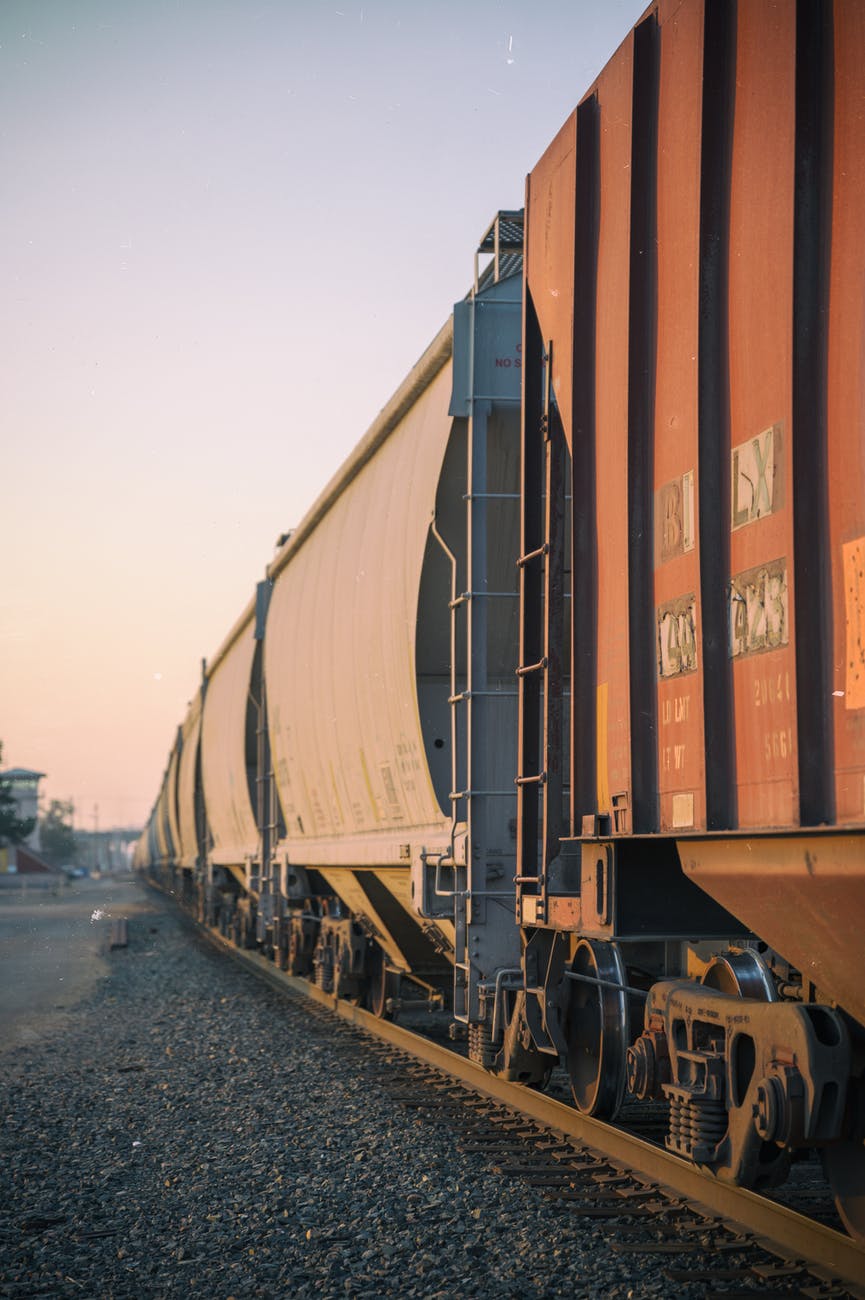
Photo by Brett Sayles on Pexels.com

Communities’ concerns about the length and frequency of trains are valid, but the key is to find a balance between alleviating their concerns and letting the railroads operate efficiently, bringing needed goods from one place to another, said Karen Darch, village president of Barrington and a board member of the Chicago Metropolitan Agency for Planning who has worked on railroad issues.

“We need transportation, this is a big industry for us, for the country,” she said. “And yet we want our communities to be safe and livable.”…

“It’s hard to argue against the commercial benefits that will occur from unifying these lines, and so the city’s trying to be realistic in terms of balancing its own interests with the greater benefit that can come for the U.S. economy,” he said. “We’re just asking, with the recognition that the railroads are going to benefit from this merger, we need some help.”

This is a conundrum that faces communities, regions, and the nation in multiple areas. The issue often arises in transportation but could also include eminent domain and land use, the move of a company from one location to another, and uneven development across communities. Whose interests should win out? How much room for compromise is there? How much can everyone involved see all of the layers?

There is little question that the Chicago region is an important region for railroad traffic in the United States. At the same time, that traffic impacts day-to-day experiences as well as long-term prospects for communities. What is good for the region or for national traffic may not look like what communities want.

The key here might be the efforts of the railroads themselves. What would they be willing to change about their operations and how much money would they contribute to help alleviate problems? This could range from listening to concerns, rerouting traffic away from residential areas, and contributing to the construction of bridges or underpasses to alleviate issues at at-grade crossings. This also helps make the contributions of railroads more tangible to suburbanites; people may know abstractly that railroads are important but have little to no direct interaction with any railroad company or representatives.

Adjusting housing for single-person households?

With the increase of single-person households in the United States, it raises questions about housing:

Photo by cottonbro on Pexels.com

The difficulties of living alone tend to lie more on a societal level, outside the realm of personal decision making. For one thing, having a partner makes big and small expenditures much more affordable, whether it’s a down payment on a house, rent, day care, utility bills, or other overhead costs of daily life. One recent study estimated that, for a couple, living separately is about 28 percent more expensive than living together.

These efficiencies are an inherent feature of sharing costs with other people, but the barriers to living alone, for those who want to, would be much lower if housing (and health care, and education) weren’t so expensive. Moreover, the types of housing that are most commonly available for one person typically privilege privacy over togetherness, but the two don’t need to be mutually exclusive. DePaulo has studied communities where single residents have their own spaces, but also plentiful shared areas with “the possibility of running into other people.” If you need to, say, move heavy furniture or get a ride somewhere in an emergency, your neighbors are easy to reach. More such options would make solo life easier.

With the rise in housing prices, the barrier to entering the housing market keeps increasing. A single-person household has fewer potential resources to draw upon.

Additionally, a good portion of housing is geared toward families or larger households. While some locations have plenty of smaller units – think studios to two bedroom units – other locations have larger residences. For example, suburbs are often full of single-family homes with 3+ bedrooms and more square feet.

Finally, housing in the United States is often tied to ideas of familial bliss. Those same private suburban homes are meant to enhance family life. Residences provide private spaces for nuclear families. They may have outdoor space for kids to play in and adults to use. Homes are a symbol of success and can provide a good long-term return on investment. Can a single person still enjoy and benefit from a house? Yes, but this may not be the typical image of life in a single-family home.

Fighting for decades against more freight trains in the Chicago suburbs

The mayor of Barrington, Illinois recently spoke about a long fight against large train companies and more freight traffic through the suburban community:

Photo by WT Pfefferle on Pexels.com

Karen Darch was elected mayor of Barrington in 2005, only two years before the merger of the Canadian National and EJ&E that would increase the freight traffic in Barrington from three trains to up to 20 each day. She understands what worries Roselle and other suburbs along the Canadian Pacific line, as CP and the Kansas City Southern pursue a merger.

The merger could bring six to eight more freight trains a day through Roselle, Itasca, Wood Dale, Elgin, Bartlett, Schaumburg, Hanover Park and Bensenville. Leaders in those towns are concerned about potential traffic backups, emergency vehicle delays, additional noise and more pollution, as vehicles idle for longer…

Under Darch’s leadership, Barrington fought to extend the oversight period over CN, arguing that crossings were being blocked for longer than what the railroad agreed to.

The village also worked for years to get federal money to build an underpass for Northwest Highway at the CN tracks — improving traffic flow and making it easier for ambulances to get to Advocate Good Shepherd Hospital.

I first ran into this issue in the late 2000s while conducting research involving a community that was also affected by the moves of Canadian National. To many leaders and residents in such suburbs, the increased traffic was not just a nuisance; in a region with many at-grade rail crossings, more and/or longer trains has the potential to snarl traffic, limit the ability of emergency vehicles to get around the community, and create more noise and pollution.

The irony is that many Chicago suburbs were founded along railroad lines and the region itself is central to the American passenger and freight rail network. Without the railroad, the Chicago region and many of its communities would not be the same. That same train that makes day to day suburban life more difficult is important for Barrington and the region as a whole.

There still might be solutions to these problems. One solution underway for a while is to move more of the freight train around the outskirts of the region so that it is does end up in communities and the city itself. A second solution is to limit the number of at-grade crossings so that roadways and trains do not interact as much. A third option is to see the whole of the region in these discussions so that what is good for Barrington and other suburbs could also be good for the region and vice versa.

Rebuilding suburban homes months after experiencing a tornado

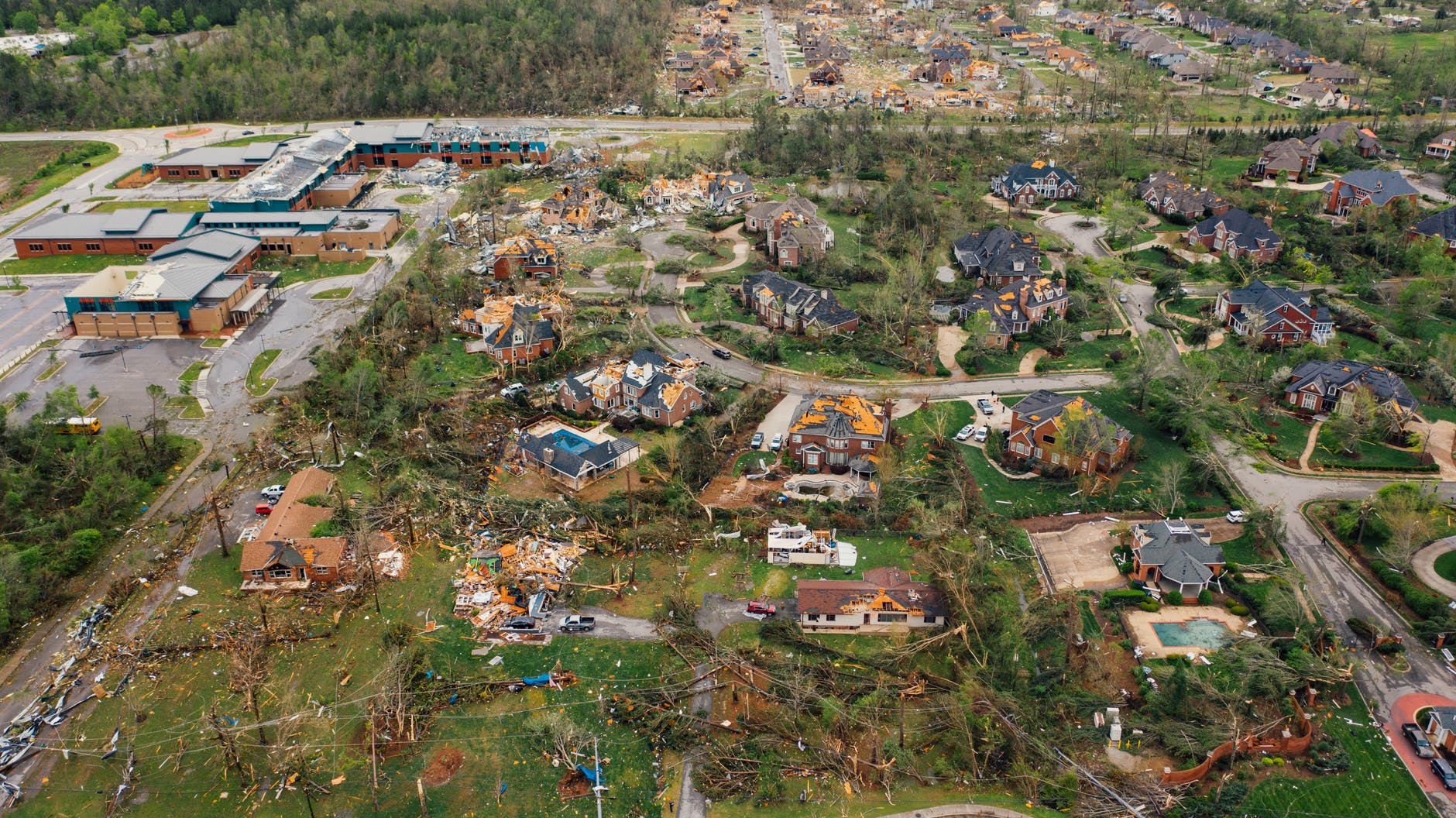
The damage from tornadoes can last for months. Here is some of the aftermath in Naperville roughly six months later:

Photo by Kelly L on Pexels.com

There may never be a full recovery for dozens of Naperville residents continuing to struggle in the wake of a devastating tornado that tore through sleepy neighborhoods shortly after 11 p.m. June 20, leaving one house destroyed and more than 200 damaged in an area just south of 75th Street…

Six months later, they and so many others continue to deal with slow-responding insurance companies, negligent contractors, supply-chain issues and a city government that’s never grappled with the long-term effects of devastation on this scale…

Some homeowners are simply choosing to sell for the value of the land. Others are dedicated to rebuilding no matter how long it takes…

City officials say they understand the frustration in the neighborhoods and acknowledge the difficulty in assessing resident needs. They’ve tried to expedite the permitting process — waiving fees is being considered if it directly benefits homeowners and not the insurance companies — and they suspended charging residents for utilities.

The feat of building suburban subdivisions can be impressive in its own right. When the mass construction of neighborhoods occurred regularly after World War Two, it represented a change to how housing was built.

Reconstructing suburban subdivisions might be a more difficult task. Rebuilding numerous homes and reconstructing daily lives amid normal suburban life is not easy. The advantage of building a whole subdivision at once is that all of the equipment, materials, and labor can be in place at the same time. When some homes are destroyed and damaged, it sounds like efforts are more scattered or focused on particular properties.

Since suburbs do experience tornadoes at least semi-regularly in the United States, is there a set of best practices communities and residents can follow? Putting homes and life back together after a calamity is never easy but perhaps there are clearer paths to resiliency.

Sears in decline leads to another large available suburban office campus

Sears recently closed its last department store in Illinois and just announced that their large suburban campus will soon be up for sale:

Photo by Hugo Magalhaes on Pexels.com

The Hoffman Estates campus features a 2.3 million-square-foot corporate office and 273 acres, including 100 acres of undeveloped land. It was home to more than 4,000 Sears employees as recently as 2017, according to company filings…

When Sears Tower opened in 1973, it was the world’s tallest building, a fitting corporate home for the nation’s largest retailer. Sears left its namesake home in 1992, moving its corporate headquarters to Hoffman Estates and selling the tower two years later. In 2009, the name of the building was changed to Willis Tower as part of the deal for the London-based insurance firm to lease office space there.

Sears is not the only corporate mainstay to pull up stakes recently and put its suburban campus on the market.

Last month, insurance giant Allstate reached an agreement to sell its longtime headquarters in unincorporated Northbrook for $232 million to an industrial developer that plans to turn the 232-acre corporate campus into a massive logistics facility.

And what will happen to these properties? There are multiple options including:

  1. Staying as office or corporate space. Could there be another company or organization who would want this property? A suburb can spend a long time looking for a comparable replacement.
  2. Redevelop the land as a mixed-use development. See “The Metroburb” not too far way created from a former Bell Labs facility. This is a trendy approach that mixes commercial or office uses with residences.
  3. Convert the property to housing. There is demand for new housing in attractive suburbs and large tracts of land do not come open often.

Making this choice will require negotiation and conversation between the parent company of Sears, potential buyers, municipal leaders, residents, and others (which could include regional officials and actors in the real estate world). The whole process could take years and the outcome might retain some hint of the Sears headquarters or it might not.

The importance and consequences of separating single-family homes from other land uses in the United States

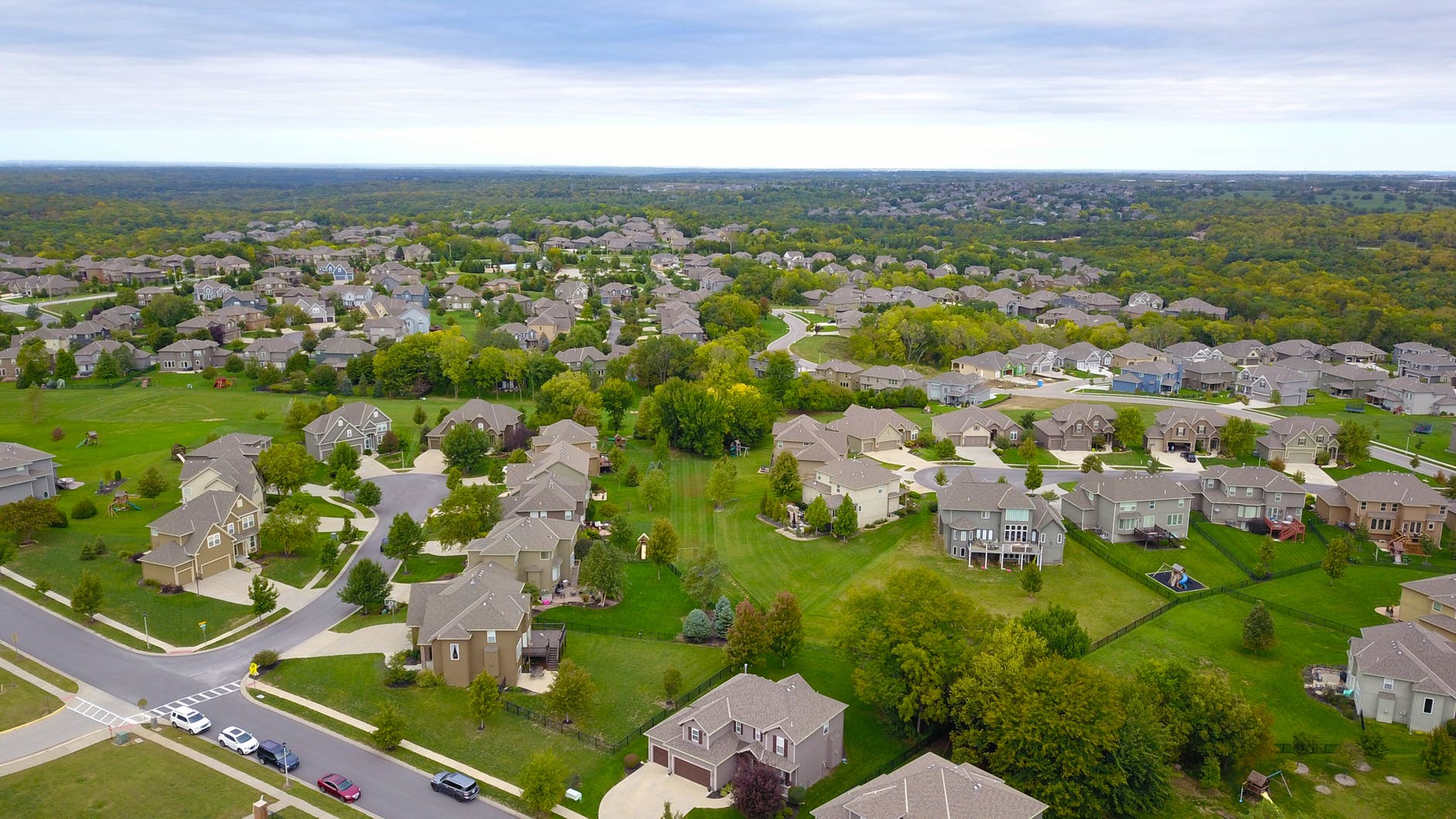
A foundational idea in American life is that single-family homes should be located near other single-family homes and away from other land uses, including denser residential units. While this might sometimes be sidelined to the more areas of planning and zoning, I would argue this is much bigger than just allocating physical space: it interacts with significant social, political, and cultural forces and has sizable effects on daily life. I will first describe how we got here before highlighting two examples I saw this week and then noting several important outcomes.

Photo by David McBee on Pexels.com

From at least the mid-1800s, Americans developed ideas about having separate single-family homes among nature. Scholar John Archer examines the idea of “the cottage in the woods” from its roots in English villa houses and into a rapidly urbanizing American landscape. As cities and then suburbs developed, the single-family home became a hallmark of suburban communities where residents had escaped hectic and dangerous urban life. As zoning developed in the early 1900s, it evolved to protect single-family homes from other nearby land uses that might threaten it. Many American leaders and organizations promoted homeownership. Suburban communities and residential neighborhoods became refuges for whiter and wealthier residents who then worked to keep others out. This all helped contribute to residential pockets separate from other land uses and protected by local zoning and land use policies.

This historical legacy and ongoing reality plays out consistently in certain areas. Two examples I ran across in just the last few days:

  1. Affordable housing in the suburbs. Can denser housing that is cheaper be anywhere near single-family homes? This particular project in the Chicago suburbs drew typical complains from nearby homeowners; noise, traffic, change in character for the neighborhood. The developer came back with changes to try to fit in better with the nearby homes but there are still concerns. This makes sense given the American logic of homes and space but this logic is not organic or inherent to the housing itself; it is created.
  2. Why do apartments have to be located on busier streets in American communities? This may have negative effects on the apartment residents and serves to maintain the distance between denser housing and single-family homes. Again, this makes sense given the established American logic but it is possible – and indeed done elsewhere – that you can have quieter residential streets lined with apartments.

Why does this all matter? This separation of housing serves to continue race/ethnicity and class divides, contributing to residential segregation. This changes social patterns as people in different neighborhoods may be less likely to interact, utilize the same civic (such as schools) and private services, and engage politically. Ultimately, it can both shape and be shaped cleavages in society. Location helps determine life chances and Americans start with the premise that homes should be separate.

Suburban lawns and religious alternatives

With religious motivation, the suburban lawn can be transformed into an area of biodiversity:

Photo by Anna Shvets on Pexels.com

Mr. Jacobs is an ecologist and a Catholic who believes that humans can fight climate change and help repair the world right where they live. While a number of urban dwellers and suburbanites also sow native plants to that end, Mr. Jacobs says people need something more: To Reconnect with nature and experience the sort of spiritual transcendence he feels in a forest, or on a mountain, or amid the bounty of his own yard. It’s a feeling that, for him, is akin to feeling close to God…

Mr. Jacobs, for his part, looks around at all the pristine lawns (“the lawn is an obsession, like a cult,” he says) and sees ecological deserts that feed neither wildlife nor the human soul. “This is a poverty that most of us are not even aware of,” he said.

And he has started a movement to promote better ecology:

About 20 years ago, he began compiling quotes from the Bible, saints and popes that expound on the sanctity of Earth and its creatures, and posting them online. He considered naming the project after St. Francis of Assisi, the go-to saint for animals and the environment. But, not wanting to impose another European saint on American land, he instead named it after Kateri Tekakwitha, a 17th Century Algonquin-Mohawk woman who converted to Catholicism as a teenager and, in 2012, became the first Native American to be canonized…

Three years ago, Mr. Jacobs took a step further, teaming up with a fellow Catholic ecologist, Kathleen Hoenke, to launch the St. Kateri Habitats initiative, which encourages the creation of wildlife-friendly gardens that feature native plants and offer a place to reflect and meditate (they also teamed up to write a book, “Our Homes on Earth: A Catholic Faith and Ecology Field Guide for Children,” due out in 2023). They enlisted other ecology-minded Catholics, and have since added an Indigenous peoples program and two Indigenous women to their board.

What exactly is the connection between religious faith in America and the suburban lawn? Two hints above:

  1. First, Jacobs suggests the lawn is “like a cult.” Americans put a lot of effort into keeping the lawn looking good. The lawn signals status and is part of necessary upkeep for the sacred single-family suburban home. The lawn may provide insight into someone’s soul. The devotion to the lawn has its own practices, beliefs, and organizations.
  2. Religious traditions have something about how to approach the earth and land. Jacobs draws on Catholic theology, tradition, and practice to develop both his personal personal practices and an organization that now has members around the world. In a country where a majority of residents are Christians of one tradition or another, how many suburbanites draw on religion to help them interact with their yard and nearby nature?

As more people reconsider whether to have a lawn or consider modifying their lawn, bringing religion into the conversation could help clarify what the lawn is all about. Is the lawn itself worthy of religious devotion or does it help point to larger and transcendent realities?

A religious destination in the Chicago suburbs: Shrine of our Lady of Guadalupe in Des Plaines

The suburbs might not be the place where people would expect to find a significant religious shrine. Yet, thousands gathered over this past weekend in Des Plaines, Illinois:

Screenshot of solg.org December 5, 2021

That was the first sighting of at least 1,000 equestrians who rode through a Cook County Forest Preserve in Wheeling to pay homage to Our Lady of Guadalupe, or the Virgin Mary. Saturday marked the tenth kickoff of the tradition in which mostly Latino Catholics from across the tristate area and even the U.S. made the pilgrimage to Des Plaines to visit the Guadalupana’s shrine, the most visited monument of its kind in the United States.

Many make the annual journey to the shrine to mirror the pilgrimages done in Mexico to fulfill a promise — a manda ― or give thanks to the Virgin Mary for blessings and protection. Others do it as a sacrifice as they pray for a specific need or concern…

Equestrians and their families from all over the Midwest partake in the pilgrimage. There are young children and women who also ride their horses.

Though Maria Vargas has attended hourslong pilgrimages to honor Our Lady of Guadalupe, also known as the Patroness of the Americas, for several years, in 2016 she and her brother organized a caravan with their semi-trucks offering it as prayer for their family business.

The same suburb known as an early home to McDonald’s is also home to an important religious site. This latter fact highlights the potential for suburban space – often devoted to private, single-family homes – to be sacred space. I have seen and experienced both more permanent and transitory sacredness in such settings.

The history of the shrine at solg.org says it all began in the late 1980s:

In 1987, Mr. Joaquín Martínez acquired a statue of Our Lady of Guadalupe during a visit to the Basilica of Our Lady of Guadalupe in Mexico. When the statue arrived in Chicago, Mr. Martinez and a group of devotees called “Friends of Our Lady of Guadalupe” decided to begin a mission whereby the image began a pilgrimage to several parishes and family homes to encourage devotion to Our Lady of Guadalupe in Chicago.

At the beginning of this mission, which coincided with the Marian Year proclaimed by Pope St. John Paul II, Fr. Robert Harne blessed the statue during a Mass that was held outdoors at Lake Opeka Park (Des Plaines) on June 14, 1987.

In June 1988, in search of a permanent place for the veneration of the Pilgrim Statue of Our Lady of Guadalupe, Fr. John P. Smyth, President of Maryville Academy, welcomed the image and its faithful devotees. On July 4, 1988, the statue was brought to Maryville Academy with the blessing of Most Rev. Placido Rodríguez, O.C.M, Auxiliary Bishop of the Archdiocese of Chicago.

On December 12, 1995, Fr. John Smyth, Fr. David Ryan and Fr. Rafael Orozco inaugurated the construction of an outdoor shrine modeled after the hill of Tepeyac in Mexico City. The outdoor shrine, known as “El Cerrito”, became the main devotional area for the veneration of Our Lady of Guadalupe.

The number of Mexican Americans in the Chicago region, both in the city and throughout the suburbs, helps make this possible. The city does not mention the shrine on its history page but there are numerous Catholic parishes and Latino residents in and around the community.

The decline in percentage of households with married parents and kids and the good life of suburbia

A recent release of data from the Census Bureau shows a decline in the percentage and absolute number of households consisting of married parents and children:

Photo by Yan Krukov on Pexels.com

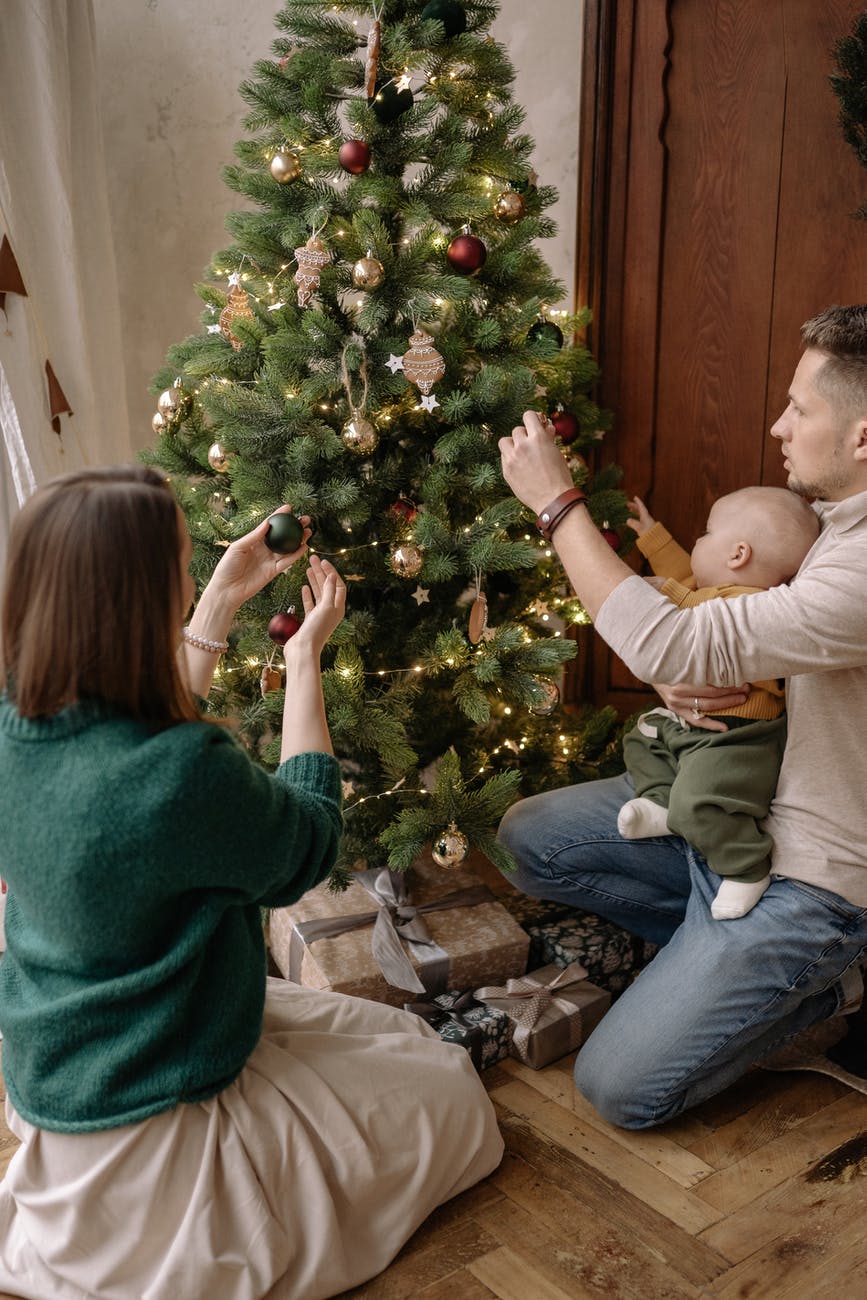
The number of U.S. homes with a married couple and kids fell to a record low, according to new government data, as the pandemic further delayed weddings and more adults don’t plan to have kids at all.The share of the U.S.’s 130 million households headed by married parents with children under age 18 fell to 17.8% in 2021 from 18.6% last year, according to the Census Bureau. That’s down from more than 40% in 1970.

By absolute numbers, there are just 23.1 million homes with nuclear families, the fewest since 1959, the data show.

This has direct links to the rise of suburbs in the United States. One of the primary reasons Americans moved to suburbs in large numbers is that they believed – and often continue to believe – that the suburbs are the best settings in which to raise children. Suburban life revolved around children, from their schooling to activities to ensuring that they get ahead in life. Nuclear families, particularly with parents who had married young, became associated with suburbia and a particular era of American history.

Today, suburbia is much more complex. It still includes nuclear families and families wanting their children to succeed. But, it also includes single households, multi-generational households, older adult households where their children have grown and/or are still living occasionally, households where the partners are not married, and young professionals.

All of this means that the typical image of nuclear families in the suburbs may not be as prevalent or powerful as it once was. It still is important, particularly in more residential communities. But, as more different kinds of households also reside in suburbs, what communities values and how decisions are made may change. Are the suburbs of today just for families with children or do they have a responsibility to a broader audience? The future American vision of the suburbs may still include families and children but the depiction may also include other households that also contribute to the good of suburban community.

What I can access in a 10 minute drive from my suburban location

Following up on an earlier post this week on the desire some Americans have to live within 10 minutes drive from what they need on a daily basis, I briefly catalogued what I could access within ten minutes drive of my suburban residence. Ten minutes does not necessarily get my very far from my house given residential speed limits and the number of stop signs and traffic lights in my way. For most of these locations, I can access them by bicycle in about the same time (though I cannot carry as much).

Photo by UnknownNFT on Pexels.com

Here is a rough count of what is within 10 minutes:

Grocery stores: at least 5

Gas stations: at least 3

Fast food/fast casual restaurants: at least a dozen

Parks: at least 5 community parks, two forest preserves, one linear pathway

Schools: at least 4

Other shopping: one second-tier shopping area at a major intersection, multiple strip malls, lots of car repair and automotive parts places, etc.

Transportation: 1 commuter train station

Almost 10 minutes away (usually more like a 12-15 minute drive away): 1 suburban downtown with a public library, local stores and restaurants, civic buildings; 2 interstates; many more stores/schools/parks; multiple big box retailers

All of this within a residential part of suburbia with medium levels of suburban density. The people around me could walk or bike to many of these locations but many do not since a short drive is convenient and normal. I would guess many residents would say the quick driving access to so many amenities is a contributor to the high quality of life.