“Who sings the song of suburbia?” Part Four on music

Parts One, Two, and Three of this series have summarized academic work on how poetry, novels, and screens (television and film) have engaged and depicted suburbs. What about popular music? While I have not comprehensively looked for academic sources regarding music in the ways I have for the other cultural mediums, I do not know of as much work in this area. At the same time, this does not mean music has not addressed the suburbs.
Photo by Milada Vigerova on Pexels.com

Starting with a broad view, the rise of mass suburbia coincides with the spread of pop and rock music in the twentieth century. Rock music arose amid the development of teenagerdom as a life stage (now in suburbs that privileged children and family life), as music that borrowed from blues music (now heard in largely white suburbs and from many white performers), and broadcast through mass media like radio and television (now in many suburban homes).

Here are some of my own ideas on this connection between suburbs and music:

-Popular music offered another means for protesting and reflecting on the suburbs. This could take many forms. Malvina Reynolds’ 1962 song “Little Boxes” criticized the tract homes arising outside many American cities. Ben Folds’ 2001 album Rockin’ the Suburbs profiled sad and angry suburban lives. The 2010 album The Suburbs from Arcade Fire built on the experiences of two band members in a suburb outside Houston. Numerous other songs and albums addressed suburban life.

-All popular music from the 1950s onward was created by some artists who had spent formative years in the suburbs. The postwar Baby Boomers and subsequent generations wrote about what they knew. For example, the Beatles song “Penny Lane” highlights the suburban nature of communities the group knew. Or, see this 2014 post about a band from the Chicago suburbs that was trying to make it big.

-Another aspect of this possible connection is how music is produced and consumed in the suburbs. The reputation of suburbs is that they are not exactly hotspots of culture, notwithstanding the occasional community that serves as an entertainment center. Music is occasionally performed in restaurants, bars, and festivals (with a heavy emphasis around here on rock/pop cover bands at community festivals). The stereotypical garage band of teenagers working out their music would benefit from the surfeit of suburban garages. Compared to the music ecosystem in larger cities including performance spaces of various sizes, the presence of music labels, and the mixing of musical groups and settings, the suburbs may not be the liveliest music scene.

-The connection between poetry about the suburbs and music about the suburbs would be worth exploring further. If singer/songwriters or popular artists are writing for the masses, how do their words and products compare? Furthermore, the role of music in all those television shows and films about suburbs could be worth considering. Is there a stereotypical “suburban soundtrack”?

-Certain genres of music have connections to particular places. Country, as its name implies, is connected to more rural areas and the South. Hip-hop and rap music emerged from urban settings. Is there a genre or type of music closely connected to suburbs? Middle-of-the-road (MOR) pop music?

Tomorrow, I will sum up this series on cultural works and the suburbs.
“Who sings the song of suburbia?” Part Three on screens (TV and movies)

Poets, as described by Jo Gill in The Poetics of the American Suburbs, and novelists, with two key works by Jurca and Beuka analyzing themes, wrote about the growing American suburbs. But, the cultural products most studied that depicted and commented on suburbs are television shows and films. Writers, actors, networks and production companies, and others helped bring the suburbs to many screens. Some of these products are well known – think the suburban sitcoms of the 1950s and 1960s that still influence scripts today or the Oscar winning film American Beauty – while others are more obscure.

Photo by Rene Asmussen on Pexels.com

With all of this academic study, I want to highlight the work of one scholar whose work I have found very helpful in my own research on suburbs on screens. After that, I will list several other books that cover similar ground from different angles.

Lynn Spigel published Welcome to the Dreamhouse: Popular Media and the Postwar Suburbs in 2001. This collection of essays covers a lot of cultural objects but the work on television in fascinating. This includes analysis of the “fantastic” family sitcom, television for children, and how TV reruns affected the memory of viewers. After finding this book, I went back to her earlier 1992 book Make Room for TV: Television and the Family Ideal in Postwar America. In this book, Spigel considers how Americans discussed the role of this rapidly-adopted technology and how its presence affected everyday life. Combined with her numerous additional works on television and other parts of popular culture and her focus on gender, I would recommend anyone interested in screens and suburbs start here.

A number of other scholars have also addressed screens and suburbs. Here is the bibliographic information for several recent texts I have cited multiple times in my work:

Coon, David R. 2014. Look Closer: Suburban Narratives and American Values in Film and Television.

Huq, Rupa. 2013. Making Sense of Suburbia Through Popular Culture.

Rowley, Stephen. 2015. Movie Towns and Sitcom Suburbs: Building Hollywood’s Ideal Communities.

Vermeulen, Timotheus. 2014. Scenes from the Suburbs: The Suburb in Contemporary US Film and Television.

It makes sense that there is more academic work on television and movies and suburbs. As mass suburbanization picks up in the United States after World War II, television spreads rapidly and Americans quickly devote hours a day to watching the box in their living room. And television often had a particular angle on the suburbs, as the studies above suggest. While films had been around longer, the prosperous postwar era expanded their reach. Furthermore, while poetry or novels might appeal to a smaller slice of the American population, these mediums are clearly popular and accessible. Together, these dominant visual mediums in the twentieth century provided many images of the suburbs.

Tomorrow, I will come back to the question at the start of Gill’s book – “who sings the song of suburbia?” – and address studies of music about the suburbs.

“Who sings the song of suburbia?” Part Two on novels

Jo Giles’ book The Poetics of the American Suburbs is the first academic study I have seen of poetry about or influenced by the suburbs. And the questions posed at the beginning of the book are worth considering – see Part One.

Photo by Suzy Hazelwood on Pexels.com

At the same time, the study of other cultural products or works about the suburbs is alive and well. Today, I will profile several academic studies involving novels and the suburbs. Poetry and novels might be very different forms of writing yet there is some overlap in themes. Additionally, writing and reading a novel might be more similar to poetry than other forms of cultural products – like television and film – which I will address tomorrow. (On Thursday, I will address a fourth category of works – music – that some commonalities with poetry.)

Two scholarly books, in particular, are great introductions to examining novels about the suburbs. In the 2001 book White Diaspora: The Suburb and the Twentieth Century American Novel, Catherine Jurca looks at how such works discuss the homelessness of suburbanites even as they have succeeded by acquiring the suburban single-family house and the representation of suburbanites as a whole – “empty white people” – as a sociological fact. In the Introduction, Jurca puts these two narrative strands together:

this study examines the tendency in twentieth-century literary treatments of the American suburb to convert the rights and privileges of living there into spiritual, cultural, and political problems of displacement, in which being white and middle class is imagined to have as much or more to do with subjugation as with social dominance.

Robert Beuka’s 2004 book SuburbiaNation: Reading Suburban Landscape in Twentieth Century American Film and Fiction emphasizes the important role of place and how fictional works addressed both fixed ideas about suburbs and variation within suburbia. From the end of the introduction of the book:

For the authors and filmmakers I discuss, the suburbs present a reflection of both the values and the anxieties of dominant U.S. culture. Their various gazes into the heterotropic “mirror” of suburbia reveal a landscape both energized and compromised by manifold cultural aspirations and fears.

These two books cover a lot of literary ground: there are a number of novels that explicitly address suburban life. Additionally, their analytical lenses help shed light on important themes and patterns. There are lived suburban experiences and then there are narratives about suburban life. Both are important and influence each other – both facts and interpretation matter for a full understanding of suburban life.

More broadly, novels are important. Long, important books are signs of culture and sophistication. I am thinking of sociologist Wendy Griswold’s work on the development of a reading culture that requires a number of elements to come into place for producers to create novels and a reading public to consume them. Perhaps it is not surprising that a number of novels and the suburbs converged given the significant social change of suburbanization as well as the development of the American literary scene. For novels and fictional works to coalesce around certain themes involving suburbia matters.

Tomorrow, several of the important scholarly works I have drawn on that analyze television and film representations of the suburbs.

“Who sings the song of suburbia?” Part One

The Introduction to Jo Gill’s The Poetics of the American Suburbs starts with a question and conclusion from a 1989 essay by Philip Nicholson:

Photo by Pixabay on Pexels.com

“Who sings the song of suburbia? Where is its poet?” In his conclusion he answers his own question firmly and in the negative: “There is no official school or philosophy of suburban culture; just as there is not poet, artist, or sculptor to present its voice, its face, or the dimensions of its imagination” (206, 208). (Gill 2013:1)

Before I go on to read the entirety of Gill’s text, these are provocative questions about who speaks for the suburbs and whether there is a specific suburban culture. I will offer a few thoughts on these questions today and then in subsequent posts highlight several scholars whose work I appreciate in helping to answer these questions regarding cultural products and suburbs.

The question of who speaks for the suburbs is a fascinating one. Particularly in the postwar era, the suburbs are often discussed as a mass of largely white residents flocking to new subdivisions. Is there anything interesting about this mass? Later academic works help explain important variations across suburbia – like Andrew Wiese’s Places of Their Own or My Blue Heaven by Becky Nicolaides – but it was relatively rare to even get in-depth studies of suburban life – such as The Levittowners by Herbert Gans or The Moral Order of the Suburbs by M. P. Baumgartner – as it was happening. This mass was critiqued from numerous sides for its conformity, consumerism, and exclusion, among other issues.

There is indeed a specific suburban culture. The particular way of life connected to the American suburbs involves single-family homes, an emphasis on family life, driving, exclusion, middle-class expectations and lifestyles, a preference for local government, and proximity to nature. See my seven posts on Why Americans Love Suburbs. But, I suspect this is not the target of Nicholson’s question. What great cultural works have come out of the suburbs or what ideas and works have been created with a suburban ethos? A typical look at this might instead emphasize the consuming nature of suburbs where suburbanites take in culture from elsewhere rather than focusing on what is produced in suburban settings. And if culture is produced in the suburbs, is it worth considering or is it tacky and low-brow?

Tomorrow, I will continue the discussion of academic work that examines cultural products and suburbs by focusing on works that I have drawn on in my own research on this topic.

The most popular posts of 2020

With the start of 2021, here on thoughts on the top five posts of 2020 on LegallySociable:

Photo by Markus Winkler on Pexels.com
  1. Demolish a vacant mall anchor store, build new apartments. This post about possible changes to the Fox Valley Mall in Aurora, Illinois had the most views. The local aspect of the story hints at the local dimensions of this list: #1, #4, and #5 had specific mentions of nearby suburbs.
  2. New York City, Los Angeles on different COVID-19 trajectories. With much written about COVID-19’s effect on cities, this post from March 2020 hints at the different ways COVID-19 played out in different communities. This is still a story to watch in 2021.
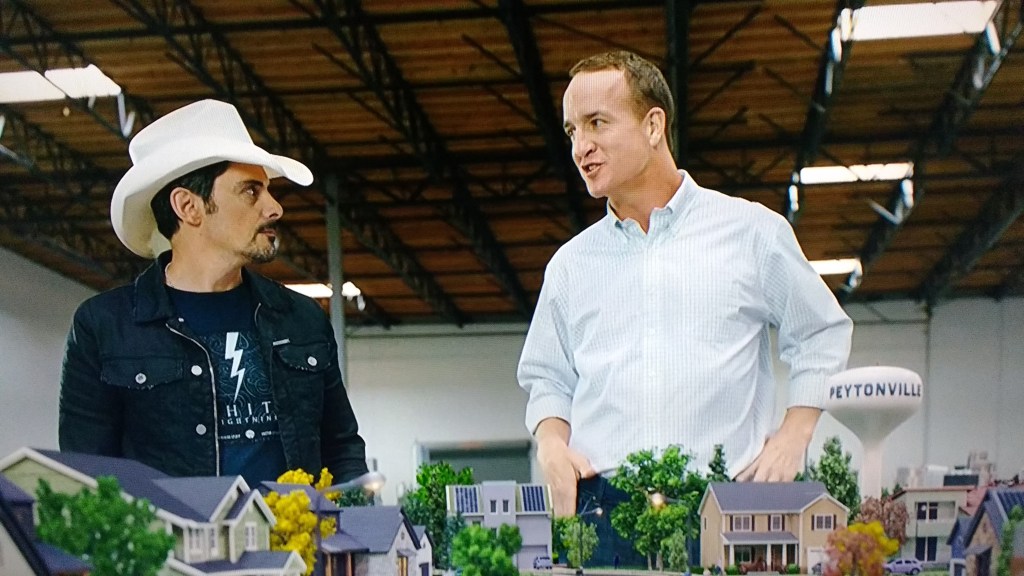
  3. Designing your own Peytonville, Part 1. The Peytonville commercials started in Fall 2019 and I wrote five posts about specific aspects of the ads. The first one was the most popular.
  4. When protests make it to the wealthier suburbs, this means… The protests of 2020 took place in many communities, including suburbs. This post discusses the implications of protests moving to wealthier suburbs that are not used to protests.
  5. How garbage is moved out of suburbs. Posted just a few days ago, this one looked at the garbage infrastructure in suburban areas but likely received a lot of views due to local disagreement about the possible waste transfer station.

All of these popular posts had something to do with place. This is a primary focus of this blog with a particular emphasis on western suburbs of the Chicago region. The top five posts either involved suburbs or cities. Even as 2020 renewed focus on both locales – with effects from COVID-19 and its effects, police violence and protests, and national and local politics – I would argue that place and communities still do not receive enough attention. My published research attempts to tackle several of these dimensions. It is hard to predict what exactly will be worth posting about in 2021 but I do know I will continue to focus on places.

Continuing suburban life next to a Karen

The suburbs often operate under a code of moral minimalism. But, when open conflict does occur, it involves race, and it goes viral, how do suburban residents move on? A case from Montclair, New Jersey involving a reaction to the construction of a small patio:

Photo by Pixabay on Pexels.com

“It shouldn’t have started any conversation,” Norrinda replied. The Hayats spent most of the summer hoping the conversation would die out, if she was being honest. In the end, they didn’t write back to the people vowing to curse Schulz on their behalf; they didn’t take that discount at the restaurant. They chose not to cooperate with the prosecutor. “Personally, I think if [Schulz] had been prosecuted and found guilty in any way, even just paid a $500 fine, I think this would have gone away for her a lot faster,” suggested a Montclair resident who had tracked the situation…

Fareed posed a question in one of our talks: “White supremacy that’s alive and well and a part of all of us,” he said, “and the question is, How much of it are we going to reject? And how much are we willing to sacrifice ourselves in order to continue to move forward?” He asked it from an intellectual distance, as if he were delivering closing arguments or posing a question to his class. But at close range, the question simply is, Would my neighbors step up to defend me again? And will they continue to want to have this conversation about race now that the immediate drama is over?…

As for Schulz, Norrinda thought she once saw her in the grocery store. Fareed told their boys they needed to be careful with the balls in the yard. He doesn’t want things to escalate. They finally have peace. Everyone wants it to stay that way.

But sometimes, well, often, when he’s standing in his house, looking out over the fence, he sees Schulz in her yard, or even just the empty yard, and it hits him. Just for an instant. Maybe it was silly or naïve or too optimistic, but there was an expectation that in Montclair he could be aware of the reality of being Black in America without having to confront it or acknowledge it in his daily life. But now, “we do actively acknowledge it,” he said. “It’s just a reminder of that reality.”

The American suburbs are built in part on a legacy of exclusion. Yet, racial incidents in wealthier suburbs might be rare and so surprising when they do occur (see other examples) for multiple reasons:

  1. There are relatively few interactions between wealthier suburbanites and Blacks and Latino neighbors. If wealthier communities have policies, housing, and character that discourage certain people from living in the community, there are fewer opportunities for being neighbors or regular interaction.
  2. As I noted in the introduction to the post, moral minimalism suggests open conflict in suburbs is undesirable. Instead, conflict is mediated through other actors or institutions such as schools.
  3. As the article notes, wealthier communities would often say they open to diversity. But, given #1 and #2 above, this does not mean they are really welcoming of residents different than the majority.

Even without the viral incident/open conflict, this does not mean suburbs are open to all. Technically, yes. In practice, not really.

Peytonville, the suburbs, and football

With the return to the airwaves of Peytonville ads from Nationwide, I noticed something in the commercials I had not thought about before (see Peytonville Parts 1, 2, 3, 4, and 5): the possible connection between suburbs and football. Notwithstanding a possible caveat that Nationwide might want to appeal to suburban customers, here are some ways the suburbs, football, and Peyton Manning might go together.

First, the majority of Americans live in suburbs. It is a slight majority but the percent in suburbs outnumbers the percent living in cities by a little more than 20%. Where is football played the most? Which communities have the most interest in football? The romanticized image of a football community might be a small town in the Heartland obsessing about football on fall Friday nights but much of the activity might be happening on suburban fields and on suburban television screens.

Second, the Peytonville commercials at least hint at college and pro football as well as suburban and urban life. For both college and pro football, where are the majority of fans? For college, perhaps the thousands of alumni for major football schools have largely settled in suburbs. With a college degree, people have the opportunity for higher-paying jobs and put those resources into suburban single-family homes. For pro teams, the majority of residents in a metropolitan region are suburbanites. Take Chicago as an example: there may be a lot of Bears fans in Chicago but there are over 6 million more residents in the suburbs than the city.

Third, the social and cultural life of the suburbs might lend itself to football (and other sports as well). With games on the weekend, many suburbanites are free to sit at home and watch or attend games. For kids, families have the resources to enroll them in activities and there are plenty of organizations ready to funnel kids into high school and college football.

Perhaps this is off yet certain sports are associated with certain places. Is football truly a suburban sport or does it belong to all of American places?

Trying to forecast future suburban commuting patterns, Naperville edition

The Naperville train stations are busy – until COVID-19. So how full will the parking lots be in the future?

Photo by Irina Iriser on Pexels.com

The city conducted a survey in the fall to gather data on commuting habits and gauge when people expect to return to work. The information will be used as the city reevaluates the Commuter Parking and Access Work Plan instituted in 2019…

A survey shows 81% of respondents are not commuting, but 75% indicated they expect to return to their “pre-pandemic schedule for commuting by Metra” by the end of 2021…

The survey shows 1,642 respondents, or 76%, said they commuted on Metra four or more days per week before the pandemic. But 37%, or 797, said they expect to continue commuting four or more days when life gets back to normal…

When people do return to a regular commute, Naperville’s parking survey showed 69% of responders would like the city to consider other payment options beyond quarterly and daily fees.

Trying to forecast commuting via multiple means – train, car, bus, subway, etc. – is going to be difficult for a while. As the article notes, a work from home option from many employers could continue. The willingness of commuters to return to mass transit and regularly proximity to others also might matter (and more of those who return to the office might choose driving which leads to other problems).

Yet, even if ridership or commuting stays low, systems still need to run and be maintained. With less revenue, how do transportation systems and municipalities keep up with costs?

This can contribute to an ongoing chicken-and-egg problem often posed in the United States. If there was better mass transit, would this lead to increased use? Or, do you have to have increased ridership or interest before building out transit systems?

The effects could be broader than just infrastructure and local budgets. Populations might shift if people change their commuting patterns for the long-term. Workplaces and offices could be very different. Suburbs, already built around private homes and lots of driving, could change in character and land use.

Seeing modernization and religious change in one small suburb

One way to approach the significant social changes of recent centuries is to examine broad patterns at a societal level. Another way to understand these changes is to look at what happened in a suburban community outside Boston:

Photo by Rudolf Kirchner on Pexels.com

“What has produced this kind of world is modernization,” Wells said. “The public environment that results from it is modernity. But these words––modernization and modernity––are abstractions to so many people. How could I explain what has happened to my readers in a way that they could get it?”

He found the answer in a small Massachusetts town named Wenham––population 4,875 when Gordon College isn’t in session. Wells opens No Place by explaining how Wenham, settled by Puritans after a 1635 sermon, slid into modernity in stages––telegraphs gave way to radio and television and internet; farmland yielded to suburban homes; horses were replaced with trains and cars and airplanes.

At some point, Wenham crossed a divide along with everyone else, Wells wrote in No Place. “It is as if the ability to make better cars and better airplanes and better medicines and better theories imply an ability to make better selves––to transcend not only our own mortality, which would be no small feat, but also our own corruption, which would be an even larger feat.”

“So many people no longer believe in human nature––something all human being have in common,” he told TGC. Instead, “they believe in the self––the core at the center of each person that is unique to them and unlike any other self. This is really at the root of the extreme relativism of our time where people not only have their own ‘values,’ but also their own take on reality.”

I have not read the book being discussed – No Place for Truth – but this is a common academic approach: use an interesting case to illustrate broader processes. In this case, it sounds like Wenham, Massachusetts can help show how modernity played out in a community roughly twenty-five miles from Boston.

At the same time, I am more interested in the suburban connections here. Again, while I have not read book discussed above, I have been studying religion and place in recent years and there may be some patterns across communities. Here is my attempt to connect the case of Wenham to suburbs and religious change.

Wenham is a small and wealthy community. Founded in the mid-1600s, the community has just under 5,000 residents with population growth of over 30% three decades in a row after World War Two. The median household income is over $90,000 and the community is over 97% white. (All figures from the 2010 Census.)

When a large number of Americans moved to the suburbs during the twentieth century, these new suburban residents were often said to be conservative. This could apply to politics as well as religion. Religiosity soared after World War Two. Many new churches were founded in suburbs while others already present grew substantially.

But, even in small suburbs where religion was important, modernism prevailed. The focus on self became part of the American suburban dream. Even with a suburban focus on providing the best for the nuclear family, suburban residents could focus more on themselves free of the stronger community ties that could be found in either small towns or urban neighborhoods from which the new suburbanites came. And success in the suburbs came to be defined as personal or individual success: a nice house, a good income, leisure time, having all the necessities befitting a suburbanite.

This all had an impact on religious beliefs, behavior, and belonging. A shift to the self changes beliefs about transcendent beings and doctrines, affects how people live their everyday lives, and weakens attachments to religious institutions.

Thus, the argument goes, modernism and religious change came to America and its communities. Life changed everywhere, even in exclusive suburban communities.

Driving less in the suburbs, a space devoted to driving

Nearing the ninth month of COVID-19 restrictions in our area, I remembered again this weekend that I have done one regular activity a lot less than normal in that time: driving. While this may be true for many Americans, this is particularly unusual in the suburbs. When a whole space where more than 50% of Americans live is organized around cars, driving significantly less makes for noticeable change.

Photo by Pixabay on Pexels.com

Americans like suburbs, in part, because they are organized around cars and driving. Single-family homes often features garages and driveways. Private lots are often located beyond walking distance of key destinations including schools, grocery stores, parks, and jobs. Commuting by car is required in the absence of other transportation options and the suburb-to-suburb trip is common.

To start, making fewer car trips during COVID-19 means I have more time in life. I do not have a long commute but with an average commute time of just under twenty-seven minutes, less driving and/or working from home means many suburbanites have more time during the week. Those who have had to continue to drive to work regularly encounter less traffic on the road and can arrive more quickly. And I have driven less to other locations as well. (Of course, others might have driven more during COVID-19, particularly delivery drivers of all sorts.)

Second, I have had to do less maintenance on my car and pay for less gas. Cars are expensive to own and maintain. It is not only about the frequency of trips; we have put off longer trips to visit family or take vacations. Suburbanites may be used to driving trips to the city or vacation spots but tourist activity is down during COVID-19. The time between oil changes and regular maintenance has increased, likely lengthening the life of our vehicles. (At the same time, COVID-19 might make owning a car more necessary when public transportation is not as attractive.)

Third, with less driving and more time at home, I have been more free to walk and bike locally. While I tend to do these things already, it is a more attractive option for many in order to get out of the house and get some fresh air. This can help suburbanites pay more attention to what is going on around them rather than just retreat to their private spaces. Similarly, streets can be more about people than just cars and trucks.

Finally, driving less means more suburbanites are spending more time at home. The private single-family home in suburbia may look more attractive during COVID-19 as it often offers space and distance from others. Particularly in wealthier suburbs, residents can work from home, have plenty of entertainment and leisure options, and have things delivered to them.

While COVID-19 has affected driving and time use in suburbs, it is less clear how attractive this is to suburbanites. Americans in general like to combine driving and homes but during COVID-19 they may have seen more of their homes and less of the road. Since driving is connected to many social and economic activities in suburbs, this is not just about accessing opportunities; it is about living out a particular style of life. Will suburban COVID-19 experiences help push residents and leaders toward a new kind of suburbs or will people be overjoyed to return to typical driving patterns?