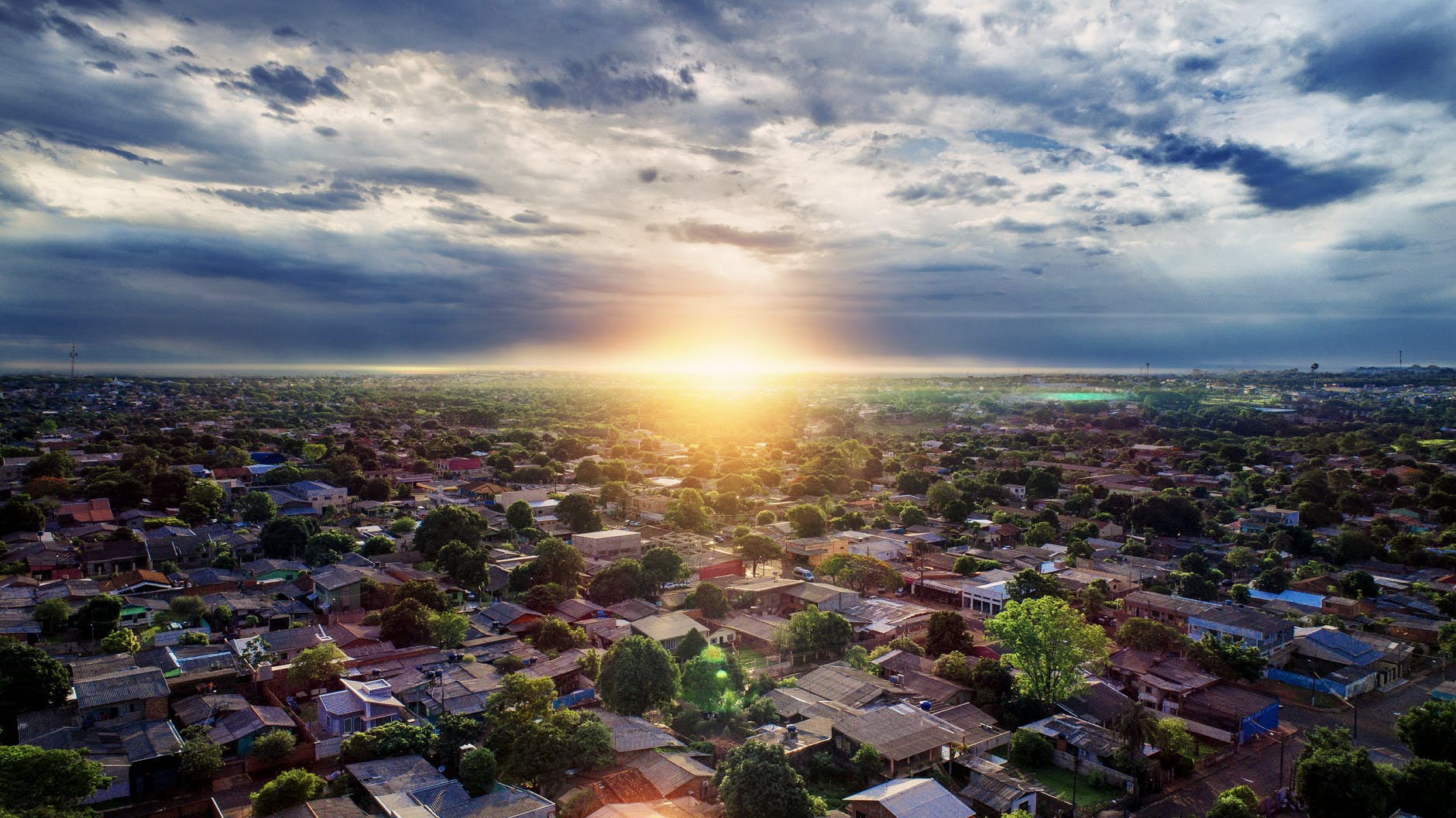
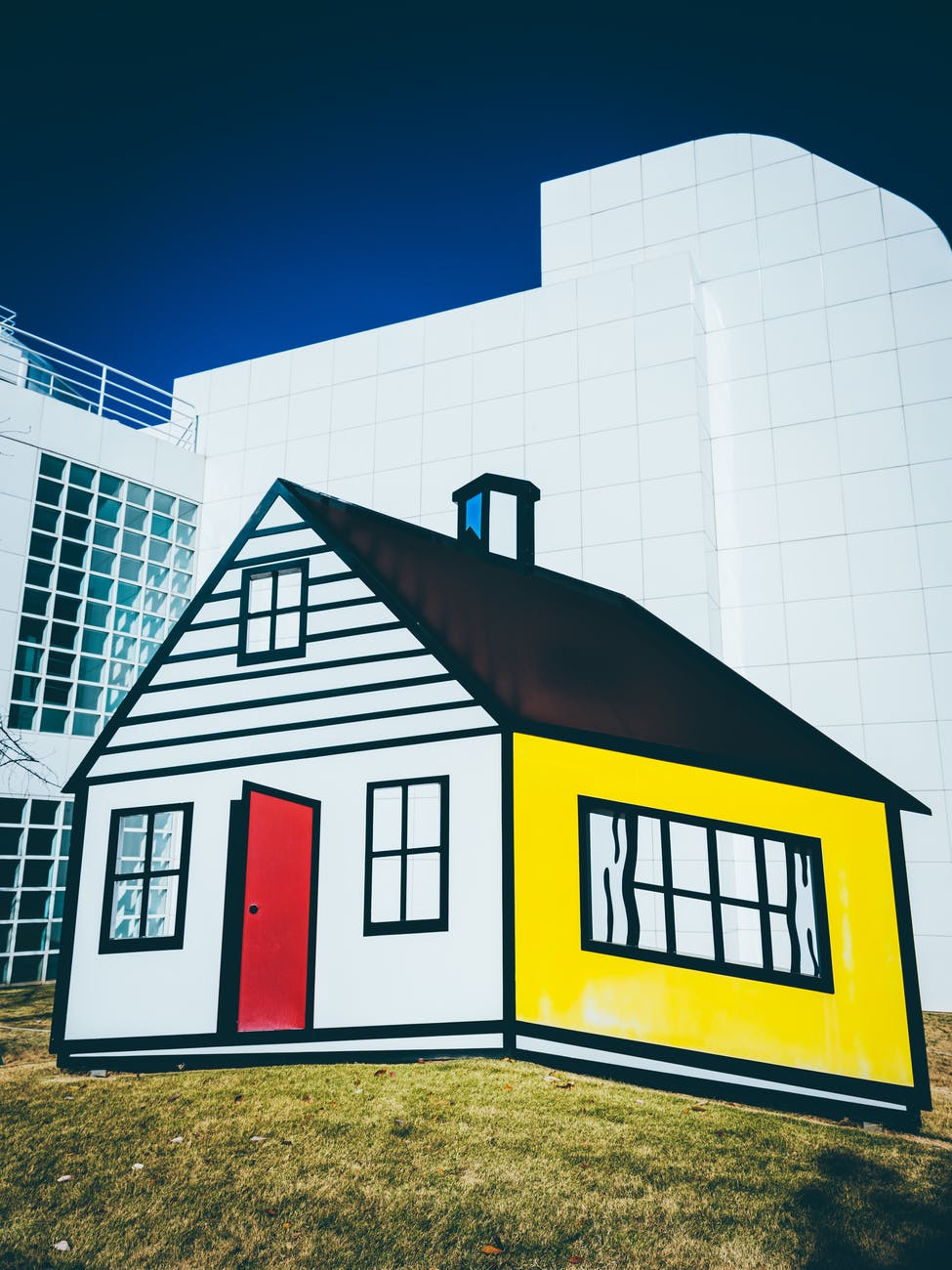
Something interesting happens when we compare the study on adoptions with this work on neighborhoods. We find that one factor about a home—its location—accounts for a significant fraction of the total effect of that home. In fact, putting together the different numbers, I have estimated that some 25 percent—and possibly more—of the overall effects of a parent are driven by where that parent raises their child. In other words, this one parenting decision has much more impact than many thousands of others.
Why is this decision so powerful? Chetty’s team has a possible answer for that. Three of the biggest predictors that a neighborhood will increase a child’s success are the percent of households in which there are two parents, the percent of residents who are college graduates, and the percent of residents who return their census forms. These are neighborhoods, in other words, with many role models: adults who are smart, accomplished, engaged in their community, and committed to stable family lives.
There is more evidence for just how powerful role models can be. A different study that Chetty co-authored found that girls who move to areas with lots of female patent holders in a specific field are far more likely to grow up to earn patents in that same field. And another study found that Black boys who grow up on blocks with many Black fathers around, even if that doesn’t include their own father, end up with much better life outcomes.
I will add this to my list of why it matters where people choose to live: it affects the life chances of kids.
Just having this data only goes so far. A few examples of where it gets trickier to figure out what to do with such information:
How many parents would act on the information compared to other reasons for choosing where to live?
How many parents could act on this information even if they wanted to?
Are there enough neighborhoods in which children could benefit? Do the current residents of such neighborhoods want lots of people moving in?
Are parents responsible for moving kids to such locations or are other actors responsible for helping kids live in these locations?
And so on. The implications of these findings could take decades to work out, particularly as Americans generally want to provide opportunities for their kids.
The Times found that more than 200,000 people nationwide have lost their homes because of federal road projects during that time, and that some of the country’s largest recent highway expansions, including in California, have forced out residents in Black and Latino neighborhoods at disproportionately high rates. And that’s in addition to the more than 1 million people pushed out during the initial period of freeway building in the mid-20th century via routes that often targeted Black communities for demolition.
That is a lot of people moved just for highways. In addition to affecting particular groups at higher rates, highways broke through established neighborhoods with existing ways of life.
This does not mean highways are on the way out. However, it does mean that constructing a new highway or widening a highway in densely settled locations is not a foregone conclusion.
The company’s proposals promise a reprieve from California’s existential crisis about its way of life, suggesting that the environmental consequences of the state’s notorious sprawl can be reformed with rooftop solar panels, induction cooktops, electric cars, and careful bookkeeping. The threat of wildfires can be held at bay by stricter building codes. These proposals preserve the idea that, although the climate may be changing, the California dream of sunshine, a single-family home, and a two-car garage needn’t change at all.
But the debate it intense about whether the sustainable features of the development offsets what suburbia brings:
Cheap fossil fuels, the supremacy of private-property rights, and the maximization of shareholder value have, for decades, dictated the patterns of land use in America. People need homes, and, in Southern California and other growing metropolitan areas, those homes get built in areas far from the centers of cities. Disasters that follow this approach are attributed to natural causes or climate change, rather than to the avoidable flaws of poor planning. Consider the Marshall fire that burned a thousand homes last December, including all of a hundred and seventy-one properties in a nineteen-nineties-era subdivision built on the outskirts of Boulder County, Colorado—or the disappearance of water from exurbs constructed in the two-thousands in the Rio Verde Foothills, outside of Scottsdale, Arizona. Even reasonable predictions on a twenty-year event horizon are seen as fussy impediments to construction…
California has a severe housing shortage; a recent state assessment called for more than a million new units in Southern California to meet demand. Barry Zoeller, an executive at the Tejon Ranch Company, told me, “That’s going to have to take, in our estimation, a combination of both infill development in urban areas and also new master-planned communities of sufficient scale that can also meet climate-change criteria.” But many environmentalists argue that the imbalance between jobs and housing in Los Angeles can not be solved by building houses that are a thirty-minute drive from the city’s outermost suburbs. “Aren’t there better places to build?” Pincetl asked. “Yes, but you don’t own the land, so no.” She added, “If we’re turning over the provision of housing and the land markets to private entities, their motivation is not to house people. Why are private-equity firms coming into the real-estate market? Tell me. Not to provide housing.”…
I used my phone to scan QR codes and open the self-entry locks on a handful of model homes by Lennar, KB Home, and Toll Brothers, among others. The houses were built close together. They were large and well appointed, with gray laminate floors, giant appliances, many bathrooms, and cold air-conditioning. Some stoves at Valencia were electric, but many were still gas ranges—the era of banning natural-gas hookups hadn’t arrived when this development was approved. Some of the planned homes were already sold out, and a steady stream of racially diverse prospective buyers in luxury cars made their way around the neighborhoods-to-be. It looked like every other subdivision I’ve ever been in: paved-over farmland with a few transplanted trees, an island in a landscape hostile to pedestrian life. Maybe I just wasn’t seeing it with new eyes. The wind blew hot and the sun beat over the newly built homes, and from far away came the faint screams of people riding the roller coasters at Magic Mountain.
This is a decades-long issue as suburbs, first found in the United States in the 1800s, exploded in popularity and policy in the 1900s. With the expansion of driving and highways, the postwar suburbs sprawled in all directions from big cities and have not stopped since. All of this comes at an environmental cost: all of the materials used, the pollution from all of the driving, the inefficiencies of single-family homes, and the loss of land and habitat.
There are numerous ways to make suburbs more sustainable. This includes the moves suggested above as well as increased suburban densities, mass transit options or walkability or other transit options so that driving is not the only options, and better locations nearer population centers and jobs and away from important land and habitats.
So, where exactly is the line where suburbs might be “sustainable enough”? The article above suggests this line is in flux as communities, states, and other interested actors negotiate and set regulations for new development. It is unlikely that all suburban development will be banned or limited and it is unlikely that all suburban development will just happen without any questions about the environmental costs. This line can also vary across contexts as the local concerns are different outside of Los Angeles than they might be outside Columbus, Ohio or Jacksonville, Florida.
So, what exactly is a luxury home, Michael, you ask? Some people classify it by the style of the house, or perhaps by its finishes, or by the product brands in the home. So, how do we define a luxury home from a price standpoint? I know different brokerages and different real estate firms define luxury real estate differently. Many define a “luxury home” as a property that is priced at $1,000,000 or higher. For the purposes of this article, we’re going to define a luxury home as a home that is listed for sale at at least three times the average sales price for that market. (There are four primary price points in most markets: starter-/entry-level, average, high-end and luxury pricing. I define high-end homes as homes that are two times the average sales price for that given area.)
Luxury is relative to that specific market. Most markets have luxury homes based on our definition; it’s all relative, however, because when people think of luxury, they often think of McMansions or estate homes, and that’s not always the case. To take action, you need to develop graphs and other visuals that can articulate the data for luxury and high-end real estate for/in your marketplace: Are you in a buyer’s market or a seller’s market? High-end and luxury homes start at what price point for your market?
I am interested in the ways the dimensions of a luxury home are different than those of McMansions. This is based on my four traits of McMansions.
The absolute square feet of the home is not mentioned above. Presumably, both McMansions and luxury homes are large.
The relative square footage is also not mentioned above. Perhaps luxury homes are generally larger than McMansions?
The architecture and design is mentioned as luxury homes may have particular features and/or finishes. While McMansions are often criticized for mass produced features and/or poor architectural choices, luxury homes stand apart from this.
The luxury home is more expensive, whether over $1,000,000 in price or some multiplier above the market or in a tier above others. McMansions are more expensive than small homes or starter homes but they are not as pricey as luxury homes. The luxury home is then a true luxury good available only to a few while McMansions are meant to appeal to a broader audience.
If the description above is correct, luxury homes are mostly different because of their price at the top end of the market. McMansions are not that; they may aspire to be luxury homes but they are for a different price point and have different features that have less to do with square feet and more to do with design elements or features.
(The next step might then be to provide advice for real estate agents and others who want to appeal to McMansion buyers and owners. How to stay away from luxury home territory and above more typical homes?)
“For any team, whether it’s in soccer or other sport, the stadium is the spiritual home,” Nashville SC chief executive officer Ian Ayre said. “If you’re renting, it’s not the same as owning, right? Of all the infrastructure and the parts we build, it’s the most important.”
The team’s coach added:
Nashville SC coach Gary Smith called the crowd “magnificent,” adding that the players felt the energy from the moment they walked onto the field for warm-ups. “The expectation and excitement that surrounded this opening game was huge,” he said after the match. “To think that the players didn’t feel that would be inhuman. The atmosphere was terrific.”…
“To have our own home is vitally important,” Smith said. “This venue now will be the place over the coming years and decades that fathers and sons will come to and look back on and say, ‘Do you remember?'”
As a sports fan, I understand this sentiment. Going to the physical home of your favorite team or to an interesting stadium or a stadium where there is clearly fan interest is exciting. It is not just watching teams play in a physical setting; there is a collective effervescence that can arise to the level similar to how people describe spiritual experiences.
On the other hand, the team benefits from this spiritual home in the terms of dollars and cents. The stadium and all it entail makes money. It is an improved property. And increasingly so these days, owners and teams develop the land around the stadium in ways to further enhance revenue. This is not a sacred place maintained for the well-being of people who visit; it is for a business.
This mixing of business and spirituality is not uncommon in the United States or elsewhere in the world. Is the spiritual homeness of the sporting event ruined because money is being made? Perhaps not for most of the fans who are there for what the trivial can produce. For some of those fans, the sports stadium is more sacred than a religious building or congregation. At the same time, a new stadium and sports in general are big business where producing spiritual homes and transcendent experiences keeps consumers coming back for more and cities eager to keep teams or introduce new teams to the local economy.
Homes ranging in price from $100,000 to $250,000, the typical cost for an entry-level home, have seen nearly a 28% decrease in inventory from a year ago, says the National Association of Realtors.
And smaller homes are also in short supply. In 1999, 37% of newly-built single-family homes were smaller than 1,800 square feet. By 2020, that share had fallen to 25%, Dietz said.
In comparison, in 1999, 66% of newly-built single-family homes were smaller than 2,400 square feet while in 2020, that share had fallen to 57%.
These are two very important factors for getting into purchasing a home. A lower price means a smaller down payment and mortgage is needed. Smaller homes are cheaper because they have fewer square feet and cost less to construct.
And without this ability to enter the housing market, it will take potential homebuyers longer to enter, if they can enter at all. This precludes them from building housing equity and stepping up to larger or more expensive residences in the future. It limits the ability of people to pursue homeownership, a goal many Americans have.
Tackling both price and housing size will be difficult in many markets where developers, builders, and those in the real estate industry can get more. Yet, here is an opportunity to appeal to an important sector of potential homeowners if solutions can be put into practice.
The peculiar yet profound way in which historic preservation bound together issues of aesthetics, finance, and urban change is key to understanding why its popularity grew so rapidly in the middle of the 20th century. It also explains why a culture of historic preservation took root in some places more than others. Most suburbs—like the one on Long Island where Geller I once stood—relied on a different set of tools to stop development, such as open-space requirements and zoning codes that limited the number of new homes. To this day, historic preservation remains a less potent force in such places, largely because these other rules ensure that homes like Geller I are unlikely to be replaced by anything but McMansions. In cities with significant numbers of old buildings, however, preservation became an essential part of the process by which communities fended off urban-redevelopment projects.
Cities also have zoning regulations and NIMBY responses to new structures but the presence of more buildings and uses in denser areas can make this all more complicated. Particularly in areas where redevelopment is hot, a new building might be very different than what has stood there for a long time.
But, as the article notes, historic preservation can be a tool used in a lot of places to halt plans:
Historic preservation not only gave this process of hyper-gentrification an imprimatur of political and legal legitimacy it might otherwise have lacked, but also continues to enable it in the present day. The LPC’s own website still notes that one of the purposes of New York’s landmarks law is to “stabilize and improve property values.” While the commission’s press releases paint an image of a body focused on protecting a diverse new array of buildings, the historic districts that already exist are, right now, a significant intervention in the city’s real-estate markets, whose main beneficiaries are the people who own land within them. Nor is this dynamic unique to New York. In California, wealthy cities like Pasadena and Palo Alto have recently tried to expand their landmarking powers in order to circumvent a new state law encouraging the construction of sorely needed housing. Simsbury, Connecticut, which is 87 percent white, just finalized a sale of nearly 300 acres to a land trust—killing an affordable-housing project in the process—on the premise that the site is historically significant because Martin Luther King Jr. once worked there. In Washington, preservationists have long tried to block the redevelopment of a water-filtration plant that hasn’t been used in 35 years on the basis that it is historically significant.
But the plans have not been embraced by all in the 41st Ward and its neighborhoods filled with postwar bungalows and ranch-style homes. Though the complex would be located in a far stretch of the city next to offices and hotels bordering Park Ridge, residents say they fear it will congest traffic and overcrowd schools.
John Frano, who lives about a mile away in Oriole Park, said the apartment complex will create too much bustle in a section of the city known for being more serene and spacious…
Retired Chicago police Sgt. Salvatore Reina, a longtime owner of a two-flat in Oriole Park, said he opposes the Glenstar tax break partly because it feels unfair to smaller landlords like him. He added that he worries about having to bid against the potentially lower rents in the future complex…
“These neighborhoods are not made for massive multiunit buildings,” Reina said. “When you bring more people in, other issues are going to arise with that too. Who knows what they are? Some could just be quality-of-life issues.”
While there is more at play here – the role of aldermanic prerogative and how exclusion shapes residential patterns – these are common NIMBY concerns: traffic, the effect on schools, large buildings, and how might move into the new units. At the same time, if you cannot build affordable housing units here, where can they be constructed? Even the location of affordable housing units in a building similar in size to adjacent buildings and not adjacent to single-family homes leads to such responses.
The reason I emphasize the proximity of residents is that I found when studying proposals for land or buildings from religious groups (here and here) proximity of residents to the property appeared linked to the concerns raised. Those who have purchased a home or housing unit often do not like the idea that someone wants to significantly alter the building or property next to you.
This is not the case here. Affordable housing is so undesirable in the United States for established homeowners and residents that it is difficult to construct. There are other barriers at play as well but consistent and loud opposition from residents in the community is common. They view affordable housing as a threat rather than as housing that could help local residents or workers, let alone help the larger city or region.
In recently watching the 2021 film version of West Side Story, this stanza from “Gee, Officer Krupke” stood out.
Yes, Officer Krupke you’re really a slob This boy don’t need a doctor just a good honest job Society’s played him a terrible trick And sociologically he’s sick
The whole song plays with this idea: the Jets are not responsible for their actions as they have been failed by their families and society. Elsewhere in the song, they are said to have a “social disease.” Sure, you could penalize an individual offender – with the police, analysts, social workers, and the courts involved in the song – but that would fail to reckon with the sizable social problems at hand. Of course, the song is meant to invoke laughs.
How much is an individual an individual given their social surroundings? This is one of the questions I raise early on in an Introduction to Sociology class. In the United States, the emphasis is typically on the individual: they make their own choices, develop their own identity, and are responsible for their own actions. Sociology pushes back on that individualistic emphasis by analyzing the social facts and forces that shape and outlive individuals. And West Side Story has its own ideas about individuals and society with its retelling of Romeo and Juliet.
In Musk’s mind, “Twitter serves as the de facto public town square,” and as such, it should be a place where people are able to speak their minds. This metaphor seems slightly off, though. Yes, for people like Musk it’s a place to have debates they think are important for humanity; people with millions of followers are often the people who think what they’re saying is most important. But for the rest of Twitter—some 229 million daily users—it’s more like a metropolis. People have neighborhoods they stick to; sometimes they go out and talk with friends, sometimes they watch from their windows, sometimes they talk up strangers in a park. Most of these aren’t the kind of world-changing conversations Musk seems to want to have, but they’re just as vital.
As someone who studies cities and suburbs as well as social media, a few thoughts:
The idea of a “town square” seems quaint in a mass society. At the scale of a society like the United States, is there really a single place where everyone can come together? This may have better fit an earlier era of mass media – such as the opening decades of television – or for particular events – the mass viewership of the Super Bowl – but generally does not apply when a country has over 300 million residents.
A “town square” would seem to fit better in a smaller community or neighborhood. The capacity of a town square would be limited. What would the equivalent be in a big city: a plaza? A main thoroughfare or major park where people gather for rallies or protests?
On social media, many users friend or interact with people they know offline. Twitter is a little different model since you follow people but a sustained follow can lead to understanding the other user more. The platforms are not generally set up to interact with random users nor do many users choose to do that.
The goal of participating in durable social media communities is also what Facebook is pushing these days. Even as the early years of the Internet offered potential to connect with anyone in the world, many users found people with like interests and spent a lot of time there. If this is indeed more like city neighborhoods, what then connects the central plaza or town square to all the neighborhoods? How much flow or interaction is there back and forth?