US urban office space vacancies related to earlier office building booms

With the vacancy rate for office space in the major US cities almost at 20%, is now safe to conclude too much space was constructed in the first place?

Photo by Scott Webb on Pexels.com

America’s offices are emptier than at any point in at least four decades, reflecting years of overbuilding and shifting work habits that were accelerated by the pandemic.

A staggering 19.6% of office space in major U.S. cities wasn’t leased as of the fourth quarter, according to Moody’s Analytics, up from 18.8% a year earlier. That is slightly above the previous records of 19.3% set in 1986 and 1991 and the highest number since at least 1979, which is as far back as Moody’s data go…

That glut weighs on the office market to this day and helps explain why vacancies are far higher in the U.S. than in Europe or Asia. Many office parks built in the 1980s and earlier struggle to find tenants as companies cut back on space or leave for more modern buildings.

“The bulk of the vacant space are buildings that were built in the 1950s, ’60s, ’70s and ’80s,” said Mary Ann Tighe, chief executive of the New York tri-state region at real-estate brokerage CBRE.

And just as in the early ’90s, it is the overbuilt South that is hit hardest. Today, the three major U.S. cities with the country’s highest office-vacancy rates are Houston, Dallas and Austin, Texas, according to Moody’s. In 1991, Palm Beach and Fort Lauderdale in Florida and San Antonio held those positions.

This sounds like a cyclical market: during financial downturns, fewer companies want office space and vacancies rise. During economic success, more companies expand and make use of the space. When more space is built during the good times, that same space is not necessarily needed later.

Does that mean that COVID-19 was only a partial contributor to office vacancies? Was a reckoning going to come for urban office space even without a global pandemic? Or might office space be back in demand again soon as economic conditions change?

I can see why new office space is desirable to fund and build. Whether it should be built, given the cycles discussed above, is another story. And if office space cannot be easily converted to other uses, how much more is really needed in major cities?

Filling suburban Bed Bath & Beyond locations

When Bed Bath & Beyond closed all of its stores, it left numerous suburban stores vacant. Many of the locations are empty no longer:

Photo by Prateek Katyal on Pexels.com

Burlington, Michaels, Barnes & Noble, Ollie’s Bargain Outlet, Macy’s, HomeGoods and other chains have replaced old Bed Bath & Beyond stores. Indoor pickleball courts, trampoline parks and bowling alleys have also filled up the vacancies…

The majority of Bed Bath & Beyond’s stores are in the suburbs of mid-size and large cities, and are under 50,000 square feet. These are appealing qualities for retailers as some companies favor smaller spaces, instead of mega stores, to save on rent and labor and as shoppers buy more online. Macy’s, for example, is opening its smaller “Market by Macy’s” versions at old Bed Bath & Beyond stores…

Bed Bath & Beyond spaces have been grabbed up swiftly at rents of up to 50% what Bed Bath & Beyond was paying, according to commercial real estate investment firm CBRE. Landlords are taking advantage of the vacancies, with some dividing former Bed Bath spaces into smaller sizes, said Brandon Isner, CBRE’s head of retail research for the Americas.

“There is little to no concern that any of the spaces will go vacant for long,” he said…

It is interesting to hear that some suburban retail real estate is in demand. This would contrast with the negative news about shopping malls or about some big box and strip mall properties. Perhaps it is the particular size of these stores – a medium size that could appeal to a lot of other retailers – or perhaps it is the low price – which cuts the cost of doing business.

I hope there are some large-scale studies going on regarding the transformation of retail spaces in the suburbs. Imagine taking pictures at 5 year intervals in major shopping districts or along major roadways. At the least, it could detail the changes in buildings and what retailers are present. But, it could also catalogue major changes to structures, what kinds of retailers are present, and how popular these sites are. Just as the shopping mall defined life for suburban teenagers for at least a decade, the major shopping centers and strip malls in suburbs defined life for millions over multiple decades. Plenty of people visited Bed Bath & Beyond and many more could visit these structures – with whatever is in them- for years to come.

“Stuck between the hot housing market and the hot job market”

Housing values are up and there are jobs to be had – but many of the jobs to work are in places where housing is expensive. What gives?

Photo by Ron Lach on Pexels.com

All over the country, employers like McDonnell are finding themselves stuck between the hot housing market and the hot job market. In Oregon, rural school districts have puzzled over how to provide enough housing for teachers. In rural Arizona, hospitals are renting out rooms to staff members. In Massachusetts, the state has helped support temporary housing for summer workers on Cape Cod.

The result is a kind of tug-of-war between two of the economy’s main pillars. On a small scale, these transactions are just business owners and employees working things out in one-to-one agreements. But the underlying tension caused by the housing market could permanently shape how people decide where to live, what jobs to take — and whether the economy is working for them.

No one thinks a lack of housing is enough to spoil momentum in the labor market. Employers have added workers for 34 consecutive months, after all, and the job market is still churning. But some economists still worry about the knock-on effects of the country’s housing challenges. Until enough homes get built in the places that need it most, more companies will have to get creative — through higher pay, remote work options or other perks — to ensure their workers can find a place to live…

Martin estimates that offers don’t work out more than half the time, largely because of housing issues. And even when they do, Martin said, she’s never seen so many professionals in mid-level management roles, earning $60,000 or $75,000 per year, who still need roommates to make it work.

I remember a presidential candidate suggesting people should be able to live near where they work

The most interesting part of the article above is that it sounds like at least a few employers are getting creative in providing housing so they can have workers and stable employees. If the market or government cannot provide housing, employers and organizations can help.

This is a long-term issue in the United States that sometimes goes by the name of “spatial mismatch.” This refers to the situations where the jobs available do not line up with where people live. Particularly with jobs scattered throughout metropolitan regions, workers have difficulty finding housing near work opportunities and/or need to commute long distances.

Since job growth has continued for a while now, does this mean only certain workers have been able to take advantage of certain jobs? For example, those with more resources or housing equity in their current location or an ability to commute long distances could have an advantage for jobs. At some point, will there not be enough workers to fill some of these spots?

Trying to diversify a city economy through sports

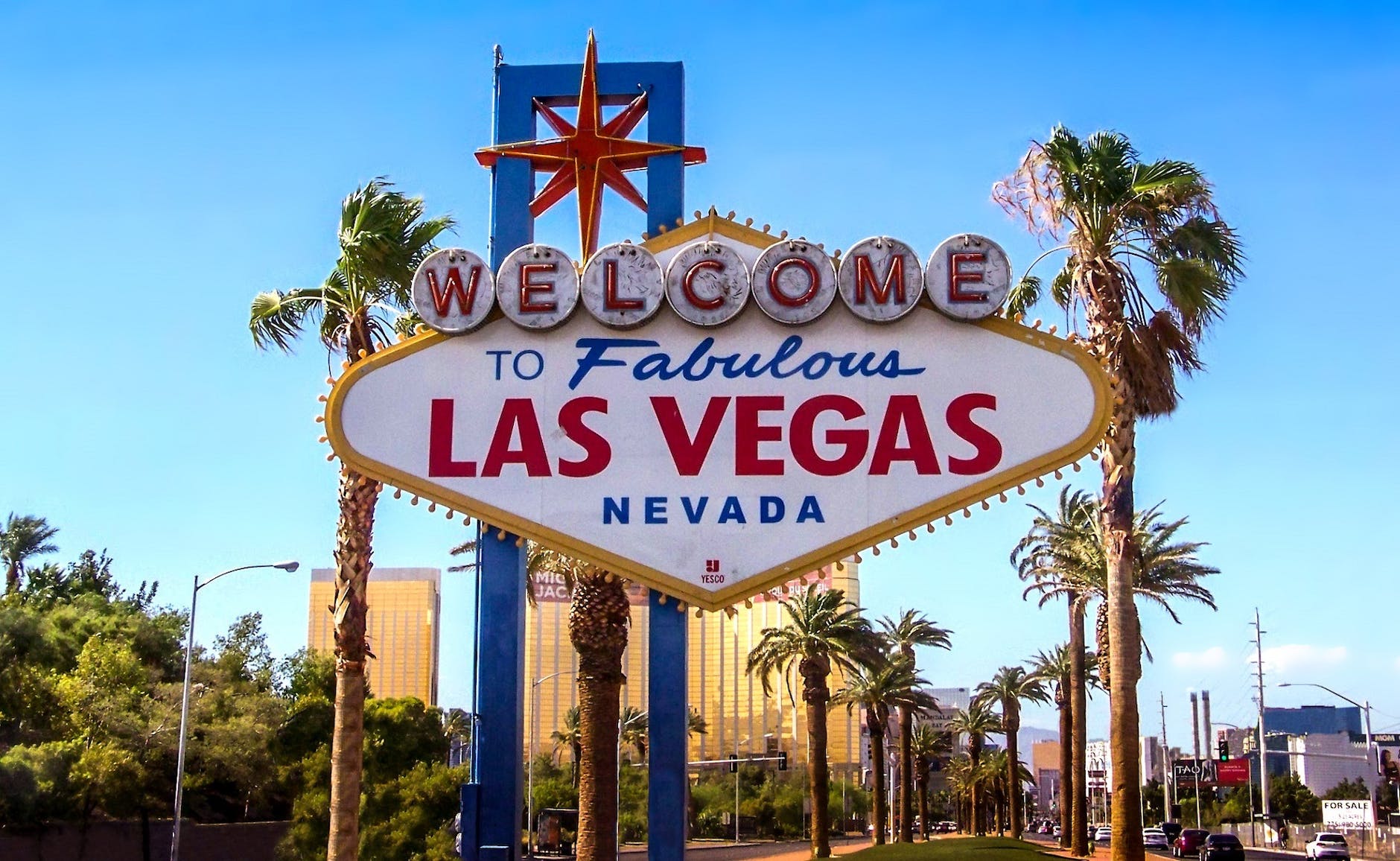
Las Vegas has gambling and all that goes with it, including significant recent investments in sports:

Photo by Pixabay on Pexels.com

In under a decade’s time, the desert city long known for its casinos, food and live entertainment has become the home to four major league sports teams (the latest being MLB’s Athletics), six minor league teams, a major sports organization in the Ultimate Fighting Champion, and four large sports venues playing host to events such as NCAA tournament games, NFL Pro Bowls, and, coming this February, Super Bowl LVIII.

At least a half-dozen more venues are in the planning stages, and the city appears poised to be one of the top picks for an NBA expansion team and an MLS team, as well…

The initial economic impact estimates for Sunday’s Formula 1 Las Vegas Grand Prix and the February 2024 Super Bowl were $1.3 billion, and $500 million, respectively. (But this was before ticket prices slid for F1 when the championship was won earlier in the season).

That total would match the estimated $1.8 billion contributed to the metro area by all sporting events from July 2021 to June 2022, according to an economic impact study released this summer by the Center for Business and Economic Research at UNLV’s Lee Business School.

Earlier research on public money used for new stadiums suggested teams benefit the most from that spending. Will the money spent here on facilities increase the size of the economy, generate additional new jobs, and other benefits or does it simply shift money around? Will residents and businesses move to Las Vegas just because of sports?

Perhaps the pitch with Las Vegas is that it has the added bonus of lots of tourists. If some of them can be enticed to sporting events and other local attractions, this is extra money. This might work for major events, but I would guess it is harder for a regular season MLB game.

Here is just one guess of how this all might look in 10-15 years: local officials will say that sports helped enhance the city’s status, the team owners will be happy with their facilities and revenues, and the local economy will not be enhanced much just because of sports (when accounting for the debt and costs associated with sports).

Skyscrapers happened because real estate was really expensive

A quick history of the Chrysler Building in New York City provides a reminder of a key reason skyscrapers emerged in American cities:

Photo by Following NYC on Pexels.com

Dominating the New York skyline brought prestige and publicity, but tall towers also resolved a more prosaic problem: As land prices climbed, developers had to build upward to turn a profit, pushing their projects as high as engineering, natural light and, eventually, zoning would allow. “Skyscrapers were a self-fulfilling prophecy of the heated real estate market,” writes Neal Bascomb in his 2003 book Higher: A Historic Race to the Sky and the Making of a City. By the 1920s, with Europe in ashes after World War I, these buildings became brash totems of a new world order. Manhattan in particular had become the “harbor of the world, messenger of the new land … of the gold diggers and of world conquest,” wrote the German architect Erich Mendelsohn in his seminal 1926 book Amerika, published the year after New York overtook London as the world’s most populous city.

In a dense space like Manhattan, demand for land pushed prices up. To make more money from the same plot of land, skyscrapers offered more space. The addition of thousands of square feet of office space, even if it could be hard to fill at times, provided profit.

I would be interested to see analysis shows the profits of a skyscraper over a lifetime compared to other options builders, developers, and companies could have pursued. Instead of building up in major cities, here are other options they could have pursued: building underground; building dense and wide buildings (imagine ones that cover several city blocks at a height of ten stories or so); constructing large buildings in other parts of the city and suburbs; and pursuing multiple business districts rather than centralized locations where everyone wants to gather.

Even if there was profit at stake, there is also the matter of the prestige of skyscrapers. Skyscrapers are important symbols in a city skyline. Were skyscrapers both profitable and status-enhancing or did the increased status mean that the absolute numbers did not matter quite as much?

New design choices at Barnes & Noble stores

Chain stores are predictable and often have a common aesthetic. Barnes & Noble is headed a different direction in some of its locations:

Photo by Engin Akyurt on Pexels.com

Other stores will have a different look. The design of a new location in Brooklyn reveals the polished concrete floors from its past life as a Barneys New York. A Barnes & Noble recently opened in California with cerulean walls, and an experiment in robin’s egg blue is in the works for some East Coast locations…

The result has been an idiosyncratic approach to mass retail. Mr. Daunt, who describes himself as “an independent bookseller in background and ethos,” is pushing the chain to act more like the indie stores it was once notorious for displacing — and to embrace lighter, brighter interiors with modular shelves designed for maximum flexibility…

In its darkest hours, the stores began to resemble the discount aisle at Spencer’s. A layout known as “the racetrack prototype” — which Ms. Flanigan identified as “my least favorite design” — borrowed from big-box stores like Target, with cash registers by the door and impulse-purchase temptations around the perimeter. Only after wading through a sea of tchotchkes would customers encounter books…

The new look aims to encourage browsing, which Mr. Daunt believes improves customer satisfaction. “If you just want to buy a book, the guys in Seattle will sell you a book,” Mr. Daunt said. “The enjoyment and the social experience of that engagement with books in a bookstore? That’s our game.”…

Bookstores, in Mr. Daunt’s view, are fundamentally different from other retail businesses, partly because of the range and variability of the products. Under his leadership, local managers are given a free hand, meaning that the Upper West Side store may offer a shopping experience quite different from the one in Spanish Fort, Ala.

If the primary competition is not other retailers but rather an online store, this might make some sense. The hopefully pleasant idiosyncrasies of different locations provide an alternative to an app or website experience.

But, this goes against the ethos of a lot of American retail and restaurants. As consumers drive near and far across a big country, they often expect uniformity and predictability. Sociologist George Ritzer described the process as “McDonaldization.We can point out instances when locations deviate from the expected.

By definition, can a chain retailer express itself this way? If this is successful, I suspect others might follow, even if they are not engaged in selling books.

Reporting the average credit card debt by household tells us something – but the median might be better

Headlines yesterday reported on a rising average credit card debt among American households:

Is the average the best measure? With credit card debt possibly ranging from $0 to who knows how much, is the average a good measure of what is typical?

Previous data I have seen suggest the average might not be very helpful. A July 2023 story based on survey data reported this:

A recent GOBankingRates survey found that 30% of Americans have between $1,001 and $5,000 in credit card debt, 15% have $5,001 or more in credit card debt and about 6% have more than $10,000 in credit card debt.

From 2022 data:

Unfortunately, most people with an active credit card account don’t always pay their bills in full. A November 2022 LendingTree survey found that just 35% of cardholders say they always pay their credit card balance in full every month, while 65% say they carry a balance at least some of the time. Nearly half (46%) of those cardholders who have card debt say it would take them at least a year to pay it off.

And tables on this site based on 2019 Federal Reserve survey data suggest the median credit card debt is quite a bit lower than the average.

I am guessing the median credit card debt is a better measure of the typical debt as it better accounts for all the households without any credit card debt. There is a place for the average or the total amount of credit card debt, particularly if one wants to emphasize the growing amount of debt.

The Chicago suburbs have 99 million square feet of office space

The suburbs are not just places where people live. The Chicago suburbs have a lot of office space:

Photo by 500photos.com on Pexels.com

While higher-end properties are outperforming less expensive options among the suburbs’ 99 million square feet of office space, they still saw a decline in the year’s second quarter, ending a yearlong run of gains, according to data collected by the Chicago-based firm.

The Pentagon has 6,500,000 square feet of space so the suburban office space is over 15 times that of the Pentagon. The Willis Tower in Chicago has roughly 4,000,000 square feet of space so the suburbs have roughly 25 times more space. A football field is 57,600 square feet is the office space covers over 1,718 football fields. If the average new American home is about 2,500 square feet, this office space is nearly 40,000 new average homes.

Note: another website suggests the Chicago suburbs have 162 million square feet of office space, putting the Chicago suburbs behind the Washington D.C. suburbs, the Dallas-Forth Worth suburbs, the Bay Area suburbs, and the New Jersey suburbs.

Whichever number is correct, it is hard to put this much space in perspective. The suburbs may be primarily about single-family homes but they have plenty of space for business.

Potentially different logics for land: from a church that “nourished thousands” to million dollar homes

Reflecting on the tearing down of a Catholic church in Chicago, one long-time parishioner describes what will replace the structure:

Photo by Pixabay on Pexels.com

It’s a “good’ neighborhood now. And the land that Transfiguration once occupied will be turned into about a dozen single-family homes, where, in an area that was zoned for and still is largely home to two- and three-flats, the starting price of a new house is $1.35 million. Talk to me about the zoning on that one.

This week is the one I dreaded: the physical building, Transfiguration of Our Lord, is being torn down. I held out hope that the building that had welcomed and taken care of so many would be preserved. At the very least, I hoped that the land that nourished thousands of families would house a few more of them in the middle of a nationwide affordable housing crisis. But why build homes for two or three families when you can get rich selling a house to just one?

So the fences have gone up, and the building is coming down.

Processing the closing of a long-time religious congregation can be difficult.

But, there is also a suggestion above that these are two very different uses of land. According to this member, the church nourished families and the community. The church welcomed immigrants. Its school educated kids. The church was a gathering place. Churches in the United States do not pay property taxes, but they can provide services for the neighborhood.

In contrast, the buildings that will replace the church will be expensive single-family homes. These will provide private space for households within a desirable neighborhood. There is money to be made in the developing and selling of the buildings.

This could lead to a question: is land better used for organizations that serve the community or for single-family homes? If people care more about money, creating more real estate is the answer. If people want to emphasize community, there might be room for religious congregations and other neighborhood organizations, but they may need to sustain themselves. Americans value single-family homes and like making money. When congregations close, it is a relatively easy step in many communities to redevelop this land or reuse the buildings in ways that generate money and revenue.

How much would empty urban office buildings affect municipal tax revenues?

With talk of empty urban office buildings leading to a decline in property values, how might this affect tax revenues collected by cities? Here is one estimate:

Photo by Bekir Du00f6nmez on Pexels.com

Municipal governments have even more to worry about. Property taxes underpin city budgets. In New York City, such taxes generate approximately 40 percent of revenue. Commercial property—mostly offices—contributes about 40 percent of these taxes, or 16 percent of the city’s total tax revenue. In San Francisco, property taxes contribute a lower share, but offices and retail appear to be in an even worse state.

These are not huge numbers but they do contribute to the overall local budget picture. Office or commercial buildings in cities that are not being used or are being turned over to lenders or are prospects for building conversions will not generate as much tax revenue as they might when demand for such properties is higher.

How will cities address this? It will be interesting to see different approaches that could be affected by local real estate markets, housing needs, and budget specifics. If there are a few cities that are able to limit the revenue damage, they might serve as models for others.

(This is also a problem for suburbs with large amounts of office and commercial space.)