The factors leading to the states with the largest homes

New American single-family homes are the largest in the world. Here is how they rank in size by state, starting with the largest:

Utah has the highest average home size in the United States, at 2,305 square feet. Utah also boasts a whopping median of four bedrooms for the typical real estate listing. Despite the impressive average home size, the median home price in the state is a reasonable $219,900…

Near the top of the crop, Colorado has an average house size of 2,126 square feet, among the largest in the nation. From 1910 to 2020, the size of the average home in Colorado grew 67 percent. Several factors have contributed to the trend toward bigger homes across the nation, the foremost of which may be 20th century government policies that fueled the growth of suburbs…

The average home size in Wyoming is 2,052 square feet, the third largest average in the nation. The ample home sizes may well have something to do with the fact that Wyoming is the least populated state in the nation, which gives people plenty of room to spread out. As in most states, however, the median number of bedrooms is three…

The median size for homes within Bozeman city limits is about 1,790 square feet, just a bit over the national average, and a typical home includes three bedrooms and 2.5 baths. The statewide average, however, is much larger, reaching 2,040 square feet, which means Montana comes in fourth in home size among U.S. states. The median price for a Montana home is around $250,000.

Based on the rankings here and the states at the top, here are factors that likely influence home size across states:

1. The era of development. States in the West and Sunbelt have more recent development compared to the Northeast and Midwest.

2. Prices in local housing markets. People can build and buy bigger homes when prices are lower.

3. The size of land allows for bigger houses. Places with more open land for development have an edge compared to regions and communities that are already built up.

4. A local ethos that emphasizes home and lot size as opposed to other desirable traits (living in a denser neighborhood, access to mass transit and other amenities, etc.). This could come through buying preferences and local regulations.

Not surprisingly, Hawaii has the smallest homes. But, there are a bunch of states in the middle. Additionally, as is noted in the description for each state, the average home size can vary widely between contexts within states.

The relatively narrow sidewalks in both cities and suburbs

With fewer cars on the roads, Tom Vanderbilt considers the possible size and role of sidewalks:

Even in a place such as New York City, sidewalks, as the architect John Massengale documented, have been shrunk over the years to make more space for cars. In my own neighborhood, many stretches of sidewalk are the bare minimum of five feet wide. This, per long-standing research, accommodates two pedestrians at once, but begins to fall apart at anything beyond that: two pedestrians encountering one walking in the opposite direction; a kid on a scooter; people stopping to chat. Making matters worse are sidewalk-shrinking obstructions such as trees, light poles, or, most egregious, traffic signs. That same street meanwhile, will dedicate more than 10 feet to an active vehicle-travel lane, as well as two additional lanes of parked vehicles—each larger than the sidewalk itself.

The larger question that Vanderbilt and others address is this: are cities made for cars or people? Is the goal of urban planning to move as many cars as efficiently as possible or to encourage a vibrant streetlife and pedestrian activity?

This also applies to the many residential and suburban areas of the United States. In recent weeks, I have thought about this in my residential neighborhood. There is little room for multiple people. The difference is starker when comparing the sidewalk to the nearby roadway, which easily accommodates two cars passing at 30 mph. And with the size of the residential sidewalk, this forces walkers, runners, and bicyclists either into the grass or, more recently with COVID-19, into the street so that everyone has enough space.

SidewalkResidential

I am guessing various actors would throw up some roadblocks regarding wider sidewalks in residential neighborhoods: they would be more costly to put down, they would take away land from yards, a wider sidewalk is less necessary in normal times (and the rate of sidewalk use does seem up in my locale). But, the way to counter this might be to suggest the sidewalk could expand while the street could shrink. Do we really need such wide residential streets? Would we rather make our neighborhoods more pleasant for cars or people? The American suburbs are tied up with cars and driving but this does not have to always require sacrifice from those who want to walk, run, and bike.

Interpreting data: the COVID-19 deaths in the United States roughly match the population of my mid-sized suburb

Understanding big numbers can be difficult. This is particularly true in a large country like the United States – over 330,000,000 residents – with a variety of contexts. Debates over COVID-19 numbers have been sharp as different approaches appeal to different numbers. To some degree, many potential social problems or public issues face this issue: how to use numbers (and other evidence) to convince people that action needs to be taken.

This week, the number of deaths in the United States due to COVID-19 approached the population of my suburban community of just over 53,000 residents. We are a mid-sized suburb; this is the second largest community in our county, the most populous suburban county in the Chicago region outside of Cook County. The community covers just over 11 square miles. Imagining an entire mid-sized suburb of COVID-19 deaths gives one pause. I had heard the comparison a week or two ago to the deaths matching the size of a good-sized indoor arena; thinking of an entire sizable community helps make sense of the number of deaths across the country.

Of course, there are other numbers to cite. Our community has relatively few cases – less than hundred as of a few days ago. Considering the Chicago suburbs: “If the Chicago suburbs were a state, it would have the 11th-highest COVID-19 death toll in the nation.” The COVID-19 cases and deaths are scattered throughout the United States, with clear hotspots in some places like New York City and fewer cases in other places. And so on.

Perhaps all of this means that we need medical experts alongside data experts in times like these. We need people well-versed in statistics and their implications to help inform the public and policymakers. Numbers are interpreted and used as part of arguments. Having a handle on the broad range of data, the different ways it can be interpreted (including what comparisons are useful to make), connecting the numbers to particular actions and policies, and communicating all of this clearly is a valuable skill set that can serve communities well.


Marketing 101 example: equating pickup trucks to the American way of life

A look at declines in pickup sales for American automakers includes this description of what pickups represent:

“Pickups represent a rugged sense of individualism for many Americans. They are the very definition of America in that they are larger than life like America and can both work and play hard,” said Erich Merkle, U.S. Ford sales analyst.

This is both a concise and bold marketing statement: pickups are the American way of life! The statement ties to multiple big themes that run through American culture: individualism, larger than life, hard work and lots of play. And it is a vehicle that allows the owner to participate in the pervasive driving culture in the United States. And all this just for $35,000 to $50,000 for a new truck!

A truck, like many consumer goods, is not just about functionality but is also a statement about the owners and what they want to be. Buying smartphones, single-family homes, clothing, and more fall into the same process: marketing appeals to our want for what we own to match our personality and/or aspirations. A truck is not just a truck; it is a statement about the driver. It says, “I eat a Prius for lunch” or “I need to do important projects” or “I have the resources to buy a new truck” (among other possible messages).

Then I am reminded that it is just a pickup truck. Vehicles are necessary in many American communities in order to get from Point A to Point B. But, many vehicles may work in order to accomplish regular tasks. If the primary vehicle use is for commuting to work or regular errands such as buying groceries or dropping off and picking up kids, a truck is probably not needed. Some people need trucks for regularly hauling items or for work.

For now, this match between pickups and the American Dream “works.” There are numerous other products that would wish to tie themselves as closely as pickup trucks to the base values of the American Dream. It may not be this way in several decades; perhaps the rugged individualism and freedom will be attached to fleets of electric vehicles that are at everyone’s beck and call. Until something changes, expect to continue to see the marketing pitch that pickups equal the American way of life.

A brief history of the Sunday drive

With Illinois residents asked to shelter in place, architecture critic Blair Kamin suggests the Sunday drive could be revived – and provides a brief history of the practice:

Building on the precedent of the high society horse-drawn carriages that rolled down elegant boulevards in the late 19th century, the Sunday Drive is thought to have originated in the 1920s — just a few years after the great influenza epidemic of 1918 that killed at least 50 million people worldwide…

Henry Ford, whose mass production methods made cars available to millions, is said to have supported the Sunday Drive because it helped to sell cars…

The popularity of the Sunday Drive reached its apex in the 1950s and 1960s, when cars were still associated with personal freedom, not air pollution or suburban sprawl.

But something changed in the 1970s. Perhaps it was rising gas prices or a heightened environmental consciousness. Or maybe, some urban planners think, suburban sprawl was blurring the once-clear boundary between town and country. Where once there were farm fields and expanses of nature, now there were strip malls and traffic-jammed arterial roads. That made the Sunday Drive a lot less alluring.

This impulse is not foreign to Americans today. Driving is romanticized in many ways, from the celebration of road trips to marketing for cars which shows happy drivers moving through alluring landscapes to ordering social life in the suburbs around the need to drive. At the same time, as Kamin notes, driving is a humdrum activity much of the time. The car commercials that show people cruising down empty roads in the middle of the day do not match everyday experiences.

I also wonder about the connections between Sunday drives and other activities. For example, take organized religion. The classic sociological study Middletown describes the changes in a small city with the introduction of cars, including some residents who shifted from going to church on Sundays to taking recreational drives with family. The car offered an escape from the typical way of life. As a more recent example, data suggests younger people are less interested in getting their driver’s licenses. Why would you want to go for a leisurely drive when a smartphone or tablet or laptop offers access to what information and destinations you want?

The largest business park in the United States is over 160 square miles

Reading through a 2019 article in Wired about new fault line research on the West Coast, I noticed this paragraph about the biggest business park in America:

Eriksen’s offices are located in the Tahoe-Reno Industrial Center, the country’s largest business park. TRIC covers more than 160 square miles—three San Franciscos’ worth—of sculpted valleys and rocky hills. Its tenants include Google, Switch, and Tesla, along with 2,000 protected wild horses. TRIC is as sure a sign as any that the Reno area is reinventing itself, aiming to attract younger residents who come not for strippers and slot machines but for lucrative jobs and easy access to the great outdoors. Lance Gilman, the bolo-tie-wearing, larger-than-life businessman behind the development, told me that on his first tour of the land he saw a bird’s nest just sitting there on the ground, catching the light. He took it as a good omen, a sign of Reno’s impending transition from has-been gambling den in the mountains to tech-centric boomtown. (Still, this is Nevada: At one point during the planning phase, Gilman had to assume management of the nearby Mustang Ranch brothel—the first ever licensed in the state—to stop a biker gang from moving in and marring his glorious vision.)

One of Gilman’s employees, a project manager named Kris Thompson, agreed to take me on a tour of the site. We started at Tesla’s Gigafactory, which the company claims will be the largest building on the planet when completed. (“It put us on the world stage overnight,” Gilman told me.) Although still under construction, the Gigafactory was already so colossal that I could not make out its scale against the mountains beyond. As we drove on, Thompson directed my attention to the huge stone pads on which TRIC’s industrial structures are being erected. “We do not cut corners,” he said. “These pads have no subsidence. We have granite-basalt bedrock. For tech companies, that’s great.” (Eriksen seems to agree with this assessment: He and his colleagues have done nothing further to insulate their offices against quakes.) “The lack of a seismic threat in this area is one of our strengths,” Thompson continued.

But, of course, there is a seismic threat. According to Faulds, it’s about the same as what I already live with in California. The San Andreas may be closer to the breaking point, but the Walker Lane could see a major earthquake at any time.

Thompson and I returned to TRIC’s central office, where Gilman, now walled in by paperwork, was gearing himself up for several hours of new business calls. Last year, a company called Blockchains scooped up 67,000 acres of TRIC land to build a libertarian “smart city.” With that sale, the development had all but sold out. It was time, Gilman told me, to pursue new opportunities. “We’re in the path of growth,” he said, as heavy trucks boomed by on the highway, shaking the earth.

This four paragraph section is an interesting aside in the larger discussion of the Walker Lane Fault. But, it is a fascinating aside as office parks and industrial parks are not unique in the United States. Thousands of communities, ranging suburbs to exurban areas to more rural areas, have blocks of land set aside for commercial and industrial use. But, how many places have anything near 160 square miles set aside?

What makes this business park unique alongside the size is the relative location to other place, the particular setting, and the time the land became available. First, a location outside Reno puts the business park within roughly 4 hours of Silicon Valley and the Bay Area. That is not an easy commute but it can be done in a day or for a short trip. Second, the city of Reno and the state of Nevada have some features that are attractive to some companies. Third, having all of this land available now and in recent years means that some momentum can build regarding who is interested in the space (such as Tesla and libertarian-oriented firms). Take away one of these factors and the particular success of a business park of this size might be different or there might be a very different mix of interested companies. More broadly, numerous business facilities and stores sit vacant at desirable locations throughout the United States yet this business park attracts attention.

Recommended read: A Field Guide to American Houses

I was sad to read about the recent passing of Virginia Savage McAlester. I highly recommend the book A Field Guide to American Houses that occupied much of her attention.

There are many ways to describe McAlester. She was an author, a preservationist, an architectural historian, an activist, the founder and leader of multiple non-profits, and a loyal and dedicated daughter, sister, and mother. McAlester is perhaps best known for her monumental A Field Guide to American Houses, which, after it first appeared in 1984, did nothing less than anoint McAlester as the “Queen of Historic Preservation.” The book has topped architectural best seller lists for so long that, in 2019, Curbed called her the “most popular architecture writer in America.”…

McAlester’s book appeared at a time when, as architectural historian William Seale told the New York Times, developers charged like “wild bulls” over the city’s old neighborhoods…

McAlester set about creating such a survey. The book that emerged from her efforts is a hefty tome that has been referred to as “The Bible,” by preservationists. The Field Guide is more than a catalog of home styles and types. To write it, McAlester said she had to learn a whole new architectural vocabulary, in part because the common features of so many American homes didn’t rise into the architecture lexicon at Harvard…

For example, in a 2014 update to the Field Guide, she coined two new phrases to describe two emerging architectural styles: “21st century modern” for the sleek, angular, uncluttered structures that dominate the pages of contemporary shelter magazines; and “millennium mansions” for the thrown-up ex-urban behemoths more commonly derided as “McMansions.” For McAlester, it was important to understand the highs and lows of design because both architectural visions shape our experience and conception of American communities.

I have used this book both in scholarly projects and read it for enjoyment. I have it on the shelf in my office and occasionally will pull it down to reference some feature of homes or to look through the numerous examples McAlester provided.

A few additional thoughts on the text:

  1. The book highlights both the broad categories of homes as well as the numerous variations within each type. Based on the distinctive features of each style which the book clearly points out, you can usually easily find the broad category a home fits into. At the same time, you can also revel in the many types within each category.
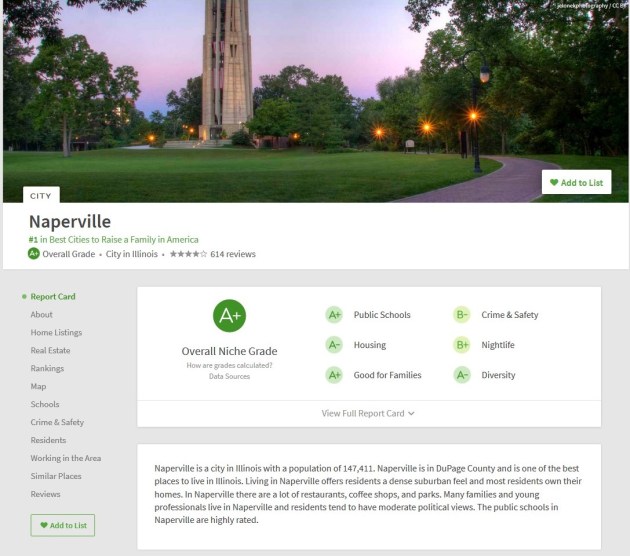
  2. The numerous photographs in each style are very helpful. McAlester collected photographs from numerous locations throughout the United States. For example, the section on “millennium mansions” includes multiple photographs from Naperville, Illinois.
  3. I also appreciate the sections of the book about particular features of homes, ranging from roofs to windows to how homes are structurally supported. This book is not just about the external appearance; there are things to be learned about houses are put together.

Less traffic, faster driving

Reports suggest more drivers are going fast on emptier roads:

Despite there being far fewer vehicles on the road due to COVID-19 stay-at-home orders, state highway safety officials across the country are seeing a severe spike in speeding. Many states have reported alarming speed increases, with some noting a significant surge in vehicles clocked at 100 mph or more.

Being a safe driver should always be a priority, but during the coronavirus pandemic, traffic safety experts at the Governors Highway Safety Association (GHSA) say it is more important than ever. “While COVID-19 is clearly our national priority, our traffic safety laws cannot be ignored,” said GHSA Executive Director Jonathan Adkins. “Law enforcement officials have the same mission as health care providers — to save lives. If you must drive, buckle up, follow the posted speed limit and look out for pedestrians and bicyclists. Emergency rooms in many areas of the country are at capacity, and the last thing they need is additional strain from traffic crash victims.”

During the past month, pedestrian and bicycle traffic are reported to have increased exponentially, while motor vehicle traffic is down. Adkins noted that GHSA is encouraged to see so many communities across the country making roadways more accessible to pedestrians and bicyclists. To keep roads safe for everyone, traffic safety officials nationwide are pleading with motorists to slow down and respect traffic safety laws…

A 2019 report on speeding by GHSA, “Speeding Away from Zero: Rethinking a Forgotten Traffic Safety Challenge,” highlights excessive vehicle speed as a persistent factor in nearly one-third of all motor vehicle-related fatalities, while a 2020 GHSA report on pedestrian fatalities, published in February, finds that pedestrians now account for 17% of all traffic-related fatalities.

In many metropolitan regions, traffic is pretty constant throughout the day. COVID-19 has reduced the number of daily work trips plus some of the other reasons for cars and trucks on the road.

With more open road, perhaps it is “natural” for drivers to feel they can go faster. I am reminded of the argument by New Urbanists that narrower roads lined with parked cars and trees close to the street push drivers to slow down. The illusion is that with fewer potential obstacles on the road, a driver can be safe even while going faster. Of course, going faster reduces the time drivers have to correct and avoid things in their path.

It would be interesting to note how much local police forces are responding to speeders now. Is it worth stopping them if there is a risk of transmitting COVID-19? Are police resources needed more elsewhere? At this point, what other options do officials have in reducing speeds on less crowded roads?

Mapping daily life amidst COVID-19

I like the Citylab project of asking readers to submit their maps life during COVID-19. A few thoughts:

1. COVID-19 affects multiple dimensions of social life, including the distance people must keep from each other (and social interactions). The maps help highlight the spatial dimensions of COVID-19, reminding us of the relatively free mobility many people have during normal times (think regular commutes, a sprawling country often based on driving a car to different locations). The maps also highlight the difficulties or significant changes because of reduced mobility. On one hand, we have more technology than ever that lets us access people and places wherever all the time. On the other hand, not being able to move as we typically do is worth acknowledging.

2. It can be both fun and informative to ask people to draw their daily activities or their community. It pushes people to think spatially (which they may or may not do on a regular basis) and can quickly show what places they find more meaningful. Asking about someone’s day often leads to a list of activities or tasks; the map can include this information but add a valuable spatial dimension.

3. As a bonus, such maps not only provide information but they also allow people to display their creativity. This is clear in the Citylab maps: the contrasts of color, styles, and interpretations is engaging. Compared to more common methods of data collection like surveys or interviews, drawing a map provides a worthwhile contrast.

4. Perhaps reduced mobility will push more Americans to know their immediate surroundings in and around their residences. Instead of passing many places while driving, current circumstances may push more people to pass places at walking or bicycling speed. I know I see my neighborhood differently through regular walks; perhaps other will have similar experiences.


.

Another fear regarding outside basketball courts: spreading COVID-19

The closing of parks and recreation spaces has come as part of restrictions put in place to limit the spread of COVID-19. In reading online discussions regarding these closings and observations that some people continue to engage in group activity, multiple sports have come up. One stuck out to me: playing basketball.

I have argued in previous posts (see here, here, here, and here) that there is a lack of basketball courts in parks and community areas in many places. Even though basketball is a popular sport, there are not as many courts as there could be. Why? The people who often use such facilities are young men, not a demographic many communities are looking to see congregate regularly.

Now, there is a new reason to conspire against building basketball courts: they are public health risks when diseases like COVID-19 are present. If social distancing helps stop the spread, basketball as a sport does not lend itself to this with its close contact and relatively small playing surface. Shooting hoops in the driveway with family members is one thing; courts in parks could attract up to ten players at a time (more if halfcourt games are in process) plus whoever else might be waiting. Add in that schools are in remote learning mode and the crowds that might end up at basketball courts could prove worrisome.

Other sports regularly played in parks or other recreational activities could face the same issue. Baseball and softball games generally provide some space yet the batter, catcher, and umpire are regularly close, runner and fielders end up near other, and then there is the matter of dugouts. Soccer games take place on large fields yet chasing the ball presents problems in getting near other players. Tennis is often played at a distance but players have to occasionally come to the net. People walking, running, and biking can adjust to put more distance between them and others (unless the sidewalks or paths do not allow this).

Yet, these other sports and the spaces needed to carry them out do not always receive the same negative attention as basketball courts. In a post-COVID-19 world, will outdoor basketball courts become even more scarce in favor of recreation activities that give participants more space?