These “heavy tweeters” account for less than 10% of monthly overall users but generate 90% of all tweets and half of global revenue. Heavy tweeters have been in “absolute decline” since the pandemic began, a Twitter researcher wrote in an internal document titled “Where did the Tweeters Go?”
A “heavy tweeter” is defined as someone who logs in to Twitter six or seven days a week and tweets about three to four times a week, the document said.
This echoes earlier analyses of power users on social media. Many members of social media platforms contribute relatively little while a small number do a lot.
I would be interested to hear more about social media platforms or online sites that are able to encourage broader participation. Is there a way to build broad-based online communities with more equitable contributions and influence?
I also wonder how much this matches offline communities that can also be marked by a small set of participants doing a lot. Is the online realm simply mirroring offline patterns or are there new dynamics here that are important?
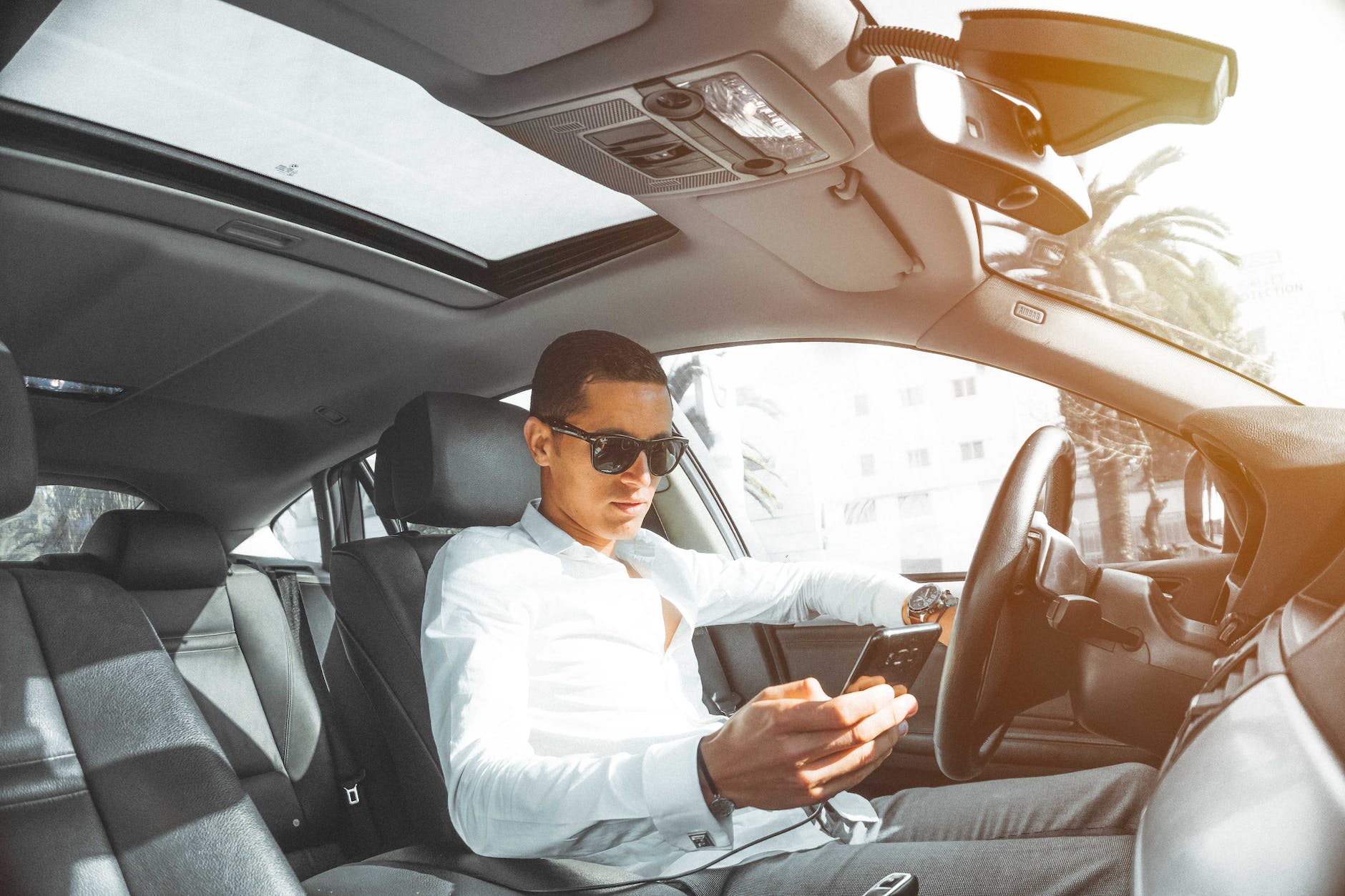
How often do you pull near another vehicle and take a quick look over? These days, you will often see a driver looking at their phone. Recognizing phone use while driving is relatively easy to spot: the driver’s head is tilted down, not looking at the road. There is a particular posture, as illustrated in the photo below:
This can occur while accelerating in leaving an intersection or driving at high speed down the highway. Many drivers appear unable to keep their eyes off their phone while their vehicle is in motion.
Perhaps this is just a sign of our era? Americans love driving and love smartphones. Even as deaths while driving increase, phone use continues. The acknowledgment of a public problem with phone use while driving from years ago seems to have faded away a bit.
From a driving norms perspective, is there a polite way to signal to another driver that you can see their phone use and request they pay attention to their safety and your safety?
From a social perspective, is the smartphone the new car in that we are willing to reorganize society around using smartphone use rather than fitting smartphones into our existing social order?
Palatine Township Elementary District 15 Superintendent Laurie Heinz said that if the special taxing mechanism is implemented — where property taxes above a certain level would be diverted away from schools, as well as other taxing bodies, and into the Bears’ proposed mixed-use project — the district would need financial assistance to add classroom space to schools in nearby Rolling Meadows, or potentially even build a new school within the 326-acre site…
The Bears’ preliminary site plan suggests a significant residential component, from higher-density, multifamily properties of four to eight stories closer to the Metra train station, to lower-density townhouses and multifamily units of two to four stories further south and east through the site.
Heinz said the housing could generate hundreds or even thousands of students.
“We want a seat at the table,” Heinz said at a recent community meeting. “We’re going to fight against it all being TIF’ed because we will need money.
The superintendent is saying that the school district will need money to serve the influx of students that would come through new residential units. Other school districts, residents, or leaders have gone further when considering other suburban projects: they do not necessarily want school students to live in new residential units. Fewer school-age children would save money for school districts and communities in the long run due to not having to provide educational services.
In some ways, this is an odd stance for suburban leaders and residents to take. Much of the suburban sprawl in the United States involved providing spaces and success for children. Property values and a sense of community status are often tied to the performance of local school districts.
But, this focus on children comes with costs. Particularly for mature suburbs, they can struggle to fund schools or residents and leaders push back against the costs of schooling compared to other preferred priorities (such as taxes not going up).
For this particular project, who will adjust: the city not provide a TIF? The developer change the residential units in ways that appeal to certain kinds of residents and not others? The school district finding ways to fit this into particular confines? Stay tuned.
Robert I. Toll, L’66, a former University Trustee, an emeritus member of the Carey Law School Board of Advisors, and the co-founder of transformative home construction company Toll Brothers, died on October 7 at home in Manhattan. He was 81.
Mr. Toll was born in Philadelphia suburb Elkins Park, Pennsylvania, to a father who was involved in Philadelphia real estate and who had successfully rebuilt his career after the Great Depression. Mr. Toll graduated from Cornell University in 1963 with a bachelor’s degree in political science, then graduated from Penn’s Law School three years later. He briefly worked at the Philadelphia law firm Wolf, Block, Schorr, and Solis-Cohen, but then founded Toll Brothers with his younger brother Bruce in 1967. To start out, “we built two homes,” Mr. Toll recalled. “Instead of selling them, we used them as samples for the lots we owned down the street.” These sample homes landed the brothers contracts to build 20 more homes, which each sold for $17,500. Robert, Bruce, and Alan Toll were among the first postwar housing developers to recognize how trends in highway construction would allow access to swaths of farmland for housing and shopping developments.
Over the next five decades, under Robert Toll’s leadership of the company as chair and CEO, Toll Brothers rapidly grew to become, as the company’s slogan boasts today, “America’s luxury home builder.” The company recognized shifting demographics in the U.S. during the 1970s and targeted baby boomers looking to trade upward. The Toll Brothers blueprint included targeted land purchases, appeals for quick zoning approval, and predesigned houses that allow room for personalized changes by buyers. Boosted by the proliferation of McMansions and the implementation by zoning boards of two-acre lot sizes in many American suburbs, Toll Brothers became a force in the American housing market. Today, over 150,000 American families in 24 states live in a Toll Brothers-built home. Toll Brothers appeared on the Fortune 500 list, and Robert Toll spearheaded several philanthropic initiatives, including Seeds of Peace, a summer camp in Maine for children from global conflict. His many professional honors included recognition as one of the world’s top 30 CEOs by Barron’s magazine in 2005 and as best CEO in the Homebuilders and Building Products Industry by Institutional Investor magazine in 2008 and 2009. The Wall Street Journal once called Mr. Toll “the best CEO in the housing business.”
Did Toll Brothers take advantage of an opportunity to sell luxury homes to a growing market or help create and establish a growing market? Would they call their luxury homes McMansions or is that a term applied by others?
No matter how these questions are answered, it is clear Toll Brothers contributed to the trend of larger and more expensive homes in the United States. Over 150,000 homes is a sizable number of dwellings. The shift to large-scale builders in the mid-twentieth century is an important factor in suburbanization and housing more broadly.
Additionally, what will happen to all of these luxury homes? Will they be updated and renovated for decades? I assume a good number are situated in neighborhoods and communities where they will not be near any cheaper or denser housing. Will some become teardowns? Will at least a few be preserved? There is still more of the Toll Brothers story to tell.
After reading Jonathan Franzen’s latest novel Crossroads, I have a not-original answer to the problem of the brokenness lurking behind the promise of the American Dream in the American suburbs: realistic expectations about what life in the suburbs is like.
Much is expected of the American suburbs and Americans love them for multiple reasons. They are the land of opportunity. Home to the middle-class and the hard-working. A symbol of success. A setting meant to guarantee success to future generations. The land of private single-family homes where owners can control their own destiny.
What if the suburbs could never deliver on all of these promises? What if it was only available to some? What if the humans who tried to pursue these goals still faced difficulties and heartbreak? What if the suburbs covered up a whole host of issues in American society?
Numerous novels, films, songs, and creative works have addressed these questions over the last century. They have clearly showed the cracks in the suburban facade, the tragedies masked by the suburban sprawl.
But, these works often struggle to propose a solution. Get rid of the suburbs? Do not move to them in the first place? Stop promoting them?
If anything, these works serve as a cautionary tale: the suburbs may not be as impressive as they are made out to be. They are home to the problems all humans face as well as have their own particular issues due to their histories and current realities.
At the same time, through policy and ideology, millions of Americans have moved to the suburbs. Balancing the dire stories told of life falling apart in the suburbs alongside the narratives of success and comfort in the suburbs, is there a more realistic narrative available about what suburban life is?
The Northwest suburban municipality — of Makers Wanted Bahamas Bowl fame — has inked a two-year marketing partnership with the Roush Fenway Keselowski Racing team that will enable it to affix its business marketing tagline, logo and brand to the No. 6 Ford Mustang stock car during the NASCAR Chicago Street race events next year.
The announcement was made during the ninth Made in Elk Grove Manufacturing & Technology Expo at the high school. The daylong exhibition, awards and networking event highlights businesses within the village’s sprawling industrial park — which the village has sought to promote through several unconventional marketing sponsorships. The town sponsored the college football bowl game in 2018 and 2019, plus three USA Olympic teams last year.
“Elk Grove Village is home to the largest industrial park in North America. We’re surrounded by incredible transportation options and our town works hard to make this a destination for businesses,” Johnson said in a statement. “Partnering with RFK for a marquee race allows us to reach a huge audience with a partner that shares a passion in American business and manufacturing.”
Suburbs continue to market themselves in order to stand out from the hundreds of other suburban communities with which they might be competing. Lots of suburbs could say they have industrial space, nearby transportation options, and are business friendly. Fewer might be able to say they have “the largest industrial park,” sit near O’Hare Airport, within such a busy region for railroad traffic, and right next to major highways, and offer exactly what Elk Grove Village can offer businesses. This branding effort will help highlight these distinctive features.
But, the big question is whether this broader exposure translates into increased business and development activity in the community. Will those watching Brad Keselowski zoom around a track visit makerswanted.org in large numbers or relocate their firms to the suburb? Is it enough that the suburb might have an increased status but no change in activity?
Critics of the D.C. bill have pointed out the lack of data showing the dangers of RTOR, but many people who don’t use cars know instinctively how dangerous turning vehicles can be. “Our current safety studies fail to capture the reality of the constant near misses and confrontations that result between these motorists and pedestrians, which can be observed daily just by observing a typical busy intersection with RTOR,” Schultheiss says.
When teaching a research methods class, I can often come back to this observation about how sociologists approach data and evidence: we want both “facts” and “interpretations” to get the complete story of what is going on. In this particular situation, here is what that might mean: even if the statistical data suggests ROTR is not very dangerous, it matters that people still fear cars turning right on red. The experiences of pedestrians, bicyclists, and others on sidewalks and streets is part of the larger picture of understanding turning right on red. This would go alongside the data and experiences of vehicles and drivers.
Once this full set of data is collected, making policy decisions is another matter. If leaders want to prioritize vehicles, that is one choice. Or, as the piece suggests, some cities want to rethink streets and transportation, and they can end ROTR. But, it would be advisable to have all of the evidence before acting.
If you play the visionary, what must the church or mission agency do now to prepare for the coming changes? How will they take the gospel message to the world?
Much of what we will have to do is practical love, not just suburban evangelism. I don’t know how leaders of World Vision, SIL, Compassion International, or TEAM should change their strategies—but they must be talking about this. Do the analysis, and anticipate the threats.
Will “practical love” be necessary also in the suburbs?
As environmental impacts ramp up, more and more people will discover they are vulnerable. On the West Coast, the Colorado River is running dry. An entire swath of the country is or may soon be on water rationing, and I don’t know how to deal with that. We are not as protected from environmental impacts as we think we are.
Supply chain issues are affecting cellphones and new cars, but what happens when it hits the grocery stores? Trace it back, and you will discover that there were no apples, because the pollinators were absent. This brings it home, but by then, it will be too late.
I see two connections to suburbs in this discussion:
There is “suburban evangelism” and this contrasts with “practical love.” To address changes in the environment, “suburban evangelism” may not be enough.
The environmental issues will eventually come to the suburbs. Suburbanites might feel like they are protected by a certain level of wealth and distance from immediate dangers, but environmental change will find them.
In other words, there is a particular way of Christian faith that aligns with suburban life. Right now, that faith does not regularly intersect with climate change or environmental issues.
A much larger, and related, question: what about suburban faith does not line up with addressing climate change and other important social issues? (I have some thoughts about this: I have an analysis titled “Faith in the Suburbs: Evangelical Christian Books about Suburban Life” in this book.)
As far as I can count, for a town of only 40,000 or so (I think; no census data for the place exists), it has seen more than 150 murders since 1978, nearly all during October.
As the setting for the “Halloween” horror films, the town has an accumulated history:
What makes Haddonfield important, though, is what made Sherwood Anderson’s Winesburg, Ohio, and Hawkins, Indiana, of “Stranger Things,” and many other fictional Midwest small towns, so indelible. These are places that retain the allure of an America we’re promised, full of kindness and nurturing, alongside the hypocrisy we’ve always known. Like Spoon River, Bedford Falls, Grover’s Corners, Brigadoon, Lake Wobegon and Springfield in “The Simpsons” — some Midwestern, all too good to be true — Haddonfield will be defined not as One of the Best Places in America to Live but One of the Best Places to Remind Yourself That Small Town America was Never a Vacuum…
If you take all the “Halloween” films as reference: There are also low-slung elementary schools surrounded by chain-link fencing. Boulevards lined with Victorian and Cape Cod-style homes with welcoming porches and big lawns. There are farms just outside town, and two newspapers and two hospitals inside. The University of Illinois is mentioned but there’s also a community college there and a strip club, tavern and small police force. It’s middle to upper-middle class, but with pockets of inbred poverty. No one mows the cemetery, and despite the violent history, there are more shadows than streetlights…
The real Haddonfield, of course, is South Pasadena, in California. That explains the lack of foliage (and mountains in the background). According to the Los Angeles Times, the 130-year-old home used for the Meyers house has since been made a historic landmark.
But if Haddonfield existed in Illinois, it would most likely be around the Bloomington-Normal area, said Jim Hansen, a professor of English and critical theory at the University of Illinois at Urbana-Champaign who also teaches classes on horror. It seems to sit off I-55. That said, Bloomington-Normal is south of Livingston County, the (real) county referenced in the series. On the other hand, isn’t it scarier if we don’t know?
I have multiple thoughts in response to this:
Are horror films more effective in supposedly idyllic small towns or suburbs? The contrast between normal everyday life and the activity of horror films is high. If the Midwest is a home to American virtue, is it also home to its repudiation?
Put 13 films together and a devoted fan base and this fictional place becomes a known one. Certain sites are familiar, the logic of daily life is known. Relatively few places depicted on television or in movies can become so familiar.
The filming location is very interesting. If you know the filming took place in South Pasadena, does this ruin the image – visual and conceptual – of small town Midwestern life?
This small town needs the services of Encyclopedia Brown, or perhaps an older detective; someone who could put an end to the horror business.
Commuters can reserve a $2 ride in a small bus that typically stops at train stations and travels on major roads…
On-Demand service runs from early morning to evening with zones in Aurora, Batavia, Hoffman Estates, Naperville, Round Lake, St. Charles/Geneva, Vernon Hills/Mundelein, West Joliet and Wheaton/Winfield. Rides need to be booked at least an hour in advance.
Another experiment is the VanGo program that lets people reserve a Pace van at the Lake Forest or Lake-Cook Metra stations and drive to employment centers such as Baxter International. An expansion to Palatine is under consideration.
“We give you a code for the vehicle, it unlocks the door, it unlocks the key, you can take it to work and back at night to the train station” along with co-workers, Metzger said.
VanGo drivers must have a credit card and a good driving record, plus meet other requirements. A round trip is $5.
These are mass transit options – still mass transit because the vehicles are operated by a transportation entity and because they are hoping there are multiple riders in the vehicle – that try to adapt to suburban sprawl. A lack of density in the suburbs means that traditional railroad and bus lines cannot reach enough people and the ease of traveling by car means that many people will choose driving. These options offer more flexibility to individual users and specific locations.
Will it work? Can Pace compete with ride shares companies or companies that offer access to vehicles? I am skeptical that it will be effective in the long run given the current nature of suburbia.









 Legally Sociable