Love and mass transit in 2021

Combine online dating and a love for mass transit and what do you get?
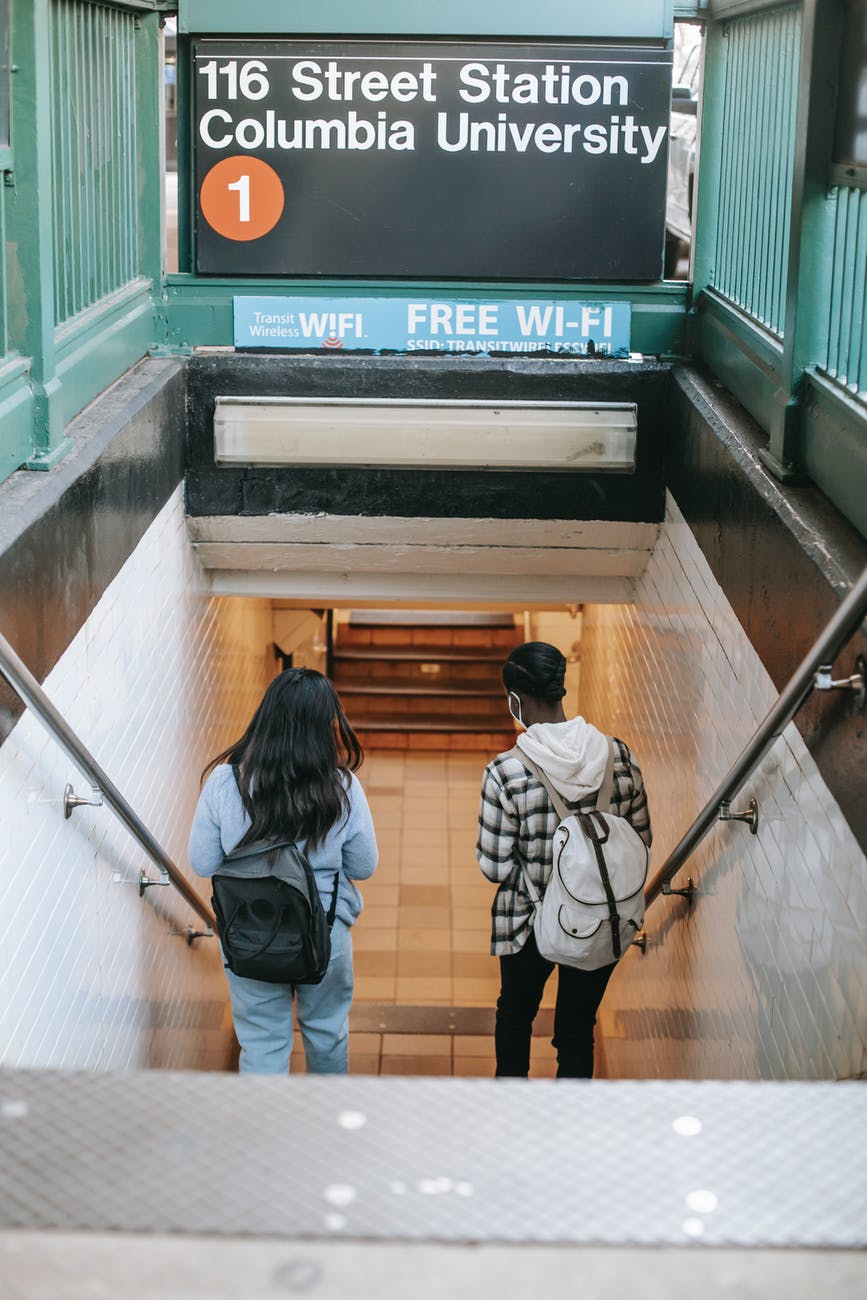
Photo by Charlotte May on Pexels.com

As a single person wandering through the world, it can be difficult to find someone who loves all the right things: parks, subways, bike lanes, human-scale buildings, high-density housing, debates over the ideal length of a city block. Even on a dating app, you can’t always tell from a profile who might be thinking, behind their smile, I hate cars.

But if this is exactly the sort of partner—or friend or fling—you’re looking for, there is a solution: Join the wildly popular Facebook meme group and leftist community NUMTOTs (“New Urbanist Memes for Transit-Oriented Teens,” which isn’t really just for teens) and request access to its private spin-off group, NUMTinder. With about 8,000 members living mostly in North America, the United Kingdom, and Australia, NUMTinder is a makeshift dating environment for those who consider liking public transportation to be a core part of their personality, or those for whom a lack of interest in urban planning is a deal breaker. Almost everyone in the group posts at least one selfie with a bike or a subway entrance, to demonstrate their commitment to the lifestyle, and when a new member introduces herself, it’s not uncommon for her to brag about the fact that she doesn’t have a driver’s license. (A second spin-off group, called NUMThots, is for sharing the spiciest seminudes that Facebook’s content moderation will allow. But transit-themed!)

The primary advantage to online dating is that it expands a person’s options beyond geography and their immediate social network to a much broader pool of people who can be filtered by particular traits. In this case, limit the pool to people who care about mass transit and those with that interest can search for partners.

While this may seem strange to the general public, is it really any different than numerous other likes people care about? Just as a comparison, plenty of people like cars or specific cars. At races, car events, clubs, and more, people with these interests could come together. Or, take people who regularly watch trains. Through different communities, these people could meet up and interact. The primary difference is that more Americans might like cars than mass transit.

A final thought: I imagine this group might be more useful in and around cities with a lot of mass transit. Of course, it could also be helpful in other places where few people even think about mass transit because it is not as present.


Private city for business opens in Honduras

A Honduras city primed for business will soon open for remote operators:

Photo by John Lee on Pexels.com

Próspera is the first project to gain approval from Honduras to start a privately governed charter city, under a national program started in 2013. It has its own constitution of sorts and a 3,500-page legal code with frameworks for political representation and the resolution of legal disputes, as well as minimum wage (higher than Honduras’s) and income taxes (lower in most cases). After nearly half a decade of development, the settlement will announce next week that it will begin considering applications from potential residents this summer.

The first colonists will be e-residents. Próspera doesn’t yet have housing ready to be occupied. But even after the site is built out, most constituents will never set foot on local soil, says Erick Brimen, its main proprietor. Instead, Brimen expects about two-thirds of Prósperans to sign up for residency in order to incorporate businesses there or take jobs with local employers while living elsewhere…

The idea behind charter cities, along with their predecessor seasteading, which sought to create independent nations floating in the ocean, is to compete for citizens through innovative, business-friendly governing systems. For some reason, the idea has long been linked to Honduras, an impoverished country whose governing system is classified as “partly free” by the human rights organization Freedom House. Paul Romer, an American economist who pioneered the idea of charter cities, tried to start one in the country a decade ago. It failed, but Honduras has spent much of the time since then writing a law to enable such cities, which are known in the country as Zedes, short for zonas de empleo y dessarollo económicos (employment and economic development zones).

But the prospect of creating pockets of prosperity that play by their own rules is controversial for obvious reasons. Próspera has drawn protests from local residents who see a lack of transparency and little to gain from its existence, and a group of local political leaders signed a letter of opposition in October. This month, an arm of the Technical University of Munich said it’s reevaluating its relationship with Próspera and that it generally withdraws from projects if there are indications of human rights violations. Representatives for TUM didn’t respond to requests to elaborate. A spokeswoman for Próspera says it has had a “great working relationship with TUM over the years.” 

Although this city has been in the works for years, it seems appropriate that is will open for remote businesses in the COVID-19 era. Even without a physical presence in the city, corporations will be able to incorporate there and enjoy the benefits.

Down the road, it is interesting to imagine what a thriving or beleagured charter city could be like. For some reason, I am thinking of some of the more colorful communities from Star Wars where all sorts of characters come together to conduct their activities. How many people would come to live and work versus how many will access the city’s benefits from afar? What kinds of alterations to the regulations might be necessary? How many free market cities might this inspire elsewhere?

Facebook continues to claim it is about “meaningful social interactions”

Members of Congress questioned leaders of social media companies this week. In contrast to what legislators suggested, Mark Zuckerberg said Facebook has one particular goal:

Photo by Kampus Production on Pexels.com

Focusing on the attention-driven business model seems to have been a coordinated strategy among the committee’s Democrats, but they were not alone. Bill Johnson, a Republican from Ohio, compared the addictiveness of social platforms to cigarettes. “You profit from hooking users on your platforms by capitalizing off their time,” he said, addressing Dorsey and Zuckerberg. “So yes or no: Do you agree that you make money off of creating an addiction to your platforms?”

Both executives said no. As they did over and over again, along with Pichai, when asked straightforwardly whether their platforms’ algorithms are optimized to show users material that will keep them engaged. Rather than defend their companies’ business model, they denied it.

Zuckerberg, in particular, suggested that maximizing the amount of time users spend on the platform is the furthest thing from his engineers’ minds. “It’s a common misconception that our teams even have goals of trying to increase the amount of time that people spend,” he said. The company’s true goal, he insisted, is to foster “meaningful social interactions.” Misinformation and inflammatory content actually thwarts that goal. If users are spending time on the platform, it simply proves that the experience is so meaningful to them. “Engagement,” he said, “is only a sign that if we deliver that value, then it will be natural that people use our services more.”

Zuckerberg has said this for years; see this earlier post. Facebook and other social media platforms have the opportunity to bring people together, whether that is through building upon existing relationships or interacting with new people based on common interests and causes.

Has Facebook delivered on this promise? Do social media users find “meaningful social interactions”? The research I have done with Peter Mundey suggests emerging adult users are aware of the downsides of social media interactions but many still participate because there is meaning or enough meaning.

I suppose it might come down to defining and measuring “meaningful social interaction.” Social interaction can take many forms, ranging from carrying on social media mediated relationships through simply viewing images and text over time to less personal interaction in commenting on or registering a reaction to something like hundreds of others to direct interaction to people through various means. Is a negative response meaningful? Does a positive direct interaction count more? Can the interaction be more episodic or is it sustained over a certain period of time?

One possible path: ask for the evidence of Facebook, Twitter, Instagram, and Snapchat users (among others) having meaningful interactions alongside evidence of how these platforms count and measure capturing attention. Another: ask whether these companies think they have succeeded in creating “meaningful social interactions” and what they would cite as markers of this.

When infrastructure needs exceed capacity, Suez Canal edition

Images from this week of the Ever Given wedged in the Suez Canal are fascinating. Such a situation raises a lot of quick questions – such as “how did this happen?!?” – but there are bigger issues at work. For example, how and when does infrastructure adjust when the needs increase?

Photo by Pixabay on Pexels.com

Here is how one piece frames it:

The incident could raise new questions about the container shipping industry, which moves 90 percent of the world’s goods, and its increasingly gigantic ships. Demand for shipping goods by sea has surged during the Covid-19 pandemic, with spot prices for empty containers moving from China to northern Europe rising by more than 400 percent. In response, shipping lines have loaded gigantic vessels like the Ever Given with record numbers of containers. Ships have run into some trouble. The industry has lost more cargo into the sea in late 2020 and early 2021 than in prior years. “We’re going to get to a point where the ships are so large, it becomes a burden,” says Byers.

Goods traveling via containers – whether on ships, trucks, trains, or other means – are essential to modern economies. As markets grow and expand, there will be more shipping containers moving around the globe. That means infrastructure needs to expand. More trucks and roads. More trains. More intermodal facilities. Canals that need to be wider.

This happens primarily behind the scenes. Consumers see goods on shelves or they are delivered from vast warehouses and all is good. It is only when something goes wrong in these systems, such as a 1,300 foot ship getting stuck in a major international shipping route, that we note the tensions and the limits. Changes will be made on the Suez Canal to limit the possibility of this happening again and the shipping containers will continue to flow. Until the problem arises again or larger changes need to be made…

Frank Sinatra’s “My Way” as the ultimate expression of American individualism?

A while back, I encountered Frank Sinatra’s song “My Way” two different ways. In one instance, a radio host closed out an eight year run by playing the song and reflecting on the years of conversation. In the second instance, another person thought about their life thus far and used some of the words from the song to wonder what life might hold by the end.

Here is my sociological question: does this song represent American individualism in the twentieth century?

Americans are known for their individualism. For example, the sociological study Habits of the Heart examined how individualism plays out in the realm of religion and spirituality. President Donald Trump played “My Way” for the first dance at the Inauguration Ball and the song played when he left Joint Andrews Base in January 2021.

Take these two paragraphs from the song:

Regrets, I’ve had a few
But then again, too few to mention
I did what I had to do
And saw it through without exemption

I planned each charted course
Each careful step along the byway
And more, much more than this
I did it my way

This is a man reflecting on a full life. He planned it, he executed it, and did it “my way.” Later in the song:

I’ve loved, I’ve laughed and cried
I’ve had my fill my share of losing
And now, as tears subside
I find it all so amusing

To think I did all that
And may I say – not in a shy way
Oh no, oh no, not me
I did it my way

Similarly, thinking about the emotional aspects of life, the singer notes that he was not shy and “I did it my way.”

It would be hard for any single cultural work to stand in for an entire people or country. Yet, at the same time, there are certain works that become popular, stand the test of time, and embody particular values and practices. Is “My Way” one of these songs or does it fit a particular subset of Americans better than others?

Update 12/20/22: The song was part of the funeral service for football coach Mike Leach:

As the service was about to begin, Frank Sinatra’s “My Way” played over the sound system. It was quickly apparent with every speaker who came on stage that Leach, who was born in California and raised in Wyoming, had carved his own path — from college rugby player to Power 5 head coach.

Many in attendance wore cowbell-shaped pins on their suit jackets. Inside the cowbell was a skull and crossbones, a nod to Leach’s nickname, Pirate.

Have I have seen that building before…on a studio backlot?

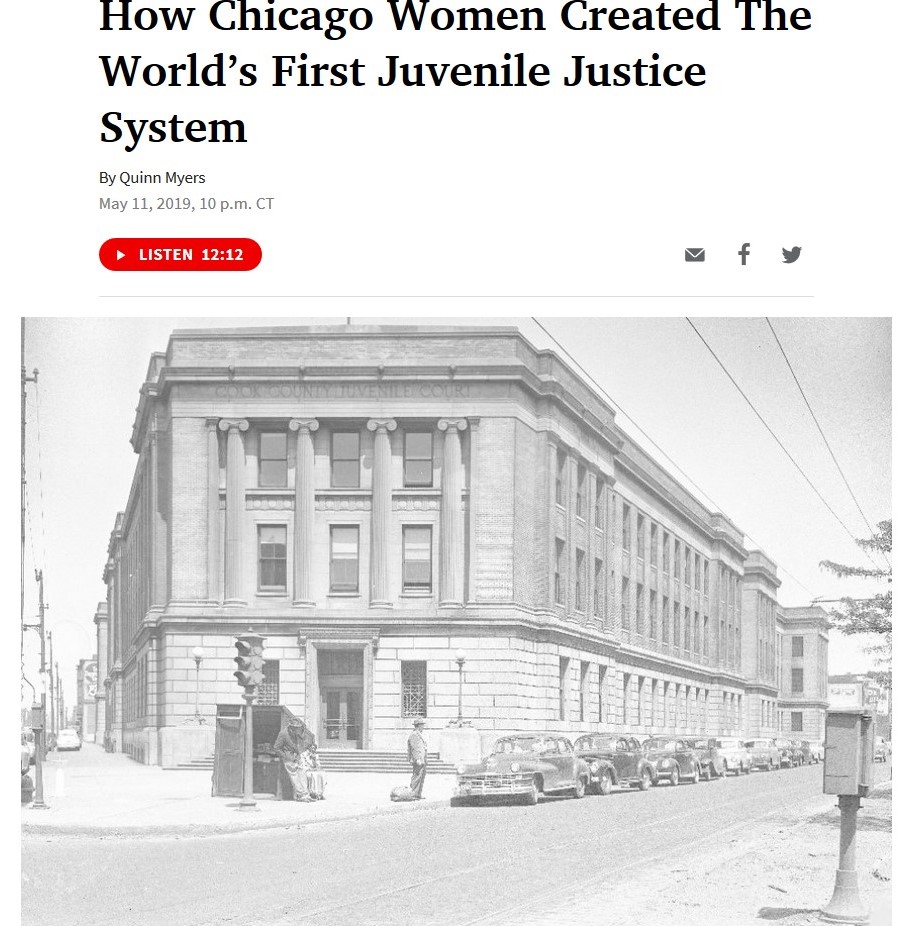
A recent WBEZ story highlighted the country’s first juvenile institution in Chicago. Here is the front of the building:

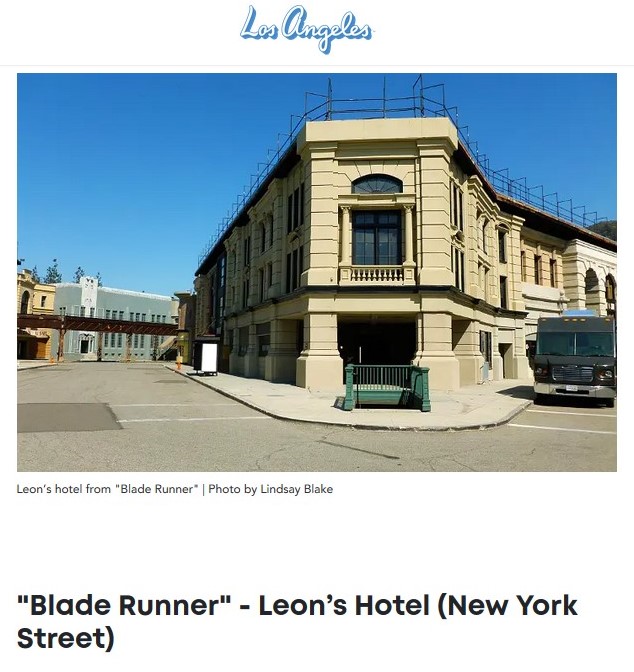
As soon as I saw this image, it reminded me of something I had seen on a tour years ago of the Warner Brothers backlot. Here is what I saw:

These buildings are not the same. But, their spirit is similar. They sit at an oddly-angled corner that gives the front entrance of the building a unique look. There are columns or pillars at the front. The buildings have a similar shape and set of materials even though they are slightly different. The backlot building has a subway entrance (from New York?) in front.

My experience with these structures hints at two larger processes at work:

  1. My memory is not quite perfect yet it is grouping similar buildings together. How many buildings in major American cities have this kind of look on this kind of corner?
  2. Linking to some of my research, how much do television and film depictions of place interact with our corporeal understandings of places? I can see a building on a screen, experience that same place or a similar place, and our brain and understandings then interact. Or, perhaps we may only know of a place through screen depictions and this backlot building in various forms stands in for all sorts of real settings.

I will keep looking for the Warner Brothers building on screen and continue to think through what it means for my understanding of Chicago, New York, and other places.

Brand loyalty and two nearby households with 3+ Subaru Outbacks

I understand the concept of brand loyalty. We own two Toyotas. But, I still find it interesting when I go by two nearby homes that have either 3 or 4 Subarus parked outside.

https://www.subaru.com/vehicles/outback/index.html

To have a driveway full of the same car suggests a strong commitment to this model. Is it the styling? The reliability? Some sort of special deal for people who loyal to the brand or an employee discount??

Cars have been sold for decades with the idea that they reflect some important traits of their owner. Purchase a particular brand and model and it helps define you. Or, a car and add-ons could provide clues about your personal life and possessions. Owning multiple Subarus makes a statement in a way that having different kinds of vehicles does not.

I wonder if there are more Outbacks inside the garages though many suburbanites do not have space given all the tools, sports equipment, and other items to store.

Residential segregation – by political party

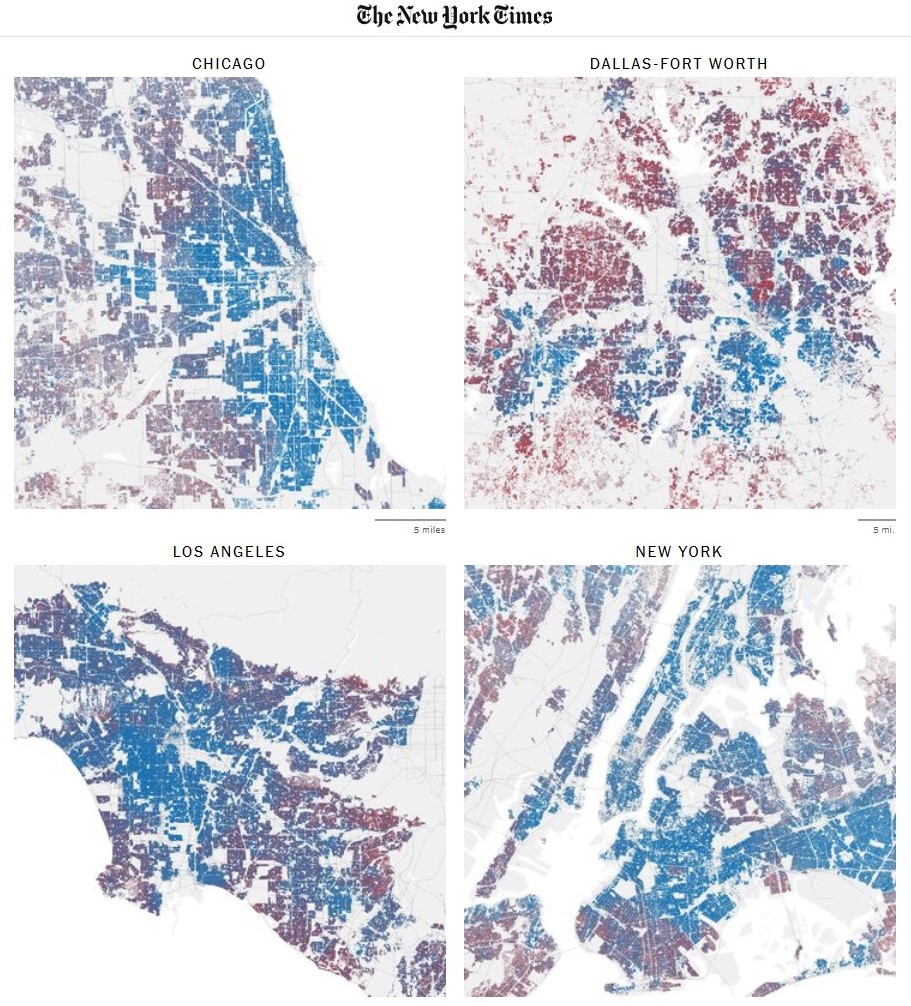
Residential segregation by race is a large issue and voting patterns in recent elections generally show Democrats winning in cities and close suburbs and Republicans winning in outer suburbs and rural areas. Put these two ideas together and you have residential segregation by political party.

https://www.nytimes.com/interactive/2021/03/17/upshot/partisan-segregation-maps.html

As new research has found, it’s not just that many voters live in neighborhoods with few members of the opposite party; it’s that nearly all American voters live in communities where they are less likely to encounter people with opposing politics than we’d expect. That means, for example, that in a neighborhood where Democrats make up 60 percent of the voters, only 50 percent of a Republican’s nearest neighbors might be Democrats.

Democrats and Republicans are effectively segregated from each other, to varying degrees by place, according to the Harvard researchers Jacob Brown and Ryan Enos. And at least over the past decade, they believe this partisan segregation has been growing more pronounced…

For each individual voter, tied to an address, the researchers looked at their thousand nearest voters, weighting those next door more heavily than those a mile away. Drawn this way, about 25 million voters — urban Democrats especially — live in residential circles where at most only one in 10 encounters is likely to be with someone from the opposite party. Democrats in parts of Columbus, Ohio, and Oklahoma City live this way. So do Republicans in the reddest parts of Birmingham, Ala., and Gillette, Wyo…

These studies together suggest that as places become more politically homogeneous, people there are more likely to conform and to publicly signal their partisanship. Maybe no one says, “I want to move here because of all these Biden yard signs.” But perhaps one neighbor is swayed by the people who put them up, and another neighbor concludes, “This isn’t the place for me.”

Lots of confounding variables to examine across a lot of locales. But, the underlying patterns are fascinating to consider: do geographic communities, even in an era of reduced neighborly contact and participation in local institutions, influence people’s political belief and behavior? With more focus in recent years on how online and social media behavior influences politics, this connection to geography has the opportunity to reinvigorate conversation about the power of local communities.

I would be interested to see how this plays out among local governments of communities with similar traits. Take a suburb closer to a big city that leans Democrat and a suburb further out that leans Republicans. Are the local decisions made that different? Do local elections look different?

Or, how often are there tipping points across communities and neighborhoods where a majority of voters are of one party or another? The patterns now show some stability but these have changed in the past and could change again in the future. What happens when they do change and does the character of the community change?

Taxing cars by miles driven already going in two states with more moving forward

With larger numbers of new kinds of cars using roadways, states are moving ahead to shift away from a gas tax to fund roads:

Photo by Markus Spiske on Pexels.com

The Oregon task force put the state at the forefront of the new approach, known as a road-user charge or a vehicle miles-traveled (VMT) tax. The state launched a voluntary program in 2015. Legislators in Salem are considering a bill that would make the program mandatory for new vehicles with a fuel economy rating of 30 miles per gallon or higher starting in 2026…

Utah’s program was launched last year and has enrolled more drivers than Oregon’s. A dozen states are considering legislation this year to update, launch or study programs, including California — where the governor wants to end sales of gas-powered cars by 2035 — and Wyoming…

Officials in Oregon say objections can be overcome as the public becomes more familiar with the new systems and research debunks concerns that some drivers, especially those in rural areas, will be disproportionately affected…

Oregon’s tax rate of 1.8 cents per mile is equivalent to the 36-cent gas tax paid by a vehicle that gets 20 miles per gallon. Someone driving about 11,500 miles a year would pay about $207. That leaves owners of hybrids paying more than they otherwise would. It would be a good deal for drivers of large SUVs or pickup trucks, but in 2019, the legislature limited enrollment of new vehicles to those that get at least 20 miles per gallon.

This has been years in the making; see earlier posts here and here. The gas tax will generate less revenue as states and carmakers move away from gasoline engines. Something will need to change.

How drivers respond will be interesting. Will this discourage driving? Move people more quickly or less quickly to new technologies? Encourage fleets of electric cars rather than individual ownership?

And the ripple effects are hard to anticipate. What does this do with the trucking industry which is responsible for delivering many critical goods? Does this lead to better maintained roads? Will this encourage more interest and funding for mass transit?

Or, the funding could smoothly transition over time and Americans continue their love of and support for driving. And this and others changing aspects of driving could simply change the whole experience of driving without eliminating driving, ranging from commuting patterns to visiting gas stations and fast food places to road trips.

The later costs of sprawl

One writer suggests the sprawl of the Sun Belt leads to significant costs down the road:

Photo by Life Of Pix on Pexels.com

Over time, growth has reduced those advantages. Jobs and people moving to states like Texas and Georgia slowly bid up the price of land and labor. Ample spare capacity for land and transportation infrastructure — think six-lane highways — let sprawl be a growth outlet for decades, but over time congestion and distance from airports and job centers raised the cost of sprawl as well. The 2008 financial crisis arguably busted the sprawl model in the largest Sun Belt metros of Houston, Dallas and Atlanta, where until the onset of the pandemic single-family building permits had lapsed to 35% below the 2006 highs, despite those metros still having reputations for sprawl and fast growth…

What’s needed to maintain past growth momentum and meet the expectations of these new populations is a continued push up the value chain towards local economies based on knowledge work, with higher-paying jobs and college-educated workers. The specific services or investments needed to lure these types of jobs and workers will shift with the political winds — it might be a greater investment in schools and universal pre-K programs today, and transportation infrastructure tomorrow. It’s the same kind of policy arms race these communities have been accustomed to for decades, only with more services replacing low taxes as the policy lever.

For now, the most likely tweaks to the governance model will probably be incremental — stormwater improvements, sidewalk construction and other “complete streets” projects, modest increases to educational funding — simply because the votes aren’t there to raise taxes enough for the kind of revenue needed for bigger changes.

But these tensions aren’t going away. It’s eventually going to require larger investments than current leaders and older voters are willing to make. Ultimately, the choice for these communities is to spend the money needed to stay competitive in the new arms race, or lose out to places that will.

In the United States, growth is good. Communities need to grow to show that they are exciting, thriving places. New residents and businesses signal good things to come.

But, the piece quoted above notes the longer-term possibilities of such growth. What happens after the fast growth slows or ends? Is it sustainable? How do communities switch from fast growth to mature growth or stability? My own research in the Chicago suburbs suggests this is not necessarily an easy switch. When the land starts to or does run out, communities have to make important decisions. Should they grow through increased density and/or allow taller buildings? How much will it cost to maintain all of the existing infrastructure? How much redevelopment or teardowns will take place? Even during the high growth periods, the costs can increase – see battles within sprawl over the costs for new schools and who pays – let alone as the sprawling areas age.

More broadly, what happens to sprawling suburbs decades after the sprawl has ended? We can now look back at numerous postwar suburbs and see what happened. The Levittowns always draw some attention for the ways they changed and are still the same. Many of these suburbs are over a half century old (though others are newer). These communities revolve around single-family homes and driving, among other things, and this might continue for decades. Or, it might not if conditions and ideologies change.