Lucy: Don’t worry. I’ll be there to help you. I’ll meet you at the auditorium. Incidentally, I know how you feel about all this Christmas business. Getting depressed in all that. It happens to me every year. I never get what I really want. I always get a lot of stupid toys and a bicycle or clothes or something like that.
Charlie Brown: So what is it you want?
Lucy: Real estate.
In addition to the words of Lucy, I recently heard a famous person describe their interest in real estate this way: “they aren’t making any more of it.” I have heard some variation of this numerous times in life. Since there are limits on how much real estate can be had, this can push prices up in places where there is high demand and limited property. (Of course, humans are pretty good at finding ways to create more real estate – think in-fill in many coastal cities – or finding financial opportunities out of what exists.)
And perhaps this hints at Lucy’s frustration. She keeps getting Christmas gifts for kids when she really wants to get ahead. Real estate would be a unique but wealth-building present. Forgot those ads with a car in a bow in the driveway: Lucy wants a property deed under the tree.
The giants of the social web—Facebook and its subsidiary Instagram; Google and its subsidiary YouTube; and, to a lesser extent, Twitter—have achieved success by being dogmatically value-neutral in their pursuit of what I’ll call megascale. Somewhere along the way, Facebook decided that it needed not just a very large user base, but a tremendous one, unprecedented in size. That decision set Facebook on a path to escape velocity, to a tipping point where it can harm society just by existing…
The on-again, off-again Facebook executive Chris Cox once talked about the “magic number” for start-ups, and how after a company surpasses 150 employees, things go sideways. “I’ve talked to so many start-up CEOs that after they pass this number, weird stuff starts to happen,” he said at a conference in 2016. This idea comes from the anthropologist Robin Dunbar, who argued that 148 is the maximum number of stable social connections a person can maintain. If we were to apply that same logic to the stability of a social platform, what number would we find?
“I think the sweet spot is 20 to 20,000 people,” the writer and internet scholar Ethan Zuckerman, who has spent much of his adult life thinking about how to build a better web, told me. “It’s hard to have any degree of real connectivity after that.”
In other words, if the Dunbar number for running a company or maintaining a cohesive social life is 150 people; the magic number for a functional social platform is maybe 20,000 people. Facebook now has 2.7 billion monthly users.
For much of human history, social interaction included only a relatively small number of people. The interactions occurred in a small geographic space. Some exchange in terms of news, trade, and people happened but not on the fast, global scale of which we are accustomed to today.
Facebook and other social media companies allow users access to thousands, if not millions, of users. Even as users have some choice about these connections, the possibilities are unprecedented. If humans found it daunting in the nineteenth century to encounter growing big cities (and early sociologists looked to explain the massive social changes connected to urban society and interaction), how do we comprehend all of the possible interactions today?
Some research suggests that even if users could access all these connections, they do not necessarily do so. Do Facebook users or Twitter users or other social media users regularly interact with people they do not know or do they primarily stick to people they know and/or known sources? Actually stepping across boundaries may be easier in the social media realm but they are still boundaries.
Does this suggest that humans cannot interact with global communities? Or, is this interaction not possible on an individual level and instead needs to be mediated through institutions, such as mass media or governments or corporations? Facebook’s experiences may just be helping people think about how to broaden connections without overwhelming those involved.
I have read several news stories discussing the move of companies out of California. Such news feeds chatter about companies and residents leaving places because of politics, taxes, discontent, etc. But, the details in this one story suggest some companies are shifting some workers and activity while retaining operations in California.
“Oracle is implementing a more flexible employee work location policy and has changed its corporate headquarters from Redwood City, California to Austin, Texas,” the filing said. “We believe these moves best position Oracle for growth and provide our personnel with more flexibility about where and how they work.”
The company already has a significant presence in Austin, opening a five-story, 560,000 square-feet campus overlooking Lady Bird Lake. It also has employment hubs in Redwood City, Santa Monica, Seattle, Denver, Orlando and Burlington…
Oracle follows a handful of similar moves by California companies and high-profile business leaders leaving the state. Tesla CEO Elon Musk announced he had moved to Austin last week at The Wall Street Journal’s CEO Council summit. His exodus followed months of bashing California for its handling of the pandemic. The billionaire CEO said he is maintaining company operations in California, but also has significant operations for Tesla and SpaceX in Texas…
HP Enterprise also announced its decision to relocate its headquarters from San Jose to the Houston suburb of Spring earlier this month. Palantir Technologies relocated from Palo Alto as well this year, landing in Denver. Tech giants Google and Apple have also been expanding their presence in Austin over the last several years.
Headquarters are important, particularly for cities. Attracting the headquarters of a major company is a big status symbol for any big city. See the interest in trying to attract Amazon’s second headquarters. The implication is that the new location has a favorable business climate and is on the rise (with the opposite assumed of the previous location).
But, headquarters are just part of a company. They may be the nerve center and the physical home of company executives. Yet, large companies today can have offices and plants all over the place connected to a headquarters elsewhere.
Another way to read the moves out of California above is to suggest that these companies are hedging their bets by being located in numerous advantageous locales. Having multiple locations can help take advantage of local tax breaks for particular purposes, build on local work forces, maintain their place in local social networks, and provide points to pivot around when conditions change. The headquarters may have moved but they may move again and the companies still see some value in keeping operations going in California (even if some of this is simply due to inertia).
This suggests a different future reality than one where cities serve as anchors for major corporations. Instead, major multinational corporations keep offices and facilities all over the place, ready to move when needed or when an opportunity arises. Austin and Houston might be attractive now, Miami or Denver in a few years (just sticking to US locations). And as cities continue to look for an edge over their competition, attracting another big company is important…even as that company is actually rooted in multiple locations.
Estimates for the nation’s total rent shortfall on Jan. 1 range in the tens of billions of dollars, potentially exceeding the amount of emergency rental assistance that Congress may or may not deliver over the next few weeks. If lawmakers fail to act, the New Year could trigger a long-feared disaster — an avalanche of evictions during the dead of winter, as the pandemic rages.
Back rent owed by struggling U.S. households — about 11.4 million renters in all — averages about $6,000 per household, or around three-and-a-half months’ rent, according to Mark Zandi, chief economist for Moody’s Analytics. Most of it has accrued since the expanded unemployment benefits under the CARES Act expired over the summer.
“These are low-income households,” he says. “They’ve probably already borrowed as much as they can from family or friends. They have no resources left.”…
The National Council of State Housing Agencies commissioned its own report on the nation’s overdue rent, arriving at a figure of $34 billion back in September. Stout, the global advisory firm that produced the report, has since issued a biweekly report on households facing eviction, drawing on data from the Census Bureau’s American Community Survey and its weekly Household Pulse Survey. Stout’s tracker currently estimates that 7–14 million households will face eviction for nonpayment in January, with rental arrears totaling between $13–24 billion.
Even if COVID-19 ended tomorrow or the vaccine is quickly distributed, administered, and effective, this is a lingering effect that will take a long time to work through. It will affect renters, landlords, other actors in the real estate market (including lenders and investors) as well as communities if there are unpaid bills and/or people left without housing.
Even as the media coverage of this issue might focus on certain housing markets, the effects could stretch across many markets. Imagine the priciest markets: with high rents to start, how can people make up the money if they do not have jobs or the same income or how could they easily find housing? But, the cheaper markets may run into similar problems: if you cannot afford to pay back rent, how many cheaper housing options or replacement housing options could people find? Given the possibility of regional differences, this might mean more local units of government – states, municipalities – could provide different options that better address local circumstances.
More broadly, this hints at ongoing housing issues that seem to get little attention. Housing is a foundational, daily issue for many and COVID-19 just exacerbates existing issues. Relief money from the federal government may provide temporary help but housing costs and quality need attention in many places.
If people were looking for more reasons not to watch major sports – and there are plenty at the moment – then consider the commercialism involved in any televised sporting event. I quote from an article featured in an earlier post:
The 11 minutes of action was famously calculated a few years ago by the Wall Street Journal. Its analysis found that an average NFL broadcast spent more time on replays (17 minutes) than live play. The plurality of time (75 minutes) was spent watching players, coaches, and referees essentially loiter on the field.
An average play in the NFL lasts just four seconds.
Of course, watching football on TV is hardly just about the game; there are plenty of advertisements to show people, too. The average NFL game includes 20 commercial breaks containing more than 100 ads. The Journal’s analysis found that commercials took up about an hour, or one-third, of the game.
The game itself could be interesting. I have watched numerous games that contained amazing sports moments and I am consistently surprised how often something new or rare happens.
But, even with those great moments, I always get a big dose of commercials. Break after break after break selling me products, brands, and an American way of life based on buying more and more.
Perhaps this is the true message of American sports: the observer, someone who probably was not able to play the sport in question at a high level, can live the good life through purchasing goods and experiences. Even while I am watching, I can purchase a lot through my phone or computer. And I can upgrade the sports watching experience with an even bigger television, more food and drinks, tailgate accessories, and ways to travel to the sporting sites.
And this may be the big message of American life in general. Community might be nice as might finding contentment with what you have. But, the guiding impulse that will help keep the economy humming and the consumer satisfied by novelty and acquisition is to just keep wanting and buying.
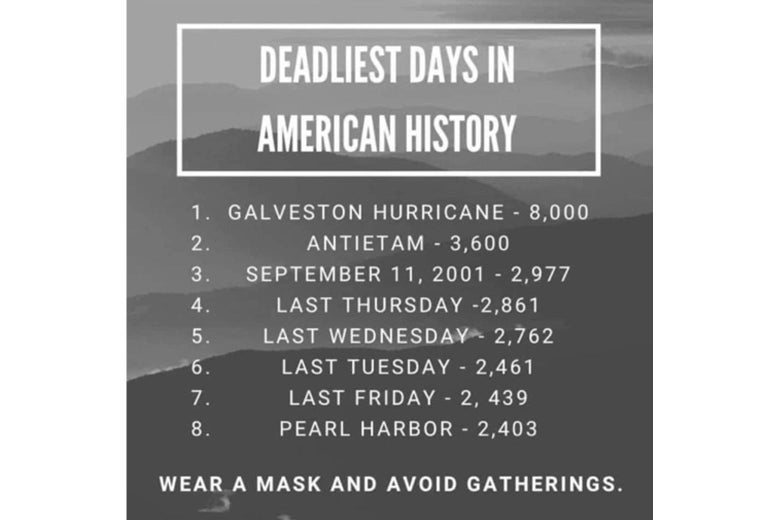
A list of the most deaths on a single day has been making the social media rounds. Titled “The Deadliest Days in American History,” spots #4-7 are recent days with COVID-19 deaths following the Galveston Hurricane, the battle of Antietam, and September 11, 2001. But, the numbers on the list are not what they seem:
I first saw the image on Facebook.
For one thing, a list of the “deadliest days” in American history would include days with the most deaths, not the most deaths from one discrete event. On all of the days included, more people in the United States died than the numbers listed. According to Reuters, 2,861 COVID-19 deaths were indeed reported last Thursday. But that doesn’t account for the number of people who died from heart disease (last week’s daily average was 1,532 deaths), lung and tracheal cancer (last week’s daily average was about 560 deaths), or chronic kidney disease (last week’s daily average was about 290 deaths). Deaths from drug overdoses have also been reaching record highs this year, a trend that may have been worsened by the pandemic. (Obviously, more people died on the days of the Galveston hurricane, the Battle of Antietam, 9/11, and Pearl Harbor, too.)
By its own rules, the list is also incomplete. More than 3,000 people died in the 1906 San Francisco earthquake, which isn’t mentioned, nor is the 1899 San Ciriaco hurricane, which killed more than 3,300 people in Puerto Rico over the course of six to nine hours. While we’re at it, the population of the United States is much larger now. The U.S. was home to about one-tenth of the current population during the Battle of Antietam. Losing 3,600 people back then would be like losing 36,000 people now.
But yes, the general idea behind this list—and other attempts to communicate the horrors of the pandemic as a set of digestible facts—is worthwhile. It can be helpful to compare the number of deaths specifically from the coronavirus to other historical events in which there were huge losses of American life. More than 286,000 people in the U.S. have died from COVID-19 thus far. Compare that to the 116,000 Americans who died in World War I; 405,000 Americans who died in World War II; 37,000 Americans who died in the Korean War; and 58,000 Americans who died in the Vietnam War. The 1918 flu pandemic killed 675,000 Americans, the 1968 influenza A pandemic killed 100,000 Americans, and the 2009 H1N1 pandemic killed 12,469 Americans.
The general idea may be a good one: similar numbers reported day after day lose their power. It can be hard for the general public to interpret large numbers in the abstract, as this earlier post about comparing an earlier death figure from COVID-19 to my community’s population. The list tries to place the daily death totals in historical context by noting that these are not just normal numbers; they are high numbers for any day in American history.
Yet, as noted above, the numbers do not quite work out. Perhaps the list should have a new title like “Days with the most deaths directly attributable to unusual causes” since it ignores all causes of death on particular days. And even then, other natural disasters are ignored and putting the numbers in a different context – as a percent of the population as a whole – also changes the list.
The list might still spur people to action, even if the list has flaws. And this was probably the goal of the list in the first place: it is not meant to be an academic study on the topic but a call to action. Like many statistics, these numbers are used in a way intended to nudge people toward different behavior.
County Treasurer Maria Pappas is out with a new report that concludes the 81-year-old program isn’t working. Not enough people are bidding on the properties, she says, and so the parcels often remain eyesores, a deterrent to revitalizing the neighborhoods they blight. That especially hurts struggling Black city neighborhoods and south suburbs, Pappas notes.
“Nobody wants these properties because they are in areas that are losing population, have high crime and aren’t worth the property taxes you have to pay to own them,” said Pappas, who conducts the sales as directed in state law. “So people abandon them.”…
Land Bank officials strongly dispute that notion, saying they’ve done more to return properties to productive use in just a few years than private buyers — often hedge funds making speculative bids — have achieved over a much longer period of time.
They acknowledge changes to the system are needed, and plan to ask lawmakers to approve them. “If the treasurer would like to support the reform of this, we couldn’t be more happy to have her join us,” said County Commissioner Bridget Gainer, who set up the Land Bank in 2013.
Vacant properties are not desirable in any community since they are not generating the revenues they could, whether because taxes are not being paid or the land is not being used in a productive way. Additionally, they are aesthetically unappealing – being often viewed as signs of blight or neighborhood problems – and could attract unwanted activity. Whether it is suburbs trying to fill empty grocery stores or dead shopping malls or communities with fewer economic opportunities looking for redevelopment, vacant or abandoned land is distressing.
This particular ongoing issue in the Chicago area is highlighted even more clearly when land not very far away – perhaps just a few miles and sometimes in the same municipality – is very desirable and multiple actors would want to redevelop it. Even during COVID-19, land in the Loop attracts attention as developers and architects eye property and vie to be part of what is viewed as a desirable area and a good investment.
In the United States, the contrast between the availability of capital and development by location can be incredibly stark. In this case, it is connected to significant residential patterns by race where land and buildings in Black neighborhoods are less desirable. There is land to be redeveloped in Chicago and it can be had rather cheap…but, due to powerful social forces over time, no one has any interest in the cheap land and they would rather continue to fight over and compete in the lucrative areas.
“What has produced this kind of world is modernization,” Wells said. “The public environment that results from it is modernity. But these words––modernization and modernity––are abstractions to so many people. How could I explain what has happened to my readers in a way that they could get it?”
He found the answer in a small Massachusetts town named Wenham––population 4,875 when Gordon College isn’t in session. Wells opens No Place by explaining how Wenham, settled by Puritans after a 1635 sermon, slid into modernity in stages––telegraphs gave way to radio and television and internet; farmland yielded to suburban homes; horses were replaced with trains and cars and airplanes.
At some point, Wenham crossed a divide along with everyone else, Wells wrote in No Place. “It is as if the ability to make better cars and better airplanes and better medicines and better theories imply an ability to make better selves––to transcend not only our own mortality, which would be no small feat, but also our own corruption, which would be an even larger feat.”
“So many people no longer believe in human nature––something all human being have in common,” he told TGC. Instead, “they believe in the self––the core at the center of each person that is unique to them and unlike any other self. This is really at the root of the extreme relativism of our time where people not only have their own ‘values,’ but also their own take on reality.”
I have not read the book being discussed – No Place for Truth – but this is a common academic approach: use an interesting case to illustrate broader processes. In this case, it sounds like Wenham, Massachusetts can help show how modernity played out in a community roughly twenty-five miles from Boston.
At the same time, I am more interested in the suburban connections here. Again, while I have not read book discussed above, I have been studying religion and place in recent years and there may be some patterns across communities. Here is my attempt to connect the case of Wenham to suburbs and religious change.
Wenham is a small and wealthy community. Founded in the mid-1600s, the community has just under 5,000 residents with population growth of over 30% three decades in a row after World War Two. The median household income is over $90,000 and the community is over 97% white. (All figures from the 2010 Census.)
When a large number of Americans moved to the suburbs during the twentieth century, these new suburban residents were often said to be conservative. This could apply to politics as well as religion. Religiosity soared after World War Two. Many new churches were founded in suburbs while others already present grew substantially.
But, even in small suburbs where religion was important, modernism prevailed. The focus on self became part of the American suburban dream. Even with a suburban focus on providing the best for the nuclear family, suburban residents could focus more on themselves free of the stronger community ties that could be found in either small towns or urban neighborhoods from which the new suburbanites came. And success in the suburbs came to be defined as personal or individual success: a nice house, a good income, leisure time, having all the necessities befitting a suburbanite.
This all had an impact on religious beliefs, behavior, and belonging. A shift to the self changes beliefs about transcendent beings and doctrines, affects how people live their everyday lives, and weakens attachments to religious institutions.
Thus, the argument goes, modernism and religious change came to America and its communities. Life changed everywhere, even in exclusive suburban communities.
Nearing the ninth month of COVID-19 restrictions in our area, I remembered again this weekend that I have done one regular activity a lot less than normal in that time: driving. While this may be true for many Americans, this is particularly unusual in the suburbs. When a whole space where more than 50% of Americans live is organized around cars, driving significantly less makes for noticeable change.
Americans like suburbs, in part, because they are organized around cars and driving. Single-family homes often features garages and driveways. Private lots are often located beyond walking distance of key destinations including schools, grocery stores, parks, and jobs. Commuting by car is required in the absence of other transportation options and the suburb-to-suburb trip is common.
To start, making fewer car trips during COVID-19 means I have more time in life. I do not have a long commute but with an average commute time of just under twenty-seven minutes, less driving and/or working from home means many suburbanites have more time during the week. Those who have had to continue to drive to work regularly encounter less traffic on the road and can arrive more quickly. And I have driven less to other locations as well. (Of course, others might have driven more during COVID-19, particularly delivery drivers of all sorts.)
Second, I have had to do less maintenance on my car and pay for less gas. Cars are expensive to own and maintain. It is not only about the frequency of trips; we have put off longer trips to visit family or take vacations. Suburbanites may be used to driving trips to the city or vacation spots but tourist activity is down during COVID-19. The time between oil changes and regular maintenance has increased, likely lengthening the life of our vehicles. (At the same time, COVID-19 might make owning a car more necessary when public transportation is not as attractive.)
Finally, driving less means more suburbanites are spending more time at home. The private single-family home in suburbia may look more attractive during COVID-19 as it often offers space and distance from others. Particularly in wealthier suburbs, residents can work from home, have plenty of entertainment and leisure options, and have things delivered to them.
While COVID-19 has affected driving and time use in suburbs, it is less clear how attractive this is to suburbanites. Americans in general like to combine driving and homes but during COVID-19 they may have seen more of their homes and less of the road. Since driving is connected to many social and economic activities in suburbs, this is not just about accessing opportunities; it is about living out a particular style of life. Will suburban COVID-19 experiences help push residents and leaders toward a new kind of suburbs or will people be overjoyed to return to typical driving patterns?
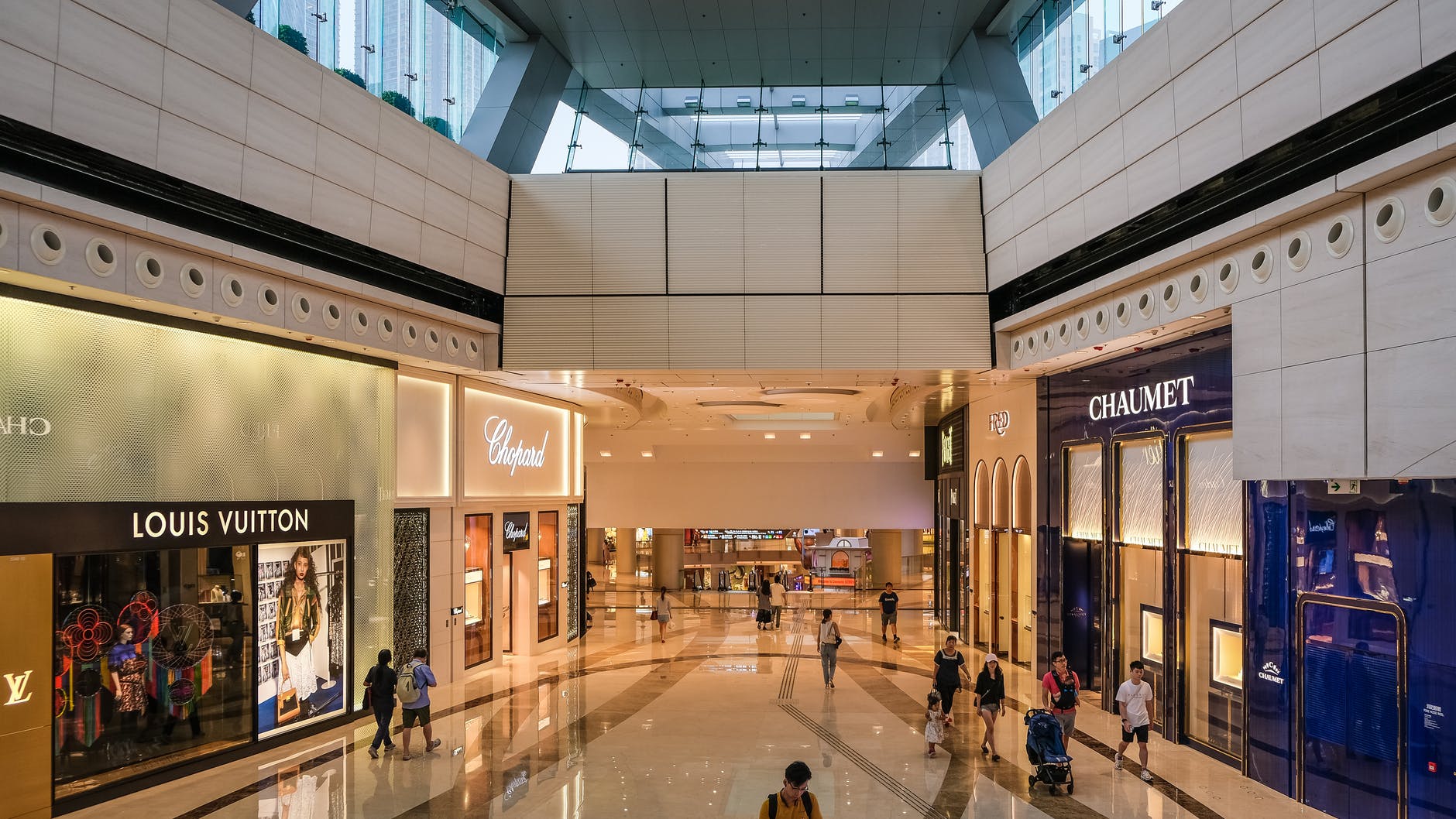
Then, in October 2018, Sears declared bankruptcy, and they decided it was time. Here was the scheme: MP built a position against two slices—called “tranches” in Wall-Street speak—of mall debt with, they thought, a relatively low likelihood of being repaid: CMBX.6 BB and BBB-, which were filled with roughly $2 billion worth of debt, an outsized chunk of which was issued to 39 struggling shopping malls. They bought credit default swaps on the block of debt, which amount to insurance policies on the bonds. If the bonds went completely bust—similar to, say, your house burning down—they would be owed their entire value in cash. But even if the tranches decreased in value, MP’s insurance would be worth more and they could sell the swaps for a profit. In any case, it was an asymmetric bet: the downside risk was confined to what they’d have to pay to hold the insurance, but the potential payout was many multiples of that amount—theoretically in the billions…
Meanwhile, McKee was becoming known on Wall Street as “The Queen of Malls,” and other bearish hedge funds began asking her for advice on shorting CMBX.6. “All I did was talk about malls all day,” she said. This included portfolio managers working for the infamous billionaire activist investor Carl Icahn, who, by the end of 2019, had put on a $5 billion short position, arguably the largest by anyone on Wall Street. This went against conventional wisdom at the time, considering that the value of the mall debt was going up, but once word got out that Icahn had entered the ring, the trade was taken more seriously on Wall Street. “That made a lot of people stand up and say, ‘Hold on, we should look at this,’” McNamara said…
Between March and July, as businesses struggled to pay their rent, CMBS delinquencies, according to Trepp, increased by a staggering 492 percent, the value of the hotly contested CMBX.6 tranches were slashed in half, and the brick-and-mortar retail sector was on the verge of going belly-up. Large retailers like Gap stopped paying rent; Neiman Marcus, J.Crew, Brooks Brothers, Ann Taylor, Loft, Pier 1 Imports, GNC, and JCPenney (among many others) filed for bankruptcy; Victoria’s Secret was closing hundreds of stores and Lord & Taylor announced it was closing its doors for good and liquidating inventory; TJX and Macy’s recorded losses of $5 billion and $2.5 billion, respectively; foot traffic for shopping malls plummeted to basically zero; and, in April, clothing sales fell 79 percent, the largest drop on record. “The economy has declared war on your aunt’s wardrobe,” Scott Galloway, marketing professor at New York University, mused on his podcast Pivot. As for Crystal Mall, Simon Property Group, its landlord, defaulted on the mortgage and is planning on handing over the keys to their special servicer…
COVID-19 also revealed a dirty secret hidden in the crawlspace upon which many commercial mortgage-backed securities were built. A University of Texas at Austin study published in August claimed that banks knowingly inflated underwriting income for $650 billion worth of commercial real estate mortgages issued between 2013 and 2019, including by 5 percent or more for nearly a third of the roughly 40,000 loans. “A well-documented historical pattern is that fraud thrives in boom periods and is revealed in busts,” the university researchers wrote, adding that end investors were unaware of this hidden risk, a deception akin to buying a Ferrari secretly outfitted with a rusted-out Kia engine. It could be argued that CMBS had been a magic trick all along, with big banks one step ahead, luring investors to pick a card from a rigged deck. It took a global pandemic—an act of God—to reveal this financial sleight of hand.
Americans and financial institutions were bullish about single-family homes into the 2000s, until they were not and the housing market imploded. Americans liked shopping malls…and is this a repeat?
Since the story suggests those shorting shopping malls are in the minority, does this mean other investors truly believe shopping malls will successfully reinvent themselves and or redevelop enough to successfully pay their mortgages? Or, are a lot of people hoping that shopping malls make it through?
The default of shopping malls could have a broad effect, particularly on communities that will struggle to fill that space and recapture some of the tax revenue that shopping malls could bring in. More broadly, the difficulties retailers face could impact a lot of people in multiple ways.







 Legally Sociable