Two numbers that show how much space the United States devotes to parking

The United States has a lot of parking:
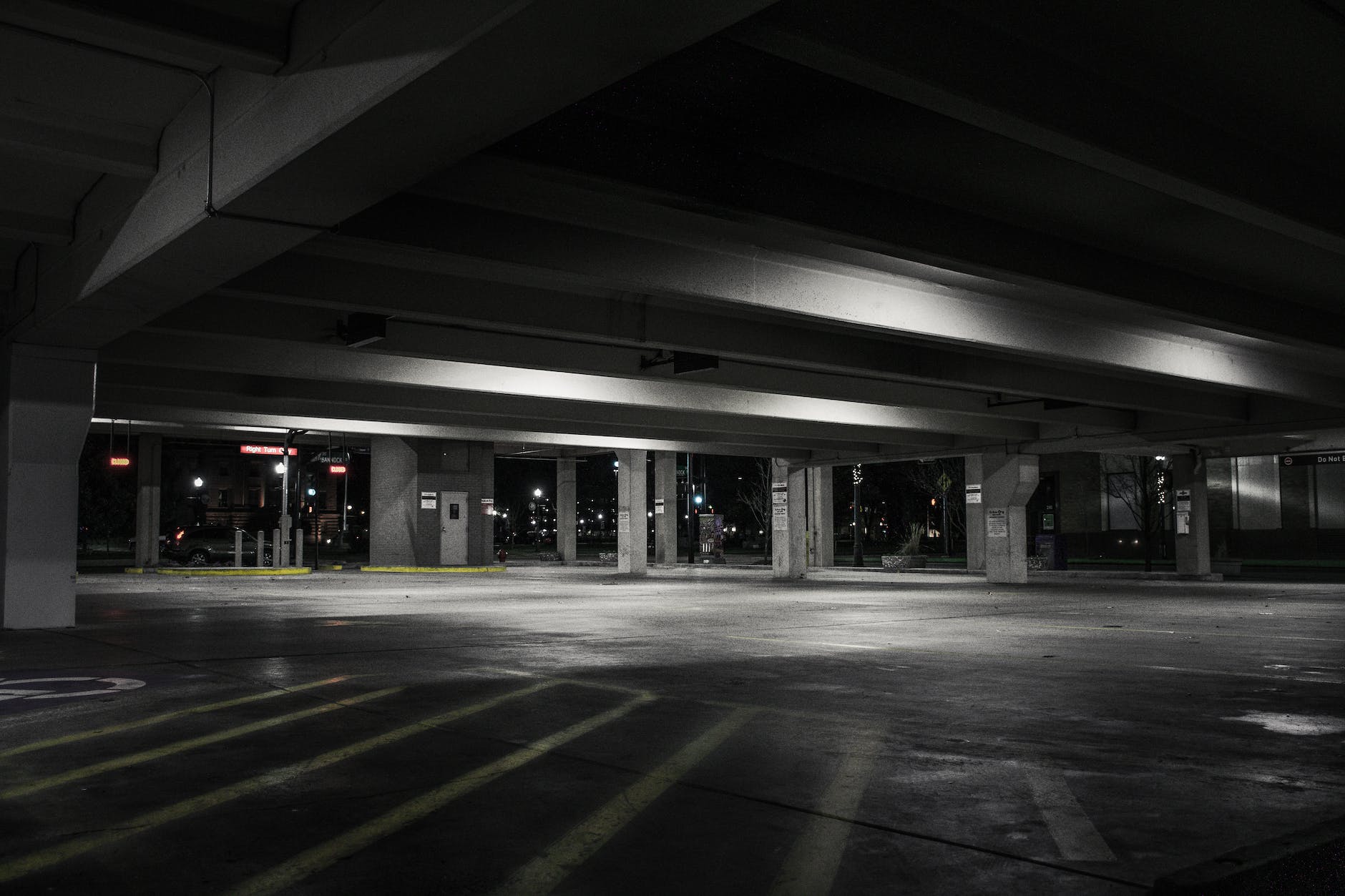
Photo by Brett Sayles on Pexels.com

The United States has about two billion parking spots, according to some estimates — nearly seven for every car. In some cities, as much as 14 percent of land area is covered with the black asphalt that engulfs malls, apartment buildings and commercial strips.

In a country where driving is an essential part of the regular and idealized way of life, space is required for vehicles when they are not in use. Most locations requires parking so people can drive and park there. Communities accrue a lot of parking, sometimes for parking that serves multiple locations (such as a downtown parking garage) and sometimes for a single use (like a parking lot in front of a big box store).

Increased density would help solve this problem without necessarily asking for people to drive less. Put desirable locations near each other and then centralize parking or share parking facilities so that parking is not unnecessarily duplicated. If “surban” developments are more popular or “fifteen minutes cities” emerge in greater numbers, perhaps this might help.

Less driving could also help. As could expectations about how much parking is needed; it is for peak and unusual times that rarely occur?

If enough places and concerned actors are able to slow the growth of parking lots and/or eliminate some, it is interesting to imagine communities with fewer parking spaces in the future. How might such land be positively used?
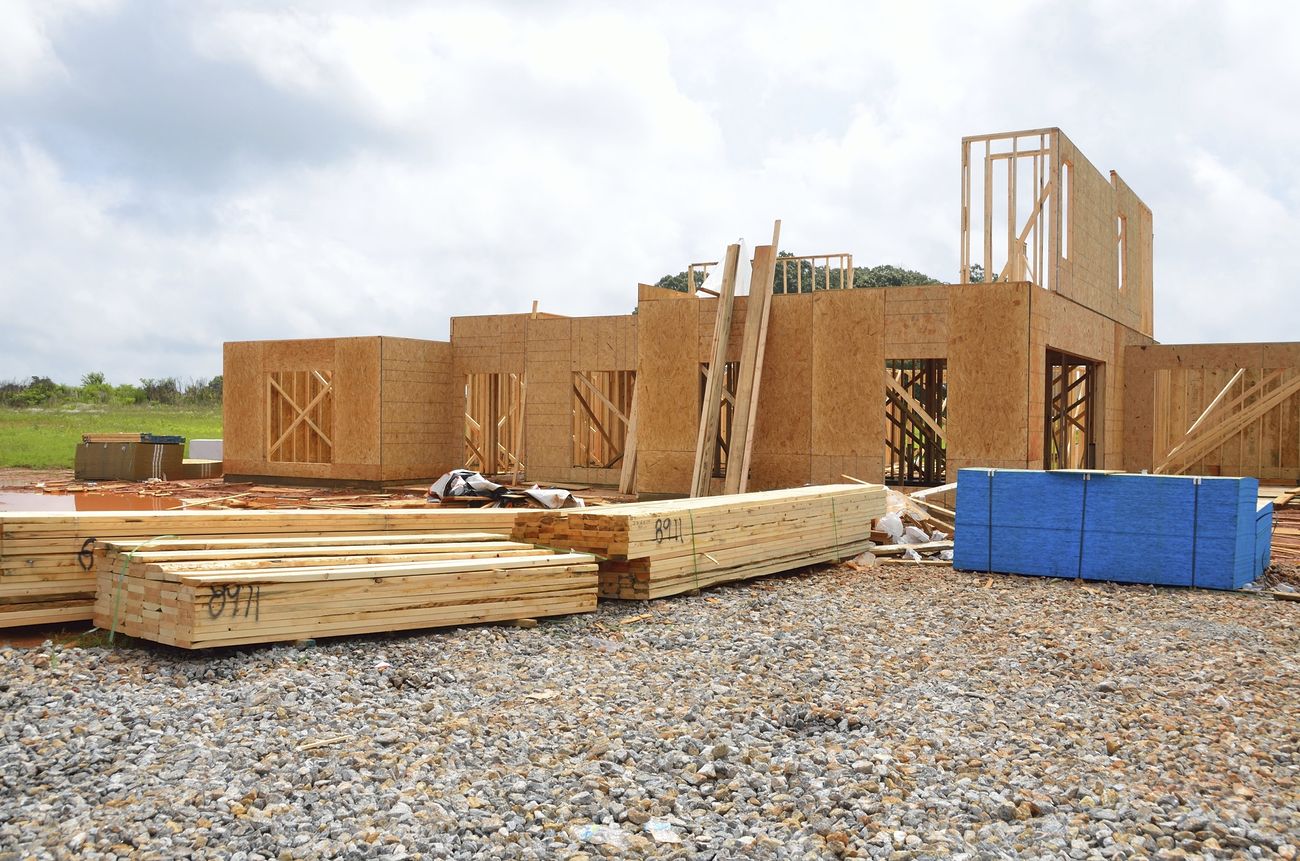
DuPage County Board to consider affordable housing

The DuPage County Board has plans to address affordable housing needs:

The creation of an ad hoc affordable housing committee was announced during Tuesday’s county board meeting and comes two weeks after the county board set aside $2.5 million to start an affordable housing solutions program.

“If you work in DuPage County, you should be able to live in DuPage County,” said Deborah Conroy, county board chairwoman, after announcing the committee…

The cost of land, officials said, often hinders affordable housing developments…

From 2018 to 2022, some 862 affordable rental units were built in DuPage County, Illinois Housing Development Authority Executive Director Kristin Faust told board members Tuesday. During that same time, 996 homebuyers purchased a home with a mortgage assisted by the housing authority, Faust said.

DuPage County is a relatively wealthy county. According to the Census Bureau, the median household income is $100,292, the poverty rate is 6.9%, and the median value of owner-occupied housing is $324,900.

Additionally, the County and the municipalities within it do not have a great history of pursuing affordable housing. In the postwar era, DuPage County did not build much public housing when it had funds to do so. Municipalities largely pursued housing aimed at white, middle-class and above residents. Affordable housing has been raised as an issue in the county since at least the 1970s. Newer efforts still aim their efforts at relatively well-off residents.

By not having sufficient affordable housing in DuPage County (or in the Chicago region as a whole), the County may struggle to grow, attract workers, and continue the quality of life that residents expect.

How much will Sunbelt growth slow because of more traffic?

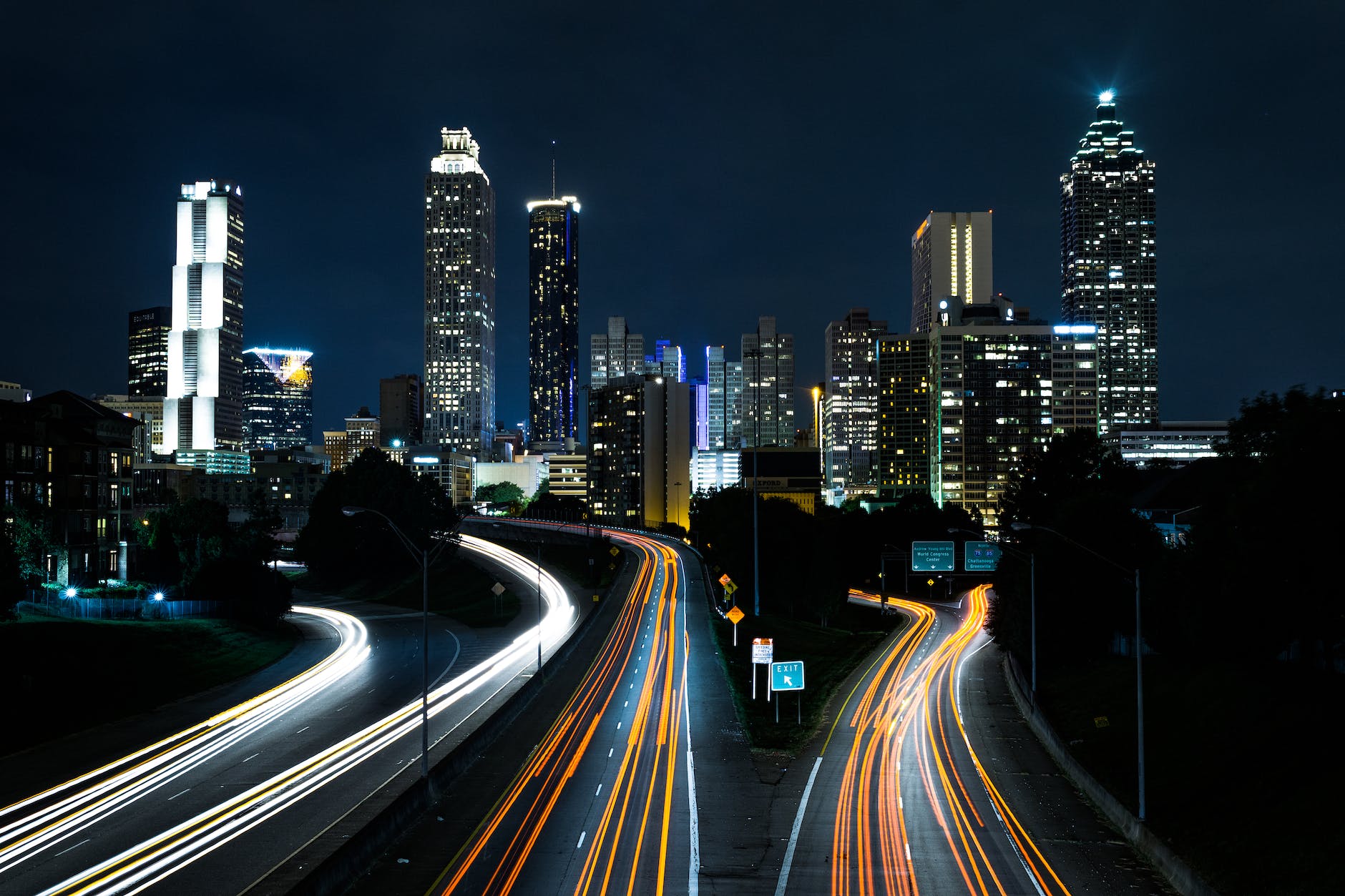
More development and increased populations mean more traffic in multiple Sunbelt metropolitan areas:

Photo by Joey Kyber on Pexels.com

In most U.S. cities, traffic is less congested than it was in 2019, as fewer people commute to offices, according to mobility data company Inrix. In some Sunbelt cities, such as Miami, Nashville and Las Vegas, where the population has surged in recent years, it has become worse. 

These cities also attracted more companies and tourists during the pandemic. Local roads, built decades ago for a much smaller population, are struggling to accommodate the new reality. 

“They way underestimated their growth,” said Robert Cervero, professor emeritus of city and regional planning at the University of California, Berkeley, College of Environmental Design…

Sunbelt cities are particularly vulnerable to congestion because of poor public transit. Driving in New York City’s rush hour can be bumper-to-bumper, but many people take the subway. Most southern cities offer no such alternative…

For now, Sunbelt states are hoping to fight congestion by adding more roads and express lanes. Tennessee lawmakers are considering a proposal to add toll lanes on state roads. Florida Republican Gov. Ron DeSantis recently proposed spending more than $5 billion on highway construction and more than $800 million on rail and transit throughout the state.

Growth is good in the United States – until it threatens some of the attractive features of places that brought people there in the first place.

At what point do residents and businesses not move to growing regions because of congestion? These Sunbelt cities continue to have numerous attractive features even if they have more traffic.

Adding lanes to roads may appear proactive but it can lead to more attractive as more drivers think there is capacity. Considering mass transit is necessary but complicated by suburbanites who do not necessarily want transit to reach them, high costs to get basic mass transit in place (though this could help save money down the road), and limited interest in denser development.

Do smaller cities offer advantages here? I have heard this argument before: you can have more rural property conditions within a ten to twenty minute drive of the main shopping areas or the downtown. Achieving this is more difficult in a more populous area where there is more competition for land.

The long wait for a train station parking permit in Naperville is ending

The busy Metra commuter rail train stations in Naperville meant that it could take years to get a parking permit. That is no longer true:

Photo by Pixabay on Pexels.com

All parking spaces in Naperville commuter rail lots will transition to daily fees in the coming months.

The Naperville City Council Tuesday voted to eliminate the parking permit system at the Route 59 and Naperville/Fourth Avenue Metra rail stations and require commuters to pay only for the days they park…

Even before the COVID-19 pandemic changed the frequency people commute to Chicago, city staff was working to address the problem of spaces not be used in permit lots.

Effective immediately, no new permits will be issued for any Naperville commuter parking lots.

In the coming months, staff will modify the municipal code for council consideration with a goal implementing the daily pay-by-plate fee model in July…

When demand does return, the city can look into implementing more technology, such as parking guidance and reservations systems, Louden said.

This is a big change in a community where finding parking at the train station was difficult for years. Suburbanites are often used to plentiful and cheap parking so both a waiting period for a permit and a shift to a first-come-first-served model can irk different people.

It would be interesting to hear more about how changing work patterns – more work from home, perhaps more suburb to suburb commuting over time compared to trips into Chicago – affect suburban life. Are we in for a significant reckoning with commuter rail and mass transit when fewer people use it regularly for work? How about big parking lots: do they survive? Or, do suburban schedules change when fewer people work 9-5 shifts?

Trying to organize food co-ops in the suburbs when local farms and food producers have dwindled

One suburban food co-op is hoping to launch later this year in central DuPage County. Where do they get their food from?

Photo by Engin Akyurt on Pexels.com

Prairie Food will focus on local, organic and sustainably produced food. The co-op has cultivated relationships with Walnut Acres Family Farm in Wilmette, Rustic Road Farm in Elburn, Jake’s Country Meats in southwest Michigan and “quite a few dairy farms,” Kathy Nash said…

Co-op organizers say the model — local control, local ownership — has become especially relevant after the pandemic brought on food supply issues…

Food co-ops clearly define what “local” means. The Food Shed’s goal is to source 25% of all of the store products within a 100-mile radius. The McHenry County co-op purchased land on Route 14 and Lakeshore Drive to build from the ground up. The shopping space will cover around 7,000 square feet…

The Food Shed started from a desire to connect with local farmers and “tap into the local economy,” Jensen said. The co-op was officially incorporated in 2014.

If the comparison is between a 3,000 mile salad where the ingredients come from a long ways away or having food from within 100 miles or a few hours drive, then the co-op is definitely pursuing local food.

At the same time, the desire to buy local food is made more difficult in suburban settings where development has gobbled up land for decades. Looking back at some research notes I had, I found these facts about local farms:

-The amount of land in DuPage County devoted to farming dwindled toward the end of the twentieth century – down to 11% of the county’s land in 1987 and 95 farms in 1992 – according to the Chicago Tribune.

-Also in the Chicago Tribune, the last dairy farm in DuPage County closed in 1993 with the land sold to a developer. At one point, the county was known as “the milk shed for Chicago.”

-The last beef cows in Naperville left in 2005 with the sale of a farm to developers (also according to the Chicago Tribune).

So even as some suburbanites want local food, the developments and communities in which they live are at least partly responsible for pushing food production further away?

ADU construction up in Seattle – to nearly 1,000 in a year

Recent changes to regulations in Seattle made the construction of accessory dwelling units (ADUs) more attractive and local property owners are responding:

Photo by Chait Goli on Pexels.com

The addition of accessory dwelling units in Seattle has surged since 2019, when the city revamped its regulations to encourage their creation, pitching the units as a way to add density gently and provide a wider menu of living opportunities in neighborhoods dominated by single houses.

Almost 1,000 ADUs were permitted last year, up from 280 in 2019. That’s a 250% increase.

How does this compare to the amount of housing needed?

The state must add 55,000 homes per year over the next 20 years to meet demand, according to Department of Commerce projections published last week. More than half must be affordable to low-income residents, and new homes are needed at all income levels, the projections said…

ADUs remain a relatively minor component of Seattle’s housing production, given that more than 11,000 homes were built last year in multifamily structures like apartment buildings and town houses…

Will these new units prove to be the answer to affordable housing? In terms of sheer numbers, the quick answer seems to be: not yet. This pace would need to pick up and/or continue for a while.

Additionally, as the article discusses, who is building these units and who is living in them? If they are primarily built and rented by wealthier property owners, does this further housing inequality?

It will also be interesting to see how the increasing density in neighborhoods affects everyday life. Will residents find additional units on properties preferable to multifamily dwellings?

Try to run an online world and a company town

Would it be easier to run Twitter or build and oversee a company town? Elon Musk is exploring constructing a town in Texas for employees of his multiple firms:

Photo by Tatiana Syrikova on Pexels.com

In meetings with landowners and real-estate agents, Mr. Musk and employees of his companies have described his vision as a sort of Texas utopia along the Colorado River, where his employees could live and work.

Executives at the Boring Co., Mr. Musk’s tunnel operation, have discussed and researched incorporating the town in Bastrop County, about 35 miles from Austin, which would allow Mr. Musk to set some regulations in his own municipality and expedite his plans, according to people familiar with Mr. Musk’s projects.

They say Mr. Musk and his top executives want his Austin-area employees, including workers at Boring, electric-car maker Tesla Inc. and space and exploration company SpaceX, to be able to live in new homes with below-market rents…

As of last year, Boring employees could apply for a home with rents starting at about $800 a month for a two- or three-bedroom, according to an advertisement for employees viewed by the Journal and people familiar with the plans. If an employee leaves or is fired, he or she would have to vacate the house within 30 days, those people said.

I am intrigued by the contrast between online and offline activity. I have argued before that the two realms are more linked than people think. Here, both the business activity spans these two realms as might the world of employees and visitors.

What might the fate be of this proposed community? On one hand, if the primary goal is to provide cheaper housing for employees, perhaps such a community could be really helpful. Since housing is a significant portion of household costs, providing cheaper good housing could help attract and retain employees. Another bonus is that employees are close to work and might be willing to work more hours.

On the other hand, when has a company town worked out well in the long-term? What regulations does Musk want to implement and what are the penalties for not adhering to them or disagreeing with them? Even with reduced housing prices, how will employees feel about always being tied to work?

My suspicion is that this will not work out as intended. Developing a community is no easy task and the interaction between work life and community life is hard to manage.

When a revival overwhelms a small town of 6,000 people

The recent religious revival at Asbury University brought a lot of people to Wilmore, Kentucky:

Photo by Aayush Srivastava on Pexels.com

By the time university leaders concluded the gathering, an estimated 50,000 students and visitors had come to the campus to pray, said Kevin Brown, Asbury’s president. The outpouring attracted students from more than 260 colleges and universities, many drawn by social media livestreams and posts. Similar prayer services cropped up at other Christian universities, including Lee University in Tennessee, Cedarville University in Ohio and Samford University in Alabama…

The surge of worshippers overwhelmed the campus and the sleepy town of Wilmore, which is home to roughly 6,000 residents, according to U.S. Census Bureau data. Cars streamed into the city, backing up traffic and filling the town’s parking spaces.

“We have two stoplights, to give you an idea of how large our town is,” Brown said. Suddenly having to figure out how to accommodate thousands of visitors “on the fly” was “unnerving and unsettling.”

“Our town and our institutions are just not equipped to absorb such a large influx of people,” he said. “On the other hand, it was really, really sweet and really beautiful to see so many different people, so many different ages, representing so many different geographies … just to see everyone in one space, united and experiencing something together.”

The juxtaposition of religious activity and visitors in a small town is worth considering. Three questions come to mind:

1. How many communities would be prepared for a large influx of visitors there for religious purposes? What exactly would they need to respond and what would mark the interactions and activity outside of the clearly marked religious spaces?

2. Would Christians in the United States be more or less surprised to find religious revival happening in a small town or in a major city (thinking of Billy Graham’s long meetings in 1957 in New York City or the Azusa Street Revival in Los Angeles in 1909)?

3. Are the conditions of small town life more or less conducive to religious fervor? Americans often have romantic notions of small towns yet big cities are denser and have more people coming and going.

Chicago February municipal election turnout drops

The most recent elections in Chicago featured low voter turnout. From WBEZ:

Photo by cottonbro studio on Pexels.com

Citywide, preliminary turnout currently stands at roughly 34.3%, among the lowest turnout rates for a February municipal election in the last 80 years. The total number of ballots cast in this election isn’t final yet because there are still thousands of vote-by-mail ballots en route to the board of election commissioners.

In 2015 and 2019, the return rate for vote-by-mail ballots averaged nearly 80%. Assuming the same return rate this year, the city’s overall voter turnout rate could reach 35%.

From the Chicago Tribune:

Though early voters smashed city records, overall turnout was low in Tuesday’s municipal election.

Only about 1/3 of registered voters in Chicago cast ballots for mayor, city clerk, city treasurer, City Council and police district councils.

The citywide turnout rate this year was lower than it’s been in the last three municipal elections in 2011, 2015 and 2019. In fact, turnout in 2023 was about 10% lower citywide than it was in 2011.

Notwithstanding the issues of February elections not tied to other state or federal outcomes, I wonder at a few other possible factors involved:

  1. Are the people voting by mail voters who would otherwise not vote or people who would have turned up at a poling place in the past?
  2. Is the motivation of voting in a broader primary with more possible candidates – giving voters more options to find someone who might represent their particular interests – less inviting than having two candidates in the later election and the voters having to choose one or the other?
  3. In a city where leaders tend to be powerful figures, what else might interest voters in selecting these leaders?

The Internet and social media mean our reference group is everyone and not just family and friends

Related to the post yesterday about the power of statistics on college campuses, here is a similar matter: how much do we compare our behavior today to “everyone” or “larger patterns” rather than just family and friends around us?

Photo by fauxels on Pexels.com

The connection is not just the Internet and social media and the way they connect us to more people and narratives. This is a change in statistics: we think we can see larger patterns and we can access more information.

Whether what we see on social media is a real pattern might not matter. (A reminder: relatively few people are active on Twitter.) We see more online and we can see what people are highlighting. This might appear as a pattern.

Not too long ago, we were more limited in our ability to compare our actions to others. The mass media existed but in more packaged forms (television, radio, music, films, newspapers, etc.) rather than the user-driven content of social media. The comparisons to that mass media still mattered – I remember sociologist Juliet Schor’s argument in The Overspent American of how increased TV watching was related to increased consumption – but people’s ties to their family and friends in geographic proximity were likely stronger. Or, in Robert Putnam’s Bowling Alone world, people spent a lot more time in local organizations and groups rather than in the broad realms of the Internet and social media.

Now, we can easily see how our choices or circumstances compare to others. Even odd situations we find ourselves in quickly be matched across a vast set of platforms for similarities and differences. Whether our tastes are mainstream or unusual, we can see how they stack up. If I am on college campus X on one side of the country, I can easily see what is happening on college campuses around the world.

Even as the Internet and social media is not fully representative of people and society, it does offer a sample regarding what other people are doing. We may care less about what the people directly near us are doing and we can quickly see what broader groups are doing. We can live our everyday lives with a statistical approach: look at the big N sample and adjust accordingly.