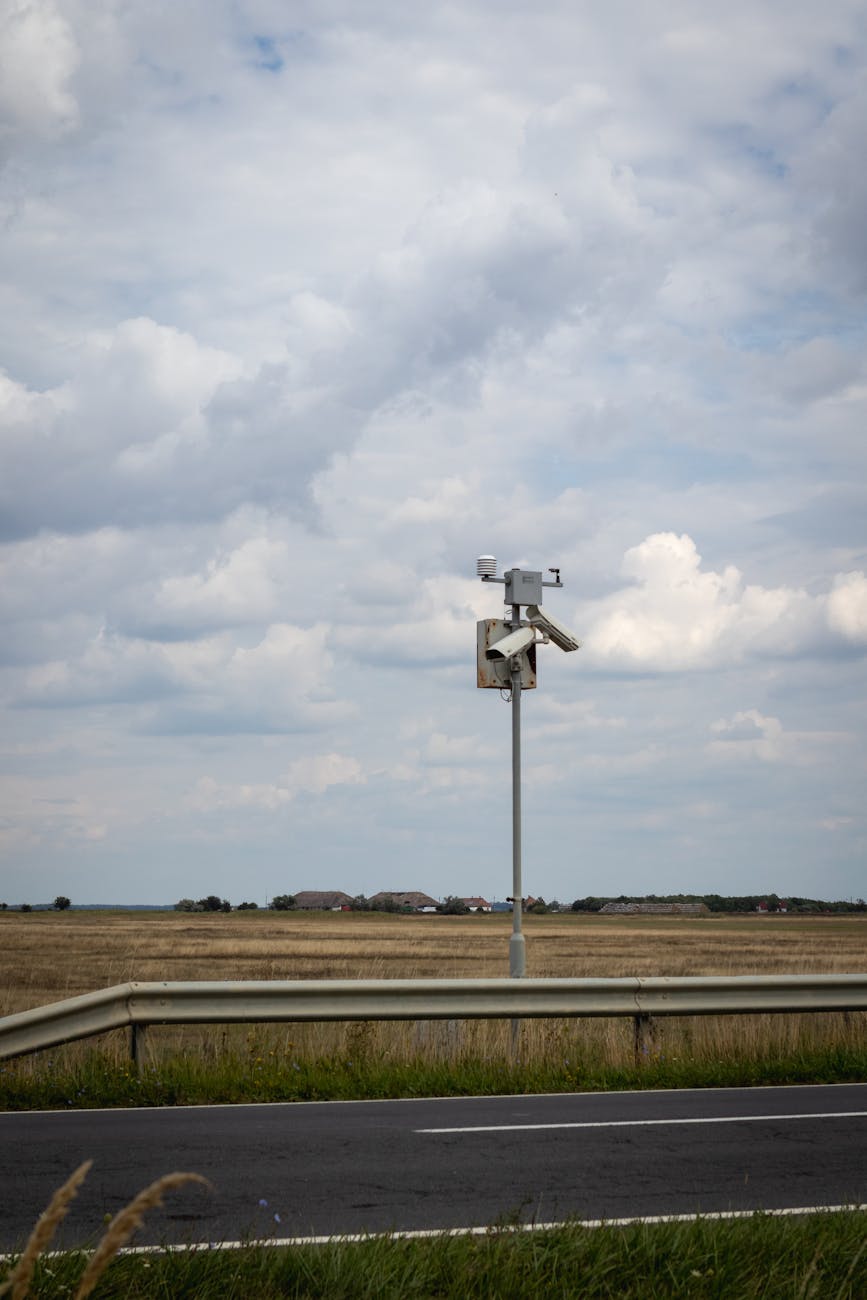
In the last few years, license plate cameras have popped up across suburbs near where I live. It took me a while to recognize what they were, but now that I know what they look like, I see they are in many locations. Why has there been little resistance to the presence of these cameras? I find it hard to imagine suburbanites would have liked this happening several decades ago. Why so little discussion or opposition today?
Two conjectures (with no evidence for either outside of my own knowledge of suburbs):
Fear of crime. They see and hear many stories about crime and the role of cars in those crimes. If license plate cameras can track people who commit crimes and do so quickly, that may be a small price to pay to keep their suburban community safe. (See also use of doorbell cameras in efforts to combat suburban crime.)
The surveillance state is already here, whether there are license plate cameras or not. People can be tracked by their phones, their credit card activity, their social media use, through cameras mounted inside and outside buildings. Why fight a system that is already in place and to which we already assented (by using smartphones, social media, etc.)? (See the term “surveillance capitalism” first used in 2014.)
There could be other factors at play. Companies and organizations have pushed these cameras as opportunities and solutions? People haven’t noticed them or don’t know what they are? This is just part of technological and social change?
I will be looking to see if there is more public discussion of their presence and how much information is available about how often they are used.
The great thing about rowhouses — that is, narrow, long, tall houses built connected to one another, sometimes called townhomes — is that they have most of the stuff Americans say they want in a home in a dense, efficient format. Typically they are single-family homes between two and four stories (though they can be built or split into apartments easily enough), with a front and back yard. The yards are small, but big enough for most purposes — you don’t need a McMansion-style soccer field to have some friends over for drinks and burgers, or let the dog run around, or simply get some fresh air and sunshine.
Then because the houses are connected to each other and on tiny lots, they are vastly more efficient. Instead of construction crews working on separate detached projects one after the other, they can build an entire block all at once. Shared walls means smaller bills for heating and cooling. Perhaps most importantly, the high density they enable allows for walkable neighborhoods with lots of shops and workable public transit. South Philly, which is almost entirely rowhouses, has about 24,000 people per square mile — which is not as dense as Brooklyn, but more than five times as dense as Phoenix and easily enough to support a subway line.
Rowhouses do have somewhat less privacy, of course. (I occasionally hear my neighbors even through the foot-thick brick walls, and I’m sure they hear me on occasion.) But even this has its upside — most obviously in a more vibrant neighborhood culture. When the sun is shining the folks on my block like to sit on the porch, chat with each other, smoke some meat, keep an eye on the neighborhood kids playing on the sidewalk, and so on. It feels like a friendly, alive place much more than the silent suburban cul-de-sacs I have visited in my life. And besides, who really wants to mow a three-acre yard all summer? Occasional weeding is more than enough work for me…
But rowhouses make a perfect middling addition to the American urban housing toolkit. Wherever a location is near to an urban center but not quite suitable for high-rises, slapping down a quick set of rowhouses ought to be the default option whenever land is freed up. By the same token, many American cities are also desperately short of moderately large apartment buildings, in the 3-8 story range, at somewhat more valuable locations like directly adjacent to transit stops.
The advantages and disadvantages to single-family homes amid American sprawl are clearly laid out here. The advantages include a lower price, efficiency in construction and heating and cooling, a smaller yard to maintain, and a lively, denser street. The disadvantages mirror these advantages: less space, less privacy. At the least, rowhouses in cities and denser suburbs provides opportunities for homeowners.
I have three further questions about rowhouses. First, what about rowhouses constructed for wealthier homeowners? In this piece, part of the appeal of rowhouses is a cheaper price point. Yet, rowhouses can be constructed with plenty of space and a lot of features for wealthier buyers. These homes might even give the appearance of being denser but are then trapped in small spots in cities or in suburban subdivisions far from anything walkable. Zoning is indeed an issue in certain places but I am guessing that is matters less in wealthier neighborhoods or communities or rowhouses are not viewed as a threat but rather as an intriguing change of pace.
Second, the importance of privacy may be understated. Americans like suburban single-family homes in part because they want to be separate from others (for privacy, because of race and class, to have their own property). Some homeowners want density and vibrant neighborhood life; others do not. If given the choice between a single-family home, a rowhouse, a condo, a townhouse, and an apartment (and controlling for particular neighborhood characteristics), what would most Americans choose?
Third, how much of these chooses about development depend on regional approaches to housing? As noted in the story, rowhouses are common in some places like Brooklyn and Philadelphia. They are not common in many other places. Having lived in one such development in the suburbs of the Midwest, it was an unusual choice among the typical options. And when that community and other nearby ones have been given choices about what to build since, they have largely eschewed rowhouses (except for more expensive ones). Getting communities to change up these options, particularly if there are worries about property values, is not an easy task.
A recent ad from Ring shows the kind acts neighbors can perform for each other and visitors. The moments range from dropping off misdelivered mail to warning about a fire to capturing footage of someone shoveling a front sidewalk to a resident leaving out snacks for delivery drivers. All of this looks good…And yet: do people install video doorbells because they want to capture good deeds? Or, are they more likely motivated by fear and safety concerns?
On the whole, I would guess video cameras will not increase the number of good needs and neighborliness. American communities need more face-to-face interaction, not monitoring via cameras or online discussions through platforms like NextDoor or messages through yard signs. The commercial is a worthy attempt by Ring to bring a positive message regarding the doorbell camera but hides more of what is really going on.
If people are concerned about the rise of cameras and analysis (particularly through algorithms and predictive software), will this change their behavior? The United States already has a tendency in recent decades toward private spaces. Scholars and commentators lament the decline of public spaces, the shift toward privatized settings between work and home (think Starbucks or shopping malls), and the primacy of single-family homes. Imagine a society where people are fearful of cameras and decide to curtail their public activity. A variety of technologies could help them limit the time they spend outside their residences: think working from home, grocery and food delivery, and the delivery of all sorts of goods and services to an address.
If this comes to pass, the public realm might be even more impoverished. Will the often think social life and outside activity of suburban neighborhoods continue to dry up? Where will people of different backgrounds and interests interact? What will happen to the thrill of being around crowds and dynamic activity? Would this simply lead to more suspicion and calls for even more cameras and surveillance to figure out who would be so bold to go out (or to turn the surveillance into more private spaces)?
This all may sound pretty dystopian. When I walk down the street in my neighborhood or my community (regular activities for me), I rarely think about the cameras that might be watching. I try to be observant and I do not notice too many surveillance devices. My neighbors may indeed be watching (or able to watch) but it does not feel like a threat. But, sometime soon, just the threat of being watched, let alone different actors using the video and data, may influence the feeling of community.
(Of course, it may not be the cameras that truly could limit public life. Perhaps the true threat comes from the smartphones we all carry and that track us.)
How does Rawal do it? He correctly figures out the URL — the uniform resource locator, or full web address — that a graphic depicting the poll’s results appears at before their official release.
“URL manipulation is what I do,” he said, “and I’ve been able to get really good at it because, with websites like CNN and Fox, all the file names follow a pattern.”
He added, “I’m not going to go into more detail on that.”
He said he had just spoken with The Register’s news director, who expressed interest in his helping the newspaper “keep it under tighter wraps.” He is considering it.
This makes sense on both ends: media organizations need a way to organize their files and sites and someone who looks at the URLs over time could figure out the pattern. Now to see how media organizations respond as to not let their stories out before they report them.
I imagine there is a broader application for this. Do many organizations have websites or data available that is not linked to or a link is not easily found? I could imagine how such hidden/unlinked data could be used for nefarious or less ethical purposes (imagine scooping news releases about soon-to-be released economic figures in order to buy or sell stocks) as well as data collection.
Much will be written in the coming weeks about how WeWork failed investors and employees. But I want to spotlight another constituency. WeWork’s fundamental business idea — to cram as many people as possible into swank, high-dollar office space, and then shower them with snacks and foosball-type perks so they overlook the distraction-carnival of their desks — fails office workers, too.
The model fails you even if you don’t work at a WeWork, because WeWork’s underlying idea has been an inspiration for a range of workplaces, possibly even your own. As urban rents crept up and the economy reached full employment over the last decade, American offices got more and more stuffed. On average, workers now get about 194 square feet of office space per person, down about 8 percent since 2009, according to a report by the real estate firm Cushman & Wakefield. WeWork has been accelerating the trend. At its newest offices, the company can more than double the density of most other offices, giving each worker less than 50 square feet of space…
But after chatting with colleagues, I realized it’s not just me, and not just the Times: Modern offices aren’t designed for deep work…
The scourge of open offices is not a new subject for ranting. Open offices were sold to workers as a boon to collaboration — liberated from barriers, stuffed in like sardines, people would chat more and, supposedly, come up with lots of brilliant new ideas. Yet study after study has shown open offices to foster seclusion more than innovation; in order to combat noise, the loss of privacy and the sense of being watched, people in an open office put on headphones, talk less, and feel terrible.
This moment might just a tipping point in the evolution of office space. Cubedsuggests office layouts do change over time. What seems to be next is a mixing of older models and the open model: different spaces that range from very private (think soundproof booths or offices away from activity, sound, and eyes) to very open (think couches and play areas for activity). How exactly the imperative to save money or be efficient remains to be seen.
Hinted at in this opinion piece is another interesting idea: could truly private spaces only be available to certain classes of workers or certain people? The office has long been symbol of more power and/or responsibility. Imagine a workforce or a public where the majority of people operate in common spaces that are semi-private, with privacy usually obtained though the actions of individuals (headphones, focus on screens, etc.). In contrast, those with power and resources have access to distraction-free spaces.
Another big issue could be this: how much work these days is truly distraction-free and are we moving toward less deep work? Again, this might different by field or role. But, the rise of smartphones and the Internet means people are highly distractable from work, even in very private settings. American adults on average are consuming 11 hours of media a day, some of this which must happen at work for many.
A recent controversy in an Australian suburb highlights two key issues in suburbia: (1) what exactly can you do in a suburban backyard and (2) how do suburbanites resolve conflict? To the details:
The Perth woman said she couldn’t enjoy her backyard in the suburb of Girrawheen, claiming her neighbours deliberately allow their barbecue meat and fish smells to waft into her yard…
After her claims were rejected by a tribunal earlier this year on lack of evidence, she applied to the Supreme Court of Western Australia for right of appeal. It was also turned down in July…
And it’s not just the smell of meat and fish that has made her furious — it’s the smell of cigarettes and the sound of children playing with basketballs…
Mr Vu said he just wanted to “keep the peace” and had removed the barbecue out of his yard and also banned his children from playing basketball…
Mr Hammond said the first step in any dispute with your neighbours was to try and resolve the matter face-to-face.
Two issues are present:
Suburbanites tend to assume that backyards are for private activities. The front yard is open to the public and can be seen from the street and the sidewalk. The backyard is more hidden, particularly if the yard is fenced or cut out from view in other ways (such as through hedges and trees). But, are there limits to what can be done in backyards? What is considered infringing on others? Overly loud dogs? Trees that cross property lines? Activities found undesirable by neighbors (such as grilling and playing basketball)? Where property rights end and neighborhood disturbances and nuisances begin could be a fine line (and there are surely some local regulations to help figure this out).
Suburbanites are often not great at resolving conflict. Baumgarner argued suburban community is built around avoiding open conflict and using third party actors if necessary. It is not clear from the article above how much face-to-face interaction happened between neighbors but appealing to the courts seems likely to end badly for neighborly relations: no matter who wins, the fact that this led to media coverage and court cases likely makes it more difficult to have positive relationships.
On one hand, this is a small-scale conflict. On the other hand, multiply such conflicts by just a few and the suburbs look like a place where neighbors want to be protected from each other – wait, privacy and exclusion was indeed behind the creation of suburbs…
The doorbell-camera company Ring has quietly forged video-sharing partnerships with more than 400 police forces across the United States, granting them access to homeowners’ camera footage and a powerful role in what the company calls America’s “new neighborhood watch.”
The partnerships let police automatically request the video recorded by homeowners’ cameras within a specific time and area, helping officers see footage from the company’s millions of Internet-connected cameras installed nationwide, the company said. Officers don’t receive ongoing or live-video access, and homeowners can decline the requests, which are sent via emails that thank them for “making your neighborhood a safer place.”…
To seek out Ring video that has not yet been publicly shared, officers can use a special “Neighbors Portal” map interface to designate a time range and local area, up to half a square mile wide, and get Ring to send an automated email to all users within that range, alongside a case number and message from police.
The user can click to share their Ring videos, review them before sharing or, at the bottom of the email, unsubscribe from future footage-sharing requests. “If you would like to take direct action to make your neighborhood safer, this is a great opportunity,” an email supplied by Ring states.
At the same time, I suspect numerous suburbs would welcome this extra surveillance. Think of wealthier suburban neighborhoods or communities: wouldn’t they typically welcome more information on who is around their homes? This might not even be about crime but really about possible crimes or activity from ne’er-do-wells or even who should be around on streets and sidewalks (often delimited by race and class). Privacy concerns might be mitigated by the suggestion in the article that users still get to choose whether they share footage with police.
Maybe it will all quickly come to this: what about the resident in these communities who refuses to get a Ring doorbell or install security cameras? A small hole in the surveillance network could bring about pressure from neighbors to conform and protect the neighborhood.
Traditionally, suburban areas have been more fond of privacy with the emphasis on single-family homes, interactions with neighbors by choice, and a willingness to fight local initiatives if they threaten said property and home. Big cities have long been home to more surveillance ranging from Jane Jacobs’ famous line about “eyes on the street” to the rise of CCTV in London.
What exactly is the cause of all of this? A few factors may be at work:
The ease and low cost of the technology. Why have a regular doorbell when a video doorbell does not cost that much? (And the Internet suggests some people have fears of answering the door.)
If suburban neighborhoods are increasingly under video surveillance, I wonder if this might change some decisions about where people live. Could this push people to more rural areas or perhaps to communities that more tightly control entries and exits (think gated communities with a real presence all around the perimeter? Or, would the extra surveillance encourage people to live in certain suburbs? Perhaps the decades-old neighborhood watches will be replaced by an unblinking eye on every house.
But State’s Attorney Joe McMahon said prosecutors in some ways are busier than ever with new types of evidence, such as surveillance from Wifi-enabled doorbells, police body cameras and home and business surveillance, compared to several years ago.
“We’re now seeing video come in from Ring doorbells,” McMahon said this week during his monthly media briefing. “We’re now getting actual video, audio and digital information that must be reviewed and analyzed and ultimately stored.”
In recent months, video from doorbell cameras helped police arrest a burglary suspect, and data from a Ring doorbell was used to confirm the identity of a suspect in a Sleepy Hollow home invasion, attempted murder and sex assault. Both court cases are pending.
McMahon said reviewing body camera video from multiple officers responding to a violent crime or even a DUI arrest has increased the workload for prosecutors compared to several years ago.
If there is demonstrable proof that crime rates are going down or more crimes are solved because of this additional evidence, I would guess the public would provide more funds – likely through taxes – to help go through all of the evidence. But, if the evidence does not lead to much or it somehow slips through the cracks or is hacked, it might be very hard to find the public resources.
This also seems ripe for algorithms/machine learning tools to help county and municipal officials scan quickly through all these video feeds. All of this could be very expensive to do in the short-term but could help handle the increasing video streams of the future.


 Legally Sociable