Suburban downtown apartments for empty nesters and young professionals

When suburbs build apartments or condos in their downtowns, who do they envision living there? A quote from suburban leader provides a hint as I have seen similar sentiments across suburban downtowns:

Photo by Gotta Be Worth It on Pexels.com

Suess said there’s a high demand for apartment space in the downtown areas and the suburbs in particular.

“The attraction of this I think is very much towards empty nesters,” Suess said. “I think it’s towards young professionals starting out and, again, folks who want to be in the downtown area.”

That is a very specific set of people. Presumably, these are people with the resources available to live in nicer apartments near a lot of suburban amenities.

At the same time, highlighting these groups also reinforces the importance of single-family homes in suburban communities. Empty nesters are ones who might have owned a home for years and raised kids there but now are looking for a change from maintaining a home. Young professionals are just starting out and perhaps they do not yet have the resources to be homeowners for the first time.

Often, suburbanites do not like apartments and/or the people who might live there. But the right apartments in a downtown setting can attract certain residents – the ones named above – and contribute to a denser, walkable, thriving downtown.

Zillow Gone Wild is popular but how can one make money from it?

Social media users like to see unusual residences on the account Zillow Gone Wild:

Photo by cottonbro studio on Pexels.com

Since he started the account in December 2020, it has exploded into a social media phenomenon, amassing more than 4 million followers across the major social media platforms and spinning off an HGTV show that debuts next month with Mezrahi as executive producer. Throughout it all, Mezrahi’s recipe has remained mostly unchanged: Find the zaniest homes on the market – castle-themed mansions with full drawbridges, for example – then blast them out to the internet with a bit of pithy commentary, and watch the clicks, likes and shares pile up. The simplicity of the premise is part of the brilliance; it’s the result of the decade-plus that Mezrahi spent charting the internet’s fascinations as social media director for BuzzFeed.

Does all this interest in houses translate into money?

None of this, however, was enough to save Mezrahi at BuzzFeed. The now-struggling company laid him off last spring. He had survived previous cuts, “but eventually you don’t last, especially as a strategist kind of person,” Mezrahi says. Already, he’d been mulling the prospect of leaving the full-time gig to focus entirely on his personal projects. BuzzFeed simply made the choice for him…

Still, there is one thing that Mezrahi shares in common with the rest of them: He’s trying to figure out how to make more money off the internet. Aside from the HGTV executive producer credit, most of Zillow Gone Wild’s revenue comes from ads. He did one for “The Bachelor,” posting what looked like a typical listing but for the show’s famed house. PopTarts and Royal Caribbean have also paid him to promote fake listings for a house made of PopTarts, and for the new Icon of the Seas cruise ship.

But the account still brings in “very little” money, he says. He imagines a future where his newsletter has a paid classified section or where he dedicates more time to growing a YouTube audience because that platform can be the most lucrative.

Americans like houses. It helped give rise to suburbia and an decades-long emphasis on homeownership. That they are now popular on social media should not be a surprise.

It will be interesting to see how this goes in the next few years. How big can the social media audience get for this account? Would users be willing to pay for such content or special content? How much content could there be? Will a TV show lead to more opportunities or spin-offs or streaming shows? Can Zillow Gone Wild be its own brand soon with different content and products?

What older adults owe younger adults regarding housing: nothing, something, or everything?

Older adult Americans are holding on to their big houses longer. Should they do this? Here are three options in the American context for how older adults could approach housing in terms of what they might owe younger adults regarding housing.

Photo by Luis Yanez on Pexels.com
  1. They owe younger adults nothing. Older adults worked hard to acquire and maintain their properties. They are holding on to them as valuable assets that can continue to appreciate in value. If they can stay in the homes (considering finances and health), why shouldn’t they stay in the homes they selected as long as they can?
  2. They owe younger adults something. Older adults can balance what they would like as they age – staying in their homes, cashing out the value of those properties – with also helping younger adults who desire housing. This might look different for a variety of households and locations.
  3. They owe younger adults everything. Older adults should actively work to pass along their homes and properties (and their associated wealth and opportunities) to younger people. They should make way for future generations who could benefit from the housing they benefited them. They are passing along a housing legacy that can enrich their children and grandchildren. They have an obligation to insure housing is readily available for those who come after them.

This is a rough approximation of options available within the United States. Numerous articles in recent years highlight this dynamic of generational shifts in housing options and preferences. The housing situation in the United States is unique – emphasizing single-family homes, limited supply, high mortgage interest rates, a big Baby Boomer generation, decades-long housing value increases, and more – and Americans tend to think that housing is a market, not a human right.

Fast forward ten or twenty years down the road: I would guess Americans will follow some middle option above. Some older adults will want to or have to pass along housing, others will hold onto it as long as possible. What might be most interesting is if some of those big houses stop rising in value so much or even lose value – how much might this change the dynamics in housing turnover?

Learning about American housing through The Sims

Playing The Sims may just offer a few lessons about housing in the United States:

Photo by Monstera Production on Pexels.com

The Sims felt like a trial run for adulthood, exploring how you’d make use of your future autonomy. Much of this validated the importance of personal space: how to lay out a room, how to choose a sofa that balanced aesthetics and comfort, how to make a house a home…

The official trailer for The Sims 4: For Rent emphasizes the potential of “multiunit life,” promising “ample opportunity … [for] eavesdropping, snooping, or even breaking and entering”—a description that instantly evoked memories of my worst roommates…

Inevitably, a lot has changed. The peaceful suburb I remembered from childhood has been replaced by elaborate “worlds” that I can (effortfully, via a loading screen) switch between to grow my property portfolios. The Sims 4 is more immersive and finely drawn, visually, than the original was, but it’s also more involved: It took me a whole afternoon to create my first Sim and set her up in her “hovel.”…

But soon my frustration (as Edith) with Jazz’s requests started to outweigh my commitment to being the Only Good Landlord. Every notification from the rental instantly provoked my impatience. Not the damn tenant again! The slow, clunky transition within the game between Edith’s home and the rental only added to my frustration and my creeping sense of Jazz as a burden. Why did this guy need so much of Edith’s energy?

With For Rent, The Sims has perhaps moved too far toward reflecting brutal reality, forcing players to choose between being on one side or the other of an often fractious and all-too-familiar power imbalance. As a child, I was drawn to The Sims as a role-play for adulthood, a world of expansive promise and possibility; playing For Rent, I was reminded, depressingly, of how the game is rigged.

The Sims is a game, a product intended to provide enjoyment for players. Can one gamify the rental experience in the United States?

More broadly, The Sims puts a home – owned or rented – at the center of the experience. The United States has a long history of celebrating the single-family home. Renting may be common in some places but it can also be treated with suspicion in other places. Players of the game can make their own choices but they are limited by what is possible in the game as well as what is possible in our society.

Anyone able to offer an analysis of housing, landlords, and properties in general across the Will Wright creations? Simcity offered a particular take as did SimTower – has this changed noticeably over the years? Are there any video games that do a different or better job of portraying property and renting?

Workers cottages and a growing suburban dream in the Chicago region

What kinds of homes did early suburbanites in the Chicago area live in? Some lived in workers cottages:

Photo by Steve Johnson on Pexels.com

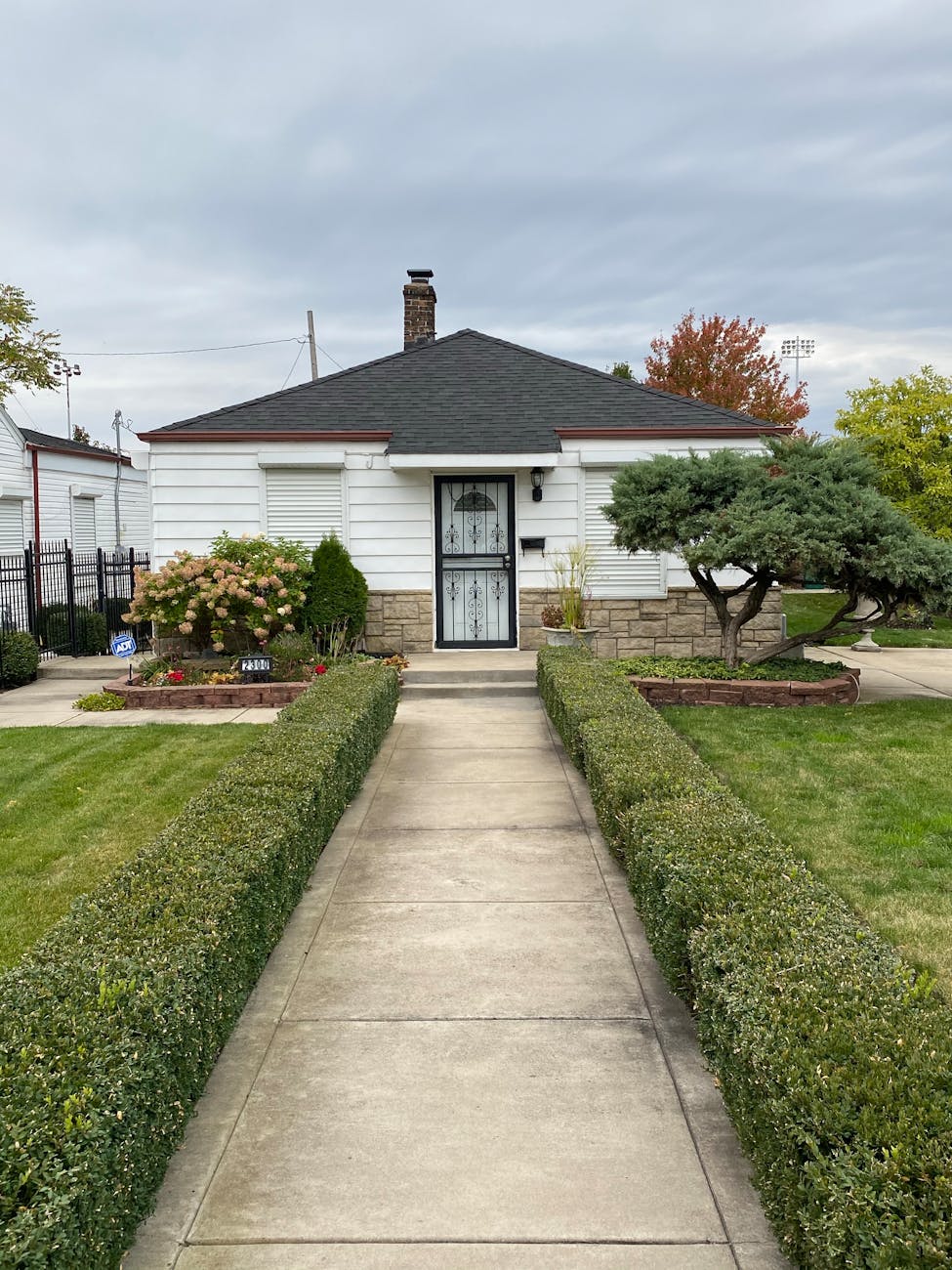
Thanks to a plentiful supply of lumber from old growth pine forests in Wisconsin and Michigan, as well as new milling processes such as kiln drying that gave precut wood precise standardized measurements, a new form of structure started appearing. Workers cottages were more affordable than elaborate, but they came with the promise of a better standard of living for working class families.

A century and a half after they started being built in earnest, an effort is afoot to celebrate and preserve the cottages, houses that have continued to offer utility and accessibility for generations…

The lecture was arranged by the nonprofit Chicago Workers Cottage Initiative, a group organized to celebrate and promote the houses, built mostly from the 1880s to the 1910s, that they say “represent the origins of the ‘American Dream’ of homeownership and the investment and pride of Chicago’s new immigrants.”…

“Some of these cottages were really spartan four-room houses,” Bigott said. “They cost like $600 on a $200 lot. It was a simple frame building, with two bedrooms, a living room, a kitchen.”…

It was a model that worked, and its backbone was the workers cottage. Elaine Lewinnek, a professor of American Studies at California State University, Fullerton, argues in her 2014 book “The Working Man’s Reward: Chicago’s Early Suburbs and the Roots of American Sprawl” that the idea of house ownership as “the working man’s reward” was one of Chicago’s most impactful exports, setting the scene for suburbs everywhere.

The suburbs have a longstanding reputation that they are full of people of wealth who are able to purchase a home and afford a suburban lifestyle. Imagine neighborhoods of McMansions, rampant consumerism, and newer vehicles.

This may be largely true and yet it is not entirely true. The homes described above could house the working class in suburban settings. This is not the only area where this occurred; historian Becky Nicolaides described working class houses in the Los Angeles suburbs.

And the housing today in the suburbs can also be varied. Postwar housing also had some variety from larger homes to smaller ranches. Wealthy suburban communities in the Chicago region today sit not far from neighborhoods with more modest housing.

If this article looks back at what was over 100+ years ago, what housing today will be viewed as housing for the working person in the suburbs in 2100?

Why not use President’s Day to sell homes rather than mattresses?

American presidents for at least 90 years have supported homeownership. See these thoughts from Herbert Hoover in 1931. So why not tie President’s Day in February to selling and buying homes?

February might seem a bit early to promote buying and selling homes. It is still cold in parts of the country. The school year still has months to go.

However, I have heard that the housing market tends to pick up after the Super Bowl. Warmer weather is on the way. Families might be more willing to move with less time left in the school year.

Americans like sales and shopping. Why leave President’s Day to mattresses and furniture? Why not kick off the home real estate market every year? Pepper the weekend with quotes from Presidents Obama and Bush. Find some quotes from Lincoln, Washington, and other famous presidents that seem to support the modern idea of homeownership. Match patriotism, capitalism, and holidays.

“A man’s home is his castle,” McMansions, and the “castle” that houses a McDonald’s

Let me try to put together a few ideas:

  1. Americans tend to subscribe to the phrase “a man’s home is his castle” and all that means for a private home owner.
  2. Plenty of Americans like McMansions, large homes with dubious architecture often found in sprawling neighborhoods or as much larger houses compared to their neighbors.
  3. McDonald’s is a famous American brand and helped give rise to fast food that goes well with driving and the private single-family homes of suburbia.

Put these together and you have a McDonald’s in a castle in northern Indiana:

Image from Google Street View

Only in America might someone build a gas station castle (it looks like a castle but in a McMansiony way) that contains a McDonald’s. I wonder if it attracts any more customers just because it is a castle.

(This building has apparently been around a while but I recently saw a story about it that caught my eye because I have seen other castle gas stations in other northern Indiana trips.)

How can tiny houses be best used?

I contributed some thoughts to an article considering the fate of tiny houses in the United States. Here is the argument of the article:

Photo by Melike Benli on Pexels.com

But over the last few years, tiny homes have morphed from a millennial lifestyle trend or life hack into a potential solution to the housing crisis. As an affordability crisis grips the nation and homelessness surges, tiny-home communities have sprouted from Wisconsin to Austin. In California, grappling with one of the worst housing crises in the nation Gov. Gavin Newsom promised last year to deliver 1,200 tiny homes as interim housing in Los Angeles, San Diego, San Jose, and Sacramento.

Unfortunately, it seems that tiny homes are an imperfect solution to high housing costs and rising homelessness. So why, then, do politicians, nonprofits and even do-gooder corporations love tiny homes so much? It has something to do with Americans’ persistent addiction: an obsession with single-family homes. 

And here are my thoughts:

Tiny homes also play into American homeownership aspirations, including a desire for privacy, said Brian Miller, a professor of sociology at Wheaton College. “On the other hand, it’s very different from the typical progression over the last few decades where American homes just keep getting bigger and bigger,” Miller said, later adding that, “tiny houses are sometimes an explicit rejection of that.” 

But they’re not necessarily for lower-income families—really they’re for people who can afford this type of lifestyle, one that allows you to do so temporarily while maybe even paying for a storage unit for your material possessions, Miller suggested. And yet, somehow tiny homes have entered into a new era—now posed as an (imperfect) solution to the housing crisis, which has manifested itself in unaffordable housing costs and a growing homeless population. Tiny homes are an individualized solution, Wagner stressed. “The reality is, we just need to build housing,” she said. But the push for tiny homes as an answer to the housing crisis is a perverse outgrowth of the inequality baked into the American economy. 

The tiny house movement is still pretty small. Americans like owning a house but they tend to like more space. There may be more tiny houses constructed in the coming years but they may target very specific audiences in settings where tiny houses are allowed/viewed as desirable.

Are peripheral suburbs really “the most boring places in the world”?

Looking at data on where millennials are moving includes an evaluation of those places:

Photo by Helena Lopes on Pexels.com

To Lee and his colleagues’ surprise, millennials aren’t moving to nearby dense, walkable exurbs. They’re getting way out to peripheral suburbs.

“It turned out that millennials are moving to the most boring places in the world,” says Lee, who’s now a professor at Seoul National University. “They’re moving to really single-family-dominated areas with very few urban amenities.”

What might make these places less boring?

It’s expensive to live in the places millennials prefer: walkable communities with lots of shops, restaurants, and public space. An analysis published last year found that homebuyers in the 35 biggest American metropolitan areas paid 34% more to live in walkable neighborhoods, while renters paid 41% more. Paul Stout, a millennial landscape-architecture student with a popular urbanist TikTok account called Talking Cities, says he constantly hears from followers who wish they could afford a home within walking distance of places like coffee shops…

But while millennials wallow over the choice between a tiny apartment in a dense city and a lonely, sidewalk-less subdivision, urbanists insist any place can be dense and walkable as long as land-use laws allow it and people want to live there.

“There’s a lot of places in the suburbs that could be really lovely to live if you could only put a grocery store or a coffee shop on the corner,” Stout says. “I’m optimistic that you could actually make living walkable almost anywhere in the US, given the right package of zoning reform.”

America is not known for its walkability (see the dangers to pedestrians) or its third places. Instead, Americans often promote and move to suburbs built around single-family homes and driving.

Does this mean suburbs further out from the city are really “the most boring places in the world”? Or are millennials and many others pushed into binary choices where they prioritize cheaper and larger housing and thus give up other community features? In many American communities, they cannot have both cosmopolitan street life and ample affordable housing they can own.

And I would venture to guess that at least a few of American suburbanites do not find them to be boring places. (One could argue they were pushed into this option rather than chose it but that is a different argument.) Millennials and Gen Z may find them more boring than older adults and this would be interesting data to compare.

Assuming the starter home is just the beginning of a journey of bigger and bigger homes

Starter homes are in short supply. Does this mean the idea that Americans should be able to purchase bigger homes as they age will change? One recent story looks at these expectations:

Photo by Tatiana Syrikova on Pexels.com

When Vickie Franzen and her husband, Jon Crenshaw, bought their first house in Roseville, Calif., in 2018, they never expected they would still be there in 2024, weighing whether to squeeze a desk into the nursery along with the crib, so the space could double as an office…

Suddenly, the house’s 1,600 square feet feel like a way tighter squeeze. But there’s another number they can’t get out of their minds, either: 3.5 percent, their current mortgage rate, which they scored by refinancing in 2020 and aren’t eager to give up.

Their quandary isn’t unique, of course. Today’s high interest rates and low housing affordability mean that all across the country, homeowners just like them – people who thought they were buying good-enough-for-now houses that they would leverage into dream homes soon enough – are having to reevaluate. Not that Franzen and others in her situation aren’t grateful to own a home, given the current market conditions. But turning a starter home into something closer to a forever home requires compromise, from sacrificing space to putting off having children…

Logically, as homeowners stay put, they consider whether to renovate. But acquiring a loan to fund a remodel can be costly. Renovation loans functionally refinance a mortgage at the current interest rate. And home equity lines of credit typically come with either adjustable rates or rates fixed at a high number.

The assumption is that there is a starter home – described as a “good-enough-for-now” home – which will soon be followed by a larger house – described above as “something closer to a forever home.” Americans have expected this for decades, particularly in the suburban era where single-family homes are a sign of status, private family life, and an important investment.

Built in to this expectation is larger and larger houses over time. Americans have the largest new homes in the world. The one example of square footage in the story involves a 1,600 square foot home. When the families interviewed for the story talk about their homes, they need more room for growing households. The American Dream is a dream of more and more square footage.

Do Americans need more space? They like more space, whether for more bedrooms or activity rooms or storage space. They expect more space.

As many articles in the last decade or so have noted, perhaps this simply means the starter home will go away and people will jump into bigger homes from the start. Why bother going through the trouble of a starter home if big homes are an option? And all those large homes owned by Baby Boomers might be available soon.