“A man’s home is his castle,” McMansions, and the “castle” that houses a McDonald’s

Let me try to put together a few ideas:

  1. Americans tend to subscribe to the phrase “a man’s home is his castle” and all that means for a private home owner.
  2. Plenty of Americans like McMansions, large homes with dubious architecture often found in sprawling neighborhoods or as much larger houses compared to their neighbors.
  3. McDonald’s is a famous American brand and helped give rise to fast food that goes well with driving and the private single-family homes of suburbia.

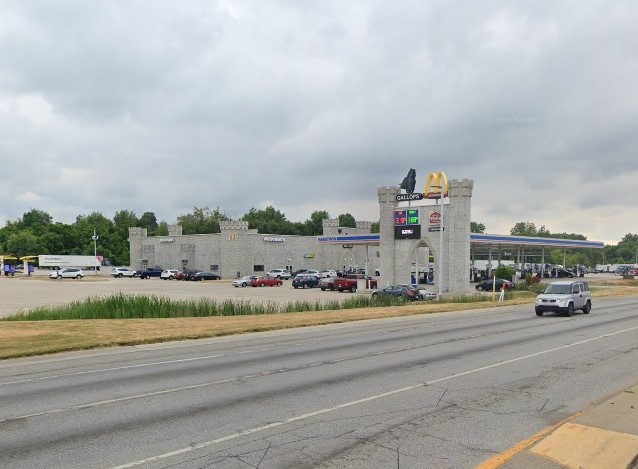
Put these together and you have a McDonald’s in a castle in northern Indiana:

Image from Google Street View

Only in America might someone build a gas station castle (it looks like a castle but in a McMansiony way) that contains a McDonald’s. I wonder if it attracts any more customers just because it is a castle.

(This building has apparently been around a while but I recently saw a story about it that caught my eye because I have seen other castle gas stations in other northern Indiana trips.)

How can tiny houses be best used?

I contributed some thoughts to an article considering the fate of tiny houses in the United States. Here is the argument of the article:

Photo by Melike Benli on Pexels.com

But over the last few years, tiny homes have morphed from a millennial lifestyle trend or life hack into a potential solution to the housing crisis. As an affordability crisis grips the nation and homelessness surges, tiny-home communities have sprouted from Wisconsin to Austin. In California, grappling with one of the worst housing crises in the nation Gov. Gavin Newsom promised last year to deliver 1,200 tiny homes as interim housing in Los Angeles, San Diego, San Jose, and Sacramento.

Unfortunately, it seems that tiny homes are an imperfect solution to high housing costs and rising homelessness. So why, then, do politicians, nonprofits and even do-gooder corporations love tiny homes so much? It has something to do with Americans’ persistent addiction: an obsession with single-family homes. 

And here are my thoughts:

Tiny homes also play into American homeownership aspirations, including a desire for privacy, said Brian Miller, a professor of sociology at Wheaton College. “On the other hand, it’s very different from the typical progression over the last few decades where American homes just keep getting bigger and bigger,” Miller said, later adding that, “tiny houses are sometimes an explicit rejection of that.” 

But they’re not necessarily for lower-income families—really they’re for people who can afford this type of lifestyle, one that allows you to do so temporarily while maybe even paying for a storage unit for your material possessions, Miller suggested. And yet, somehow tiny homes have entered into a new era—now posed as an (imperfect) solution to the housing crisis, which has manifested itself in unaffordable housing costs and a growing homeless population. Tiny homes are an individualized solution, Wagner stressed. “The reality is, we just need to build housing,” she said. But the push for tiny homes as an answer to the housing crisis is a perverse outgrowth of the inequality baked into the American economy. 

The tiny house movement is still pretty small. Americans like owning a house but they tend to like more space. There may be more tiny houses constructed in the coming years but they may target very specific audiences in settings where tiny houses are allowed/viewed as desirable.

Are peripheral suburbs really “the most boring places in the world”?

Looking at data on where millennials are moving includes an evaluation of those places:

Photo by Helena Lopes on Pexels.com

To Lee and his colleagues’ surprise, millennials aren’t moving to nearby dense, walkable exurbs. They’re getting way out to peripheral suburbs.

“It turned out that millennials are moving to the most boring places in the world,” says Lee, who’s now a professor at Seoul National University. “They’re moving to really single-family-dominated areas with very few urban amenities.”

What might make these places less boring?

It’s expensive to live in the places millennials prefer: walkable communities with lots of shops, restaurants, and public space. An analysis published last year found that homebuyers in the 35 biggest American metropolitan areas paid 34% more to live in walkable neighborhoods, while renters paid 41% more. Paul Stout, a millennial landscape-architecture student with a popular urbanist TikTok account called Talking Cities, says he constantly hears from followers who wish they could afford a home within walking distance of places like coffee shops…

But while millennials wallow over the choice between a tiny apartment in a dense city and a lonely, sidewalk-less subdivision, urbanists insist any place can be dense and walkable as long as land-use laws allow it and people want to live there.

“There’s a lot of places in the suburbs that could be really lovely to live if you could only put a grocery store or a coffee shop on the corner,” Stout says. “I’m optimistic that you could actually make living walkable almost anywhere in the US, given the right package of zoning reform.”

America is not known for its walkability (see the dangers to pedestrians) or its third places. Instead, Americans often promote and move to suburbs built around single-family homes and driving.

Does this mean suburbs further out from the city are really “the most boring places in the world”? Or are millennials and many others pushed into binary choices where they prioritize cheaper and larger housing and thus give up other community features? In many American communities, they cannot have both cosmopolitan street life and ample affordable housing they can own.

And I would venture to guess that at least a few of American suburbanites do not find them to be boring places. (One could argue they were pushed into this option rather than chose it but that is a different argument.) Millennials and Gen Z may find them more boring than older adults and this would be interesting data to compare.

Assuming the starter home is just the beginning of a journey of bigger and bigger homes

Starter homes are in short supply. Does this mean the idea that Americans should be able to purchase bigger homes as they age will change? One recent story looks at these expectations:

Photo by Tatiana Syrikova on Pexels.com

When Vickie Franzen and her husband, Jon Crenshaw, bought their first house in Roseville, Calif., in 2018, they never expected they would still be there in 2024, weighing whether to squeeze a desk into the nursery along with the crib, so the space could double as an office…

Suddenly, the house’s 1,600 square feet feel like a way tighter squeeze. But there’s another number they can’t get out of their minds, either: 3.5 percent, their current mortgage rate, which they scored by refinancing in 2020 and aren’t eager to give up.

Their quandary isn’t unique, of course. Today’s high interest rates and low housing affordability mean that all across the country, homeowners just like them – people who thought they were buying good-enough-for-now houses that they would leverage into dream homes soon enough – are having to reevaluate. Not that Franzen and others in her situation aren’t grateful to own a home, given the current market conditions. But turning a starter home into something closer to a forever home requires compromise, from sacrificing space to putting off having children…

Logically, as homeowners stay put, they consider whether to renovate. But acquiring a loan to fund a remodel can be costly. Renovation loans functionally refinance a mortgage at the current interest rate. And home equity lines of credit typically come with either adjustable rates or rates fixed at a high number.

The assumption is that there is a starter home – described as a “good-enough-for-now” home – which will soon be followed by a larger house – described above as “something closer to a forever home.” Americans have expected this for decades, particularly in the suburban era where single-family homes are a sign of status, private family life, and an important investment.

Built in to this expectation is larger and larger houses over time. Americans have the largest new homes in the world. The one example of square footage in the story involves a 1,600 square foot home. When the families interviewed for the story talk about their homes, they need more room for growing households. The American Dream is a dream of more and more square footage.

Do Americans need more space? They like more space, whether for more bedrooms or activity rooms or storage space. They expect more space.

As many articles in the last decade or so have noted, perhaps this simply means the starter home will go away and people will jump into bigger homes from the start. Why bother going through the trouble of a starter home if big homes are an option? And all those large homes owned by Baby Boomers might be available soon.

The wealth needed for the “Home Alone” house and life

Not everyone can live the Home Alone life:

Photo by cottonbro studio on Pexels.com

Aside from the quirkiness of this 90s film staple, another aspect of the movie that continues to captivate audiences is the question: just how rich were the McCallisters? The New York Times set out to find out by speaking with economists and professionals at the Federal Reserve. It turns out, according to the report, they were indeed rich — to the tune of being in the top 1%.

The article goes on to say that the McCallisters’ stunning home is proof of just how much money they have. The real house used for its exterior shots in the film is actually located on Lincoln Avenue in Winnetka, a Chicago suburb that happens to be one of the most expensive neighborhoods in the United States, the NY Times reports, citing Realtor.com.

At the time that the film came out in 1990, this massive Georgian-Colonial style home was affordable to only the 1%. It turns out, 32 years later, the house is still only within reach of the 1%, according to economists at the Federal Reserve Bank of Chicago, the NY Times reports. Three economists poured over data, including household incomes of the area for 1990 and 2022, the property value, mortgage rates at the time, taxes and insurance to come to this conclusion…

“In the middle of 2022, a similar house would cost about $2.4 million, based on the Zillow estimate for the ‘Home Alone’ house. A home of that value would be affordable to a household with an income of $730,000, which would be in the top 1 percent of Chicago-area households,” the economists said.

The house is key. It is large, expensive, and in a wealthy suburban neighborhood. It is not a McMansion; it is a mansion.

Can you have madcap Christmas capers that end well without a large expensive house? I would guess that an analysis of houses depicted in Christmas movies would show they tend to be larger than normal – this is common in movies and television.

Imagine Home Alone in a 1,000 square foot 1950s ranch home or a 1 bedroom apartment. Would it be better? Significantly different?

“Washington just isn’t set up to address the housing crisis”

One writer looks at what the federal government, particularly HUD, can and cannot do regarding housing:

Photo by Pixabay on Pexels.com

The problem is structural: Washington just isn’t set up to address the housing crisis. The federal government plays a large, but largely indirect, role in the housing market. It operates through incentives, credits, guarantees, and subsidies. Rather than building housing, it makes mortgages cheaper and covers part of market rents. Rather than setting up retirement communities, it provides tax breaks for developers. You could say the country’s real department of housing and urban development is the Treasury Department, along with Fannie Mae and Freddie Mac. The Senate committee responsible for housing is the Banking Committee

It wasn’t always that way. Indeed, Washington played an aggressive role in expanding the country’s housing stock from the 1930s to the 1970s. As part of the New Deal, the government financed the construction of homes for tens of thousands of families. HUD was founded during Lyndon Johnson’s administration and, as part of his Great Society, set out to build or rehabilitate millions of housing units…

Something else is stopping Washington from addressing the housing crisis: the Tenth Amendment to the Constitution. Land-use policy is not the purview of the federal government. It’s the purview of the states. Congress cannot rewrite Los Angeles’s building code. The White House can’t decide to upzone West Hartford, Connecticut. “I used to spend time with my counterparts in other countries and they’d say, Well, we just updated our national building code and national zoning code. We just wrote a national housing strategy,” Donovan told me. “I’d say, Wait, you have a national building code?

As my colleague Jerusalem Demsas has written, we have delegated our housing policy not just to state and local governments but to every neighborhood’s homeowners association. Residents of a given place have ample opportunities—zoning-board meetings, candidate forums, historical architectural reviews, city-council open mics—to stop development. So they do. And thus mostly wealthy, mostly older people shape policy to their preferences: keeping new families out, maintaining single-family zoning, stopping development, and prioritizing the aesthetics of buyers over the needs of renters.

I understand the difficulties of creating federal laws or policies that then run into local government and zoning issues. I have written about this.

But, I am a little confused about the argument overall. It might be more accurate to say that the HUD and federal agencies have been reluctant to be directly involved in providing housing. The United States tried to provide some public housing in the mid-twentieth century and this did not go well. The federal government ended up retreating and, as the article notes, largely provides help now through housing vouchers.

At the same time, the federal government has an impact on financial markets, housing policy, and housing aspirations. Look at all of the interest in addressing interest rates. Or, the interest in mortgage regulations. Or, how politicians discuss homeownership. In other words, one journalist provided this quote of how housing works in the United States: “The former governor of the Bank of England, Mervyn King, told me this: “Most countries have socialized health care and a free market for mortgages. You in the United States do exactly the opposite.”

Could the federal government do more to provide actual housing units? Yes, it could. This would require a concerted effort and resources as this has not been the approach for a while. Does the federal government promote housing, specifically supporting single-family homes? Yes, it does.

How many landmark buildings should a suburb have?

As Napervillians debate the fate of the Scott house, a 156-year-old home constructed by one of the community’s first families, the number of historic landmarks in the suburb stood out:

Photo by Tim Mossholder on Pexels.com

As things stand right now, there are no protections that would prevent future owners from altering or tearing down the house. Its location is just outside of the Naperville Historic District, where regulations dictate standards for exterior home improvements. It is part of a federal historic district, but their rules is not nearly as restrictive, according to the Illinois Historic Preservation Office.

Preservation is possible were it to be made a city landmark, a process open to any Naperville property over 50 years old, but that requires the recommendation of the Naperville Historic Preservation Commission and the approval of the Naperville City Council.

There are only four historic landmarks in Naperville.

Heap said he and his fellow co-owners are keeping options open but acknowledges the house’s future will hinge on who it’s sold to. That also goes for whether Heap’s law practice stays on as tenants.

This is not a new debate in Naperville. As the article notes, the suburb has a historic district that developed over time and through much discussion. Naperville has lots of teardowns where public debate could pit the property rights of the owners against the interests of neighbors or the community.

Is four historic landmarks, then, good or enough? The current four include two houses, one former church, and a former library building. One way to figure this out would be to do some comparing to other suburbs. I do not know these figures but someone or an organization might have them. Another way to think about it is that Naperville has a track record of preserving its past and telling its own story, such as through Naper Settlement and other actors. A third option would be to have some sense of what leaders and residents want concerning landmarks; do they want to save particular structures or have guidelines for more buildings and properties?

The matter of preserving buildings in the suburbs is an ongoing conversation as buildings from a prior era come up against changing conditions and styles. This includes homes (even McMansions eventually?) but also civic buildings and business structures. The American suburbs have had a particular look for decades but there is no guarantee that much or all of that remain in the future unless there are dedicated efforts to the contrary.

Housing, design, and keeping living spaces private

While discussing the potential of cohousing, Kristen Ghodsee describes how the design of housing in the United States tends to emphasize individualism:

Photo by Lisa Fotios on Pexels.com

Our bathrooms, bedrooms, kitchens, and dining rooms are places of great physical intimacy, and we often measure our closeness with others by the rooms we are willing to share with them. Close proximity also means vulnerability, and trust is an essential component of inhabiting common spaces and microbial environments. But our preferences are malleable. Both individualism and cooperation are learned traits; like muscles, the more we use them the stronger they become. Some of us just uncritically accept the private apartment or single-family home for ourselves because it is what our societies consider “normal.”

Americans like single-family homes and private dwellings. Even within these private dwellings, there can be plenty of room for people to have their own space and choose when they want to interact.

As noted above, imagining different housing possibilities is difficult because Americans are used to these options and what tends to be idealized. These options have been promoted for decades and backed with government funds and policies, ideologies, and preferences. To promote other options – like cohousing – requires a concerted and prolonged effort. Even calling such options “utopian” suggests it is unusual and perhaps unattainable.

And it is not like Americans are that much more likely to public to share spaces with others. We do have some spaces that are cosmopolitan where people of different locations and backgrounds can coexist and interact. But, we also more private spaces outside of the home that allow sociability and restrict who can be there.

This reminds me of the 2010 book In the Neighborhood where Peter Lovenheim tries to get to know his neighbors, with the mark of success being able to stay overnight. It is one thing to say hi to a neighbor, it is another to regularly welcome them into your home.

The possibility that downsizing housing may now cost more

Moving to smaller housing units may not be cheaper at this point in time:

Photo by Lewis Burrows on Pexels.com

The average 30-year fixed-rate mortgage has soared to 7.49 percent, according to latest data from lender Freddie Mac, while many homeowners are locked into much cheaper 2 or 3 percent deals on their current homes. 

Meanwhile the number of smaller houses for sale has diminished in recent years, according to listing website Realtor.com – pushing up the price of the limited inventory on the market.

The number of properties for sale that measure 750 to 1,750 square feet – the size range people who are downsizing tend to purchase – has dropped by more than 50 percent since 2016, according to Realtor.com…

Hannah Jones, Senior Economic Research Analyst at Realtor.com, said: ‘Home prices for smaller homes fell 0.4 percent year-over-year in September, but remained more than 50 percent higher than pre-pandemic.

On one hand, this is about a particular moment where demand is high for small houses, few are available, and selling and buying means acquiring a higher interest rate.

But, there are also larger forces at work contributing to this moment. The United States has the largest houses in the world. This contributes to the lack of smaller homes for sale; fewer small units have been constructed in recent decades. There are also a lot of older Americans who have larger homes and may not want to keep them as they age. Are there enough units to accommodate their changing housing needs and/or enough buyers who want the homes they previously owned?

In many ways, the housing stock in the United States does not change quickly. Builders, developers, municipalities, buyers, and others interested actors need time to assess conditions and change course. Coordinated planning across different interested actors could help as housing conditions and needs change in the coming years.

My interpretation of what Americans mean when they say “renting is throwing away money”

I recently read through some social media discussion of this particular phrase: “renting is throwing away money.” As someone who studies suburbs and housing, what do people mean in the United States with this phrase? Here are a few dimensions of this and some historical and social context:

Photo by Kindel Media on Pexels.com
  1. In more recent decades, Americans have shifted to viewing homeownership more as a vehicle for investment and making money. Houses are not just places to live; people expect them to appreciate in value and provide profits over the years. (And in some places, homes have quintupled in value over several decades.) Renters do not get to share in this built equity while the landlord could cash out both in monthly payments and a sale down the road. If homeownership is primarily about buying a property to see it appreciate, then renters are missing out on this opportunity.
  2. However, homeownership in the United States is not just about making money. Homeownership signals something involving status, social class, and a commitment to a community. Homeowners have made it. Their ability to purchase a home is a signal of their industriousness and commitment to a community. They may raise a family there. Yes, they can sell the home down the road but they have bought into a particular place and put their money into a particular community. This is less about a personal return on investment and more of a marker of the homeowner and their ties to their neighbors and neighborhood.
  3. In contrast, renters are often treated differently than homeowners. They can be viewed as more transient and less interested in building up the local community. They may be assumed to be lower-income or less desirable residents for the community. Rentable units are a threat to community and single-family home property owners. (I have found this particularly true in wealthier suburban settings where opposition to apartments is often framed in terms of who might live there. More expensive apartments do not attract the same opposition even if residents still might be opposed to density, the height of the building, traffic, etc.)

Summing up: in an era with a hyperfocus on investment, homeownership can be viewed as a better long-term return on investment than renting. Additionally, Americans often view homeownership as more virtuous and more desirable for community life than renting. Put these together and there are long-standing concerns regarding renting and apartments.