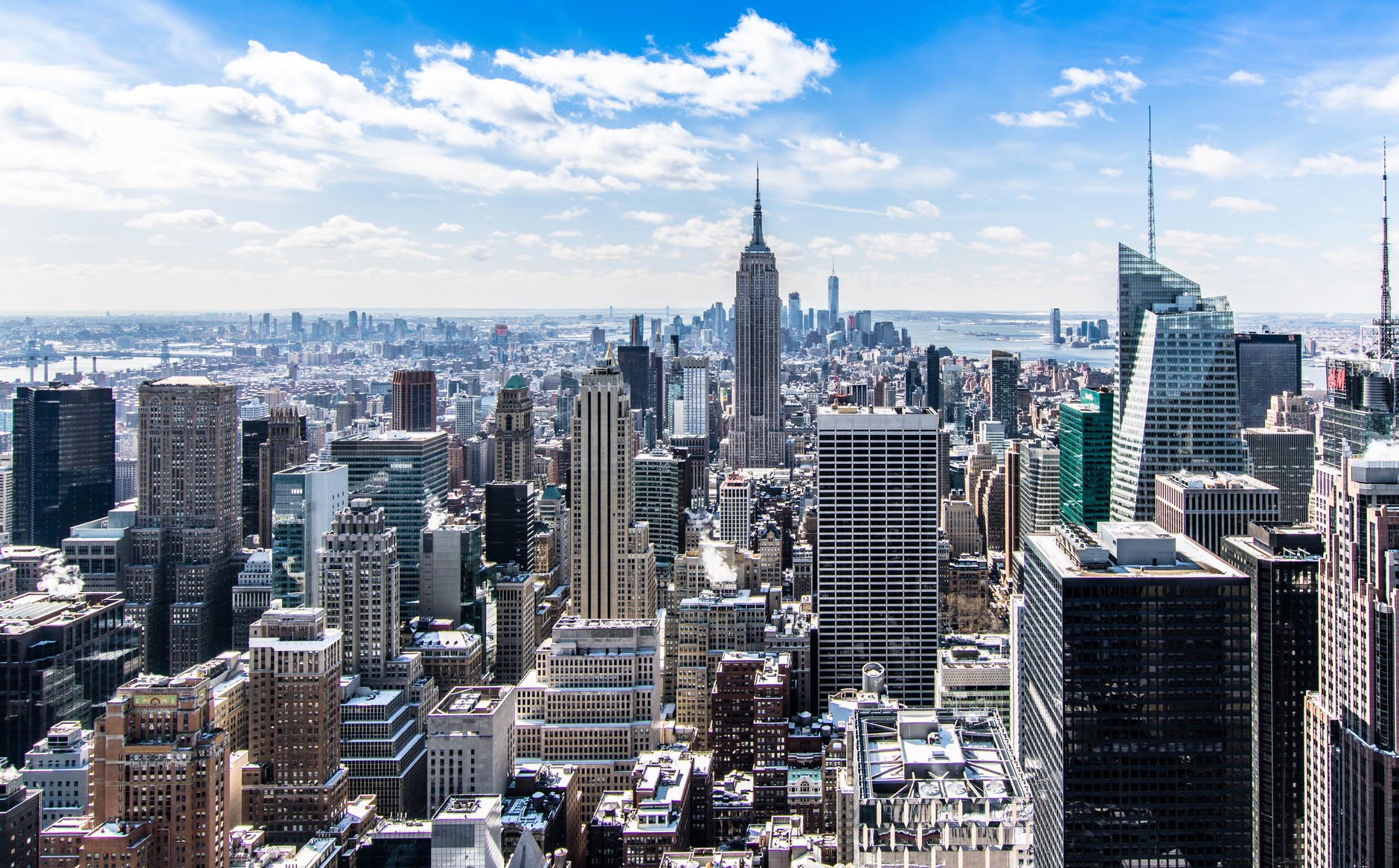
Chicago as “the nation’s capital of deconversions” from condos to apartments

Henry Grabar suggests Chicago is ground zero for efforts to convert condos to apartments:

Photo by Timur Saglambilek on Pexels.com

Stories like this make Chicago the perfect place to understand how condos usually meet their end—not in a pile of rubble, but in a buyout that leaves some owners feeling lucky and others feeling betrayed. Lauren Kerchill, the owner of a Gold Coast unit overlooking Lake Michigan, was a holdout when investors came to buy out her building. After fighting to toss her condo board, she told Crain’s Chicago Business she was called “petty,” “greedy,” and “uneducated.” She just didn’t think she could find another home like hers nearby. In the end, she didn’t have a choice. Her neighbors voted to sell her building, at 1400 Lake Shore Drive, for $107 million in 2019—another record, this time the most expensive deconversion in the country…

But there’s another side to the story, in which deconversion is the only way out for condo owners stuck in deteriorating properties. In June, the collapse of Champlain Towers South in Surfside, Florida, drew attention to the challenges that confront condo boards as they assess structural damage and raise money for repairs. Maintenance bills for the Great American Condo Boom of the ’70s and ’80s are starting to come due in areas like South Florida…

While states like Florida, California, and Hawaii saw tons of new condo construction in the decades after the concept was established in the 1960s, Chicago saw a different kind of boom: older buildings becoming condos. Fearing rent control, facing declining profits, or saddled with obsolete prewar commercial space, landlords in Chicago raced to sell off their units in the 1970s. Yuppies and middle-class workers gobbled up these starter apartments, which provided an easy and cheap entry point to homeownership.

Fifty years later, those buildings are among the oldest condominiums in the country. Owners who have not kept on top of maintenance, and even some who have, sometimes find themselves facing massive repair bills.

It would be interesting to read more about the specific aspects of Chicago’s history, real estate market, and local regulations that play into the the number of condo deconversions in Chicago.

More broadly, this gets at two larger housing issues:

  1. How do deconversions fit with a larger American promotion of homeownership? Condos offer opportunities to offer homeownership opportunities in settings where the single-family home is less possible. But, given market conditions right now, is there now increased interest in having more rental units?
  2. While aging and the associated expenses is an issue for condo buildings, it is also an issue for many more housing units in the United States. What happens to older homes and residences when there is limited interest in repairing them or redeveloping the property? In wealthier communities and desirable locations, there are often developers and individuals interested in rehabbing or rebuilding structures. Hence, teardowns or new residences in suburban downtowns. Elsewhere, replacing or changing housing is a more arduous task.

The value of highlighting Starbucks, since 1971

In a Starbucks TV commercial, I noticed the company notes it was founded in 1971. Here is a logo from their website that highlights 50 years of business:

Starbucks.com

The company’s website highlights their heritage:

Our story begins in 1971 along the cobblestone streets of Seattle’s historic Pike Place Market. It was here where Starbucks opened its first store, offering fresh-roasted coffee beans, tea and spices from around the world for our customers to take home. Our name was inspired by the classic tale, “Moby-Dick,” evoking the seafaring tradition of the early coffee traders.

Ten years later, a young New Yorker named Howard Schultz would walk through these doors and become captivated with Starbucks coffee from his first sip. After joining the company in 1982, a different cobblestone road would lead him to another discovery. It was on a trip to Milan in 1983 that Howard first experienced Italy’s coffeehouses, and he returned to Seattle inspired to bring the warmth and artistry of its coffee culture to Starbucks. By 1987, we swapped our brown aprons for green ones and embarked on our next chapter as a coffeehouse.

Starbucks would soon expand to Chicago and Vancouver, Canada and then on to California, Washington, D.C. and New York. By 1996, we would cross the Pacific to open our first store in Japan, followed by Europe in 1998 and China in 1999. Over the next two decades, we would grow to welcome millions of customers each week and become a part of the fabric of tens of thousands of neighborhoods all around the world. In everything we do, we are always dedicated to Our Mission: to inspire and nurture the human spirit – one person, one cup, and one neighborhood at a time

Fifty years is likely a safe point to highlight a founding date as it is a nice round number, a half century. Sure, 49 or 51 years gets at the same idea but it does not have the gravity of 50. Yet, I could imagine two sides to whether promoting this date is helpful.

On one side, fifty years is a long time. Many businesses do not make it this far. Even fewer companies are so long for so many years. Highlighting the date implies permanence, tradition, stability. Starbucks is not just a passing trend; they are good at what they do, they have been around five decades, and hope to be around for many more.

On the other side, Americans tend to like upstarts and novelty. Does fifty years imply old age and lack of innovation? Starbucks is established while other successful companies are offering new models and products. There are Starbucks locations everywhere but once companies like Sears or Woolworths also thrived.

Even as the company celebrates 50 years, companies are not permanent. Perhaps there is a time when fast food in general no longer exists or people can get similar food products at home. Or, Starbucks does something internally that causes issues. Or who knows what. Does it reach 75 years or 100 years, other round milestones worth celebrating? It is hard to know now; Starbucks will keep going until it doesn’t.

Ghost town, suburban O’Hare industrial property edition

Ghost towns in the American West are well-known. Recognized less frequently are suburban communities or neighborhoods that disappear. A neighborhood of over 100 homes in Bensenville will be demolished to expand industrial facilities near O’Hare Airport:

Photo by KoolShooters on Pexels.com

The 106 houses where people had raised families since 1956 will be gone.

Rising in their place will be 1.2 million square feet of top-of-the-line industrial space in four buildings…

By knocking down the houses, the new owners will have a 68-acre site in a very hot O’Hare International Airport industrial real-estate submarket…

When the project was proposed, “I thought about what happened to Bensenville with the O’Hare project,” DeSimone said. He means the loss of about 600 homes and businesses near York and Irving Park roads in 2009 when Chicago bought the properties to expand the airport.

The area surrounding O’Hare Airport is desirable because of the amount of passenger and freight traffic that goes through the airport each year. Because of its particular location, the airport is near all sorts of land uses, including residences. This has caused noise problems over the years and this agreement seems to be a mixed bag: the residents got a lot of money for their money and they were not forced into the change but an established neighborhood of 65 years will be gone and the suburb of Bensenville continues to lose residents.

How will the neighborhood be remembered? Will it be commemorated in any physical way beyond the memories of the residents who used to live there? This is the opposite of what many assume will happen with suburbs and American communities. The expectation is for continual growth while population stagnation or loss is seen as undesirable. To have a neighborhood with its homes, families, and activity disappear is not a thought many would want to dwell on.

Get a house that is zero-carbon over its lifetime…for $32 million in Malibu

It will take a little money to acquire the first zero-carbon home in California:

Photo by Vinicius Maciel on Pexels.com

The roughly 14,400-square-foot modern ranch-style house has all electric appliances and mechanical systems, and comes with an organic vegetable garden, orchard and apiary, according to marketing materials. In addition, the develop said it reduced carbon emissions during construction by using alternative building materials.

“This home will have zero [carbon] emissions throughout its lifetime,” said Scott Morris of Crown Pointe Estates, developer of the home. The average U.S. home emits 8.3 metric tons of carbon dioxide a year, according to U.S. Environmental Protection Agency data…

Until recently, developers have focused on reducing energy use in homes, but attention is expanding to include cutting embodied carbon, the greenhouse gases that are emitted during the manufacturing, transportation and disposal of building materials, said Cliff Majersik, a senior adviser at the Institute for Market Transformation, a Washington, D.C., think tank with public and private funding that promotes investment in low-energy building. If the developers rigorously reduced and measured embodied carbon, and offset the remaining carbon, it would be a “very impressive achievement,” he said.

According to Mr. Morris, Crown Pointe reduced the embodied carbon in this home’s construction by replacing 80,000 pounds of steel in the original home design for sustainable timber. It says it slashed its concrete usage by 14% by replacing a concrete-slab foundation with a crawl-space foundation. And rather than place a concrete subfloor beneath the wood and stone floors, it used a rubber underlay made from recycled tires. Around 25% of the concrete used is recycled, the developer said.

This is a cool feat and yet it is not exactly anything close to an average home. The irony here is that this zero-carbon home both costs so much – it is a luxury in a premium location to be zero-carbon – and it is such a big house – a reduced environmental footprint yet still taking up a lot of land and having a quintessentially American square footage. Does this make being zero-carbon a status symbol?

How long until this kind of home is within reach of more homeowners? Some of this technology would be possible in much smaller homes but it could still be costly to eliminate carbon from all the other materials.

Housing for tenants, housing for landlords?

Who is housing for? The expiration of the national rent moratorium highlights competing interests in American housing:

Photo by Laura Tancredi on Pexels.com

The eviction wave is expected to hit population centers across the country. Housing advocates point to renters in Ohio, Texas and parts of the Southeast — where tenant protections are generally low, housing costs are high and economic problems from the pandemic linger — as particularly at risk. Even though it has its own ban in place through August, New York is also a concern, because it has been especially slow at distributing rental assistance funds to the hundreds of thousands of tenants in the state who are behind on their rent.

The last-minute gridlock between President Joe Biden and Democrats in Congress that resulted in the demise of the eviction ban this week threatens to impose new economic burdens on state and local governments. The officials will have to respond to mass evictions triggered by landlords — including many struggling financially themselves because of lost revenue — who are poised to kick out tenants who fell behind on their bills during the pandemic. The renter safety net is severely weakened, with fewer than a dozen state eviction bans in place and state and local governments having disbursed only a fraction of the $46.5 billion in rental assistance that Congress authorized over the past year.

About 7.4 million adult tenants reported they were behind on rent in the latest U.S. Census Bureau survey, which was taken during the last week of June and the first week of July. About 3.6 million tenant households said they were “somewhat likely” or “very likely” to face eviction over the next two months.

The lapse of the eviction ban, which was first imposed by the Centers for Disease Control and Prevention in September as a Covid-19 safety measure, comes after landlords warned that it cost them billions of dollars each month. Industry groups including the National Association of Realtors lobbied against extending the moratorium this week and made the case to lawmakers that it “unfairly shifts economic hardships to the backs of housing providers who have jeopardized their own financial futures to provide essential housing to renters across the country.”

In addition to tenants and landlords, there are more actors involved including builders, developers, real estate agents, mortgage providers, local officials, and more. But, ultimately, whose interests should win out in times of trouble?

The era of COVID-19 is a very unusual time. But, the US has faced severe housing issues before. The housing bubble of the late 2000s. The Great Depression. A housing shortage after World War Two. In the United States, the logic regarding housing tends to default to free markets – people can access what they have resources for and there is much money to be made in housing – plus homeownership. With both, interventions from actors, like the federal government, may be necessary in times of crisis or for people with very limited means. In non-crisis times, interventions can favor developers and homeowners.

In contrast, there is less support for public housing or seeing housing as a right. Housing is needed for a variety of reasons – health, stability, accessing jobs and services, personal space, etc. – but not guaranteed.

If any city or local government truly wanted to distinguish itself as a people-oriented location rather than a market-oriented community, guaranteed housing would be one way to stand out.

A suburban covered bridge hit 17 times in a year

Since a covered bridge in Long Grove reopened last August, truck drivers have hit the top of the bridge – with a clearance of 8’6″ – 17 times.

“We have made so many attempts to make the signs more visible, and it just keeps happening.” said Trustee Jennifer Michaud. “I live very close to the downtown, and I always know when the bridge is hit, because I see the helicopters come in. And I’m just, ‘Oh, another one.'”…

“People look at their phones and their phone tells them to go this way, and Google doesn’t know that they are driving a truck,” she said…

One option is an overhead detection system that would sense when a truck of a certain height approached the bridge and send a warning signal to the driver. Such a system would have recurring costs, including maintenance.

Another option could be to prohibit truck traffic.

This seems like a clash of transportation eras. The covered bridge is from an older era and this is part of its current appeal. The bridge invokes tradition and likely brings in curious visitors. The bridge is part of the local character. Here is how the Historic Downtown Long Grove puts it:

As one of the last iron trusses in The Chicago area, the single-lane Covered Bridge is so iconic, it’s quite literally become Long Grove’s emblem.   For over 100 years, the bridge has stood as the symbol of this crossroads town, one of the first in the country to pass a Historic Landmark Ordinance (in 1962) so that new construction need conform to its unique and charming style.  The Covered Bridge has transcended its historical role as a functional necessity and a tourist attraction into something of far greater significance – the Queen and Protector of this special place we call Long Grove just 35 miles NW of Chicago.

As the gateway to the historic downtown, the Covered Bridge is where Long Grove’s quaintness begins and ends.  Not only does the single-lane bridge buffer the town from being a major thoroughfare to Route 53, but there’s also something enchanting about waiting at a stop sign while the car opposite of you slowly passes over the bridge before your turn.

To paraphrase one resident: “I love how you need to stop, which suggests for you to relax, and prepare to step back in time to a less hectic world.  As you ease across the bridge, the sound and feel of the bricks and timbers under you add another reminder that you’re entering a special place.”

At the same time, today’s vehicles are bigger and technology steers drivers down particular roads to get them from Point A to Point B. No community today would choose to build such a small bridge today. Can everyone get what they want in such a situation?

This reminds me of driving through tunnels on the Pennsylvania Turnpike where they are clear signs prohibiting trucks carrying certain materials. Presumably, there is some sort of enforcement system. An overhead sensor could work. So could posting someone on each side of the bridge who can watch traffic and stop vehicles that are too tall.

This is not just a problem for this covered bridge. This can happen at drive-thrus, gas stations, parking garages, and other places with limited heights. If someone asked me how tall my vehicle is, I could guess but I would not know for sure. And if I was driving a different vehicle than normal, like a moving truck or a tall pickup, I might not even think about it.

Chicago truly has a grid

Looking at a map of Chicago or seeing it from above coming in and out of the local airports shows Chicago’s road network is a grid. A recent study examined just how much of a grid it is:

Photo by Benjamin Suter on Pexels.com

It is right to compare Chicago’s street network to something so obsessively exact. A recent academic study, “Urban spatial order: street network orientation, configuration, and entropy,” by Geoff Boeing, looked at the maps of 100 major world cities, and found that Chicago’s “exhibits the closest approximation of a single perfect grid.” Nowhere else have urban planners been so successful in imposing Euclidean order on natural surroundings. On a scale of 0 to 1, in which 1 is a perfect grid, Chicago scores 0.9. (The least-perfect grid is Charlotte, a Sunbelt city whose street system is more entropic than Rome or São Paulo.)

Why such a design?

The man hired to plat a town at the mouth of the Chicago River was James Thompson, a surveyor from Kaskaskia, and the father of the Chicago Grid. Illinois had already been divided into square townships and sections by the Northwest Ordinance of 1785. Since Thompson was subdividing a township section, he simply repeated that pattern in miniature when he designed Chicago’s first street map. It was less than half a square mile, bounded by Kinzie on the north, Washington on the south, Jefferson on the west and Dearborn on the east, but it was the template for a network that would eventually cover the 234 square miles of Chicago—and extend into suburbs beyond its borders…

Thompson’s grid was interrupted only by the river, and by established Native American trails which became diagonal streets: Elston, Clark, Milwaukee, Archer, Ogden. By 1869, the grid had become so integral to the city’s identity that the Tribune boasted, “There is no city where the opportunities for straight streets are so advantageous as in Chicago,” and demanded, “Give us straight, broad streets, running uninterruptedly from one extremity of the city to the other.”…

In our quest for orderliness, Chicago also has the advantage of being one of the flattest cities in the U.S., lying on a plain that was once the bottom of a proto-Great Lake. It would not be practical or possible to impose an uninterrupted grid on Pittsburgh or San Francisco, where streets wind sinuously around hills. As the study notes, “Boston features a grid in some neighborhoods like the Back Bay and South Boston, but they tend to not align with one another. Furthermore, the grids are not ubiquitous and Boston’s other streets wind in various directions, resulting from its age (old by American standards), terrain (relatively hilly), and historical annexation of various independent towns with their own pre-existing street networks.”

This sounds like a perfect storm of factors: a planner who applied methods from the Northwest Ordinance, a unique landscape that was flat and had only one waterway, and a quest for land development and profit with land that could be easily marked and developed.

Of course, this question of spatial order could be combined with consideration of how these different spatial orders are experienced. Do residents of Chicago and visitors have a better experience because of the grid or are cities, like Boston or San Francisco, with different spatial orders more interesting and vibrant? The grid has particular advantages for navigation but has less charm or uniqueness.

3D printed houses under construction

To address affordable housing in Florida, one company is trying 3D printed homes:

Photo by Fernando Arcos on Pexels.com

After purchasing a plot of land in the Griffin Heights neighborhood, the couple reached out to Printed Farms, a Florida startup that has access to the Danish manufacturer COBOD’s construction 3D printer, to head the innovative project.

Work began Thursday on a plot of land in northwest Tallahassee area and is expected to finish by Friday. The automated printer can lay up to two feet of wall a day.

Once initial construction on the three-bedroom, two-bathroom house wraps up, it still won’t be ready for its first owner until it has furnishings installed, which may take an additional eight to 10 weeks.

The house will cost between $175,000 and $200,000 depending on its appraisal and area median income affordability, Light said. 

Once there are some completed homes, this will provide opportunities for builders and possible homeowners to consider them. I wonder how much of the devil is in the details. What is the materials and labor cost compared to traditional methods? How long will these homes last? Will the appearance and experience of the home be similar to traditional construction? How much faster could such homes be constructed? How many people would want to be among the first to try them out?

Of course, if this can help address affordable housing needs, it could be a big deal. Alongside tiny homes, ADUs, and other innovations, many communities in the United States need more quality and cheaper units.

Adding social norms and social pressure to seeing lawns as “a window into your soul”

Do lawns say something about a homeowner?

Photo by FOX on Pexels.com

To our neighbors, our lawn was just another suburban expanse of green. But to my dad, like millions of other yard-having homeowners, it was a canvas, a psychologist’s couch, a playpen, a physical manifestation of his deepest fears and greatest joys. Our lawn was one of the few places in my father’s world where he could impose his will. Plus, it was a respite from his three children. It was a miracle he ever came inside.

Watching my dad out there year after year taught me this: A lawn can tell you an awful lot about its owner.

This fits with the American idea that things you own, ranging from a home to a car to your smartphone, say something important about you. They are not just items to use or enjoy; they reflect your personal brand, even as millions of others may have the same things.

People might also do this with lawns. If people keep up their lawn, they assume the homeowner cares about their property and home. Americans generally like this. Those who do not keep up their home and lawn are less trustworthy as are people who do not own homes.

At the same time, lawns are also the product of social norms. What do the neighbors do with the lawn? How might a messy lawn be perceived by neighbors? Are nicer lawns connected to higher property values? How do different brands sell grass seed and other lawn products? I have argued before that a well manicured and clear lawn is connected to social class. Communities have expectations about what lawns should look like and can exercise both formal and informal sanctions, whether mowing lawns for residents and sending them the bill if the grass is too long to dirty looks.

More broadly, the idea of a green and lush lawn is tied to the American suburban dream. The nice single-family home surrounded by an oasis of green hints at private property, nature, and an attentive homeowner. A neighborhood with such lawns is a sign of care and neighbors who value their community.

The rise of social media managers

More companies and organizations now have social media managers:

Photo by George Milton on Pexels.com

Some 15 years after Facebook and Twitter opened their platforms to the public, social media is an established, mainstream career field. There are academic programs dedicated to its practice. Workers say it’s sometimes still treated as a job for rookies, both through pay grades and interpersonal dynamics from those who think it’s just not that serious. But that’s changing: Those in the field see more bargaining power and more full-time roles than ever before.

Many social-media specific jobs still offer lower salaries than comparable fields like marketing. The average annual salary for marketing managers is $102,496 and $109,607 for marketing directors on Glassdoor, according to a spokesperson for the jobs website. Meanwhile, the average annual salary is $67,892 for social-media directors and $47,908 for social-media assistants…

But Ms. Visconti notes that the field has become more professionalized in recent years. When she got her undergraduate degree at the Fashion Institute of Technology in 2015, she says, “It definitely wasn’t seen as a career path.” Today, following work for clients including Hyatt and Puma, she believes she can dedicate her whole career to social media. “What I love about it is that it’s the way to connect most directly with consumers,” she says…

“In the beginning, it was all about the need for businesses to create content specifically for social media, which was an insight that I had somewhat early,” he says. “Now it’s much more about understanding how algorithms work, and I just don’t understand things like what time of day to publish a TikTok video on a deep level.”

My colleague Peter Mundey and I found similar things in our 2019 study “Emerging SNS Use: The Importance of Social Network Sites for Older American Emerging Adults.” These 23 to 28 year olds found that social media could be part of their work life. We found: “Mentions of job-related activities from the Wave 4 respondents included corresponding with potential employers via Facebook, making professional connections through LinkedIn and showing work-related activities and progress through other SNS platforms, helping firms promote themselves via social media and responding to other users, and even working for social media companies.” We found that this work was not necessarily for everyone, even if older emerging adults were regular social media participants.

There could also be an interesting study in here about the development of a new career, role, and/or industry. Marketing, for example, is well known and emerged over decades in the twentieth century. Social media manager is new, utilizes newer technology, is more familiar to younger members of the workforce, and is developing its own professionalization processes. Will it firmly established in terms of status, pay, and training within a decade or two and how will that happen?