“Zombie malls” cost communities while others profit

A number of American communities have “zombie malls,” shopping centers that continue to exist even if communities wish they would disappear.
Photo by Aldiyar Seitkassymov on Pexels.com

There are hundreds of zombie malls throughout the U.S. like the Berkshire
Mall, more dead than alive. The older, low-end ones have
lost at least half and, in some cases, more than 70% of their value
since
the industry’s peak in late 2016, according to real-estate research firm Green
Street…

That’s when Namdar Realty and Mason like to swoop in. The New York-based
real-estate partners are among the most prolific purchasers of U.S. malls. They
make money by buying malls cheap and keeping them going, even as town officials
beg them to pull the plug.

Bare said the community would be better served if the Berkshire Mall was
turned into something more valuable. Ideally, a mixed-use property with housing
and medical offices or educational space, and maybe some retail and
restaurants…

Malls typically sit on large parcels of prime real estate—which often
include nearby buildings such as restaurants as well as large parking lots—that
can be subdivided and sold in parts, sometimes at a value exceeding the
purchase price of the mall. The partners keep the malls open, but cut costs by
appealing their property-tax bills and reducing expenses such as staffing and
maintenance. 

All the while, they continue to collect rent from the mall’s remaining
retailers. When national retailers move out, Namdar Realty and Mason try to
replace them with nontraditional tenants such as call centers, local small
businesses, doctors’ offices and bounce-house venues.

asdf

Here are some of the reasons communities do not like malls surviving in this
state:

-They are not generating the kinds of tax revenues they did as a thriving
mall.

-The land could be generating more revenue if used in different ways.
Communities want to replace the tax revenues of the malls with other revenues.
(And this is a reason housing might not be too appealing to some leaders.)

-A mall in bad repair and/or is partly to mostly empty is an eyesore.
Gleaming and busy malls are a source of pride; struggling or dying malls are
the opposite.

-Outside mall owners may not always be perceived as having the best
interests of the community in mind. Imagine how locals might interpret their
actions: someone is trying to profit off our struggles. They are impeding our
progress just to make money for outsiders.

-Even if malls can be demolished or repurposed, it can be a hard path to
putting new and worthwhile in its place. These outsiders are slowing the
process or making it impossible to move on.

Even zombie malls will meet their fate eventually, either as unprofitable
ventures that are sold and redone or as places that continue to generate
profits. And if they can keep making money, are they really zombies?

Housing, design, and keeping living spaces private

While discussing the potential of cohousing, Kristen Ghodsee describes how the design of housing in the United States tends to emphasize individualism:

Photo by Lisa Fotios on Pexels.com

Our bathrooms, bedrooms, kitchens, and dining rooms are places of great physical intimacy, and we often measure our closeness with others by the rooms we are willing to share with them. Close proximity also means vulnerability, and trust is an essential component of inhabiting common spaces and microbial environments. But our preferences are malleable. Both individualism and cooperation are learned traits; like muscles, the more we use them the stronger they become. Some of us just uncritically accept the private apartment or single-family home for ourselves because it is what our societies consider “normal.”

Americans like single-family homes and private dwellings. Even within these private dwellings, there can be plenty of room for people to have their own space and choose when they want to interact.

As noted above, imagining different housing possibilities is difficult because Americans are used to these options and what tends to be idealized. These options have been promoted for decades and backed with government funds and policies, ideologies, and preferences. To promote other options – like cohousing – requires a concerted and prolonged effort. Even calling such options “utopian” suggests it is unusual and perhaps unattainable.

And it is not like Americans are that much more likely to public to share spaces with others. We do have some spaces that are cosmopolitan where people of different locations and backgrounds can coexist and interact. But, we also more private spaces outside of the home that allow sociability and restrict who can be there.

This reminds me of the 2010 book In the Neighborhood where Peter Lovenheim tries to get to know his neighbors, with the mark of success being able to stay overnight. It is one thing to say hi to a neighbor, it is another to regularly welcome them into your home.

Pilot ADU program in New York City

New York City has started a small program that could help address the need for housing in the city:

Photo by Centosfotos on Pexels.com

New York City just unveiled its newest effort, which will hand 15 homeowners up to $395,000 to build an additional apartment. This could mean an extra unit in a garage, basement, or attic, or a tiny home in the backyard. The idea is to boost housing density in a city in desperate need of new housing.

New Yorkers can apply online for the funding, but high-income residents aren’t eligible — the income limit for a family of four is $232,980, the New York Times reported. And the ADUs that are built will have a limit on rent: a one-bedroom can’t be rented for more than $2,600.

The city’s department of housing preservation and development on Tuesday unveiled the “Plus One ADU” pilot program, similar to a state-wide initiative with the same name that has doled out tens of millions of dollars to help homeowners across New York State build ADUs in their backyards…

The effort is part of the city’s sweeping new housing reform proposal, which seeks to pave the way for 100,000 new homes in the city by encouraging conversions of commercial buildings into residential, boosting density near mass transit, and reducing space devoted to parking. The proposal also aims to legalize ADU construction across much more of the city.

Adding 100,000 units would be helpful as the city, like many major cities, needs lots and lots of units to provide more housing options and address housing costs. But, how quickly can these units be added and how much can they ease the housing issues? It would be worth looking at the math on this; at what point do the government funds lead to long-term savings? Hopefully, this is part of a comprehensive strategy that tries to add housing units in multiple ways.

Not all New York City is as dense as Manhattan but it is a pretty dense American city. How dense are city residents willing to go? Like many cities, there are different clusters of housing units in different neighborhoods. Adding a housing in basements or backyards can only happen in certain places and these changes would add residents. ADUs might be less visible than other means of providing more housing units – for example, high-rises would not be welcome in many residential neighborhoods – but Is there a point where residents feel there are enough ADUs?

Fear of crime near record highs even as crime rates are down

Recent data from Gallup suggests more Americans are fearful of crime:

Photo by Lennart Wittstock on Pexels.com

A recent Gallup poll found that 28% of Americans worry frequently or occasionally that they will be murdered, according to a Nov. 16 news release. That’s a near-record high…

This heightened apprehension has had a detrimental effect on the daily lives of Americans, causing them to curb commonplace activities.

Four in ten Americans — the largest number in three decades — are afraid to walk within a mile of their homes alone at night, according to the poll. The last time concerns about walking alone were so high was in 1993, when nationwide crime was near an all-time high, according to a 2016 report from the Brennan Center for Justice…

Violent crime in the U.S. peaked in 1991 at a level of 758 offenses per every 100,000 people, according to the FBI. Since then, it has precipitously fallen, though there have been occasional upticks…

Research has shown that there is no connection between crime rates and levels of concern about crime, Barry Glassner, a sociologist and author of “The Culture of Fear: Why Americans Are Afraid of the Wrong Things,” told McClatchy News.

Perceptions and reality are two different things. Sociologists need to study both as perceptions can drive a lot of actions, policy, and beliefs. Simply repeating the actual numbers will not necessarily convince people.

While television news and politicians are implicated at the end of the story, I wonder about the role of social media. It is relatively easy to share stories of single events. Social media collapses the broader social world by amplifying smaller patterns and individual occurrences. Does it spread fear about crime (among other fears)?

Additionally, how much is this tied to long-standing anti-urban sentiments in the United States? If the majority of Americans live in suburbs but perceive crime to be a problem in cities, this can intersect with their existing ideas about cities.

Imagining 1.65 million people in the two Chicago airports

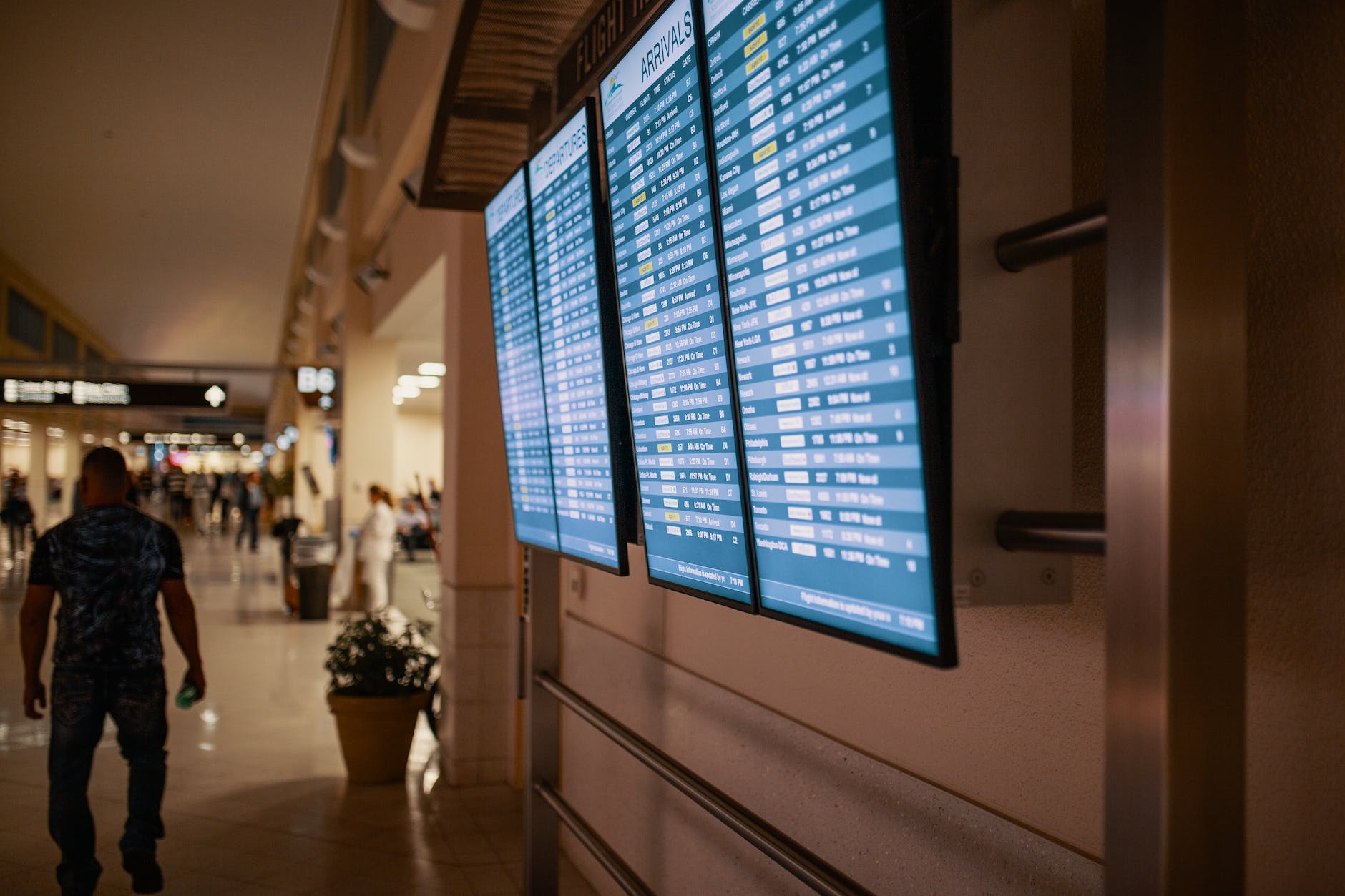
The airports in Chicago are used to big crowds but I still have a hard time imagining over 1.5 million going through the two airports over Thanksgiving:

Photo by Josh Sorenson on Pexels.com

The Chicago Department of Aviation projects 1.65 million passengers will stream through O’Hare and Midway airports this Thanksgiving season, surpassing 2022 totals. Sunday will be the busiest day at both airports with nearly 300,000 people expected, the CDA reported.

I do not think I have ever flown during the Thanksgiving week due to having a lot of family within driving distance. But, I have been to these airports during Thanksgiving week to pick up and drop off people. There are a lot of cars and big crowds. One memorable trip included a two hour return drive – typically a 35 minute journey – because of lots of traffic and heavy snowfall.

I suspect airports need to be built kind of like big box store or shopping mall parking lots: enough capacity to handle the busiest days of the year but usually not near full use. If airports did not have room for Thanksgiving week travel, people would be upset and airlines would not be able to move as many people as they do. In the times with fewer passengers, everyone can adjust staffing and resources.

For all of those making their way through O’Hare and Midway this week, best wishes to you. Hopefully, the weather here does not wreak havoc on schedules.

“Stuck between the hot housing market and the hot job market”

Housing values are up and there are jobs to be had – but many of the jobs to work are in places where housing is expensive. What gives?

Photo by Ron Lach on Pexels.com

All over the country, employers like McDonnell are finding themselves stuck between the hot housing market and the hot job market. In Oregon, rural school districts have puzzled over how to provide enough housing for teachers. In rural Arizona, hospitals are renting out rooms to staff members. In Massachusetts, the state has helped support temporary housing for summer workers on Cape Cod.

The result is a kind of tug-of-war between two of the economy’s main pillars. On a small scale, these transactions are just business owners and employees working things out in one-to-one agreements. But the underlying tension caused by the housing market could permanently shape how people decide where to live, what jobs to take — and whether the economy is working for them.

No one thinks a lack of housing is enough to spoil momentum in the labor market. Employers have added workers for 34 consecutive months, after all, and the job market is still churning. But some economists still worry about the knock-on effects of the country’s housing challenges. Until enough homes get built in the places that need it most, more companies will have to get creative — through higher pay, remote work options or other perks — to ensure their workers can find a place to live…

Martin estimates that offers don’t work out more than half the time, largely because of housing issues. And even when they do, Martin said, she’s never seen so many professionals in mid-level management roles, earning $60,000 or $75,000 per year, who still need roommates to make it work.

I remember a presidential candidate suggesting people should be able to live near where they work

The most interesting part of the article above is that it sounds like at least a few employers are getting creative in providing housing so they can have workers and stable employees. If the market or government cannot provide housing, employers and organizations can help.

This is a long-term issue in the United States that sometimes goes by the name of “spatial mismatch.” This refers to the situations where the jobs available do not line up with where people live. Particularly with jobs scattered throughout metropolitan regions, workers have difficulty finding housing near work opportunities and/or need to commute long distances.

Since job growth has continued for a while now, does this mean only certain workers have been able to take advantage of certain jobs? For example, those with more resources or housing equity in their current location or an ability to commute long distances could have an advantage for jobs. At some point, will there not be enough workers to fill some of these spots?

Trying to diversify a city economy through sports

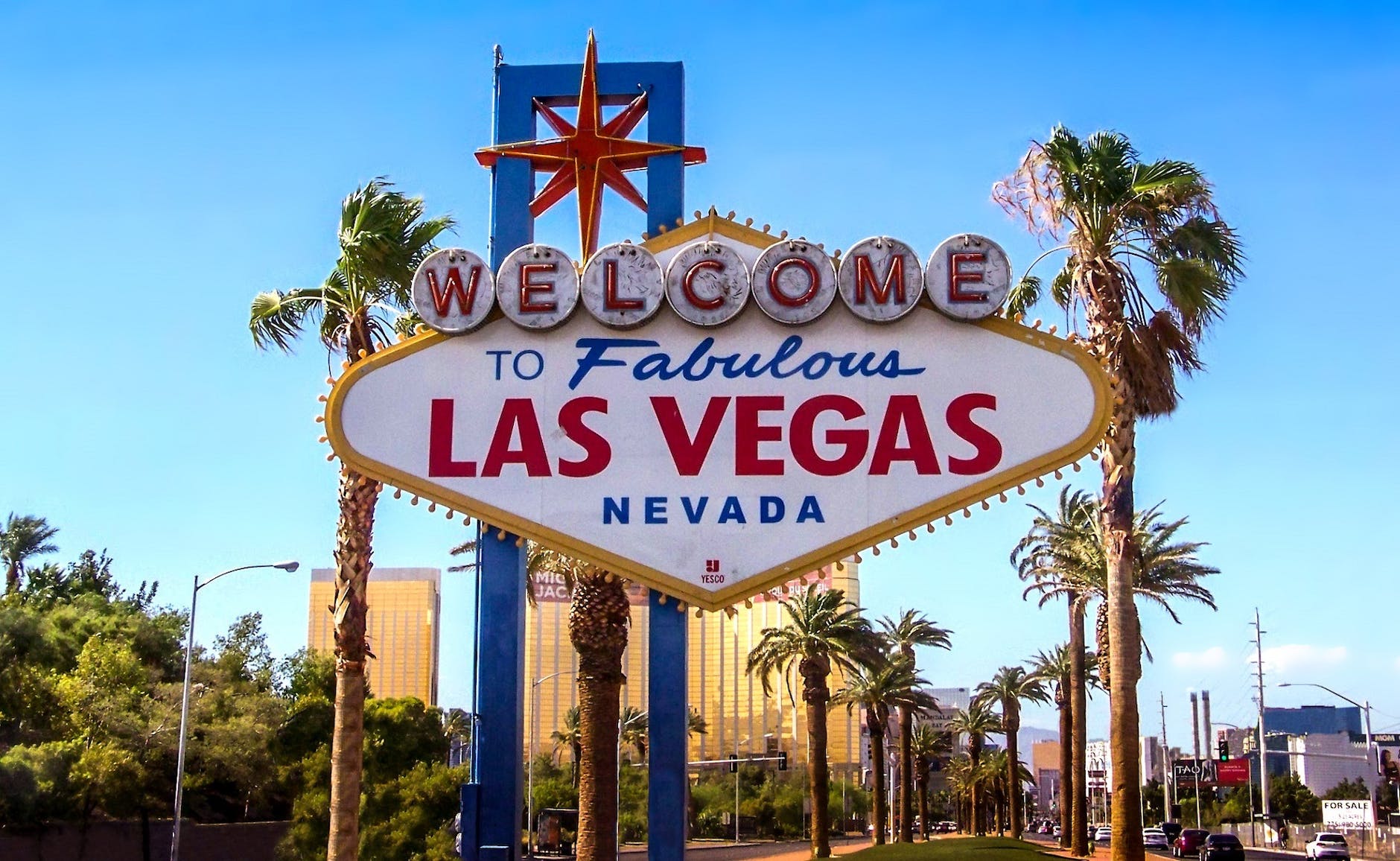
Las Vegas has gambling and all that goes with it, including significant recent investments in sports:

Photo by Pixabay on Pexels.com

In under a decade’s time, the desert city long known for its casinos, food and live entertainment has become the home to four major league sports teams (the latest being MLB’s Athletics), six minor league teams, a major sports organization in the Ultimate Fighting Champion, and four large sports venues playing host to events such as NCAA tournament games, NFL Pro Bowls, and, coming this February, Super Bowl LVIII.

At least a half-dozen more venues are in the planning stages, and the city appears poised to be one of the top picks for an NBA expansion team and an MLS team, as well…

The initial economic impact estimates for Sunday’s Formula 1 Las Vegas Grand Prix and the February 2024 Super Bowl were $1.3 billion, and $500 million, respectively. (But this was before ticket prices slid for F1 when the championship was won earlier in the season).

That total would match the estimated $1.8 billion contributed to the metro area by all sporting events from July 2021 to June 2022, according to an economic impact study released this summer by the Center for Business and Economic Research at UNLV’s Lee Business School.

Earlier research on public money used for new stadiums suggested teams benefit the most from that spending. Will the money spent here on facilities increase the size of the economy, generate additional new jobs, and other benefits or does it simply shift money around? Will residents and businesses move to Las Vegas just because of sports?

Perhaps the pitch with Las Vegas is that it has the added bonus of lots of tourists. If some of them can be enticed to sporting events and other local attractions, this is extra money. This might work for major events, but I would guess it is harder for a regular season MLB game.

Here is just one guess of how this all might look in 10-15 years: local officials will say that sports helped enhance the city’s status, the team owners will be happy with their facilities and revenues, and the local economy will not be enhanced much just because of sports (when accounting for the debt and costs associated with sports).

Is Times Square beautiful?

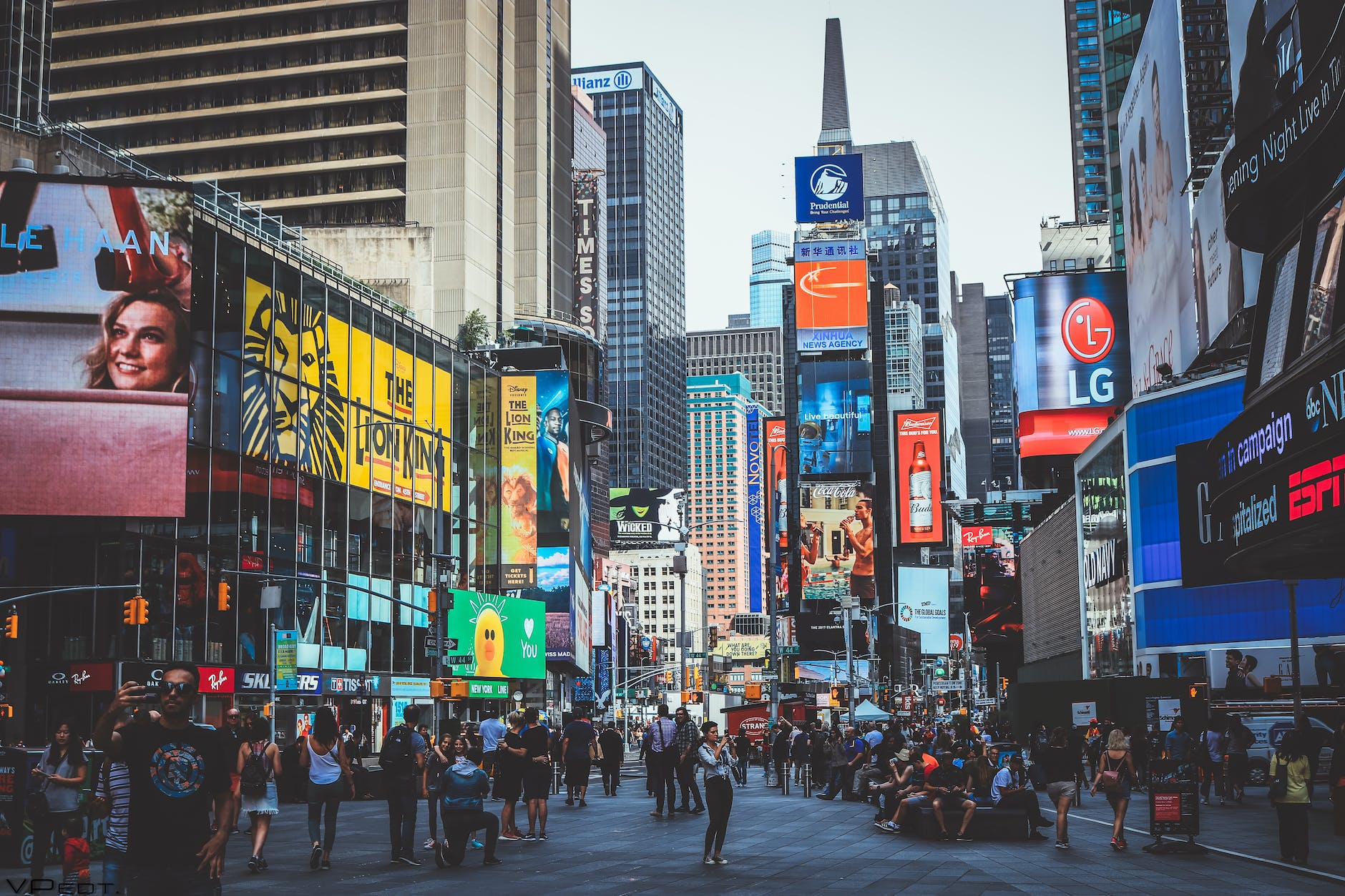
While busking as Mario, one writer describes Times Square in New York City:

Photo by Vlad Alexandru Popa on Pexels.com

Times Square is beautiful when you judge it by aesthetics alone. Yes, plenty of great American sights are more spiritually fulfilling than this Cathedral of Stuff, but if you’re willing to set aside those exasperating anti-capitalist ethics for a few moments, I recommend letting the financial majesty of midtown wash over you. There is truly no joy quite like becoming entranced by a particularly sublime Coca-Cola advertisement, or being inexplicably inspired to take a picture of the Disney Store, and letting your brain cells atrophy away in dumbstruck glory. No, the only problem with Times Square is the obnoxious people who occupy it, and as I stood under the scarlet glow of an H&M sign, dressed in full Super Mario garb, gesturing toward the young families hurrying by—who were doing everything possible to finish up their Manhattan vacation without getting hustled into oblivion—I felt as if I was finally doing my part to make this city worse.

It is for sure a spectacle. Lights, noise, crowds. Activity at all hours. A place to see things and be seen. Can feel like the center of a universe.

Whether it is aesthetically pleasing is a whole different question. How do we judge beauty in cities? I suspect we could ask dozens of New Yorkers about what they find beautiful in their city and get even more responses. Is the problem the people who get in the way of the beautiful modern capitalist tableau?

There is nothing “natural” about Central Park

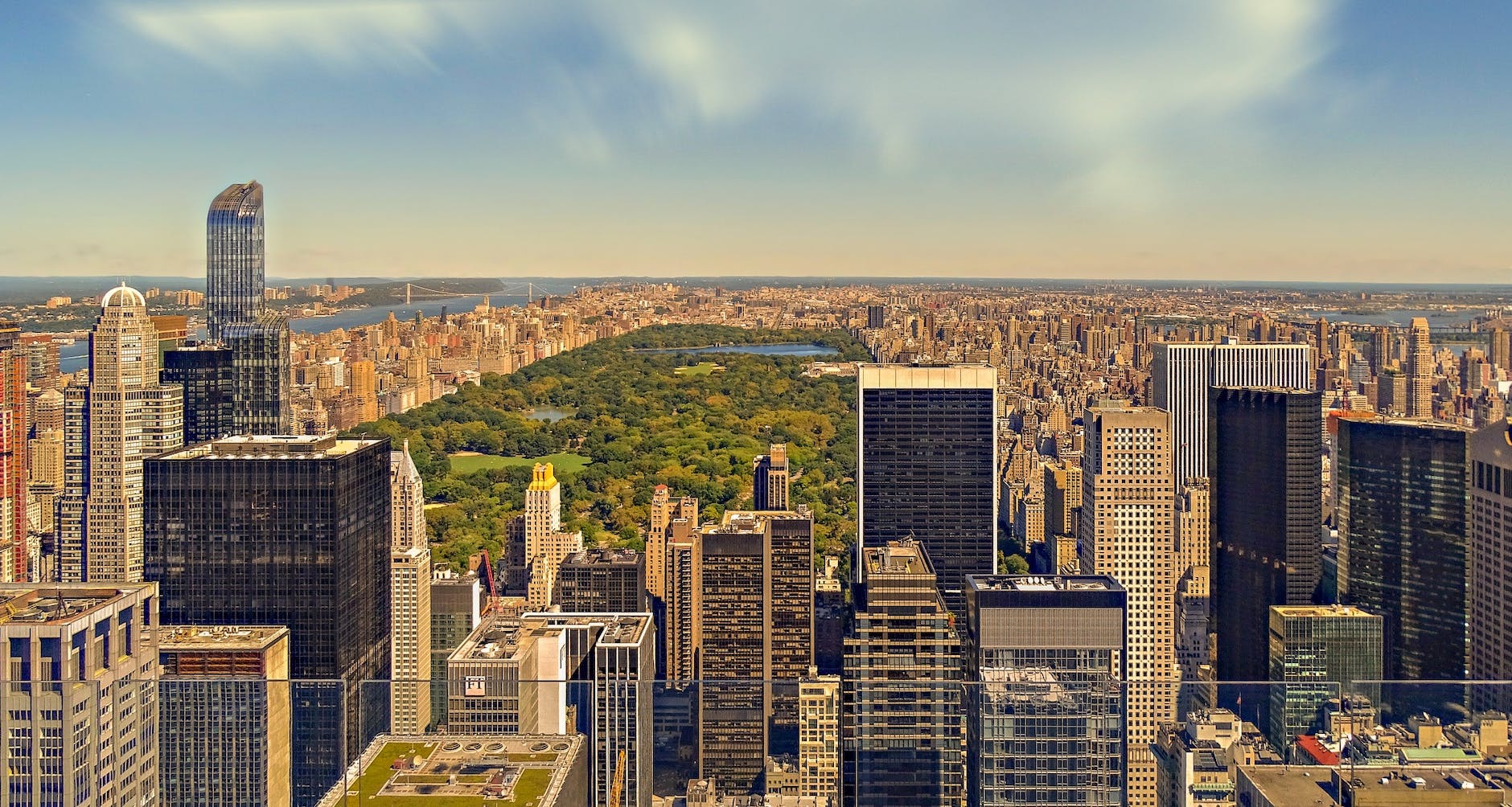
Humans like to cultivate nature in the city. Central Park in New York City is a great example. This 13 minute video from Architectural Digest explains.

Photo by Pixabay on Pexels.com

From the video:

Vaux and Olmsted’s design called for a radical departure in the thinking of what a grand civic garden should be. They rejected the idea of highly formal rigid gardens like those designed exclusively for the wealthy. Instead, they proposed a naturalistic setting, filled with meadows, woodlands, gurgling streams, and surprising vistas. The resulting work involved shifting over 5 million cubic yards of soil, planting over 500,000 trees and shrubs, and excavating more than seven lakes and other bodies of water, all done by hand. In fact, the boulders like this one, which the bolt is sticking out of are the only original pieces of natural landscape in the park, and even many of these were unearthed, scraped, and cleaned to appear as they do today.

It is hard to imagine New York City without this park yet it radically transformed the setting.

One of the world’s wealthiest men has a plan for Miami and thinks it could eclipse New York’s financial sector

Ken Griffin has a lot of money and big hopes for Miami:

Photo by Elvis Vasquez on Pexels.com

“We’ll see how big Wall Street South becomes,” Griffin said in an interview Tuesday with Bloomberg News at the Citadel Securities Global Macro Conference in Miami. “We’re on Brickell Bay, and maybe in 50 years it will be Brickell Bay North how we refer to New York in finance.”

Titans of Wall Street have flocked to South Florida in recent years, attracted by warm weather and lack of state income tax. But Griffin, who moved to Miami last year, plans to outdo them all by changing the face of the city with a more than $1 billion waterfront tower that will serve as Citadel’s headquarters, as well as political and philanthropic donations ranging from a children’s hospital to soccer.

Griffin, who is worth $35.4 billion, according to the Bloomberg Billionaires Index, still has high praise for New York, where Citadel maintains a considerable presence and intends to build an office tower. Citadel is planning a massive new Manhattan skyscraper that could rise to roughly 1,350 feet (411 meters) with 51 office floors and seven terraces…

“Miami, I think, represents the future of America,” he said.

Griffin has a vested interest in this matter. He just came from Chicago, a place where his politics did not necessarily align with others. He suggests Miami is pro-growth. He wants to spend his money locally.

It is true that New York City does not necessarily have to be the global financial capital forever. Places change, statuses rise and fall, industries shift and move. But, it would take a lot of change for New York City to be eclipsed by Miami as a financial center. For example, one ranking of global cities does not include Miami in its top 30 and New York City is #1. And the financial center aspect of New York is just one part of a city with numerous features and resources.

This sounds like boosterism. Griffin wants to raise the profile of Miami. He wants others to come to join him. He and the city can ascend together. There is money to be made in Miami – and in New York and in Chicago and in numerous other cities.