Moving forward with a congestion tax for entering Manhattan

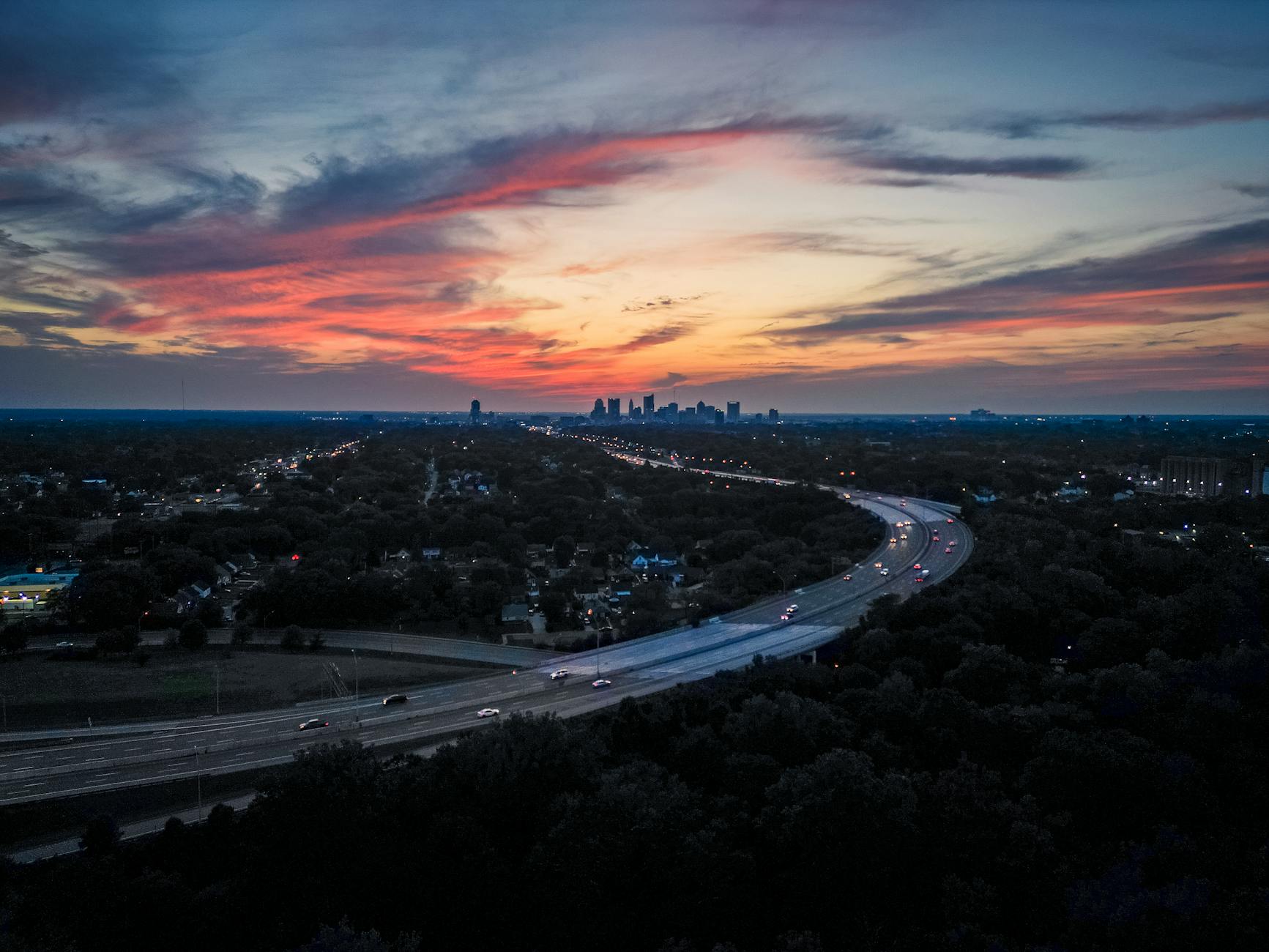
A state board recommends vehicles entering Manhattan south of 60th Street pay the first congestion tax in the United States:

Photo by Udayaditya Barua on Pexels.com

Under the plan, passenger car drivers entering Manhattan south of 60th Street during daytime hours would be charged $15 electronically, while the fee for small trucks would be $24 and large trucks would be charged $36.

Cities such as London and Stockholm have similar programs in place, but New York City is poised to become the first in the U.S.

Revenue from the tolls, projected to be roughly $1 billion annually, would be used to finance borrowing to upgrade the city’s mass transit systems…

Officials say that in addition to funding needed transit improvements, congestion pricing will result in improved air quality and reduced traffic…

“The Traffic Mobility Review Board’s recommended credit structure is wholly inadequate, especially the total lack of toll credits for the George Washington Bridge, which will lead to toll shopping, increased congestion in underserved communities, and excessive tolling at New Jersey crossings into Manhattan,” Murphy, who filed a federal lawsuit over congestion pricing in July, said in a statement.

In the US city with the highest rate of mass transit usage, this makes some sense. The roadways are crowded. Mass transit systems need money. At least some of the vehicles entering the city can afford the fee.

At the same time, Americans like to drive free. Cars and driving are an essential part of American life, whether cruising down a highway or delivering many goods via truck. Many will not be happy to pay extra to drive down taxpayer roads into parts of the city when it used to be free.

If this goes forward in Manhattan, how soon until it comes to other American cities? Those places may have fewer alternatives to driving but the revenue – and other benefits – might be hard for other places to pass up.

Chicago area suburbs passing ordinances to not allow long-term stays by migrants

The Chicago suburb of Oak Park is devoting resources to helping migrants while other suburbs are trying to keep migrants from having long-term stays in their community:

Photo by Binyamin Mellish on Pexels.com

Unlike their counterparts in Schaumburg and Rosemont, Elk Grove Village officials aren’t yet taxing long-term hotel stays, but have crafted a local ordinance of their own to prevent migrants from coming back to town.

The new village rules bar hotel and motel owners from providing a room to anyone without certified medical documentation verifying that the individual is free of contagious diseases, such as malaria or tuberculosis, over the last 60 days. That certification can only come from a board-certified infectious disease physician, according to the ordinance. The requirement doesn’t apply to anyone who has been living in the United States for at least a year.

The ordinance also aims to prevent warehouse owners in Elk Grove Village’s sprawling industrial park, or the owners of vacant shopping centers, from turning their buildings into temporary housing. Property owners would have to get a village license and meet certain zoning and health and safety requirements, such as providing a complete bathroom including flush toilet, sink, bath or shower in each sleeping unit…

The former La Quinta Inn at 1900 Oakton St. in Elk Grove Village — since purchased and demolished by the village — was among the first suburban locations to host migrants in September 2022.

Elk Grove’s board was set to consider the new regulations Thursday, but moved up approval to a Nov. 20 special meeting once officials received a spreadsheet purporting to show suburban hotel locations being eyed to host new migrant arrivals. The list came from a restaurateur who was asked to provide meals for migrants, Johnson said.

The idea seems to be that by limiting sites where migrants can stay, a suburb can keep migrants out and/or discourage other actors from making arrangements for migrants to stay in a suburb.

It would be interesting to compare these suburban efforts to those that might be taking place in other suburbs in the Chicago region and in other metropolitan regions. Some suburbs have hotels or industrial properties while others do not. These conditions are the result of decades of planning and zoning decisions.

Furthermore, do suburban residents as a whole feel migrants should be temporarily housed in their communities and do their opinions differ from city or rural residents? One reason Americans like suburbs is the accessible local government and I would guess the ordinances in the suburbs mentioned above came, at least in part, do to input from local residents and business owners.

Zipper merges work great at…McDonald’s?

Highway drivers sometimes struggle to use full lanes to merge when a lane is closing or ending. This is known as the “zipper merge.” Thankfully,McDonald’s has helped show Americans they can do it?

McDonald’s has several advantages in encouraging a smooth zipper merge process:

  1. A shorter runway to merging. You often go around a turn, order, and immediately merge. In contrast, highway merges can sometimes be seen from a mile or more away and some want to block all that space.
  2. A physical separation of the lanes before merging. The vehicles are ordering before merging and the need to have a display board and speaker means the lanes cannot be crossed into. Even if a driver wanted to block the other lane, the physical barriers make that difficult.
  3. People want to get their food. While driving on the highway, the goal is to get somewhere quickly. Different motivations.
  4. Might it matter that McDonald’s is private property while highways/roadways are more of open or public space?

Some of these principles could be applied to highways. Imagine temporary physical barriers between the lanes to force a merge closer to the end of the lanes. Or, reminders that blocking lanes has (legal?) consequences even though it is more public space.

Oak Park is supporting migrants; other suburbs could do the same?

The Chicago suburb of Oak Park has agreed to continue spending monies to help migrants new to Chicago and the United States:

Photo by Matt Barnard on Pexels.com

The village board in Oak Park voted Monday night to allocate hundreds of thousands of dollars to help migrants through the winter.

It was a divisive vote that sparked controversy among Oak Park trustees, with the debate going late into the night.

In the end, Oak Park trustees decided to extend its emergency declaration and spend an additional $500,000 to support migrants through the winter. That’s a compromise from the original proposal to spend $1 million through March.

The additional money is coming from unspent federal funds, not from local taxes. The vote was four to three to approve the measure…

There are hundreds of migrants in Oak Park that are being helped by the village or by churches.

In an earlier discussion, one trustee suggested more suburban communities could be involved:

Straw said “it’s time” for Oak Park to be a leader, and “work on stepping out in front so we can bring along our neighboring communities.

“The goal should be for this to be a coordinated western suburban response, where we are not alone at the front, but linking arms with our neighbors,” Straw said. “But the only way to get there, when no else is willing to step out first, is to step out. And it’s time.”

In the recent public and political discourse about migrants, cities have provided the primary setting. But, suburbs are now often the communities newcomers to the United States go to. This may not have been common in earlier periods but it is more common today. In a country where a majority of residents live in suburbs and there are a variety of suburban communities, many immigrants start in the suburbs.

How many suburbs might join Oak Park in welcoming migrants? Will there be “a coordinated western suburban response”? Given that there are hundreds of suburbs in the Chicago region, there is a lot of potential for suburbs, religious congregations, other organizations, and residents to respond.

Filling suburban Bed Bath & Beyond locations

When Bed Bath & Beyond closed all of its stores, it left numerous suburban stores vacant. Many of the locations are empty no longer:

Photo by Prateek Katyal on Pexels.com

Burlington, Michaels, Barnes & Noble, Ollie’s Bargain Outlet, Macy’s, HomeGoods and other chains have replaced old Bed Bath & Beyond stores. Indoor pickleball courts, trampoline parks and bowling alleys have also filled up the vacancies…

The majority of Bed Bath & Beyond’s stores are in the suburbs of mid-size and large cities, and are under 50,000 square feet. These are appealing qualities for retailers as some companies favor smaller spaces, instead of mega stores, to save on rent and labor and as shoppers buy more online. Macy’s, for example, is opening its smaller “Market by Macy’s” versions at old Bed Bath & Beyond stores…

Bed Bath & Beyond spaces have been grabbed up swiftly at rents of up to 50% what Bed Bath & Beyond was paying, according to commercial real estate investment firm CBRE. Landlords are taking advantage of the vacancies, with some dividing former Bed Bath spaces into smaller sizes, said Brandon Isner, CBRE’s head of retail research for the Americas.

“There is little to no concern that any of the spaces will go vacant for long,” he said…

It is interesting to hear that some suburban retail real estate is in demand. This would contrast with the negative news about shopping malls or about some big box and strip mall properties. Perhaps it is the particular size of these stores – a medium size that could appeal to a lot of other retailers – or perhaps it is the low price – which cuts the cost of doing business.

I hope there are some large-scale studies going on regarding the transformation of retail spaces in the suburbs. Imagine taking pictures at 5 year intervals in major shopping districts or along major roadways. At the least, it could detail the changes in buildings and what retailers are present. But, it could also catalogue major changes to structures, what kinds of retailers are present, and how popular these sites are. Just as the shopping mall defined life for suburban teenagers for at least a decade, the major shopping centers and strip malls in suburbs defined life for millions over multiple decades. Plenty of people visited Bed Bath & Beyond and many more could visit these structures – with whatever is in them- for years to come.

Those with the right jobs and resources can move where they want in the United States

In a story about people leaving Texas (even as the state gained population last year), I was struck by the patterns in the stories of people moving out the state: they could do so. Here is what I mean:

Photo by Terrance Barksdale on Pexels.com

While people have been moving into the Lone Star state to take advantage of its relatively affordable real-estate market, political atmosphere, and work opportunities, some of those same qualities are driving others out. Over 494,000 people left Texas between 2021 and 2022 (though the state gained a net population of 174,261.) It’s a trend that could intensify as housing costs surge and the state’s political landscape becomes more polarized

For Texans, “the Midwest has emerged as popular recently because it is just by and large the most affordable region,” Hannah Jones, Realtor.com’s economic research analyst, told Business Insider in October. “We’re seeing this trend of buyers looking for affordability really explode.”…

In Austin, some tech workers who flocked to the city during the pandemic just can’t seem to get out fast enough

Jules Rogers, a reporter who relocated from Portland, Oregon, to Houston in 2018 for a position at a local newspaper, left Texas less than two years after moving to the city…

Theoretically, Americans can move wherever they like. In reality, the ability to move is constrained by a variety of factors, including financial resources and jobs.

In this story, people can move in and out of Texas relatively easily. Some came in recent years and want to move back out. Others are leaving Texas for cheaper housing elsewhere.

This may be possible for some. But, it is not easy for everyone to do this. Americans do not just move to places where housing is cheaper. People have numerous reasons for locating in certain places and not others. Those with resources and particular jobs that are in demand or available in many places have some flexibility that others may not have. White-collar workers, in particular, may be able to more easily move from big metro region to big metro region (or even out of these regions as some did during COVID-19).

This would be hard data to collect but it would be interesting to compare people moving for different reasons and how long they stay. Do retirees who move to certain places stay longer than those who move for jobs or cheaper housing?

“Zombie malls” cost communities while others profit

A number of American communities have “zombie malls,” shopping centers that continue to exist even if communities wish they would disappear.

Photo by Aldiyar Seitkassymov on Pexels.com

There are hundreds of zombie malls throughout the U.S. like the Berkshire
Mall, more dead than alive. The older, low-end ones have
lost at least half and, in some cases, more than 70% of their value
since
the industry’s peak in late 2016, according to real-estate research firm Green
Street…

That’s when Namdar Realty and Mason like to swoop in. The New York-based
real-estate partners are among the most prolific purchasers of U.S. malls. They
make money by buying malls cheap and keeping them going, even as town officials
beg them to pull the plug.

Bare said the community would be better served if the Berkshire Mall was
turned into something more valuable. Ideally, a mixed-use property with housing
and medical offices or educational space, and maybe some retail and
restaurants…

Malls typically sit on large parcels of prime real estate—which often
include nearby buildings such as restaurants as well as large parking lots—that
can be subdivided and sold in parts, sometimes at a value exceeding the
purchase price of the mall. The partners keep the malls open, but cut costs by
appealing their property-tax bills and reducing expenses such as staffing and
maintenance. 

All the while, they continue to collect rent from the mall’s remaining
retailers. When national retailers move out, Namdar Realty and Mason try to
replace them with nontraditional tenants such as call centers, local small
businesses, doctors’ offices and bounce-house venues.

asdf

Here are some of the reasons communities do not like malls surviving in this
state:

-They are not generating the kinds of tax revenues they did as a thriving
mall.

-The land could be generating more revenue if used in different ways.
Communities want to replace the tax revenues of the malls with other revenues.
(And this is a reason housing might not be too appealing to some leaders.)

-A mall in bad repair and/or is partly to mostly empty is an eyesore.
Gleaming and busy malls are a source of pride; struggling or dying malls are
the opposite.

-Outside mall owners may not always be perceived as having the best
interests of the community in mind. Imagine how locals might interpret their
actions: someone is trying to profit off our struggles. They are impeding our
progress just to make money for outsiders.

-Even if malls can be demolished or repurposed, it can be a hard path to
putting new and worthwhile in its place. These outsiders are slowing the
process or making it impossible to move on.

Even zombie malls will meet their fate eventually, either as unprofitable
ventures that are sold and redone or as places that continue to generate
profits. And if they can keep making money, are they really zombies?

Housing, design, and keeping living spaces private

While discussing the potential of cohousing, Kristen Ghodsee describes how the design of housing in the United States tends to emphasize individualism:

Photo by Lisa Fotios on Pexels.com

Our bathrooms, bedrooms, kitchens, and dining rooms are places of great physical intimacy, and we often measure our closeness with others by the rooms we are willing to share with them. Close proximity also means vulnerability, and trust is an essential component of inhabiting common spaces and microbial environments. But our preferences are malleable. Both individualism and cooperation are learned traits; like muscles, the more we use them the stronger they become. Some of us just uncritically accept the private apartment or single-family home for ourselves because it is what our societies consider “normal.”

Americans like single-family homes and private dwellings. Even within these private dwellings, there can be plenty of room for people to have their own space and choose when they want to interact.

As noted above, imagining different housing possibilities is difficult because Americans are used to these options and what tends to be idealized. These options have been promoted for decades and backed with government funds and policies, ideologies, and preferences. To promote other options – like cohousing – requires a concerted and prolonged effort. Even calling such options “utopian” suggests it is unusual and perhaps unattainable.

And it is not like Americans are that much more likely to public to share spaces with others. We do have some spaces that are cosmopolitan where people of different locations and backgrounds can coexist and interact. But, we also more private spaces outside of the home that allow sociability and restrict who can be there.

This reminds me of the 2010 book In the Neighborhood where Peter Lovenheim tries to get to know his neighbors, with the mark of success being able to stay overnight. It is one thing to say hi to a neighbor, it is another to regularly welcome them into your home.

Pilot ADU program in New York City

New York City has started a small program that could help address the need for housing in the city:

Photo by Centosfotos on Pexels.com

New York City just unveiled its newest effort, which will hand 15 homeowners up to $395,000 to build an additional apartment. This could mean an extra unit in a garage, basement, or attic, or a tiny home in the backyard. The idea is to boost housing density in a city in desperate need of new housing.

New Yorkers can apply online for the funding, but high-income residents aren’t eligible — the income limit for a family of four is $232,980, the New York Times reported. And the ADUs that are built will have a limit on rent: a one-bedroom can’t be rented for more than $2,600.

The city’s department of housing preservation and development on Tuesday unveiled the “Plus One ADU” pilot program, similar to a state-wide initiative with the same name that has doled out tens of millions of dollars to help homeowners across New York State build ADUs in their backyards…

The effort is part of the city’s sweeping new housing reform proposal, which seeks to pave the way for 100,000 new homes in the city by encouraging conversions of commercial buildings into residential, boosting density near mass transit, and reducing space devoted to parking. The proposal also aims to legalize ADU construction across much more of the city.

Adding 100,000 units would be helpful as the city, like many major cities, needs lots and lots of units to provide more housing options and address housing costs. But, how quickly can these units be added and how much can they ease the housing issues? It would be worth looking at the math on this; at what point do the government funds lead to long-term savings? Hopefully, this is part of a comprehensive strategy that tries to add housing units in multiple ways.

Not all New York City is as dense as Manhattan but it is a pretty dense American city. How dense are city residents willing to go? Like many cities, there are different clusters of housing units in different neighborhoods. Adding a housing in basements or backyards can only happen in certain places and these changes would add residents. ADUs might be less visible than other means of providing more housing units – for example, high-rises would not be welcome in many residential neighborhoods – but Is there a point where residents feel there are enough ADUs?

Fear of crime near record highs even as crime rates are down

Recent data from Gallup suggests more Americans are fearful of crime:

Photo by Lennart Wittstock on Pexels.com

A recent Gallup poll found that 28% of Americans worry frequently or occasionally that they will be murdered, according to a Nov. 16 news release. That’s a near-record high…

This heightened apprehension has had a detrimental effect on the daily lives of Americans, causing them to curb commonplace activities.

Four in ten Americans — the largest number in three decades — are afraid to walk within a mile of their homes alone at night, according to the poll. The last time concerns about walking alone were so high was in 1993, when nationwide crime was near an all-time high, according to a 2016 report from the Brennan Center for Justice…

Violent crime in the U.S. peaked in 1991 at a level of 758 offenses per every 100,000 people, according to the FBI. Since then, it has precipitously fallen, though there have been occasional upticks…

Research has shown that there is no connection between crime rates and levels of concern about crime, Barry Glassner, a sociologist and author of “The Culture of Fear: Why Americans Are Afraid of the Wrong Things,” told McClatchy News.

Perceptions and reality are two different things. Sociologists need to study both as perceptions can drive a lot of actions, policy, and beliefs. Simply repeating the actual numbers will not necessarily convince people.

While television news and politicians are implicated at the end of the story, I wonder about the role of social media. It is relatively easy to share stories of single events. Social media collapses the broader social world by amplifying smaller patterns and individual occurrences. Does it spread fear about crime (among other fears)?

Additionally, how much is this tied to long-standing anti-urban sentiments in the United States? If the majority of Americans live in suburbs but perceive crime to be a problem in cities, this can intersect with their existing ideas about cities.